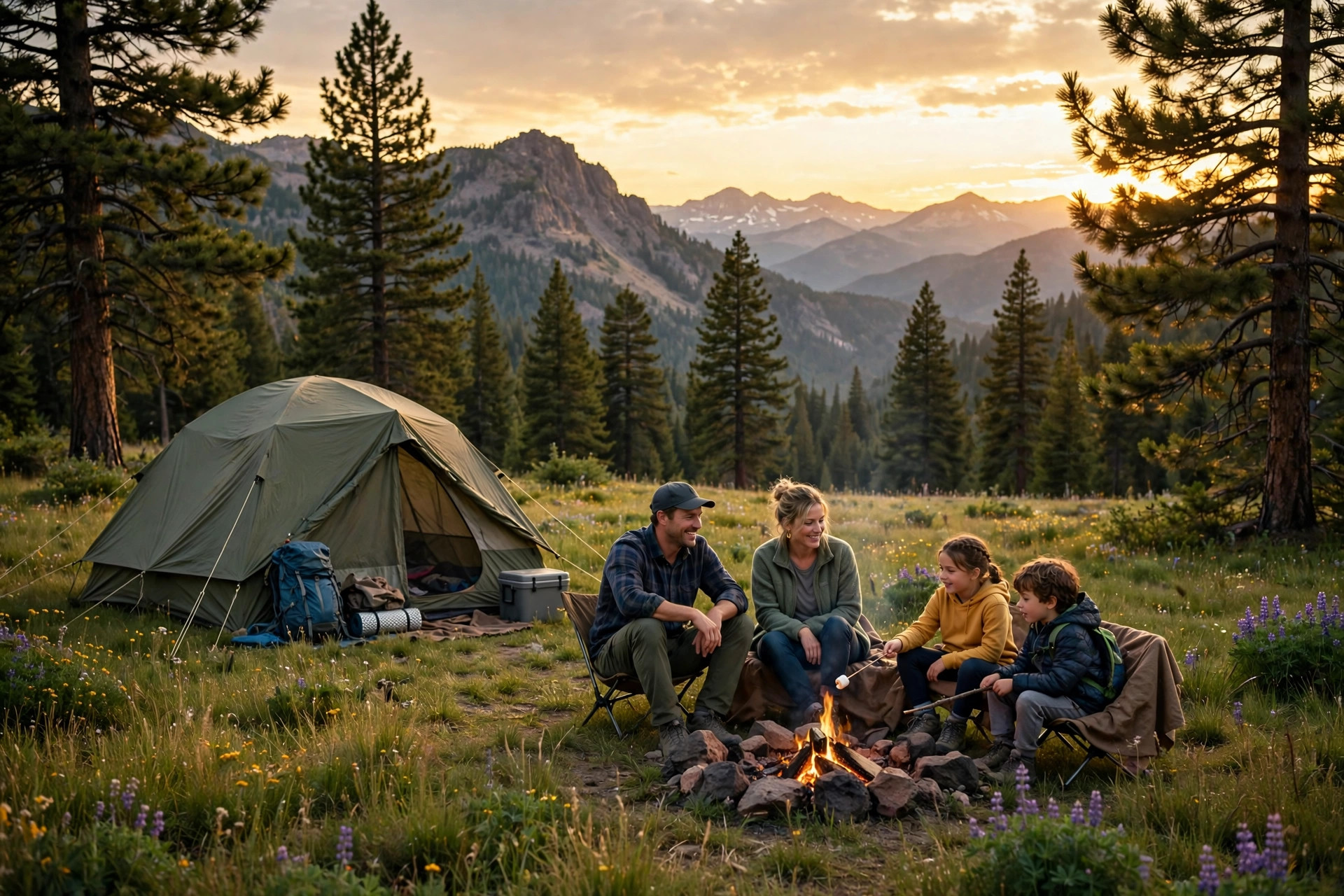
The best family camping spots in the USA combine beautiful scenery with developed campgrounds, accessible outdoor activities, and facilities that make spending a few nights outdoors easier — especially when kids are along. Families can choose from mountain parks, forested campgrounds, coastal landscapes, and lakeside locations, and the right choice depends on your family’s preferred scenery, activities, season, and comfort level.
Six destinations stand out for family camping: Great Smoky Mountains National Park, Yellowstone National Park, Grand Teton National Park, Yosemite National Park, Acadia National Park, and Zion National Park. Below, each one is broken down by what makes it work for families, the best season to go, and what to know before you book — so you can pick the spot that fits your crew, not just the prettiest photo.
Quick Comparison: 6 Best Family Camping Spots
| Park | Best For | Best Season | Reservations |
|---|---|---|---|
| Great Smoky Mountains | First-time family campers, toddlers | Spring and fall | Required, Recreation.gov |
| Yellowstone | Wildlife and geysers with kids | June to September | Required for most sites |
| Grand Teton | Mountain lakes and easy hikes | June to September | All sites, Recreation.gov |
| Yosemite | Waterfalls and iconic views | May to October | Required, books out fast |
| Acadia | Coast, tide pools, biking | June to October | Required, Recreation.gov |
| Zion | Desert canyons, year-round trips | Spring and fall | Required |
1. Great Smoky Mountains National Park
Great Smoky Mountains National Park, on the Tennessee–North Carolina border, is a practical option for families who want developed camping surrounded by forests and mountains. The park has 10 developed frontcountry campgrounds, with facilities that include restrooms with cold running water, flush toilets, picnic tables, and fire grates at individual campsites.
Cades Cove and Smokemont campgrounds are open year-round, while the other developed campgrounds operate seasonally. Advance reservations are required for frontcountry camping, and sites can be booked through Recreation.gov.
What makes the Smokies especially family-friendly is how easy the outdoors feels here. Short, flat trails like the Sugarlands Valley Nature Trail and the Laurel Falls path work well for little legs, and the Cades Cove loop road is an easy drive where kids can spot deer, wild turkeys, and sometimes black bears from the car. The visitor centers run junior ranger programs that keep children engaged, and the nearby towns of Gatlinburg and Cherokee offer a soft landing if the weather turns. For more ideas on visiting with little ones, see our guide to Great Smoky Mountains with toddlers.
Best season: Late spring brings wildflowers and mild days, while October delivers the famous fall color. Summer is warm and humid with afternoon thunderstorms, so pack rain gear if you visit then.
2. Yellowstone National Park
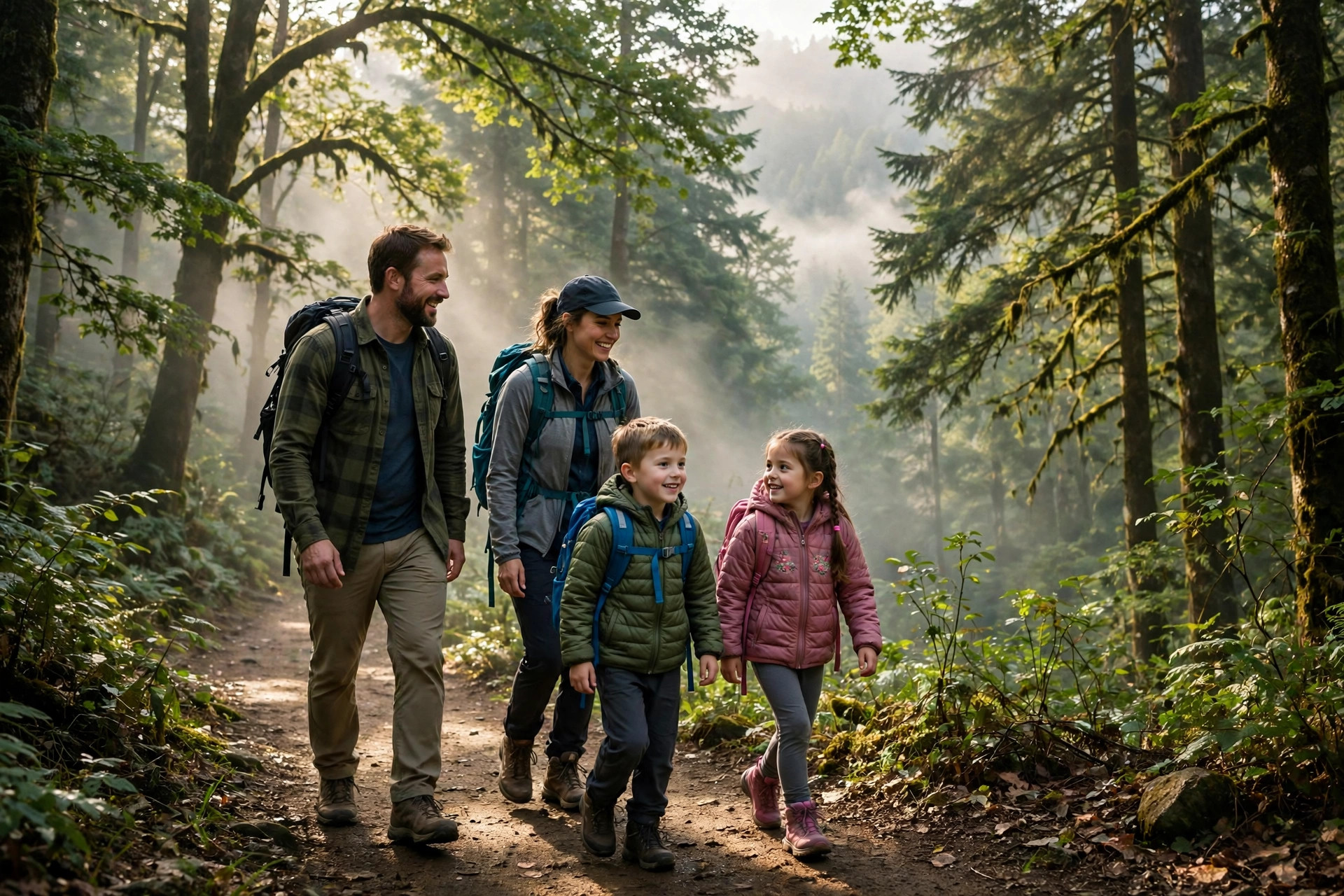
Yellowstone offers families a chance to camp among forests, lakes, mountains, and geothermal landscapes. The park has 11 campgrounds with more than 2,000 established campsites. Most campsites must be reserved in advance, and reservations can be made on a rolling basis up to six months before the stay when availability exists.
Yellowstone does not allow overnight vehicle parking or camping in pullouts, parking areas, or picnic grounds. Visitors need to use designated campgrounds.
For families, the attraction is not simply the campground itself. A camping trip can be combined with scenic drives, wildlife viewing at Lamar Valley, boardwalk walks past geysers and hot springs, and visitor centers with hands-on exhibits. Old Faithful is the obvious crowd-pleaser, but the short Fountain Paint Pot trail and the Grand Canyon of the Yellowstone are just as memorable for kids — and far less crowded. If you want a ready-made plan, our 5-day Yellowstone itinerary with kids maps out each day around realistic driving distances.
Best season: June through September, when all roads and campgrounds are open. Early June and September are cooler and quieter, though some high-elevation areas may still hold snow in early June.
3. Grand Teton National Park
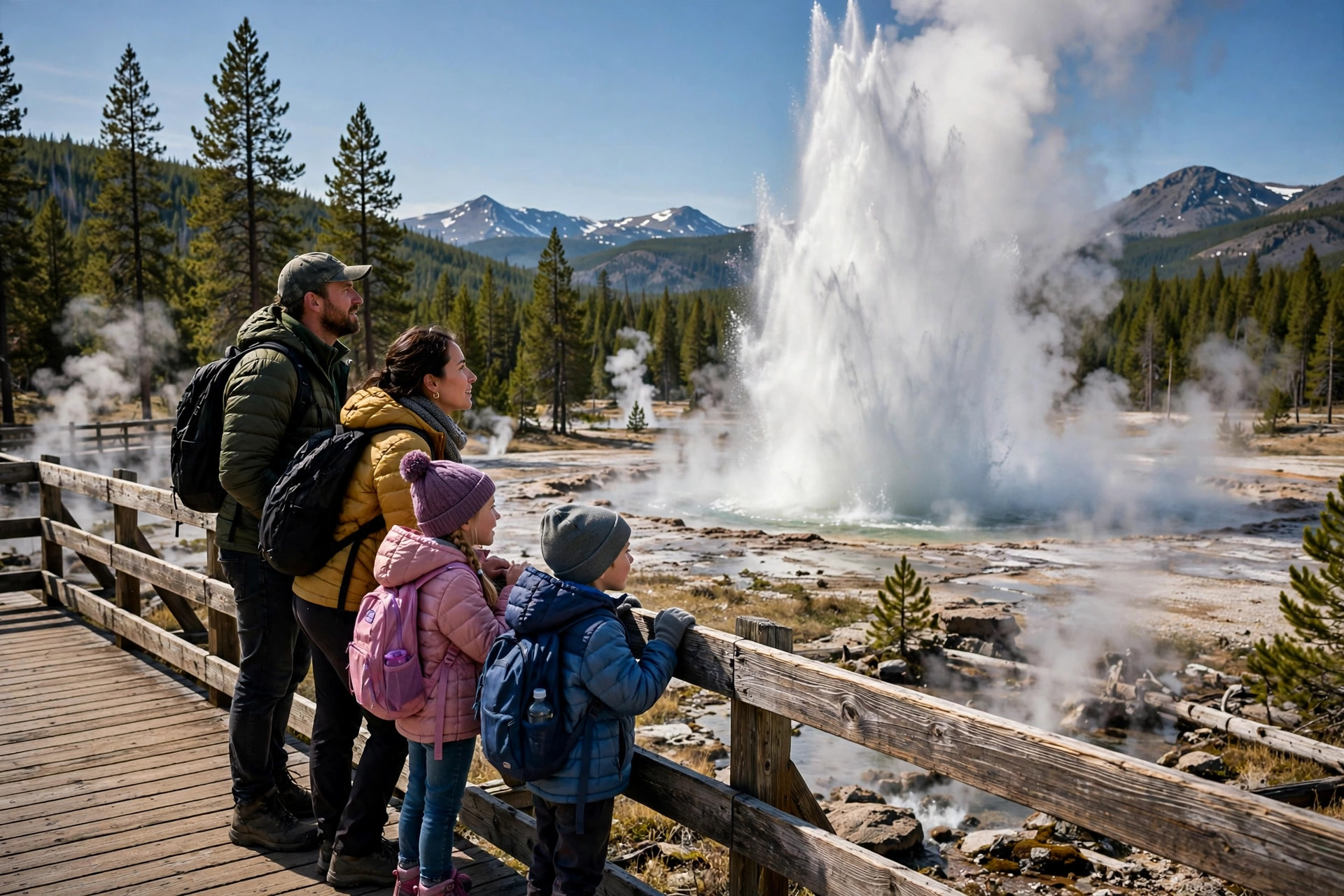
Grand Teton National Park in Wyoming is known for dramatic mountain scenery, lakes, and outdoor recreation. Its campgrounds provide families with a way to stay close to the park’s landscapes without choosing backcountry camping.
All Grand Teton campground sites are available by advance reservation through Recreation.gov, with reservations available up to six months ahead. The park currently has seven campgrounds with around 1,000 campsites. Many sites provide modern comfort stations, potable water, picnic tables, fire grates, and bear boxes.
Families should remember that camping outside designated campgrounds is not allowed. Overnight stays in pullouts, parking areas, picnic grounds, and similar locations are prohibited unless covered by the appropriate backcountry permit.
Grand Teton is a strong option for families who want mountain scenery and a traditional national-park camping experience while still having access to developed facilities. Jenny Lake is the family hub: the easy lakeside trail, the shuttle boat across the lake, and the short hike to Hidden Falls all work well with children. Colter Bay offers a swim beach, a visitor center with kids’ activities, and ranger-led programs in summer. Because the park sits right next to Yellowstone, many families pair the two parks into one trip.
Best season: Late June through September. July and August are warmest, while September brings golden aspens and far fewer crowds.
4. Yosemite National Park
Yosemite National Park in California is one of the country’s best-known outdoor destinations, with granite cliffs, waterfalls, forests, and mountain scenery. The park has numerous developed campgrounds, but families should plan reservations well in advance.
Yosemite’s popular campgrounds operate on a reservation system from approximately April through October. The National Park Service warns that reservations can become unavailable very quickly, while some campgrounds use first-come, first-served arrangements during parts of the colder season. Check the official Yosemite camping page for the current rules before you book.
When planning a family trip, choose a campground based on your intended activities and the amount of driving you want to do. Yosemite is large, so staying near the areas your family wants to explore can save time. Campgrounds in Yosemite Valley put you within walking distance of the Lower Yosemite Fall trail, the meadows, and the Ansel Adams Gallery — all easy wins with kids. Higher-elevation campgrounds like Tuolumne Meadows suit families who want cooler temperatures and alpine scenery, but the road there opens later in the season.
Before booking, check the official campground information for operating dates, reservation rules, campsite limits, and current conditions. For help with timing, read our guide to the best time to book campsites in the USA.
Best season: May and June for the biggest waterfalls, September and October for thinner crowds and mild weather. Summer is busy, so book the moment reservations open.
5. Acadia National Park
Acadia National Park in Maine offers a different family camping experience, combining forests, rocky coastline, mountains, and island scenery. The park has campgrounds on Mount Desert Island and the Schoodic Peninsula, along with lean-to shelters on Isle au Haut.
Reservations for park campsites are made through Recreation.gov. The park releases reservations according to specific schedules, so families should check the current reservation information before choosing travel dates.
Acadia does not permit backcountry camping or overnight parking outside designated arrangements. Families should also pay attention to campground-specific facilities. For example, Duck Harbor Campground does not have a potable water source, so visitors must bring enough safe drinking water or treat available water appropriately.
Its combination of coastal scenery, forest, and developed camping makes Acadia an interesting choice for families who want something different from a mountain-focused trip. Kids love the tide pools at low tide, the carriage roads are perfect for family bike rides, and the short hike up Cadillac Mountain — or the drive to its summit for sunrise — is a trip highlight. Our Acadia 3-day itinerary with kids covers the best family stops day by day.
Best season: June through October. July and August are warmest for the coast, while late September and early October bring fall color and fewer visitors.
6. Zion National Park
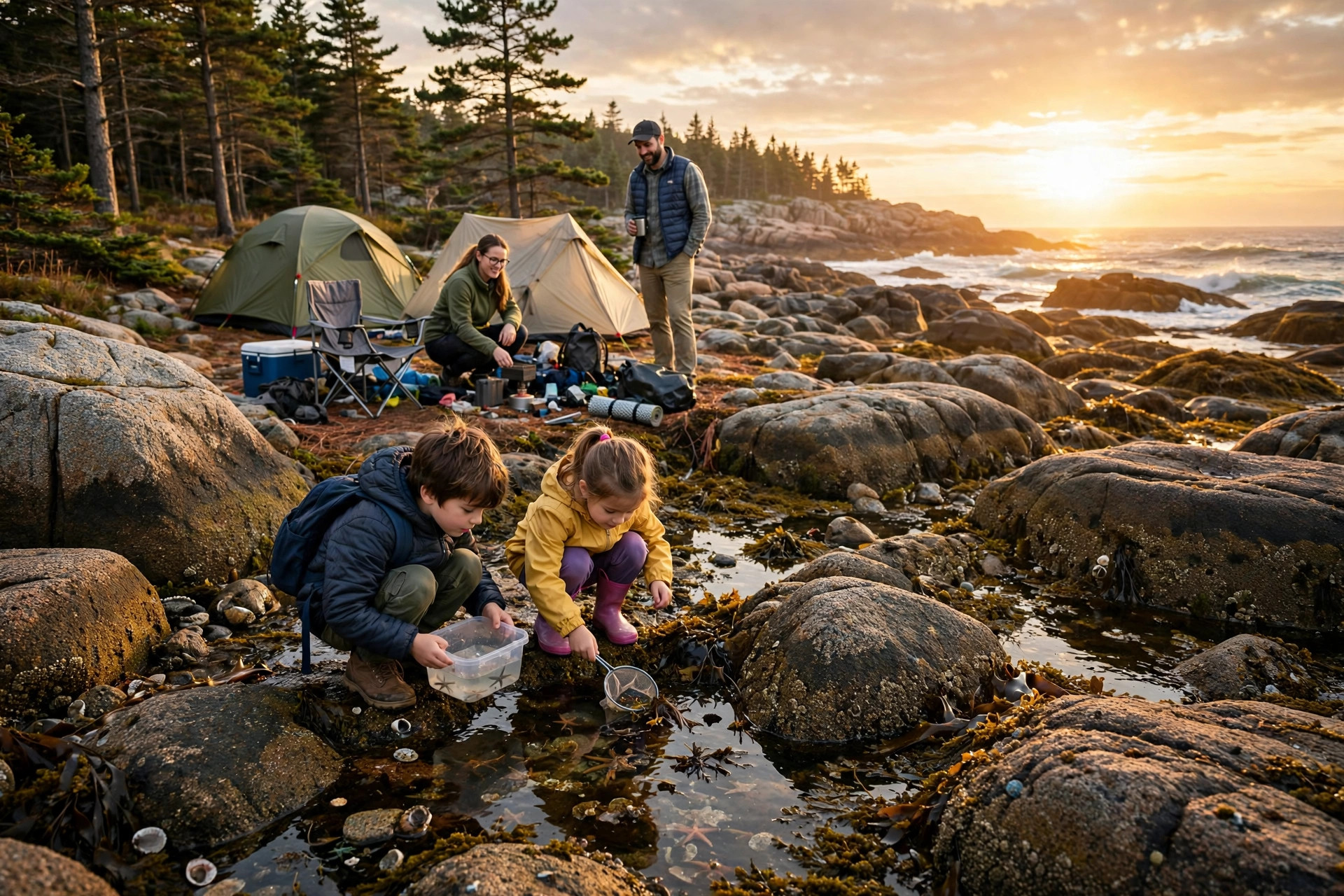
Zion National Park in Utah provides a desert camping experience surrounded by large sandstone cliffs and canyon scenery. The park has three campgrounds, with Watchman Campground located near the South Entrance and open year-round. Reservations are required for park campgrounds.
Families should pay close attention to temperature when planning a Zion camping trip. The National Park Service notes that daytime temperatures in the park’s desert area can exceed 95°F (35°C) during summer, with limited shade in some areas.
Current campground conditions should also be checked before traveling. The National Park Service currently lists Watchman as open year-round, while South Campground and Lava Point Campground operate seasonally and may have closure information that changes over time.
For families visiting during warmer months, carrying enough water and planning outdoor activities around the weather are especially important. The easy Pa’rus Trail is stroller-friendly, the Riverside Walk leads to the mouth of the Narrows where older kids can wade, and the shuttle system means you never have to drive inside the canyon. Plan hikes for early morning, rest in the shade at midday, and save the evening for the Watchman Trail viewpoint at sunset.
Best season: March through May and September through November, when temperatures are comfortable for hiking. Winter is also pleasant, with Watchman open year-round and far fewer visitors.
How to Choose a Family Camping Spot
The best campground for your family depends on what you want from the trip. A family with young children may prefer a developed campground with nearby facilities, while families with older children may want a destination with longer hikes and more outdoor activities. If you are still weighing campgrounds, our 12 questions to ask before booking a family campground will help you compare options side by side.
Before booking, check these practical details:
- Campground facilities: Confirm toilets, water, picnic tables, and fire facilities.
- Reservation requirements: Many popular national-park campgrounds require advance reservations, often six months out.
- Weather: Check the forecast and seasonal conditions before leaving — desert parks and mountain parks can swing 30 degrees between day and night.
- Travel distance: Consider how much time your family will spend driving between the campground and activities.
- Food storage: Follow park-specific rules, particularly in areas where bears and other wildlife are present.
- Trail conditions: Choose activities that match the ages and experience of everyone in the group.
- Water: Some campgrounds have no potable water, so confirm this before you arrive.
Tips for a Stress-Free Family Camping Trip
Keep the first family camping trip manageable. A one- or two-night stay can be easier than starting with a long trip. Test the tent before leaving home and make sure children have suitable clothing, footwear, water, and sun protection. Our first family camping trip weekend plan walks through the whole thing step by step.
Do not assume that every campground has the same facilities. Some locations provide drinking water and developed restrooms, while others have more limited services. Always check the official park website before packing.
Reservations are another major part of planning. Popular destinations such as Yosemite, Grand Teton, Yellowstone, Acadia, and Zion can have limited campground availability, particularly during busy travel periods. Booking early gives families more options for choosing suitable dates and campsites. Set a calendar reminder for the day reservations open — six months ahead on Recreation.gov — and have a backup campground in mind in case your first choice sells out.
Finally, build downtime into each day. Kids need unstructured time at camp to explore, play, and rest, and the trip will feel far more relaxed if you are not rushing from one viewpoint to the next.
FAQs
What are the best family camping spots in the USA?
Great Smoky Mountains, Yellowstone, Grand Teton, Yosemite, Acadia, and Zion are six national parks with developed camping options and a wide range of outdoor experiences. The most suitable destination depends on your family’s preferred scenery, activities, travel season, and campground requirements.
Which national park is easiest for family camping?
Developed frontcountry campgrounds can be easier for families because campsites are accessible by vehicle and provide basic facilities. Great Smoky Mountains, for example, has developed campgrounds with restrooms, running water, picnic tables, and fire grates. It is also one of the most forgiving parks for first-time family campers.
Which national park is best for toddlers?
Great Smoky Mountains and Acadia are both strong choices for toddlers: short, flat trails, visitor centers with junior ranger activities, and campgrounds close to the car. Yosemite Valley also works well, with stroller-friendly paths and meadows to explore.
Do families need reservations for national park camping?
Reservation rules vary by park and campground. Grand Teton requires advance reservations for its park campgrounds, while Yellowstone requires reservations for most campsites. Yosemite also uses reservations extensively during the main camping season. Most national-park campgrounds book through Recreation.gov, often six months ahead.
When is the best time of year for family camping in national parks?
Late spring and early fall are usually the sweet spot: mild weather, fewer crowds, and campgrounds that are fully open. Summer is the easiest time for school-age kids but also the busiest and hottest, especially in desert parks like Zion. Winter works well at Zion and the Smokies, where some campgrounds stay open year-round.
Is Zion suitable for family camping?
Zion has developed campgrounds and year-round camping at Watchman, but families should consider the heat, particularly during summer. Checking current conditions and carrying sufficient water are important parts of planning. Spring and fall are the most comfortable seasons for a family trip to Zion.
What should families check before a camping trip?
Check campground availability, reservation requirements, weather, water availability, food-storage rules, fire regulations, and current trail or campground conditions on the destination’s official website before leaving.
Conclusion
The best family camping spots in the USA offer different ways to enjoy the outdoors, from the forests of Great Smoky Mountains to the mountains of Grand Teton, the coast of Acadia, the desert scenery of Zion, and the famous landscapes of Yellowstone and Yosemite. Instead of choosing a destination based only on photographs, compare its campground facilities, weather, reservation requirements, and activities with your family’s needs. A little planning can make the trip more comfortable and leave everyone with more time to enjoy the outdoors.

2 comments
[…] check the campground itself. Many sites in our guide to the best family camping spots in the USA have good drainage and tree cover, and a quick call ahead can tell you if your site ponds when it […]
[…] camping is new to you as a budget sleep strategy, start with our roundup of the best family camping spots in the USA and the ultimate camping checklist so you buy or borrow the right gear once. Borrowing a tent for […]