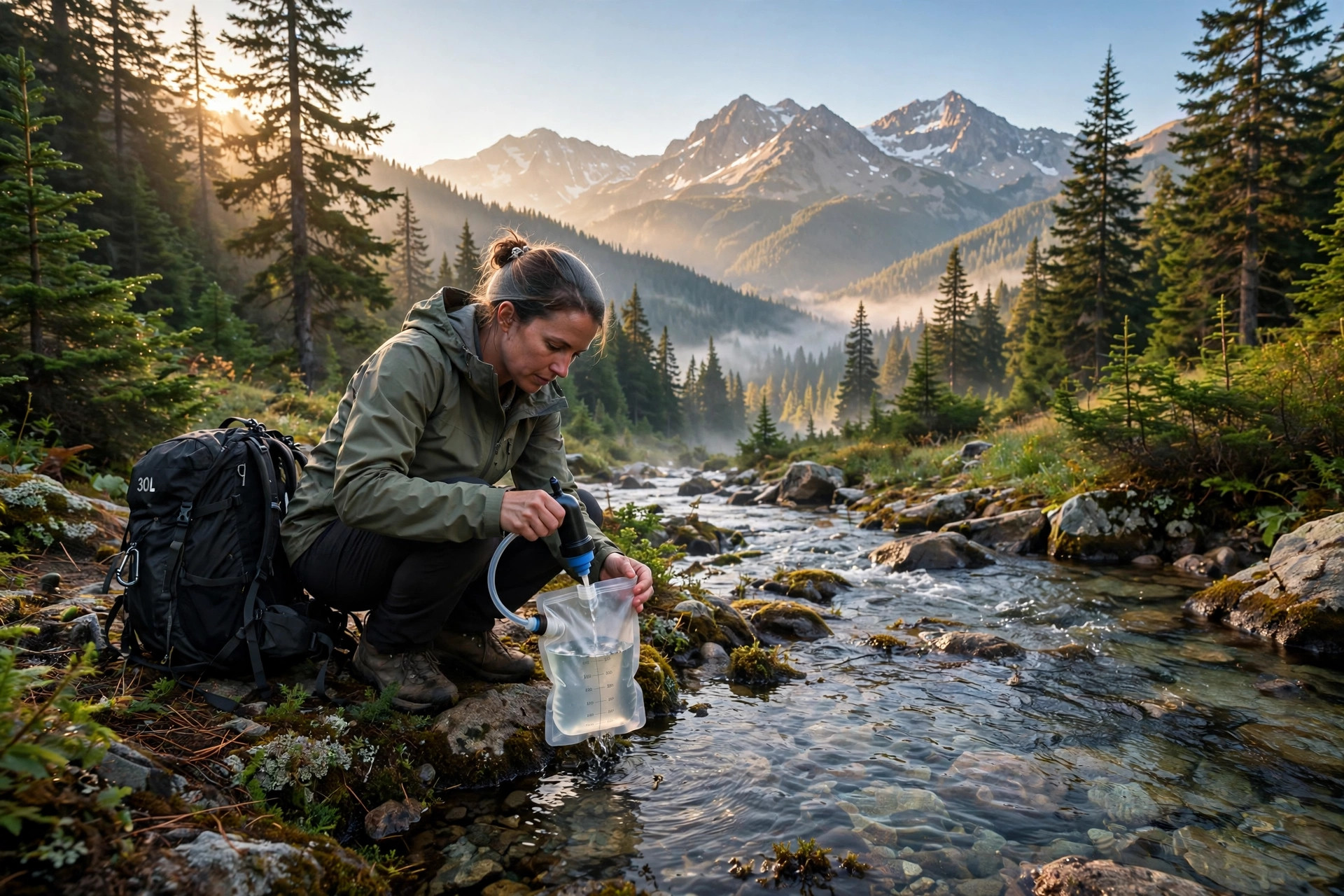
Crystal-clear mountain water looks harmless. It is not. On my first long trail I watched a hiking partner lose three days to giardia from a “pristine” alpine stream, and I have treated every sip seriously ever since. Streams and lakes can carry bacteria, protozoa, and viruses that no filter-less stomach can outlast — and getting sick days from the nearest road is the fastest way to ruin a trip.
After more than 6,500 miles of backpacking and thru-hiking, I can tell you this: filtering or purifying your water is non-negotiable. I always carry a reliable water filter and a backup purification method. My trusted trio has stayed the same for years — the Sawyer Squeeze and Sawyer Micro Squeeze, the Katadyn BeFree filter bottle, and Aquamira water treatment — and this combination has kept me healthy on trails from the John Muir Trail to the Continental Divide. Below is how each system works, where each one shines, and how I actually use them in the field in 2026.
Pro tip first: after scooping water from any source, always clean or sanitize your hands. Simply touching your face or your food with dirty water on your hands can make you sick, no matter how good your filter is.
Filter vs. Purifier: What’s the Difference?
Before the gear breakdown, a quick distinction that matters. A filter (like the Sawyer Squeeze or Katadyn BeFree) pushes water through a membrane that physically traps protozoa, bacteria, and particulates — giardia and cryptosporidium included. Filters are fast and improve taste and clarity, but standard hollow-fiber filters do not catch viruses, which are small enough to pass through.
A purifier or chemical treatment (like Aquamira) kills or inactivates everything — bacteria, protozoa, and viruses — using chlorine dioxide, UV light, or heat. Purifiers don’t remove floaties, though, so in muddy water they work best paired with a filter or a pre-filter like a bandana.
That is exactly why I carry both: a filter for daily use and chemical treatment as my always-in-the-pack backup. Here is my three-system overview, updated for the 2026 hiking season.
| System | Weight | Removes Viruses? | Best For |
|---|---|---|---|
| Sawyer Squeeze | 3.0 oz | No | Long hikes, murky or unreliable sources |
| Sawyer Micro Squeeze | 2.5 oz | No | Ultralight thru-hikes |
| Katadyn BeFree (1L) | 2.3 oz | No | Clear, flowing water; fast and simple |
| Aquamira treatment | ~1 oz | Yes | Backup, viruses, freezing temps |
1. Sawyer Squeeze and Micro Squeeze
Why I trust them
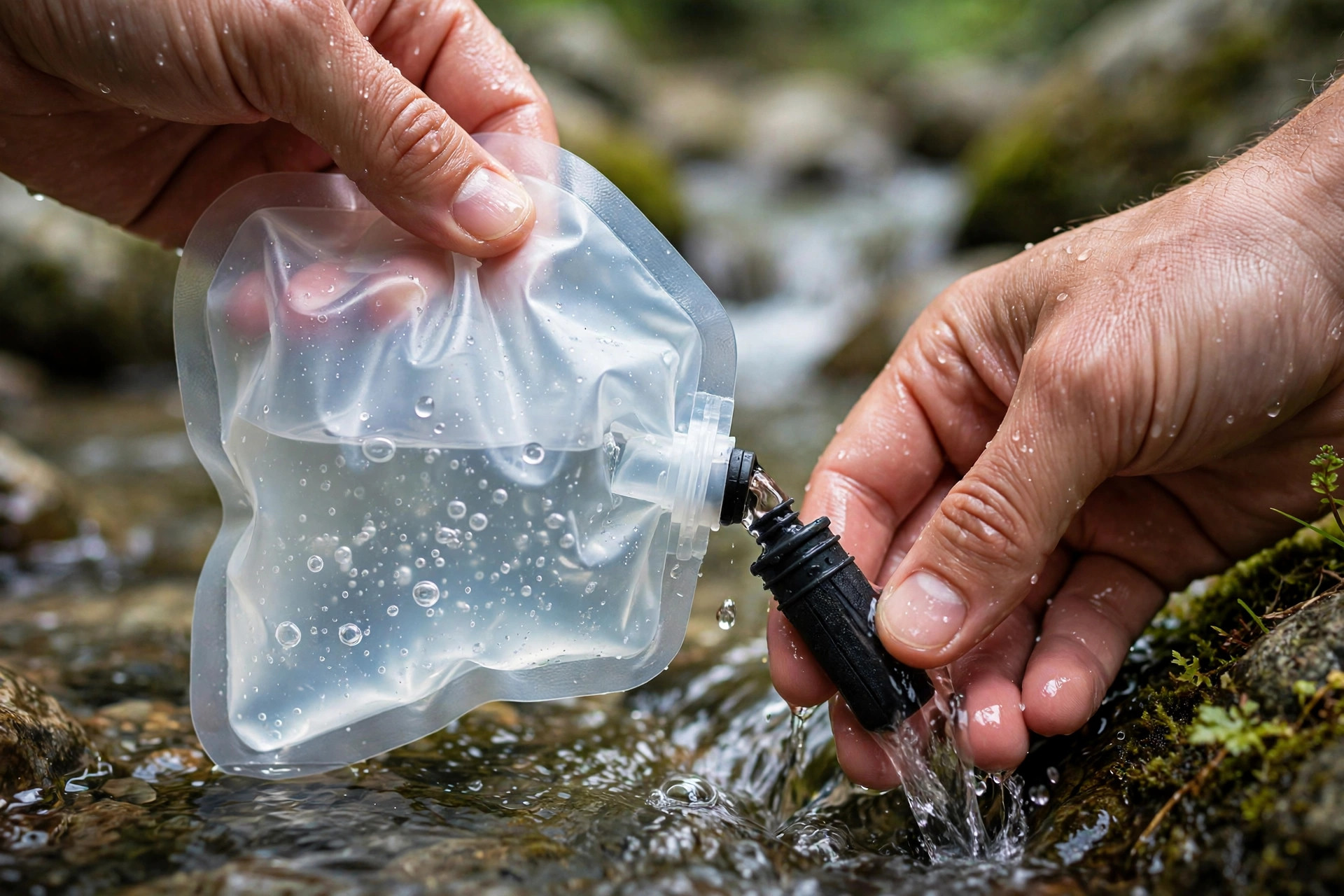
For backpacking and thru-hiking, a reliable squeeze filter is a game-changer, and the Sawyer Squeeze remains my workhorse. The full-size Squeeze (3.0 oz) has a faster flow rate; the Micro Squeeze (2.5 oz) shaves weight for baseweight-obsessed thru-hikes. I have used them on the John Muir Trail, the Pacific Crest Trail, the Arizona Trail, and the Continental Divide Trail, and they have never let me down.
Scenarios where these filters shine
- Ideal for long-distance hikes with stagnant or unreliable water sources.
- Effectively removes particulates — dirt, floaties, dead bugs, and other debris.
- Perfect for filtering from sources with bugs, grass, or unclear flow.
- My pick for beginner hiking gear lists: cheap, light, and nearly indestructible.
Key features
- Versatile threading fits most 28mm-thread bottles like the Smartwater bottle — no extra water container needed.
- Backflushable: a quick backflush clears clogging and restores flow, which dramatically extends the filter’s life.
- The Micro Squeeze is a long-time favorite among thru-hikers for its weight.
Pros
- Backflush capability extends the filter’s usable life for thousands of liters.
- Removes gunk effectively from the ugliest sources.
- Compatible with various water bags and bottles.
Cons
- The O-ring can cause leaks if overtightened — a dab of silicone grease helps.
- Hollow-fiber filters can be ruined by freezing, so sleep with yours in your sleeping bag or a warm pocket on sub-freezing nights.
- The clean end must stay clean; dropping it into dirty water contaminates everything downstream.
2. Katadyn BeFree Water Filter Bottle
Why it is my fast-and-light favorite
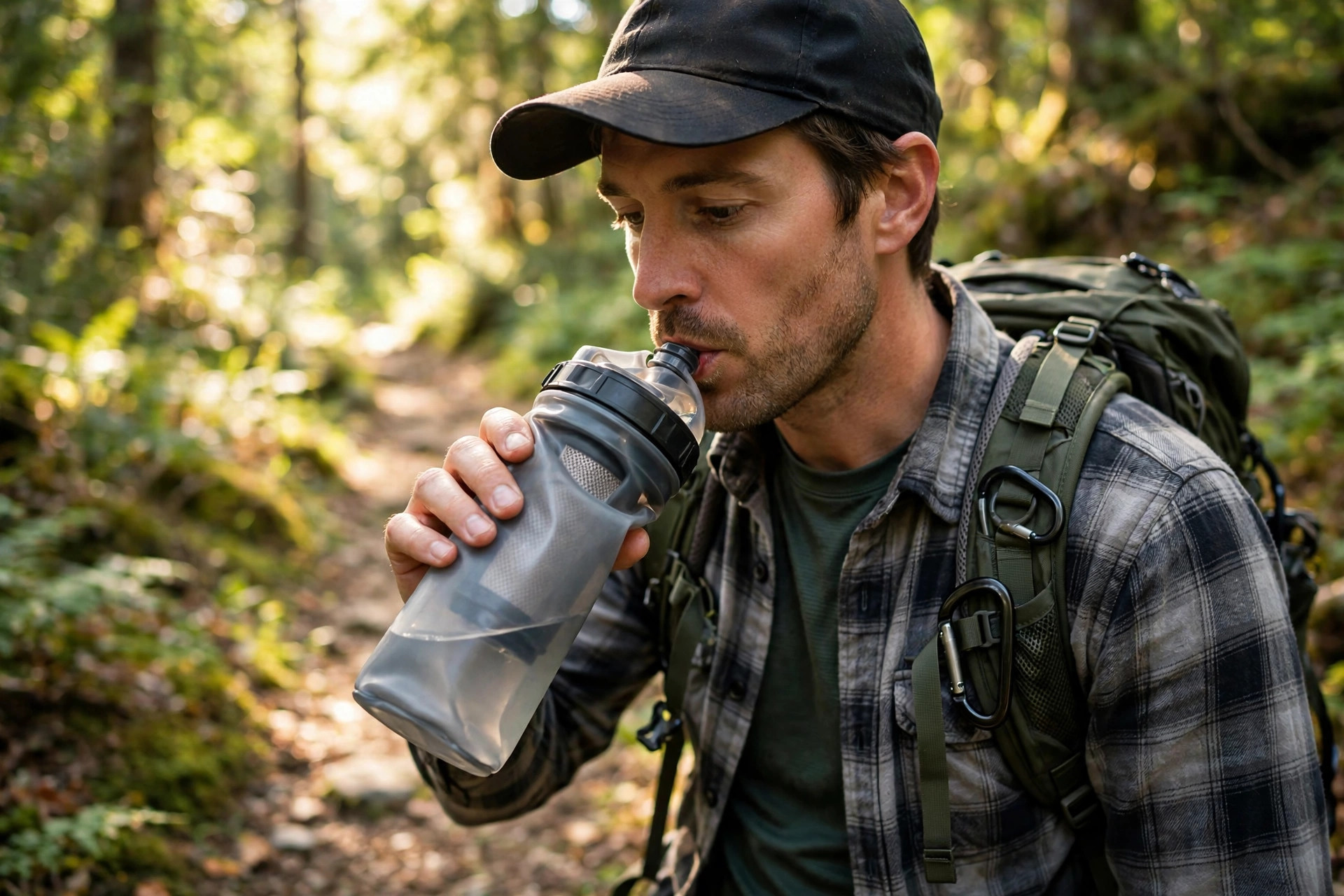
The Katadyn BeFree filter bottle (2.3 oz for the 1L size) is my grab-and-go filter — the one I reach for when I know the water will be clear and flowing. It filters shockingly fast for its weight, and the soft flask doubles as extra water capacity on dry stretches.
Where it works best
- Ideal for backpacking in places with abundant clean, running water — the Pacific Northwest, Colorado, the Sierras.
- I carried it on a Wonderland Trail thru-hike and on overnight trips in recent summers, and it was effortless.
- Skip it for muddy ponds, standing water, or cow tanks: the hollow-fiber element clogs quickly and cannot be backflushed.
Pros
- Extremely fast flow in clear water.
- Dead simple: fill, screw on, squeeze, drink.
- You can buy just a replacement filter if the bottle is still in good shape.
- The soft flask collapses flat, saving pack space.
Cons
- Prone to punctures — protect the soft flask from sharp pack items.
- Uses a 42mm thread, so it is not compatible with most standard disposable bottles.
- No backflush system, so once it clogs badly, it is done.
- Like all hollow-fiber filters, it can be destroyed by freezing — keep it warm on cold nights.
- The clean end must stay clean, just like the Sawyer.
3. Aquamira Water Treatment
Why chemical treatment is always in my pack
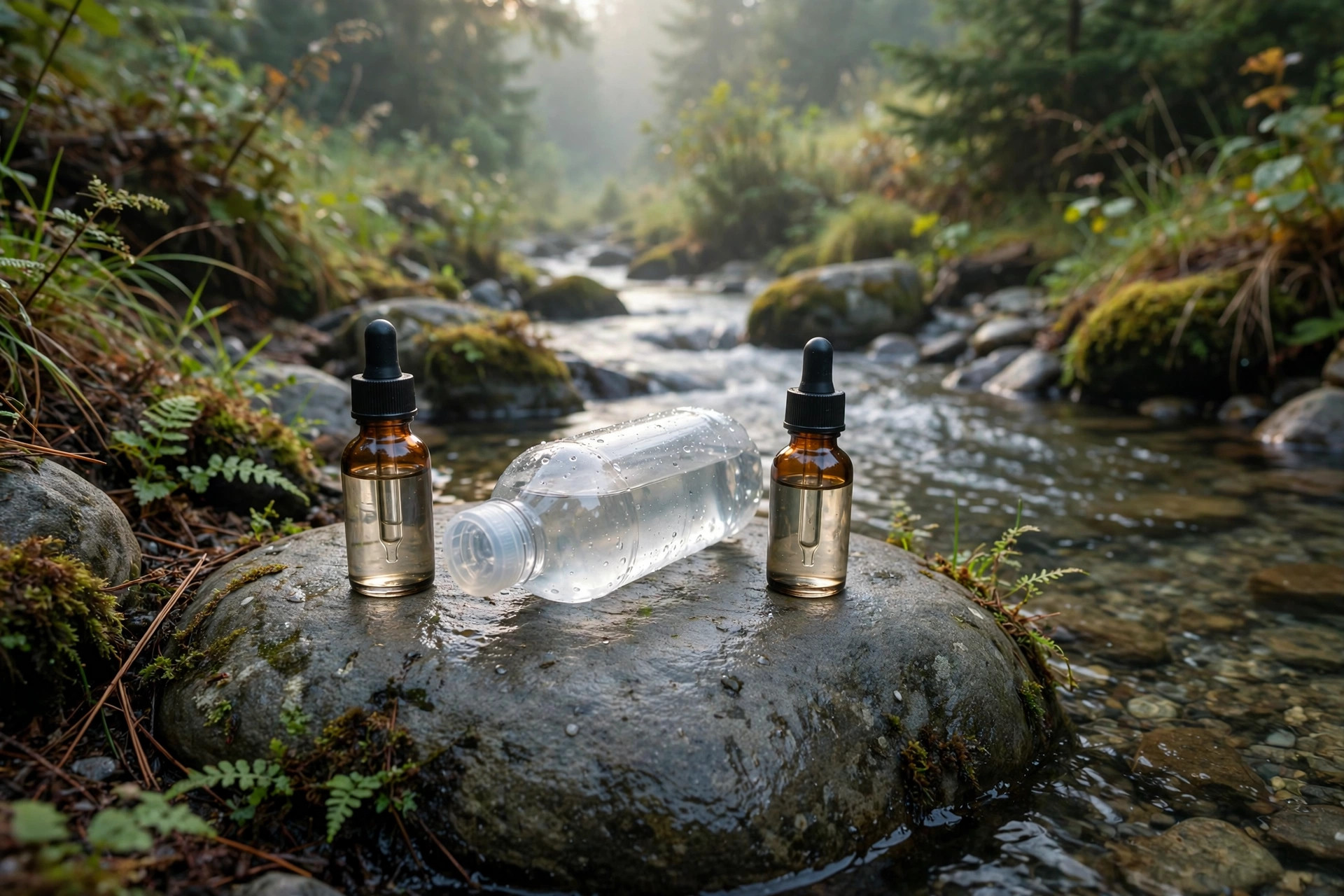
Aquamira is my backup and my virus-killer. It uses chlorine dioxide — two small bottles you mix together — to kill bacteria, viruses, and cysts without the iodine taste or discoloration of older treatments. It weighs almost nothing, costs little, and has a long shelf life, which is why it never leaves my pack even on day hikes.
Where Aquamira shines
- Best for clear, flowing water without floaties like debris, dead bugs, mud, or dirt.
- If a source looks questionable (stagnant, livestock upstream), I pair it with the Sawyer Squeeze for extra safety.
- Ideal for long trails like the PCT, Arizona Trail, and CDT when I am moving fast and want an ultralight option.
- My go-to in freezing weather, since unlike filters, chemical treatment cannot be destroyed by ice.
Pros
- Kills viruses — including norovirus — which most filters cannot touch.
- Extremely lightweight, compact, and affordable.
- Immune to freezing damage, making it the reliable cold-weather choice.
Cons
- Takes about 20 minutes: 5 minutes to mix the drops, 15 minutes for the reaction.
- Does not remove particulates, so you may need a bandana pre-filter or a filter first.
- No instant drinkable water — you must plan ahead.
- In cold water, allow at least 30 minutes, since the chemical reaction slows down.
What About UV Pens, Gravity Filters, and Boiling?
Squeeze filters and chemical drops are not the only options, so here is an honest take on the other methods I have tried or considered:
- UV purifiers (like the SteriPEN): effective against viruses and fast in clear water, but they rely on batteries, struggle in murky water, and can break at the worst moment. I don’t trust my health to something that dies when the battery does.
- Gravity filters: wonderful for groups and basecamps — hang a dirty bag and let physics do the work. Overkill and heavy for a solo backpacker.
- Pump filters: still popular with canoeists and guides, but heavier than squeeze systems and more moving parts to fail.
- Boiling: the simplest method of all. A rolling boil for one minute (three minutes above 6,500 feet, per CDC guidance) kills everything. It costs no weight beyond fuel, but it is slow and uses precious stove gas — I keep it as my no-gear emergency plan.
For authoritative backcountry water guidance, the CDC’s backcountry water treatment page is worth a read before any big trip.
My Actual Field Routine
Here is what a water stop looks like for me, hundreds of miles in: I pick the clearest, fastest-moving part of the source I can reach. I scoop with my dirty-side pouch or bottle, screw on the Sawyer, and squeeze into my clean bottle. Then I sanitize my hands before eating or touching my face. That is it — a two-minute routine.
At camp, I pre-treat the next morning’s water with Aquamira before bed so it is ready at dawn. On sub-freezing trips, the filter goes into a dry sack inside my sleeping bag with me — a frozen filter gets quietly discarded, because you cannot tell it is cracked until it stops protecting you. If I am heading somewhere with well-maintained campsites and reliable water, the BeFree often replaces the Sawyer entirely.
Final Thoughts: Staying Safe With the Right Water System
Having a reliable water filtering and purifying system is essential for staying healthy while hiking, backpacking, or thru-hiking. I have never gotten sick from water on the trail because I always carry one of these systems — and a backup. Here is how I choose:
- For longer hikes or thru-hikes with varying or uncertain water sources, I rely on the Sawyer Squeeze or Sawyer Micro Squeeze.
- When I know the water will be clear and flowing, the Katadyn BeFree is my go-to.
- I always carry Aquamira as my purification backup — especially when moving fast, hiking in cold weather, or anytime my filter could fail from freezing, breaking, or clogging.
A backup method is crucial because your primary filter will let you down eventually. And the pro tip bears repeating: always clean or sanitize your hands after scooping water. Simply touching your face or food with dirty water on your hands can make you sick.
FAQs About Water Purification for Backpacking
Why does boiling water work?
Boiling is a top choice for purifying water while hiking because heat destroys every class of waterborne pathogen. Bring water to a rolling boil for one minute — longer at higher altitudes — and it is safe to drink. It is simple, effective, and has saved me on trips when my filter was out of commission.
What is the most effective water purification method?
For the backcountry, there is no single “best” — it depends on the water. Chemical treatments like chlorine dioxide and boiling kill the widest range of pathogens, including viruses. Filters are faster and improve clarity but generally do not remove viruses. For everyday trail use, a filter plus a chemical backup covers every scenario.
How do you filter water while backpacking?
Squeeze filters are the most popular choice among thru-hikers: fill a soft pouch from the source, attach the filter, and squeeze filtered water into a clean bottle. A well-maintained filter can last for thousands of liters. Just remember — ice destroys hollow-fiber filters, so take extra care in subfreezing temperatures.
Can I drink straight from a mountain stream?
You should not. Even the clearest-looking water can carry giardia, cryptosporidium, or norovirus from wildlife and livestock upstream. Symptoms can take days to appear and can end a trip. Always filter or purify — it takes two minutes.
How often should I backflush my squeeze filter?
Backflush whenever the flow rate noticeably slows — on murky sources that can mean daily; on clear water, every few days is plenty. Regular backflushing is the single biggest factor in how long your filter lasts.
Can a frozen water filter still be used?
No. Freezing can create micro-cracks in hollow-fiber membranes that let pathogens through with no visible sign of damage. If your filter has frozen, retire it. This is exactly why I carry Aquamira as a backup in cold weather.

1 comment
[…] aspects of staying clean and healthy in the backcountry is access to safe drinking water. The best water purification system for backpacking depends on your needs, but whatever you choose, keep it lightweight, reliable, and easy to use. […]