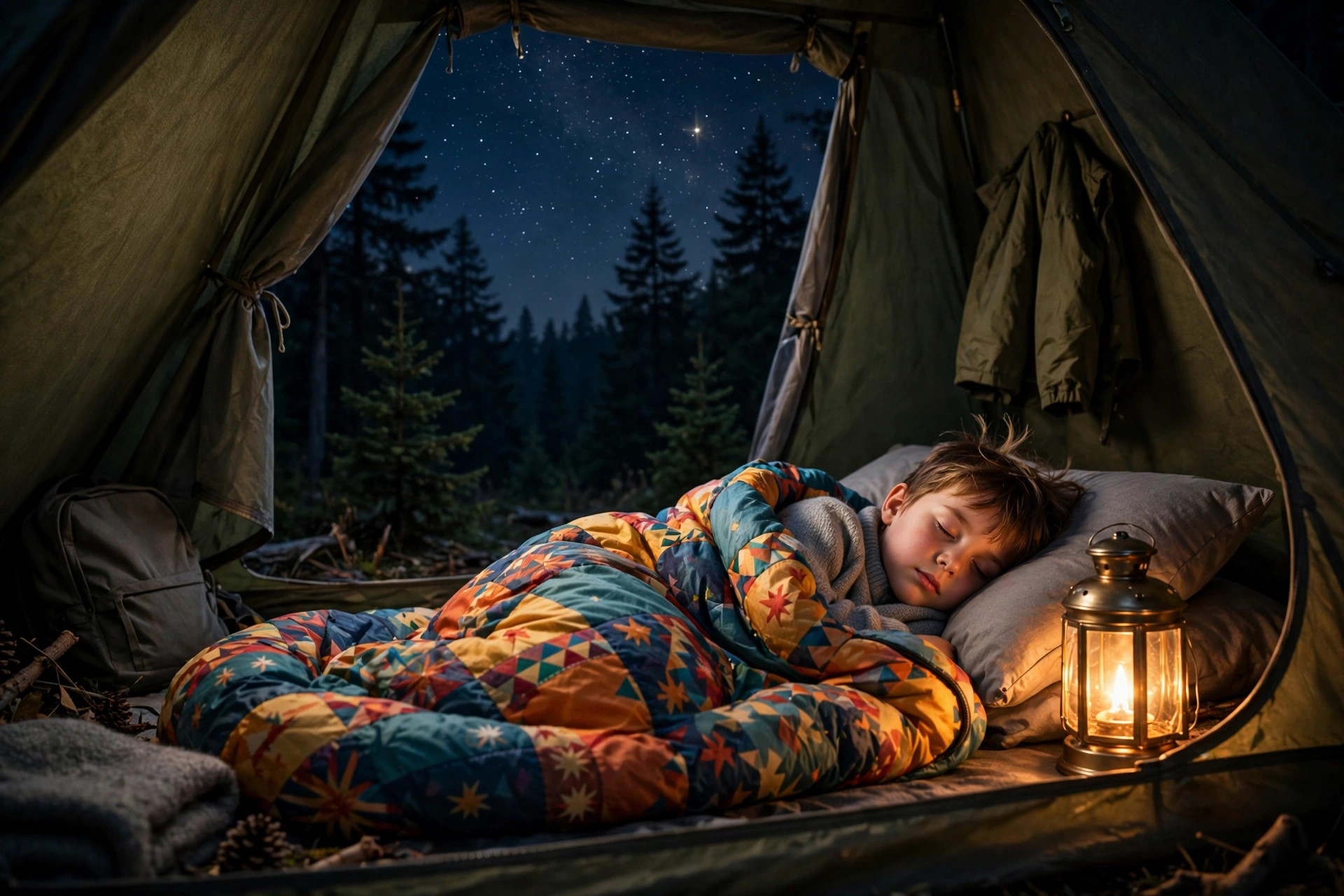
Every family camping trip comes with one make-or-break moment: bedtime. The sun sets, the campfire crackles, and just when you are ready to relax, your overtired toddler starts bouncing off the tent walls. If learning how to get kids to sleep while camping feels harder than the hike up the trail, you are not alone. Most kids sleep differently outdoors — new sounds, new light, new smells, and a whole lot of excitement. The good news is that sleep at camp is a skill you can teach, just like pitching a tent. These 15 parent-tested tips cover the gear, the routine, and the mindset shifts that turn restless camp nights into peaceful ones.
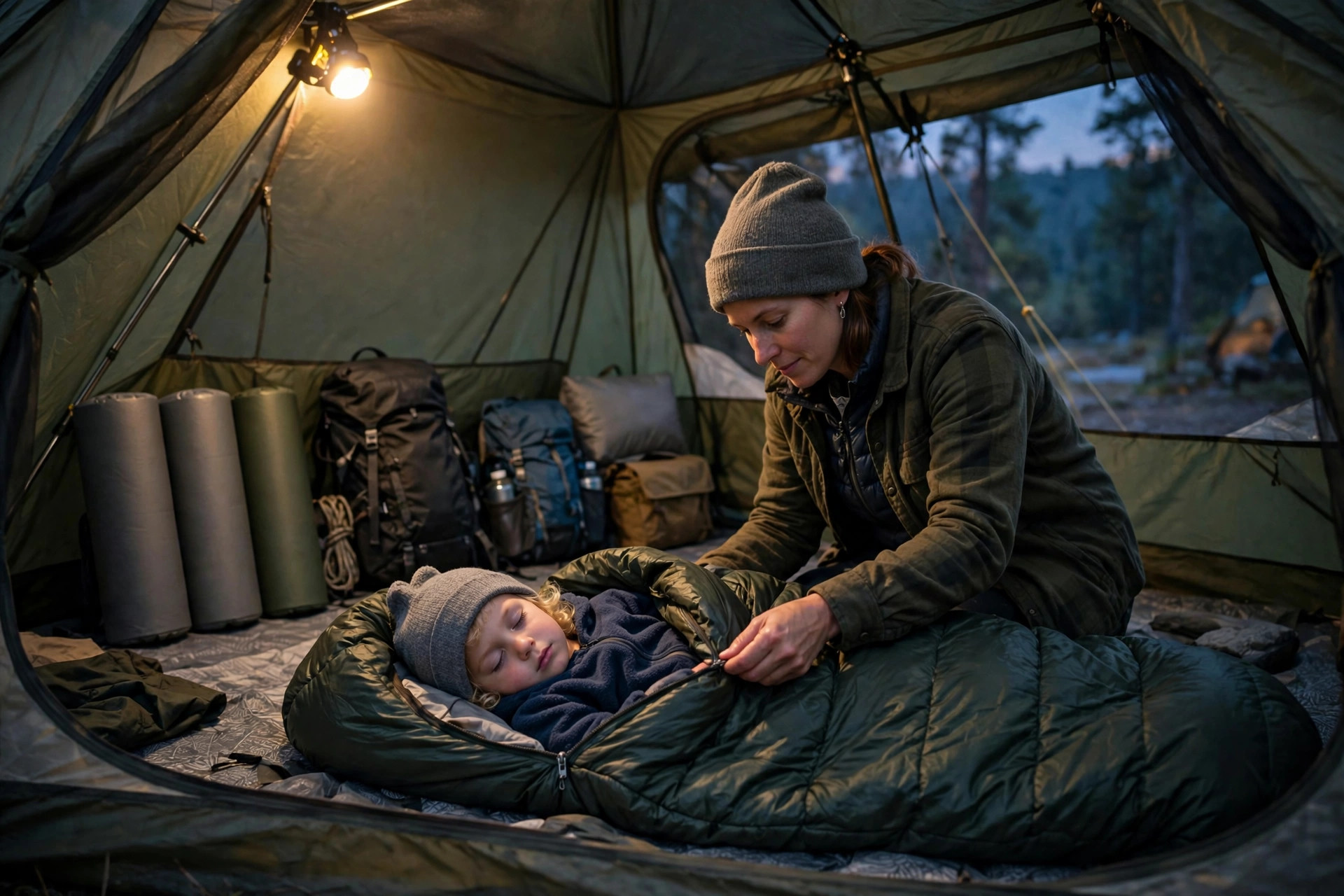
Why kids struggle to fall asleep while camping
Kids resist sleep at camp for completely normal reasons. First, the environment is full of unfamiliar stimulation: owls, coyotes, tent flaps rustling, neighboring campers laughing, headlamps sweeping past. Second, their bodies are often either overtired or not tired enough — camping days are either jam-packed with activity or spent sitting in the car. Third, the usual sleep cues are gone: no familiar bed, no bedroom wall, no white noise machine humming in the corner. Add a sleeping bag that feels slippery and strange, and it is no wonder bedtime stretches to midnight on night one.
15 parent-tested tips for peaceful camp nights
1. Bring the same bedtime routine from home
This is the single most powerful sleep tool you own, and it packs for free. If home bedtime means teeth, pajamas, two books, and a song, do teeth, pajamas, two books, and a song at camp — in the same order. Children cue their bodies to wind down through sequence, not location. Keep the routine roughly the same length (15–20 minutes works for most families) and protect it even if campfire fun is tempting to extend. A small battery-powered book light keeps reading time consistent anywhere.
2. Time dinner and sugar early
Eat a full, calm dinner 90 minutes to two hours before bedtime. Heavy meals right before sleep cause discomfort, and a marshmallow-only dinner causes a sugar spike followed by a restless crash. Plan your camp cooking so the kids eat a real meal, and save s’mores for the middle of the evening, not the finale.
3. Borrow comfort from home
A favorite stuffed animal, blanket, pillow, or even a worn T-shirt that smells like home bridges the gap between the bedroom and the tent. Parents often underestimate how much familiar smell and texture calm a child. If your child has a lovey, it gets a seat on the packing list right next to the tent stakes.
4. Burn off energy at the right time
The classic mistake is wearing kids out right up until bedtime with a campfire dance party, then expecting them to drop. End intense activity at least two hours before bed. Replace late-night roughhousing with a calm after-dinner walk, stargazing, or quiet flashlight tag that winds down instead of ramping up.
5. Master the sleep clothing system
Kids wake up at 2 a.m. mostly because they are too cold, too hot, or uncomfortable. Dress them in dry, clean base layers for sleep — never the clothes they wore all day, which hold sweat and dirt. Merino wool or synthetic long underwear works well; avoid cotton, which stays damp. Add warm socks and a hat if temperatures drop. Check our detailed layering guide for keeping kids warm while camping for the full breakdown.
6. Choose a genuinely comfortable sleep surface
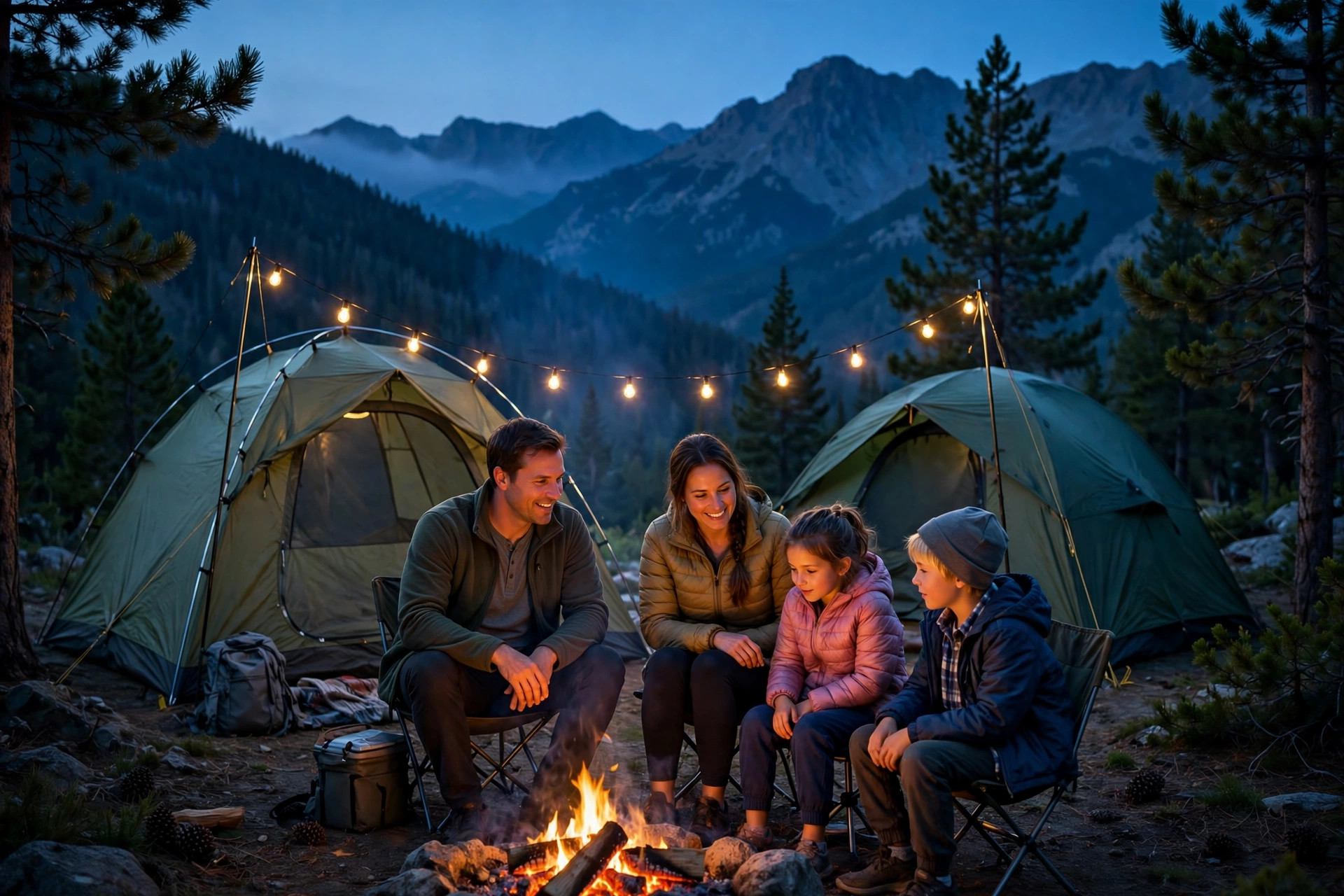
A sleeping pad that leaves a child feeling every rock underneath is a recipe for hourly wake-ups. Kids’ bodies are lighter than adults’, but they are also more sensitive to bumps. Use a pad with real cushioning — many parents find a full-size air mattress or a thick self-inflating pad works better for kids than the ultralight adult pads. Test the setup at home first.
7. Use white noise to mask camp sounds
The woods are not quiet at night, and unfamiliar sounds trigger alertness in children. A phone app playing white noise, rain, or fan sounds on loop — set to a volume that stays steady all night — dramatically reduces wake-ups from owls, wind, and other campers. If your child uses a sound machine at home, bring a portable version or a phone with the same sound. Keep the device charged or plugged into a power bank; the noise stopping at 1 a.m. is worse than no noise at all.
8. Make the tent pitch dark (but not scary)
A tent that glows with every passing headlamp or lights up at 5:30 a.m. sunrise breaks sleep cycles. A rain fly fully zipped and orienting the tent door away from common paths helps. Inside the tent, a dim lantern or string of warm fairy lights gives enough visibility for a child to feel safe without signaling “morning.” Let kids control the lantern: being able to turn their own light on and off gives them power over the scary dark.
9. Pick your campsite for sleep, not just views
Site selection shapes sleep quality. Choose a spot away from the campground road, the bathroom building (foot traffic and door slams), and groups that arrived to party. Flat ground keeps everyone from rolling together into a pile at 3 a.m. When booking, look for sites described as “quiet” or “family loops” — and if you can, find next-season spots early with these tips for last-minute campsite cancellations.
10. Keep bedtime consistent — even at camp
Letting bedtime slide two hours later “because we’re on vacation” is the fastest route to an overtired child. Try to keep the sleep window within 30 minutes of the home schedule. Kids who are overtired produce stress hormones that make them more wired, not more sleepy Hold the line kindly and firmly.
11. Handle the “scared of the dark and noises” phase directly
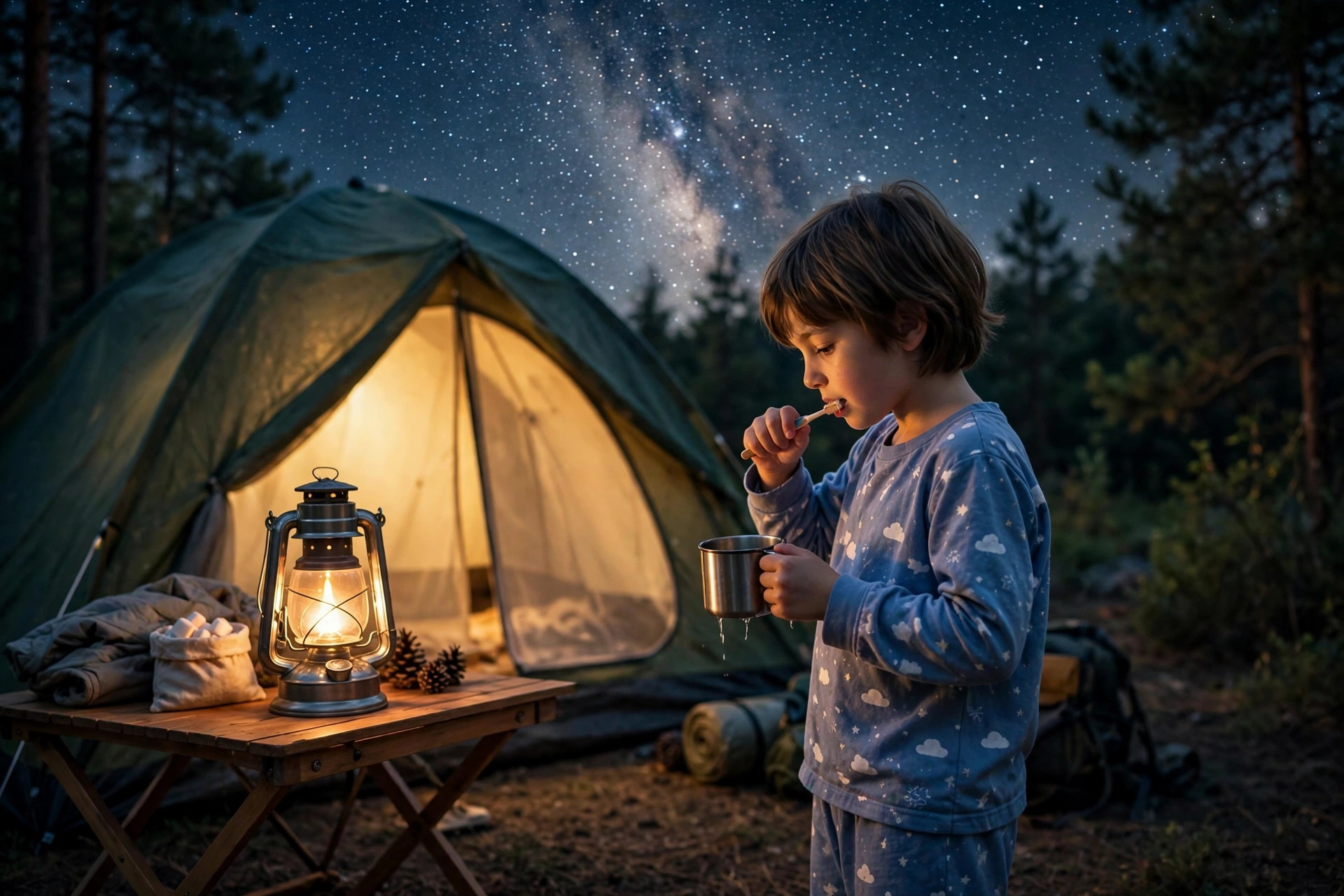
Ages 3–6 are peak years for nighttime fears, and a tent in the woods can amplify them. Instead of dismissing fears, narrate the sounds together before bed: “That was an owl saying goodnight. That rustle is the wind.” A “brave spray” (a spray bottle with water and a drop of lavender) or a special flashlight the child keeps by their pillow gives them a job to do if they wake scared.
12. Manage light exposure before bed
Bright campfire and lantern light close to bedtime suppresses melatonin, just like a screen does. In the last hour before bed, dim things down: bank the fire low, switch lanterns to their dimmest setting, and avoid glowing tablets. Morning sunlight after wake-up resets the body clock and helps the next bedtime land on time.
13. Do a tent bedtime dry run at home
The best prep costs nothing: pitch the tent in the backyard or the living room and sleep in it one night before the trip. Kids learn the sleeping bag zipper, the pad, and the sounds of the tent fabric — all without the stakes of a real trip. You will also discover leaks or kicked-off sleeping bags before it matters.
14. Have a plan for middle-of-the-night wake-ups
Most kids wake at least once outdoors, and how you respond determines whether it becomes a 10-minute reset or a 2-hour ordeal. Keep responses boring and quiet: no lights on full blast, no phone screens, no leaving the tent unless nature calls. Keep a designated “pee system” ready — a lidded bottle for little kids or a nearby spot with headlamps ready — so bathroom trips are quick and uneventful. Whisper, keep it dark, and help them settle back in the same position.
15. Give it three nights before you judge
Night one is an adjustment. Night two is usually better. By night three, most kids sleep like rocks. The families who declare “camping doesn’t work for us” often quit after one rough night. Plan trips of at least two or three nights when you can; the payoff in sleep quality — and your own relaxation — compounds with each night.
Sleep tips by age
What works for a toddler is not what works for a 10-year-old. Use this quick reference to match strategies to your child’s age:
| Age group | What helps most | Watch out for |
|---|---|---|
| Babies (under 1) | Keep the exact home sleep schedule; bring the crib mattress substitute or travel crib if it fits in the tent; layer carefully to avoid overheating | Overheating in layered sleep gear; monitor temperature with a hand on the chest |
| Toddlers (1–3) | Familiar lovey and routine; a separate sleep space inside a big tent so they don’t climb on siblings; early bedtime before overtiredness hits | Escape-artist tent unzipping; unfamiliar bedtime protesting |
| Kids (4–8) | Named night sounds, a job for scary moments (flashlight keeper), control over their lantern; involve them in the routine | Fears of the dark and animal sounds; staying up past tiredness |
| Older kids (9+) | Their own sleep space or corner; responsibility for setup; stargazing as the wind-down activity | Late-night sibling chatter; screen time before bed |
Families camping with the youngest members should also read our safety-first guide to camping with a newborn, which covers sleep, temperature, and positioning in detail.
The camp bedtime routine checklist
Tape this to your camp box lid. Thirty minutes before lights-out, run the sequence:
- Dim lanterns and bank the fire (start the light wind-down)
- Teeth brushing with a cup of water (yes, even at camp)
- Change into clean, dry sleep clothes — including fresh socks
- Potty or pee-system stop so nobody wakes for the bathroom at midnight
- Get into sleeping bags and zip up together
- One or two short stories with a dim book light
- Start white noise, turn lantern to lowest setting or off
- Goodnight phrase, same as home — then quiet voices only
Plan your own sleep too: choose a family-sized tent with enough room so nobody is sleeping on gear. Our family tent buying guide explains how to size a tent so bedtime doesn’t feel like a sardine can.
Mistakes that keep kids awake at camp
- Skipping naps for young kids to make them “more tired” — it backfires and creates overtired, wired bedtimes.
- Brand-new gear on night one — an unfamiliar sleeping bag or pad adds novelty when you need familiarity.
- Caffeine hiding in evening drinks — hot chocolate is fine, but check that it is caffeine-free, and skip cola at dinner.
- Full-bright lanterns at bedtime — use the dimmest setting and aim light at the tent ceiling, not at faces.
- Letting bedtime slide every night — the first slip becomes the new normal by night three.
- Too many layers — overheating wakes kids just as fast as cold. Check a child’s neck or chest; if it feels hot and sweaty, remove a layer.
Frequently asked questions
What age can kids start sleeping in a tent?
Many families camp with babies from just a few months old, and toddlers adapt quickly. The key is not a magic age but preparation: proper temperature management, a safe sleep surface, and realistic expectations. Any age works when the routine, comfort, and warmth are right.
How do I keep my toddler from unzipping the tent at night?
Place the toddler’s sleep space in the middle of the tent, away from doors, and consider a carabiner clip through the door zippers up high where little hands can’t reach. A consistent bedtime routine also reduces the urge to escape, because the child understands the tent means sleep time.
Should I bring a travel crib camping?
If it fits your tent, a travel crib gives babies and young toddlers a safe, contained sleep space they already know. Many families skip it once kids are over 18 months and comfortable on a pad, but it is worth the space for younger ones.
What is the best sleeping setup for kids in cold weather?
A sleeping bag rated at least 10°F below the expected overnight low, a well-insulated pad, dry base layers, warm socks, and a hat. For the full breakdown of temperature ratings and layering, see our guide to kids’ sleeping bags and the layering system for keeping kids warm.
Is it normal for kids to wake up crying the first night camping?
Yes — completely normal. New sounds, new darkness, and new surroundings can startle kids awake. Respond calmly, keep it dark and quiet, and avoid screens. Most children settle back to sleep within minutes, and night two is almost always easier.
How can I keep noise down from other campers at night?
White noise or a fan app is your best defense. Choose a campsite away from high-traffic areas and party groups when you book. Earplugs sized for kids exist, but most children sleep better with the comforting consistency of white noise.
Ready for your most restful family trip yet? Start with our stress-free weekend action plan for your first family camping trip and pair it with these sleep tips — by night two, the only sound at your campsite will be the crickets. For more expert-backed advice, REI’s camping with kids guide and the National Park Service camping basics are solid starting points, and Recreation.gov is where most federal campsites are booked.

1 comment
[…] — the same reason a warm bath works at home. If bedtime at camp is a struggle, read our guide to getting kids to sleep while camping alongside this […]