Almost every family remembers their first camping trip — but not always for the reasons they hoped. The tent that took two hours to pitch in the dark. The toddler who was awake, cold and furious at 3 a.m. The dinner that never happened because the stove gas was still in the garage. If you are planning your first time camping with kids, take heart: nearly all first-trip disasters come from the same handful of predictable mistakes, and every one of them is easy to avoid once you know it exists.
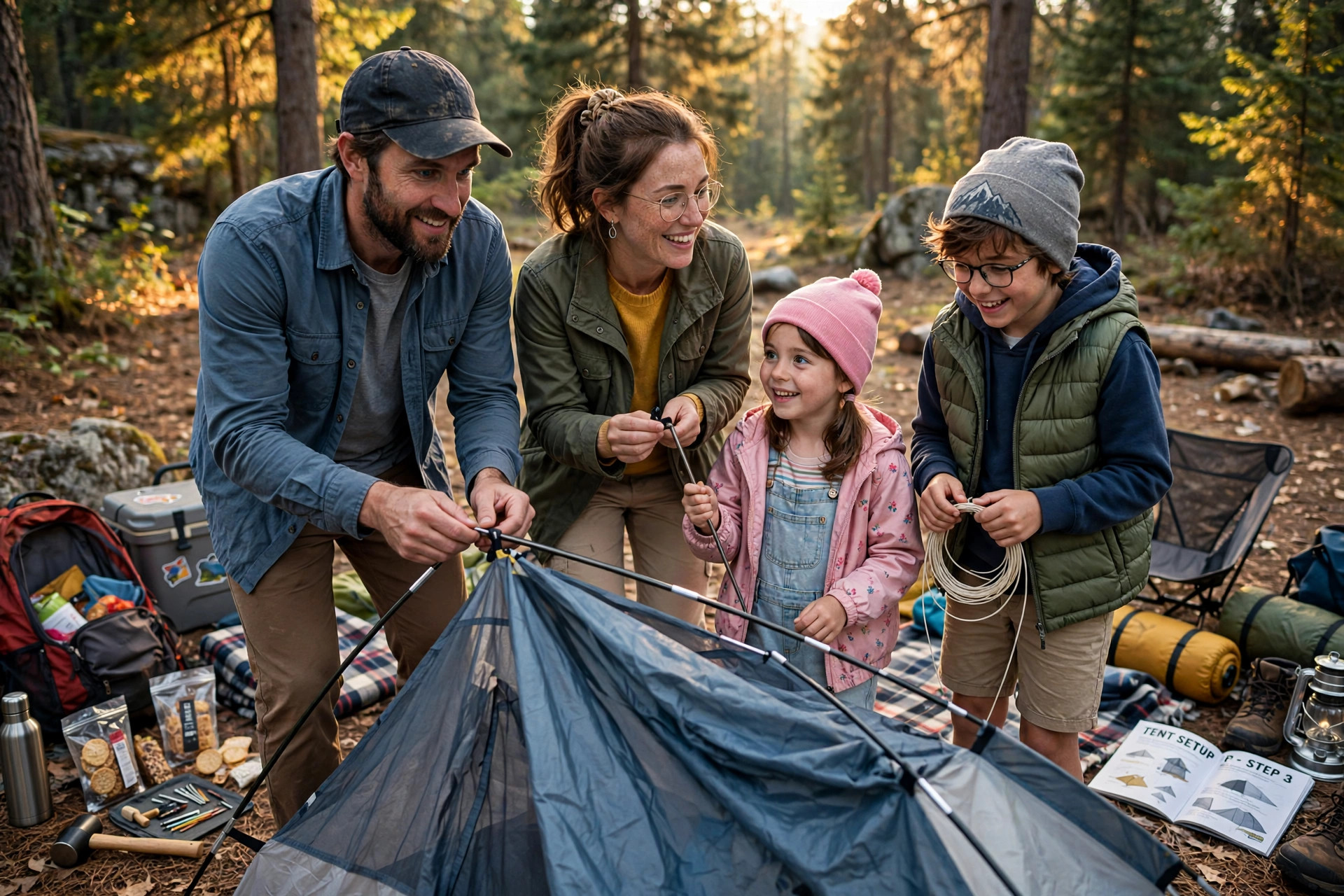
This guide walks through the 15 mistakes first-time camping families make most often, grouped by when they happen — before you leave, at the campsite, at mealtimes, at night, and out on the trail. You do not need expensive gear or years of experience. You need a short trial run, a realistic plan, warm sleep, enough food, and lower expectations than Instagram suggests.
The 15 Mistakes at a Glance
| # | Mistake | The simple fix |
|---|---|---|
| 1 | Never practising at home first | Pitch it and sleep in it in the garden |
| 2 | Choosing a campsite too far or too basic | Drive-up site with toilets, within two hours |
| 3 | Arriving late in the day | Arrive by mid-afternoon at the latest |
| 4 | Buying a tent that is too small | Size up: 6-person tent for a family of four |
| 5 | Forgetting to check the weather | Check the forecast the night before |
| 6 | Sleeping cold on thin mats | Insulated pads matter more than the sleeping bag |
| 7 | Planning complicated camp meals | Cook food kids already love, prepped at home |
| 8 | Not bringing enough snacks and water | A dedicated snack bag, restocked every morning |
| 9 | Packing the wrong clothes | Layers, waterproofs, a full spare set per child |
| 10 | No plan for rain | Tarps, games, and a wet-weather attitude |
| 11 | Letting bedtime collapse completely | Keep a simple version of the home routine |
| 12 | Over-scheduling every day | One main activity a day is plenty |
| 13 | Ignoring campsite safety basics | A walk-around check when you arrive |
| 14 | Bringing screens as the entertainment plan | Nature first, a few low-effort backups |
| 15 | Expecting perfection | Aim for good enough, and laugh at the rest |
Mistakes Before You Leave Home
1. Never practising at home first
The single biggest first time camping with kids mistake is treating the trip itself as the rehearsal. A tent you have never pitched, a stove you have never lit, and a child who has never slept in a sleeping bag are three experiments running at once — in the dark, possibly in the rain. Pitch the tent in the garden and time yourselves. Sleep in it for a night if you can. Children who have already "camped" at home arrive at a real campsite feeling like experts, and bedtime is dramatically easier for it.
2. Choosing a campsite that is too far or too basic
For a first trip, boring is brilliant. Choose a proper drive-up campsite with flushing toilets, drinking water and marked pitches, ideally under two hours from home. That short drive matters twice: nobody arrives carsick and exhausted, and if the night goes truly badly, home is close enough to be a genuine backup plan. Save the remote wild spot for trip three. Booking ahead through Recreation.gov for public land, or your usual booking site for private campgrounds, also means you know exactly what facilities to expect.
3. Buying a tent that is too small
Tent capacity labels assume cosy adults with no luggage. A "4-person" tent fits a family of four the way an airline seat fits a tall teenager: technically, unhappily. Size up at least one step — a 6-person tent for four people gives you room for air beds, bags and a travel cot. If you are borrowing or buying second-hand, check it at home for missing poles, broken zips and a working rainfly before the trip, not during it.
4. Forgetting to check the weather properly
Check the forecast the night before and again on the morning you leave, and plan for the night-time temperature, not the sunny afternoon one. A clear day at 20°C (68°F) can drop to 6°C (43°F) after dark, which completely changes what sleepwear and bedding you need. The National Weather Service publishes clear guidance on heat, lightning, cold and storms — worth ten minutes before any trip. If severe weather is forecast, postponing is not failure; it is the experienced move.
Mistakes at the Campsite
5. Arriving late in the day
Everything about camping with kids is harder after dark: pitching, cooking, finding the toilets, and settling an overtired child in a strange tent. Aim to arrive by mid-afternoon, pitch in daylight, and let the children explore while you set up. Give them small jobs — collecting pegs, unrolling sleeping mats, choosing where the teddy sleeps. A child who helped build the camp feels at home in it.
6. Ignoring campsite safety basics
Spend five minutes on arrival walking the pitch with adult eyes. Look for ant nests, standing water, sharp drops and busy site roads. Agree on boundaries your children can repeat back, and the rule that they never go to the toilets or tap alone after dark. Keep medicines, matches and sharp tools in one closed box in the car, and store all food in sealed containers — ideally in the vehicle — for hygiene and, in some regions, because of wildlife rules at the site entrance.
7. Packing the wrong clothes
Kids get wet, muddy and cold faster than adults, and they do it in clothes you were counting on for tomorrow. Pack a full spare outfit per child per day, sealed in a bag; warm layers for evening even in summer; waterproofs; and twice as many socks as feels reasonable. At night, dress children in clean, dry sleep clothes — never the day's damp layers. Our guide to camping with toddlers essentials lists the basics that save first trips most often.
8. Having no plan for rain
Rain does not ruin a family camping trip; arriving with no rain plan does. Pack a simple tarp so you have dry outdoor space, a pack of cards, colouring books and two or three small surprises saved for a wet afternoon. Wellies turn puddles from a problem into the entertainment. Our field guide to camping in the rain with kids walks through the tarps, tent tweaks and attitude shifts that genuinely save the trip.
Mistakes with Food and Drink
9. Planning complicated camp meals
A campsite is the wrong place for ambitious cooking. Hungry children, one or two burners, fading light and a wobbly table punish anything complicated. Cook meals your kids already love at home, prep as much as possible before you leave, and make the first night's dinner the easiest of all — ideally something that only needs reheating. A written plan removes the daily "what are we eating?" stress; our 3-day family camping meal plan is built exactly for this, with a full shopping list.
10. Not bringing enough snacks and water
Outdoor children are permanently hungry. Fresh air and excitement burn through breakfast at a speed that shocks most parents, and a hangry meltdown helps nobody. Keep a dedicated snack bag — bananas, cereal bars, cheese sticks, raisins, rice cakes — accessible in the car and at the pitch, and refill it every morning. For water, fill a large container at the site tap and keep cups topped up all day rather than waiting for anyone to ask.
Mistakes at Night
11. Sleeping cold on thin mats
Beginners blame the sleeping bag when the real problem is underneath: cold comes up from the ground. A thin mat, or an air bed with no insulation, pulls heat away all night. Every sleeper needs an insulated pad or a blanket under their air bed, a sleeping bag rated for colder than the forecast, and dry sleepwear. Our guide to what toddlers sleep in when camping covers layers, bags and room-sharing setups by age.
12. Letting bedtime collapse completely
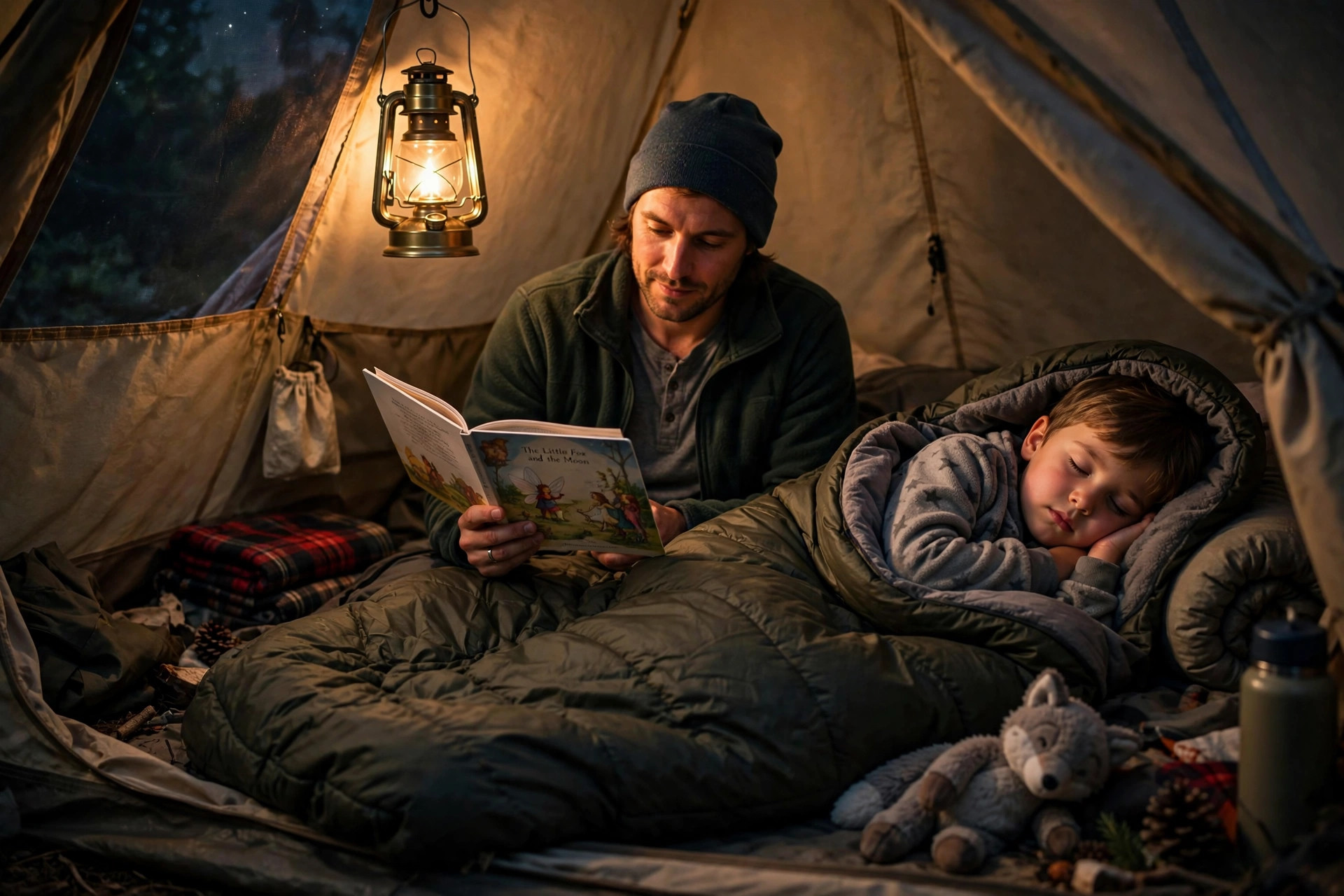
Camping bedtime will be later than home — that is fine and part of the fun. What does not work is no routine at all, because overtired children in tents wake at dawn and melt down by lunch. Keep a short version of home: wash, pyjamas, a story by torchlight, the same comfort toy. Start earlier than you think, while there is still light to find things.
Mistakes with Activities and Expectations
13. Over-scheduling every day
A first camping trip does not need a summit hike, a lake swim, a nature centre and a bike ride. It needs time — to poke sticks into streams, watch ants and help cook. Plan one main activity per day, keep walks short for little legs, and build in downtime at the pitch. On a walk, turn back while everyone is still happy, not when the first whinge starts; the walk back counts too.
14. Bringing screens as the entertainment plan
Tablets have their place on the drive, but families who lean on them at the pitch usually find the negotiation never ends. Try a screen-light approach instead: torches for shadow games, a magnifying glass, a simple scavenger hunt, cards and reading aloud. Keep one downloaded film in reserve for a truly stuck-in-the-tent rainy evening — as a backup, not the plan.
15. Expecting perfection
Something will go wrong, because something always does: a forgotten mallet, a spilt breakfast, a child who hates the tent for exactly one night and loves it the next. The families who come back glowing are not the ones where nothing went wrong — they are the ones whose parents treated the mishaps as part of the story. Keep the first trip short, pack one small luxury for yourself, and judge it by whether the kids ask "when are we going again?" on the drive home.
A Simple First-Trip Checklist
Before you close the car boot, run this list — the full version lives on our ultimate camping checklist:
- Tent pitched once at home, with all poles, pegs, mallet and rainfly
- Insulated sleep pad or blanket layer for every sleeper
- Sleeping bags rated colder than the forecast night temperature
- First night's dinner prepped and ready to reheat
- Full snack bag plus a large water container and cups
- Spare dry outfit per child, sealed; double socks; waterproofs
- Torch or headtorch per person, plus spare batteries
- First-aid basics, any medicines, sun cream and insect repellent
- Cards, colouring and one small surprise activity for wet weather
- Bin bags — for rubbish, wet clothes, and a dozen other things
Frequently Asked Questions
How long should a first camping trip with kids be?
One or two nights is ideal. Two nights give everyone a full day to settle in without the trip becoming an endurance test. Keep the drive under about two hours each way, and book a site with proper toilets and drinking water.
What age is best for a first camping trip with kids?
There is no single right age — babies often sleep surprisingly well outdoors, toddlers need the most supervision, and children from about four usually throw themselves into it. What matters more than age is preparation: practise in the tent at home, keep the trip short and close, and plan sleep, food and warmth carefully for the youngest child coming.
What is the most important thing to get right on a first camping trip?
Warm, dry sleep. Most failed first trips end at 3 a.m. with a cold, awake, miserable child — and that almost always traces back to thin mats, damp sleepwear or a bag not warm enough. Insulated pads, dry pyjamas and a bag rated colder than the forecast fix most night-time problems before they start.
Should we buy lots of new gear for a first trip?
No. Borrow, hire or buy second-hand for anything you are unsure about, and spend your budget on the few things that decide comfort: a tent big enough, insulated sleep pads and warm sleeping bags. Most families add gear gradually over the first few trips, which spreads the cost and stops you buying things you never use.
What if my child hates the first night?
Stay calm and stay warm: add layers, offer a drink and a familiar story, and give it a little time — many children settle once they realise the tent, and you, are not going anywhere. If a child is genuinely distressed or unwell, use your backup plan without guilt. Most children who bail on night one happily try again a few weeks later.
Your First Trip Can Be the Good Story
First time camping with kids goes well for ordinary reasons: a tent you have practised with, a pitch you reached in daylight, warm beds, simple food, a snack bag that never empties, and parents who expected a few things to go sideways. Avoid these 15 mistakes and you have removed nearly everything that turns first trips into cautionary tales. What is left is the good part — slow mornings, muddy boots, and stories by torchlight.
