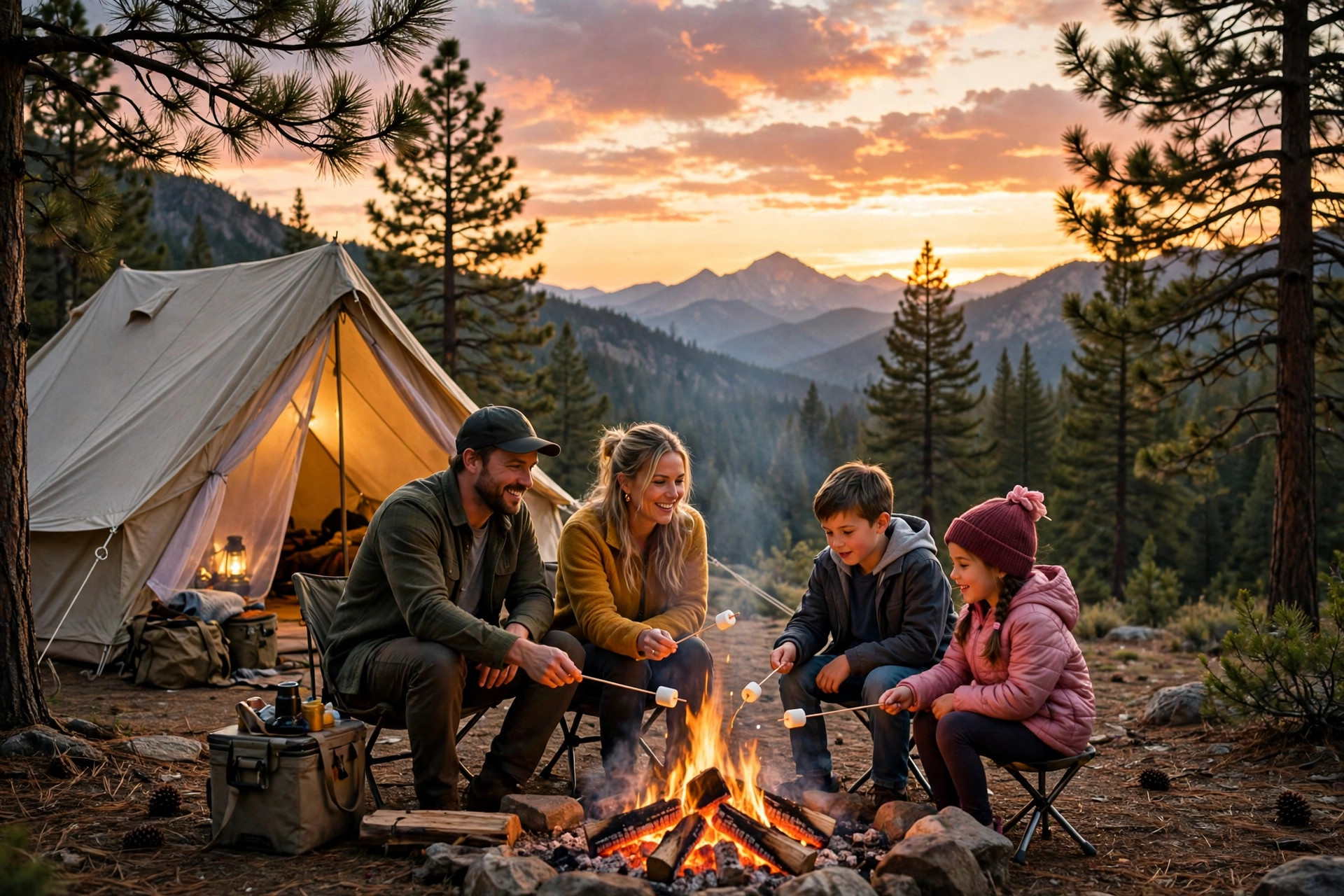
Camping is one of the best ways to escape the daily grind and reconnect with the great outdoors. Whether you’re planning a quiet couple’s getaway or your very first family trip with kids, a little preparation turns a potentially stressful weekend into a trip you’ll talk about for years.
If you’re new to camping, here’s the good news: you don’t need fancy gear or years of experience to have a great time. You just need to nail the basics — shelter, food, safety, and a comfortable night’s sleep — and let the rest unfold. This guide walks you through every essential step so your first camping trip goes smoothly.
Start with the Right Shelter
Your shelter decision shapes your whole trip. For most beginners, a good family tent is the sweet spot: affordable, portable, and easy to set up once you’ve practiced at home. Choose a tent rated for one more person than will actually sleep in it — that extra space makes a huge difference for bags and elbows.
How to Pitch Your Tent Like You’ve Done It Before
- Practice at home first. Set the tent up in your backyard or living room so the first time isn’t at dusk in a mosquito-filled campground.
- Pick level ground clear of rocks, roots, and dips where water would pool. Run your hand over the spot before committing.
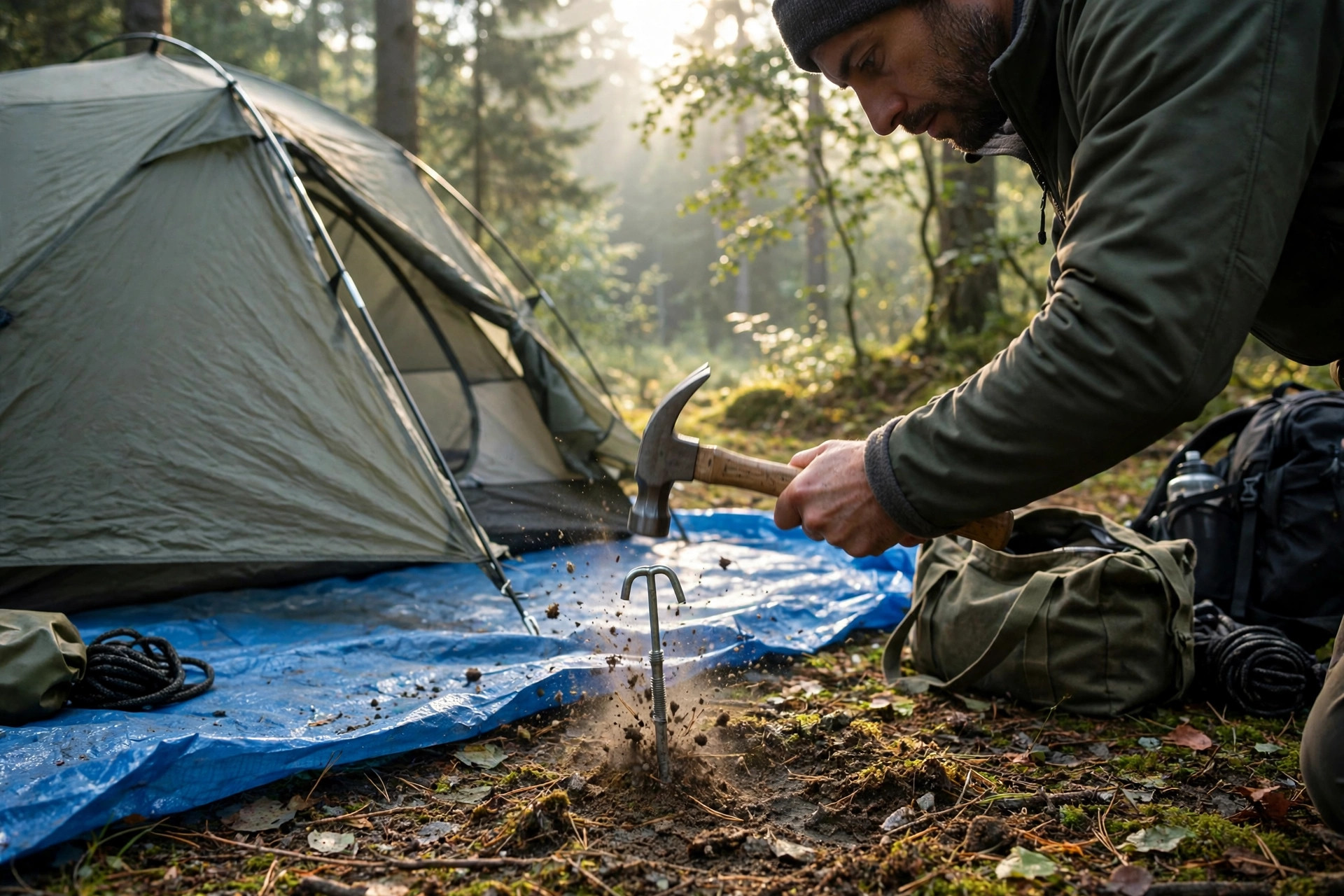
- Lay a footprint or tarp slightly smaller than the tent floor underneath — it protects against moisture and punctures.
- Stake it down properly at a 45-degree angle away from the tent, and re-check stakes after rain or wind.
- Ventilate. Open tent windows and vents to prevent condensation from soaking your sleeping bags overnight.
Tent Camping vs. Cabins, Glamping & RVs
Not sold on sleeping on the ground? You have options. Campground cabins (many with electricity and beds) are a great middle ground for beginners or groups with mixed comfort levels. Glamping setups — pre-pitched canvas tents, yurts, and even treehouses — have surged in popularity as an easy entry point. RV sites offer all-weather comfort with hookups, though they demand more planning and budget. For your first trip, a simple tent at a well-equipped campground still gives you the most authentic experience for the least money.
Choose a Beginner-Friendly Campground
The #1 beginner mistake is picking a remote, primitive site for trip one. Look for a campground with flush toilets, potable water, and an on-site host — especially if you’re camping with kids for the first time. Read recent reviews for notes on noise, shade, and site size.
The Case for Camping Close to Home
More than half of campers stay within 100 miles of home, and for good reason: shorter drive, easy rescue runs for forgotten gear, less planning, and a nearby hospital if anything goes wrong. A state park you’ve driven past a dozen times can feel brand new at sunrise. Check Recreation.gov for reservable sites near you, or browse your state’s parks page — many allow same-week bookings.
When to Venture Farther
Once you’ve got one successful trip under your belt, national parks become irresistible. A first big trip to somewhere like Yellowstone or the Smokies rewards you with scenery you can’t find near home — just book 3–6 months ahead for peak season. The National Park Service site lists campgrounds, fees, and reservation windows for every park.
The Beginner’s Camping Gear Checklist
You don’t need to buy everything at once — borrow or rent the big-ticket items for trip one. Here are the categories that matter:
- Sleep system: tent, footprint/tarp, sleeping bags rated for expected nighttime lows, sleeping pads (these matter more for warmth than the bag does), and a pillow from home.
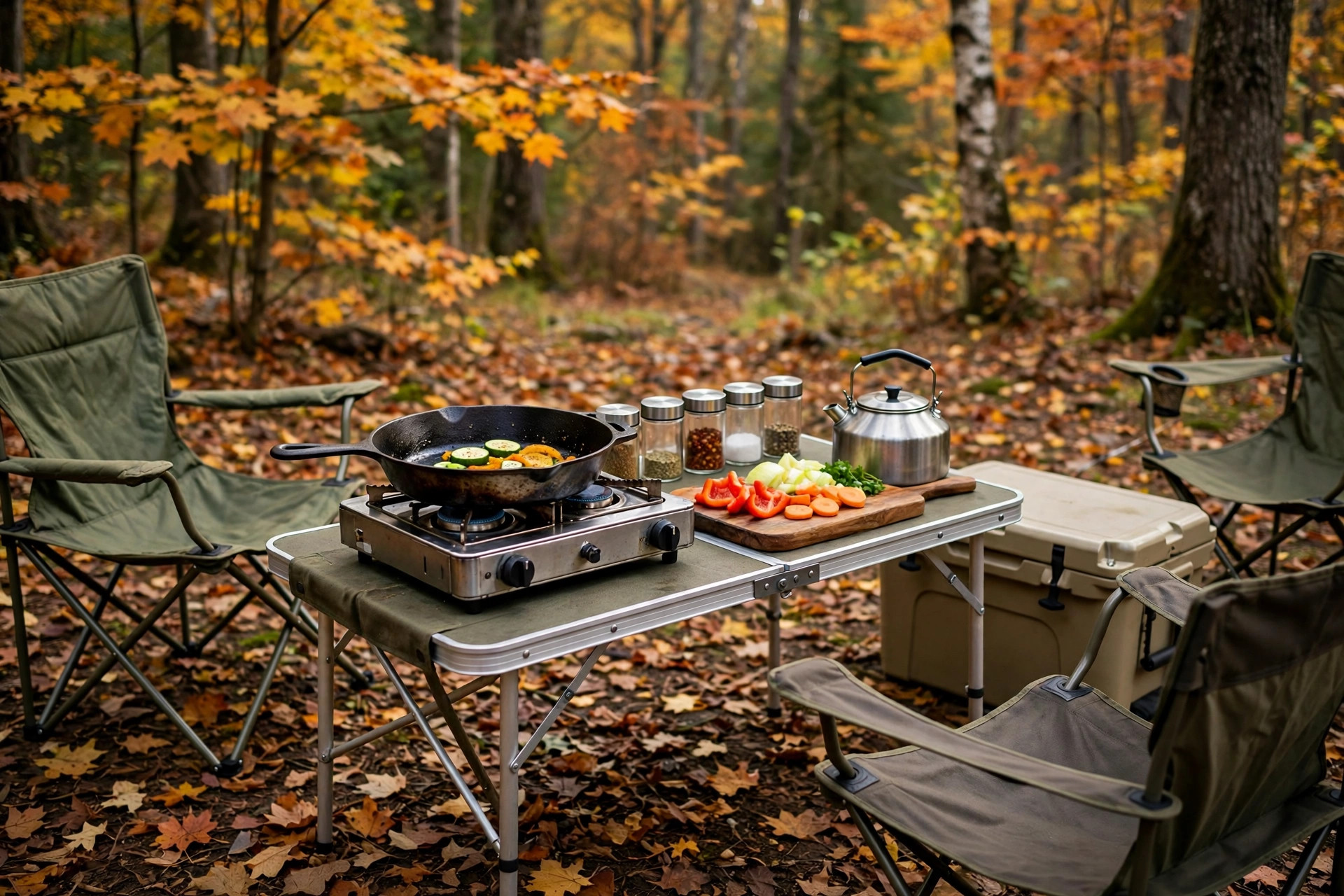
- Camp kitchen: two-burner stove or grill grate, fuel, cooler with ice, pots/pans, utensils, plates, cups, dish soap + bin, and a coffee setup (non-negotiable for many of us).
- Light: headlamps for everyone (plus one lantern for the picnic table) and spare batteries.
- Clothing: dress in layers, pack rain gear even when the forecast is clear, and bring a warm layer — nights run 10–20°F colder than you expect.
- Safety & comfort: first-aid kit, sunscreen, bug repellent, firewood (buy it locally to stop spreading pests), and a folding chair each.
- For kids & pets: favorite snacks, a comfort toy, glow sticks for after dark, leash, waste bags, and their regular food.
Want the full deep-dive? See our 7-day camping meal plan and the 11 beginner mistakes most new campers make — learning them ahead of time is free.
Camp Cooking Without the Stress
Meal planning is where beginners save the most time and money. Before you leave, prep what you can at home: chop vegetables, pre-mix pancake batter, marinate meat in zip bags. At camp, build meals around one-pot or foil-packet recipes so cleanup is fast and you’re back by the fire sooner.
Stock a small camp pantry box that lives ready to go: cooking oil, salt, pepper, garlic powder, hot sauce, coffee, and tea. Pack proteins that pull double duty — eggs for breakfast burritos one morning and fried rice the next. And always bring more snacks than you think you need; trail mix, jerky, fruit, and s’mores fixings keep everyone happy between meals.
First-Timer Tips That Actually Matter
- Do a full gear test at home. Pitch the tent, inflate the pads, light the stove. Discovering a broken zipper in your driveway beats discovering it at midnight in the rain.
- Arrive with daylight to spare. Plan to reach camp at least 2–3 hours before sunset so setup never feels rushed.
- Respect quiet hours (usually 10pm–6am), keep food sealed away from wildlife, and leave your site cleaner than you found it.
- Have a rain plan. A pop-up canopy, card games, and a couple of tent-friendly activities for kids turn a stormy afternoon into a cozy memory instead of a disaster.
- Keep a trip list. Jot down what you forgot, what you never used, and what you’d do differently. By trip three, you’ll be packing like a pro.
Make It Fun for Everyone
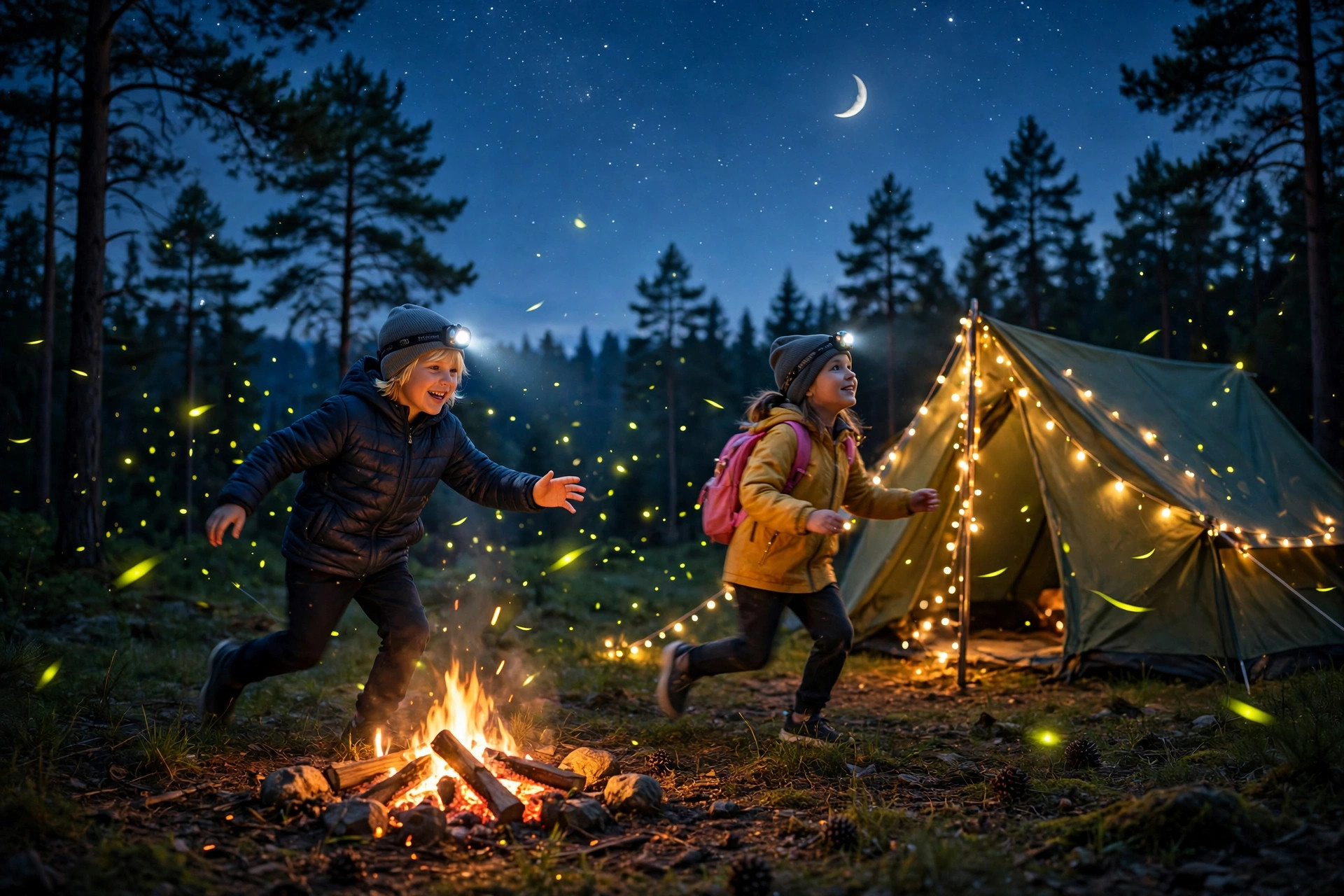
Camping works best when everyone — especially kids — has something to look forward to. Let kids help pitch the tent, gather kindling (safely), and pick the evening’s s’mores toppings. Bring along outdoor games like cornhole or ladder ball for the afternoon, and save the classics for after dark: campfire songs, constellation spotting, and firefly chasing. For more ideas, our stress-free first family camping weekend plan lays out a full hour-by-hour itinerary.
Beginner Camping FAQs
How much does it cost to start camping?
For a first trip, very little if you borrow or rent: a basic tent, sleeping bags, and pads can be rented from outfitters like REI for a fraction of purchase price. Expect to spend under $100–$150 on food, firewood, and campsite fees for a weekend. Buy your own core gear only after you know camping is your thing.
When is the best time of year for a first camping trip?
Late spring and early fall are ideal — mild days, cool-but-comfortable nights, and fewer crowds. Summer works too but book early and prepare for heat. Winter camping is wonderful but not beginner territory; save it for after you’ve dialed in your cold-weather sleep system.
Do I need a reservation, or can I just show up?
Most popular campgrounds — especially state and national parks — require reservations, often months ahead in peak season. Recreation.gov handles federal sites; state park systems usually have their own booking pages. Always reserve before you drive.
What should I do about bears and wildlife?
Never keep food, scented toiletries, or coolers inside your tent. Store everything in your locked vehicle or the campground’s bear boxes, cook away from your sleeping area, and check the campground’s wildlife rules on arrival. In most Eastern US campgrounds, raccoons are a bigger nuisance than bears — but the same food rules apply.
Can I camp if I have a baby or toddler?
Absolutely — families camp with infants all the time. Bring their familiar sleep setup, pack extra layers and diapers, choose a site close to bathrooms, and keep expectations flexible: naps happen when they happen. Our fall camping with kids guide has season-specific tips that work year-round.
