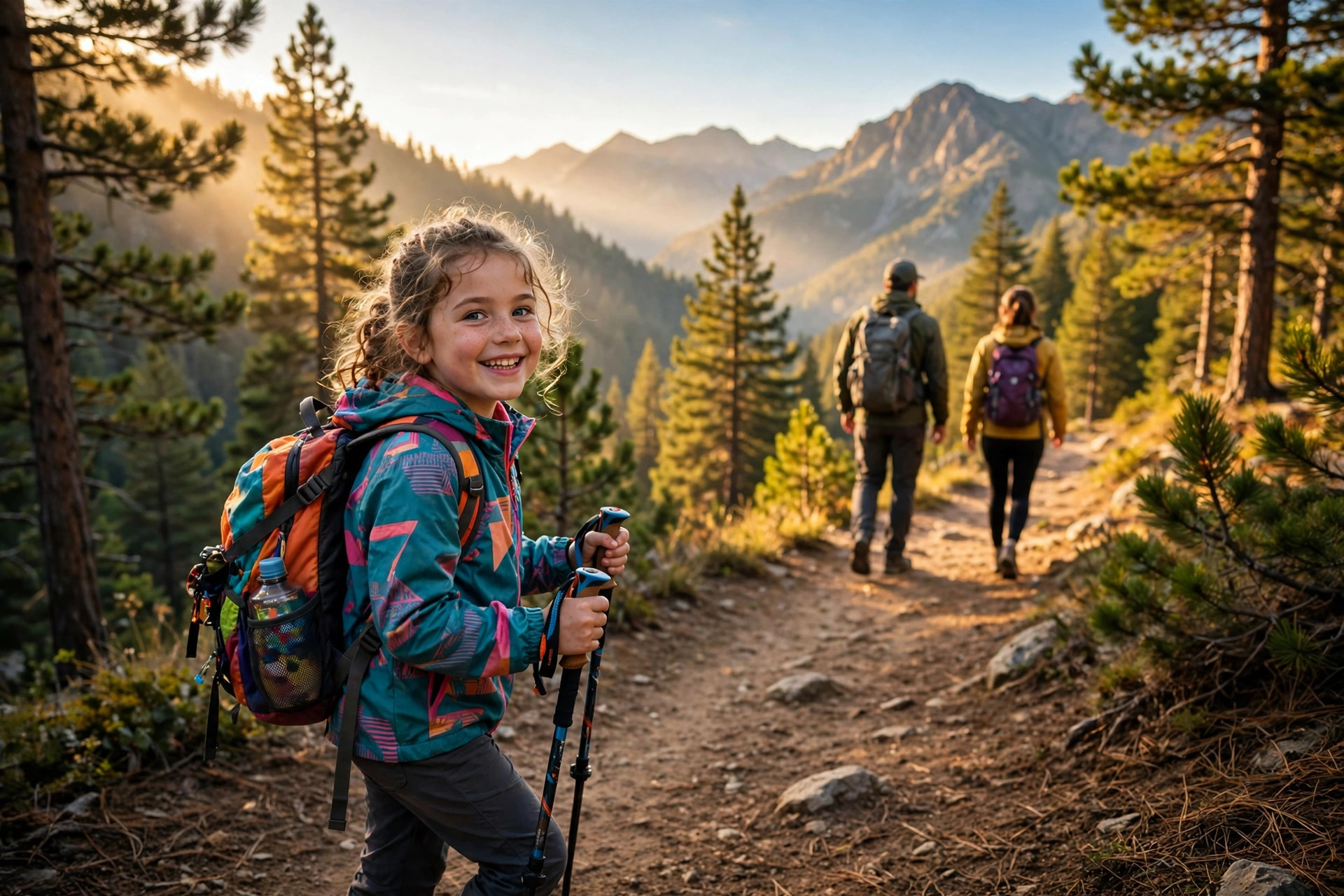
If you have ever watched your child slip on a rocky downhill stretch or run out of steam halfway up a climb, you have probably wondered about trekking poles for kids. Do little hikers actually need them, or are they just a smaller version of adult gear that ends up getting carried by mom and dad? The honest answer is: it depends on your child’s age, the trail, and how the poles fit. Get those three things right, and poles can turn a tired, frustrated hiker into a confident one. Get them wrong, and they become expensive sticks that trip everyone up.
In this guide, Emma walks you through the real decision: when poles help, what age kids can start, how to size them by height, what to look for when buying, and how to teach your child to use them safely — plus the kid-size poles families actually reach for on the trail. Before you head out, it is also worth checking trail conditions and any reservation requirements on Recreation.gov, especially for popular national park and forest trails.
Do Kids Actually Need Trekking Poles?
Short answer: most kids under 5 do not need poles, most kids over 7 benefit from them on real trails, and the ages in between are a judgment call. Poles are a tool, not a toy and not a requirement. They help in specific situations:
- Steep or rocky terrain: Poles give a child two extra points of contact, which means fewer slips on loose rock, wet roots, and downhill grades.
- Longer hikes: On hikes over 2–3 miles, poles spread the work between arms and legs, so little legs tire more slowly.
- Stream crossings and mud: A pole planted ahead tests depth and footing before a small foot commits.
- Confidence: Many nervous young hikers walk taller and faster with poles in hand. The poles feel like “real hiker” gear, and that pride is real motivation.
- Heavy packs: If your child carries their own daypack, poles help balance the extra weight.
On the other hand, poles are the wrong call on flat, easy nature walks, for toddlers who are still mastering balance, and on crowded trails where swinging poles become a hazard to other hikers. If your child would rather scramble, climb, and use their hands, let them — poles are for walking trails, not playgrounds.
What Age Can Kids Start Using Trekking Poles?
There is no official minimum age, but most outdoor educators and pediatric physical therapists suggest waiting until a child can follow multi-step instructions and walk steadily on uneven ground — usually around age 5 or 6. Before that, a child’s arms are better used for balance and catching themselves.
| Age | Poles? | What works best |
|---|---|---|
| Under 5 | Not yet | Free hands for balance; a walking stick found on the trail for fun |
| 5–7 | Yes, on easy trails | One pole or a short pair; flat or gently rolling terrain only |
| 8–10 | Yes | A proper kid-size pair; introduce uphill and downhill technique |
| 11–13 | Yes | Kid-size or short adult poles; longer hikes and rougher terrain |
| 14+ | Yes | Usually ready for adult poles sized to their height |
Height matters more than age. A tall 9-year-old may outgrow kid poles, while a petite 12-year-old may still need them. Always size by height, not by the birthday.
How to Size Trekking Poles for Kids
Sizing is the single most important part of buying poles for a child, and it is also the part most families get wrong. Poles that are too long force a child’s shoulders up and throw off balance; poles that are too short make them hunch over.
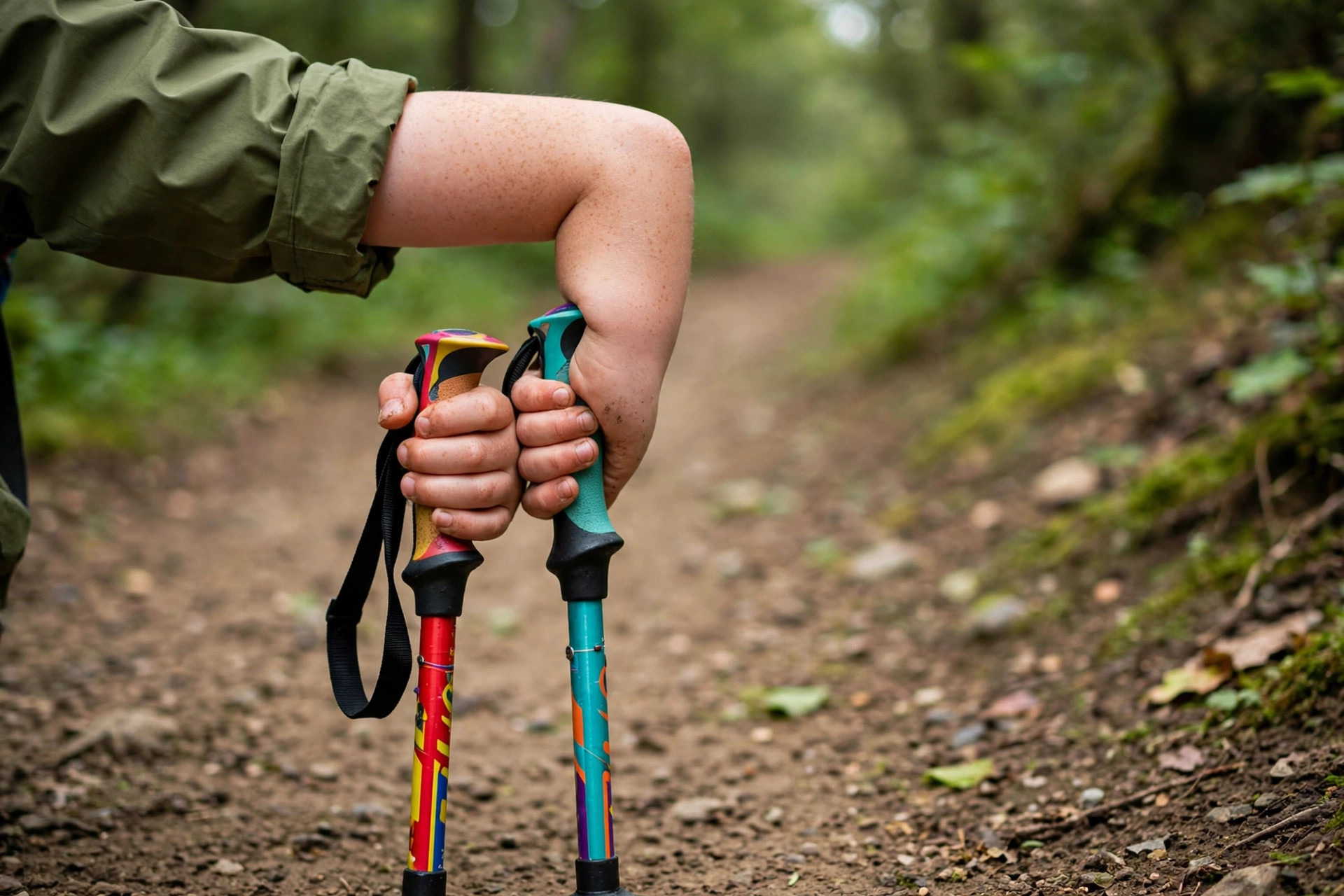
The 90-Degree Elbow Test
Have your child stand on flat ground holding the pole with the tip on the ground beside their foot. Their elbow should bend at roughly 90 degrees — upper arm hanging naturally, forearm level with the ground. If the elbow is much wider than 90 degrees, the pole is too long. If it is much tighter, the pole is too short. Do this test with the shoes they will actually hike in, because thick-soled boots add height.
Kid Pole Length by Height
| Child’s height | Pole length (approx.) |
|---|---|
| 3’0″ – 3’6″ (91–107 cm) | 50–65 cm |
| 3’6″ – 4’0″ (107–122 cm) | 60–75 cm |
| 4’0″ – 4’6″ (122–137 cm) | 70–90 cm |
| 4’6″ – 5’0″ (137–152 cm) | 85–105 cm |
| Over 5’0″ (152 cm+) | 100–120 cm (or adult poles) |
A good rule of thumb used by many hiking families: pole length is about 68% of your child’s height. But always confirm with the elbow test — it beats any chart.
Buy poles with room to grow. Kid-specific poles usually adjust across a wide range (for example, 50–97 cm), so one pair can last several years of growth spurts. Avoid fixed-length poles for growing kids unless they are very cheap and you accept replacing them next season.
7 Things to Look for in Kid-Size Trekking Poles
Not every small pole is a good kid pole. Some are just short adult poles with the same heavy hardware. Here is the checklist we use:
- Light weight: Under 8 ounces (about 225 g) per pole is the sweet spot. Heavy poles tire small arms fast, and tired arms mean dropped poles.
- Small grips: The grip should fit a child’s hand comfortably, not force their fingers to stretch around an adult-size handle. Foam or cork grips are kinder than hard plastic and absorb sweat.
- Easy locks: Flip locks (lever-style) are much easier for kids to operate than twist locks. Your child should be able to adjust their own poles — if only an adult can work the lock, it is the wrong pole.
- Wide adjustment range: Look for at least 40–50 cm of adjustment so the poles grow with your child and can be shortened for uphill and lengthened for downhill.
- Durable material: Aluminum is the best choice for kids — it bends rather than snapping like carbon fiber can, and it survives being dropped on rocks.
- Tips and baskets included: Carbide tips grip rock and dirt; rubber tip covers protect floors and pavement; small baskets stop poles sinking into mud and snow. A pair that includes all three saves a separate purchase.
- Wrist straps that adjust small: Straps should tighten enough for a small wrist. Loose straps are useless; straps that cannot tighten at all are a snag hazard.
If you are building out the rest of your child’s trail kit at the same time, our guides to the best hiking backpacks for kids by age and kids’ hiking boots fit and sizing cover the two items that matter even more than poles.
Best Kid-Size Trekking Poles for Families (2026)
These are the kid-specific poles that show up again and again in family hiking conversations and are built for smaller hands and shorter statures rather than simply being cut-down adult poles. We have not lab-tested every pair ourselves, so treat this as a shortlist to compare — check the current specs, weight, and adjustment range before you buy, because manufacturers change details between seasons.
Black Diamond First Strike — Best All-Rounder for Growing Kids
The First Strike is the most-recommended kids’ pole in family hiking circles, and for good reason: it adjusts from about 26 to 43 inches, which covers roughly ages 3 to 14, and its FlickLock levers are genuinely easy for kids to use. It is a proper four-season pole with interchangeable baskets, so one pair works from summer trails to snowy paths. Best for: families who want one pair to last years. Watch out for: it is heavier and pricier than budget pairs, so it suits committed young hikers more than occasional walkers.
Leki Pathfinder Jr. — Best Premium Fit
Leki builds the Pathfinder Jr. specifically for junior hikers, with a smaller grip and a shorter collapsed length that fits in a kid’s daypack. The build quality is excellent, and the poles feel balanced in small hands. Best for: kids who hike often and parents who want gear that lasts. Watch out for: premium price, and younger kids may need help with the adjustment mechanism at first.
Hiker Hunger Kids Hiking Poles — Best for Little Hands
Designed by a small family company, these poles are built from the ground up for kids roughly 2’6″ to 4’2″ tall (about ages 2 to 9). The grips are kid-sized, the flip locks work with a thumb, and the box includes rubber tips, snow and mud baskets, and a carry bag. Best for: first poles for younger children. Watch out for: taller or older kids will outgrow the height range quickly.
Croosseoutdoors Kids Hiking Poles — Best Budget Purpose-Built Pair
These lightweight aluminum poles adjust from about 50 to 97 cm, weigh roughly 6.5 ounces each, and cover about ages 5 to 14 in a single pair. They are one of the lightest genuinely kid-specific options and include all-terrain baskets. Best for: families who want a capable first pair without a premium price. Watch out for: the grips are basic, so very long days may be less comfortable than foam or cork.
Clostnature Kids Trekking Poles — Best Value Alternative
A close alternative to the Croosseoutdoors pair, with a similar 50–96 cm range and light aluminum build, at a very accessible price. Best for: families buying two pairs for siblings, or a spare pair for friends. Watch out for: check the lock type on the current model before ordering, as budget poles sometimes vary.
Yourjoy Kids Trekking Poles — Best Starter Pair
Yourjoy’s two-pack is a simple, affordable way to introduce kids to poles. The poles are light, collapse small, and come in colors kids actually like — which matters more than adults admit. Best for: trying poles out before investing in a premium pair. Watch out for: best on easy to moderate trails; serious rocky terrain deserves a sturdier pole.
What about just giving them your old adult poles? Collapsed adult poles are usually still too long, too heavy, and too thick-gripped for kids under about 12. For a one-off try on a flat trail it is fine — but if your child likes poles, a kid-size pair is worth it. And remember: the rest of the kit matters too. Our realistic hiking distances by age guide helps you pick a trail length your child can actually finish with poles in hand.
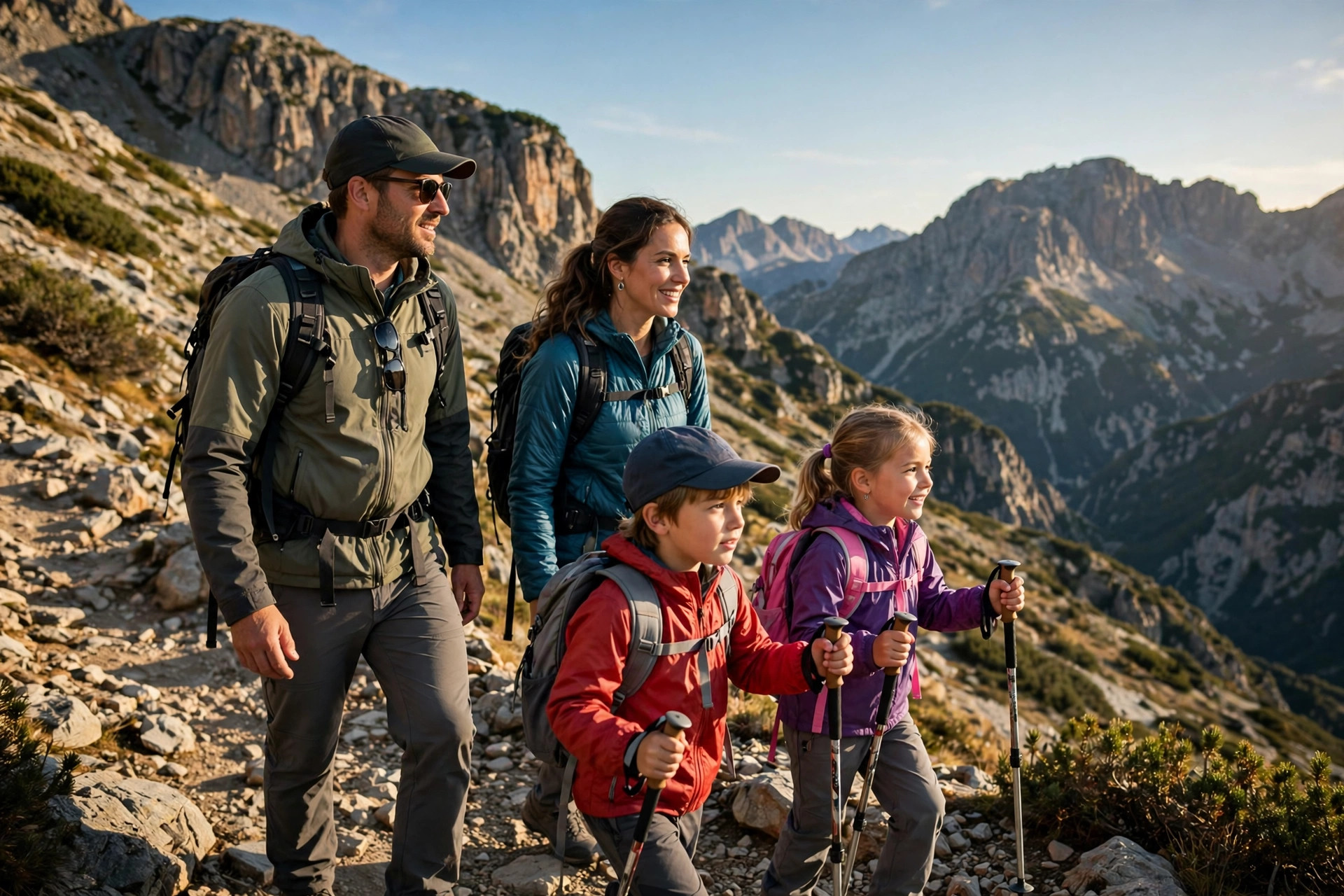
How to Teach Your Child to Use Trekking Poles
Handing a child poles without teaching them is how poles end up dragging on the ground, poking siblings, and getting abandoned at the first rest stop. Spend ten minutes on this before your first real hike:
- Practice at home first. Let your child walk around the yard or a flat park path with the poles before any trail. Adjust the length together using the elbow test.
- Teach the rhythm: opposite arm, opposite leg. Left pole plants when the right foot steps forward, and vice versa. Walk beside them and call it out — “left pole, right foot” — until it clicks. Most kids get it within a few minutes.
- Poles stay in front, tips down. The tips should plant on the ground ahead of the body, not swing sideways or drag behind. Demonstrate the difference between a plant and a drag.
- Uphill: shorten the poles. Shorten by a few centimeters so your child can push down and forward without reaching up.
- Downhill: lengthen the poles. Lengthen slightly so the poles reach the ground ahead on the descent, and teach your child to plant before stepping down.
- Hands through the straps — the right way. Show them to come up through the strap from below so the strap supports the wrist, then grip over the strap. This is also how the pole stays attached if they stumble.
- Practice stopping and starting. Kids need to know how to stop, plant both poles, and wait — especially on narrow trails when other hikers pass.
Make it a game on the first hike: count how many steps they can take in rhythm, or let them be the “trail tester” who checks muddy patches with a pole tip before the family crosses. Our trail safety skills by age guide pairs well with this — poles are one tool in a bigger safety toolkit.
Trekking Pole Safety Rules for Kids
These rules sit alongside general trail safety — the National Park Service hiking safety guidance is a good pre-trip read for the whole family, covering weather, wildlife, and what to carry.
- Tips away from people: Poles are never pointed at siblings, friends, or other hikers. No sword fights, no poking, no exceptions.
- Collapse poles at rest stops and viewpoints: Loose poles on the ground are a tripping hazard for everyone.
- Use rubber tips on pavement and boardwalks: Carbide tips slip on hard surfaces and can damage wooden boardwalks.
- Carry poles when scrambling: On rock scrambles, boulder fields, or anything requiring hands, poles go in the pack or get carried — never in the hands.
- Check locks before every hike: A pole that collapses mid-step can cause a fall. Teach your child to tug-test each section before starting.
- One pole is better than none: If a pole breaks on the trail, keep hiking with one — or none — rather than improvising with a damaged pole.
- Never use poles as a leash or tow: Do not tie poles to a child or use them to pull a tired hiker uphill.
Common Mistakes Parents Make with Kids’ Trekking Poles
Buying adult poles and hoping they fit. Even collapsed, adult poles are too long and heavy for most kids under 12. The grip alone is a giveaway — if your child’s fingers cannot wrap comfortably around it, the pole is wrong.
Setting the length once and forgetting it. Kids grow, trails change, and uphill needs a different length than downhill. Check the elbow test every few months and adjust on the trail.
Skipping the lesson. Poles without technique are just sticks. Ten minutes of practice saves a day of frustration.
Forcing poles on a child who hates them. Some kids genuinely prefer free hands, especially strong young hikers and climbers. Poles are optional. If your child resists after a fair try, put them away and revisit next season.
Buying the cheapest pair available. Ultra-cheap poles often have twist locks that slip, grips that blister, and tips that bend. A mid-range kid-specific pair usually outlasts two cheap ones — and is safer.
When NOT to Give Your Child Trekking Poles
- On flat, paved, or very easy trails where hands are more useful free.
- When your child is still a toddler or unsteady on uneven ground.
- On rock scrambles, ladders, or trails with chains and handrails.
- In very crowded areas where swinging poles endanger others.
- When your child is carrying something in both hands, like a nature collection bag or a camera.
- During water play or at the campsite — poles are for the trail, not for around camp.
And a practical note for the drive home: pack a few trail-tested hiking snacks for kids — poles help with energy, but nothing replaces food and water on a long hike.
Frequently Asked Questions
What age should a child start using trekking poles?
Most kids are ready around age 5 or 6, when they can follow instructions and walk steadily on uneven ground. Kids aged 8 and up get the most benefit, especially on hilly or rocky trails. Height matters more than age — always size with the 90-degree elbow test.
Do kids need one pole or two?
Two poles give balanced support and the best rhythm, and that is what we recommend for real hiking. One pole is fine for younger kids just learning, or on easy flat trails where a single pole acts as a walking stick. If your child keeps dropping one pole, start with a single pole and add the second later.
Can kids use adult trekking poles?
Usually not well. Even fully collapsed, adult poles are generally too long and heavy for children under about 12, and the grips are too thick for small hands. Teens over 5 feet tall can often use adult poles sized to their height — just run the elbow test first.
Are trekking poles safe for kids?
Yes, when they are sized correctly, the locks are checked, and kids learn basic rules — tips down, tips away from people, poles collapsed at rest stops and on scrambles. The biggest risks come from poles that are too long or locks that slip, both of which are avoidable with a quick check before each hike.
How long should kids’ trekking poles be?
Use the 90-degree elbow test: with the pole tip on the ground, your child’s elbow should bend at about 90 degrees. As a rough guide, pole length is about 68% of your child’s height — for example, a child 4 feet tall needs poles around 80–85 cm. Buy adjustable poles with room to grow.
Do trekking poles actually help kids hike farther?
For many kids, yes — poles spread effort between arms and legs, improve balance on rough ground, and give nervous hikers confidence, which often translates into longer, happier hikes. They are not magic, though: realistic distances, snacks, water, and rest breaks still matter more than any gear.
The Bottom Line
Trekking poles for kids are worth it when the child is old enough (usually 5–6+), the trail is hilly or rocky enough to need them, and the poles are actually sized for a small hiker. Start with a light, kid-specific, adjustable pair, teach the opposite-arm rhythm in the yard before the trail, and set the safety rules early. Done right, poles do not just help your child hike farther — they help your child feel like a real hiker. And a child who feels like a hiker is a child who asks to go again next weekend.
