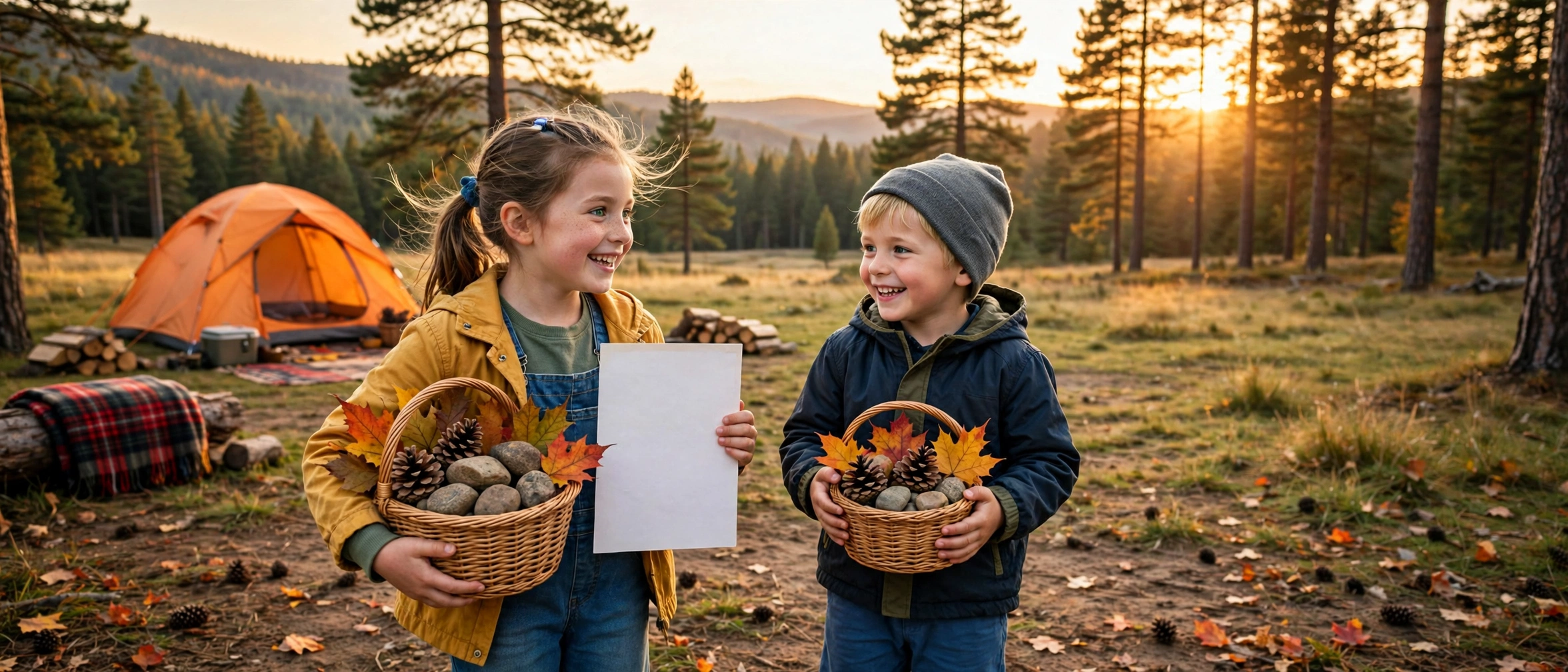
A camping scavenger hunt for kids is one of the easiest ways to turn a slow afternoon at the campsite into a real adventure. You need nothing more than a list, a paper bag, and thirty minutes — and kids who were whining “I’m boooored” five minutes ago will be sprinting from tree to tree with genuine purpose. Below you’ll find 30 kid-tested camping scavenger hunt ideas, four different hunt formats matched to ages 2–14, setup steps that take five minutes, a free printable checklist, and the safety and Leave No Trace rules that keep the game fun without harming the campsite.
Why a Scavenger Hunt Beats Just “Go Play Outside”
Open-ended outdoor play is wonderful, but it has a failure mode every parent knows: after twenty minutes, the novelty of sticks wears off. A scavenger hunt adds three things kids crave — a goal, a little mystery, and a way to “win.” It also quietly builds skills: observation (noticing animal tracks), categorization (sorting finds by color or texture), and patience (looking under the third log, not just the first).
The benefits at a glance
- Zero gear: no toys to pack, charge, or lose — great for a lighter family camping packing list.
- Works at any campsite: forests, deserts, beaches, and even your backyard all qualify.
- Scales by age: toddlers match colors; tweens crack riddles.
- Burns real energy: expect 30–60 minutes of active, focused movement.
- Screen-free by design: pair it with other screen-free camping games for a full no-device day.
How to Set Up a Camping Scavenger Hunt in 5 Minutes
1. Pick a hunt format for your kids’ ages
Choose from the four formats in the next section — classic list for most ages, sensory hunt for toddlers, photo hunt for teens, riddle hunt for ages 9+.
2. Set the boundaries
Walk the search area yourself first and define clear limits: “between our tent and the big fallen log,” for example. Keep kids within sight and sound. The National Park Service uses the same principle in its Junior Ranger programs — exploring inside clear boundaries — and their kid-friendly guides are worth browsing before your trip.
3. Decide: collect or spot?
Collecting works for common, abundant items (fallen leaves, acorns, smooth pebbles). But many finds should be “spot it, don’t grab it” — a bird, a mushroom, an animal track. This protects the campsite and teaches Leave No Trace thinking early.
4. Give everyone a bag and a buddy
A small paper bag per child keeps treasures together. Kids under 6 hunt with a buddy or a parent. A cheap plastic bucket from the dollar store also works as a “treasure chest.”
5. Agree on the finish
Set a time limit (30 minutes is the sweet spot) or a goal (first to finish the list). Announce a small prize — first pick of the marshmallows, choosing the bedtime story, or a “Chief Explorer” sticker.
4 Scavenger Hunt Formats by Age
Format 1: Classic Nature List (ages 4–10)
The traditional checkbox list. Keep it to 10–15 items so it stays achievable. Mix easy finds (a red leaf) with tricky ones (a heart-shaped rock) so every child gets wins and challenges.
Format 2: Sensory Hunt (ages 2–5)
Instead of named objects, toddlers find things by sense: “something smooth,” “something that makes a sound,” “something that smells good.” Add picture symbols next to each item on their sheet so non-readers can play independently.
Format 3: Photo Hunt (ages 10–14)
Teens photograph each find instead of collecting it — this is your “too cool” teenager engagement tool. Bonus points for the funniest animal-track photo or the most creative leaf arrangement. Works beautifully alongside a nighttime stargazing session as the day-two activity.
Format 4: Riddle Hunt (ages 9+)
Write clues as short riddles on slips of paper and hide them in order: “I’m made of wood, I crack and glow — follow me where the marshmallows go.” Each answer leads to the next clue. Hide 8–10 clues around camp.
30 Camping Scavenger Hunt Ideas for Kids
These 30 items cover forests, campgrounds, beaches, and deserts. The table marks each find with its best hunt format and whether it’s a collect item or a spot item (look, don’t touch). Pick 12–15 to build your list.
| # | Find | Type | Best for |
|---|---|---|---|
| 1 | A pinecone | Collect | Classic, Sensory |
| 2 | A red or orange leaf | Collect | Classic, Sensory |
| 3 | A smooth pebble | Collect | Classic, Sensory |
| 4 | A stick shaped like the letter Y | Collect | Classic, Riddle |
| 5 | An acorn with its cap on | Collect | Classic |
| 6 | A heart-shaped rock | Collect | Classic, Photo |
| 7 | A feather | Collect | Classic, Photo |
| 8 | Bark with an interesting pattern | Spot | Photo, Sensory |
| 9 | Animal tracks in mud or sand | Spot | Classic, Photo, Riddle |
| 10 | A bird’s nest (from a distance) | Spot | Photo, Riddle |
| 11 | Something you can hear but not see | Spot | Sensory, Classic |
| 12 | Something rough and something smooth | Collect | Sensory |
| 13 | A leaf bigger than your hand | Collect | Classic, Sensory |
| 14 | A mushroom or fungus (don’t touch) | Spot | Classic, Riddle |
| 15 | Evidence of a woodpecker (holes in bark) | Spot | Riddle, Photo |
| 16 | Five different-colored leaves | Collect | Classic, Photo |
| 17 | A spiderweb with morning dew | Spot | Photo, Sensory |
| 18 | A seed that can travel on the wind | Collect | Classic, Riddle |
| 19 | A camouflaged insect | Spot | Photo, Riddle |
| 20 | Something round and something square in nature | Collect | Sensory, Classic |
| 21 | A pine needle longer than your finger | Collect | Classic |
| 22 | Clouds in two different shapes | Spot | Sensory, Photo |
| 23 | A rock with sparkles (mica or quartz) | Collect | Classic, Riddle |
| 24 | Something that floats on water | Spot | Sensory, Classic |
| 25 | A place an animal might sleep | Spot | Riddle, Classic |
| 26 | A campsite “landmark” (fire ring, trail sign) | Spot | Classic, Photo |
| 27 | Something a squirrel would eat | Spot | Riddle, Classic |
| 28 | The tallest tree you can see | Spot | Sensory, Photo |
| 29 | A sound made only by nature | Spot | Sensory |
| 30 | Your favorite find — draw it! | — | All formats |
Free Printable Scavenger Hunt Checklist
Want the list on paper? Here’s a print-ready version you can copy or screenshot. Print one copy per child, hand out a pencil, and you’re set.
☐ Camping Scavenger Hunt Checklist (12-item version)
- ☐ A pinecone
- ☐ A red or orange leaf
- ☐ A smooth pebble
- ☐ A Y-shaped stick
- ☐ An acorn with its cap on
- ☐ A feather
- ☐ A leaf bigger than your hand
- ☐ A heart-shaped rock
- ☐ Animal tracks in mud or sand (look, don’t touch)
- ☐ Something that makes a sound you can hear
- ☐ A seed that floats on the wind
- ☐ Your favorite find — draw it in the box!
Explorer name: _______________ Date: _______________ Campsite: _______________
Safety Rules Every Family Needs
- Scout first: walk the area before the kids do and remove hazards like broken glass, wasp nests, or unstable branches.
- Stay in sight: set clear boundaries and keep kids within sight or earshot at all times.
- Look, don’t touch: mushrooms, wild berries, insects, and wildlife are observation-only. Teach this as part of the game rules.
- Check campground alerts first: look up your campsite on Recreation.gov for wildlife warnings, fire restrictions, or closures before you plan the hunt area.
- Whistle rule: if anyone feels lost, they stop and blow a whistle three times instead of wandering. Three blasts = “come find me.”
Leave No Trace: The Golden Rule of Scavenger Hunts
The best scavenger hunts leave the campsite exactly as you found it. Follow these principles so the next family finds the same treasures you did:
- Collect only abundant items — fallen leaves, acorns, common pebbles. Never pick living flowers, strip bark, or take rocks from creek beds.
- Put back what you don’t keep: sort the treasures at the end and return collected items to where you found them.
- Stay on durable surfaces: hunt on trails and established campsite ground, not through fragile meadows or restoration areas.
- Pack it out: the bags, checklists, and snack wrappers come home with you.
Make It a Rainy-Day Backup Plan
If the weather turns, move the hunt into the tent: hide 15 small items around the tent and have kids find them from a written list, or switch to tent-friendly activities like card games and storytelling. A scavenger hunt can also buy you 30 quiet minutes during setup or dinner prep — parents of toddlers, take note.
Frequently Asked Questions
What ages can do a camping scavenger hunt?
Ages 2 and up. Toddlers do sensory hunts (find something smooth, something red), ages 4–10 do classic checklist hunts, ages 9+ love riddle hunts, and teens engage best with photo challenges.
How long should a kids’ scavenger hunt last?
Plan for 30–45 minutes. Shorter hunts keep younger kids engaged; you can always run a second round with a harder list if energy is high.
What do I need to bring for a scavenger hunt?
Almost nothing: a printed list or phone, a pencil, and a paper bag per child. A magnifying glass and a cheap clipboard make it feel official for younger kids.
Is it okay for kids to collect nature items on a scavenger hunt?
Collect only abundant, fallen items like leaves, acorns, and common pebbles — never living plants, bark, or items from sensitive areas. Better yet, mix “collect” items with “spot it” items and return collected treasures when the game ends.
Can you do a scavenger hunt in the backyard?
Absolutely — a backyard or local park hunt works the same way and is a great practice run before a real camping trip. Hide a few extra items to guarantee wins for younger kids.
