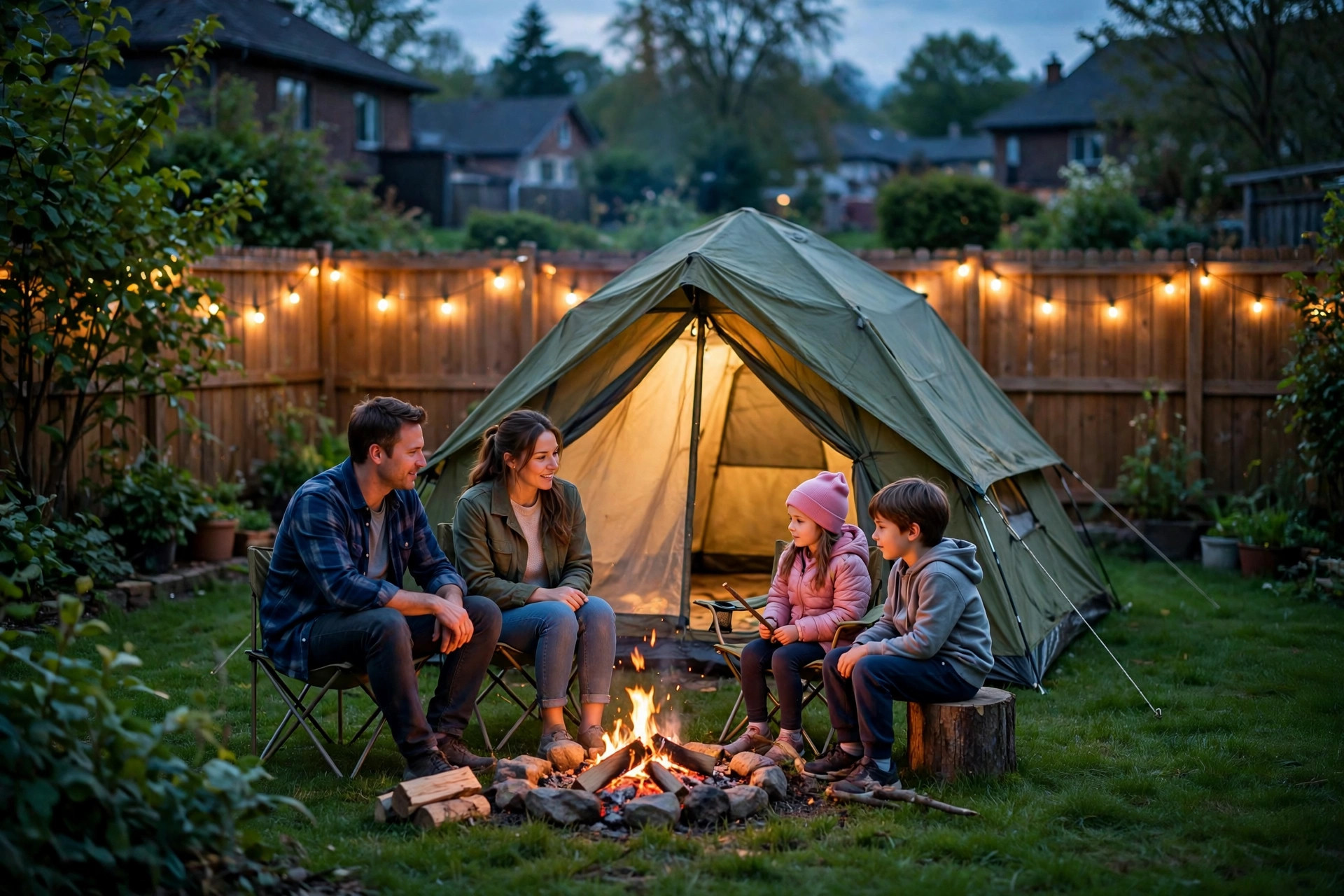
Before you book a campsite, drive two hours, and discover your six-year-old won’t sleep in a tent, do a backyard camping night with kids first. Pitch the tent on your own lawn, cook dinner over a fire pit or grill, sleep out under the stars, and learn everything about how your family camps — with a warm bed and a bathroom just a few steps away if anything goes wrong. This guide gives you the full backyard camping with kids practice-run plan: what gear to test, a step-by-step evening schedule, activities that keep kids engaged, and how to tell when your family is ready for a real campground.
Why a Backyard Campout Is the Best First Step
A first real camping trip has a lot of moving parts: a new tent you’ve never pitched, sleeping gear you’ve never tried, a bedtime routine disrupted by strange noises, and kids who may have strong feelings about all of it. A backyard campout with kids removes the stakes. You can practice every skill that matters — pitching the tent, organizing gear, cooking outside, falling asleep outdoors — and recover instantly if something fails.
Think of it as a dress rehearsal. The goal is not a perfect night. The goal is to find the problems at home: the tent that’s missing a pole, the sleeping bag that isn’t warm enough, the toddler who gets spooked by the dark, the bedtime routine that falls apart without the usual cues. Every one of those discoveries is free in your backyard and expensive at a campground two hours from home.
It also builds kids’ confidence. Kids who have already slept in a tent, eaten dinner outside, and used a flashlight to find the bathroom at midnight walk into their first real family camping trip as experienced campers instead of nervous beginners.
Your Backyard Camping Checklist: Use What You Have
You don’t need to buy anything for a practice run. The whole point is testing what you already own before you spend money on upgrades. Gather:
- Tent — pitch it exactly as you would at a campground, footprint and rainfly included
- Sleeping bags or bedding — whatever your kids will actually sleep in on the trip
- Sleeping pads or air mattress — comfort matters more than weight in the backyard
- Pillows and comfort items — the same stuffed animals and blankets as home bedtime
- Flashlights, headlamps, or lanterns — one per person, plus a night light for the tent
- Bug repellent — check the label for age limits for young children
- Camp chairs and a picnic blanket — your gathering spot for dinner and stories
- Dinner supplies — see the family camp kitchen setup for gear to practice with
- Marshmallow roasting sticks — long, food-safe, and handled by adults only
- Warm layers — one extra layer per person beyond what the evening forecast suggests; our layering system works at home too
- A watch or phone alarm — for timing how long the night really lasts for your kids
If you’re missing something major, note it on a running list during the night. That list becomes your shopping list — and it’s far cheaper to discover a missing item at home than at a campground store.
Step-by-Step: Running the Perfect Practice Night
Timing matters. Start early enough that setup happens in daylight, and treat the evening like a real camping schedule so you get honest results.
Afternoon: Set Up Camp Together
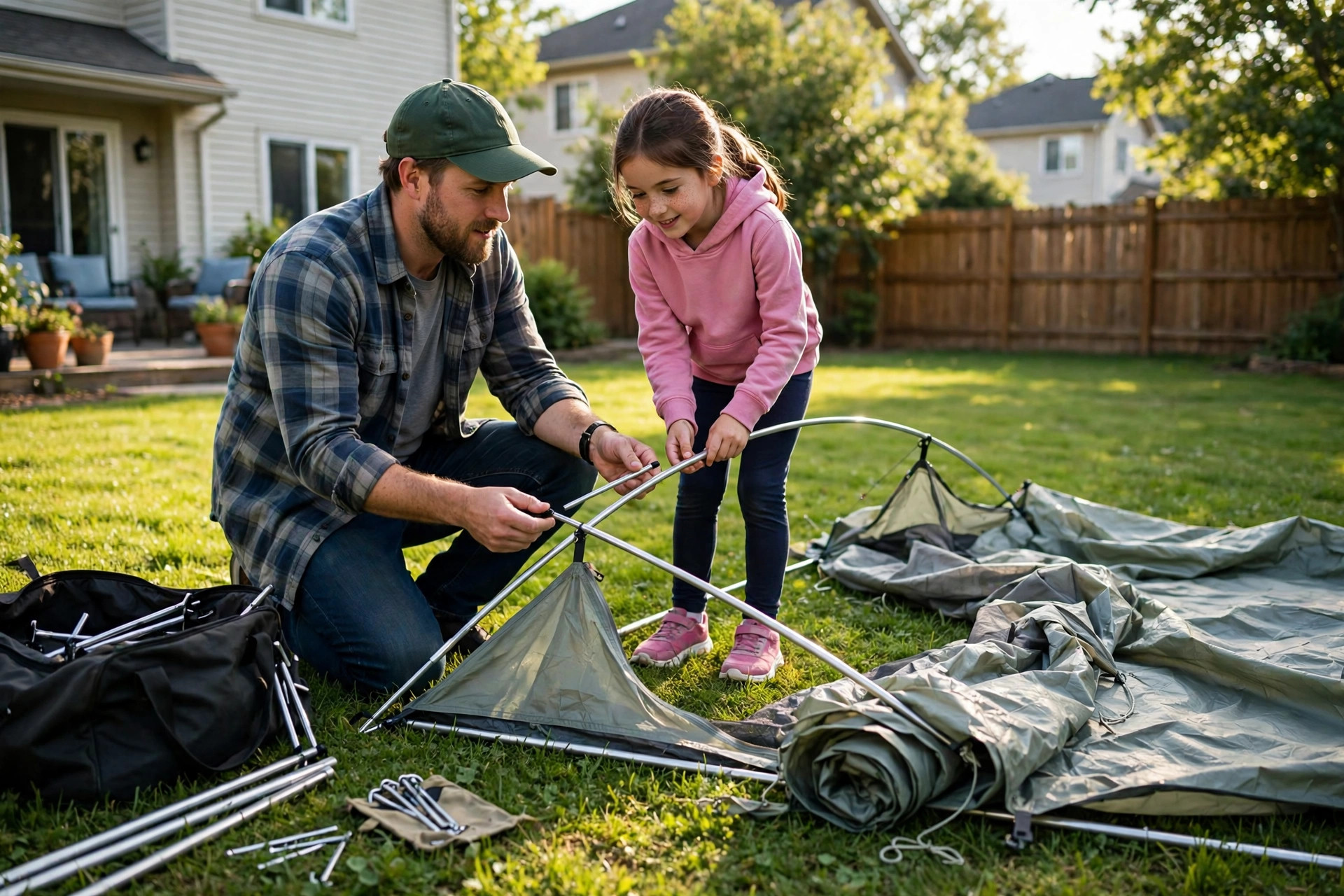
Start around 4–5 PM. Lay out every piece of gear and let the kids help — even toddlers can hold stakes or unroll sleeping bags. Pitch the tent slowly and read the instructions together; this is practice, not a race. Time how long setup takes. If it takes 45 minutes with two adults in the backyard, it will take an hour at a campground after a long drive. That knowledge alone is worth the evening.
Next, do a gear audit: check every zipper, inflate every pad, test every light, and count your tent stakes. Walk the yard like a campsite inspector. Is the tent on flat ground? Is there a low spot where water would pool in rain? Could you stake it down properly here, the way you would at a real site? These are the setup skills every beginner needs, and they’re free to learn at home — unlike many of the mistakes first-time campers make on real trips.
Evening: Dinner, Activities, and the Campfire
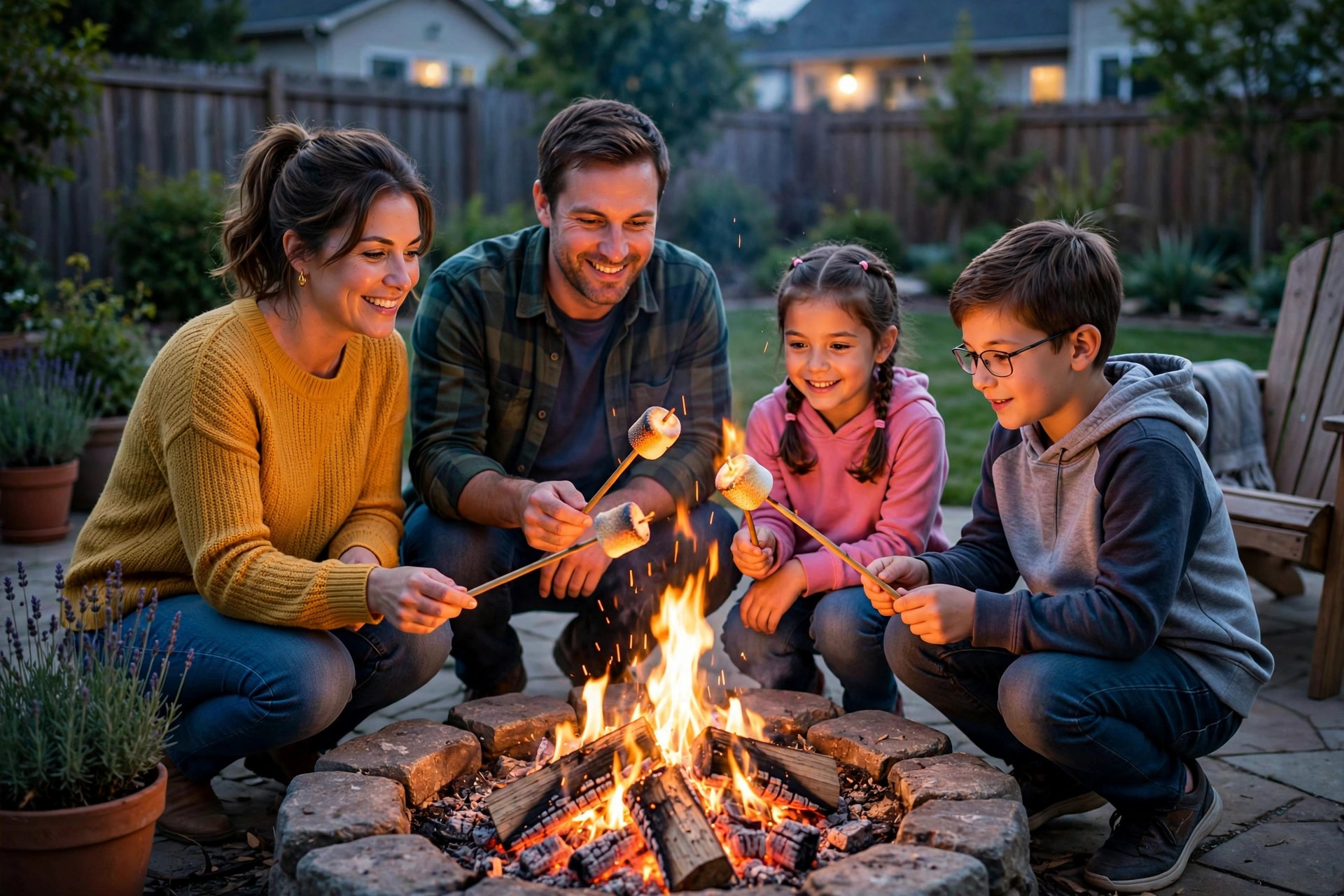
Cook dinner the way you plan to cook at a campground. If you’re bringing a camp stove, fire it up on the patio and cook a real meal. If your plan is a campfire, practice fire safety with the kids now: the fire ring stays on the adult side, roasting sticks are only handled seated, and no one runs near the flames. Keep a bucket of water nearby — the same rule you’ll follow everywhere.
Then give the kids real camping evening activities: a scavenger hunt around the yard, stargazing with kids once it gets dark, flashlight tag, or campfire stories. Notice what holds their attention and what flops. The activities that work in the backyard will work even better at a campground, and you’ll arrive with a proven playbook instead of guesses.
Bedtime: The Real Test
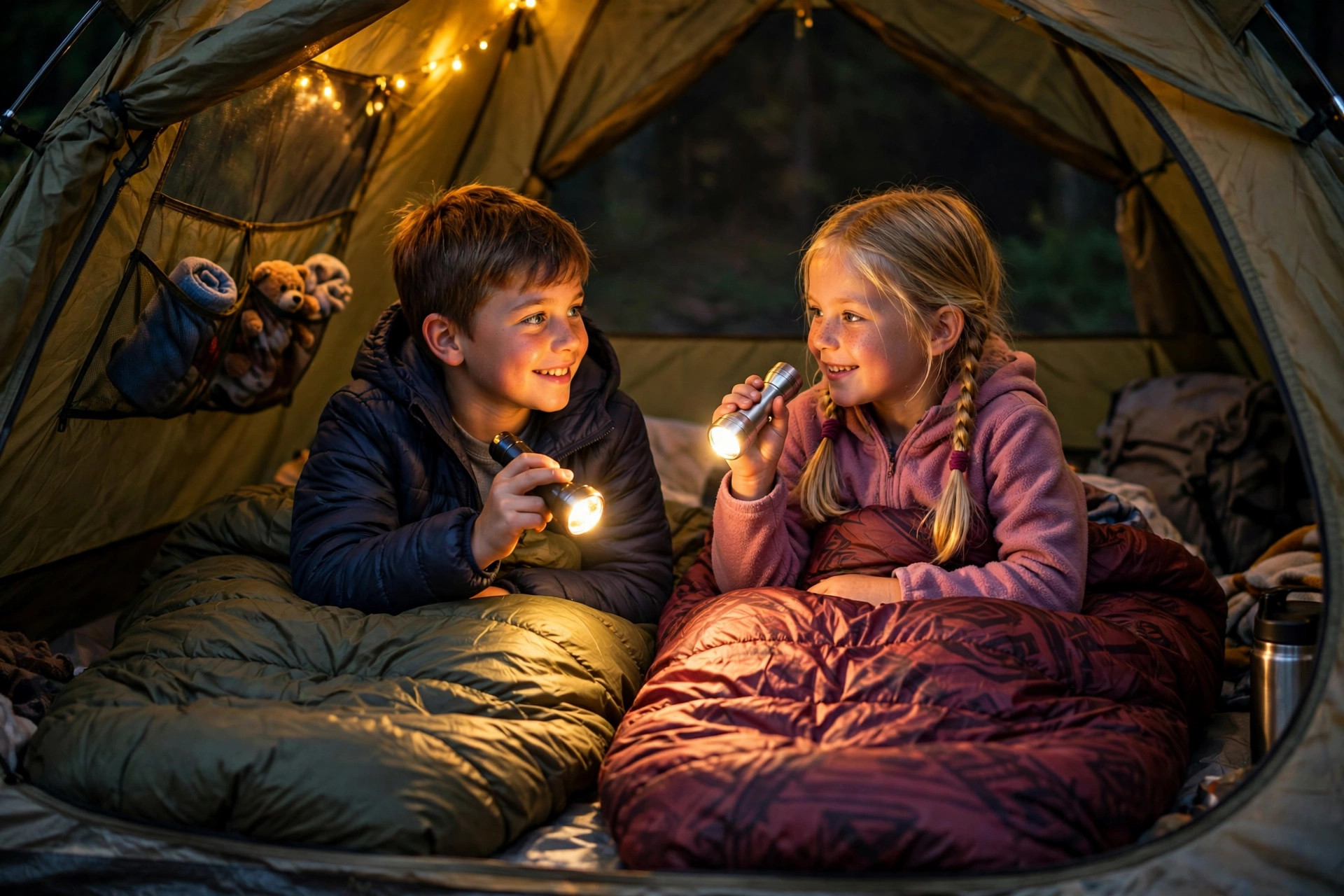
This is why you’re doing this. Keep your home bedtime routine as close to normal as possible — same pajamas, same story, same comfort items, roughly the same time. Then turn off the house lights and settle into the tent. Notice everything:
- How long does it actually take your kids to fall asleep outdoors?
- Do street sounds, neighbors, or wildlife wake them up?
- Is anyone cold? Uncomfortable? Scared of the dark?
- How many times does someone need the bathroom, and how does that go with a flashlight?
- Can you hear each other in separate sleeping areas of the tent?
Agree on an escape plan in advance: anyone can go inside to sleep in their own bed, no shame, no drama. Kids who know they have an out relax faster — and usually end up staying in the tent all night.
What to Watch and Learn: The Morning Debrief
The most valuable part of the practice run happens over breakfast. Sit down together and ask direct questions:
- What was the best part of the night? What would you change?
- Did you sleep warm enough? What did your pillow and pad feel like?
- Was anything scary, and what would make it less scary next time?
- Did we have everything we needed? What’s missing?
- How did the tent setup go — could we do it faster?
Write down the answers. A debrief turns vague impressions into an actionable punch list: buy a second lantern, replace the leaky air mattress, pack earplugs for the light sleeper, bring the toddler’s white noise machine. Do this twice — one practice run teaches you things, two practice runs let you verify the fixes.
12 Backyard Campout Activities Kids Actually Love
Activities double as skill practice. Pick 3–4 per night:
- Backyard scavenger hunt — a checklist of leaves, rocks, bugs, and night sounds; the same game works on hiking trails
- Stargazing — bring a constellation app and spot three constellations together
- Flashlight tag — classic, and it burns off pre-bedtime energy
- Campfire stories — each person adds one sentence; let the kids lead
- S’mores with a twist — try peanut butter cups or cookies instead of graham crackers
- Tent-pitching race — kids versus parents with the instructions
- Nature journal — draw what you hear and see after dark
- Nighttime sound map — everyone marks what they hear on a paper map of the yard
- Shadow puppets — a headlamp and the tent wall are all you need
- Cook dinner together — kids stir, wrap foil packets, and assemble their own plates
- Morning bird walk — step out of the tent at sunrise and identify three birds
- Pack-up drill — time the family striking camp; make it a game with a reward
Common Backyard Camping Mistakes (and Fixes)
Treating it like a party, not practice. If you string up patio lights, blast music, and order pizza, you learn nothing about real camping. Keep it authentic: tent, fire or stove, flashlights, outdoors.
Skipping the rainfly. Pitch the tent exactly as you would at a campground, rainfly included, even on a clear night. Practice in good weather is the only way to learn before bad weather forces the lesson.
Letting kids “help” with the fire. Backyard or backcountry, the fire rules are identical: adults handle flames, kids sit at a safe distance, and everything stops if anyone gets rowdy. Set the standard now.
Abandoning the bedtime routine. The point is to test whether the routine survives outdoors. Keep pajamas, brushing teeth outside, the story, and the comfort items — then observe what breaks.
Only doing it once. One backyard night finds the problems. A second night — after you’ve fixed them — proves your family is actually ready. Two runs is the magic number.
How to Know Your Family Is Ready for a Real Campground
After two practice runs, run through this readiness checklist:
- Tent setup takes under 30 minutes without arguments
- Everyone slept at least six hours in the tent
- Kids can handle the dark, the sounds, and the bathroom trips with a flashlight
- You know exactly what’s on the packing list — and you’ve tested every item
- You’ve cooked a full dinner outside without stress
- Everyone wants to do it again
That last one is the real test. If the kids are asking when the next campout is, you’re ready. Start with an easy, close-to-home campground — our full family camping checklist covers what to pack for the real thing — and pick a site with real bathrooms for the first trip. Save the backcountry for trip three.
Ready to go further? The National Park Service’s official camping guide explains campground types and reservation rules across the parks, and Recreation.gov is where you’ll book most federal campsites. Both are worth bookmarking before your first trip.
FAQ
What age is best for a first backyard campout?
There’s no minimum — even babies can join if you keep it short and stay close to the house. For toddlers, start with just dinner and stories in the tent, then sleep inside; work up to a full night. School-age kids usually handle a full backyard night on the first try, and the escape plan (sleeping inside) removes all pressure.
Do I need a fire pit for backyard camping with kids?
No. A camp stove on the patio, a grill, or even a lantern-lit picnic dinner works fine. If you do use a fire pit, check local burn rules first, keep a bucket of water nearby, and enforce the same fire safety rules you’d use at a campground.
How do I get kids to sleep in a tent instead of asking to go inside?
Paradoxically, the escape plan helps: tell them they can sleep inside anytime, and most kids relax and stay. Keep the home bedtime routine intact, bring all comfort items, add a night light, and do a calm wind-down activity like stories or stargazing before lights-out.
Should I buy gear before or after the backyard practice run?
After. That’s the entire point — the practice run reveals what you actually need versus what you assumed. Many families discover their old tent is fine but their sleeping pads need replacing, or vice versa. Test first, buy second.
What if it rains during our backyard campout?
Treat it as a bonus lesson: it’s the best possible practice for real-trip weather. Check that the rainfly is pitched correctly and watch for leaks — or bail inside guilt-free and note what you’d have needed. Never force scared kids to tough out a storm; the goal is confidence, not endurance.
