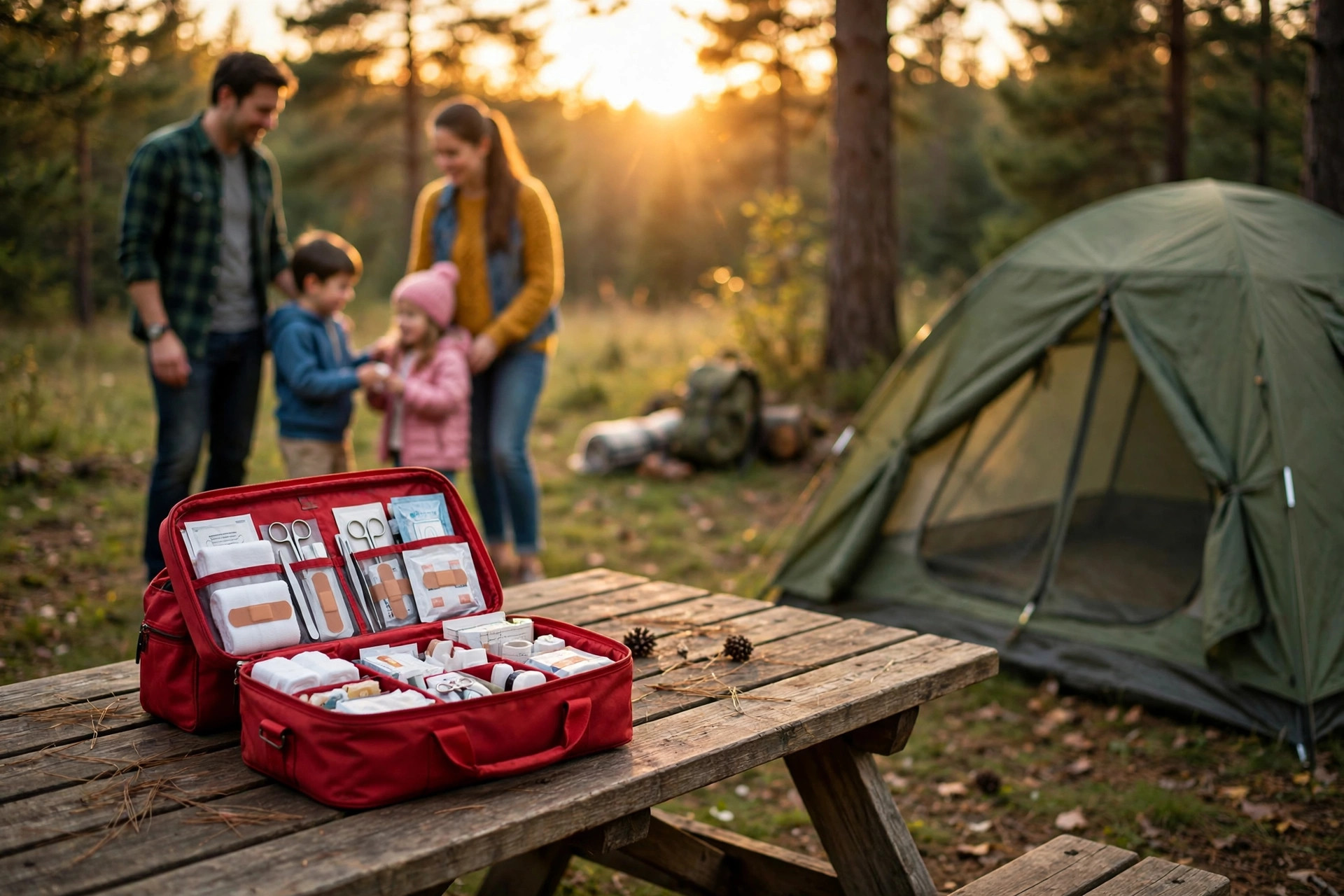
A scraped knee at the playground is a five-minute job. A scraped knee at a campsite, two miles from the car and an hour from the nearest pharmacy, feels very different. That is exactly why a family camping first aid kit for kids deserves more thought than tossing a few bandages into a zip bag the night before you leave.
This guide gives you a complete, packable checklist built around real camping injuries: blisters, splinters, bug bites, sunburn, stomach upsets, and the occasional bumped head. You will learn what to pack for each age group, how to organize it so you can find things in the dark, and what to do in the first few minutes when something happens. Nothing here replaces professional medical care, and we will be clear about when to stop treating and start heading for help.
Why a Regular First Aid Kit Is Not Enough for Kids
Most off-the-shelf first aid kits are designed for adults. The doses are wrong, the sizes are wrong, and the contents assume the patient will sit still and describe their symptoms clearly. Children do none of those things reliably, especially outdoors.
Kids get hurt differently at camp. They run on uneven ground in sandals, grab plants without looking, wade into streams, and eat things they probably should not. Their skin blisters faster, they dehydrate faster, and a small cut that an adult would ignore can become infected quickly in warm, dusty camp conditions. A kit built for kids accounts for all of that: child-sized doses, supplies sized for small fingers and knees, and extras that keep a frightened child calm while you work.
The Three Jobs of Your Kit
Think of your kit as doing three jobs. First, it handles the everyday stuff: minor cuts, blisters, splinters, and bites. Second, it buys you time in a genuine emergency by stopping bleeding, cooling a burn, or stabilizing a sprain until you reach help. Third, it covers comfort problems that can ruin a trip if ignored: headaches, mild stomach upsets, sunburn, and allergic reactions to bites. Pack for all three, and you will rarely be caught out.
The Complete Family Camping First Aid Kit Checklist
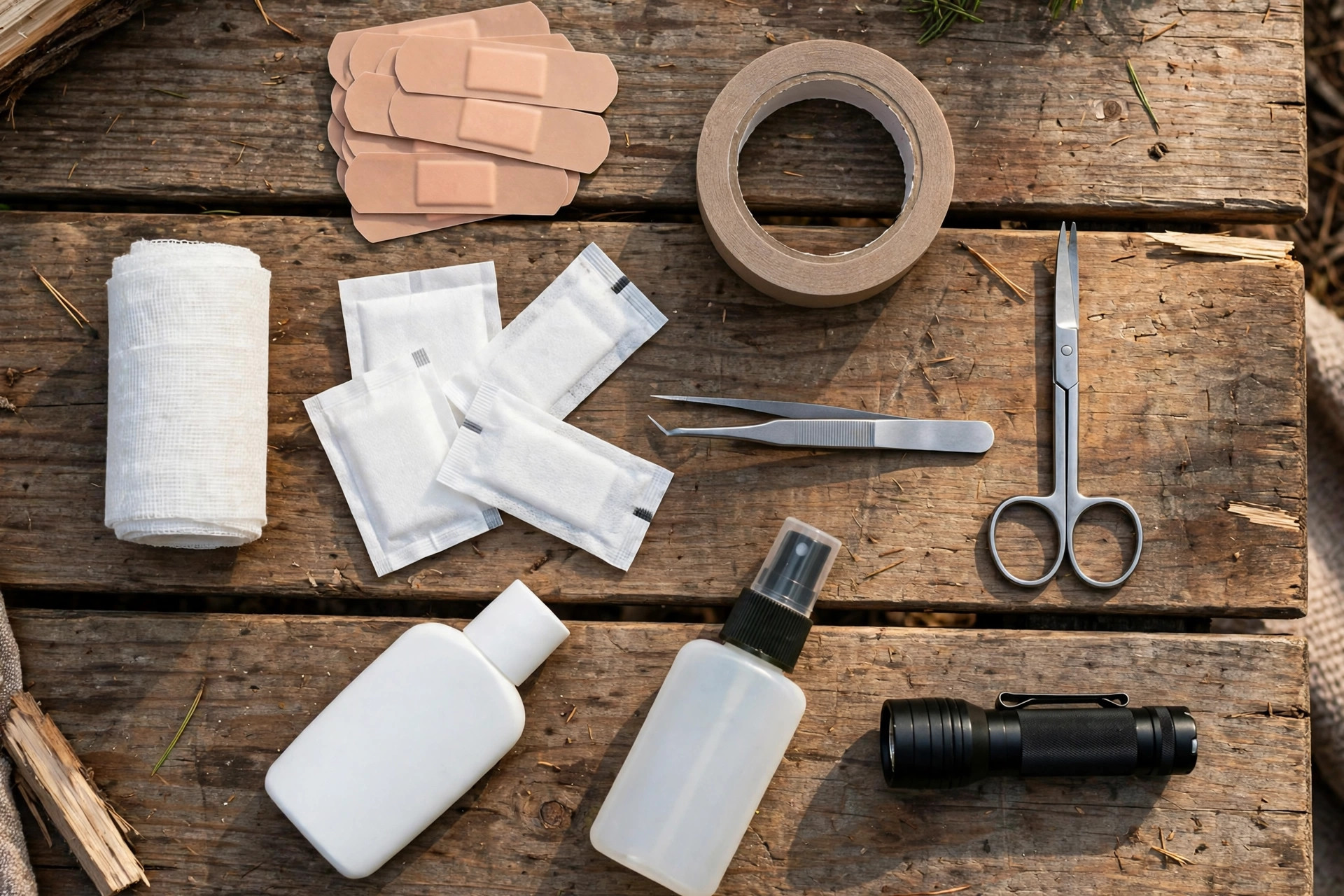
Start with a sturdy, water-resistant bag in a bright color you can spot inside a tent at night. A soft zip pouch works for car camping; a small dry bag is better for canoe trips or rainy climates. Pack it the same way every time so anyone in the family can find things without asking.
Wound Care Essentials
Most camp injuries are minor wounds, so this section earns the most space in your kit:
- Adhesive bandages in several sizes, including fingertip and knuckle shapes, plus fun designs if they help your child cooperate
- Sterile gauze pads (small and medium) and a roll of gauze for larger scrapes
- Adhesive tape and a self-adhering wrap bandage that sticks to itself, not to hair or skin
- Antiseptic wipes or a small bottle of clean water for washing wounds (plain water is often the best choice)
- Butterfly closure strips for small cuts that gape slightly
- Blunt-tip tweezers for splinters and ticks, plus a tick removal tool if you camp in tick country
- Small scissors, safety pins, and disposable gloves in your size
- Antibiotic ointment in single-use packets, which stay fresh longer than a squeezed tube
Medicines and Doses for Children
Medicines are where a kids’ kit most differs from an adult one, and where mistakes are easiest to make. Pack only medicines your child has taken safely before, and always dose by weight, not by age alone.
- Children’s pain and fever medicine (acetaminophen or ibuprofen) in a formulation your child can take, with the dosing syringe or cup that comes with it
- Children’s antihistamine for itchy bites or mild allergic reactions, if your pediatrician has recommended one for your child
- Any prescribed medicine your child needs, such as an inhaler or epinephrine auto-injector, in its original packaging with a spare if possible
- Oral rehydration salts for vomiting or diarrhea, which help replace fluids faster than plain water alone
- Anti-itch cream or calamine lotion for bites and mild rashes
Write your child’s current weight on a card inside the kit lid, and note the correct dose beside each medicine. In a stressful moment at 2 a.m., you do not want to be doing mental math. Check expiry dates at the start of every camping season, and replace anything opened, heat-damaged, or past its date.
If your child has asthma, allergies, or any condition that could flare up outdoors, talk to your pediatrician before the trip about an action plan. Keep that plan written in the kit, not just on your phone, which may have no signal or a dead battery.
Sun, Heat, and Bug Protection
Prevention belongs in the kit too, because the best-treated sunburn is the one that never happens. Pack broad-spectrum sunscreen (SPF 30 or higher) that your child tolerates, insect repellent approved for your child’s age, and a lip balm with sun protection. For more on keeping insects at bay, see our guide to keeping bugs away when camping with kids.
Add a small instant cold pack or two for bumps, heat exhaustion, and swollen bites. They weigh almost nothing and are far more useful than a bag of melting ice from the cooler. A lightweight emergency blanket also earns its place: it treats shock and cold, works as a ground sheet for treating a child, and doubles as a signal panel.
Packing by Age: Babies, Toddlers, and Older Kids
One kit does not fit every age. Adjust the basics for the child you are actually camping with.
Babies and Toddlers
For the youngest campers, skin protection and temperature control matter most. Pack extra diaper rash cream, a nasal aspirator, a digital thermometer, and saline nose drops. Toddlers put everything in their mouths, so include a small flashlight for checking mouths and throats, and keep all medicines in child-resistant containers out of reach. Our newborn camping safety guide covers the wider safety picture for camping with babies.
School-Age Kids
Older kids roam further and climb higher, so blister care and sprain support move up the list. Add moleskin or blister patches, a triangular bandage that doubles as a sling, and an elastic bandage for a twisted ankle. Teach them where the kit lives and how to fetch it, and let them carry a tiny personal kit on hikes: a few bandages, a whistle, and a card with your phone number.
How to Organize and Carry the Kit
A kit you cannot find quickly is barely a kit at all. Use clear zip bags or small labeled pouches inside the main bag: one for wound care, one for medicines, one for bite and burn care. Keep the kit in the same place at every camp, ideally near the tent entrance or in the camp kitchen area, and tell every adult where it is.
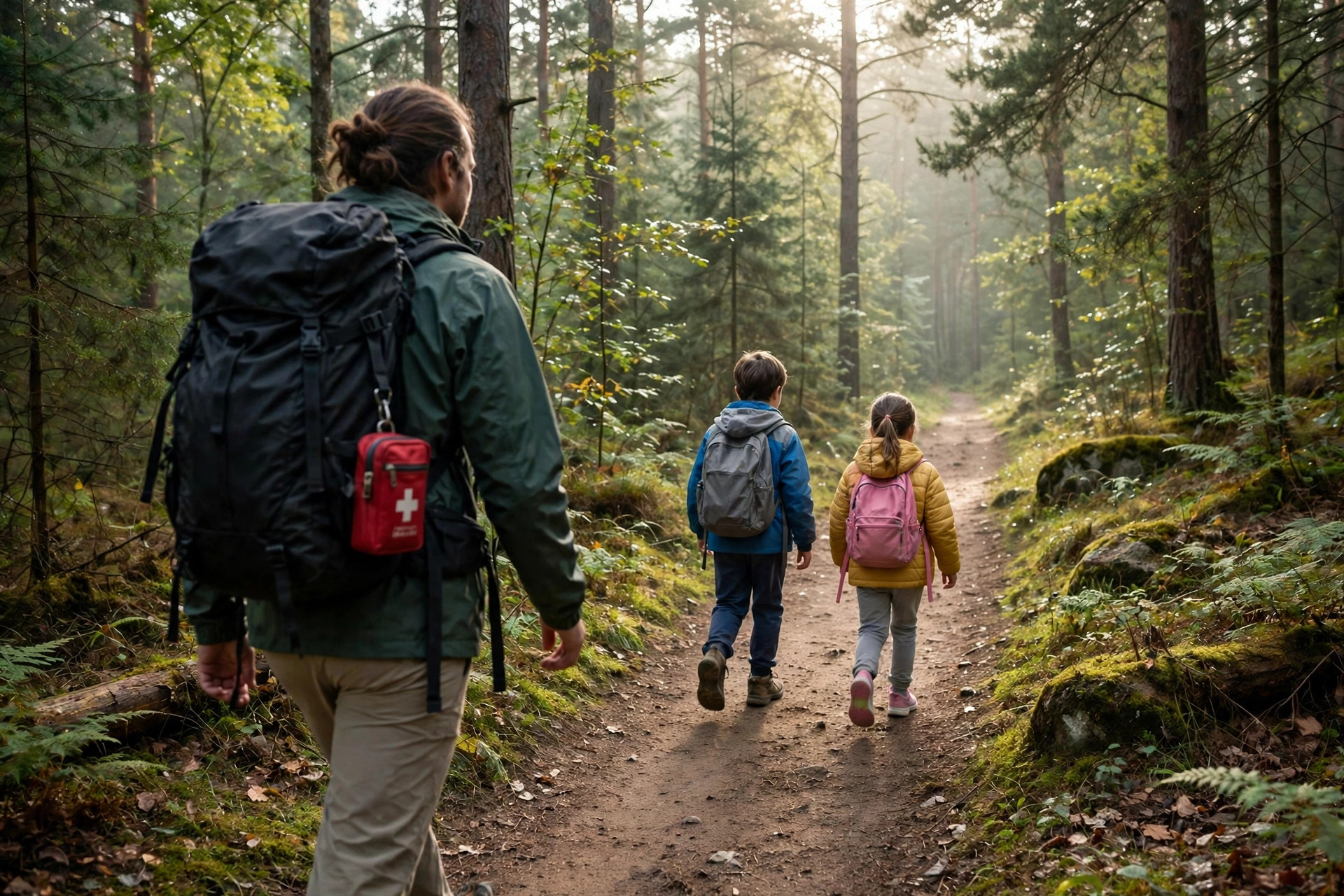
On hikes, do not leave the kit at camp. Carry a slimmed-down trail version in a daypack: bandages, gauze, tape, antiseptic wipes, tweezers, pain relief, blister patches, sunscreen, and a whistle. The full kit stays at base camp for anything bigger. This split system means you are covered on the trail and at the tent, without hauling the whole bag up every hill.
What to Do When a Child Gets Hurt at Camp
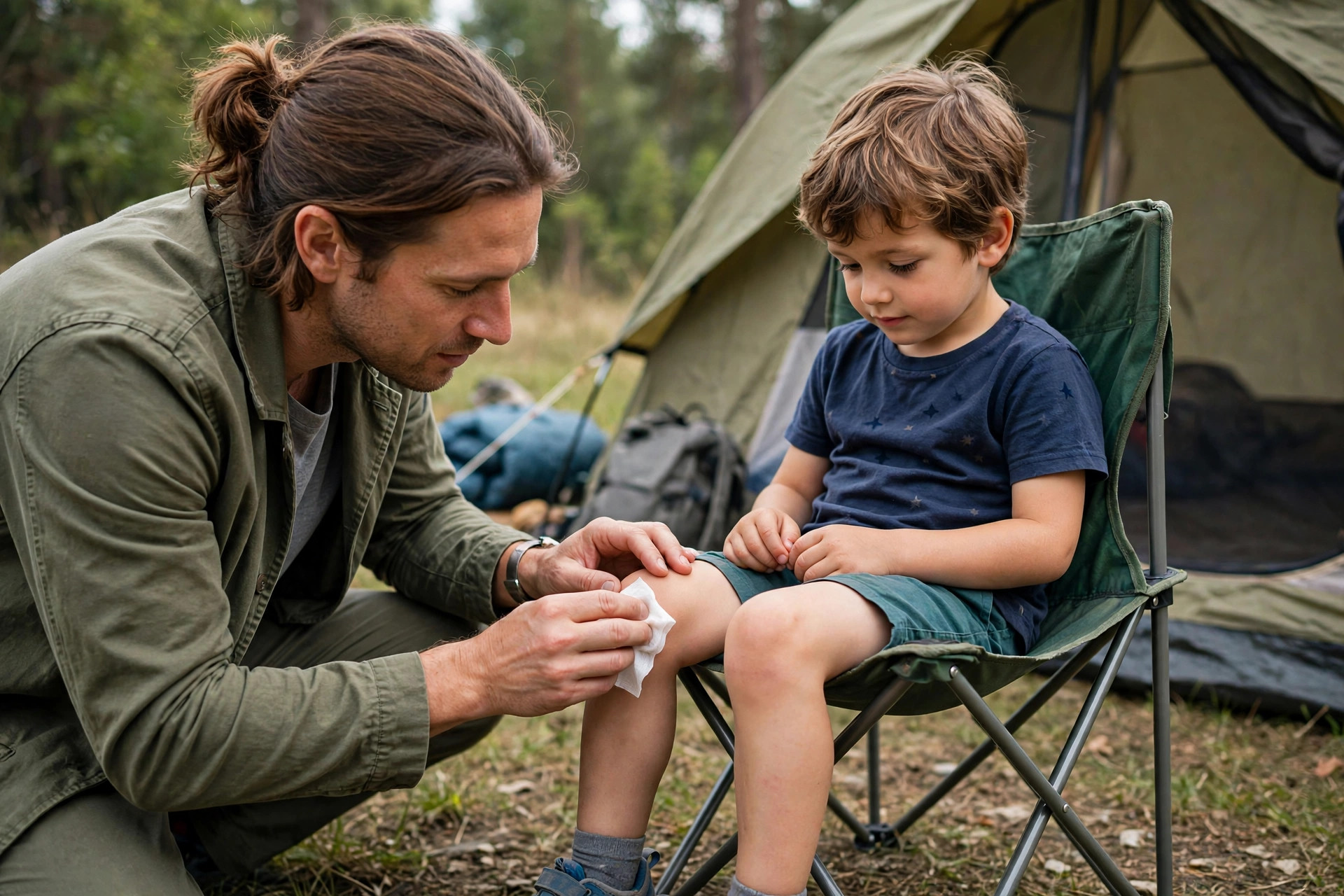
Staying calm is the real first aid skill. Children take their cues from you: if you panic, they panic, and a small injury becomes a big scene. Sit down at their level, explain what you are doing in simple words, and let them hold a bandage wrapper or choose a bandage design while you work.
Step-by-Step: Cuts and Scrapes
- Move the child to a clean, comfortable spot and wash your own hands or put on gloves.
- Rinse the wound with clean drinking water for several minutes to flush out dirt and grit.
- Pat dry with clean gauze and apply gentle pressure if it is still bleeding.
- Apply a thin layer of antibiotic ointment and cover with a bandage or gauze pad.
- Check the wound daily, change the dressing if it gets wet or dirty, and watch for spreading redness, warmth, swelling, or fever.
Step-by-Step: Blisters, Splinters, and Bites
For blisters, leave intact blisters alone and cover them with a blister patch or moleskin with a hole cut in the middle. For splinters, clean the area, use tweezers to pull the splinter out at the same angle it went in, then wash and cover. For bites, wash with soap and water, apply a cold pack for a few minutes, and use anti-itch cream. Watch bites for expanding redness or streaking, which warrant medical advice.
For ticks, remove promptly with fine tweezers or a tick tool, grasping close to the skin and pulling steadily upward. Clean the bite area, save or photograph the tick if you can, and note the date. The Centers for Disease Control and Prevention tick guidance explains what symptoms to watch for in the following weeks.
When to Stop Treating and Get Help
Most camp injuries are minor, but some need professional care fast. Head for urgent care or call local emergency services if you see any of these warning signs:
- Bleeding that does not slow after 10 minutes of firm, direct pressure
- A deep cut, a cut over a joint, or a wound with visible fat, muscle, or bone
- A head injury with vomiting, unusual sleepiness, confusion, or unequal pupils
- Signs of anaphylaxis: trouble breathing, swelling of lips or tongue, widespread hives, or collapse
- A suspected broken bone, a limb that looks deformed, or a child who cannot bear weight
- Burns larger than the child’s palm, burns on the face, hands, feet, or genitals, or any electrical or chemical burn
- High fever, stiff neck, severe dehydration, or a child who is unusually lethargic or hard to wake
Before every trip, save the location of the nearest hospital or urgent care clinic, and check whether your campsite has mobile signal. In many parks, the campground office or ranger station is the fastest route to help. The National Park Service site lists visitor centers and emergency contacts for each park, and Recreation.gov shows campground details and local information when you book.
Quick-Reference Packing Table
| Category | Must-pack items | Why it matters |
|---|---|---|
| Wound care | Bandages, gauze, tape, butterfly strips, tweezers | Handles 90% of camp injuries |
| Medicines | Child pain relief, antihistamine, prescribed meds, rehydration salts | Correct doses prevent complications |
| Bites and sun | Repellent, sunscreen, anti-itch cream, cold packs | Prevents the most common miseries |
| Support | Elastic bandage, triangular bandage, moleskin | Stabilizes sprains and blisters |
| Tools and safety | Gloves, scissors, flashlight, emergency blanket, whistle | Lets you treat safely, day or night |
Print this table or photograph it for your packing list, and run through it before your next trip. It pairs well with a full gear check: our family camping checklist of 47 essentials covers the rest of your camp setup, and our first family camping trip weekend plan walks you through a stress-free first outing.
Frequently Asked Questions
What size first aid kit do I need for family camping?
A medium pouch roughly the size of a lunchbox covers a family of four for a weekend. Car campers can go bigger, since weight does not matter. Backpacking families should carry a compact kit and rely on the trail version described above, with the full kit at base camp.
Can I just buy a ready-made kit?
Yes, a good commercial kit is a fine starting point, but always customize it. Add child-appropriate medicines and doses, extra bandages in fun designs, blister care, and any prescribed medicine your child needs. Ready-made kits rarely include enough of the items kids actually use.
How often should I check and restock the kit?
Check it at the start of every camping season and restock after every trip. Heat, moisture, and time degrade adhesives, ointments, and medicines, so replace anything that looks damaged, feels dried out, or is past its expiry date.
What should my child carry on a hike?
Older kids can carry a small personal kit: a few bandages, a whistle, a snack, water, and a card with your name and phone number. Teach them that the whistle is for emergencies only, three blasts is the standard distress signal, and they should stay put if lost.
Do I need different supplies for a baby?
Mostly additions rather than replacements: a thermometer, saline drops, nasal aspirator, diaper rash cream, and extra sun and insect protection suitable for infants. Always check age limits on repellents and sunscreens before using them on babies.
What if my child has a severe allergy?
Carry prescribed emergency medicine, such as an epinephrine auto-injector, in two places: the main kit and an adult’s pocket or daypack. Make sure every supervising adult knows where it is and how to use it, and tell the campground office about severe allergies on arrival.
A well-packed first aid kit does something no gear list can: it lets you say yes to adventure with confidence. Pack it once, restock it every trip, and you will spend far less time worrying and far more time enjoying the trail together.

3 comments
[…] the full picture, read our family camping first aid kit checklist before your trip — a hammock is only relaxing when you are prepared for small […]
[…] budget pick: a steel mesh bed, a folding frame, and a price that leaves money for the rest of your kit. It handles paved loops and flat grass well and folds small. Best for: car campers on developed […]
[…] a small repair kit: duct tape and a spare cot pin or two weigh almost nothing. Our family camping first aid kit list covers the rest of the safety gear you should never leave home […]