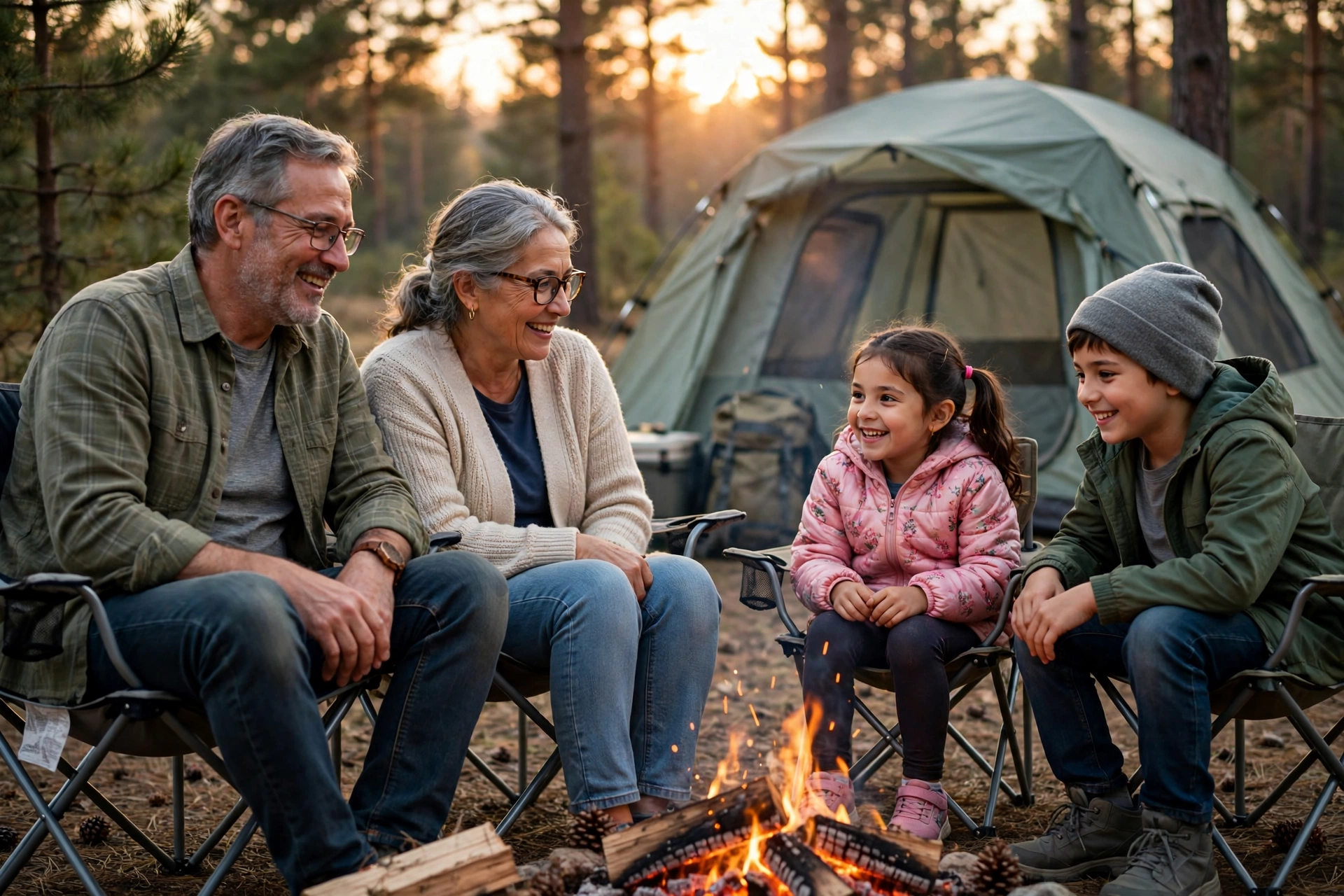
A multigenerational camping trip — grandparents, parents, and grandkids sharing one campsite — can be the best family holiday you ever take. It can also be the one where Grandma sleeps on a leaking air mattress and Dad cooks for nine people all weekend. The difference is planning for the oldest and youngest person first, and letting everyone else fit around them.
Quick answer: It works when grandparents get a real bed and a short walk to the bathroom, kids get one planned activity a day plus free time, and each household owns one job. Book a level, shaded site near the bathhouse about 90 days ahead, and keep the first trip to two nights close to home.
Why Three Generations at One Campsite Works
Camping strips a family holiday down to its simplest form: one fire, one table, no screens, and hours of unhurried time together — exactly what grandparents and grandkids rarely get at home.
Grandparents bring something no gear list can: patience. They will sit through the same story told four times, teach a grandchild to tie a knot, and happily watch a kid ride the same campground loop six times.
But the format only works if the planning respects reality: grandparents tire faster, toddlers need naps, teenagers need a role, and parents carry the logistics for all three groups unless jobs are shared beforehand. The rule that fixes most problems: plan for the oldest and youngest first.
Pick the Right Campground First
The campground matters more than the itinerary. A level site with shade, a short walk to a clean bathhouse, and a picnic table big enough for the whole group will do more for your trip than any activity you plan. Choose the site before you plan anything else.
- Level ground and easy vehicle access — no steep slopes or roots on the path to the bathroom after dark.
- A bathhouse two to three minutes away — close enough for a midnight trip with a child, far enough to escape the hand dryers.
- Shade before lunch — trees over the picnic table keep midday heat bearable for everyone.
- A quiet loop — ask the office where playground traffic cuts through, and pick the quieter side.
- Cell signal or a camp office phone — so help is always reachable.
If your group is larger than four or five people, book two adjacent sites — one for cooking and gathering, one for sleeping. It costs more, but it is the single best upgrade for a three-generation trip.
| Campground type | Best for | Watch out for |
|---|---|---|
| Developed state park | First trips — flush toilets, showers, ranger programs | Book early; popular parks fill fast |
| Private family campground / RV park | Pool, store, and activities on site | Noisy near the playground; ask for a quiet loop |
| National park campground | Older kids and teens who want real scenery | Fewer hookups, longer walks to facilities |
| Cabin or lodge + tent sites | Grandparents who need a real bed and bathroom | Cabins sell out first |
| Dispersed / primitive sites | Experienced families only | No toilets or water — skip for a first trip |
Check the managing agency’s page for reservation windows and fire rules. Recreation.gov lists most federal campgrounds with photos, site maps, and booking details.
Sleeping Setups That Work for Every Generation
Sleep is where these trips succeed or fail. A grandparent who spends the night cold and aching on a thin mat will not enjoy the next day, and a toddler who cannot settle keeps the whole site awake. Give each generation the setup it actually needs.
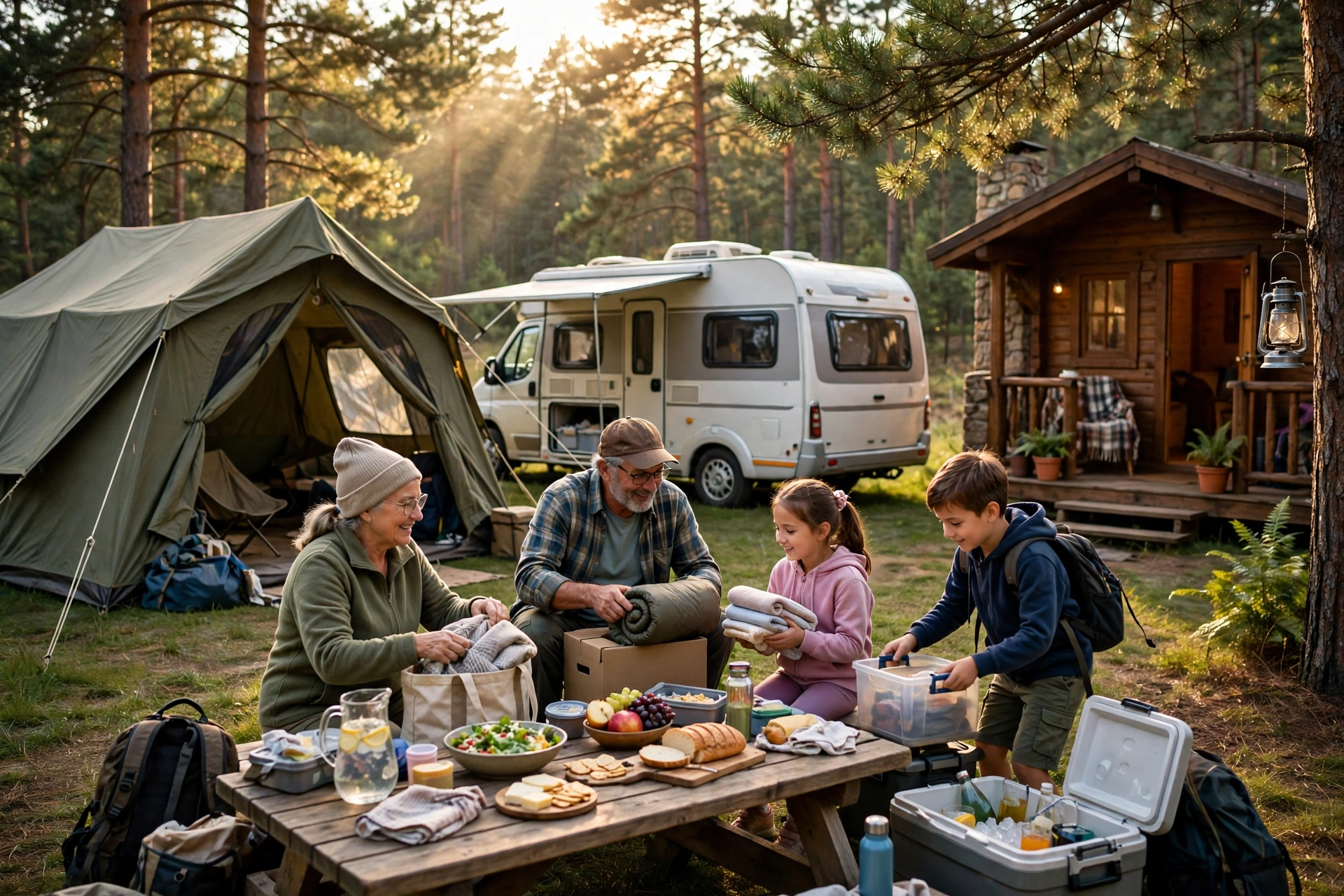
The most reliable arrangement mixes setups: grandparents in a cabin, camper, or tall tent with a real cot; parents and kids in tents nearby.
| Setup | Best for | What it needs |
|---|---|---|
| Cabin or lodge room | Grandparents, babies, mobility or health needs | Book first — cabins go fast |
| RV / camper | Grandparents who want their own bathroom and bed | Full-hookup site |
| Tall stand-up tent + cot | Active grandparents who enjoy tent camping | Firm cot, chair with arms |
| Family tent (parents + kids) | Parents with young children | Small tent for early sleepers |
| Two adjacent sites | Groups of 5+ | One site for gathering, one for sleeping |
Three comfort details matter most for grandparents: a camp chair with arms, a battery lantern for late-night bathroom trips, and a tent tall enough to stand in. Pack medications in a clear, labelled pouch, and bring any mobility aid they use at home.
For kids, keep bedtime as close to home as possible: the same blanket, the same story, the same routine. A tent that stays organized helps enormously — bedtime takes ten minutes instead of thirty. If it is your first time camping with a toddler, our guide to camping with a toddler covers the details.
Plan the Pace, Not the Schedule
The biggest mistake is building a schedule for the most energetic person in the group. Instead, plan each day in layers: one active block, one rest block, and one flexible block.
- Morning (active block): the walk, the fishing dock, or the short hike, while energy is highest.
- Midday (rest block): shade, books, cards, and a real lunch — when toddlers nap and grandparents recharge.
- Late afternoon (flexible block): a second small outing, a bike loop, or a game at the site. Let the kids choose.
- Evening (together block): the campfire — an hour of stories, marshmallows, and stars is enough.
Put the one bigger activity on the second full day, not arrival day — arrival day is for setting up and finding the bathroom. Leave gaps on purpose: the grandparent watching the campground wake up and the kid riding the same loop six times are both having the trip they came for.
If teenagers are in the group, give them a real role — let them plan one meal or lead one hike. Our camping with teenagers guide has fifteen activities that hold a teen’s attention.
Activities Every Generation Actually Enjoys
The best activities are ones where a 7-year-old and a 70-year-old do the same thing, side by side, at their own pace: fishing, easy walks, campfire cooking, simple games. The ones that fail are built for one generation and imposed on the others.
| Grandchild’s age | Activities that work | Grandparent’s role |
|---|---|---|
| Toddlers & preschoolers (2–4) | Scavenger hunt, splashing at the shore, stirring the pot | Storyteller, extra hands at bedtime |
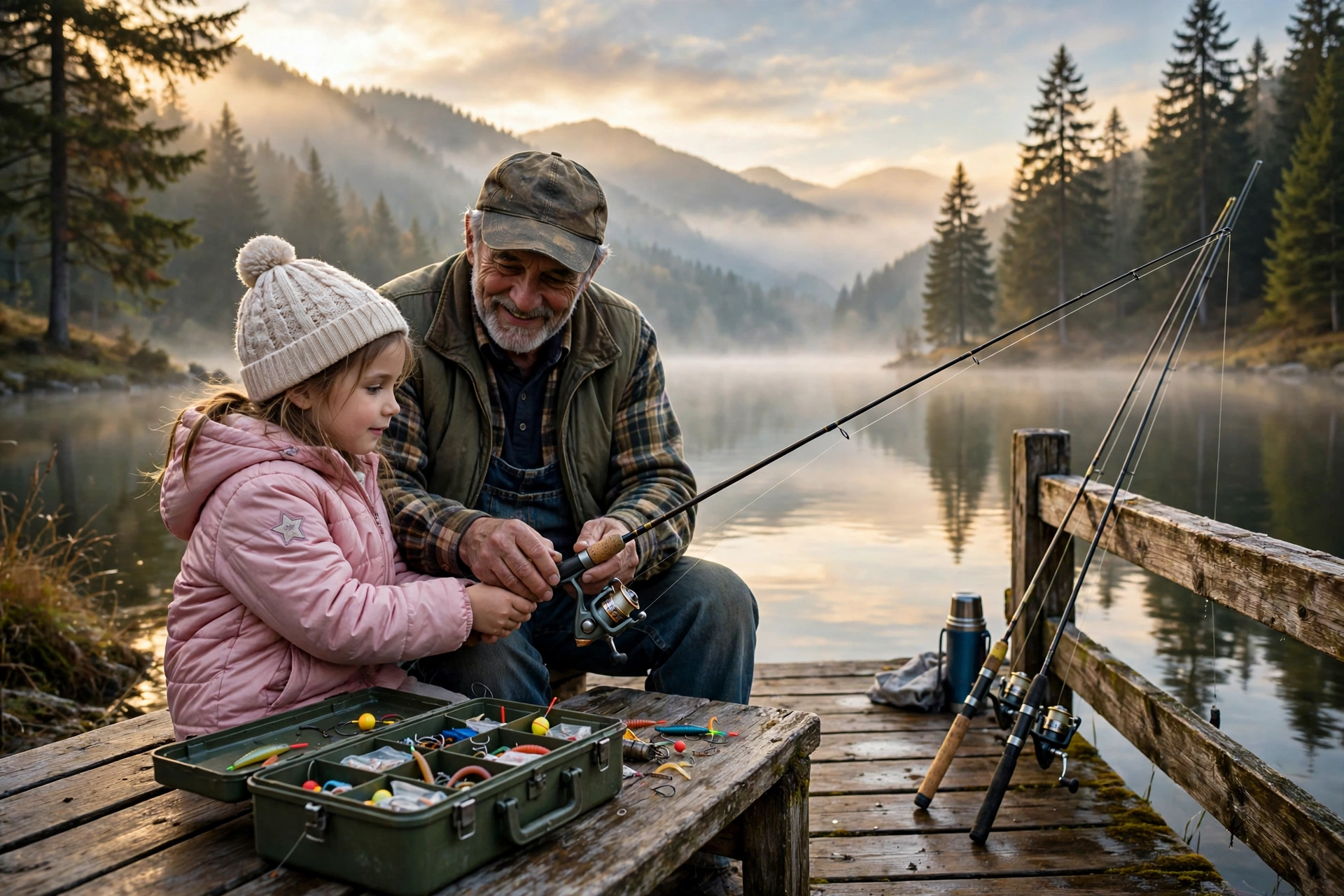
| Early school age (5–9) | Fishing, easy hikes, campfire cooking, crafts | Fishing coach, knot teacher |
| Older kids (10–12) | Kayaking, geocaching, cooking a meal, stargazing | Teammate, storyteller |
| Teenagers (13+) | Longer hikes, photography, leading a hike | Companion, mentor — let the teen lead |
Give every child a job: a five-year-old collects firewood, an eight-year-old is camp photographer, a teenager navigates with the map. Jobs turn restless kids into engaged ones.
Pack a small “rainy day” box: cards, a board game, a sketchbook, campfire stories. And keep a few no-equipment camping games for kids in your back pocket — they need nothing but people and a patch of ground.
Meals Without the Chaos
Feeding three generations at a campsite is a logistics job, not a cooking job. Decide the menu and the jobs before the trip.
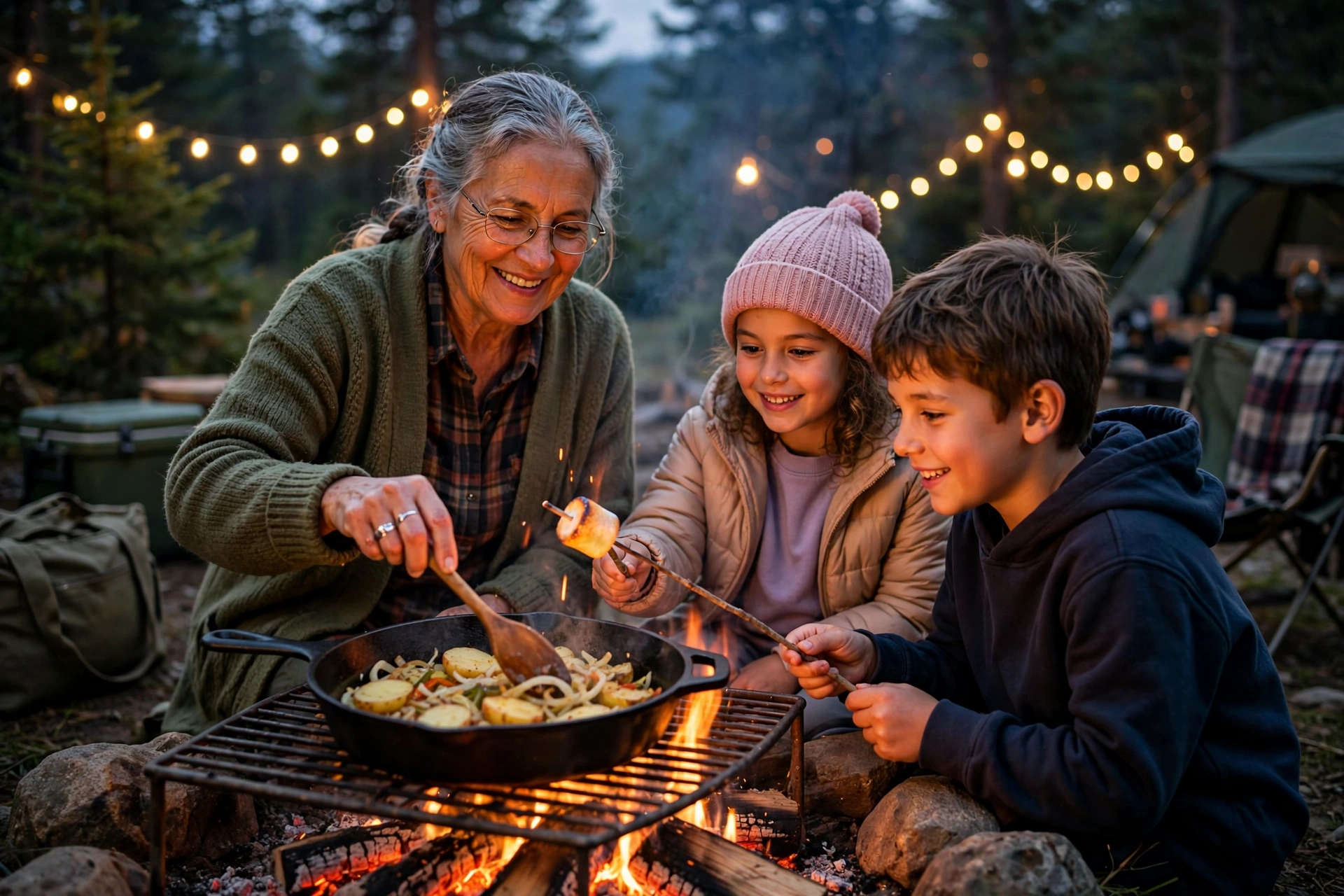
- One household, one meal a day. Grandparents take breakfast, parents take dinner, and lunch is a simple self-serve spread — sandwiches, fruit, and snacks anyone can grab.
- Prep at home. Chop, marinate, and mix before you leave — camp cooking should be assembly, not preparation.
- Cook once, eat twice. Make extra dinner and serve the leftovers as lunch the next day.
- Respect real needs. Check allergies and dietary needs before you shop — not at the campsite.
- Keep snacks visible. Hungry kids and grandparents with low blood sugar both get cranky fast. A snack box on the picnic table solves both.
Let grandparents cook the meals they love, and let kids help with the safe parts — the meal becomes the activity.
Splitting the Cost Fairly
Money is the quiet argument that ruins more family trips than weather does. Sort it out before anyone books anything.
The fairest split: each household pays for its own site and travel, and shared costs (food, firewood, activities) are split by adults, kids counted as half. One person keeps a tally and settles up on the last evening.
| Shared cost | Typical split | Who pays upfront |
|---|---|---|
| Campsite fees | Each household pays its own site | Whoever books it |
| Groceries | Split by adults; kids count as half | Rotate daily |
| Firewood & ice | Split evenly | First household to arrive |
| Activities (rentals, tours) | Only the people who join pay | Whoever books |
| Cabin / RV rental | The household that uses it | That household |
Health, Comfort and Safety for Grandparents
A little health planning prevents the two emergencies that actually happen on these trips: a missed medication and a fall in the dark.
- Medications: pack a full extra day’s supply in original labelled containers, stored cool and dry — never in a hot car. One person should know where they are and when they are due.
- Health basics: a charged phone, the nearest clinic’s number (save it before you lose signal), and a list of allergies and medications in the first-aid kit. Our family first-aid kit guide covers what to pack.
- Night safety: a lantern at each tent entrance, a clear path to the bathroom, and a headlamp for every person. Most campsite falls happen at 2 a.m. on the way to the bathroom.
- Heat and sun: grandparents and small children dehydrate faster — keep water bottles filled and shade available through midday.
- Wildlife and bugs: store food properly and teach kids the same rules. In bear country, read our bear safety for kids guide first.
If anyone has a condition that could flare up outdoors — asthma, heart disease, diabetes, severe allergies — talk to their doctor before the trip, not during it. Choose a campground within a reasonable drive of medical care for a first trip. The National Park Service’s accessibility pages show whether a park’s facilities will work for your group.
Your 8-Week Planning Timeline
- 8 weeks out: pick one decider, offer three weekends, close the vote in a week.
- 6 weeks out: book the cabin or RV site first, then tent sites next to it.
- 4 weeks out: assign one job per household — food, gear, activities, cleanup.
- 2 weeks out: confirm who is coming, check medications and diets, buy or borrow missing gear.
- 1 week out: prep food, charge every battery, print the campsite map and clinic address.
- Departure day: leave early, arrive with daylight to spare, set up the grandparents’ sleep area first.
The Multigenerational Packing Checklist
Let each household tick off its own section. A full family checklist lives in our camping checklist with kids.
- For grandparents: chair with arms, firm cot or thick pad, warm layers, medications plus one extra day, glasses, a battery lantern, any mobility aid.
- For kids: their own headlamp, a comfort item from home, a camp journal, a job list, the same bedtime book.
- For the group: a pop-up canopy, a large water jug, a snack box, cards and one board game, a first-aid kit everyone can find.
- For the site: extra tent stakes, a doormat for the tent entrance, rope for a clothesline, bin bags.
- For the memories: a charged camera, a trip journal, and one evening for stories.
Frequently Asked Questions
How many nights should a first multigenerational camping trip be?
Two nights. One night is mostly setup and pack-down; three nights is a lot to ask of grandparents and toddlers on a first trip.
What is the best age for grandkids to start camping with grandparents?
There is no wrong age. Toddlers do best at a developed campground within an hour of home. School-age kids (5–9) are the easiest — old enough for fishing, young enough to love a campfire. Teenagers need a role and a little independence.
Should grandparents sleep in a tent or a cabin?
It depends on the grandparent. Active ones who already camp can be very happy in a tall tent with a firm cot. Those with bad backs, poor sleep, or mobility issues will enjoy a cabin or RV with a real bed and private bathroom far more.
How do we split the cost of a multigenerational camping trip?
Each household pays for its own site and travel; shared costs are split by adults, kids counted as half. One person keeps a tally and settles up on the last evening.
What if grandparents and parents disagree about the rules?
Agree on the big rules before the trip — bedtimes, screens, water safety, food — and let parents have the final say. Grandparents get extra marshmallows and stories; safety rules stay the parents’ call.
What is the best campground for a three-generation family?
A developed state park or private family campground with level sites, flush toilets, showers, and shade, close to home. Pick a site two to three minutes from the bathhouse, on a quiet loop.
Multigenerational camping works because it gives three generations something modern life rarely does: unhurried time together to talk, cook, and watch the fire. Plan for the oldest and youngest first, share the jobs, and keep the first trip short and close to home.
