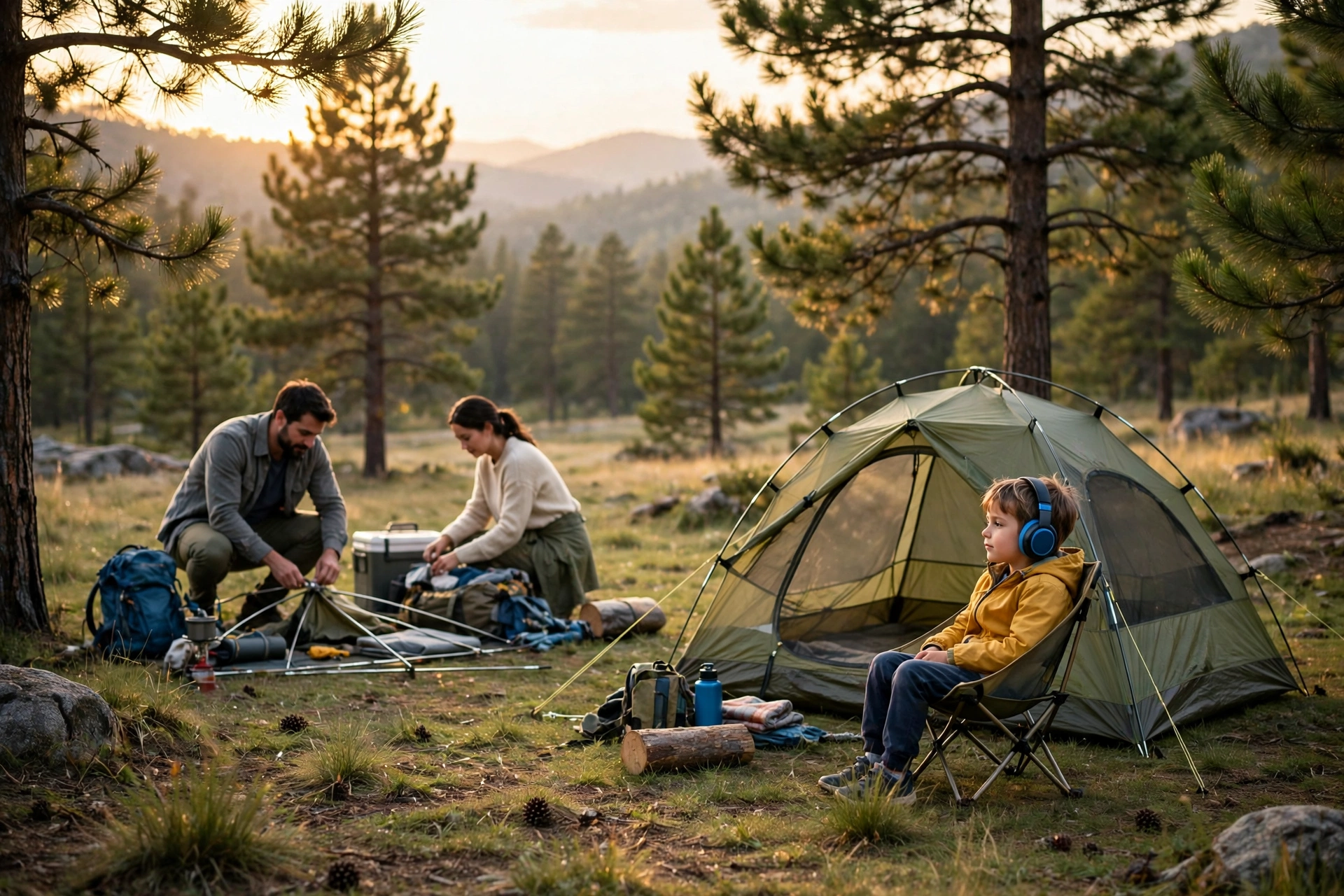
Camping with an autistic child can feel like a big leap. New sounds, new smells, a different bed, no familiar walls — for a child who depends on routine and predictability, a campsite can be wonderful or overwhelming, sometimes both in the same afternoon. The good news is that most of the overwhelm is preventable. With a practice run at home, a visual schedule, a sensory toolkit, and a campsite chosen on purpose, many families find camping becomes one of their child’s favorite things.
Every autistic child is different — treat this guide as a starting menu, not a prescription. If your child has medical needs or a safety plan from a therapist, bring those into your planning, and talk to your pediatrician before a first trip if you have any health or safety concerns.
Why Camping Feels Different for an Autistic Child
For most kids, camping is a break from routine. For an autistic child, routine is often what makes the world feel safe — and camping removes almost all of it at once: the bed, the lighting, the sounds at night, the food, the bathroom, the schedule. Add campfire smoke, gravel underfoot, other people’s music, dogs barking, and rain on a tent, and it is easy to see why a first trip can end in tears.
That does not mean camping is a bad idea. It means the trip needs structure: when a child knows what will happen, in what order, and what to do when something feels too loud, the same campsite becomes an adventure instead of a surprise. The strategies below are the ones families report working again and again.
Start Small: The 5-Step Practice Ladder
Never make the campground the first place your child meets a tent. Build familiarity in small, low-pressure steps — each one as long as your child needs before you move to the next.
- Camp in the bedroom. Set the tent up indoors and keep the normal bedtime routine, with the usual blanket, stuffed animal, and night light.
- Camp in the living room. Sleep in the tent together. Practice unzipping the door and using a flashlight.
- Camp in the backyard. One night, close to home. Eat one familiar meal outside and let your child explore the tent during the day with zero pressure to sleep in it.
- Visit a campground for the day. Walk the trails, eat lunch at a picnic table, use the bathrooms, and go home — no overnight part.
- One night, close to home. Pick a site less than an hour away and keep the plan simple: set up, one easy activity, dinner, bedtime. Success is one peaceful night, not a packed weekend.
Our full walkthrough of the home practice run is in Backyard Camping with Kids: A Practice Run Guide — the same ladder works beautifully for autistic kids, just taken more slowly.
Make a Visual Schedule and a Social Story
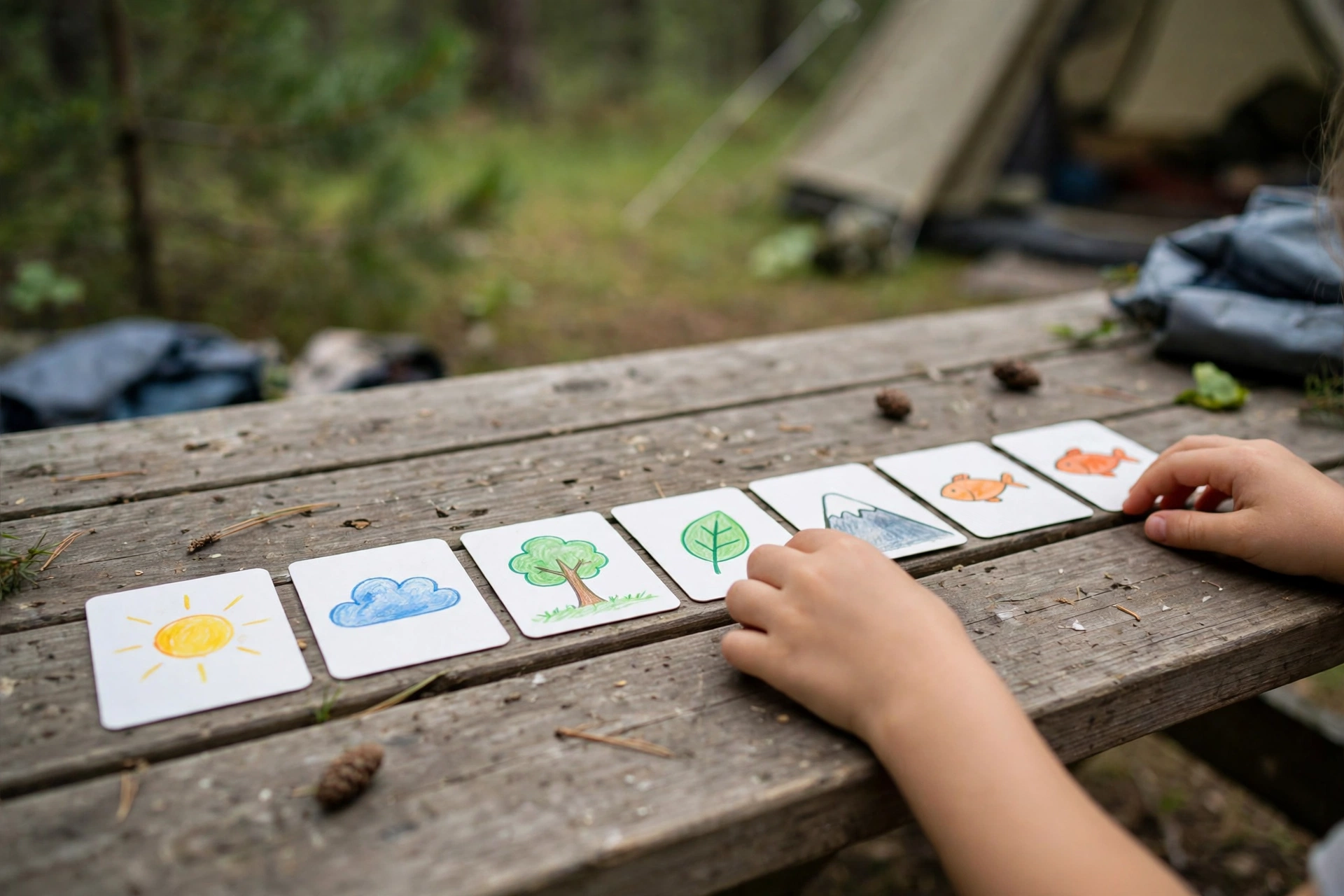
A visual schedule turns an unpredictable trip into a sequence your child can see and trust. Before you leave, make a simple picture schedule — paper cards, a printed sheet, or a phone app — showing the day in order: drive, arrive, set up tent, eat dinner, campfire, pajamas, sleep, breakfast, pack up, drive home. Let your child check off each card as it happens. The predictability itself is calming.
Pair it with a short social story: a few pages with photos of the actual campsite, tent, and bathrooms. Write it in simple, honest language: “We will sleep in a tent. The tent is noisy when it rains. If it feels too loud, I can wear my headphones or sit in the car.” Read it together several times before the trip, and bring it along.
Three rules make schedules work at camp: one main activity per day; downtime treated as part of the plan, not a gap; and an agreed escape — leaving early is allowed and is not a failure.
Choose a Sensory-Friendly Campsite
The campsite you pick matters more than any gear you buy. A quiet-looking campground can feel busy once everyone arrives, so choose with your child’s senses in mind.
| What to look for | Why it matters | How to check before you book |
|---|---|---|
| Space between sites | Less noise, fewer unexpected visitors, room to move | Look at site photos and maps; call and ask how close sites are |
| Close to bathrooms — but not next to them | Short walks at night, without foot traffic past your tent all day | Pick a site one or two spots away from the bathhouse |
| Shade and tree cover | Cooler, calmer, less glare for light-sensitive kids | Check satellite view and recent camper photos |
| Away from water and roads | Reduces wandering risk and traffic noise | Ask the ranger which loops are quietest and furthest from lakes and roads |
| Cell service and a quick exit | You can call for help, and leave fast if the trip is not working | Check coverage maps; pick a site near the entrance on a first trip |
| Accessible facilities | Flat paths, accessible bathrooms, and quiet spaces help many families | The National Park Service lists accessibility information at nps.gov/accessibility |
When in doubt, call the campground and ask how busy the loop gets, how far apart the sites are, and where the nearest hospital is. A five-minute call can save a ruined weekend. You can browse and book many campgrounds at Recreation.gov.
Pack a Sensory Toolkit
Pack the comforts your child already uses at home — camp is not the time to try new sensory tools. The goal is a small bag you can grab the moment things get loud, bright, or strange.
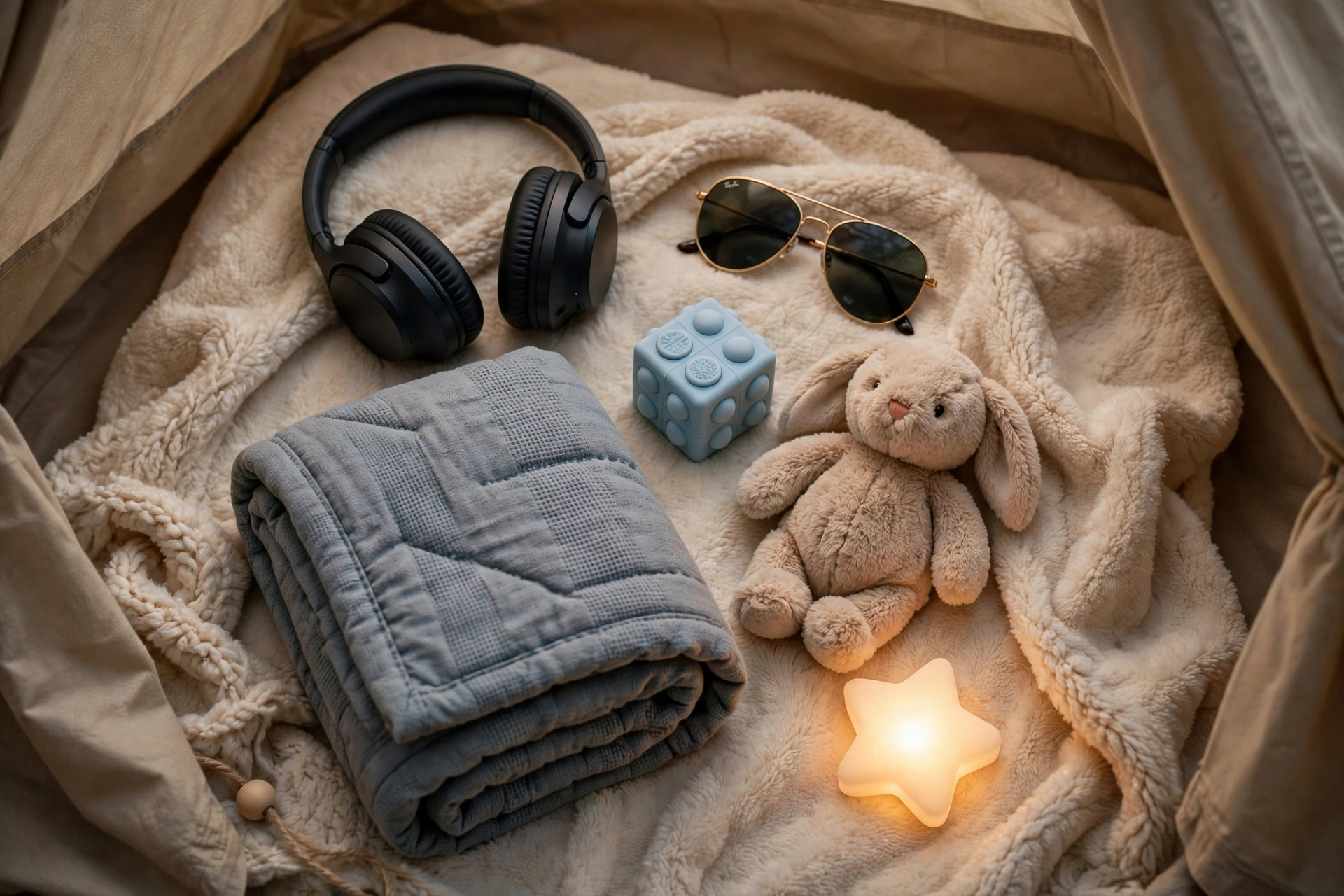
- Noise-cancelling headphones or ear defenders — the top lifesaver for campfire crackle, generators, and chatty neighbors.
- Familiar or weighted blanket — the same one from home.
- Sunglasses and a hat — for light-sensitive kids.
- Fidgets and a comfort item — whatever your child reaches for at home.
- Preferred snacks and safe foods — bring more than you think you need, in the exact brands your child eats.
- Communication tools — a picture board, an app, or a simple “I need a break” card.
- Change of clothes, easy to reach — keep a full change in the car, not buried in a bin.
- Night light and familiar bedding — the same sheets from home help the tent feel like a bedroom.
Set up a calm corner inside the tent: a cushion, the blanket, the headphones, and a book or quiet toy, always in the same spot. When your child knows exactly where calm lives, they will go there on their own. See How to Keep Your Tent Organized with Kids for systems that keep the calm corner clear.
Food, Sleep, and Keeping the Routine
Food and sleep are where most camping trips succeed or fall apart, and both are routine-bound for autistic kids. Keep them as close to home as you can.
Food: Cook the same few meals your child already eats, and bring the same plates, cups, and utensils if they matter. Pack safe foods separately so a picky eater never has to wait while dinner cooks, and keep mealtimes at the usual hours. Store food carefully — in bear country that is a safety issue too, and our guide to food storage in bear country covers the basics.
Sleep: Keep the bedtime routine — same order, same story, same pajamas. Bring the white-noise app or machine your child uses at home; campground nights are full of unfamiliar sounds. Our guide to getting kids to sleep while camping has 15 practical tips that work alongside the sensory plan here.
Routine anchors: Pick two or three anchors from home and protect them — the same wake-up time, the same breakfast, the same bedtime story. Everything else can flex.
The Wandering Safety Plan
Some autistic children wander or bolt, especially in new places with water, roads, and trails nearby. This is the one part of the trip to plan before anything else. Do it on paper, and make sure every adult on the trip knows it.
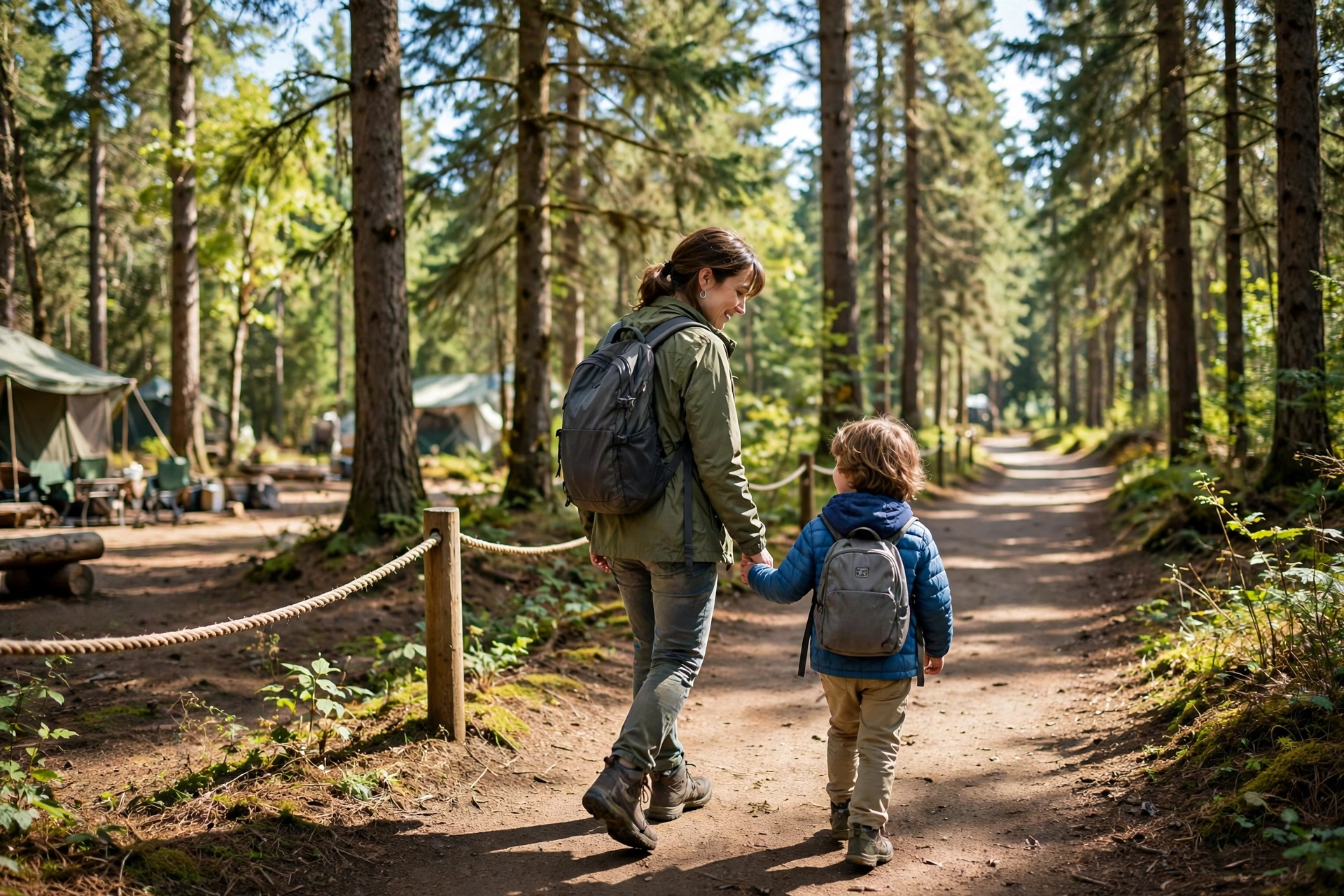
- Walk the site together on arrival. Show your child the boundaries and mark them with something visible — a rope, a row of chairs, a landmark tree.
- Assign a watcher. One adult is always the designated watcher, and the job rotates on a schedule. Never assume someone else is watching.
- Use a buddy system and a whistle. Your child always has an adult or older sibling within sight. Teach a simple recall signal — a whistle blast or a call-and-response — and practice it at home.
- Secure the tent at night. A tent zipper is not a lock. Sleep between your child and the door, use a small portable door alarm, or choose a cabin with a lockable door for the first trip.
- Carry an ID card. A laminated card in your child’s pocket with their name, your phone number, and “I am autistic — I may not respond to my name.”
- Know the water and road risks. Pick sites away from lakes and roads, and scout the nearest water on arrival so you know exactly where it is.
Our Camping with Dogs and Kids guide covers watcher rotations and boundaries in more detail, and a stocked family camping first aid kit belongs on every trip.
When Overwhelm Hits: Your Calm-Down Plan
Even a well-planned trip will have a hard moment. Agree on a plan before you leave, and keep it simple enough to remember when everyone is stressed.
- Spot the early signs. Covering ears, pacing, repeating phrases, withdrawing, or sudden stillness often come before a meltdown.
- Reduce input fast. Headphones on, move to the calm corner or the car. Do not try to talk through it — fewer words, calmer voice.
- Offer the familiar. The blanket, the snack, the fidget, the comfort item. Do not introduce anything new in this moment.
- Wait it out. Give your child time and space. Do not rush the recovery to get back to the plan — the plan can wait.
- Reset, don’t restart. After the storm passes, go back to the visual schedule at the next card. You do not have to redo the day, just pick up where you are.
A meltdown is not a failed trip. It is information. Note what triggered it and adjust tomorrow — families who camp with autistic kids say the second trip is far easier than the first, because they knew their child’s triggers.
Quick Packing Checklist
- Visual schedule cards + social story booklet
- Noise-cancelling headphones, sunglasses, hat
- Familiar blanket, fidgets, comfort item, night light
- Safe foods, familiar plates/cups, extra snacks
- Communication board or “I need a break” card
- Full change of clothes in the car
- Laminated ID card with your phone number
- Whistle, portable door alarm
- White-noise app, familiar bedding
- First aid kit, medications, sunscreen
- Your child’s favorite book or quiet toy for the calm corner
Frequently Asked Questions
Is camping a good idea for an autistic child?
For many families, yes — with preparation. Camping offers fresh air, nature, and unstructured play, which many autistic children love. Prepare in small steps, choose a quiet site, and keep routines and sensory supports in place. Start with one night close to home.
How do I prepare my autistic child for their first camping trip?
Use a visual schedule and a social story with photos of the real campsite, tent, and bathrooms. Practice at home first: tent in the bedroom, then the living room, then the backyard, then a day visit to a campground.
What should I pack for sensory needs while camping?
Pack the sensory tools your child already uses at home: noise-cancelling headphones, a familiar or weighted blanket, sunglasses, fidgets, a comfort item, preferred snacks, and a communication aid. Set up a calm corner inside the tent with these items in one fixed spot.
How do I keep my autistic child safe from wandering at camp?
Walk the site boundaries together on arrival, assign one adult as the designated watcher at all times, use a buddy system and a whistle recall signal, and choose a site away from water and roads. At night, sleep between your child and the tent door, or use a portable door alarm. Carry a laminated ID card with your phone number.
What if my child has a meltdown at the campground?
Reduce sensory input first — headphones on, move to the calm corner or car, fewer words. Offer familiar comfort items, wait it out without rushing, then return to the visual schedule at the next step. A meltdown is information about a trigger, not a failed trip.
Which campsites are best for autistic kids?
Look for sites with space between neighbors, shade, flat ground, bathrooms nearby but not next door, and a location away from water and roads. Smaller, quieter campgrounds usually beat big busy ones for a first trip. Check the National Park Service accessibility pages at nps.gov for parks with accessible facilities.
Camping with an autistic child takes more planning — but families who do it say the payoff is real: a child who discovers they love the stars, the campfire, and a tent that is theirs. Start small, keep the schedule visible, and pack the sensory toolkit.
