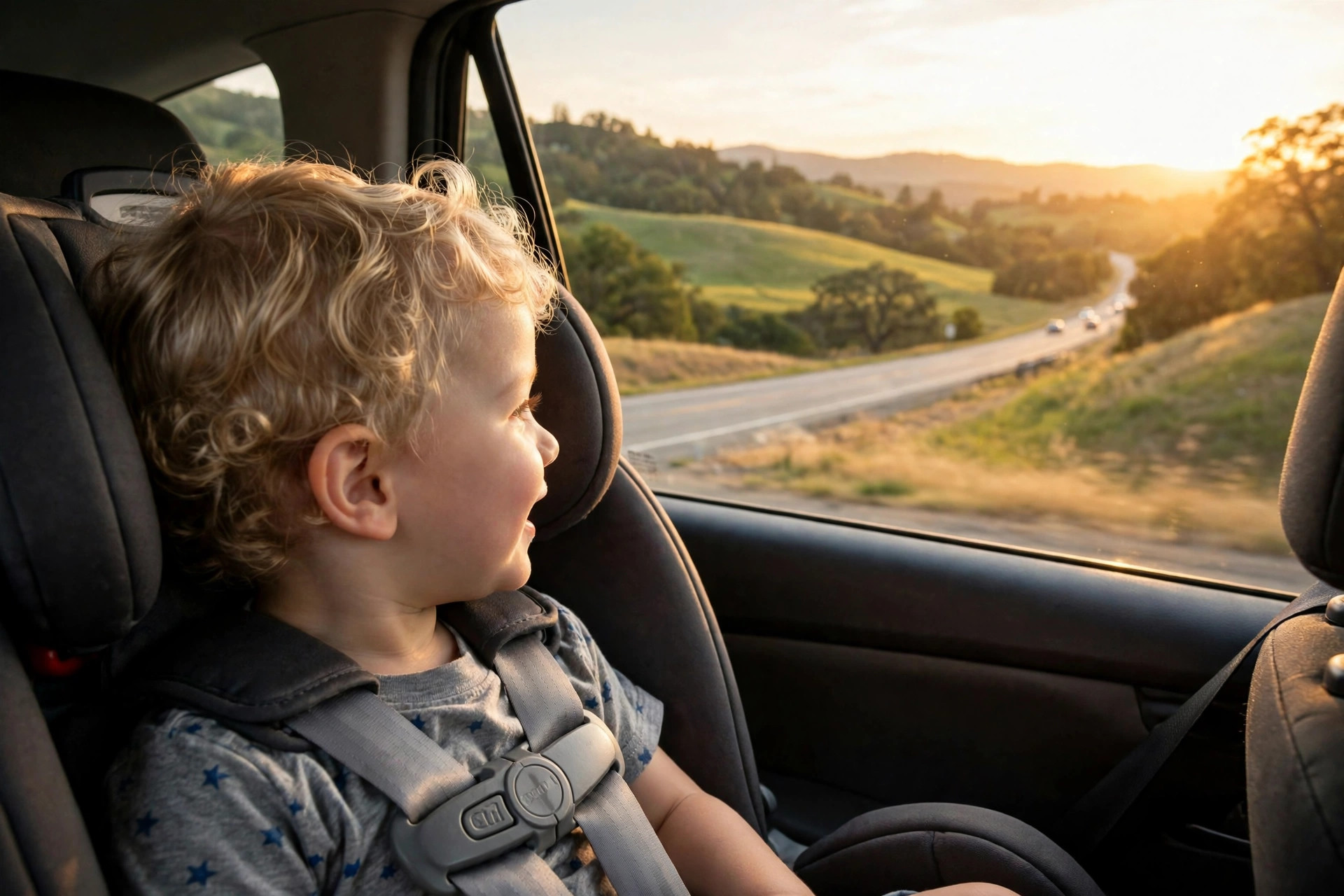
A long car ride with a toddler can feel like the hardest part of any family trip. Your two-year-old was happy ten minutes ago; now the snacks are on the floor, the favorite toy is out of reach, and the crying started around mile 60. If that sounds familiar, you are not doing anything wrong.
The good news: with the right plan, long car rides with a toddler are survivable — even pleasant. This guide covers the timing, stops, snacks, entertainment, and packing systems that actually work on real drives — no gimmicks, no expensive gear.
Why Toddlers Struggle on Long Car Rides
A toddler in a car seat faces three frustrations at once: they cannot move, they cannot reach what they want, and they cannot say exactly what is wrong. Boredom, hunger, tiredness, and discomfort all sound the same from the back seat — crying.
Most meltdowns come down to five causes: hunger, tiredness, boredom, discomfort (too hot, a twisted strap, a wet diaper), or motion sickness. Every strategy below targets one of those five.
Reset your expectations too: a four-hour solo drive takes five or six with a toddler once stops are counted. Planning for that slower pace removes the pressure that turns a fussy stretch into a stressful one.
Plan the Drive Around Your Toddler’s Clock
The single biggest lever is timing. Toddlers run on rhythms — naps, meals, energy peaks — and a drive that works with those rhythms is dramatically easier than one that fights them.
Two timing strategies work for most families — pick the one that fits your child:
- The early start: Leave 30–60 minutes before your toddler usually wakes. Loaded into the car seat still sleepy, many toddlers drift back to sleep for the first hour or two.
- The nap-time departure: Play hard in the morning, serve lunch, change the diaper, and get in the car 30–45 minutes before the usual nap. A tired, well-fed toddler often sleeps 90 minutes to two hours.
Night driving works for some families, but only if the driver can stay alert and the toddler will actually sleep. If either is doubtful, split the trip with an overnight stop instead — it is often the difference between arriving happy and arriving exhausted.
A realistic drive-day timeline:
| Time | What happens | Why it works |
|---|---|---|
| 6:00–7:00 AM | Early departure, toddler still sleepy | 1–2 quiet hours |
| 8:30 AM | Breakfast stop: eat in the car or at a rest area | Full belly, diaper change, stretch |
| 9:00–11:00 AM | Drive through the alert, happy window | Best window for songs and games |
| 11:30 AM | Lunch + long play stop (30–45 minutes) | Burns energy before the nap window |
| 12:30–2:30 PM | Nap-time driving stretch | Longest quiet stretch of the day |
| 3:00 PM | Snack + short stretch stop | Resets mood for the final leg |
| 4:00–5:00 PM | Final drive to destination | Arrive before dinner and bedtime routine |
Adjust the clock to your child’s schedule, but keep the pattern: drive during sleep windows, stop before the cranky window, never push past three hours without a real break.
The 2–3 Hour Stop Rule
Plan a proper stop every two to three hours, even if your toddler seems fine. A stop is not just a bathroom break — it is a reset: 10–15 minutes of running and fresh air can buy another two calm hours in the car seat.
Before the trip, mark stops with space to move on your route: rest areas with grass, parks near the highway, or restaurants with play areas. A stop where your toddler can actually run beats a gas station parking lot every time. If you are heading to a campground, our road trip games for kids can keep older siblings busy while the toddler plays.
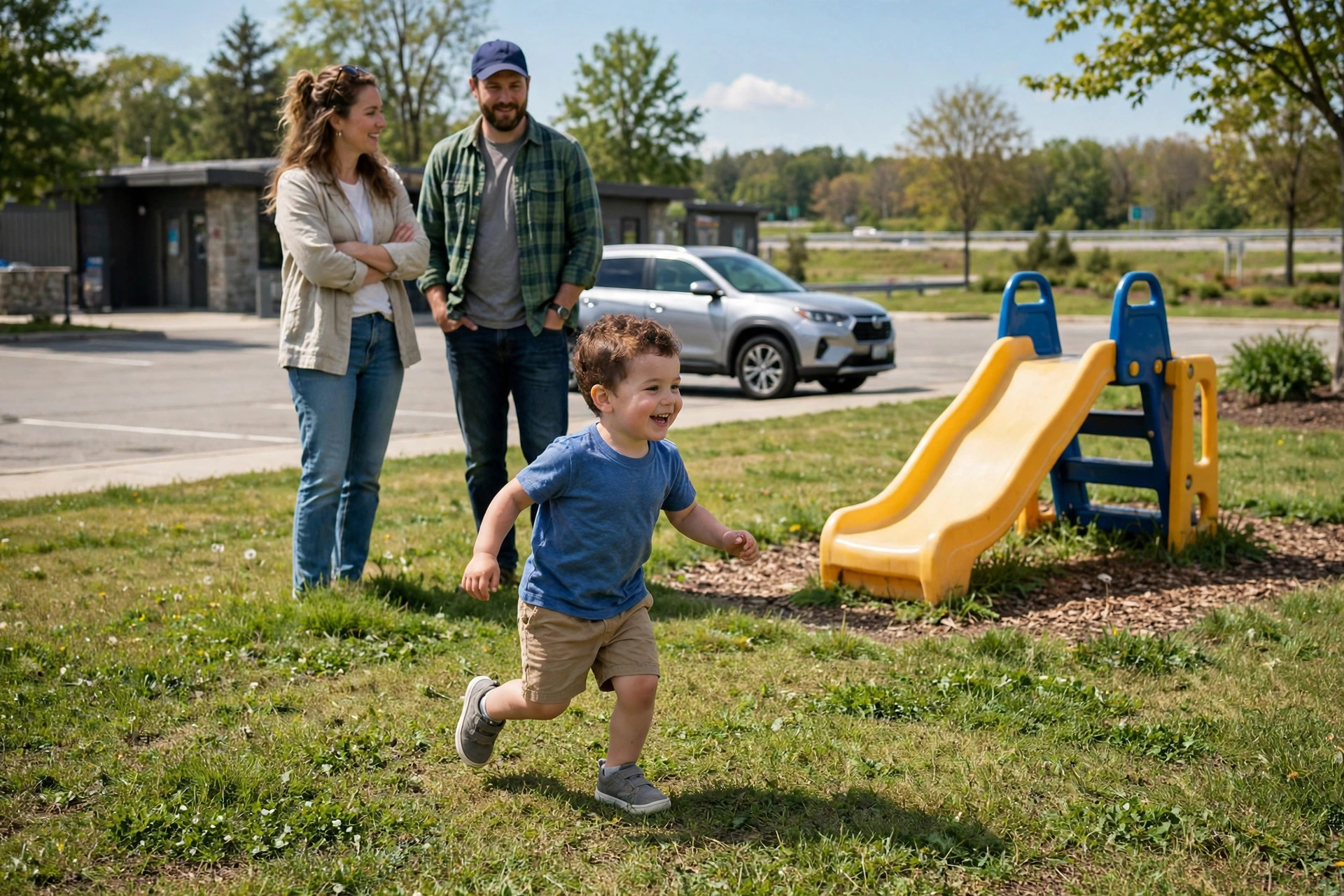
A simple stop routine keeps things quick:
- Park, unbuckle, and let your toddler walk or run immediately — do not do errands first.
- Change the diaper and offer water and a small snack.
- Let them move for at least 10 minutes (15–20 is better).
- Do your own bathroom and fuel tasks while they play, not before.
- Buckle in and go while they are still in a good mood — do not linger until boredom returns.
One more tip: eat meals in the car and stop afterward for the play break, rather than stopping twice — once to eat, once to play. That alone can save 30 minutes per stop.
A Snack Strategy That Actually Works
Snacks are the most reliable toddler-calming tool on a long drive — but the trick is the system, not the snack. Pack small, separate portions and hand them out one at a time: a whole bag is gone in four minutes, while five small portions can cover an hour.
Choose low-mess snacks that are safe to eat in a moving car: crackers, dry cereal, cheese sticks, fruit pouches, banana pieces, and dry yogurt melts. Avoid anything sticky, crumbly, or hard that could be a choking risk while the car is moving — and anything that melts all over the car seat on a warm day.
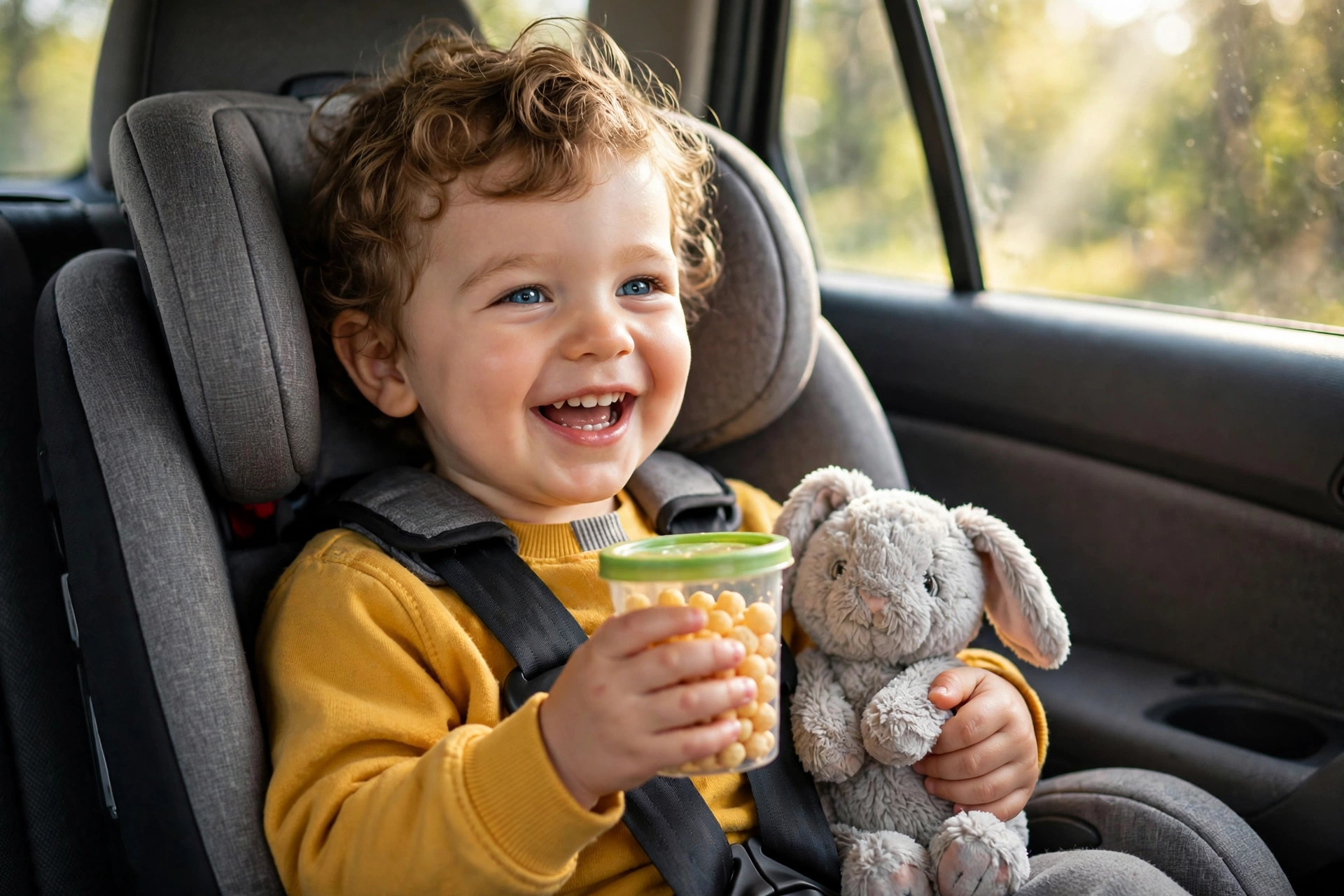
Keep a dedicated snack bag within arm’s reach of the front passenger seat, not buried in the trunk. A small cooler bag with cold items (yogurt pouches, cheese, cut fruit) covers the first half of the drive; shelf-stable snacks cover the rest. Keep a spill-proof sippy cup within reach too, filled before you leave and refilled at stops — toddlers rarely notice thirst until they are already upset.
Entertainment by Age: What Actually Keeps a Toddler Happy
What works depends heavily on age — a 14-month-old and a 3-year-old need very different entertainment. Here is what works at each stage.
12–18 months: novelty and texture
At this age, rotation beats quantity. Pack five or six small, unfamiliar items — a stacking toy, a board book, a soft ball — and introduce one at a time. Wrap a couple in tissue paper: unwrapping is an activity in itself. Songs with hand motions (Itsy Bitsy Spider, Wheels on the Bus) let your toddler join in without needing words, and looking out the window at trucks and cows is genuinely entertaining for long stretches.
Age 2: participation and pretend
Two-year-olds want to do things, not just watch. Sticker books, magnetic boards, and lift-the-flap books are gold. Start simple car games: “Can you find something red?” or “What sound does a cow make?” A small bag of toy cars or animals lets them play pretend in their lap, and toddler music or short audiobooks help — try one new playlist per hour to keep it fresh.
Age 3: games, stories, and choices
Three-year-olds can handle real games: I Spy with colors, counting games, and simple “would you rather” questions. Let them choose — “the blue book or the dinosaur?” — because choices give a toddler a sense of control, which is exactly what a car seat takes away. A tablet with a downloaded show is fine as a backup for the last hour; use it as a tool, not a source of guilt. For more screen-free ideas, see our camping games for kids that need no equipment — many work just as well in the back seat.
One rule for every age: introduce new items one at a time and save the best one for the hardest stretch, usually the last hour.
Car Sickness: Prevention and a Cleanup Plan
Motion sickness is more common in toddlers than many parents expect, and it often shows up as sudden crankiness, paleness, or quietness rather than obvious nausea. If your toddler goes suddenly quiet and pale on a winding road, suspect motion sickness before assuming boredom.
Prevention helps more than cure: keep the car cool with fresh air from the vents, avoid reading or screens on winding stretches, and keep your toddler looking out the front or side window rather than down at a book or toy. Stick to smooth highways where possible and take a break at the first sign of queasiness — fresh air and a walk often settle a stomach faster than anything else.
Pack a cleanup kit and hope you never use it: old towels, a change of clothes for your toddler (and a spare shirt for you), plastic bags, wipes, and water. If sickness happens, pull over, clean up calmly, change clothes, offer small sips of water, and wait ten minutes before driving on. Staying calm matters — if you panic, your toddler will too. If motion sickness happens on most drives, mention it to your pediatrician before your next trip.
Car Seat Comfort and Safety Checks
Before a long drive, do a two-minute car seat check: straps flat with no twists, chest clip at armpit level, harness snug (if you can pinch slack at the shoulder, tighten it). Remove bulky coats before buckling — a puffy jacket creates dangerous slack in a crash and overheats your toddler anyway. A thin fleece plus a blanket over the buckled harness keeps them warm without compromising the fit.
For authoritative car seat installation and fit guidance, check the National Highway Traffic Safety Administration (NHTSA) car seat guide and the American Academy of Pediatrics’ car safety seat information for families before any long trip. Never let a toddler ride unbuckled “just for a minute” to calm down — that minute is when you need the seat most.
A sunshade stops the afternoon sun from baking one side of the car seat, and a small neck pillow can support a sleeping toddler’s head.
The Toddler Road Trip Packing Checklist
Pack in two bags: a front-seat bag for things you need while driving, and a rest-stop bag for things you only need at stops.
Front-seat bag (within arm’s reach):
- Snacks in small portions + sippy cup of water
- 2–3 small toys or books (rotate the rest from a bag in the footwell)
- Wipes, plastic bags, and a spare pacifier if your toddler uses one
- A comfort item — the lovey or blanket your toddler sleeps with
- Phone charger and your audiobook or playlist, ready to go
Rest-stop bag (in the trunk or back):
- Diapers, wipes, diaper cream, and a portable changing pad
- Two full changes of clothes (one is never enough)
- Sunscreen and a sun hat for outdoor stops
- A travel potty or potty seat if your toddler is potty training (our potty training while camping guide covers the setup)
- Towels and a cleanup kit for spills or car sickness
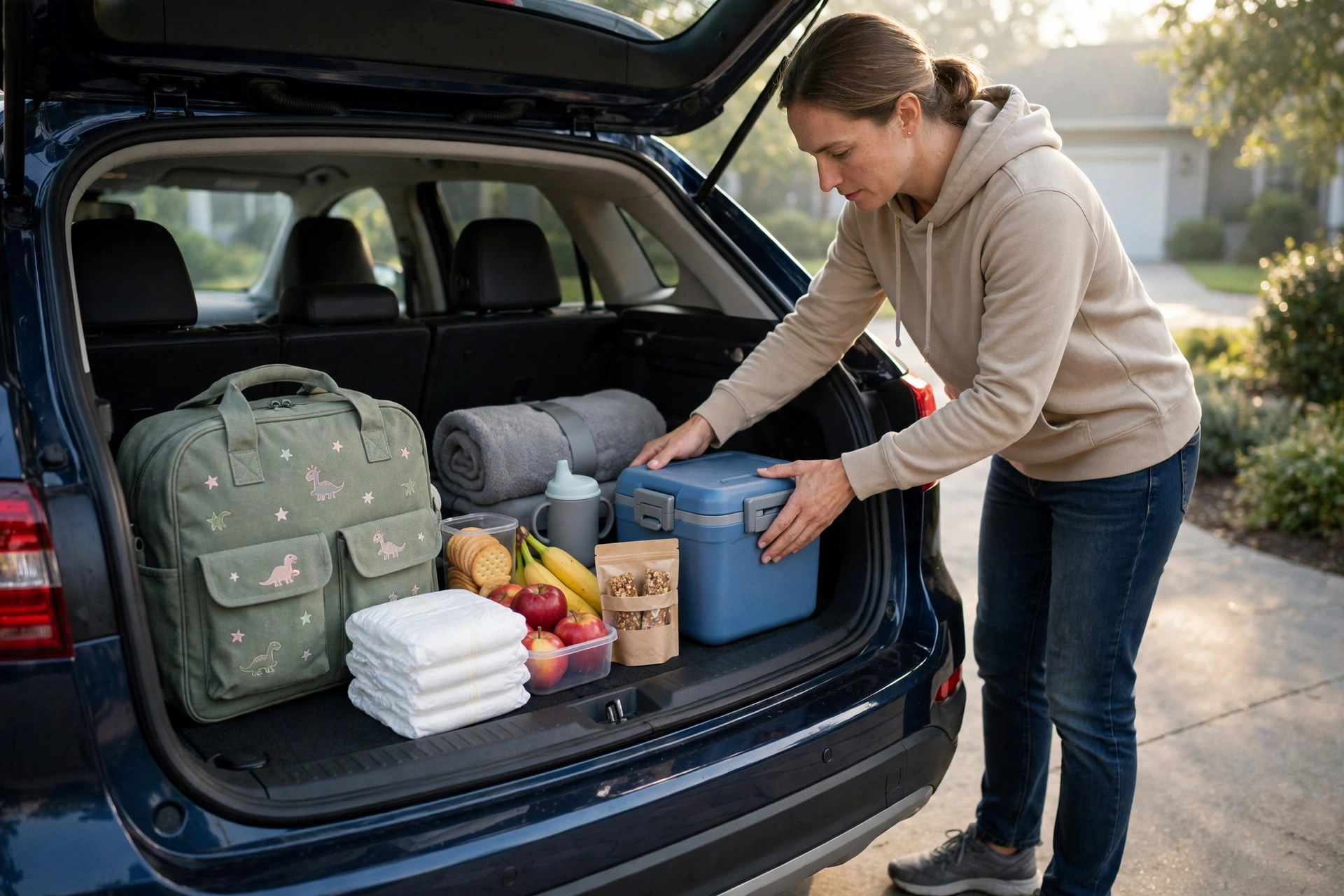
Pack the car the night before if you can — a calm morning departure with no forgotten lovey sets the tone for the whole drive. For the full trip packing list, our family camping checklist covers the campsite side, and the family road trip cost breakdown helps you budget the drive itself.
When Meltdowns Happen Anyway
Even with perfect planning, there will be a meltdown on some trip. When it happens: pull over, get your toddler out of the car seat, and let them move, drink, eat, or just be held for a few minutes. Do not try to soothe a screaming toddler from the front seat while driving — it frustrates both of you and distracts the driver. Give yourself grace: a crying toddler does not mean you planned badly — only that a small human is tired, bored, or uncomfortable. Ten minutes of patience at a rest stop usually fixes it.
Frequently Asked Questions
How long is too long for a car ride with a toddler?
Families find 4–6 hours of driving per day comfortable with a toddler, including stops; beyond that, plan an overnight stop. Toddlers should not stay in a car seat for more than about two hours without a break to move around.
What is the best time of day to drive with a toddler?
Early morning or the nap window. An early start covers distance while they are sleepy, and departing just before nap time often buys a 90-minute to two-hour quiet stretch.
How do I keep a toddler entertained on a long car ride without a tablet?
Rotate small toys one at a time, use sticker books and magnetic boards, sing songs with hand motions, and play I Spy with colors or animal sounds. Audiobooks and toddler music help, and looking out the window is genuinely entertaining for under-twos.
What snacks are best for toddlers on a road trip?
Low-mess, easy-to-hold snacks: crackers, dry cereal, cheese sticks, fruit pouches, and dry yogurt melts — packed in small portions, handed out one at a time, always with water. Avoid sticky, crumbly, or hard snacks that could be a choking risk in a moving car.
How often should I stop on a long drive with a toddler?
Plan a real stop every two to three hours, with at least 10–15 minutes of running and playing — fuel-only stops do not count.
What should I do if my toddler gets car sick?
Pull over safely, get fresh air, and let them walk around for ten minutes. Keep the car cool, avoid screens and books on winding roads, and keep their gaze out the window. Pack towels, a change of clothes, and plastic bags just in case — and if car sickness happens on most drives, talk to your pediatrician before your next trip.
