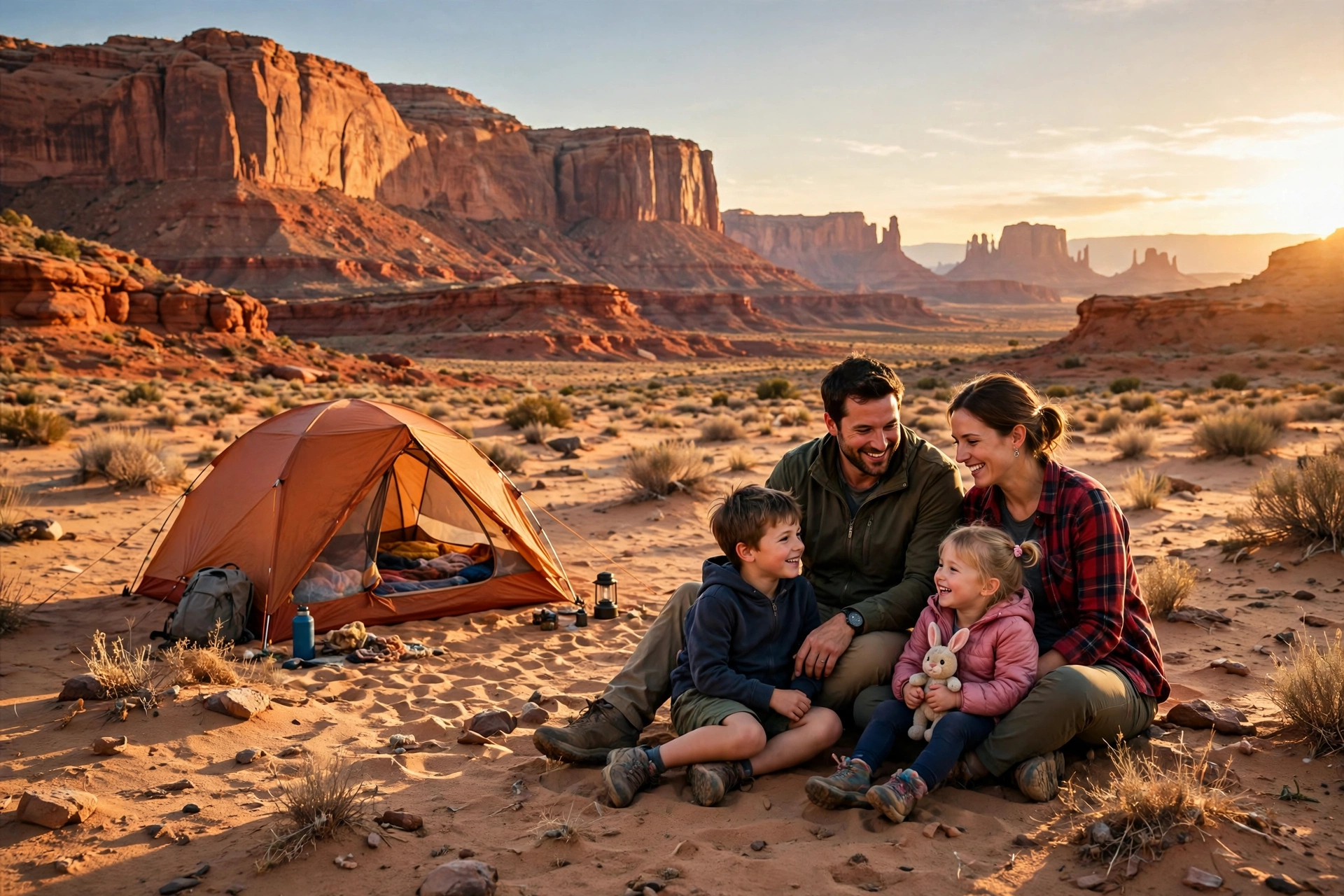
Desert camping with kids sounds like a contradiction. Blazing sun, no shade, spiky plants, and miles of sand do not exactly scream “family vacation.” But ask any family who has watched the sun set over red rock canyons while their kids hunted for lizards, and they will tell you the desert is one of the most magical places to camp with children — if you prepare for it properly.
Why Desert Camping Is Different (and Worth It)
The trade-off is that the desert is unforgiving about mistakes. There is no stream to refill a bottle, no forest canopy for shade, and no quick drive to a store when you run out of water. That is why desert camping with kids is mostly a planning exercise. Get the water, shade, and timing right, and the rest is pure fun.
If this is your family’s first camping trip of any kind, read our first family camping trip weekend plan first, then come back here for the desert-specific advice.
The Best Family-Friendly Desert Parks in the US
Not every desert is equally suitable for young children. Start with a park that has developed campgrounds, drinking water, ranger programs, and short, flat trails. These five are the best places to begin:
1. Joshua Tree National Park, California
Joshua Tree is the classic first desert camping trip. Its namesake trees look like something from a storybook, the boulders are perfect for supervised scrambling, and the park runs excellent ranger-led programs for kids. Campgrounds like Jumbo Rocks and Hidden Valley put you right among the rock formations. Check current conditions and campground status on the National Park Service Joshua Tree page before you go.
2. Saguaro National Park, Arizona
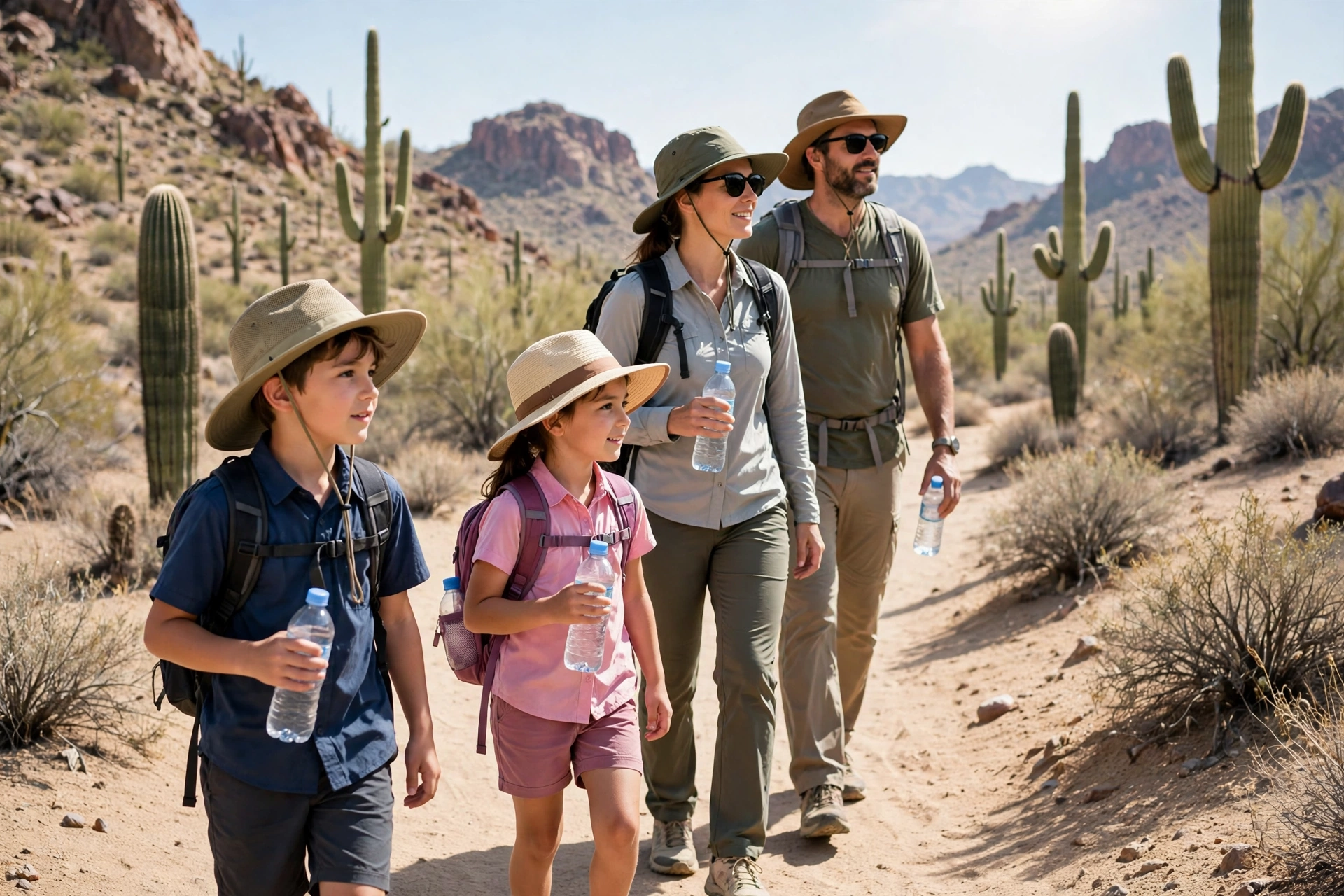
Nothing says “desert” to a child like a 40-foot saguaro cactus. Saguaro National Park near Tucson has an easy scenic loop drive, a desert discovery nature trail that is flat enough for toddlers, and a visitor center with hands-on exhibits. Summer temperatures here are extreme, so this is a late fall through early spring destination for families. Check trail conditions on the National Park Service Saguaro page before you go.
3. White Sands National Park, New Mexico
White Sands is pure joy for kids: miles of brilliant white gypsum dunes perfect for sledding and rolling down. There is no camping inside the park, but nearby campgrounds and the town of Alamogordo make a great base. Bring sleds and visit in the late afternoon, when the sand cools and the light turns golden.
4. Big Bend National Park, Texas
Big Bend is wilder and more remote, best for families with older kids who have camped before. The reward is enormous: desert, mountains, and the Rio Grande in one park, plus some of the darkest night skies in the country. Fill up on fuel, water, and food before you enter the park — services inside are very limited.
When to Go: The Desert Seasons Table
Timing is the single most important safety decision you will make. The same campground that is delightful in March can be dangerous in July. Use this as your starting point:
| Season | Typical Daytime Highs | Verdict for Families |
|---|---|---|
| Late fall (Oct–Nov) | 70–85°F (21–29°C) | Best season. Warm days, cool nights, fewer crowds. |
| Winter (Dec–Feb) | 55–70°F (13–21°C) | Excellent for hiking; nights can drop near freezing, so pack warm sleeping gear. |
| Spring (Mar–Apr) | 75–90°F (24–32°C) | Great season, plus wildflowers in a good rain year. Book early. |
| Early summer (May–Jun) | 95–105°F (35–41°C) | Only for experienced desert campers; hike at dawn, rest midday. |
| High summer (Jul–Aug) | 105–115°F (41–46°C) | Not recommended with young children. Monsoon storms add flash-flood risk. |
For most families, the sweet spot is October through April. If your only free time is summer, choose a high-elevation desert destination instead — places like the campgrounds around Flagstaff, Arizona, or Great Basin National Park in Nevada, where altitude keeps temperatures manageable. Book campsites early through Recreation.gov, which handles reservations for most federal campgrounds.
Heat Safety: The Rules That Matter Most
Children overheat faster than adults. They have a higher surface-area-to-body-mass ratio, they sweat less efficiently, and they often do not notice thirst until they are already dehydrated. These rules are non-negotiable on a desert camping trip with kids.
1. Water: plan for double what you think you need
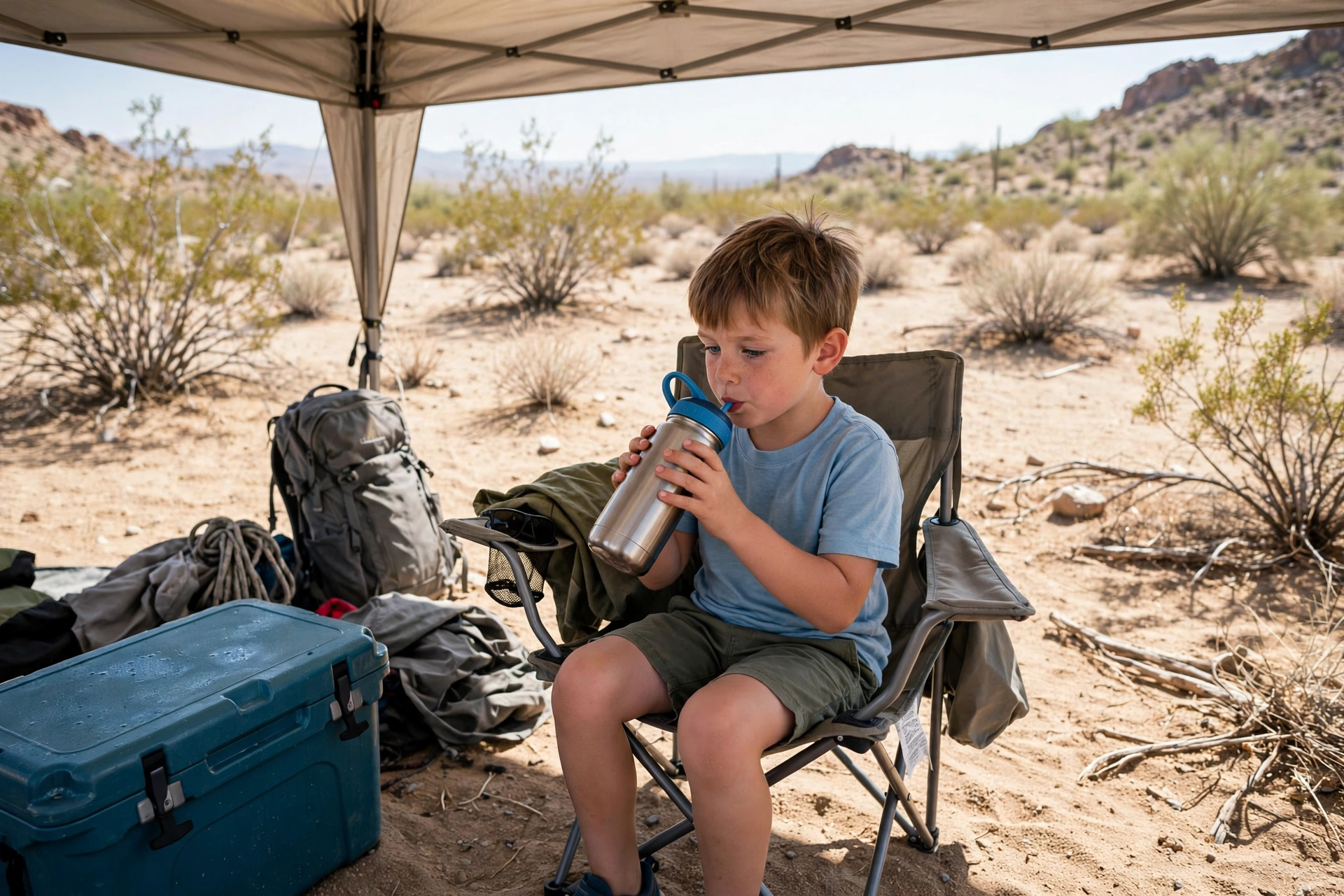
Budget at least one gallon (about 4 liters) of drinking water per person per day in the desert, plus extra for cooking and washing. Keep a dedicated water bottle for each child, mark it with their name, and set a simple rule: a sip every 15 minutes while active, whether they feel thirsty or not. Freeze a few bottles the night before so you have cold water into the afternoon.
2. Know the warning signs of heat illness
Teach yourself and older kids to recognize these symptoms early:
- Heat exhaustion: heavy sweating, weakness, nausea, headache, dizziness, pale or clammy skin. Move the child to shade immediately, loosen clothing, apply cool wet cloths, and give small sips of water. If symptoms do not improve within 30 minutes, seek medical help.
- Heatstroke (emergency): hot, red, dry skin, confusion, slurred speech, fainting, or a body temperature above 103°F (39.4°C). Call emergency services right away, move the child to the coolest spot available, and cool them with wet cloths or water while you wait. Heatstroke is a medical emergency — do not wait to see if it gets better.
- Dehydration: dry mouth, few or no tears when crying, dark yellow urine, unusual tiredness or crankiness. In toddlers, fewer wet diapers than usual is a key warning sign.
3. Schedule around the sun, not the clock
Plan hikes and active play for the first two hours after sunrise and the last two hours before sunset. From roughly 11 a.m. to 3 p.m., stay in the shade: rest in the tent, read, play card games, or drive a scenic loop with the air conditioning on. This rhythm — early activity, midday rest, evening activity — is how desert animals live, and it works just as well for families.
4. Sun protection is a system, not a single product
Sunscreen alone is not enough in the desert, where reflected light bounces off sand and rock. Layer up: wide-brim hats, lightweight long sleeves, UV-protective sunglasses for kids, and SPF 50 sunscreen reapplied every two hours (and after swimming or heavy sweating). A pop-up shade canopy at your campsite is one of the best investments you can make — it creates an outdoor living room where kids can play safely for hours.
Desert Camping Gear: What to Pack Differently
Your regular camping kit covers most of it — tent, sleeping bags, camp stove, and the rest of our family camping checklist of 47 essentials still applies. The desert adds a few items that matter more here than anywhere else:
- Extra water capacity: a 5-gallon jug per family on top of individual bottles, plus a backup supply in the car.
- Shade canopy or tarp: your campsite’s most-used piece of gear. A 10×10 pop-up canopy is worth its weight.
- Closed-toe shoes for everyone: desert ground hides cactus spines, sharp rocks, and hot sand. No flip-flops outside the tent.
- Headlamps with red-light mode: desert nights are truly dark, and red light preserves night vision for stargazing.
- Electrolyte packets: for kids, the pediatric kind. Add them to water on long, hot hikes.
- Warm layers: desert nights can be 30–40°F colder than the day. Pack fleece jackets and warm sleeping bags even when the forecast says 90°F.
- A small first-aid kit with tweezers: cactus spines happen. Tweezers, antiseptic wipes, and adhesive bandages cover most desert scrapes.
- Wet wipes and hand sanitizer: water is too precious to waste on washing hands at every meal.
One thing to leave behind: dark-colored tents if you can avoid them. Light-colored tents stay noticeably cooler inside during the day.
Wildlife Safety: Respect, Don’t Fear
Kids are fascinated by desert animals, and honestly, the animals are mostly not interested in you. The rules are simple and easy to teach: never put hands or feet where you cannot see them, always shake out shoes before putting them on, and never reach into rock crevices or under logs. Keep your campsite clean — food in sealed containers, never left out overnight — and store food in your car or a hard-sided container where required. Scorpions, snakes, and other desert creatures are active mostly at dawn and dusk, so stick to trails and well-lit areas at those times. If you do spot a rattlesnake or a javelina, the correct response is to stay calm, back away slowly, and give it plenty of space. Most desert animals only become dangerous when cornered or surprised.
Keeping Kids Happy in the Desert
A desert campsite is a natural playground, but kids still need structure, especially during the hot middle of the day. These activities work well at camp:
- Desert scavenger hunt: make a list before the trip — a smooth stone, an animal track, a feather, a cactus flower, a lizard. Younger kids love the hunt; older kids love competing.
- Sand play: bring a small bucket and shovel. Dunes and sandy washes are a sandbox the size of a national park.
- Junior Ranger programs: most desert national parks offer free Junior Ranger booklets. Kids complete activities, earn a badge, and learn the park’s ecology. It is the single best free activity in the park system — see our guide to Junior Ranger programs at the best national parks for kids.
- Rock and shadow art: desert light creates dramatic shadows. Bring paper and crayons for rubbings, or let kids photograph the patterns.
- Stargazing: deserts have some of the darkest skies in the US. Download a free star-map app before the trip, lie back on a blanket, and find the Milky Way. Our stargazing guide for kids has constellation-spotting tips for beginners.
Desert Nights: Cold, Quiet, and Incredible
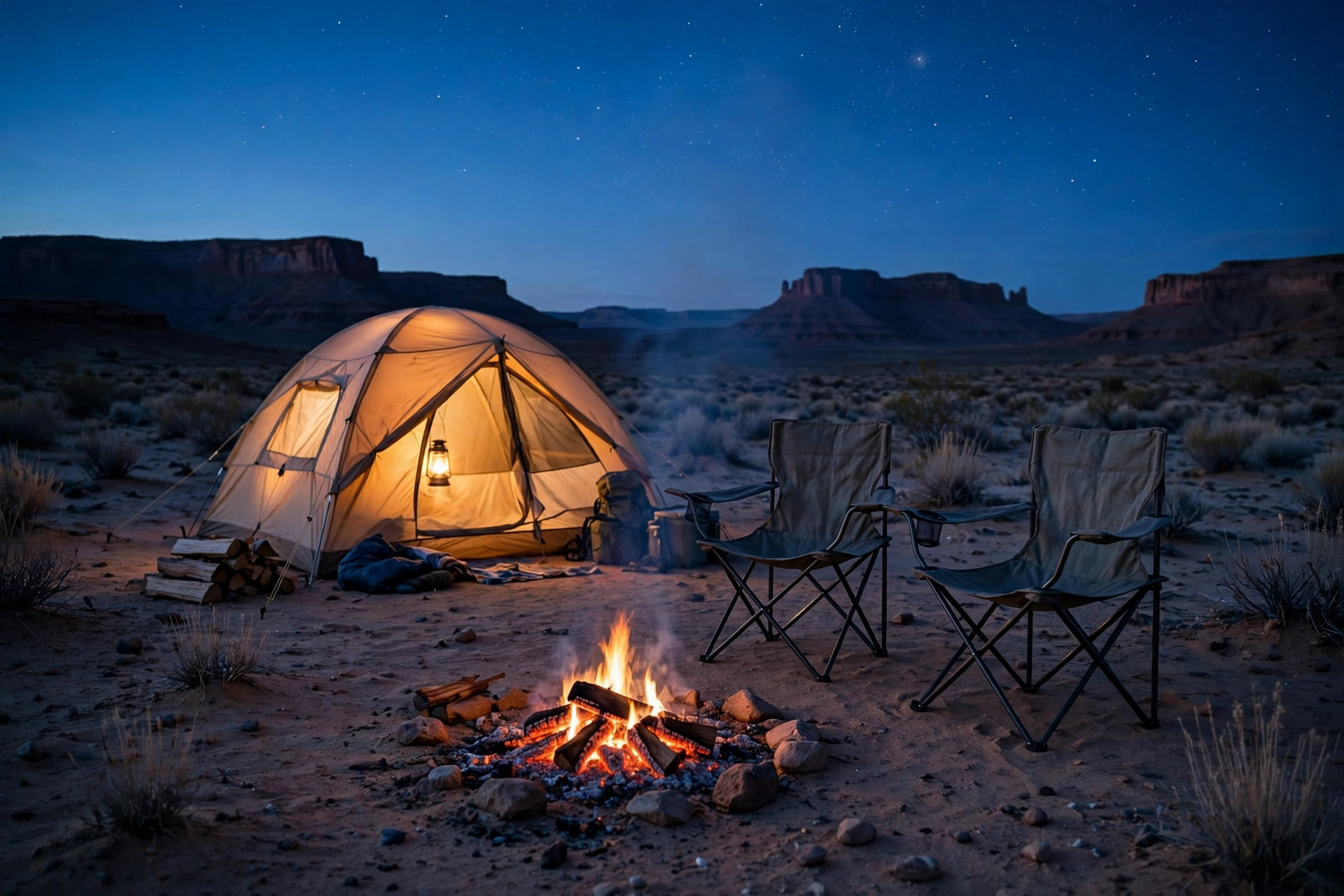
The biggest surprise for first-time desert campers is how cold the night gets. A day that hit 90°F can drop into the 50s or even the 40s after dark. That temperature swing is also the desert’s gift: cool, comfortable evenings, no humidity, no mosquitoes, and a sky full of stars. Layer up for dinner, bring out the warm drinks, and let the kids stay up a little later than usual — the night sky is half the reason to camp in the desert.
Leave No Trace in a Fragile Landscape
Desert ecosystems recover slowly. A single footprint on a cryptobiotic soil crust — the dark, bumpy living crust that holds desert soil together — can take decades to heal. Stay on established trails and campsites, camp only in designated sites, and pack out everything you brought in. If your kids are old enough, teach them the seven Leave No Trace principles before the trip — our Leave No Trace for kids guide turns each principle into a game.
Frequently Asked Questions
Is desert camping safe for toddlers?
Yes, with the right season and preparation. Toddlers do well in desert parks from October through April, when temperatures are mild. Keep hikes short and flat, carry extra water and sun protection, and avoid summer entirely with children under five.
How much water do kids need when camping in the desert?
Plan on at least half a gallon (about 2 liters) per child per day for drinking, and more on active hiking days. Offer water every 15–20 minutes rather than waiting for them to ask — children often do not recognize thirst until they are already dehydrated. Add electrolyte packets on hot days.
What is the best desert national park for a first family trip?
Joshua Tree National Park is the best first choice for most families. It has easy trails, fascinating rock formations, ranger programs for kids, and campgrounds right in the scenery. Saguaro National Park and White Sands are excellent alternatives, especially for younger children.
Do I need to worry about snakes and scorpions?
Be aware, not afraid. Encounters are uncommon if you follow the basics: wear closed-toe shoes, watch where you step, shake out shoes and clothing, and never reach into dark crevices. Keep kids on trails, supervise them at dawn and dusk when desert animals are most active, and store food properly at camp.
Can you camp in the desert in summer with kids?
It is not recommended, especially in low-elevation deserts like the Sonoran or Mojave, where daytime temperatures regularly exceed 110°F. If summer is your only option, choose a high-elevation desert destination, camp near water or shade, and keep all activity to the early morning and evening hours.
What should kids wear for desert camping?
Lightweight, light-colored, long-sleeve shirts and long pants protect against sun and cactus spines better than shorts and tank tops. Add a wide-brim hat, sunglasses, closed-toe shoes, and sunscreen. Pack a fleece jacket and warm pajamas for the cold desert nights.
The desert rewards families who respect it. Come prepared, time your days around the sun, carry more water than you think you need, and your kids will remember the red rocks, the giant cacti, and the sky full of stars long after the trip is over.
