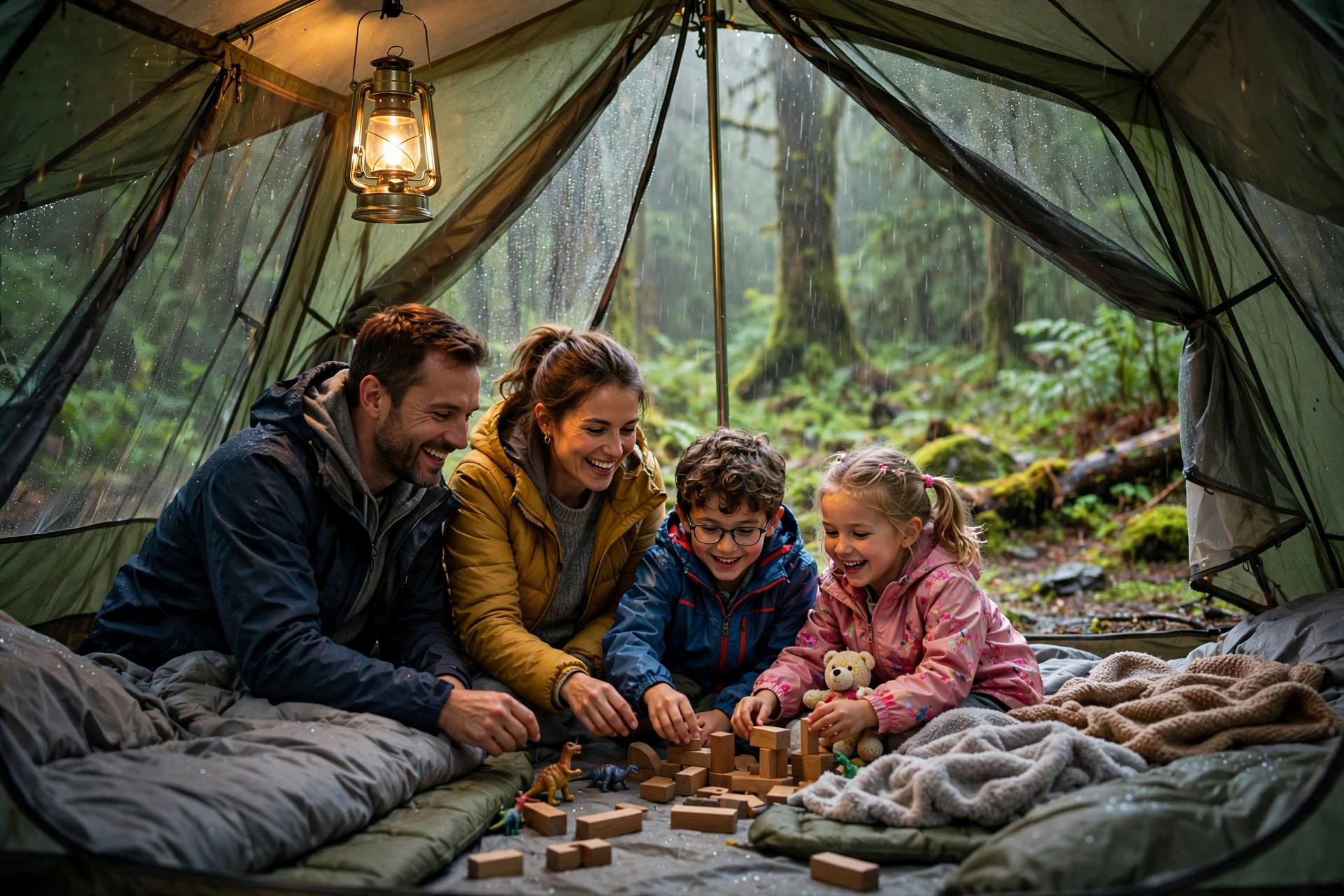
A gray sky over the tent does not have to mean a ruined camping trip. Rainy day camping with kids can actually become one of your family’s favorite trip memories — if you walk in with a plan, the right gear, and a tent full of ideas. As a parent who has sat out more than a few Pacific Northwest-style downpours with small kids, I can tell you: children do not mind the rain half as much as they mind being bored. Keep them busy, keep them dry and warm, and the rain becomes part of the adventure instead of the enemy.
This guide gives you 25 genuinely tent-friendly activities for rainy days, grouped by type so you can pick whatever fits your kids’ ages and energy level. You will also find a quick prep checklist, the gear that actually makes a difference, and the safety rules that matter when weather turns wet.
Before the Rain Starts: 5 Prep Moves That Save the Day
Most rainy-day misery is not about the rain itself — it is about being unprepared. Run through this checklist before the clouds open:
- Pitch with drainage in mind. Set the tent on a slight rise, never in a dip where water collects. If rain catches you after pitching, trench a shallow channel around the tent with a stick or your boot heel.
- Deploy the rain fly properly. A taut fly sheds water; a loose one sags and drips. Pull guy lines out at a 45-degree angle and re-tighten once the fly gets wet, because fabric stretches when damp.
- Build a dry entry zone. Rig a tarp over the tent entrance as a vestibule. This is where wet boots and rain jackets live — never bring them into the sleeping area. If you are still assembling your kit, our family camping checklist for beginners covers the tarps and extras worth packing.
- Pack dry clothes like gold. Seal one full change of clothes per person — including socks — in a dry bag or zip-top bag. Do not touch it until you need it. Dry feet reset everyone’s mood.
- Move everything off the ground. Store packs, blankets and food in closed bags on top of closed bins, not flat on the tent floor. Groundsheet seepage finds the lowest point.
First-timer? Many rainy disasters start as ordinary setup mistakes — see 11 family camping mistakes first-timers make so you do not repeat the classics.
25 Tent-Friendly Activities for Rainy Days
Classic Games & Challenges (1–6)
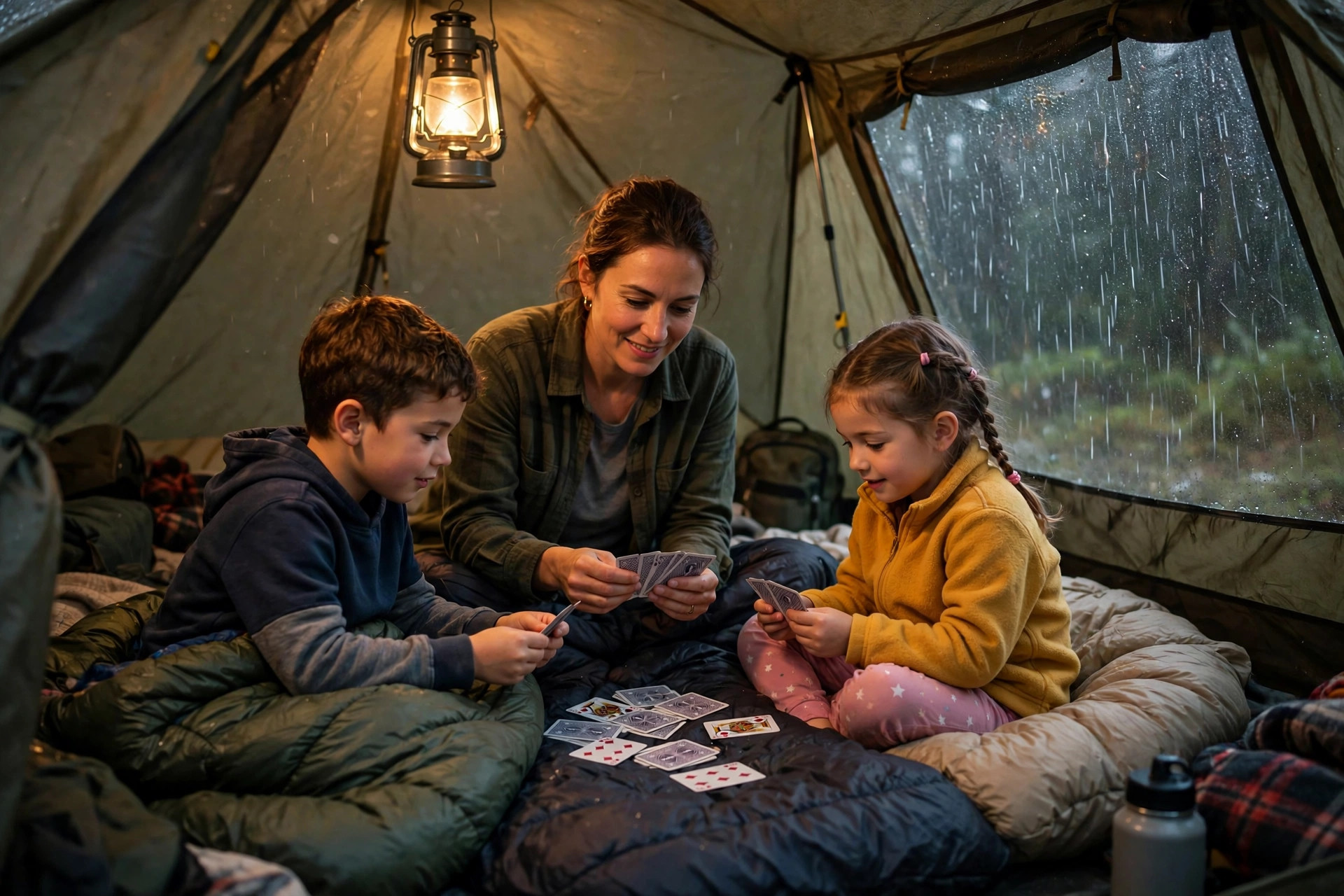
- Card game tournament. Pack a travel deck and run a mini-tournament: Go Fish for preschoolers, Uno for early elementary, Rummy for tweens. Keep a running scoreboard on a notepad — kids take scoreboard tournaments very seriously.
- Dice challenge ladder. One pair of dice, ten silly challenges written on slips of paper (“bark like a dog,” “touch your toes 5 times”). Roll to pick the next challenge. Simple, loud, and great for ages 4+.
- Tent-friendly scavenger hunt. Hide 10 small items (a leaf, a spoon, a red sock, a pebble) around the tent and vestibule. Give younger kids a picture list, older kids written clues.
- Flashlight tag shadows. Turn off lanterns, hand each child a flashlight, and make shadow puppets on the tent wall. Who can make the funniest animal? The tent fly makes a perfect screen.
- 20 Questions, camping edition. One person thinks of something in nature; everyone else asks yes/no questions. Then flip it: kids invent mystery objects for parents to guess.
- Tic-tac-toe marathon. Draw a tournament grid on a journal page and rotate opponents. Best-of-five finals get dramatic. Bonus round: play with tiny sticks on a wet log under the vestibule.
Creative & Craft Time (7–12)
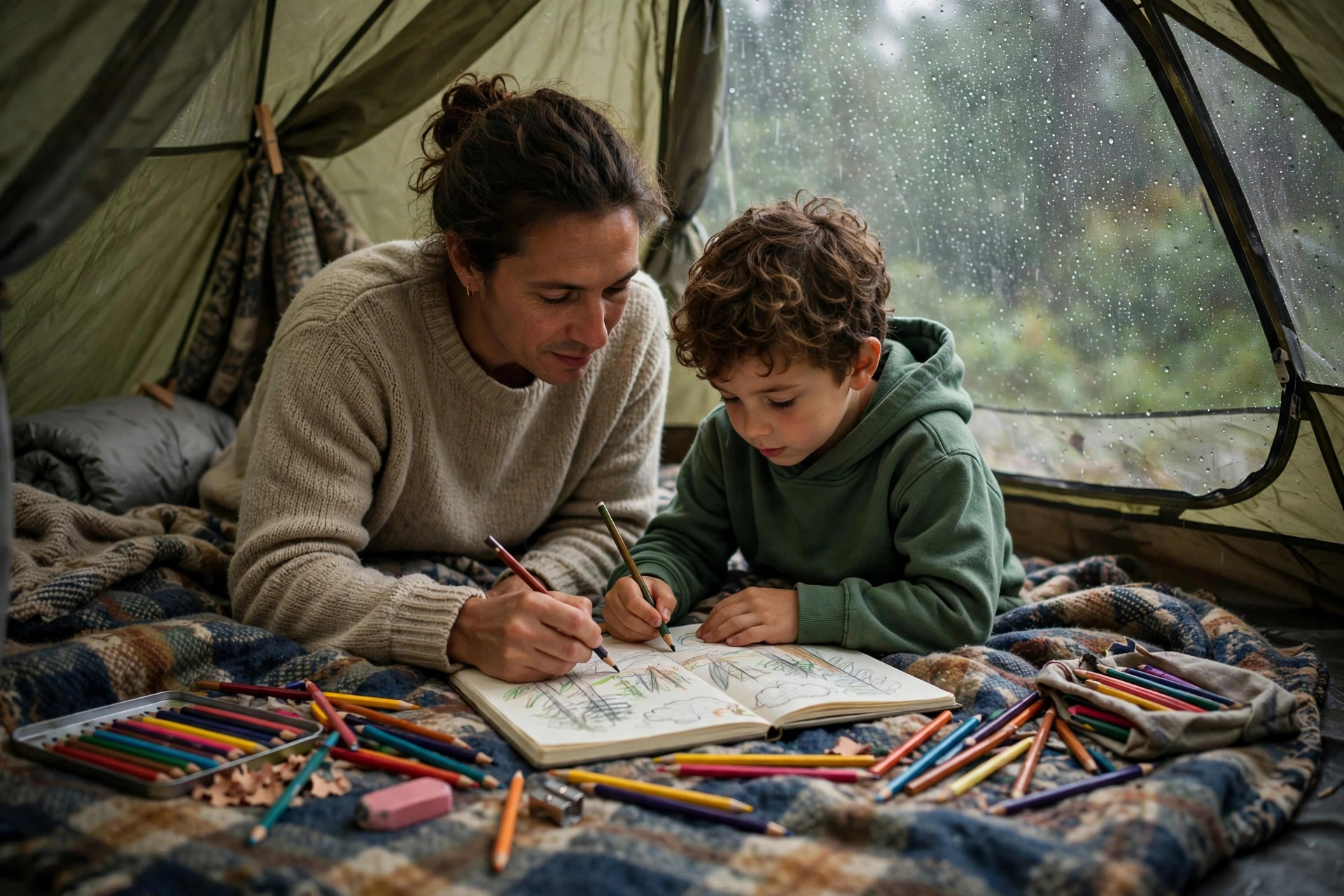
- Nature journal sketching. Hand out notebooks and have each kid draw what they see from the tent door: raindrops on the fly, dripping leaves, mist between trees. Date each page — they make wonderful trip souvenirs.
- Pine-cone creature building. Collect pine cones, sticks and bark during a dry window (or from under the vestibule overhang), then assemble little animals inside the tent. A bit of twine or rubber bands holds them together.
- Friendship bracelets from paracord scraps. A short length of paracord per child is light, cheap and keeps little fingers busy for an hour. There are dozens of simple knots even a 6-year-old can learn.
- Tent art gallery. Give everyone the same 10 minutes to draw the campsite from memory, then hang the drawings with clips on a guy line inside the tent. Vote for funniest, most accurate and most creative.
- Leaf-rubbing prints. Place a leaf under a sheet of paper and rub a crayon sideways across it. Wet leaves press flat and show vein detail beautifully — a genuinely educational rainy-day craft.
- Story stones. Draw simple pictures (sun, bear, canoe, star) on smooth stones with a marker and toss them in a bag. Kids pull three stones and invent a story connecting them.
Story & Imagination Games (13–18)
- Round-robin storytelling. One person starts a story with a single sentence; each player adds one sentence. Rainy tents produce gloriously weird tales. Record the best one on your phone.
- What-if explorer game. “What if a deer knocked on the tent?” “What if the rain tasted like lemonade?” Kids debate answers while the storm rolls — surprisingly absorbing for ages 5–10.
- Shadow theater. Level up from shadow puppets: two kids build a scene, a third narrates, parents hold the flashlight. Five-minute plays, applause mandatory.
- Memory tray. Place 12 small camp items on a tray, give everyone 30 seconds to memorize, cover it, and see who can name the most. Gradually increase the count for older kids.
- Sound bingo. Make bingo cards with sounds you might hear in the rain: thunder, dripping, owl, frog, tent flap, wind gust. First to mark a row wins hot chocolate duty.
- Build a tent city. Use backpacks, stuff sacks and sleeping bags to build “houses” connected by “tunnels.” Assign each kid a house and let the neighborhood grow.
Learning & Nature Connection (19–25)
- Count the seconds to thunder. When lightning flashes, count the seconds until thunder, then divide by 5 to estimate the miles to the storm. Kids love doing the math — and it quietly teaches a real safety habit.
- Rain-gauge science. Set a straight-sided cup under the tent fly edge, mark the water level every 30 minutes, and graph the results. A small weather station notebook makes it feel official.
- Worm and frog watch. After rain, earthworms and frogs come out — safely watchable from the dry edge of the campsite without leaving shelter. Observe, don’t collect.
- Cloud and puddle journal. Sketch the clouds before, during and after the storm. Young kids can simply describe the colors; older kids can learn basic cloud types.
- Map planning for tomorrow. Pull out the trail map and let the kids plan the next day’s hike: pick the route, estimate the distance, choose the lunch spot. Ownership builds excitement.
- Read-aloud hour. Bring one family book specifically for rainy tents — adventure stories read best to the soundtrack of rain on nylon. Fall camping trips often come with extra reading time, so this is a habit worth building.
- Gratitude circle. End the day with each person naming three things that went right. It sounds corny. It works anyway — especially on days the weather did not cooperate.
When to Venture Out: Safe Rainy-Day Excursions
Not all rain is created equal. A gentle drizzle is a different trip than a thunderstorm with 40-mph gusts. If conditions are safe (no lightning, no rising water, temperatures you can dress for), short wet-weather outings can be the highlight of the trip:
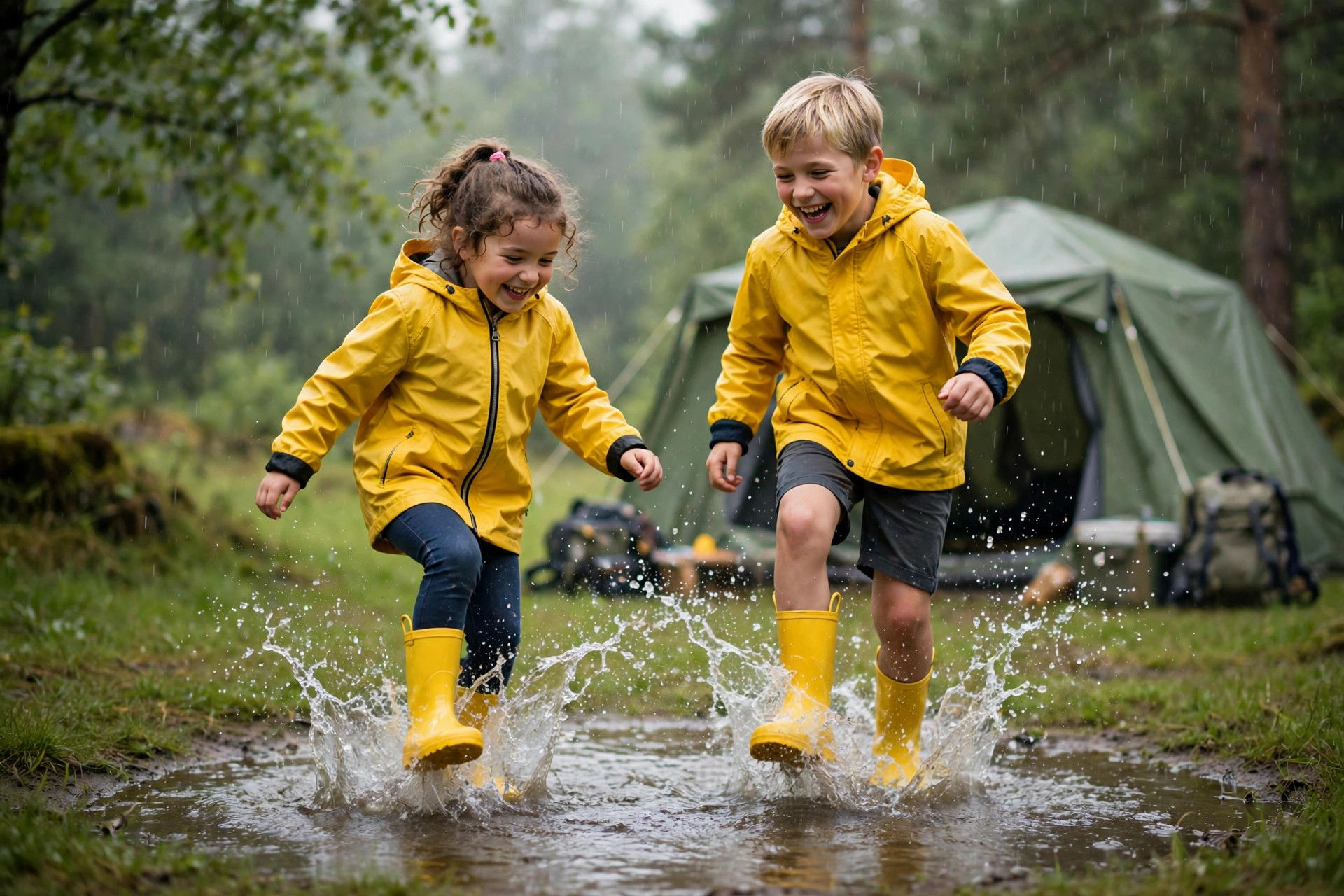
- Puddle jumping sessions. Full rain suits, rain boots, a towel back at the tent. Limit to 20–30 minutes, then change into the dry clothes you sealed in the dry bag.
- Short waterfall walks. Rain swells creeks and small falls. Stick to established trails, keep everyone within arm’s reach near water, and turn back if water rises or the trail becomes a stream.
- Vestibule cooking projects. Hot soup, campfire cocoa (on a stove, under the tarp, with ventilation), foil-packet snacks. Cooking together is entertainment in itself — and our layering guide for kids helps you dress them right for these damp outings.
Hard rule: if you hear thunder, the outing is over. Head for the tent (a vehicle is better if you have one), wait 30 minutes after the last thunderclap before heading back out, and stay away from lone tall trees. The National Park Service’s camping guidance covers broader backcountry safety principles worth reviewing before any trip.
Gear That Makes Rainy Camping Bearable
You do not need to spend a fortune — but the wrong gear in steady rain will end your trip early. Here is what actually matters:
| Item | Why it matters | What to look for |
|---|---|---|
| Rain fly + footprint | Keeps water off the tent body and out from under it | Full-coverage fly, factory-sealed seams |
| Large tarp (10×12 ft+) | Creates a dry living area outside the tent | Lightweight silnylon or poly, with guy lines |
| Kids’ rain suits | Jackets ride up; one-piece suits keep small kids dry | Waterproof (not just water-resistant), room to layer |
| Rain boots | Wet shoes end outdoor time instantly | Tall, grippy soles, easy on/off |
| Dry bags | Protect sleeping bags, electronics, dry clothes | Roll-top closure, sized to your packs |
| Quick-dry camp towels | Mop up drips, dry off kids, wipe condensation | Microfiber, pack of two or three |
| Extra guy lines + stakes | Wet flys need re-tensioning; tarps need anchors | Reflective cord, Y-stakes for soft ground |
The National Park Service’s camping pages are a good primer on weather-ready campground selection and general backcountry safety. Planning your first-ever trip? Our stress-free first camping weekend plan includes a gear list that covers wet-weather basics too.
Rain Safety Rules with Kids (Non-Negotiable)
- Lightning protocol: flash-to-bang under 30 seconds means seek shelter now; wait 30 minutes after the last thunder before resuming activities. Never shelter under an isolated tree.
- Watch for rising water. Never camp in a dry creek bed, and keep kids away from streams that rise quickly after heavy rain. When in doubt, move to higher ground.
- Beat the chill. Wet + cold = hypothermia risk, even in summer. Change kids out of damp clothes promptly, keep a warm layer ready, and know the warning signs: uncontrollable shivering, clumsiness, unusual sleepiness. recreation.gov’s trip-planning resources are worth checking for weather alerts at your specific campground.
- Ventilate the tent. A sealed tent in rain builds condensation fast. Crack a vent or door slightly (under the fly) to let moist air escape — it keeps bedding drier than you would expect.
- Have a bailout plan. Know the nearest town, keep the car packed for a fast exit, and agree beforehand on the conditions that end the trip. Leaving early is a good decision, not a failed trip.
Rainy-Day Camping FAQs
Is it safe to camp in a tent during a thunderstorm?
A tent offers no protection from lightning. If a thunderstorm approaches, move to a hard-topped vehicle if one is available. If you must stay in the tent, avoid touching metal poles and wait it out — never stand under isolated trees, and wait 30 minutes after the last thunder before going back outside.
What is the best tent activity for toddlers on a rainy day?
Toddlers do best with short, physical activities: building-block towers, a tent-city of pillows and stuff sacks, and sound bingo with real sounds they can hear. Rotate activities every 15–20 minutes, because toddler attention spans do not stretch to card tournaments.
How do you keep kids’ sleeping bags dry when it rains?
Use a footprint under the tent, never let sleeping bags touch the tent walls (condensation wicks through), and store bags in dry bags or trash bags during the day. Shake out condensation each morning so moisture does not accumulate over a multi-day trip.
Should we just pack up and leave if rain is forecast all weekend?
Not necessarily. Light to moderate rain with no lightning is very campable with the right gear and the activities above. Consider leaving if severe thunderstorms, flash-flood warnings, or near-freezing temperatures with rain are forecast — that combination is genuinely dangerous with small kids.
What should kids wear for playing in the rain at camp?
A waterproof (not water-resistant) rain suit or jacket plus rain pants, tall rain boots, and a warm layer underneath in cool weather. Always bring them back to the tent for a full change into dry clothes — including socks — and limit wet play to 20–30 minutes in cold conditions.
The Bottom Line
Rain on a camping trip is only a problem if you let the boredom win. Pack the tarp, seal the dry clothes, print this activity list or save it to your phone, and a rainy day becomes the day your kids talk about for years — the day they built a tent city, counted the storm, and discovered that rain on nylon sounds like the world’s best lullaby. Happy (damp) camping!
