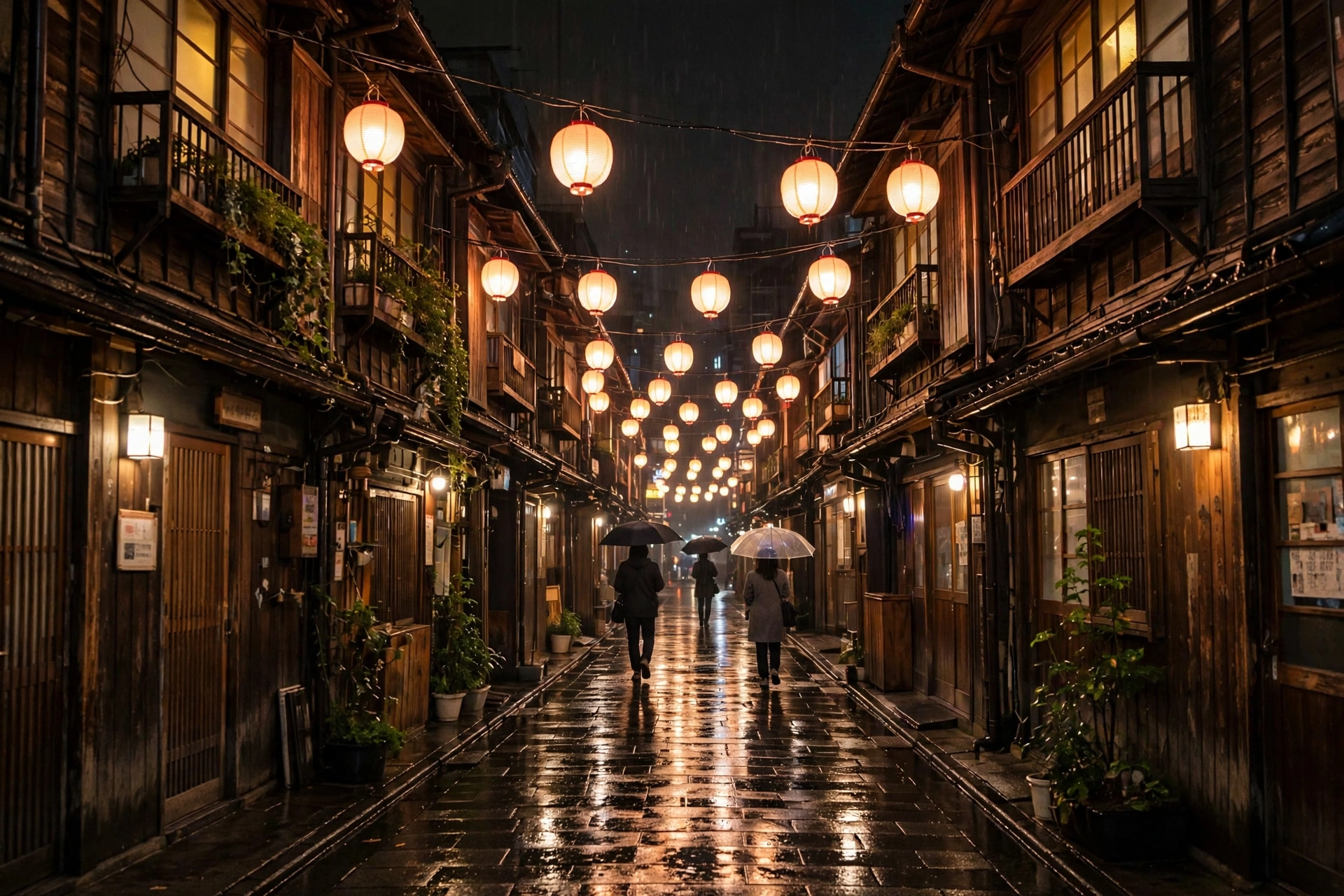
Golden Gai — sometimes called “Piss Alley” together with the neighboring Omoide Yokocho — is Tokyo’s most atmospheric nightlife neighborhood. Just a five-minute walk from Shinjuku Station’s east exit, this warren of six narrow alleys holds more than 200 tiny, independently run bars, each barely bigger than a living room. If you want to experience Tokyo after dark the way locals actually live it, this is where you come.
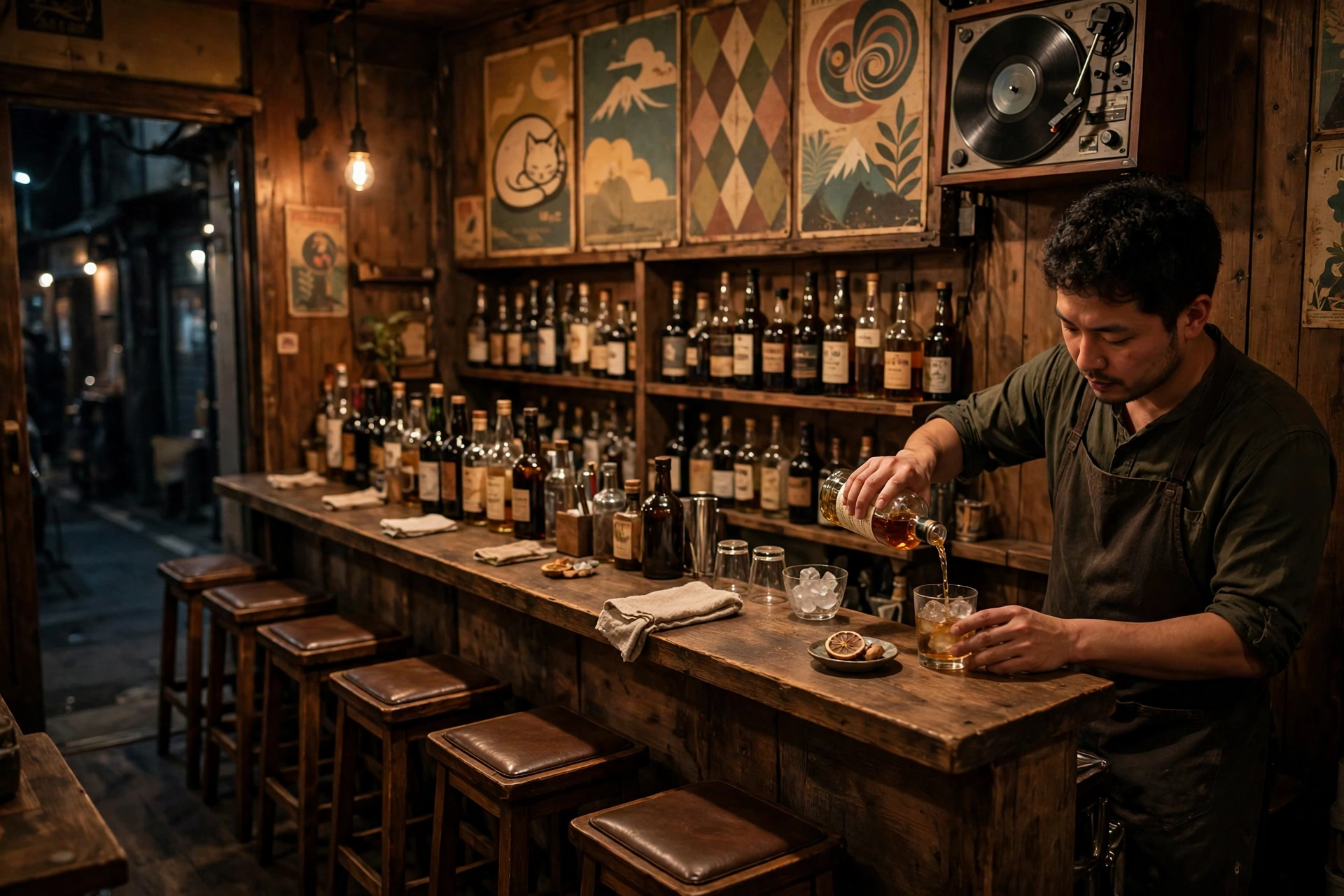
Here’s the thing that makes Golden Gai special: every bar is different. One is a Halloween-decorated cocktail den. Another is a goth-rock basement with a roof terrace. A third is a six-seat counter where the owner has been pouring the same whiskey since the 1980s. The buildings themselves are part of the story — low wooden structures and mismatched storefronts from Tokyo’s postwar years, preserved almost by accident while the rest of Shinjuku went vertical.
I’ll walk you through what the area is (and what it isn’t), how to get there, which bars welcome first-timers, the unwritten rules that keep you out of trouble, and how to pair it with the nearby Omoide Yokocho for the perfect Shinjuku night out. If you’re building a 3-day Tokyo itinerary, plan to spend one evening here.
What Exactly Is Golden Gai (and “Piss Alley”)?
Let’s clear up the name first. “Golden Gai” means Golden Street. The “Piss Alley” nickname properly belongs to the neighboring Omoide Yokocho (“Memory Lane”), a row of smoky yakitori stalls that earned the crude nickname decades ago — before modern plumbing, let’s just say conditions were different. These days the nickname gets attached to both areas interchangeably, but they’re two distinct experiences side by side:
- Golden Gai: a grid of six alleys with 200+ miniature bars, most seating 6–10 people. No food, drinks and conversation only.
- Omoide Yokocho: a 100-meter lane of yakitori grills, ramen counters, and standing bars — the place to eat before or after Golden Gai.
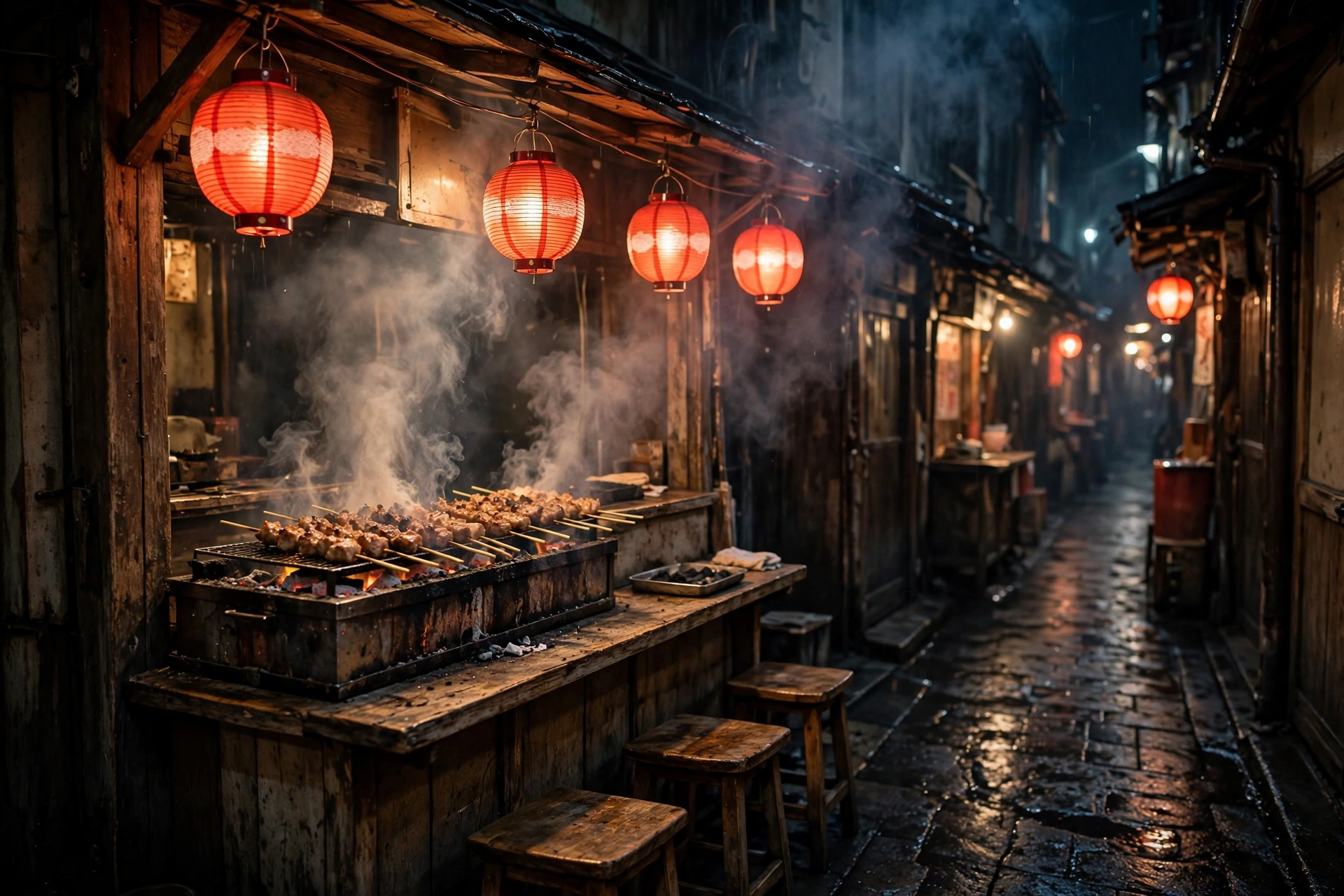
The area’s history is colorful. Golden Gai grew out of Tokyo’s postwar black-market district in the late 1940s and developed its own character through the following decades. Many of today’s bar owners inherited their spaces from earlier generations, which is why the decor feels frozen in time — in the best possible way. While Kabukicho around it became Tokyo’s famous red-light district, Golden Gai carved out a different identity: creative, slightly bohemian, and fiercely independent.
Unlike Roppongi or central Shibuya, Golden Gai was never rebuilt for tourists. That’s the charm — and that’s why it feels real.
How to Get to Golden Gai
Golden Gai sits between Shinjuku’s east exit and the Hanazono Shrine. From Shinjuku Station’s east exit, walk about five minutes east past the Shinjuku City Office — you’ll know you’re close when the neon thins out and the buildings shrink to two stories.
By Train
- JR Yamanote, Chuo, or Chuo-Sobu lines: get off at Shinjuku Station, take the East Exit.
- Tokyo Metro: Marunouchi, Fukutoshin, or Toei-Shinjuku lines to Shinjuku-Sanchome Station (Exit E2) — Golden Gai is about three minutes on foot.
- From Narita Airport: the Narita Express reaches Shinjuku in about 80 minutes.
Best Time to Visit
Most bars open between 6 and 9 pm and close sometime after midnight. Golden Gai is a night neighborhood — come before 7 pm and many bars won’t be open yet; come after 11 pm and it’s in full swing. Weekends are busiest and some tiny bars simply can’t fit you in, so a weeknight visit means a calmer, more conversational evening. If you’re planning a longer Japan trip, our one-week Tokyo itinerary shows how to fit Shinjuku nights between day trips.
Bars Worth Seeking Out in Golden Gai
With 200+ bars, picking can feel random — which is honestly part of the fun. Look for English menus or signs in the window; those bars welcome first-time visitors. Skip any bar with a “regulars only” (members only) sign. Here are well-known spots that regularly welcome international visitors:
Zucca
Named after the Italian word for pumpkin, Zucca keeps Halloween-style decor year-round — orange tones, playful corners, and solid craft cocktails in a space that feels like a tiny art installation.
Address: 1-chome-1-9 Kabukicho, Shinjuku City, Tokyo 160-0021
Albatross
A gothic-flavored bar with gilded mirrors and chandeliers — plus a rare rooftop terrace, almost unheard of in this cramped neighborhood. The atmosphere alone is worth the visit.
Address: 1-chome-1-7 Kabukicho, Shinjuku City, Tokyo 160-0021
Champion
The famous “one coin” karaoke dive: drinks for around 500 yen and well-worn songbooks. Sticky floors, loud singing, zero pretense.
Address: 1-chome-1-10 Kabukicho, Shinjuku City, Tokyo 160-0021
Kenzo’s Bar
Leopard-print wallpaper, a steady stream of 80s music, and an owner who loves chatting with international visitors. A good first stop if Golden Gai feels intimidating.
Address: 1 Chome Kabukicho, Shinjuku City, Tokyo 160-0021
Deathmatch in Hell
A black-walled punk and death-metal bar with no cover charge — proof that Golden Gai has a bar for every subculture on earth.
Address: 1-chome-1-8, Shinjuku Golden Gai 3rd St., Tokyo 160-0021
Golden Gai’s Unwritten Rules (Read Before You Go)
Golden Gai runs on etiquette. These bars are tiny, often one-person operations, and the owners decide who stays. Follow these and you’ll be welcomed like a regular:
- Bring cash. Almost no bar here takes cards. Budget around 1,000–1,500 yen per drink, and expect a cover charge (typically 500–1,000 yen) at many bars — that’s normal, not a scam.
- Respect “regulars only” signs. Some bars are members-only by design. Don’t argue — there are 200 other bars.
- No photos without asking. Golden Gai has a long-standing no-photography culture on the streets after dark. Ask inside a bar before taking pictures.
- Keep it quiet outside. People live above these bars. The alleys echo — take loud conversations inside.
- Don’t climb on buildings or wander onto private rooftops. It happens enough that signs exist.
- One drink minimum, obviously — and don’t pass out. Some bars joke (or not) about a “sleeping charge” if you fall asleep at the counter.
- Smoking: many bars still allow it; if smoke bothers you, look for newer non-smoking spots or sit near the door.
How to Plan the Perfect Golden Gai Evening
Here’s a simple formula that works: eat first in Omoide Yokocho (yakitori skewers and a beer, standing shoulder-to-shoulder with salarymen), then bar-hop through two or three Golden Gai bars, staying an hour or so in each. Two bars in one night is plenty — the point is conversation, not a pub crawl.
A few practical notes:
- Go with a small group (two to four people). Groups of six-plus simply won’t fit most bars.
- Learn two phrases: “Sumimasen” (excuse me) and “Okaikei onegaishimasu” (check, please). Effort goes a long way.
- Golden Gai is in Kabukicho, which is seedier than the rest of Shinjuku — but the Golden Gai alleys themselves are safe and welcoming. Walk confidently, ignore the touts on the main streets, and you’ll be fine.
- If you’re traveling with kids or prefer daytime exploring, Shinjuku Gyoen National Garden (a 10-minute walk) is one of Tokyo’s best parks — pair it with an early dinner in Omoide Yokocho instead.
Frequently Asked Questions
Is Golden Gai safe for tourists?
Yes. Despite being in Kabukicho, Golden Gai’s alleys are well-trafficked and the bars are legitimate small businesses. Use normal big-city awareness: ignore street touts, keep valuables secure, and don’t follow anyone offering “deals” off the main lanes.
Why is it called Piss Alley?
The nickname originally belonged to Omoide Yokocho (Memory Lane), the yakitori alley next to Golden Gai. Decades ago, before modern facilities, the alley’s smell earned it the crude nickname — which has stuck as a badge of honor for old-school Tokyo.
Do I need to speak Japanese to visit Golden Gai?
No. Many bars now have English menus and welcome international visitors. That said, a few Japanese phrases and basic politeness will get you a much warmer reception.
How much does a night in Golden Gai cost?
Expect roughly 1,000–1,500 yen per drink plus a 500–1,000 yen cover charge at many bars. A comfortable evening of two bars with a few drinks runs about 5,000–8,000 yen per person. Cash only — hit an ATM beforehand.
Can you just walk into any bar in Golden Gai?
Mostly, yes — look for English menus or open doors as signs of welcome. Skip bars marked “members only” or “regulars only.” On busy weekend nights, tiny bars may be full; weeknights are easier for walk-ins.
