Choosing where to stay in Milos is the single decision that shapes your whole trip. This volcanic Cycladic island is deceptively large, and each area delivers a completely different holiday — a hilltop village with legendary sunsets, a working port town with the best restaurants, a quiet beach resort, or a colorful fishing hamlet where the sea laps at your doorstep.
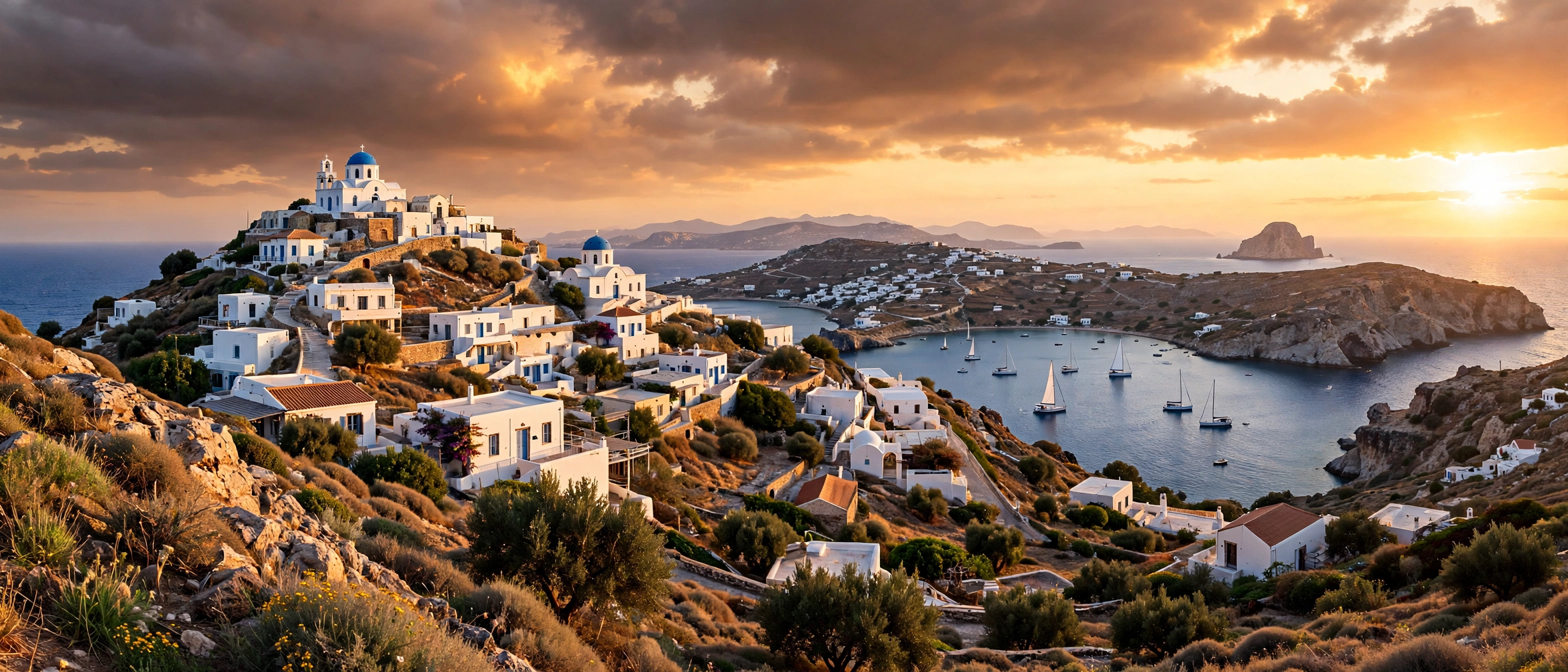
Most visitors cluster on the north-eastern side of the island, where the main villages, the port, and the easiest beach access sit close together. The western and southern coasts are wilder and more secluded — wonderful for a day trip, but less practical as a base unless you truly want to disconnect. After exploring every corner of the island, here is our honest, up-to-date breakdown of the best places to stay in Milos for every travel style.
Best Areas to Stay in Milos at a Glance
| Area | Vibe | Best for |
|---|---|---|
| Plaka | Classic whitewashed hilltop town | First-timers, couples, sunset lovers |
| Adamantas | Lively port town, most restaurants | Convenience, nightlife, ferry arrivals |
| Pollonia | Relaxed beach resort village | Families, beach days, foodies |
| Klima | Colorful fishing hamlet on the water | Romance, photographers, slow travel |
| Tripiti & Mandrakia | Quiet traditional villages | Authentic stays, repeat visitors |
| Sarakiniko area | Dramatic lunar landscape | Design hotels, splurge stays |
1. Plaka – The Classic Hilltop Island Town
If your dream of Greece is narrow lanes, blue domes, and bougainvillea spilling over white walls, Plaka — Milos’s capital — is it. Perched on a hill above the sea, this is the island’s most photogenic village, and its sunsets (best watched from the Venetian castle ruins at the top, or the terrace of the Panagia Thalassitra church) are genuinely some of the finest in the Cyclades.
Plaka packs a surprising amount into its small center: excellent restaurants, stylish cocktail bars, small boutiques, the Archaeological Museum, and the catacombs trailhead just downhill in Tripiti. Boutique stays here lean romantic — sea-view suites like Odyssey Rock and characterful budget options like Kastro both get the location right.
Good to know: Plaka has no beach — you will drive 10–20 minutes to the nearest swims. But you are central to everything, and in the evening you are already where the island’s best dining and sunset views are.
2. Adamantas – The Convenient Port Base
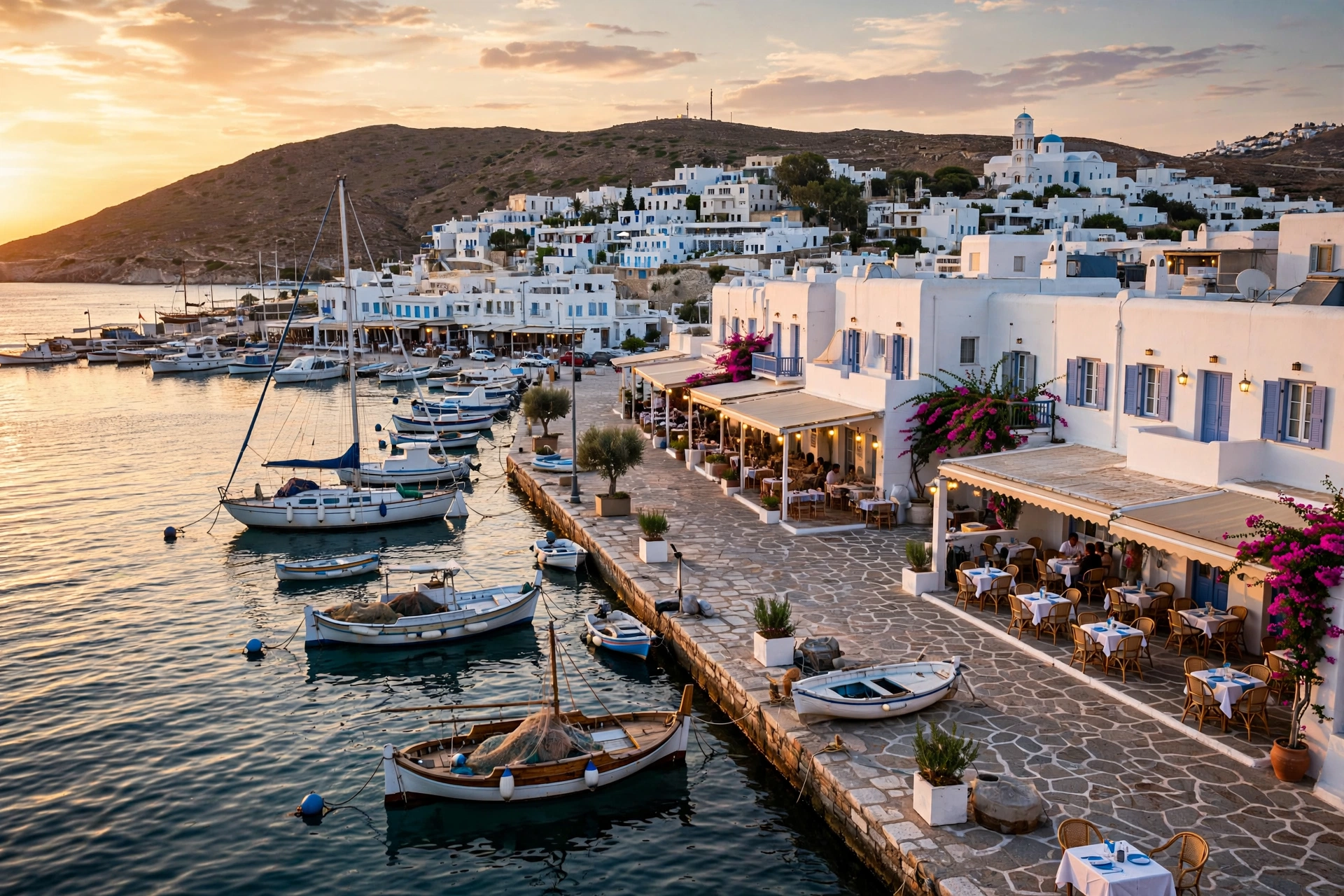
Adamantas (also written Adamas) is Milos’s main port — where your ferry docks and where the island’s liveliest waterfront promenade runs. This is the most practical base: the widest choice of restaurants and bars, the Mining Museum, and, crucially, the island’s biggest cluster of car, ATV, and scooter rental shops. Competition between them is healthy, so walk the promenade and compare before you commit.
The trade-off is atmosphere: it is a working port town, not a postcard village, and it has no standout beach of its own (Papikinou, a short drive east, covers that). For accommodation, Melagrana sits in a peaceful spot near the center, while Hotel Adamas delivers those classic sea-view mornings.
Choose Adamantas if: you want everything walkable, you arrive late by ferry, or you plan to eat out every night.
3. Pollonia – Beach Town in the North-East
Pollonia (officially Apollonia) is the island’s main beach resort — a low-key, genuinely charming one. A curved bay of calm, shallow water, a waterfront lined with some of Milos’s best seafood tavernas, and a small-boat ferry to neighboring Kimolos make it the easiest place on the island to settle into a swim-eat-repeat rhythm.
Despite the sleepy feel, the accommodation here punches above its weight: design-forward stays like Domus Litus and Nove Milos, beachfront options like Captain Zeppos, and splurge-worthy Villa Lord with its private spa tub overlooking the sea. The tiny lanes around the church of Agios Nikolaos have filled in with newer development, so you will find plenty of choice.
Choose Pollonia if: beaches are your priority, you are traveling with kids, or you want relaxed evenings without driving anywhere.
4. Klima – A Romantic Hideaway
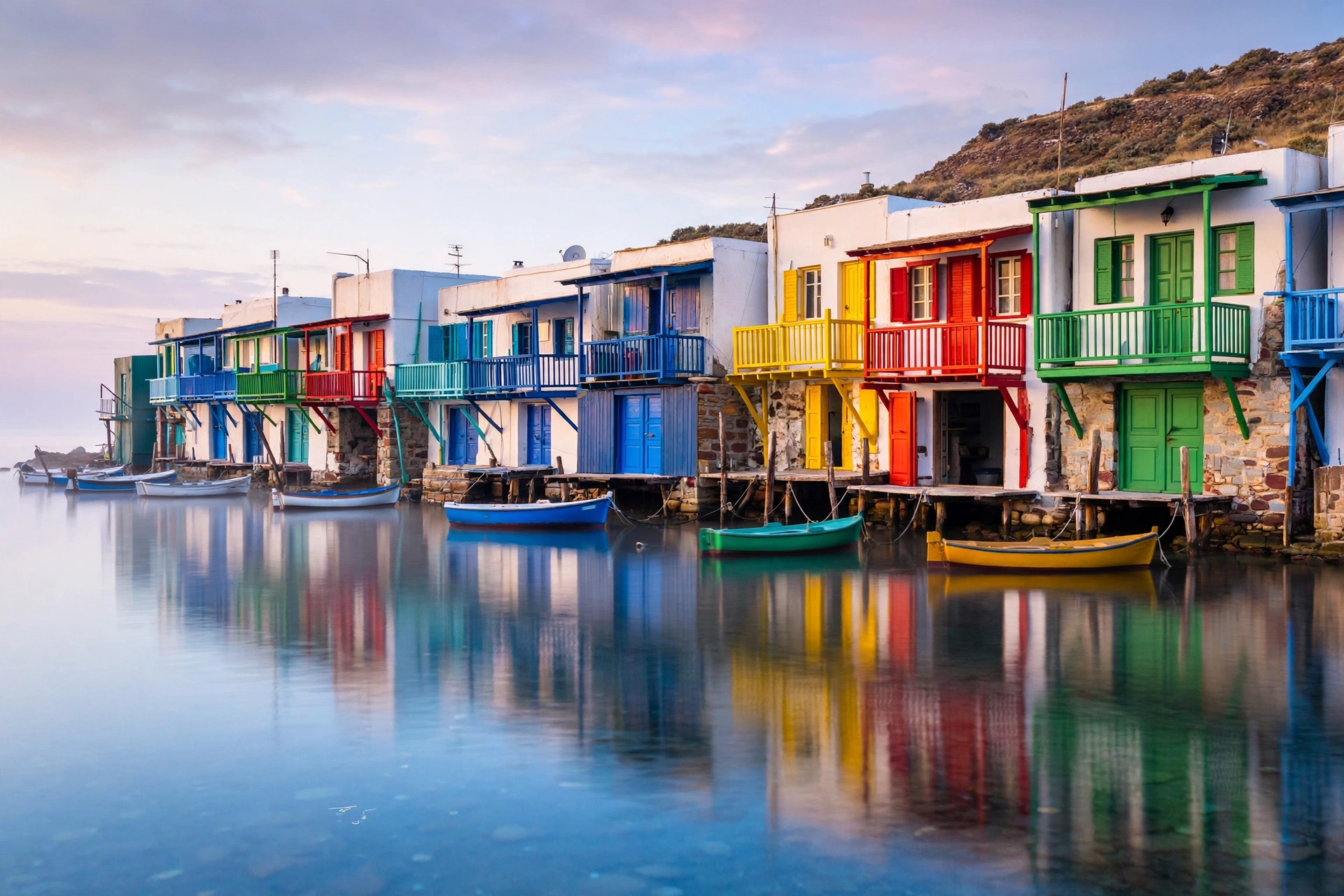
Klima is the Milos you see on postcards: a row of sirmata — traditional fishermen’s houses painted in bold blues, reds, greens, and yellows — built directly over the water, with small boats bobbing in front. Staying in one of these converted boathouses (booked through vacation-rental platforms) means falling asleep to waves under your floor and swimming off the rocks at your doorstep.
There is little here beyond the houses themselves and the excellent Astakas fish restaurant on the waterfront — and that is exactly the point. Klima is a 10-minute drive from Plaka and Tripiti for supplies and sightseeing, but evenings belong to the sea.
Book early: there are only a handful of sirmata, and they routinely sell out months ahead for July and August. If Klima is your dream, reserve it before you book your ferry.
5. Tripiti, Mandrakia & Firopotamos – Quiet Corners
For a second visit — or for travelers who prefer villages to resorts — three small settlements in the north are worth knowing:
- Tripiti: the traditional village just below Plaka, home to the early-Christian Catacombs of Milos and the ancient theatre. Staying here puts Plaka’s restaurants a short stroll uphill and Klima’s waterfront a short stroll downhill.
- Mandrakia: a tiny fishing cove on the north coast near Sarakiniko, with a clutch of sirmata and waterfront tavernas. Very quiet, very photogenic.
- Firopotamos: a miniature fishing settlement with a small beach and a whitewashed chapel above the water — the kind of place where an afternoon disappears happily.
Accommodation in these villages is mostly small studios and family-run rooms rather than hotels, which keeps prices friendlier than Plaka and Pollonia in peak season.
6. Near Sarakiniko – Stay by the Lunar Coast
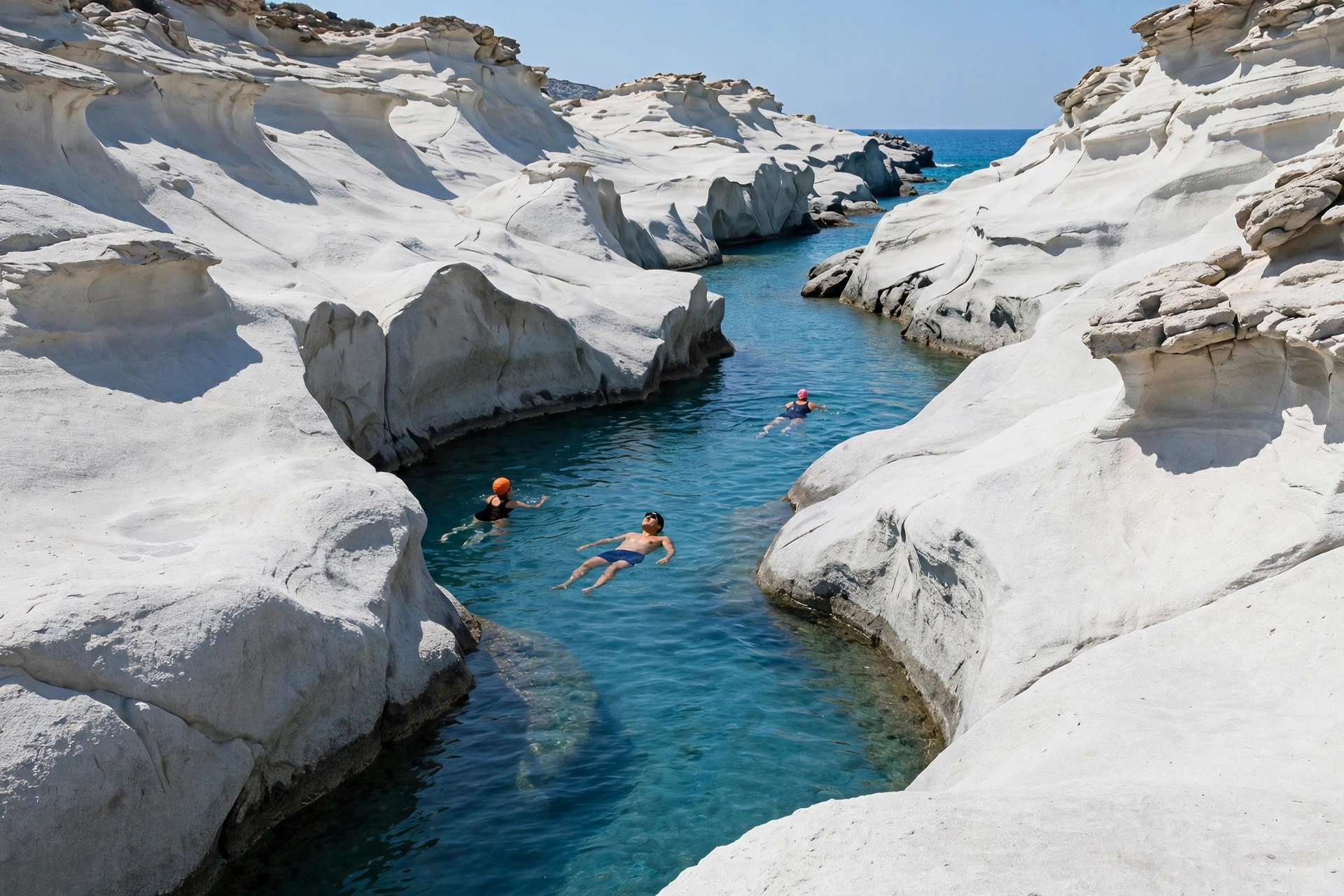
Sarakiniko — the island’s famous “lunar” beach of sculpted white volcanic rock — draws crowds by day and empties by evening. A handful of high-end stays cluster nearby, most notably the adults-only Domes White Coast Milos, for travelers who want the moonscape at sunrise before anyone else arrives.
This area suits a short splurge or a design-hotel holiday rather than a first island base: you will drive for restaurants and village life, but the setting is unmatched.
Where to Stay in Milos with Kids
Milos is a genuinely easy Greek island for families: short drives, calm bays, and a relaxed pace. For the smoothest trip with little ones, base yourself in Pollonia (shallow, calm water and everything walkable) or near Agia Kiriaki on the south coast, which has one of the island’s most family-friendly sandy beaches. Many Milos hotels are small and family-run — message ahead about cots and interconnecting rooms, as they are not always listed online. If you are flying in with children, our holiday travel with kids survival guide covers the journey side of the trip.
Getting Around Milos
Milos rewards travelers with wheels. The island is compact — Adamantas to Pollonia takes about 25 minutes — but beaches and villages are spread out, and public buses (which connect the main towns in summer) run infrequently and stop early. Rent a car or ATV in Adamantas for maximum freedom; book well ahead for July and August, when the fleet sells out and prices climb. Scooters suit confident riders, but note that some of the island’s best beaches sit at the end of rough dirt roads.
Two more practical notes: the famous sea caves and beaches of Kleftiko on the south-west coast are only reachable by boat, so book a day cruise from Adamantas; and taxis are few — do not count on hailing one late at night.
When to Visit & How Many Days
May–June and September are the sweet spots: warm seas, open restaurants, and accommodation that has not yet hit peak pricing. July and August bring the full buzz — and the meltemi winds, which can make boat trips bumpy and some north-facing beaches choppy. Winters are very quiet, with many hotels and restaurants closed.
Plan at least 4–5 days: Milos deserves more than a whistle-stop, and the ferry from Athens (Piraeus) takes several hours each way, so short trips lose too much time in transit. For official ferry and island information, the Greek National Tourism Organisation’s Milos page and Discover Greece are reliable starting points.
Planning More Greek Island Hopping?
Milos pairs beautifully with its Cycladic neighbors. If you are building a longer itinerary, see our 3 days in Sifnos guide and our Naoussa, Paros travel guide — both islands connect easily by ferry and make natural companions to a Milos stay.
FAQs: Where to Stay in Milos
Which part of Milos is best for first-time visitors?
Plaka for the classic Greek-island experience and sunsets, or Adamantas for maximum convenience. Both put you within easy reach of the island’s highlights, and you can day-trip everywhere else.
Is Pollonia or Adamantas better?
Pollonia wins for beach holidays and quiet evenings by the water; Adamantas wins for restaurants, nightlife, and not needing to plan transport. Families usually prefer Pollonia; groups of friends and food-focused travelers usually prefer Adamantas.
Do I need a car in Milos?
Strongly recommended. Summer buses connect the main towns but are infrequent, and the best beaches are far from any bus stop. Rent in Adamantas and book ahead for July–August.
How many days do you need in Milos?
Four to five days minimum. That gives you time for the north-east villages, Sarakiniko, a boat day to Kleftiko, and at least one slow beach day — without rushing the ferry schedule.
Is Milos expensive compared to other Greek islands?
Mid-range for the Cyclades. It is noticeably more affordable than Santorini or Mykonos for comparable accommodation, but July–August rates everywhere on the island rise steeply, so shoulder season (May–June, September) is the value play.

1 comment
[…] minute walk puts you in the center. If you are island-hopping more widely, pair this guide with my where to stay in Milos and where to stay in Crete guides to plan the rest of your […]