Crete is the largest of the Greek islands — roughly 260 kilometers from end to end — which makes choosing where to stay in Crete the single most important decision of your trip. Pick the wrong base and you’ll burn hours driving across mountain roads instead of swimming, hiking, and eating your way through the island. Pick the right one and everything falls into place.
This guide breaks down the best areas to stay in Crete for 2026 by travel style: first-timers, beach lovers, hikers, history buffs, and families. For each area you’ll find who it’s best for, how many nights to spend, what to do nearby, and honest pros and cons — updated with current-season travel practicalities.
Where to Stay in Crete: Quick Picks for 2026
Short on time? Here’s the fast answer:
| Area | Best for | Suggested nights |
|---|---|---|
| Chania | First-timers, couples, photographers | 3–4 |
| Rethymno | Central base for exploring the west | 2–3 |
| Heraklion | Short trips, Minoan history, island hopping | 1–2 |
| Elounda & Agios Nikolaos | Resort comfort, calm luxury | 2–3 |
| Frangokastello & the south coast | Beaches and slow days | 2–3 |
| Amari Valley & inland villages | Hiking and authentic mountain Crete | 1–2 |
The winning strategy for a week-long trip: split your stay between two bases — west (Chania or Rethymno) and east or south (Heraklion, Agios Nikolaos, or Frangokastello). You’ll see twice as much with half the driving.
Chania: Best for First-Timers
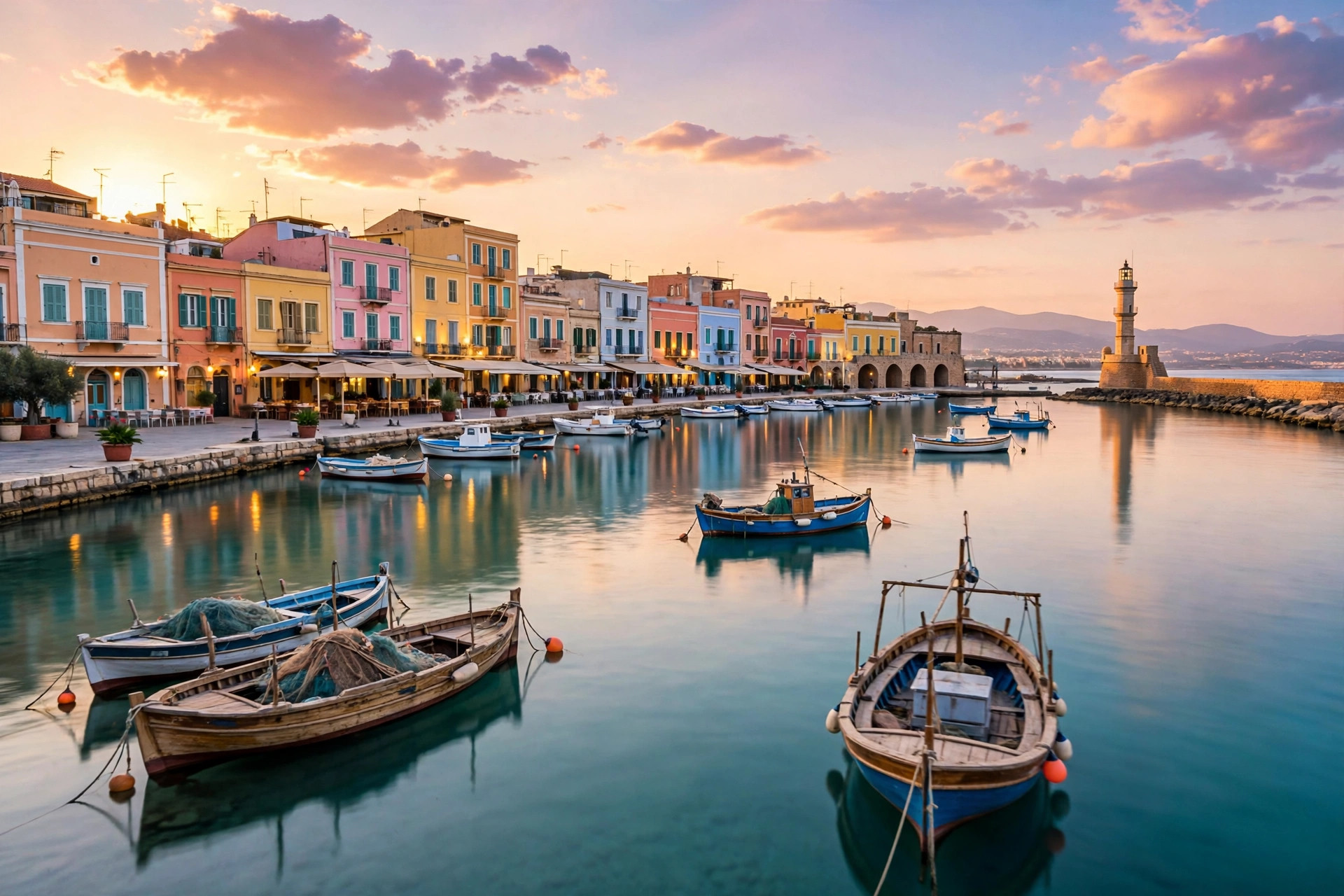
Chania’s Venetian harbor — all pastel waterfront buildings, bobbing fishing boats, and a 16th-century lighthouse — is the view on every Crete postcard, and it genuinely looks like that at sunset. For a first visit, no other town packs this much atmosphere into an easy, walkable base.
Why stay here: the old town is a maze of flower-draped lanes, small museums, and harbor-side tavernas. You’re within day-trip range of the island’s two most famous beaches — Balos Lagoon (about an hour northwest) and Elafonissi with its pink-tinged sand (about 75 minutes southwest). The Samaria Gorge, one of Europe’s longest gorges, starts about 90 minutes south.
Good to know: Chania is the most popular town on the island, so July and August bring crowds and higher prices. Book harbor-area rooms well ahead for summer. For quieter evenings, look slightly west of the old town around Nea Chora, which has a local feel and a swimmable city beach.
Stay here if: it’s your first time in Crete, you’re traveling as a couple, or you want the prettiest base with the easiest day trips.
Rethymno: The Ideal Central Base
Rethymno — Crete’s third-largest town — sits almost exactly between Chania and Heraklion, which is precisely why it works so well as a base. You get a gorgeous Venetian-Ottoman old town with vine-covered alleys, a long sandy town beach, and genuinely good-value tavernas, without Chania’s peak-season intensity.
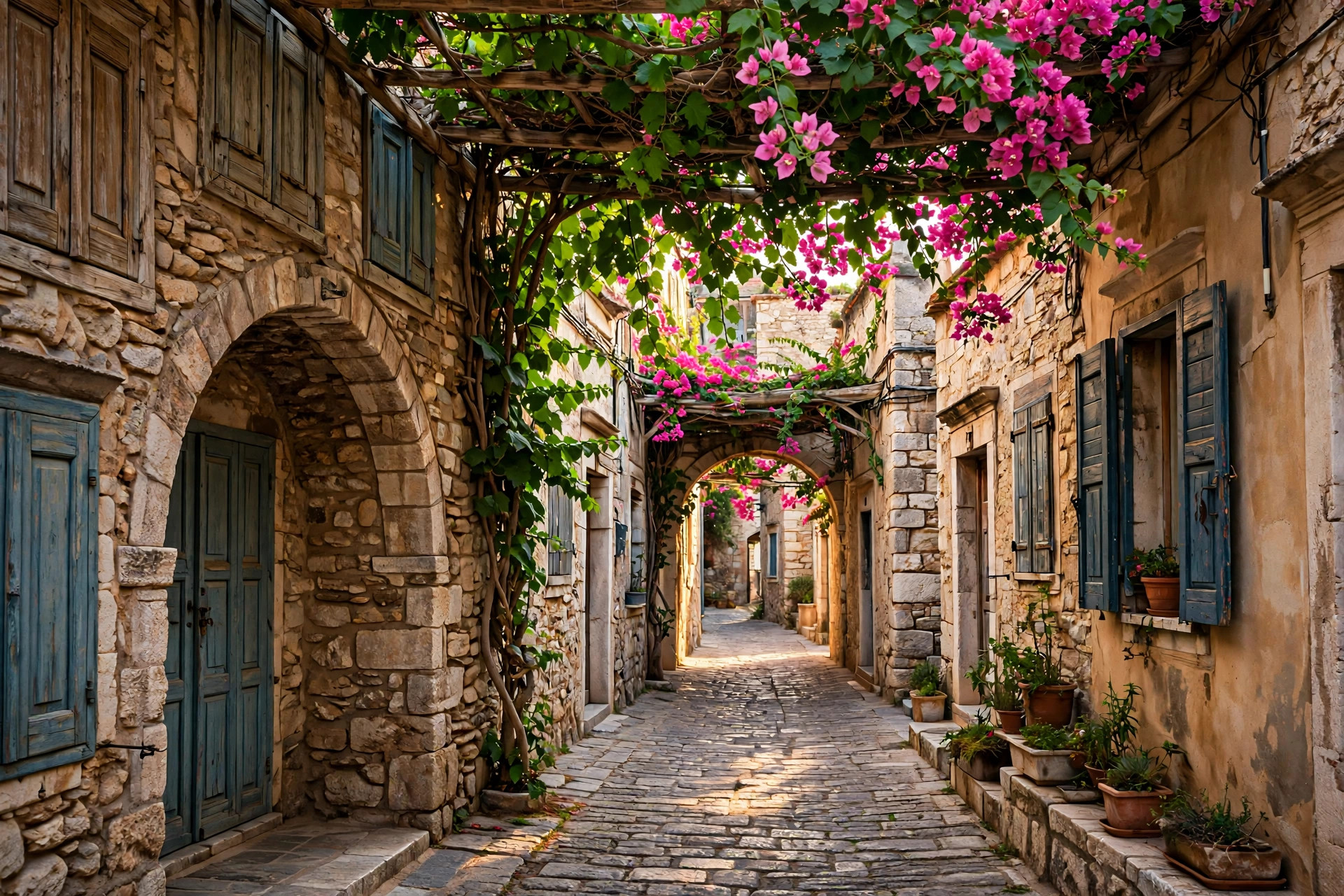
Why stay here: from Rethymno, the whole western half of the island opens up. Arkadi Monastery, one of Crete’s most important historic sites, is under 30 minutes away. The mountain villages of the Amari Valley are an easy inland loop, and you’re roughly an hour from both Chania and Heraklion. The old town’s fortress (the Fortezza) is worth an evening stroll for the harbor views alone.
Good to know: the town beach is long and sandy but can get windy in the afternoons — mornings are calmest. Parking inside the old town is genuinely difficult; if you’re driving, choose accommodation that mentions parking specifically. Tip for explorers: Rethymno’s central position makes it the best single-base choice if you only pick one town for a full week.
Stay here if: you want one comfortable base for a week of day trips, you value food and value over postcard views, or you’re traveling with teens who want both beach and town life.
Heraklion: The Lively Gateway City
Heraklion doesn’t win beauty contests against Chania — it’s a working city, Crete’s capital and largest. But it earns its place on this list three ways: the airport, the ferries, and Knossos.
Why stay here: most international flights land at Heraklion, and the port has the best ferry connections to Santorini and other islands. The Palace of Knossos — the 4,000-year-old center of Minoan civilization — is 15 minutes from the center, and the Heraklion Archaeological Museum (one of Greece’s finest) holds everything excavated there. Pair them on the same day for the full story.
Good to know: visit Knossos right at opening (8 a.m.) to beat both the tour buses and the midday heat, and consider the combined museum-palace ticket. Heraklion’s own beaches are unremarkable — come here for logistics and history, then move on.
Stay here if: you have 1–2 nights at the start or end of your trip, you’re island-hopping by ferry, or Minoan history is high on your list. For authoritative background before you go, the official Visit Greece Crete pages and the Heraklion Archaeological Museum site are the most reliable sources.
Elounda & Agios Nikolaos: East Crete’s Upscale Coast
The original version of this guide skipped the east entirely — a mistake, because the Mirabello Bay coast around Elounda and Agios Nikolaos is where Crete does relaxed luxury best. Elounda’s sheltered bay is lined with high-end resorts (several with private beaches and overwater-style suites), while Agios Nikolaos is a proper small town with a lake, a marina, and a livelier evening scene.
Why stay here: the star day trip is Spinalonga, the tiny fortified island that served as a leper colony until 1957 — boats leave from Elounda, Plaka, and Agios Nikolaos, and the morning sailings are calmest. The beaches here face east into a sheltered gulf, so the water stays calm even when the north coast is windy.
Good to know: this corner costs more than the west, especially in high season. Agios Nikolaos gives you town energy at lower prices than Elounda’s resorts; Elounda gives you the pampered, don’t-leave-the-property experience.
Stay here if: you want a resort-style slowdown, you’re celebrating something, or you prefer calm, sheltered swimming.
Frangokastello & the South Coast: Beach Lover’s Paradise
Crete’s south coast faces the Libyan Sea and feels like a different island: quieter, warmer, and far less developed than the north. Frangokastello is the sweet spot — a long, shallow, sandy beach backed by a 14th-century Venetian castle, with water so clear and calm it’s ideal for kids and nervous swimmers.
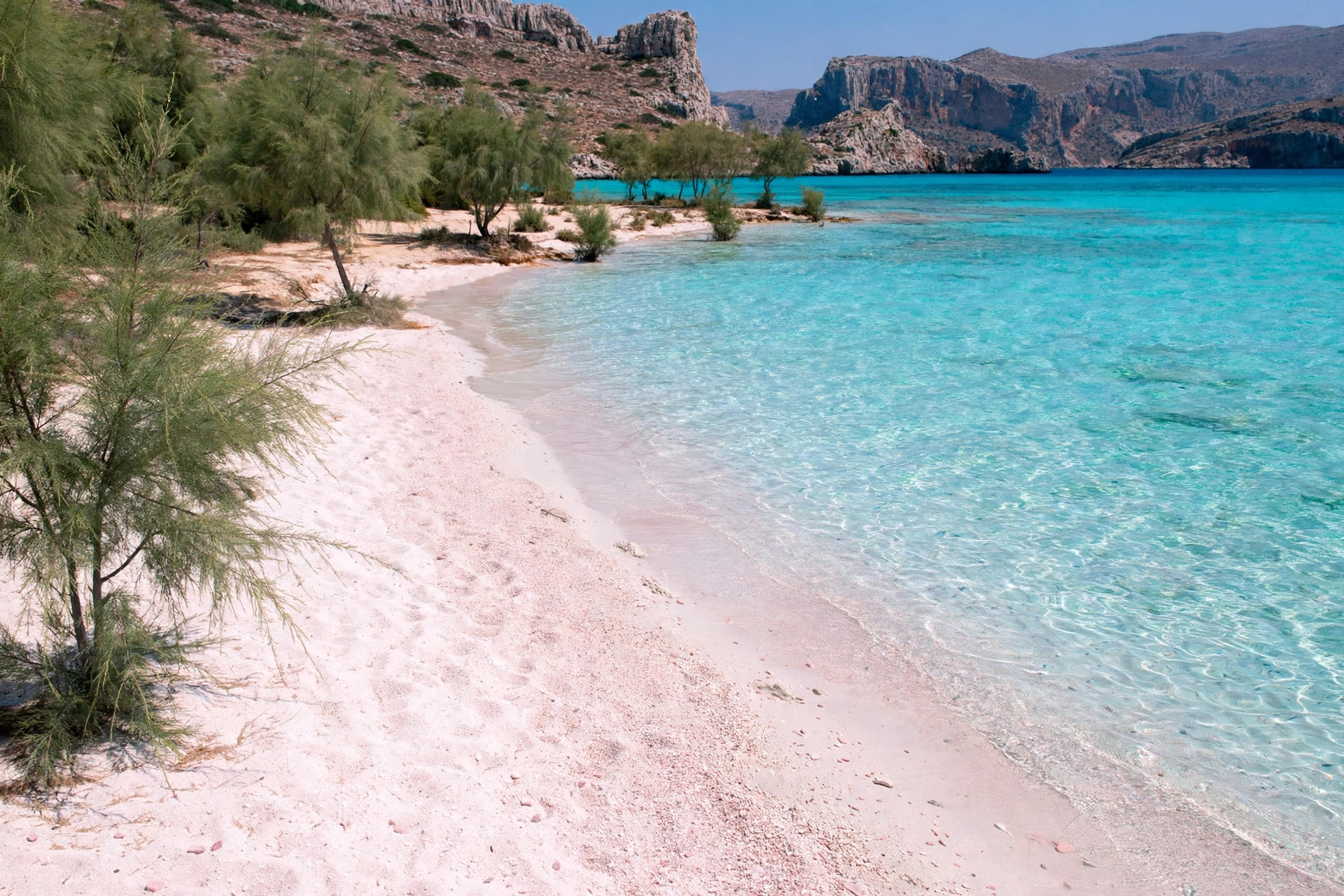
Why stay here: the south coast’s beaches (Frangokastello, Plakias, Preveli with its palm grove) are the island’s best for pure swimming. The atmosphere is deeply relaxed — small family-run apartments and tavernas rather than resorts. Sunrise here is spectacular, and the stargazing on clear nights is unreal.
Good to know: getting here means crossing the mountains — about 90 minutes from Chania, and the roads are winding. Stock up on groceries before you descend; village shops are charming but limited. If you love long beach days and quiet evenings, the drive is absolutely worth it.
Stay here if: beaches are the point of your trip, you want Crete’s calmest water, or you’re traveling with small children.
Amari Valley & Inland Villages: Authentic Mountain Crete
Drive 45 minutes inland from Rethymno and the beach crowds vanish. The Amari Valley is a patchwork of tiny villages, olive groves, and sheep-dotted hillsides with views up to Mount Ida (Psiloritis), Crete’s highest peak. This is the Crete that Cretans recognize — and it’s the coolest, literally: summer temperatures run several degrees lower than the coast.
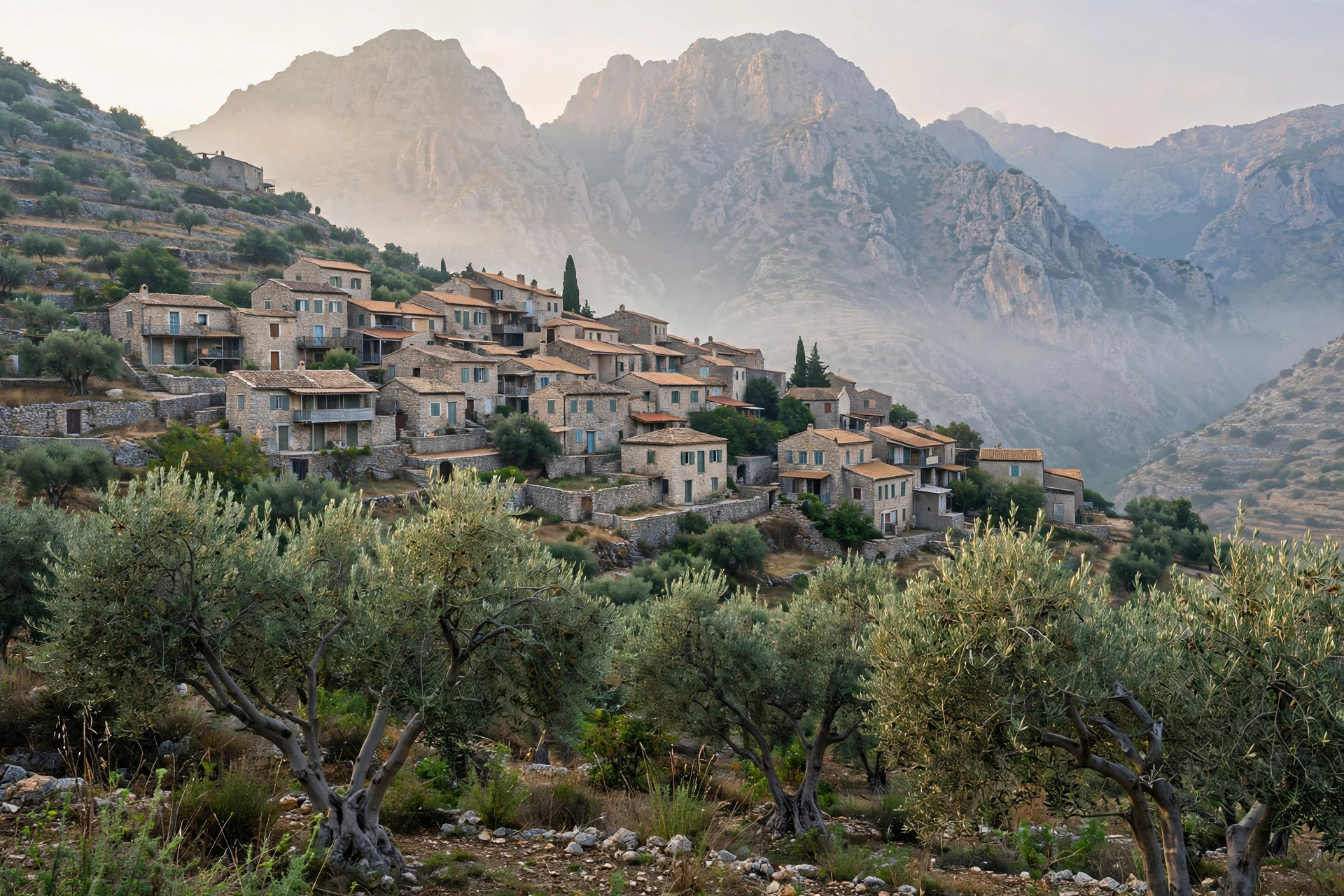
Why stay here: it’s a hiker’s and slow-traveler’s dream. Trails thread between villages, village tavernas serve food from gardens you can see, and the pace drops to a stroll. Nearby Spili is the classic mountain stop — famous for its row of lion-head fountains and a good lunch break on any inland loop. Further west, Margarites keeps a centuries-old pottery tradition alive in its workshops, and makes a lovely half-day detour.
Good to know: you’ll need a car — public transport barely reaches these villages. Many guesthouses are converted stone houses with terraces and pools; book directly with hosts where possible for the warmest welcome.
Stay here if: you want hiking, authenticity, and cool mountain air — or you want 1–2 nights inland to balance a beach-heavy trip.
How to Get Around Crete
Crete rewards drivers and punishes everyone else. The island’s main highway runs along the north coast from Chania to Sitia, but the best beaches, gorges, and villages sit at the end of winding mountain roads that buses don’t serve well.
- Rent a car — ideally booked ahead for summer. A small car handles mountain roads best; an SUV is overkill unless you’re heading to rough tracks near Balos.
- Key drive times: Chania–Rethymno ~1 hour, Rethymno–Heraklion ~1h15, Heraklion–Agios Nikolaos ~1 hour, Chania–Elafonissi ~1h15, Chania–Frangokastello ~1h30.
- Fuel up strategically — mountain villages have few stations. Our gas-saving tips for long road trips apply just as well to island driving: steady speeds on mountain climbs save real money over a week.
- Ferries: Heraklion and Chania (Souda) ports connect to Athens/Piraeus and Santorini; high-speed ferries reach Santorini in about 2 hours in season.
When to Visit Crete in 2026
- May–June: the sweet spot — warm seas, wildflowers, open tavernas, and prices before the peak. Samaria Gorge typically opens in May.
- July–August: hottest, busiest, priciest. Book accommodation 3–4 months ahead; the south coast and mountains stay calmer than the north.
- September–early October: arguably the best month — warm water, thinning crowds, and harvest season in the villages.
- November–March: quiet and green, many beach businesses closed, but Chania and Heraklion stay lively and prices drop. Great for hiking if you don’t mind unpredictable weather.
How Many Days Do You Need in Crete?
Five days is the honest minimum, and seven is far better. A week lets you split bases without rushing — for example:
- Days 1–3: Chania (old town, Balos or Elafonissi, Samaria Gorge)
- Days 4–5: Rethymno or the south coast (Frangokastello, Plakias, inland villages)
- Days 6–7: Heraklion (Knossos + museum) or Agios Nikolaos/Elounda (Spinalonga, resort slowdown)
With fewer than five days, pick one base — Chania for scenery, Heraklion for history and logistics — and save the rest for next time.
Crete with Kids: What Works
Crete is one of the most family-friendly Greek islands: shallow, calm beaches on the south coast, short manageable gorge walks (Imbros Gorge is far easier than Samaria with kids), and a food culture that genuinely welcomes children at the table. Frangokastello’s shallow water and Rethymno’s long sandy beach are the easiest wins with toddlers and young swimmers.
Two practical notes: the midday summer sun is fierce — plan beach mornings and pool/shade afternoons — and mountain drives with car seats need extra buffer time. For the travel-day side of the trip, our holiday travel with kids survival guide covers flights, jet lag, and packing systems that make the journey out far less stressful.
Budget Tips for Crete
Crete can be as affordable or as lavish as you make it. Village tavernas serve enormous, excellent meals for far less than harbor-front restaurants in Chania. Inland guesthouses cost a fraction of beach resorts. And traveling in May, June, or September cuts accommodation prices noticeably versus August.
The biggest variable is transport: rental cars, fuel for a week’s driving, and any ferry crossings add up. If you’re mapping out the full trip budget, our 2026 family road trip cost breakdown gives you a realistic framework for estimating driving and lodging costs on a trip like this.
Frequently Asked Questions
What is the best area to stay in Crete for first-timers?
Chania. It has the prettiest old town, the easiest access to famous beaches (Balos, Elafonissi), and the most day-trip options. Rethymno is the best alternative if you prefer a calmer, more central base.
Is it better to stay in Chania or Heraklion?
For scenery and atmosphere, Chania wins. For airport/ferry logistics and Minoan history, Heraklion wins. On a week-long trip, do both — they’re only about two hours apart.
How many days do you need in Crete?
Plan on 5–7 days minimum. The island is large enough that a split stay (west + east or south) gives you the best experience without exhausting drives.
Do you need a car in Crete?
Strongly recommended. Buses cover the main north-coast towns, but the best beaches, gorges, and mountain villages are only practical by car.
What is the best month to visit Crete?
May, June, and September offer the best balance of weather, open businesses, and prices. July and August are hottest and most crowded; winter is quiet with limited beach services.
Is Crete good for families with young kids?
Yes — especially the south coast (Frangokastello, Plakias) with its shallow, calm water, and towns like Rethymno with long sandy beaches. See our family section above for the full rundown.
Whichever base you choose, Crete rewards travelers who slow down: linger over the long Cretan lunch, take the mountain road instead of the highway at least once, and leave room in the itinerary for the village you didn’t plan to stop in. That’s usually where the best stories start.
