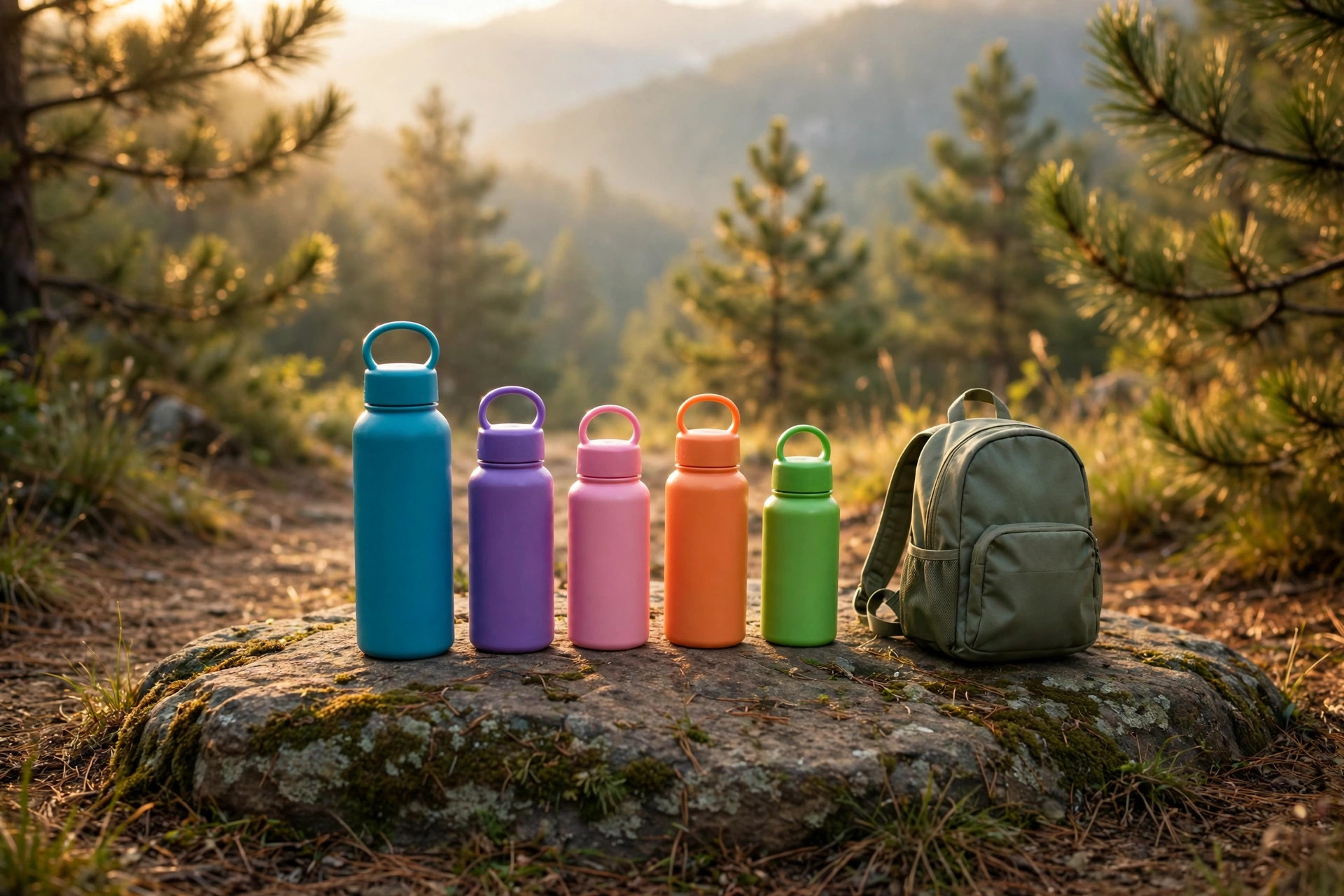
A kid’s water bottle can make or break a family hike. The wrong one leaks all over the backpack, weighs too much for small arms, or has a lid your child cannot open without help. The right one disappears into the day: your child sips on their own, stays hydrated, and enjoys carrying it. Here is how to pick one that actually works on the trail.
This is a buying guide, not a lab test — we have not run controlled drop tests on every bottle here. What follows is honest, practical guidance from real family hiking experience: which bottles hold up, which ones leak, and which one fits your child’s age and trail style.
How Much Water Does a Kid Need on a Hike?
There is no single magic number, because kids vary by age, size, weather, and how hard the trail is. As a practical starting point, most active kids need roughly 4 to 8 ounces of water every 20 minutes of hiking, and more in heat or at altitude. A 12 oz bottle covers a short, easy trail of about an hour. For a half-day hike, plan on 18 to 24 oz per child.
The bigger risk is not bottle size. It is the kid who forgets to drink. Bottles that are easy to sip from without stopping — a straw lid or a one-handed spout — get used far more often than bottles that need two hands and a full stop.
Before every hike, check the trail’s water situation. Many national park trails have no drinkable water at all. The National Park Service lists water as one of the ten essentials for every hike: carry more than you think you need, and know where the next refill is before you start.
What to Look For in a Kids Hiking Water Bottle
1. Leak-proofing that actually works
A bottle that leaks inside a backpack soaks snacks, spare clothes, and a phone. Look for a lid that locks closed or seals with a clear click. Straw lids are great for sipping but can dribble if left open, so a locking straw lid is the best of both worlds.
2. Size matched to your child’s age
A bottle that is too big is too heavy and too wide for small hands. A bottle that is too small means constant refills. Use the table below as a starting point, and adjust for your child’s strength and the length of your hikes.
| Age | Best bottle size | What matters most |
|---|---|---|
| 2–3 years | 10–12 oz | Spill-proof straw lid, light weight, easy grip |
| 4–5 years | 12 oz | One-handed sipping, locking lid, drop-proof body |
| 6–8 years | 12–14 oz | Leak-proof seal, fits a pack side pocket |
| 9–12 years | 18–24 oz | Capacity for longer hikes, fast-flow spout |
| Teens | 24 oz+ | Insulation, adult-size durability |
3. Weight when full
A full 12 oz bottle adds roughly three-quarters of a pound — small until a four-year-old carries it for two miles. Insulated stainless steel bottles are heavier empty than plastic ones — sometimes by 4 to 6 ounces. For younger kids and longer hikes, that difference matters.
4. Material: stainless steel vs. plastic
Stainless steel bottles are tougher, keep water cold for hours, and do not hold flavors or odors. They dent, but they rarely break. BPA-free Tritan plastic bottles are much lighter, cheaper, and let kids see how much water is left — but they do not insulate, so water warms up fast on a hot trail. For summer hiking in heat, insulation is worth the extra weight.
5. A lid your child can open alone
Test this in the store, not on the trail. Can your child flip the straw open, push the button, or twist the cap with one hand? If not, they will hand the bottle to you every twenty minutes.
6. Cleaning
Straw lids and spouts grow mold if you cannot clean them. Choose a bottle with a lid that comes fully apart and a mouth wide enough for a bottle brush. A dishwasher-safe bottle saves real effort after a muddy weekend.
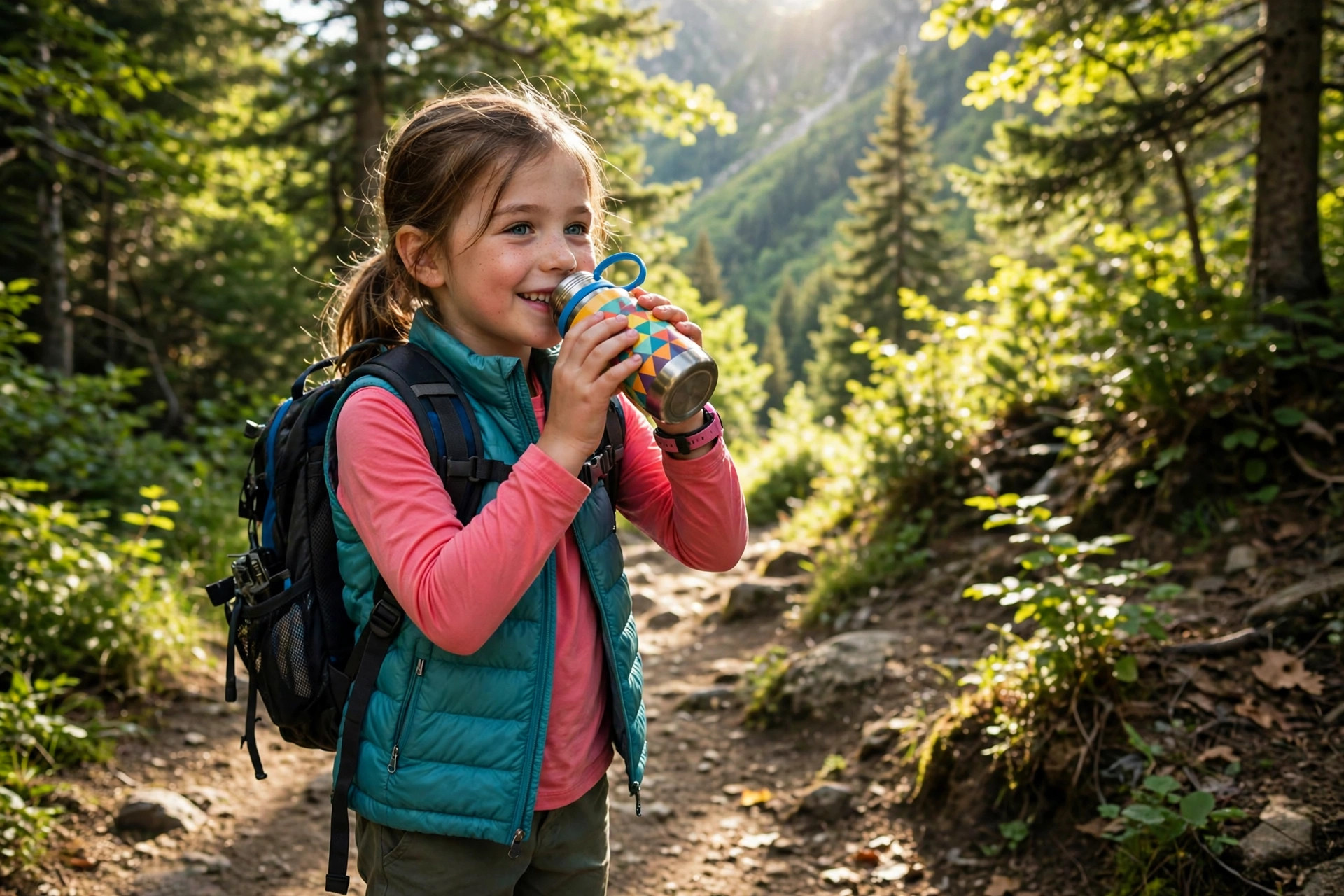
The 6 Best Water Bottles for Kids Who Hike
These six cover the real range of family needs: the toughest bottle, the lightest bottle, the easiest sipper, and the best value. Each one has an honest downside, because no bottle is perfect for every kid.
1. Hydro Flask Kids 12 oz — Best Insulated Bottle
The Hydro Flask Kids bottle is the one most hiking families reach for first. Its double-wall vacuum insulation keeps water genuinely cold for hours on a hot trail, which makes kids far more willing to drink. The straw lid is easy for small hands, and the 12 oz size fits a child’s pack side pocket.
Best for: hot-weather hikes, kids aged 4 to 8. Not for: toddlers who need a fully spill-proof seal. Watch out for: the straw lid can dribble if left open and tipped upside down — teach kids to flip it closed.
2. Yeti Rambler Jr. 12 oz — Toughest Bottle
The Rambler Jr. is a miniature tank: the same double-wall stainless steel as Yeti’s adult bottles, a straw cap that seals well, and a build that shrugs off drops onto rock. If your child throws gear or treats a bottle like a hammer, this is the bottle that survives.
Best for: rough-and-tumble kids, rocky trails. Not for: small toddlers (it is the heaviest bottle here) or budget buyers — it is the priciest pick on this list. Watch out for: weight. At around 12 ounces empty, it is nearly double the weight of a plastic bottle before you add water.
3. CamelBak Eddy+ Kids — Best Straw Bottle for Little Kids
The Eddy+ Kids has a soft silicone bite valve that even toddlers figure out quickly: bite and sip, no tipping needed. It is light, genuinely spill-proof when the valve is closed, and easy to grip. For ages 2 to 6, this is the easiest bottle for a child to use independently on the trail.
Best for: toddlers and preschoolers, first hiking bottles. Not for: older kids who want more capacity, or hot-weather hikes where insulation matters. Watch out for: the bite valve needs regular cleaning and is a wear item that may need replacing after a season of hard use.
4. Nalgene Grip-N-Gulp — Lightest and Most Indestructible
Nalgene’s reputation is earned: this bottle is nearly indestructible, weighs almost nothing, and costs less than most insulated bottles. The wide mouth makes it easy to fill from a park fountain, and you can see exactly how much water is left.
Best for: longer hikes where every ounce counts, kids aged 6 and up. Not for: toddlers — the spout opening spills quickly if tipped. Watch out for: no insulation. On a hot day the water warms up within an hour or two.
5. Contigo Autospout Kids — Easiest One-Handed Sipping
One button, one hand, one quick sip without breaking stride. The Autospout lid is the easiest lid in this guide for a child to operate while walking, and it locks closed for the backpack. The spout design means water flows fast, which older kids prefer on a long climb.
Best for: kids aged 5 to 10 who hike at a good pace. Not for: very little kids — the fast flow can surprise a toddler. Watch out for: the lid has several small parts. Take it fully apart to clean it after every trip, or it will develop a smell.
6. Thermos Funtainer 12 oz — Best Leak-Proof Classic
The Funtainer has been a parent favorite for years because it simply does not leak. The push-button straw lid seals tight, the vacuum insulation keeps drinks cold for up to 12 hours, and the 12 oz size is right for ages 4 to 8. It is also one of the more affordable insulated options.
Best for: younger kids who need a truly leak-proof bottle, value seekers. Not for: all-day hikes — 12 oz runs out fast on a long trail. Watch out for: the straw is narrower than some kids like, and the fun patterns scratch off with heavy trail use.
Quick Comparison: Best Water Bottles for Kids Who Hike
| Bottle | Size | Insulated | Weight (empty) | Best for |
|---|---|---|---|---|
| Hydro Flask Kids | 12 oz | Yes | Medium | Cold water all day |
| Yeti Rambler Jr. | 12 oz | Yes | Heavy | Maximum toughness |
| CamelBak Eddy+ Kids | 12–14 oz | No | Light | Toddlers and easy sipping |
| Nalgene Grip-N-Gulp | 12 oz | No | Lightest | Long hikes, low weight |
| Contigo Autospout Kids | 13–14 oz | No | Light | One-handed sipping |
| Thermos Funtainer | 12 oz | Yes | Medium | Leak-proof on a budget |
If you only remember one rule: match the bottle to the child, not to the brand. A tough, heavy bottle is the wrong pick for a four-year-old, and a light plastic bottle is the wrong pick for a ten-year-old on a hot desert trail.
The 5-Minute Leak Test (Do This Before the First Hike)
A bottle that passes in the store can still fail in a bouncing backpack. Test every new bottle at home:
- Fill it, close it, shake it. Fill the bottle, seal the lid, and shake hard for 10 seconds over the sink. Any drip is a fail.
- Turn it upside down. Hold it upside down for a full minute, lid closed. Then open the lid, close it again, and repeat — straw lids often leak only on the second cycle.
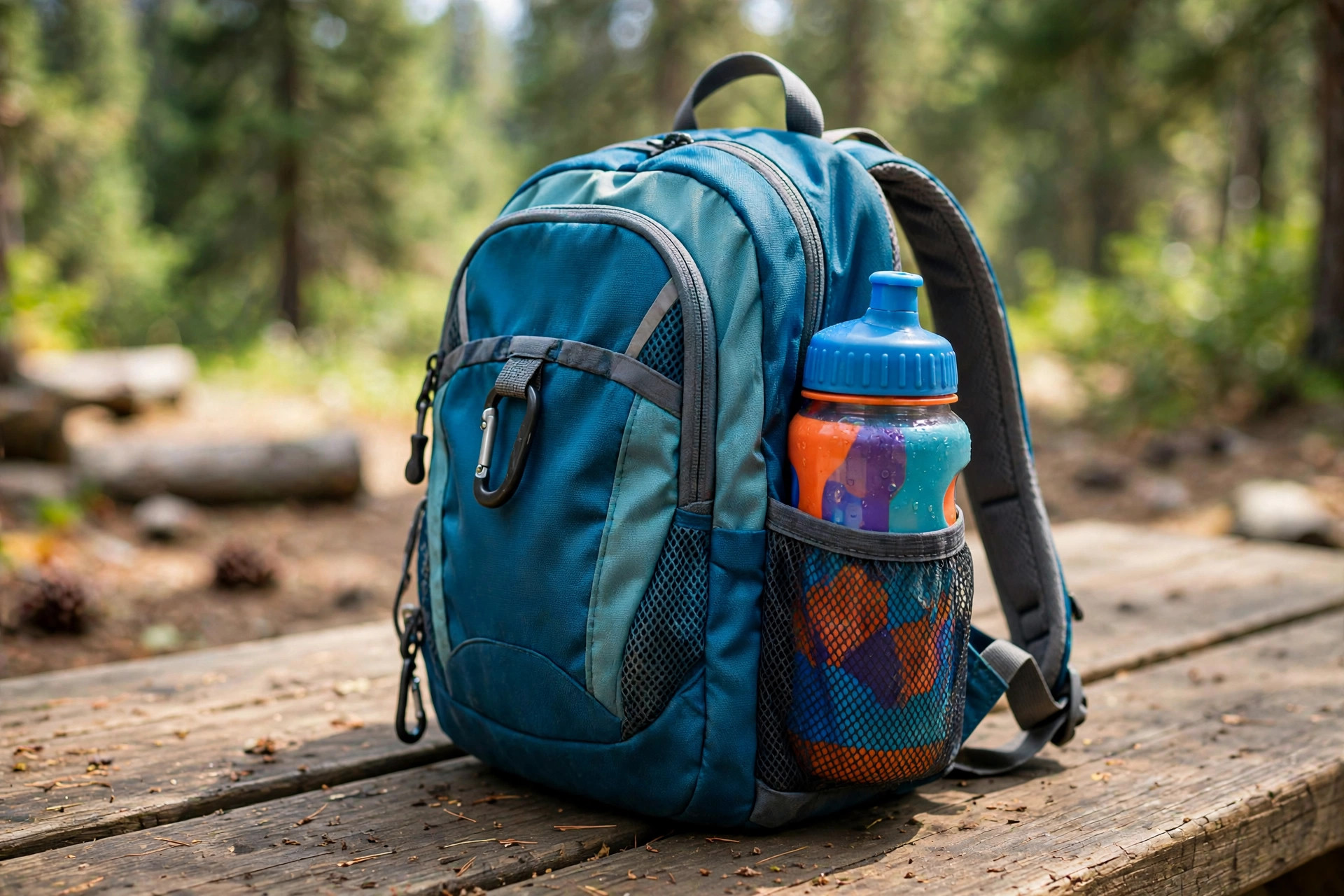
- Pack it like a hike. Put the bottle in your child’s backpack side pocket, toss in a dry towel, and shake the pack. The towel should be bone dry.
- Let your child open it. Ask them to open it, drink, and close it without help. If they struggle, the lid is wrong for them.
- Drop it once. Drop the filled bottle from waist height onto grass. A good hiking bottle survives without cracking or popping its lid.
If a bottle fails any step, return it before the trip. A leak discovered on the trail is a soaked backpack and a thirsty, unhappy kid.
Common Mistakes Parents Make
Buying the adult size. A 24 oz bottle looks like better value, but a small child cannot grip it or lift it easily, and will leave it in the car. Size for the child you have today.
Choosing looks over the lid. The bottle with the coolest character on it is useless if the lid leaks or your child cannot open it. Lid first, pattern second.
Forgetting the refill plan. A great bottle does not help if it is empty at mile three. Know where water is available on your route, and carry a spare bottle in your own pack for younger kids. Our family camping checklist includes water planning.
Skipping the test hike. The first time your child uses a new bottle should not be on a real trail. Let them carry it on a walk around the neighborhood first, so you find the leaks and lid struggles at home.
For the rest of your child’s trail kit, see our best hiking backpacks for kids by age — a bottle that does not fit the pack’s side pocket is a bottle your child will not carry. Our guide to realistic trail distances by age helps you plan how much water to carry.
Frequently Asked Questions
What size water bottle should a 5-year-old take hiking?
A 12 oz bottle is the sweet spot for most 5-year-olds. It is light enough to carry, wide enough to grip, and holds enough water for a one- to two-hour hike. For longer hikes, carry a spare bottle in your own pack rather than giving a small child a bigger, heavier one.
Are insulated water bottles worth it for kids?
Yes, in warm weather. Cold water encourages kids to drink more, and an insulated bottle keeps water cold for hours on a hot trail. In cool weather, a light plastic bottle is usually the better trade-off.
How do I stop my child’s water bottle from leaking in their backpack?
Choose a bottle with a locking lid, close it fully every time, and run the 5-minute leak test at home before the first hike. Carry the bottle upright in the pack’s side pocket rather than loose inside the main compartment.
Can kids drink from a regular adult water bottle while hiking?
They can, but it is usually a poor fit. Adult bottles are too wide for small hands, too heavy when full, and often have lids kids cannot open alone. A kid-size bottle they can use independently means they drink more and you carry less.
How often should kids drink water while hiking?
A good rule is a few sips every 20 minutes, rather than waiting until they feel thirsty. Thirst is a late signal, especially in kids. Set regular drink stops and remind younger children — they get distracted and forget.
The right bottle is the one your child will actually carry and drink from. Pick the size for their age, test the lid with their own hands, and run the leak test at home. For trip planning, Recreation.gov lists campgrounds and trails with water availability notes, so you can plan refills before you hit the trail.
