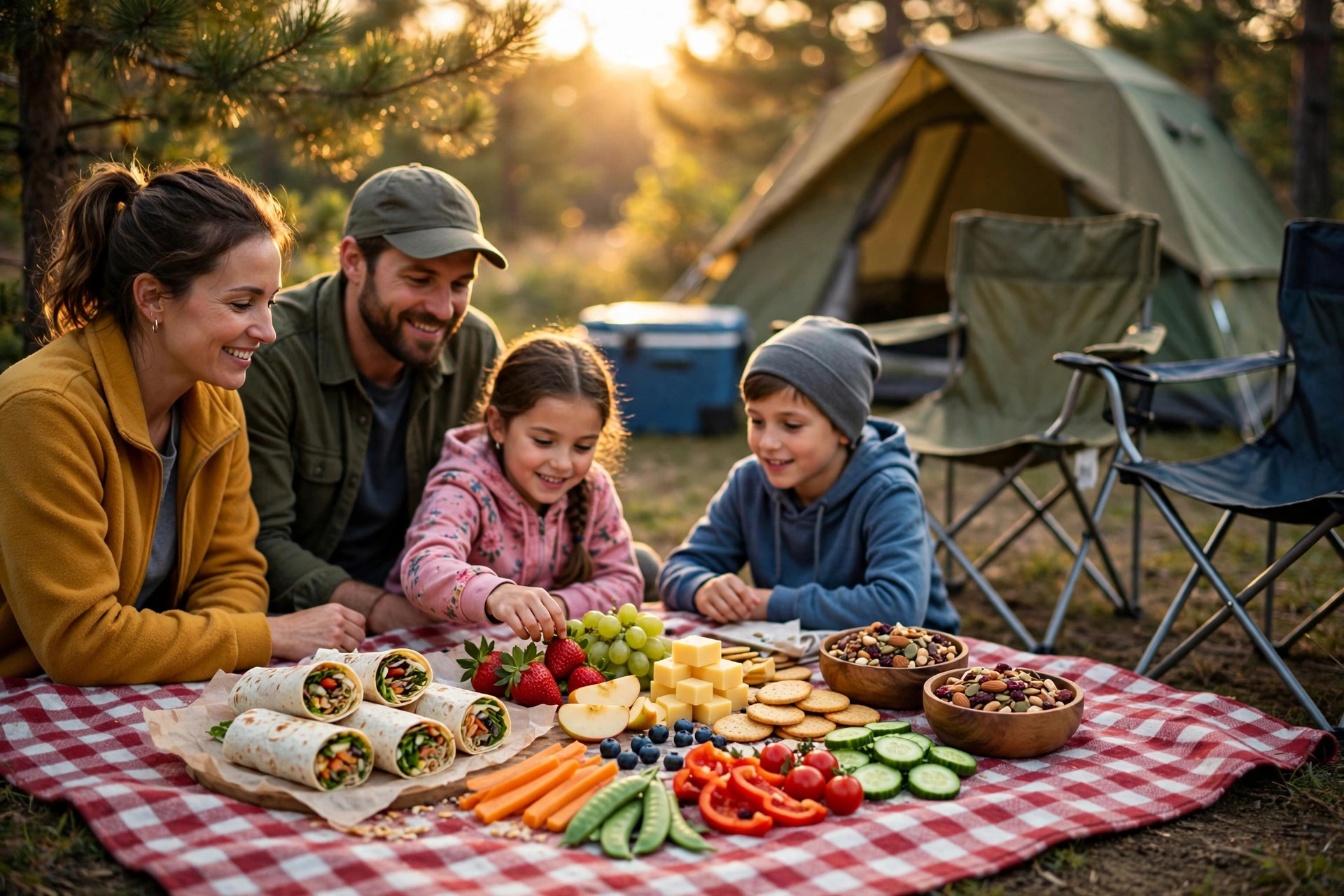
Some of our best family camping memories have nothing to do with a campfire chef moment. They involve a parking-lot picnic on arrival day, sandwiches on a summit, and a dinner of wraps and fruit eaten cross-legged in the tent while it poured outside. If you have been assuming every camping meal needs a stove, a cooler full of ice, and 45 minutes of prep, this guide will change how you plan your trips: no-cook camping meals for families are easy, kid-friendly, and often healthier than what most of us cook at camp.
This guide gives you 25 no-cook meal ideas — breakfasts, trail lunches, dinners, and snacks — plus a food-safety system, a prep-at-home checklist, a 3-day sample plan, and allergy swaps.
Why No-Cook Meals Are a Camping Superpower for Families
Cooking at camp is fun in theory. In practice, you are cooking on a wobbly table with one burner, two kids asking when dinner will be ready, and a fire ban in half the Western states. No-cook meals win in five common family situations:
- Arrival day. You pull in at 6:30 PM with tents to pitch and cranky kids. A no-cook dinner gets food on the table in five minutes.
- Fire bans and restrictions. Many parks and forests ban campfires during dry summers. No-cook means your meal plan survives the restriction.
- Rainy days. Nobody wants to cook outside in the rain. Our guide to rainy-day camping with kids pairs perfectly with a tent-friendly dinner.
- Hot days. Standing over a stove when it is 95 degrees is miserable. Cold meals keep everyone cooler.
- Short trips. For one-nighters and quick weekenders, skip the camp stove entirely and reclaim that packing space.
Going no-cook does not mean eating junk. With a little planning, your kids can eat better at camp than they do at home.
No-Cook Food Safety Rules Every Family Should Know
No-cook food is still food, and warm temperatures at camp can spoil it fast. Follow these rules and you will eat safely all trip:
- Keep your cooler at 40°F (4°C) or below. Pack perishables — deli meat, cheese, yogurt, opened milk — surrounded by ice, not just on top. A cheap fridge thermometer is worth its weight.
- Follow the 2-hour rule. Perishable food left out at camp for more than 2 hours goes in the trash; in heat above 90°F (32°C), make that 1 hour. FoodSafety.gov’s outdoor food-safety guidance covers this in detail.
- Eat the riskiest foods first. Plan deli meats, soft cheese, and yogurt for day 1–2, and save shelf-stable foods (peanut butter, tuna pouches, dried fruit) for the end of the trip.
- Wash hands before every meal. Pack hand sanitizer and biodegradable soap in an easy-access spot, and make it a rule, not a suggestion.
- Store food like wildlife is watching. In bear country or even raccoon country, every scrap and every wrapper goes in a hard-sided container or your car at night. The National Park Service’s food-storage guidelines apply even when your dinner required no cooking.
- Check expiration and package integrity. Tuna pouches and shelf-stable milk last ages, but only until opened. Puffed pouches and swollen cans go straight to the trash.
The No-Cook Pantry: 5 Building Blocks
You do not need 25 recipes. You need five building blocks that mix and match into endless meals:
| Building block | What to pack | Cooler needed? |
|---|---|---|
| Proteins | Tuna/chicken pouches, deli turkey, hard-boiled eggs, peanut butter, hummus cups, jerky, shelf-stable tofu, canned beans | Yes for deli meat, eggs, opened hummus |
| Carbs & bases | Tortillas, bagels, hearty bread, crackers, pita, shelf-stable rice or couscous cups, instant oats | No (except opened items) |
| Fruits & veggies | Apples, bananas, clementines, grapes, cherry tomatoes, baby carrots, cucumbers, bell peppers, dried fruit | Yes for cut items |
| Dairy & spreads | Hard cheeses, yogurt cups, cream cheese singles, shelf-stable milk boxes, butter/margarine packets | Yes, most |
| Flavor boosters | Mustard, hot sauce, salt & pepper, olive oil packets, granola, nuts, dried cranberries, honey packets | No |
If you pack from every row, you can feed a family for a long weekend without touching a stove.
Prep-at-Home Checklist (2 Days Before the Trip)
The secret to stress-free no-cook camping is 30 minutes of prep at home:
- Hard-boil a dozen eggs and keep them in the shell until eaten
- Make overnight oats in jars for the first two mornings
- Assemble one big pasta salad and one bean salad; portion into containers
- Pre-slice veggies (peppers, cucumbers, carrots) and portion into bags
- Mix a big batch of trail mix in a zip-top bag
- Portion peanut butter and hummus into small lidded cups for little hands
- Freeze water bottles to use as ice packs — they become drinking water as they melt
- Pre-chill the cooler with a bag of ice the night before so it starts cold
- Pack one “first meal” bag to grab immediately on arrival (wraps, fruit, drinks)
25 No-Cook Camping Meals for Families
No-Cook Breakfasts (6)
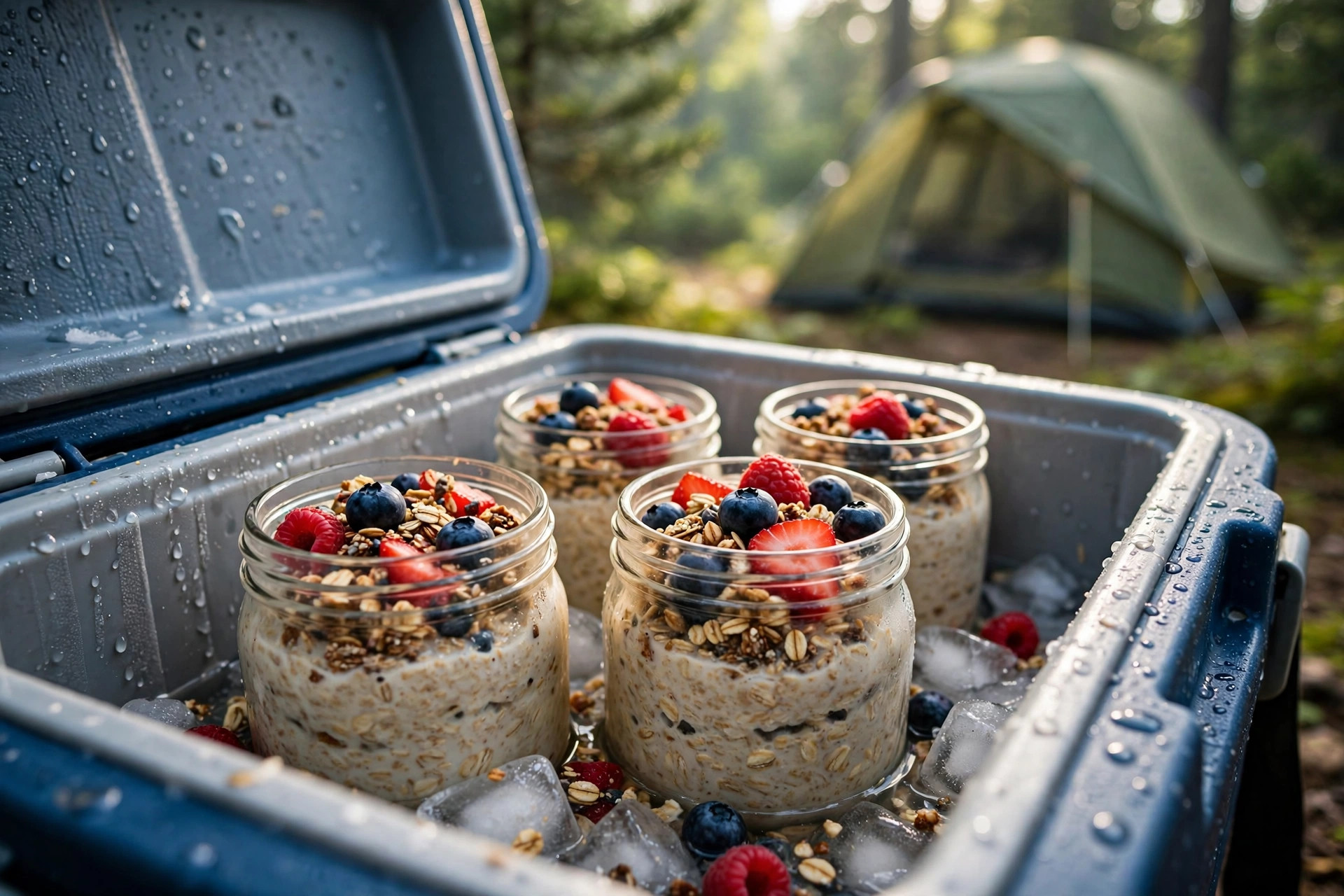
1. Overnight oats jars. Mix rolled oats, milk or yogurt, chia seeds, and frozen berries in jars at home. They are breakfast the moment you wake up, and kids love customizing their own jars.
2. Bagels with cream cheese and smoked salmon. Fancy enough for the adults, fun enough for the kids (let them build their own). Pre-portioned cream cheese singles make it mess-free.
3. Greek yogurt parfait bar. Set out yogurt, granola, honey, and fruit, and let each family member assemble. Minimal dishes, zero complaints.
4. Peanut butter banana wraps. Spread peanut butter on a tortilla, add banana slices and a drizzle of honey, roll up. Surprisingly filling, and it survives a morning hike in a backpack.
5. Hard-boiled eggs and fruit. The simplest camping breakfast there is. Eggs are portable, protein-rich, and don’t make a crumbly tent mess.
6. Cold cereal boxes + shelf-stable milk. Bring the kids’ favorite cereal and single-serve shelf-stable milk boxes. Zero prep, zero dishes — pure vacation mode.
Trail Lunches (7)
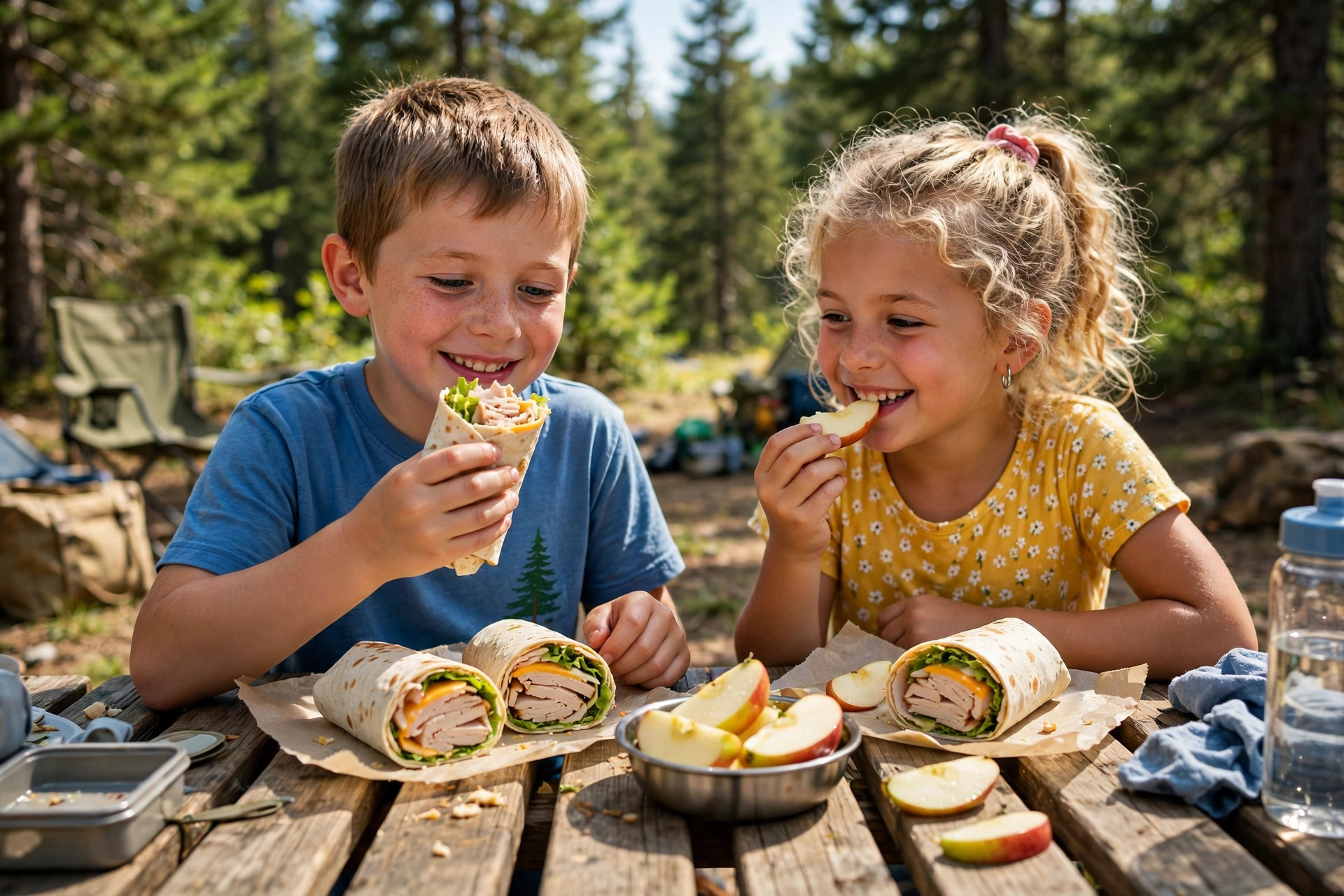
7. Turkey and cheese wraps. Layer deli turkey, cheese, lettuce, and mustard on a big tortilla. Wrap tight in foil for hiking — tortillas survive the backpack far better than bread.
8. Hummus and veggie pitas. Fill pita pockets with hummus, shredded carrots, cucumber, and feta. Kid-friendly and endlessly customizable.
9. Tuna salad crackers. Mix tuna pouches with a little mayo or mustard at camp, and scoop with sturdy crackers. Add diced celery and pickles if your kids go for it.
10. Caprese sandwiches. Fresh mozzarella, tomato slices, basil, and a drizzle of olive oil on crusty rolls. Feels like a picnic in Tuscany, tastes like one too.
11. PB&J, the trail classic. Do not overthink this one. Pre-made peanut butter and jelly sandwiches are still the most reliable kid fuel on any hike.
12. Bean and corn salad cups. Mix canned black beans, corn, diced bell pepper, and salsa at home. Serve cold in cups with tortilla chips for scooping.
13. DIY lunchable boxes. Cheese cubes, crackers, deli roll-ups, grapes, and pretzels divided into lunch boxes. Kids assemble their own, and there is something for every appetite.
For more trail-friendly snack ideas, see our family hiking snacks guide.
No-Cook Campsite Dinners (7)
14. Mediterranean pasta salad. Cook pasta at home, toss with olive oil, cherry tomatoes, cucumbers, olives, and feta. It feeds a crowd and gets better as it sits.
15. Chicken salad croissants. Pre-make chicken salad at home, pack it in the cooler, and serve on croissants with lettuce. Upgrade: add grapes and walnuts for crunch.
16. Taco wraps, no-cook style. Canned chicken or black beans, shredded cheese, salsa, shredded lettuce, and tortillas. Everyone builds their own — the secret weapon against picky eaters.
17. Antipasto board dinner. Sliced salami, prosciutto, cheeses, crackers, olives, roasted red peppers, and fruit on a cutting board. Feels festive, requires zero cooking, and keeps grazers happy for an hour.
18. Cold soba-style noodle cups. Cook spaghetti at home, portion into cups with a splash of sesame oil, and top with shredded carrots and edamame. Surprisingly kid-approved.
19. Deli sandwich night. Buy a baguette or rolls, lay out deli meats, cheeses, and toppings, and let everyone build the sandwich of their dreams. Pair with the leftover pasta salad.
20. Couscous salad with chickpeas. Make it at home with dried cranberries, lemon, olive oil, and canned chickpeas. It travels well and needs no reheating.
Kid-Approved Snacks & Treats (5)
21. Apple slices and peanut butter cups. Slice apples at camp and pair with single-serve peanut butter. Crispy, filling, and almost impossible to spill.
22. Trail mix bars. Mix oats, honey, peanut butter, and mix-ins at home, press into a pan, and cut into bars. Wrap individually for grab-and-go energy.
23. Yogurt bark. Spread yogurt on a sheet pan, top with berries and granola, freeze, and break into pieces. Pack frozen — it doubles as a cooler ice pack and a treat.
24. Cheese and meat kabobs. Thread cheese cubes, grapes, and salami onto skewers (snip the sharp tips for toddlers). Kids eat anything on a stick.
25. S’mores without the fire. Graham crackers, chocolate squares, and marshmallow fluff make a no-fire s’more that tastes shockingly close to the real thing.
Feeding Picky Eaters: What Actually Works
Camping amplifies picky eating — kids are tired, routines are off, and the food looks different. Three strategies that genuinely help:
- Build-your-own everything. Tacos, sandwiches, yogurt bars, snack boxes. Control is the picky eater’s love language.
- Bring one safe food per meal. If your kid only eats bread, fruit, and crackers, make sure those appear at every meal alongside the new stuff. No pressure, no battles.
- Let them be hungry. Fresh air and activity do more for a kid’s appetite than any persuasion. Most picky eaters eat better at camp than at home by day two.
Allergy Swaps for Common Camp Foods
If your family has food allergies, no-cook camping is very manageable with a few swaps:
- Peanut allergy: swap peanut butter for sunflower-seed butter or soy-nut butter (check the label — some facilities also process nuts).
- Dairy allergy: use dairy-free yogurt cups and skip cheese in wraps; hummus-based lunches are naturally dairy-free.
- Gluten sensitivity: corn tortillas, rice cakes, and gluten-free wraps work for almost every meal here.
- Egg allergy: skip hard-boiled eggs and egg salad; lean on tuna pouches, beans, and hummus for protein.
If your child has a serious allergy, talk to your pediatrician before the trip about emergency plans and medications, and always double-check ingredient labels — formulations change.
3-Day Sample No-Cook Meal Plan
| Day | Breakfast | Lunch | Dinner | Snacks |
|---|---|---|---|---|
| Day 1 (arrival) | Drive-up: cereal boxes at home | On the road: deli sandwiches | Antipasto board + fruit | Trail mix, grapes |
| Day 2 (full day) | Overnight oats jars | Turkey wraps on the trail | Mediterranean pasta salad + croissants | Apple slices & PB, yogurt bark |
| Day 3 (departure) | Yogurt parfait bar | Bean salad cups + chips | Pack-out leftovers picnic | Granola bars, dried fruit |
Pair this plan with a smart packing system — our family camping checklist has a full kitchen and food section.
FAQ: No-Cook Camping Meals
How long can no-cook food last in a cooler?
Perishables stay safe for about 3–4 days in a well-packed cooler with plenty of ice, as long as the temperature stays at or below 40°F (4°C). Eat deli meats, soft cheese, and yogurt in the first 1–2 days, and save shelf-stable foods for later in the trip.
What are the best no-cook meals for toddlers while camping?
Peanut butter banana wraps, cheese cubes, apple slices, yogurt cups, hummus with soft pita, and pre-made PB&J cut into small pieces. Finger foods that don’t need utensils work best for tired little hands.
Can I do no-cook camping for a whole week?
Yes, with a mid-trip resupply. Plan 3–4 days of perishable-based meals, then restock ice and fresh food at a grocery store on day 4. The rest of the week runs on shelf-stable staples plus fresh fruit.
What if there is a fire ban — can we still eat well?
Absolutely. Every meal in this guide requires zero fire, stove, or grill, so fire bans don’t affect your menu at all. You’ll miss the campfire ambiance, not the cooking.
How do I keep no-cook food safe from bears and raccoons?
Store ALL food, scented items, and trash in hard-sided containers or your locked vehicle at night, and never in your tent. Clean up crumbs and wrappers immediately after eating. Follow the National Park Service food-storage guidelines wherever you camp.
Are no-cook meals actually cheaper than cooking at camp?
Often, yes. You skip buying fuel, charcoal, or disposable cookware, and no-cook meals use fewer ingredients per serving. Buying in bulk before the trip — tortillas, tuna pouches, granola — keeps costs even lower.
The Bottom Line
No-cook camping meals remove the biggest stress of cooking outdoors: the cooking itself. With five building blocks, a short prep session at home, and a cooler that stays cold, your family can eat well without ever lighting a stove. Start with a single no-cook night on your next trip — by morning, nobody will miss the camp stove.
Ready to plan the rest of the trip? Check out our first family camping trip action plan and our guide to the camping mistakes beginners should avoid.
