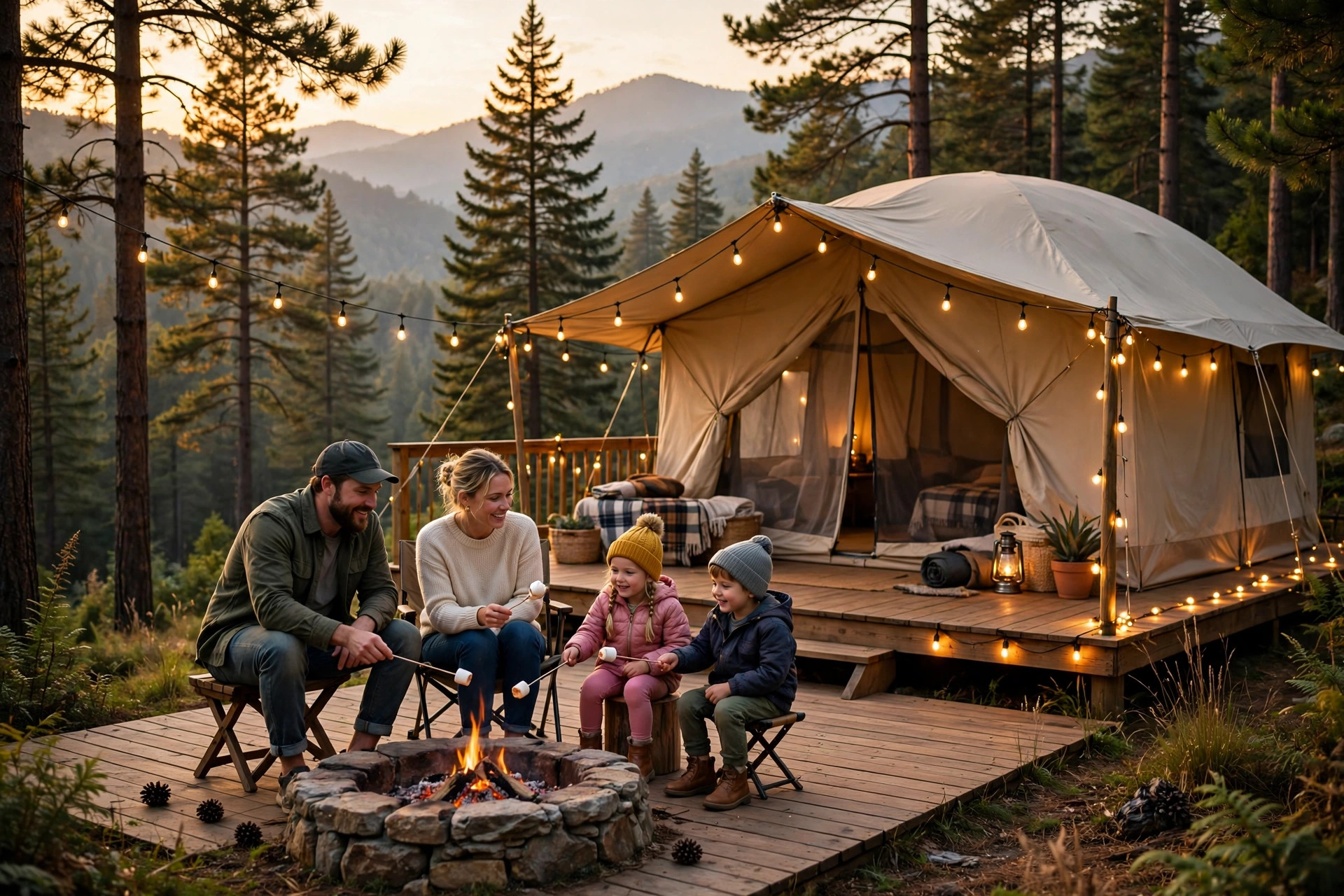
Glamping with kids might be the best-kept secret in family travel. You get the campfire, the stars, and the pine-scented mornings — without wrestling a tent in the dark while a toddler melts down. Real beds, real bathrooms nearby, and a canvas roof overhead: camping with the hard parts removed.
But glamping is not one thing. A safari tent with bunk beds and a private bathroom is a very different trip from a bare yurt with a shared bathhouse down a gravel path. This guide covers what glamping with kids actually looks like, the best types of family sites in the USA, what it costs, what to pack, and the mistakes to avoid.
What Is Glamping with Kids?
Glamping — glamorous camping — means staying in a pre-set structure in nature: a safari tent, yurt, cabin, Airstream, treehouse, or covered wagon. The structure is furnished before you arrive, usually with real beds, bedding, lighting, and often heating. You bring clothes, food, and your family; the site provides the shelter.
For families, the difference from regular camping is practical, not just cosmetic. There is no tent to pitch, no air mattress to inflate at 10 p.m., and no sleeping on roots. Kids get a proper bed, parents get a door that closes, and everyone sleeps far better — and that one change transforms the whole trip.
Sites range from simple to seriously comfortable: a furnished canvas tent with a shared bathhouse at one end, a safari tent with an en-suite bathroom, wood stove, and private deck at the other. Both count as glamping; the trick is matching the comfort level to your kids’ ages and your budget.
Is Glamping Worth It for Families?
For most families trying the outdoors for the first time, yes — and the reasons are concrete.
First, it removes the biggest barrier: the setup. A family arriving at 4 p.m. to a ready-made tent can be roasting marshmallows by 5 p.m. instead of arguing over tent poles. Second, it keeps the trip fun when the weather turns — rain in a canvas tent with a lantern and a card game is an adventure; rain in a leaking dome tent with a wet toddler is a reason to drive home. Third, grandparents can come along: people who would never sleep on the ground will happily sleep in a glamping tent.
The trade-offs are real. Glamping costs more than a campsite, sometimes several times more, and popular sites book out months ahead for summer weekends, so spontaneity is limited. Older kids who want to build fires and get muddy may find it less like “real camping” — though most sites still offer exactly that, just with a comfortable bed at the end of the day.
| Glamping | Traditional camping | |
|---|---|---|
| Setup on arrival | None — arrive and relax | 30–90 minutes of pitching and unpacking |
| Sleeping | Real beds, bedding provided | Sleeping pads or air mattresses |
| Bathroom | Often en-suite or nearby bathhouse | Shared campground facilities or none |
| Cost per night | Higher, roughly resort-level | Low, often $20–$50 a night |
| Weather resilience | Good — solid structure, heating | Depends on your gear |
| Best for | First-timers, toddlers, grandparents | Experienced families, tight budgets |
Best Family Glamping Sites in the USA
You do not need to fly to a safari lodge to glamp well. These are the types of stays families consistently love — use them as a starting point, then search near the park or region you want to visit.
Safari-tent camps near national parks
Operators such as Under Canvas run large safari-tent camps outside parks like Yellowstone, Zion, Grand Canyon, and Great Smoky Mountains. Tents sleep four or more, many with en-suite bathrooms and wood stoves, and camps offer kids’ activities and communal fire pits. They are the easiest first glamping trip for families because everything is organized — you just show up. Book early: summer dates often sell out months ahead.
Airstreams and tiny cabins
AutoCamp and similar retro-trailer resorts place restored Airstreams and cabins in scenic spots, including near Joshua Tree and the Catskills. Kids love sleeping in a shiny silver trailer, and sites usually have a clubhouse, a pool or fire pit, and a shop for forgotten essentials. Airstreams suit families of three or four best — check the sleeping layout before booking, because some sleep only two comfortably.
Yurts and cabins in state parks
Many state parks rent yurts and rustic cabins at a fraction of private glamping prices. A yurt is a round canvas-and-wood structure with beds, a table, and often heating — simple, but a huge step up from a tent, and it puts you inside the park itself. Reserve through Recreation.gov or the state’s own booking system, and expect competition for weekend dates.
KOA campgrounds with glamping tents and cabins
KOA campgrounds across the country now offer “deluxe cabins” and glamping tents alongside regular RV sites. The advantage for families is the infrastructure: playgrounds, pools, bike rentals, planned kids’ activities, and a camp store. If your kids need entertainment beyond the campfire, a KOA glamping stay is a safe bet — but check that campground’s reviews, because quality varies by location.
Treehouses, wagons, and farm stays
For a trip kids will talk about for years, look at treehouse rentals, covered-wagon stays, and working-farm glamping on sites like Hipcamp. These are smaller and quirkier than the big operators, so read the listing carefully: check bed counts, bathroom arrangements, and how far you will walk to the car.
Glamping with Toddlers: What Changes
Glamping with a baby or toddler is where the format really earns its keep — and where a few details matter more.
Pick a site with a real bathroom
With toddlers, a midnight walk to a shared bathhouse in the dark is a mission. Prioritize a tent or cabin with an en-suite bathroom, or at least a site where the bathhouse is a short, lit, flat walk away. Ask the property how far it is before you book; listings rarely volunteer that detail.
Check the bed situation
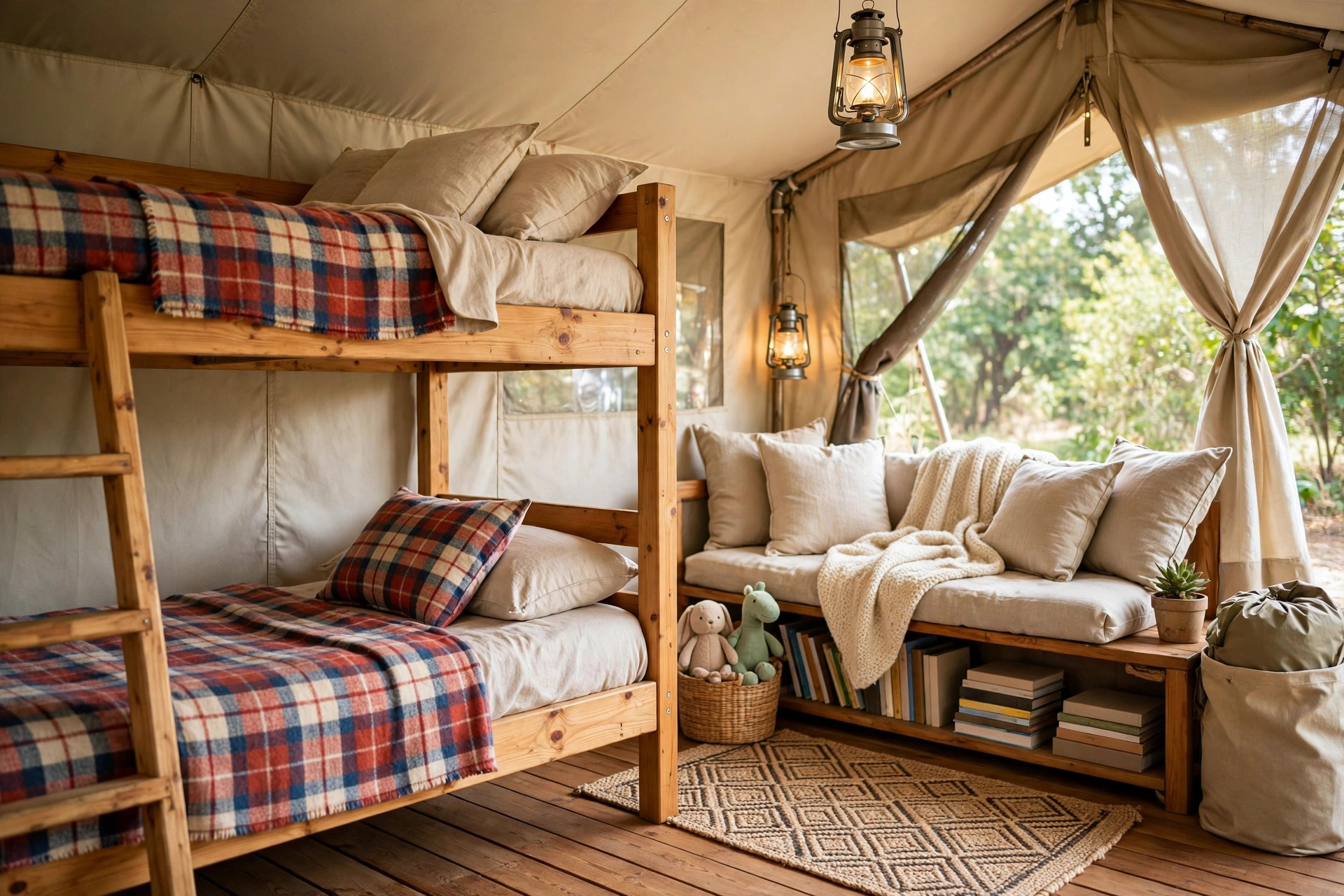
Some glamping tents have one king bed and a sofa, which leaves a toddler with nowhere safe to sleep. Look for bunks, a second bedroom area, or space to set up a travel crib. Bring your own travel crib if your child still uses one — most sites do not provide them.
Keep the routine, loosely
Toddlers cope well with glamping because the basics stay easy: a bed, a light, a door. Keep meals and bedtime roughly on schedule, bring the comfort items (blanket, stuffed animal, white-noise app), and accept shorter naps than at home. For more on the youngest campers, see our guide to camping with a newborn.
What to Pack for Family Glamping
Most sites provide bedding, towels, lighting, and cooking basics — confirm exactly what is included before you pack, because it varies.
- Layers for everyone: mornings and evenings in the mountains or desert can be cold even in summer — pack a warm layer per person plus rain jackets.
- Closed-toe shoes and sandals: trails and campfire areas are rough underfoot; sandals are for the deck only.
- Headlamps for the kids: every child old enough to walk should have one — it prevents trips after dark and kids love them.
- Food and snacks: many sites have no shop, or a pricey one. Bring breakfast supplies, lunch ingredients, and plenty of trail snacks.
- Entertainment: card games, a nature scavenger-hunt list, books, and a football. Leave the tablet as a backup, not the plan.
- First-aid basics: plasters, antiseptic, insect repellent, sunscreen, and any regular medication — the nearest pharmacy may be an hour away.
- Comfort items: the stuffed animal, the blanket, the bedtime book. Glamping is still a strange bed in a strange place.
- Reusable water bottles: one per person, filled before you leave the car.
For a full master list that works for glamping and traditional camping alike, use our family camping checklist.
How Much Does Family Glamping Cost?
Expect to pay far more than a campsite and roughly what a decent hotel room costs — sometimes more in peak season near famous parks. As a rough guide, many family-sized glamping tents and cabins list from around $150 a night in shoulder season to $400 or more per night in summer at popular national-park locations. State-park yurts are the exception: they often run $60–$120 a night.
Watch for costs behind the headline rate: extra-guest fees, linen service, cleaning fees, firewood. Some sites include breakfast or a kids’ activity programme; others charge for both. Add up the total for your dates before booking — the nightly rate alone is rarely the full story.
To keep costs down, travel in shoulder season, book midweek, and consider a state-park yurt or KOA cabin before a private luxury camp — the experience for kids is surprisingly similar; the price is not.
7 Tips for a Smooth First Glamping Trip
- Book the right size: count sleeping spots, not “sleeps four” claims. A tent that sleeps four with one king and a sofa sleeps two adults and two small children, not four adults.
- Arrive before dark: even a glamping site is confusing at night. Arrive with two hours of daylight to spare so kids can explore while you unpack.
- Ask about heating: canvas cools fast after sunset. Confirm heating is included and how it works — a wood stove needs firewood and supervision; an electric heater needs power.
- Plan one big activity a day: a hike, a lake, a ranger programme. Overscheduling kids outdoors backfires; the campfire is an activity too.
- Check the food situation: kitchen, grill, restaurant, or nothing? Knowing this before arrival decides what you pack and what you eat.
- Teach the boundaries early: on arrival, walk the site with the kids and agree where they can and cannot go alone — the road, the water, the neighbouring tents.
- Have a wet-weather plan: rain happens. Bring a card game, a craft kit, and a sense of humour, and check whether the site has a covered communal area.
If this is your family’s very first outdoor overnight, our stress-free first camping trip plan walks through the whole weekend hour by hour.
Glamping vs Traditional Camping with Kids: Which Should You Choose?
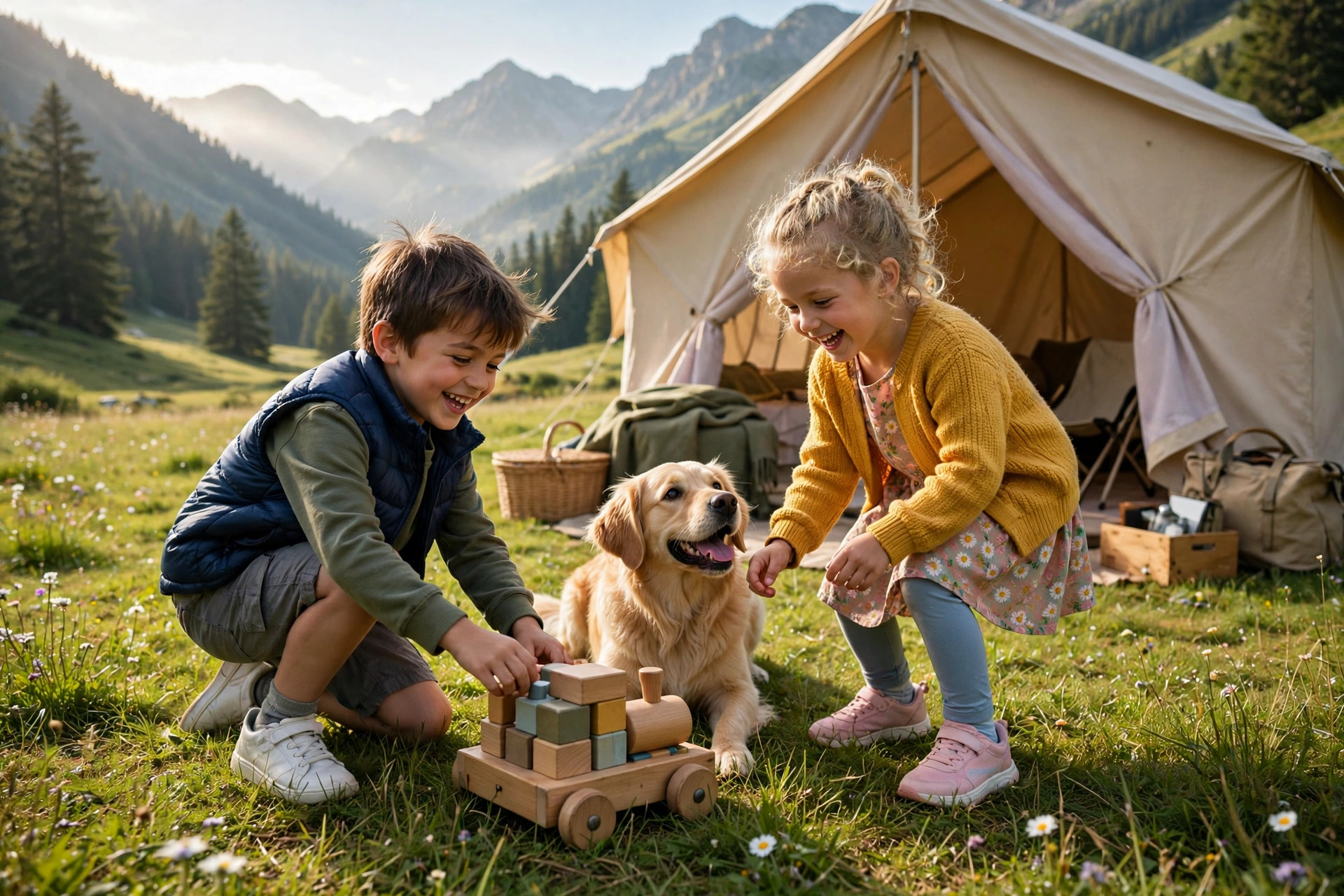
The honest answer depends on your family, not on which one is “better”. Choose glamping if it is your first outdoor trip, if anyone in the family is under four, if grandparents are coming, or if you simply want a holiday rather than a project. The comfort buys you relaxation, and relaxed parents make for happy kids.
Choose traditional camping if your kids are older and want the full experience, if budget matters most, or if you already own the gear — older kids genuinely love building the camp themselves.
Many families do both: glamping for the big annual trip near a national park, regular camping for quick local weekends. There is no rule that says you must pick one forever. Whichever you choose, the site matters as much as the shelter — our guide to choosing a family-friendly campground covers the questions worth asking before you book either one.
Frequently Asked Questions
What age is best for glamping with kids?
Any age works, but glamping shines for ages 2–10. Toddlers benefit from real beds and nearby bathrooms, and school-age kids get the adventure without the discomfort. Babies under one are fine too if the site has heating and an en-suite bathroom — check both before booking.
Is glamping safe for kids?
Yes, with the same common-sense precautions as any outdoor stay: supervise children near fires and water, keep food stored away from wildlife, and walk the site together on arrival to agree boundaries. Choose sites with lighting on paths and a staffed reception if you want extra peace of mind.
Do glamping sites provide bedding and towels?
Most do, but not all. Private operators almost always include bedding and towels; state-park yurts and simpler cabins sometimes do not. Check the listing’s “what’s included” section and bring your own if it is unclear.
Can you glamp in a national park?
You cannot pitch a private glamping tent inside a national park, but you can stay in lodges, cabins, and concessionaire-run tent camps just outside the gates — and in some parks, in historic lodges inside them. For stays inside the parks, see our guide to the best national park lodges for families. Plan park visits through the National Park Service site, which lists lodges, campgrounds, and ranger programmes.
What should kids wear for glamping?
Layers, always: a T-shirt, a fleece, and a rain jacket, plus closed-toe shoes. Mornings and evenings can be chilly even in summer, and trails are dusty and uneven. Pack one warm hat per child for cool nights. For planning the park side of your trip, the National Park Service plan your visit pages list campgrounds, lodges, and ranger programmes by park.
