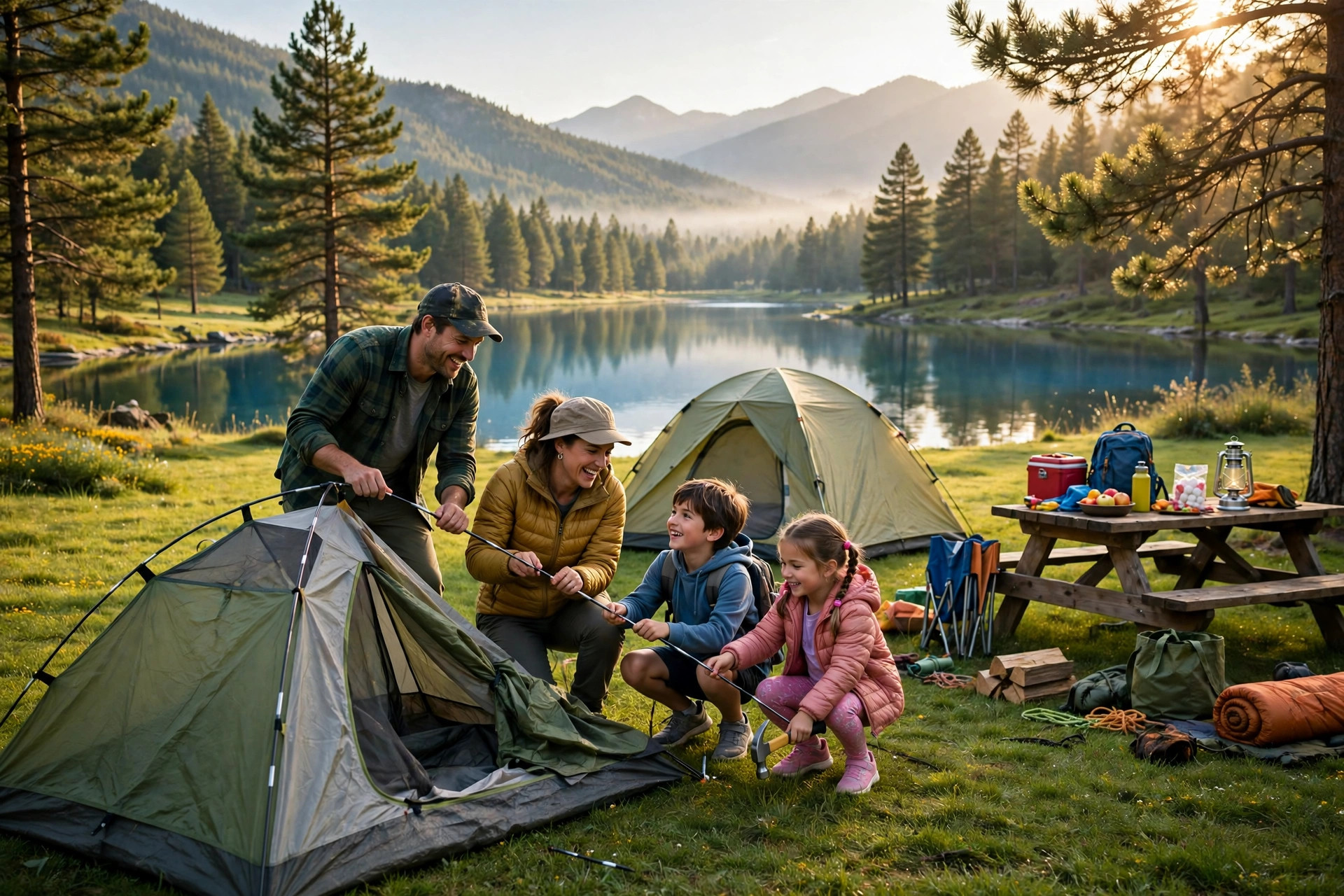
Learning how to choose a family-friendly campground is the single biggest lever for turning a stressful weekend into a trip your kids talk about for months. A gorgeous lake means nothing if the nearest flush toilet is a mile away, the site sits on a highway shoulder, and quiet hours are apparently optional. Ask the right questions before you book — here are the 12 that matter most.
Why the Campground Matters More Than the Destination
Parents obsess over which national park or forest to visit, but the truth is simple: your kids will remember the campsite far more than the scenery. They will remember the clean bathroom block that made nighttime potty trips easy, the flat tent pad that didn’t funnel everyone into a cold puddle, and the ranger-led campfire program that taught them about constellations. They will also remember the campground where screaming neighbors kept them up until 1 a.m.
According to the National Park Service, campgrounds inside and near national parks vary wildly in amenities — some offer flush toilets and showers, others have nothing but a pit toilet and a hand pump. Matching the campground to your family’s needs is how you avoid learning that difference at 2 a.m. in the rain. The questions below will take you about 20 minutes to answer for any campground — and they will save you an entire ruined weekend.
Safety Questions to Ask First
1. Are there unguarded water bodies near the campsites?
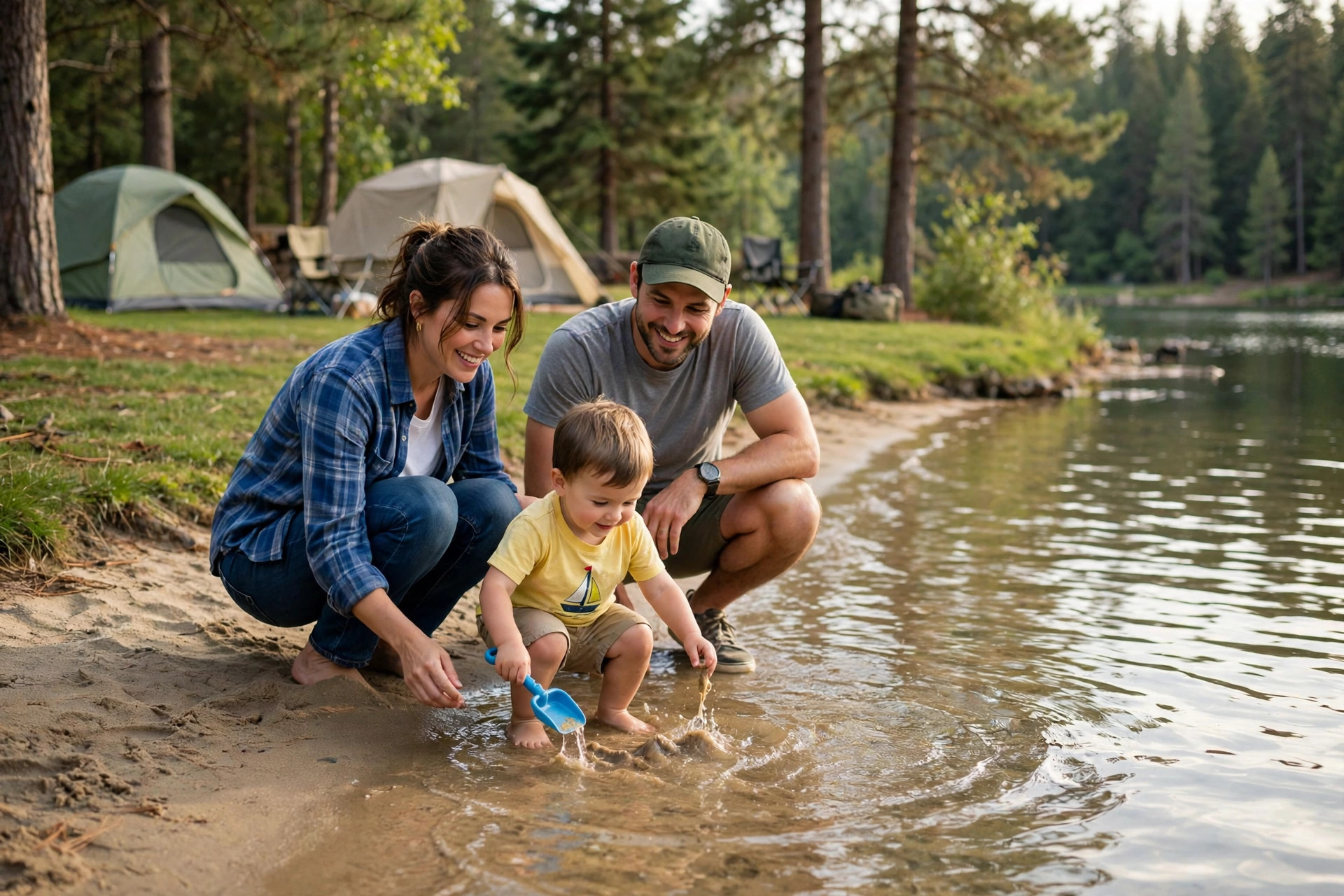
Lakes, rivers, and streams are the number one reason parents need to think twice about a site. Most campground drownings involve children who slipped away from camp for a few minutes. Ask: is there a swimming area, a river current, or a steep bank within wandering distance of the sites? If the answer is yes, request a site set back from the water and bring a portable fence or playpen for crawlers. The National Park Service water safety page is a useful pre-trip briefing for the whole family.
2. How close is the nearest road, and what is traffic like?
Campgrounds next to highways or busy park roads mean exhaust noise, headlights sweeping the tent at night, and — for families — the constant worry of a toddler bolting toward traffic. Ask whether sites are buffered by trees or set deep in the loop, and whether the campground enforces a low speed limit. Tent loops tucked away from the entrance road are almost always calmer.
3. What wildlife visits camp, and what food-storage rules apply?
In bear country, food storage rules are not suggestions — they are enforced with fines and, in some cases, eviction from the campground. Ask about bear boxes, shared food lockers, and the local wildlife (bears, raccoons, snakes, ticks). Knowing the rules ahead of time lets you pack proper storage and teach kids the “nothing with a scent in the tent” rule before arrival.
4. Is there cell service, and how do you reach help?
Many beautiful campgrounds sit in complete dead zones. That’s charming until someone twists an ankle or spikes a fever. Ask whether any carrier has coverage, where the nearest hospital or urgent care is, and whether the camp host or ranger station has emergency communication. Our family camping checklist includes a small first-aid and emergency kit built around exactly this scenario.
Facilities and Comfort: What You Can’t Fix After Arrival
5. What are the restrooms and showers really like?
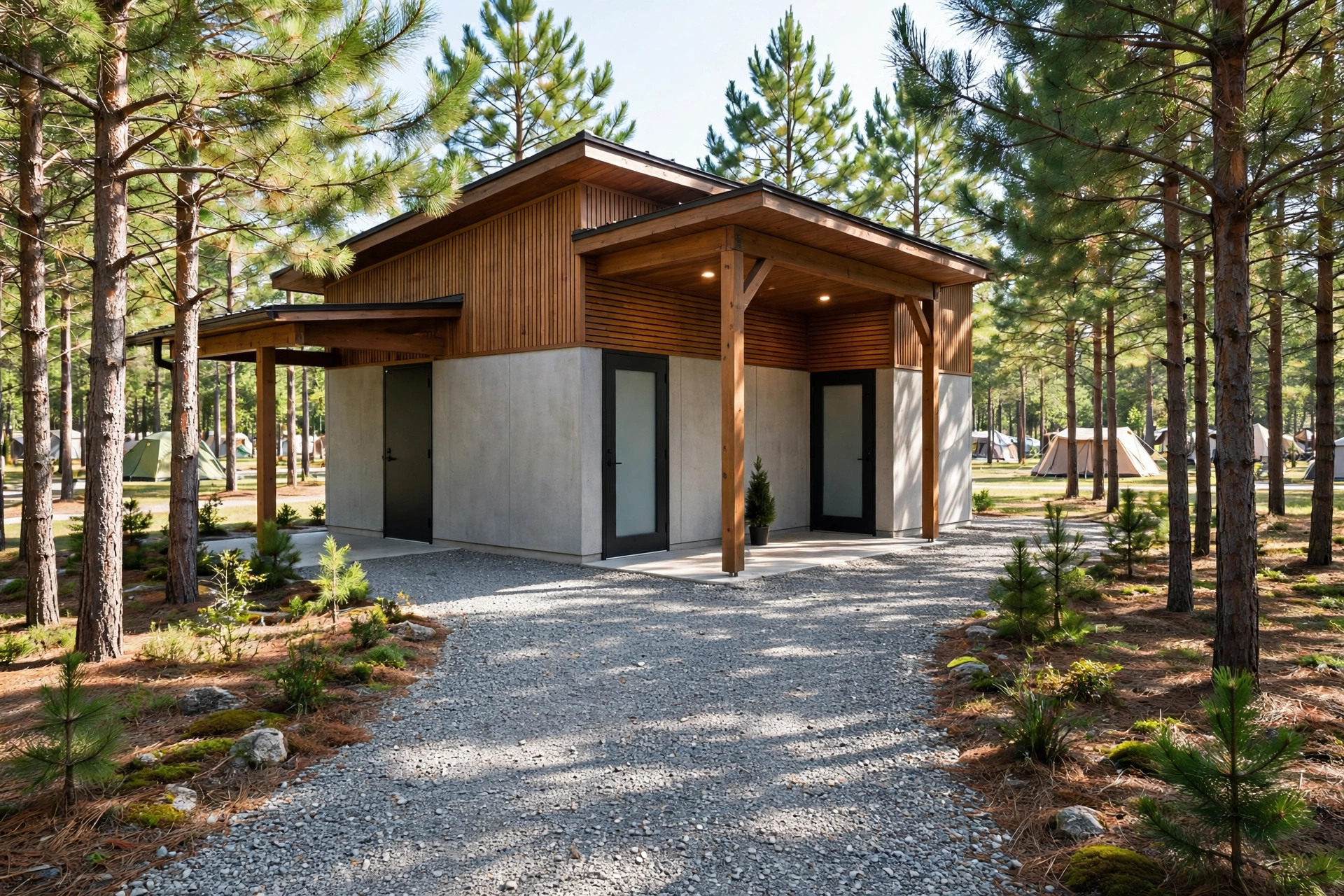
“Restrooms available” can mean anything from heated flush toilets with private showers to a single vault toilet half a mile from your site. Ask specifically: flush or vault? Showers or none? How many stalls serve how many sites? How far is the walk from the farthest loop? For families with small kids, a site within a two-minute walk of the bathroom block is worth paying extra for. If the campground is dry (no flush toilets), plan accordingly — it is manageable, just not a surprise you want at midnight.
6. Is drinking water available at each loop?
Some campgrounds have potable water spigots on every loop; others expect you to haul every gallon from a single well — or bring it all from home. Ask where the water points are and whether the water is treated. If the answer is vague, plan on five gallons per family per day for drinking, cooking, and hand-washing. A water jug with a spigot is one of the best cheap upgrades a family can make.
7. How noisy and crowded does it get?
Read recent reviews for the word “party.” Campgrounds near towns or popular with large groups can turn into all-night social clubs on summer weekends. Ask about quiet hours and whether they are actually enforced, how close together the sites are, and whether there are separate loops for tents, RVs, and groups. A tent-only loop is often the quietest choice for light-sleeping kids.
8. What is there for kids to actually do?
Bored kids are the fastest path to a miserable trip. Ask about ranger programs, junior ranger booklets, playgrounds, nature trails short enough for little legs, fishing piers, or bike paths. A campground with even one structured activity — a Friday night campfire talk, a guided morning walk — changes the entire feel of the weekend. This is the question that separates “we survived” from “when are we coming back?”
Rules, Costs, and Fine Print
9. What are the quiet hours and campfire policies?
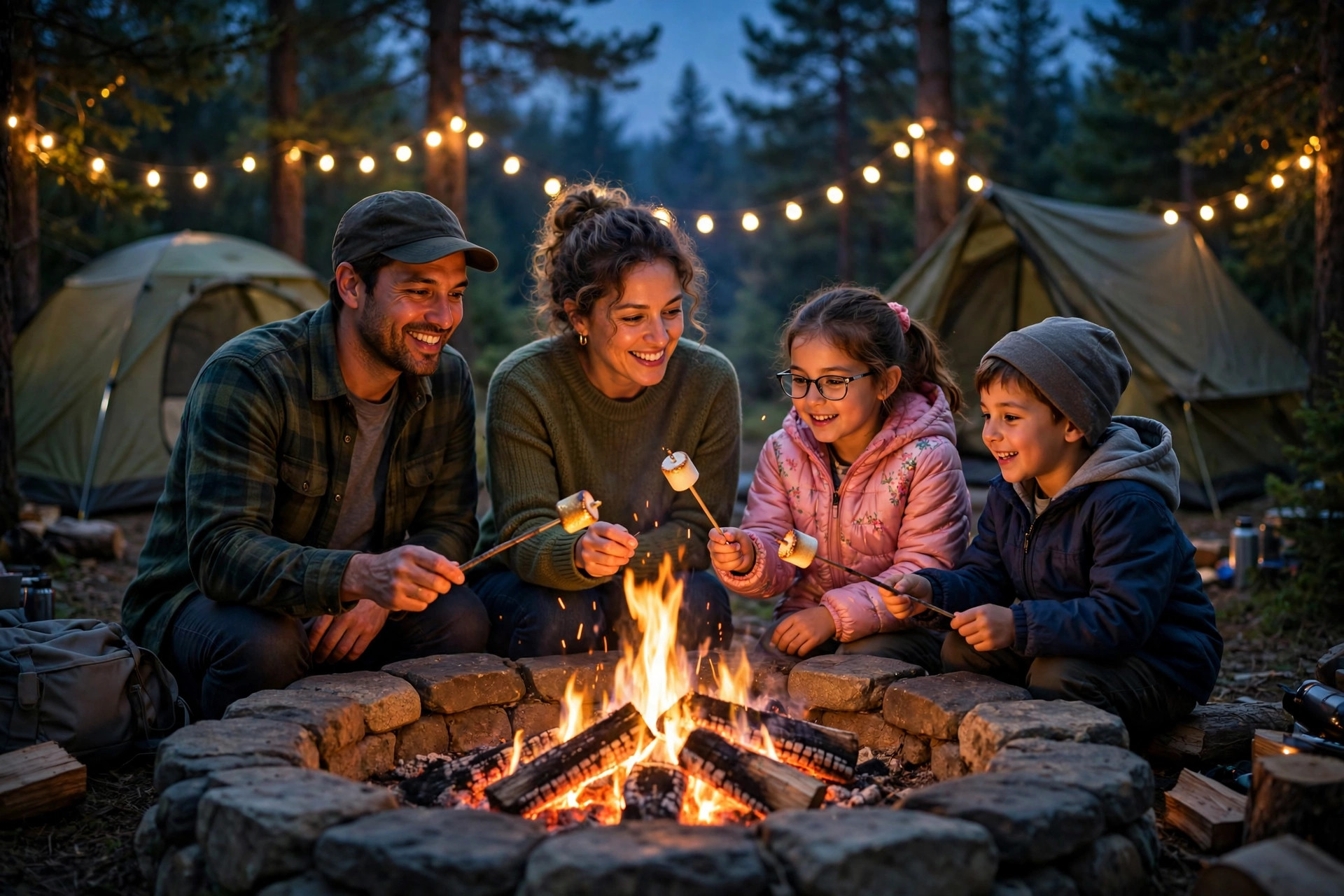
Quiet hours tell you the campground’s culture. A 10 p.m. quiet hour that is enforced means a family-oriented place. Ask also about campfire rules: fire bans are common in dry summers, and some campgrounds prohibit gathering firewood or require you to buy it on-site. Knowing this lets you pack a camp stove as backup — see our camp stove comparison if you need one.
10. What are the real total costs — not just the nightly rate?
The advertised $30/night can quietly become $60 once reservation fees, vehicle passes, extra-tent fees, firewood, and “premium site” surcharges pile on. Ask for the all-in total before booking. If you camp more than a few weekends a year, an annual federal recreation pass from Recreation.gov can pay for itself quickly across federal sites.
11. How big, flat, and private are the sites?
Site photos on booking pages are taken with wide-angle lenses at golden hour — take them with skepticism. Ask about tent pad size, ground levelness, shade, and the distance between neighboring sites. For families, a bigger site is almost always worth the premium: you need room for the tent, a kitchen setup, a play area, and a safe distance from the fire. Our family tent buying guide explains how tent size should match site size.
12. Can you actually get a site — and what is the cancellation policy?
Popular campgrounds sell out the minute reservations open. Ask when the booking window opens (many federal sites release sites six months out on Recreation.gov), whether there are first-come-first-served sites, and what the cancellation terms are. If everything is sold out, don’t despair — our guide on finding last-minute campsite cancellations has helped plenty of families snag weekend spots.
Red Flags: Walk Away If You See These
- No posted rules or contact info: a campground with no visible management is a campground where problems go unsolved.
- Reviews consistently mention noise, theft, or filthy bathrooms: one bad review is noise; five is a pattern.
- “Waterfront” sites with no barriers and no mention of supervision: beautiful and risky — only book if you’re comfortable with constant water vigilance.
- Photos show trash, damaged picnic tables, or overgrown sites: deferred maintenance in photos means worse in person.
- Amenities listed on the website contradict recent reviews: trust the reviewers. Campground websites are rarely updated when a shower building closes.
- No quiet hours, or “we don’t enforce them”: with kids, this is a deal-breaker on summer weekends.
How to Research a Campground Before You Book
Start with the official reservation page — Recreation.gov for federal sites, or the state park agency site for state parks. Then cross-check with recent Google reviews, filtering for mentions of “kids,” “family,” “bathroom,” and “noise.” Campground review sites and the National Park Service camping page fill in the official details. Finally, call the campground directly with your top three questions — the tone of the answer tells you as much as the content. A host who happily answers detailed family questions is exactly who you want looking after your loop.
If you’re still nervous about your first trip, read the mistakes first-time family campers make — nearly all of them trace back to picking the wrong site or arriving unprepared for what the site actually offers.
Frequently Asked Questions
What makes a campground truly family-friendly?
A family-friendly campground combines safety (sites set back from water and roads), clean and nearby restrooms, potable water, enforced quiet hours, and something for kids to do — ranger programs, short trails, or a playground. The label on the website means nothing; the answers to the 12 questions above mean everything.
How far in advance should we book a family campground?
For popular federal and state park campgrounds, book the moment the reservation window opens — often six months ahead. For shoulder seasons and lesser-known parks, 4–8 weeks is usually enough. Always have a backup plan, and check our cancellation-spotting guide for sold-out weekends.
Are private campgrounds better than public ones for families?
Not automatically. Private campgrounds (like KOA) usually have more amenities — pools, playgrounds, planned activities — but cost more and can feel crowded. Public campgrounds (state and national parks) offer better nature and bigger sites but fewer comforts. Choose based on your kids’ ages and your tolerance for rustic bathrooms.
What should we do if we arrive and the campground is bad?
First, talk to the camp host — they can often move you to a better site. If the problem is safety (filthy water, no management, dangerous conditions), document it and leave; check nearby state parks or private campgrounds for same-night availability. This is why researching the cancellation policy in advance matters.
Can we visit a campground before booking a trip there?
Absolutely, and for local campgrounds it’s a great idea. Do a day trip, walk the loops, check the bathrooms, and watch how the sites sit relative to water and roads. You’ll learn more in 30 minutes on the ground than in two hours of online research.
Is it worth paying extra for a “premium” or “deluxe” site?
For families, often yes. Premium sites are usually larger, flatter, closer to facilities, and better shaded — exactly the features that matter with kids in tow. Do the math on the total difference for your stay; it’s often the cheapest upgrade in the entire trip.
The 20-Minute Habit That Changes Every Trip
You don’t need to memorize all 12 questions. Bookmark this list, pull it up whenever you book, and run through it with a cup of coffee. Twenty minutes of research is the difference between a campground that works against your family and one that works for it. The best trips aren’t the ones with the most spectacular views — they’re the ones where everything at camp simply worked.
