Few things ruin a family camping trip faster than mosquitoes. One evening of swatting and scratching and the kids are miserable, the parents are frazzled, and bedtime becomes a whine-fest. And bites aren’t just an annoyance — mosquitoes and ticks can carry diseases that are genuinely worth avoiding with children.
The good news: keeping bugs away from kids at the campsite isn’t about spraying more chemicals. It’s a simple system of the right repellent, smart clothing, and a few campsite habits. This guide walks you through exactly what to do — based on guidance from the EPA and the American Academy of Pediatrics — so your family can enjoy the outdoors bite-free.
Why Bug Protection Matters More for Kids
Kids get more bites than adults, and not just because mosquitoes like them better (though there’s some evidence they do). Children play close to the ground where bugs live, they sit still less, and they’re terrible at not scratching. A bite on an adult’s ankle is a nuisance; the same bite on a toddler can swell into a golf-ball-sized welt that keeps them up all night.
Mosquitoes
Mosquitoes are most active at dawn and dusk — which is exactly when families are cooking dinner and winding down at the campsite. In the US, mosquitoes can carry West Nile virus and, in some regions, Eastern equine encephalitis. The actual risk of serious illness from a single trip is low, but prevention is simple enough that there’s no reason to skip it.
Ticks
Ticks are the bigger concern for families who hike or camp near grass and woods. They don’t fly or jump — they wait on vegetation and grab onto whatever brushes past. Ticks can carry Lyme disease and other illnesses, and small nymph-stage ticks are about the size of a poppy seed, so they’re easy to miss on a squirmy kid. This is why clothing and nightly tick checks matter as much as repellent.
Picking a Kid-Safe Insect Repellent
Not all repellents are appropriate for children, and the labels at the store don’t make this obvious. Here’s what the science and the official guidance actually say.
The EPA registers several active ingredients that are proven effective. The American Academy of Pediatrics (AAP) states that insect repellents containing DEET or picaridin are safe for children when used as directed — with one key exception: do not use insect repellent on babies younger than 2 months. For tiny babies, clothing and mosquito nets are the protection, not chemicals.
| Active ingredient | Kid-safe age guidance | Typical protection time |
|---|---|---|
| DEET (10–30%) | Safe for kids 2 months+ per AAP; 30% max recommended | About 5 hours at 20–30% |
| Picaridin (5–20%) | Safe for kids 2 months+ per AAP | About 4–6 hours at 20% |
| IR3535 | Safe for kids 2 months+ per EPA | Shorter — usually 2–4 hours |
| Oil of lemon eucalyptus | Not for children under 3 | About 4–6 hours |
Higher concentration doesn’t mean stronger protection — it means longer protection. A 10% DEET product keeps mosquitoes off about as well as a 30% one; it just wears off sooner. For kids, there’s rarely a reason to go above 30% DEET.
Skip these for children: oil of lemon eucalyptus on under-3s, unregistered “natural” sprays made from essential oils (no reliable proof they work), wristbands and clip-on gadgets (they only protect the few inches around them), and combination sunscreen-bug-spray products. With combo products you end up reapplying repellent every time you reapply sunscreen, which is more chemical exposure than needed. The EPA’s repellent finder is a handy tool if you want to compare registered products.
How to Apply Repellent on Kids (the Right Way)
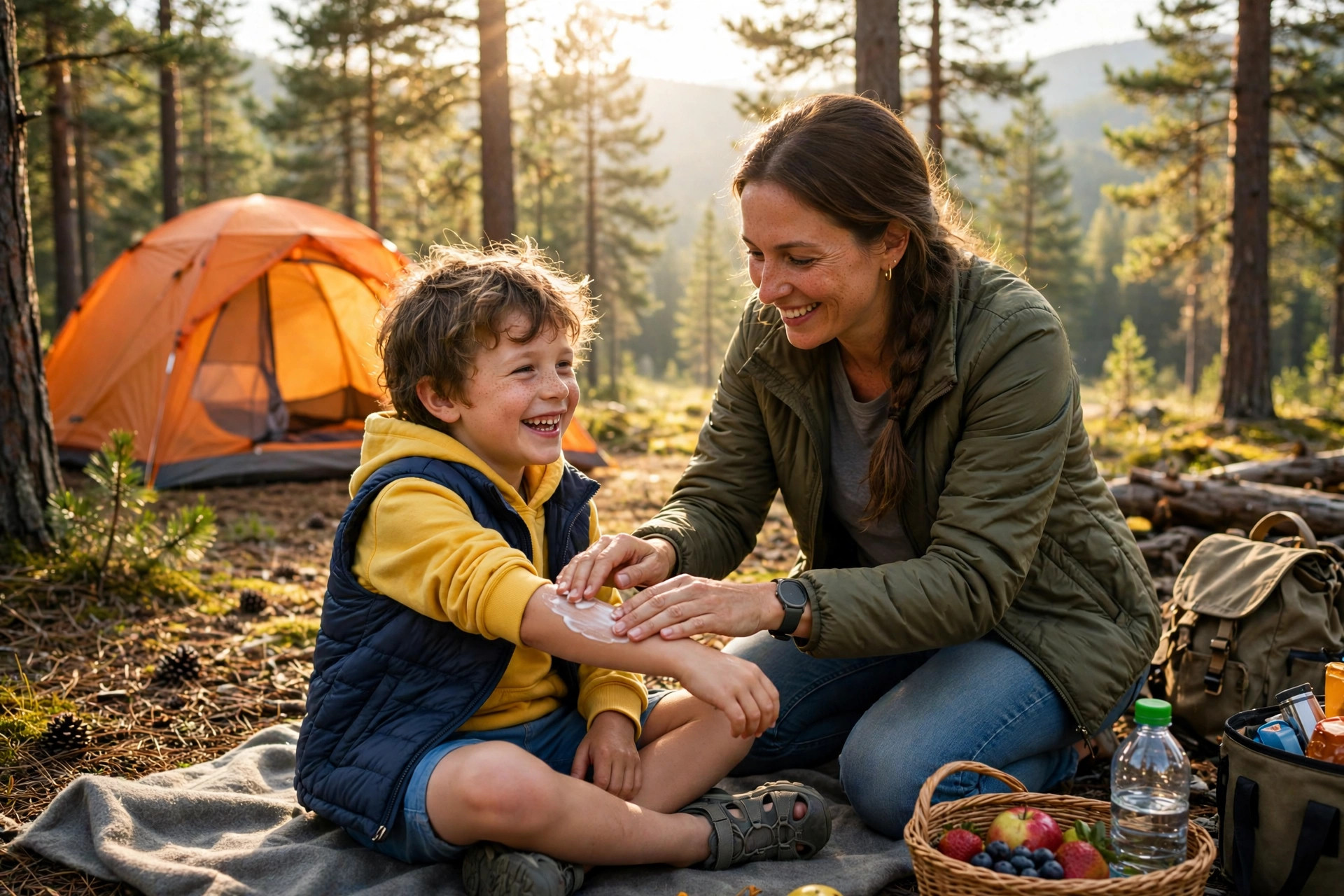
Technique matters more than most parents realize. Adults should apply the repellent to their own hands first, then spread it on the child’s exposed skin — never spray a child directly in the face, and avoid the eyes, mouth, and hands of small children (they put their hands in their mouths). Spray your hands and pat it onto their face instead. Don’t apply repellent under clothing. When you come back inside or at bedtime, wash treated skin with soap and water.
Dress Them in Bug Armor
Repellent is only layer two. Layer one is clothing, and it does more work than most families expect. A long-sleeve shirt and long pants make it physically harder for mosquitoes to reach skin, and tucked-in pants deny ticks an easy route up little legs.
Go for light-colored clothing. It’s not that mosquitoes can’t see you anyway — it’s that ticks and bugs are far easier to spot against light fabric during your evening tick check. The same layering system that keeps kids warm doubles as bug protection on cool mornings and evenings, since those long base layers cover the most-biten skin.

Two extras worth packing: a wide-brim hat (protects ears and neck, the spots everyone misses with repellent) and, if you’re camping in heavy tick country, a fine-mesh head net for the kids. They’re a few dollars, weigh nothing, and turn a miserable swarmy evening into a non-event. Permethrin-treated clothing is another option — it kills ticks and mosquitoes on contact. Treat outerwear only, never apply permethrin to skin, and treat clothing yourself at home before the trip rather than at the campsite.
Make Your Campsite Bug-Hostile
The campsite itself is half the battle. Mosquitoes love standing water, food smells, and still air. A few setup choices make a bigger difference than another round of spray.
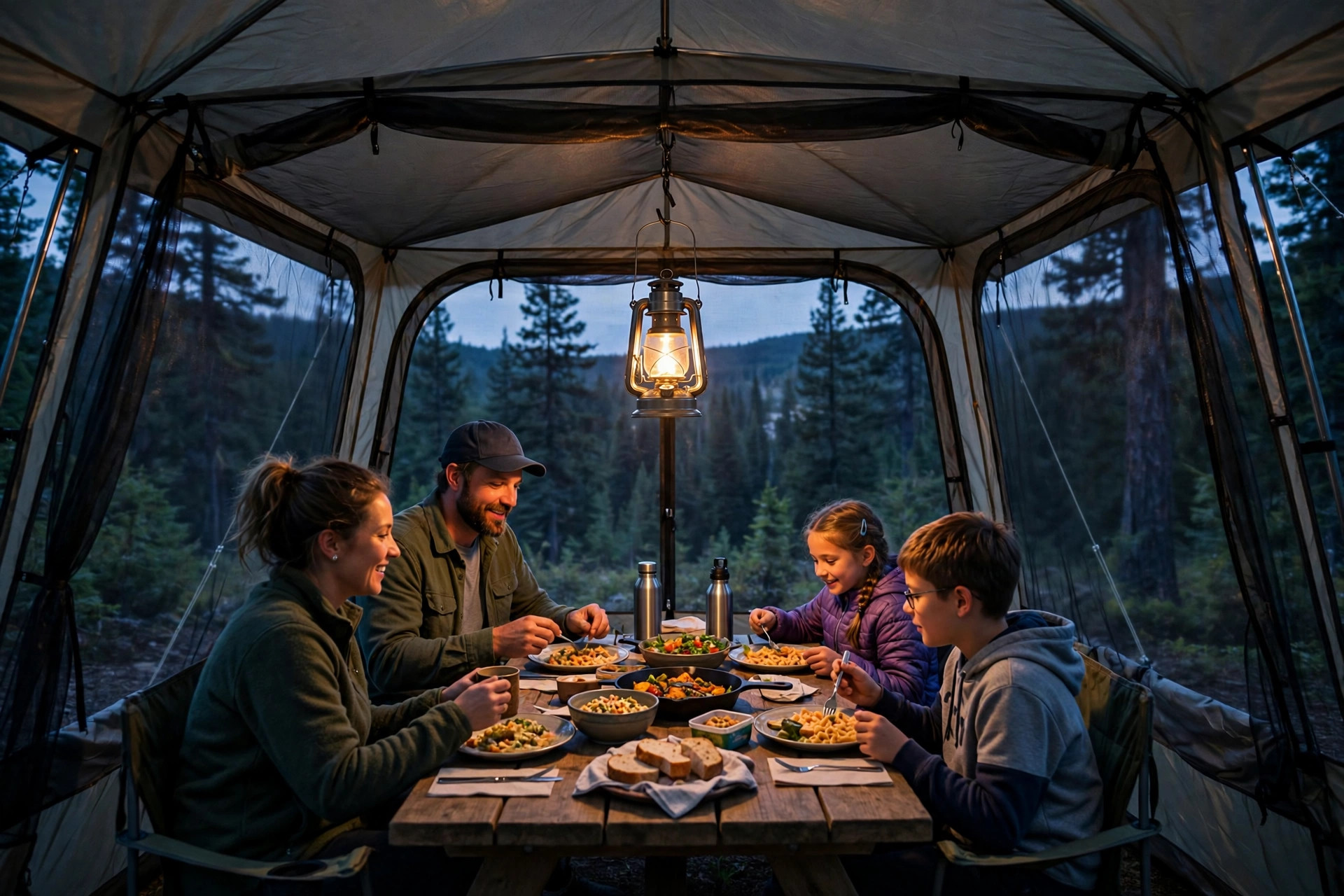
Set up a bug-free zone. A screened canopy or bug net over the picnic table gives your family somewhere to eat and hang out without a cloud of mosquitoes. Keep the tent zipped at all times — one careless afternoon and you’ll be hunting a mosquito inside the sleeping bags at midnight. If you’re shopping for shelter, add a screen room to your family camping checklist now rather than discovering you want one at the campground.
Manage food smells. Sweet drinks, fruit, and campfire cooking attract wasps and flies as well as mosquitoes. Keep food covered, wipe the picnic table after meals, and store everything in sealed containers at night — our camp kitchen setup guide covers the routine that keeps both bugs and bears uninterested in your site.
Dump standing water. Mosquitoes breed in still water, and a campground is full of accidental nurseries: bucket lids, the bottom of a canoe, a forgotten dog bowl. Dump them. If your site is near a marshy area, a small battery-powered fan pointed at the seating area helps — mosquitoes are weak fliers and a gentle breeze genuinely disrupts them.
Campfire and Evening Strategy
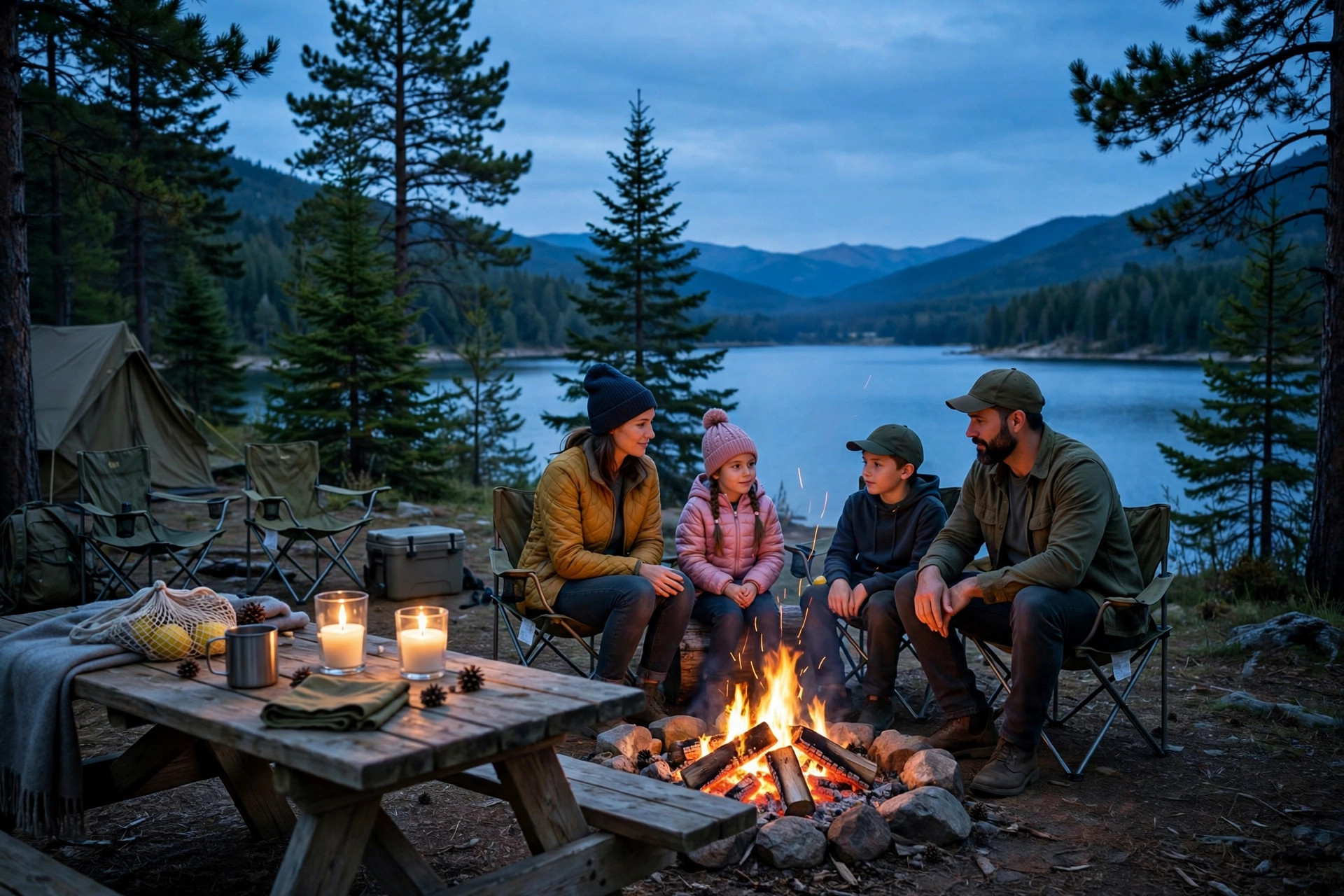
Dusk is prime mosquito hour, and it’s also prime campfire hour. Use that to your advantage. Smoke from a campfire repels mosquitoes reasonably well, so position seating downwind of the fire pit — you get the warmth and the smoke drifts over your crew. Citronella candles on the picnic table add a modest effect; they won’t create a force field, but combined with repellent and clothing they reduce bites noticeably.
Time your activities around the bug clock. Plan the big hike or playground session for midday when mosquitoes are least active, and have quieter campsite time during dawn and dusk when the screened shelter and repellent are doing their job. If one parent wants to fish at dawn — peak mosquito time — that’s the moment for the head net and a fresh repellent application.
The Nightly Tick Check Routine
For ticks, the nightly check is the single most important habit — more important than any product. Most tick-borne illness risk drops dramatically if you find and remove a tick within 24 hours. Make it part of the bedtime routine, like brushing teeth.
Check the whole body, but pay special attention to the hotspots where ticks love to hide: behind the ears, along the hairline, the armpits, the belly button, the waistline, behind the knees, and between the toes. Use your fingers to feel for small bumps as well as looking — nymph ticks are tiny. Shower within two hours of coming indoors if you can; it washes off unattached ticks and is a good time to do the check.
If you find a tick, remove it with fine-tipped tweezers: grasp as close to the skin as possible and pull straight up with steady pressure. Don’t twist, don’t squeeze the body, and skip the old myths — no nail polish, petroleum jelly, or burning it off. Clean the bite area with soap and water, and note the date and where on the body it was, in case symptoms develop later. The AAP’s guidance on tick-borne diseases and insect repellent is worth a read before tick-season trips.
When Bites Happen: Warning Signs
Even with a good system, kids will get some bites. Most are harmless and just need ice, an oatmeal bath, or a dab of calamine lotion to stop the scratching. Clip their nails short for the trip — scratching is what turns a simple bite into an infected one.
Call your pediatrician if you notice any of these: a bite area that keeps growing, gets hot, or develops red streaks spreading outward; swelling of the face or lips; difficulty breathing (call emergency services — that’s an allergic reaction); or, in the days to weeks after a tick bite, a fever, rash, headache, or joint pain. A bull’s-eye rash around a tick bite deserves a prompt call. When in doubt, take a photo of the bite with your phone so you can show the doctor how it changes over time.
Bug-Protection Packing Checklist
Add these to your gear and you’ll have the full system ready:
- EPA-registered repellent with DEET (10–30%) or picaridin (5–20%), in lotion or pump form for kids
- Long-sleeve shirts and long pants for each child (light-colored)
- Wide-brim hats and a mesh head net or two
- Screened canopy or pop-up bug shelter for the picnic table
- Fine-tipped tweezers (dedicated to the first-aid kit) for tick removal
- Battery-powered fan for the seating area
- Citronella candles or a thermacell-style device for the table
- After-bite care: calamine lotion or hydrocortisone cream, plus soap for washing off repellent
- A small notebook or phone note to log tick bites (date + location on body)
Camping with a baby under 2 months? Skip the repellent entirely and rely on clothing, a stroller mosquito net, and a screened shelter. Our camping with a newborn safety guide covers the full picture for the littlest campers.
Frequently Asked Questions
What bug spray is safe for toddlers while camping?
The AAP considers DEET (up to 30%) and picaridin safe for children over 2 months old when used as directed. Apply it to your own hands first, then to the child’s exposed skin, avoiding eyes, mouth, and little hands. For babies under 2 months, use clothing and mosquito nets instead of any repellent.
Is DEET or picaridin better for kids?
Both work well and both are AAP-approved for children. DEET has the longest safety record and slightly longer protection per application. Picaridin is odorless, non-greasy, and doesn’t damage plastics or synthetic fabrics the way DEET can — a real plus around tents and sunglasses. Either is a fine choice; pick the one your family will actually use consistently.
How do I protect kids from ticks while camping?
Use a three-part approach: treat outerwear with permethrin before the trip (never on skin), do a full-body tick check every evening including hairline, armpits, and waistline, and remove any attached tick with fine-tipped tweezers promptly. Shower within two hours of coming indoors to wash off unattached ticks.
Do citronella candles really keep mosquitoes away at a campsite?
Partially. Studies show citronella candles reduce mosquito landings in the immediate area, but their range is short — a few feet at best. Treat them as a supplement to repellent, clothing, and a screened eating area, not a replacement. A smoky campfire and a fan do more heavy lifting.
What should I do if my child gets a tick bite while camping?
Remove the tick with fine-tipped tweezers, pulling straight up without twisting, then clean the area with soap and water. Write down the date and where on the body it was. Watch for fever, rash, headache, or joint pain in the following weeks, and call your pediatrician if any of those appear.
Final Word
Keeping bugs away from kids while camping isn’t complicated — it’s just a system: kid-safe repellent applied the right way, long light-colored clothing, a screened place to eat, and a nightly tick check. Set it up once on your first trip and it becomes second nature. The payoff is what camping is supposed to be: kids running around the campsite at dusk, tired and happy, instead of covered in welts and asking to go home.
