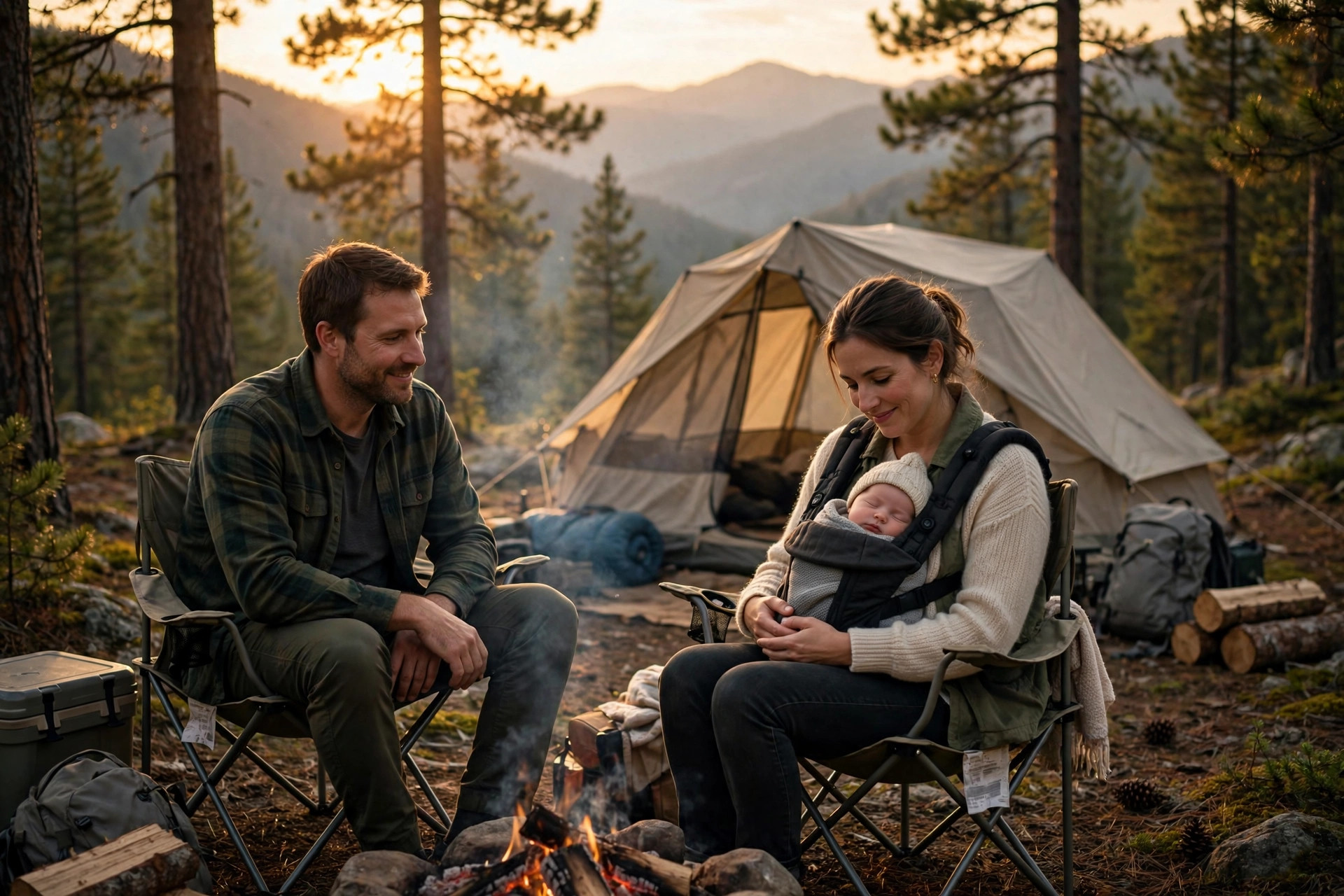
Can you take a newborn camping? The short answer is yes — many families head to the great outdoors with babies just a few months old. But a newborn is not a toddler, and camping with one takes a different kind of planning. Pediatricians who support family camping agree on a core set of safety rules that keep tiny babies warm, fed, protected from the sun, and sleeping safely far from home.
This guide collects those rules into one practical plan. It covers the right age for a first trip, safe sleep inside a tent, temperature control, sun and bug protection, feeding, hygiene without running water, and the campsite choices that make everything easier. As always, these are general guidelines — check with your own pediatrician before planning your first outing, especially if your baby was born early or has any health concerns.
When Is It Safe to Take a Newborn Camping?
There is no single magic age, but most pediatricians and family-camping experts suggest waiting until your baby is at least 2 to 3 months old before a first camping trip. The reasons are practical: by this age, the baby’s immune system has had time to strengthen, the first round of vaccinations has usually happened, and feeding and sleep rhythms are a little more predictable.
Some families go earlier, and some wait longer. What matters more than the exact week is your baby’s health, the weather, and how far you are from medical care. A first trip should be close to home, close to a hospital or urgent-care clinic, and short — one or two nights is plenty. If anything goes wrong, you want the drive home to be under an hour.
Ask your pediatrician first
Before you book a campsite, run the plan by your baby’s doctor. Mention where you are going, how long you will stay, and what the expected night temperatures are. A pediatrician can flag risks you might not think of, from altitude effects to whether your baby’s vaccinations are up to date for the area.
Rule 1: Keep Newborn Sleep Safe in the Tent
Safe sleep matters even more in a tent than at home, because you are working with unfamiliar surfaces and equipment. The core principles stay the same: a firm, flat sleep surface, baby on their back, and nothing loose around them.
A portable bassinet or a small pack-and-play designed for travel is the best bed for a newborn at the campsite. Both give your baby a firm, flat mattress and breathable mesh sides. What to avoid: letting a newborn sleep in a car seat, swing, or bouncer overnight — these position the baby’s chin against their chest, which can restrict breathing during long stretches.
Inside the tent, keep the sleep area free of pillows, loose blankets, and stuffed toys. Babies under one year should not sleep with these items, in a tent or at home. A fitted sleep sack in the right warmth rating is the safest way to keep a baby warm at night.
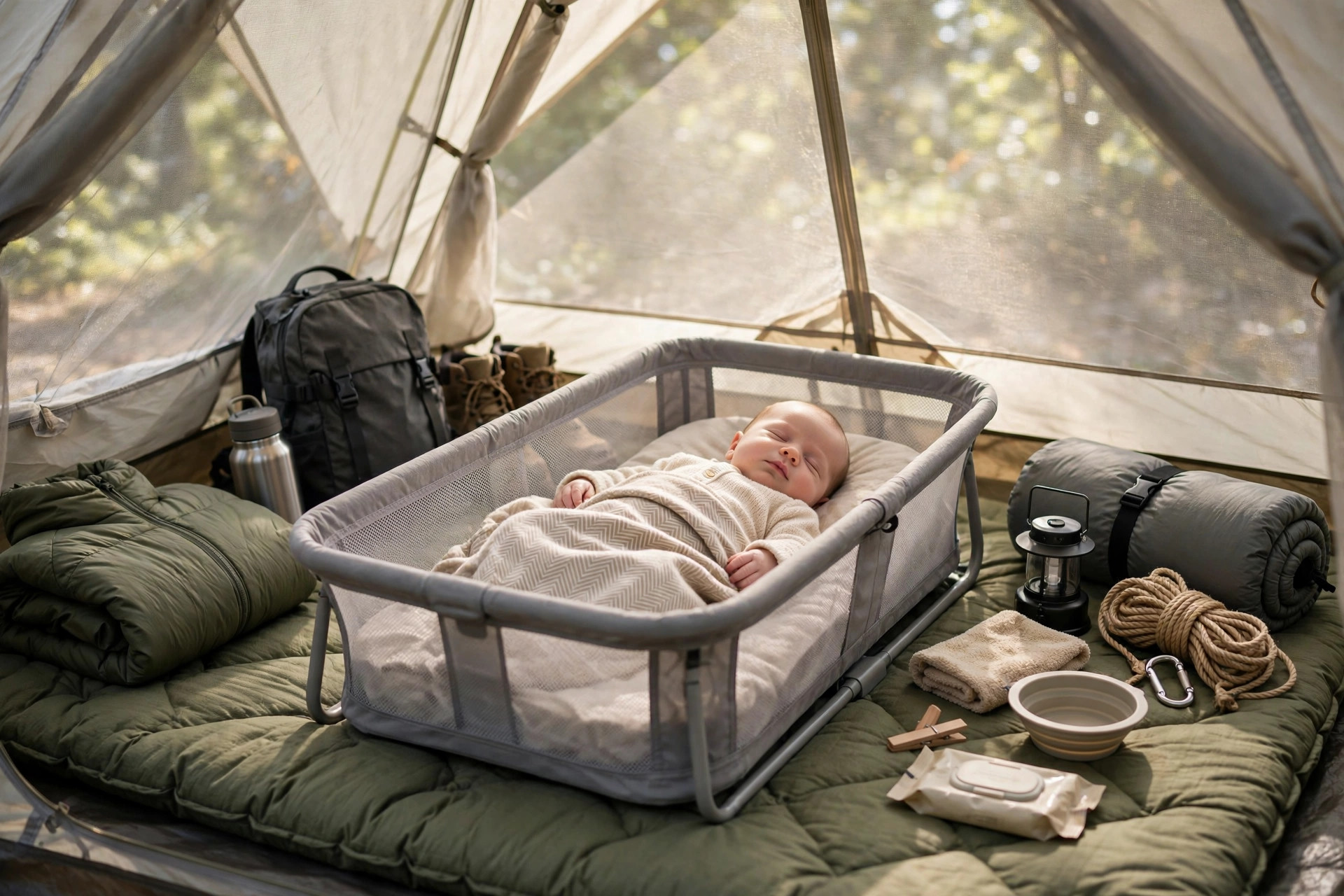
Position the bassinet away from the tent walls so condensation can’t drip on your baby, and away from the tent door so a cool draft doesn’t blow directly on them. For more detail on what little ones should sleep in outdoors, see our guide to what toddlers sleep in when camping — many of the same principles apply to newborns.
Rule 2: Master Temperature Control
Newborns lose heat fast and can’t regulate their body temperature the way older children can. The comfort zone for a sleeping newborn is roughly the same as indoors: about 68–72°F (20–22°C). That is harder to hit in a tent, so planning matters.
Layer, don’t bundle
Dress your baby in thin layers you can add or remove: a soft base layer, a mid layer like a fleece onesie, and a sleep sack for the night. A good rule of thumb is one more light layer than you are wearing. Check your baby’s temperature by feeling their chest or the back of their neck — warm and dry is right; cold hands and feet are normal in babies, but a cool chest means they need another layer.
Overheating is just as risky as chilling. Signs include a hot, sweaty neck, flushed cheeks, and fast breathing. Never cover your baby’s head indoors in the tent while they sleep — hats are for awake time in the cold, and overheating risk rises when the head is covered during sleep.
Our deep-dive on keeping kids warm with a camping layering system explains how to build these layers from gear you may already own.
Heat up the tent smartly
On cold nights, warm the tent before bedtime. A hot water bottle (wrapped in a cloth) placed in the bassinet a few minutes before sleep takes the chill off — remove it before the baby goes in. Never use a propane or gas heater inside a tent: the carbon monoxide risk is deadly, and no camping trip is worth it.
Rule 3: Treat the Sun Like the Main Event
A newborn’s skin is extremely sensitive to the sun, and most pediatricians recommend keeping babies under six months out of direct sunlight as much as possible. Sunscreen is not the first answer for newborns — shade is.
- Shade first: park the tent and your daytime setup under tree cover or bring a pop-up canopy. A stroller or carrier with a UPF-rated sun canopy is worth its weight in gold.
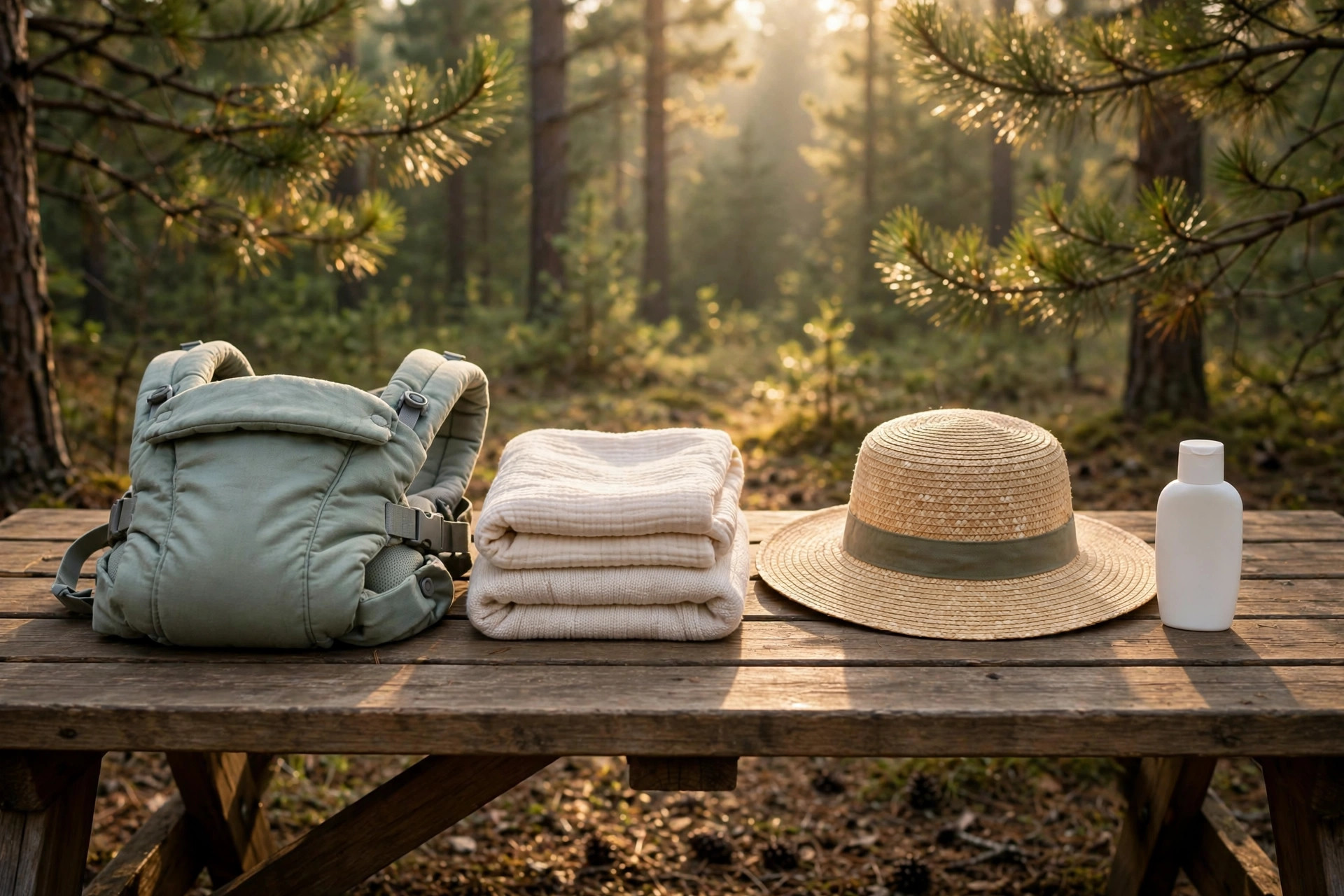
- Clothing as protection: lightweight long sleeves, long pants, and a wide-brim hat cover far more skin than sunscreen ever will.
- Sunscreen as backup: for the tiny bits of skin you can’t cover, a small amount of baby-safe mineral sunscreen is widely considered acceptable from around six months; under six months, ask your pediatrician.
- Watch the eyes: baby sunglasses with a strap look adorable and genuinely protect developing eyes.
Rule 4: Protect Against Bugs and Critters
Insect repellents with DEET are not recommended for babies under two months, and even after that, many parents prefer physical barriers. A fine-mesh bug net over the bassinet or stroller keeps mosquitoes and flies out without any chemicals at all.
At the campsite, avoid setting up near standing water where mosquitoes breed, and keep food sealed and stored away from the sleeping area — not just for bears, but to avoid ants and wasps near your baby. Check your baby’s skin each evening for bites, and keep a baby-safe after-bite cream in the kit.
Rule 5: Plan Feeding Like a Mission
Whether you breastfeed or formula-feed, feeding a newborn outdoors works best when you plan the details at home.
Breastfeeding at the campsite
Breastfeeding is the simplest feeding option while camping — no equipment, no water to sterilize. Bring a comfortable camp chair with armrests, a nursing cover if you want privacy, and extra water for yourself, since nursing parents get thirsty. Night feeds are easy in the tent: keep a small dim lantern by the bassinet so you can see without waking the whole campground.
Formula feeding safely
Formula needs safe water. Boil water for at least one minute (three minutes above 6,500 feet of elevation), let it cool, and use it within 24 hours. Pre-measure formula into a dispenser and carry cooled boiled water in a clean insulated bottle. Wash bottles with hot soapy water — bring a dedicated wash basin and biodegradable soap — and air-dry them on a clean cloth.
Rule 6: Nail Campsite Hygiene Without Running Water
Newborns go through 8–12 diapers a day, and a campsite has no changing table or sink. Set up a dedicated diaper station: a portable changing pad on a camp table or the back of your vehicle, with diapers, wipes, and hand sanitizer within reach.
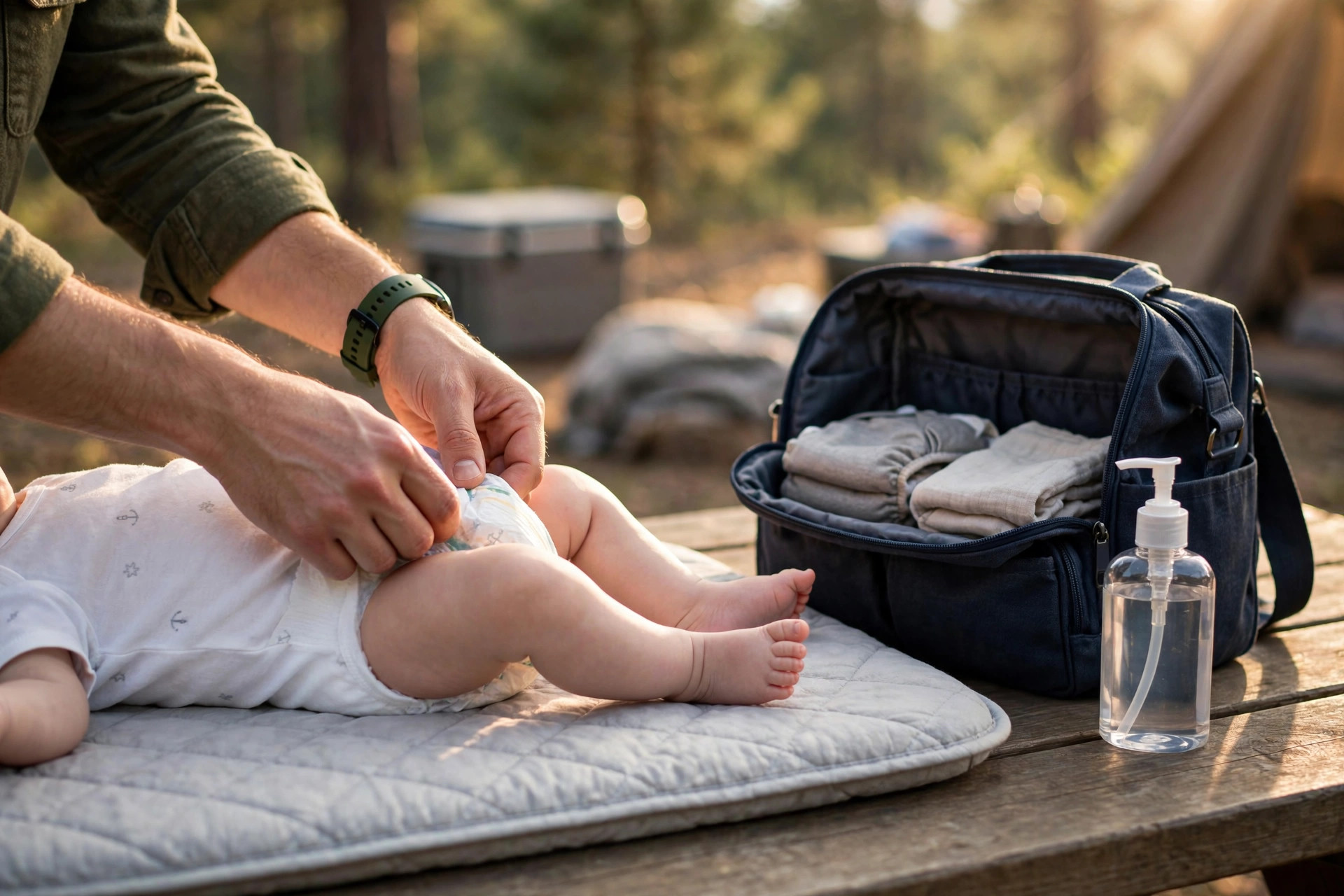
Bag used diapers in scented bags and store them in a sealed dry bag away from the tent — and follow Leave No Trace by packing all diaper waste out with you. Wash your hands (or use hand sanitizer with at least 60% alcohol) before every feed and after every change. A small camp sink with a water jug and biodegradable soap handles the deeper cleans.
Rule 7: Choose the Right Campsite
Not all campsites are newborn-friendly. For a first trip with a baby, prioritize:
- Drive-up access: you will haul a shocking amount of baby gear. Walk-in sites can wait.
- Shade and flat ground: for a comfortable tent setup and daytime naps outdoors.
- Clean restrooms nearby: flush toilets and sinks make nighttime diaper changes much easier.
- Low elevation and mild weather: skip high-altitude or desert trips until your baby is older.
- Quiet hours that are actually quiet: read recent reviews — party campgrounds and newborns do not mix.
Book early: popular family-friendly campgrounds fill up months ahead. Our guide to when to book campsites in the USA breaks down reservation windows state by state, and Recreation.gov is the official booking site for most federal campgrounds. The National Park Service camping guide is also a great starting point for choosing a park with family amenities.
Rule 8: Pack for the Baby, Then Pack Again
Everything on this list has earned its place on real newborn camping trips. Lay it out the night before you leave.
| Category | Essentials | Why it matters |
|---|---|---|
| Sleep | Portable bassinet or pack-and-play, sleep sacks in 2 warmth ratings, fitted sheet | Safe, familiar sleep surface anywhere |
| Clothing | 7–8 onesies, 2–3 fleece layers, wide-brim hat, socks, booties | Newborns need frequent changes; layers handle temperature swings |
| Diapering | Diapers for 3 days + extra, wipes, cream, changing pad, scented bags, hand sanitizer | No running water at the site |
| Feeding | Nursing cover & chair cushion or formula, bottles, boiled water, wash basin | Feeding can’t pause for the outdoors |
| Sun & bugs | UPF canopy or shade tent, bug net for bassinet, baby-safe sunscreen (ask pediatrician) | Newborn skin needs maximum protection |
| Health | Thermometer, infant pain reliever (ask pediatrician first), saline drops, pediatrician’s phone number | Small problems need fast answers far from home |
| Carrying | Soft structured baby carrier, stroller with sun canopy | Hands-free hiking and naps on the move |
Our full family camping checklist with 47 essentials covers the grown-up side of the packing list, and if you are specifically tent camping, the tent camping with a baby guide goes deeper on tent setup for little ones.
Rule 9: Know What to Skip
Pediatricians and experienced camping parents agree on a short list of things that are not worth the risk with a newborn:
- Open campfires close to the baby: keep your newborn well away from the fire ring — smoke irritates tiny airways, and sparks are unpredictable.
- Hiking with a newborn in a backpack carrier: soft front carriers are fine for short, easy walks; frame backpack carriers are for babies who can sit up on their own (usually around 6 months).
- Swimming: skip lakes and pools for newborns — cold water and germs are both risks.
- Campground hot tubs: never for babies; the heat and bacteria are both dangerous.
- Secondhand gear you can’t verify: an old bassinet with recalled parts or a worn-out sleep sack is not a bargain.
The National Park Service guide to camping with kids has more age-by-age advice as your baby grows into a toddler camper.
FAQ: Camping with a Newborn
How old should a baby be before camping?
Most pediatricians suggest waiting until at least 2–3 months old, after the first round of vaccinations. Always check with your own pediatrician, especially for premature babies or babies with health conditions.
Can a newborn sleep in a tent?
Yes, as long as sleep stays safe: a firm, flat surface (portable bassinet or pack-and-play), baby on their back, and no loose blankets or pillows. Never let a newborn sleep overnight in a car seat or swing.
How do I keep my newborn warm at night while camping?
Use thin layers plus a sleep sack in the right warmth rating, keep the tent around 68–72°F if you can, and check your baby’s chest or neck — warm and dry is right. Never use a gas heater inside a tent.
What should I do if my baby gets sick while camping?
Head home or to the nearest urgent care — don’t try to ride it out. A rectal temperature of 100.4°F (38°C) or higher in a baby under 3 months is a medical emergency. This is why your first trip should be close to medical care.
Is it safe to use sunscreen on a newborn?
Shade and clothing are the primary protection for babies under six months. For uncovered skin, many pediatricians approve a small amount of baby-safe mineral sunscreen — ask yours before the trip.
Can I hike with a newborn?
Short, easy walks with a soft front baby carrier are fine. Save frame backpack carriers for when your baby can sit up independently, usually around 6 months, and skip rough or high-altitude trails for now.
Disclaimer: This article shares general safety information for family camping and is not medical advice. Talk to your baby’s pediatrician before planning any outdoor trip with a newborn.

1 comment
[…] 6 months and up. For younger babies, stick with wraps or soft-structured carriers. Our guide to camping with a newborn has the full safety rules for taking tiny babies […]