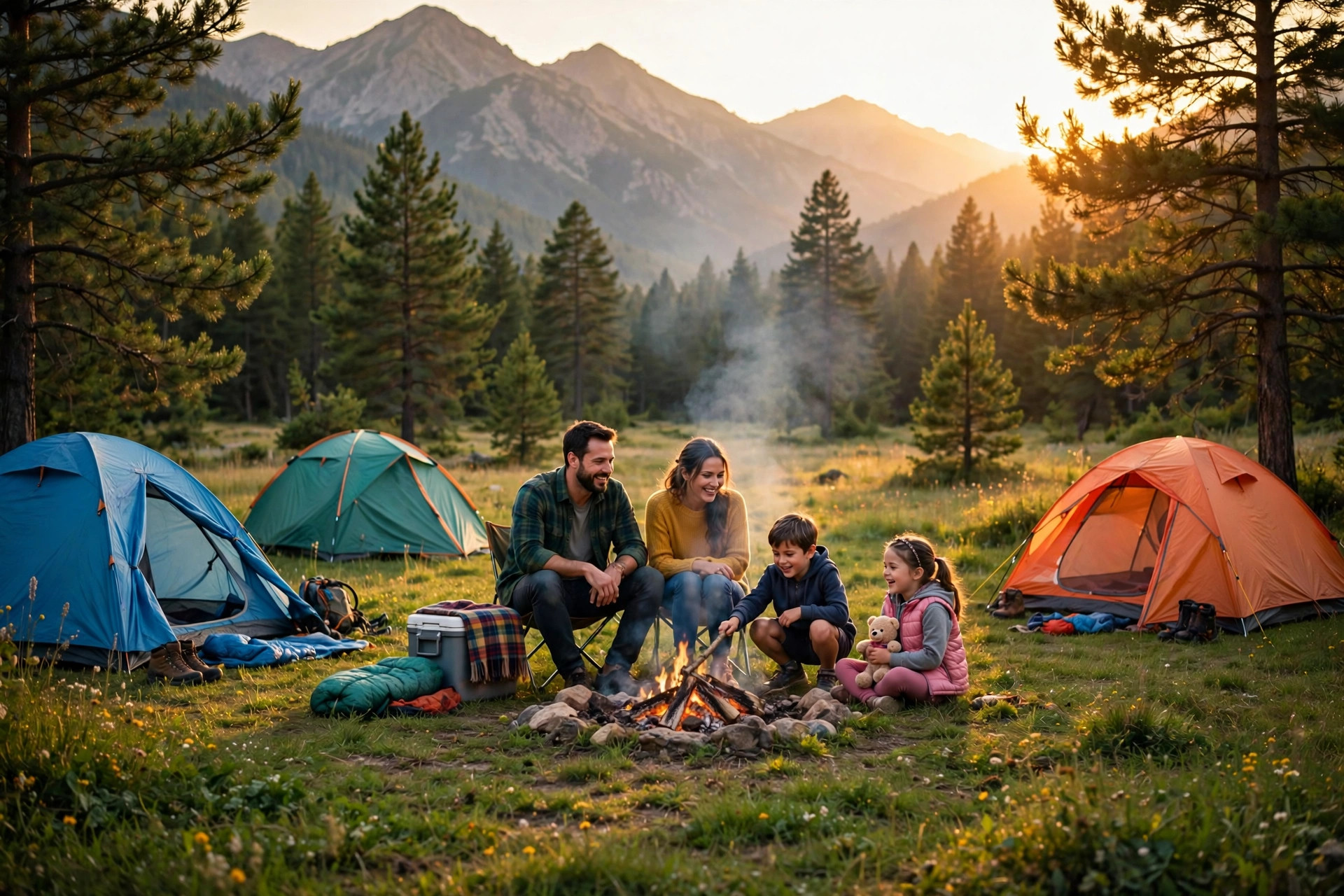
There is a special kind of heartbreak reserved for camping families: you finally pick a weekend, get the kids excited, load up the car in your imagination — and then discover every campsite within 200 miles has been sold out for months. If you have ever wondered when you were supposed to book, you are not alone. The best time to book campsites is not a single date; it is a calendar game, and every park system plays by different rules.
In this guide, we break down exactly how far in advance campsite reservations open across the USA — from Recreation.gov federal campgrounds to state park systems in California, Florida, New York, Texas, and beyond — plus the exact release times you need to be online to have a real shot at popular dates. Pair this with our family camping checklist and you will be ready the moment your window opens.
How Campsite Reservation Windows Actually Work
Most campgrounds use one of two systems. A rolling window releases new dates every single day: a “6 months ahead” window means that today, sites become bookable for the date exactly six months from now. A fixed release event opens a whole block of dates at once — for example, an entire summer season going on sale on one morning in March.
Rolling windows reward planning; release events reward speed. For both, the golden rule is the same: be logged in, with payment details saved, before the window opens. On popular summer weekends, prime sites in famous parks can sell out within minutes — sometimes seconds — of release.
Federal Campgrounds: Recreation.gov
The single biggest booking platform for campers is Recreation.gov, which handles national parks, national forests, Bureau of Land Management land, and Army Corps of Engineers campgrounds. For the majority of reservable federal sites, the rule is simple: reservations open 6 months in advance, with new dates released daily at 10:00 AM Eastern Time (7:00 AM Pacific).
Want a campsite for July 15? Mark January 15 on your calendar and be online at 10:00 AM Eastern sharp. A few famous exceptions play by their own rules:
- Yosemite National Park: campground releases happen in monthly blocks on the 15th of each month, roughly five months ahead — the 15th at 7:00 AM Pacific is the day that matters.
- Yellowstone National Park: National Park Service campgrounds follow the standard Recreation.gov windows, but the park’s lodges and cabins (booked separately) can be reserved up to 13 months ahead — and summer sells out astonishingly early.
- Some small, ultra-popular parks (like Arches and Canyonlands) hold portions of their sites as first-come, first-served even within the reservation system, so always read the campground’s page before planning.
One more tip: Recreation.gov gives you 15 minutes to complete a reservation once sites are in your cart. Log in at least 15 minutes before release time and have your top three site choices mapped out in advance.
State-by-State Reservation Windows
State parks use completely different systems, windows, and release times. Here is the quick-reference table for the most-visited states, followed by details on each.
| State | Reservation system | How far ahead | Release time |
|---|---|---|---|
| California | ReserveCalifornia | 6 months | 8:00 AM Pacific |
| Florida (residents) | Florida State Parks | 11 months | 8:00 AM Eastern |
| Florida (non-residents) | Florida State Parks | 10 months | 8:00 AM Eastern |
| New York | ReserveAmerica | 9 months | 8–9 AM Eastern (varies) |
| Texas | Texas State Parks | Up to 5 months | 8:00 AM Central |
| Washington | GoingToCamp | 9 months | 7:00 AM Pacific |
| Wisconsin | GoingToCamp | 11 months | 9:00 AM Central |
| Michigan | GoingToCamp | 6 months | 8:00 AM Eastern |
| Colorado | Colorado Parks & Wildlife | 6 months | 8:00 AM Mountain |
| Oregon | Oregon State Parks | Up to 9 months | 12:00 AM Pacific |
 ” alt=”Parents planning their family camping trip on a laptop at a forest campsite” />
California: ReserveCalifornia
California state parks use ReserveCalifornia, with a 6-month rolling window released at 8:00 AM Pacific. For coastal heavyweights like Big Sur, you realistically need to click within seconds of the 8:00 AM release. Pro tip: California is huge, so consider excellent inland alternatives — national parks like Sequoia, Kings Canyon, and Lassen Volcanic often have more forgiving availability.
Florida: The Longest Window in the Country
Florida has one of the longest booking windows anywhere — but with a catch. Since 2024, Florida residents can book state park campsites 11 months ahead, while non-residents get 10 months. Residents must provide a Florida driver’s license or state ID number to use the extra month. New dates drop at 8:00 AM Eastern. Winter beach camping in the Keys can sell out the day the window opens, so non-residents should be ready a month ahead of their target date to scout, and click the moment their 10-month window opens.
New York: 9 Months, With Complicated Timing
New York state parks take reservations up to 9 months ahead through ReserveAmerica, and the release times are oddly specific: from March 15 through Labor Day, new dates appear at 8:00 AM Eastern on weekdays and 9:00 AM on weekends. The Finger Lakes and Adirondack campgrounds fill fastest for summer weekends — mark your release date and set an alarm.
Texas: Up to 5 Months
Texas state parks open reservations up to 5 months ahead at 8:00 AM Central. The window is shorter than most states, but Texas has an enormous number of parks — Enchanted Rock and Garner State Park are the ones that sell out fastest, while excellent parks like Davis Mountains often have same-season availability.
Washington, Wisconsin, and Michigan: GoingToCamp
These states (plus Maryland, Minnesota, and Ohio) run on the GoingToCamp platform, each with its own window: Washington 9 months, Wisconsin 11 months, Michigan 6 months. Olympic and North Cascades access in Washington disappears fast for July and August — treat the 9-month mark as your deadline, not a suggestion.
 ” alt=”Family studying a park map together on a picnic table at a lakeside campsite” />
Campgrounds That Break the Rules
Some beloved destinations refuse to follow the standard rolling-window playbook, so always check the specific campground’s page:
- Yosemite: monthly release blocks on the 15th, ~5 months ahead, 7:00 AM Pacific.
- Rocky Mountain National Park: the park’s largest campground has faced construction-related closures in recent years, so availability rules change season to season — check the NPS page before counting on it.
- Private and county campgrounds: often release a full year ahead with much less competition, and make excellent backups when the public systems sell out.
When Should You Actually Book? A Seasonal Cheat Sheet
Knowing the window is only half the battle — the other half is knowing when demand peaks. Use this seasonal calendar to time your planning:
Summer (June–August): Book at the full window
Summer weekends at popular parks sell out the day windows open. For a July 4th weekend, you should have been online on the January 4 release date. If your dates are fixed, work backwards from the window. If your dates are flexible, aim for Sunday-through-Thursday nights, which stay available far longer.
Fall (September–October): Your secret sweet spot
Fall is the family’s best-kept camping secret: thinner crowds, gorgeous color, and windows that stay open for weeks instead of seconds. In many states, you can book fall trips just 1–3 months out. See our guide to keeping kids warm while camping for the one extra piece of gear that makes shoulder-season trips comfortable.
Winter (December–February): Regional extremes
Winter is feast or famine. Florida and Arizona desert parks are at peak demand (book at the full window), while most northern parks are quiet — some close entirely. Snow camping families should read up on camping with toddlers before committing to a cold-weather trip.
Spring (March–May): Wildflowers and short windows
Spring break weeks sell out early in Texas, Florida, and the desert Southwest. The upside: outside spring break itself, March and April availability is often excellent with just a few weeks of lead time.
 ” alt=”Peaceful tent campsite at dawn in a national park with morning mist” />
Booking Strategies That Actually Work
- Set release-date alarms. For every trip, calculate your exact release date and time (in the right timezone) and put it on your calendar with a 15-minute early reminder.
- Log in early and stay logged in. Recreation.gov sessions can time out. Log in 15 minutes before release, keep the tab open, and have your payment method saved.
- Pick 3–5 target sites. Have backups ranked before the window opens, because your first choice may vanish while you are checking out.
- Book midweek first. If you need a Friday night, search Thursday-to-Sunday as a block — some systems hold weekend nights for multi-night stays.
- Try less-famous parks nearby. The state forest or Army Corps campground 30 minutes away often has sites when the famous park is sold out.
- Watch for cancellation waves. Cancellations spike around 7–14 days before the stay (people finalize plans), and again 48 hours out. Check availability on Tuesday and Wednesday mornings for the coming weekend.
- Use availability alerts. Free and paid scanner services can text you the moment a site opens up at your target campground — worth it for bucket-list parks.
And if it is your family’s first trip, avoid the classic beginner errors with our guide to first-time camping mistakes — booking too late is mistake number one.
How to Grab Last-Minute Campsite Cancellations
Missed the window? All is not lost. Cancellations return to inventory throughout the day, and smart campers know the patterns:
- Check early and often. On Recreation.gov, cancelled sites can reappear at any time. Check first thing in the morning and again in the evening.
- Try arriving midweek. A Tuesday arrival often finds openings that do not exist for Friday arrivals.
- Call the park. Rangers sometimes know about sites that are not yet in the system, or about first-come, first-served loops that fill later than expected.
- Have a Plan B list. Keep three backup campgrounds in your notes for every trip — including one private campground that takes walk-ins.
- Look for single-night gaps. If no one has your full weekend, piecing together two one-night stays at nearby campgrounds still beats staying home.
Once you have your site secured, plan your meals with our 3-day family camping meal plan so the only thing you are thinking about at the campsite is s’mores.
Frequently Asked Questions
How far in advance can you book a campsite on Recreation.gov?
Most federal campgrounds on Recreation.gov open reservations 6 months ahead, with new dates released daily at 10:00 AM Eastern Time. Some campgrounds have shorter windows or special release rules, so always check the specific campground’s page.
What time do campsite reservations open?
Release times depend on the system: Recreation.gov releases at 10:00 AM Eastern, ReserveCalifornia at 8:00 AM Pacific, and Florida state parks at 8:00 AM Eastern. New York varies between 8:00 and 9:00 AM Eastern depending on the season and day of the week.
Which state lets you book campsites the farthest in advance?
Florida residents can book state park campsites 11 months ahead (non-residents 10 months), and Wisconsin allows 11 months through GoingToCamp — among the longest windows in the country.
Can you book a campsite for next summer already?
It depends on the window. In October, a 6-month window covers April, so next summer (June–August) is not yet open — but Florida’s 11-month window and Wisconsin’s 11-month window are already releasing dates for next summer right now.
Do campsites really sell out the day the window opens?
For famous parks on holiday weekends, yes — often within minutes. But the vast majority of campgrounds still have availability weeks or months after release. Flexibility on dates, weekdays over weekends, and nearby alternatives make a huge difference.
What is the cheapest way to find last-minute campsite openings?
Check Recreation.gov and state systems directly in the morning, especially 7–14 days and 48 hours before your target dates, when cancellations spike. Availability-alert services are free to try and can notify you the moment a site opens.
