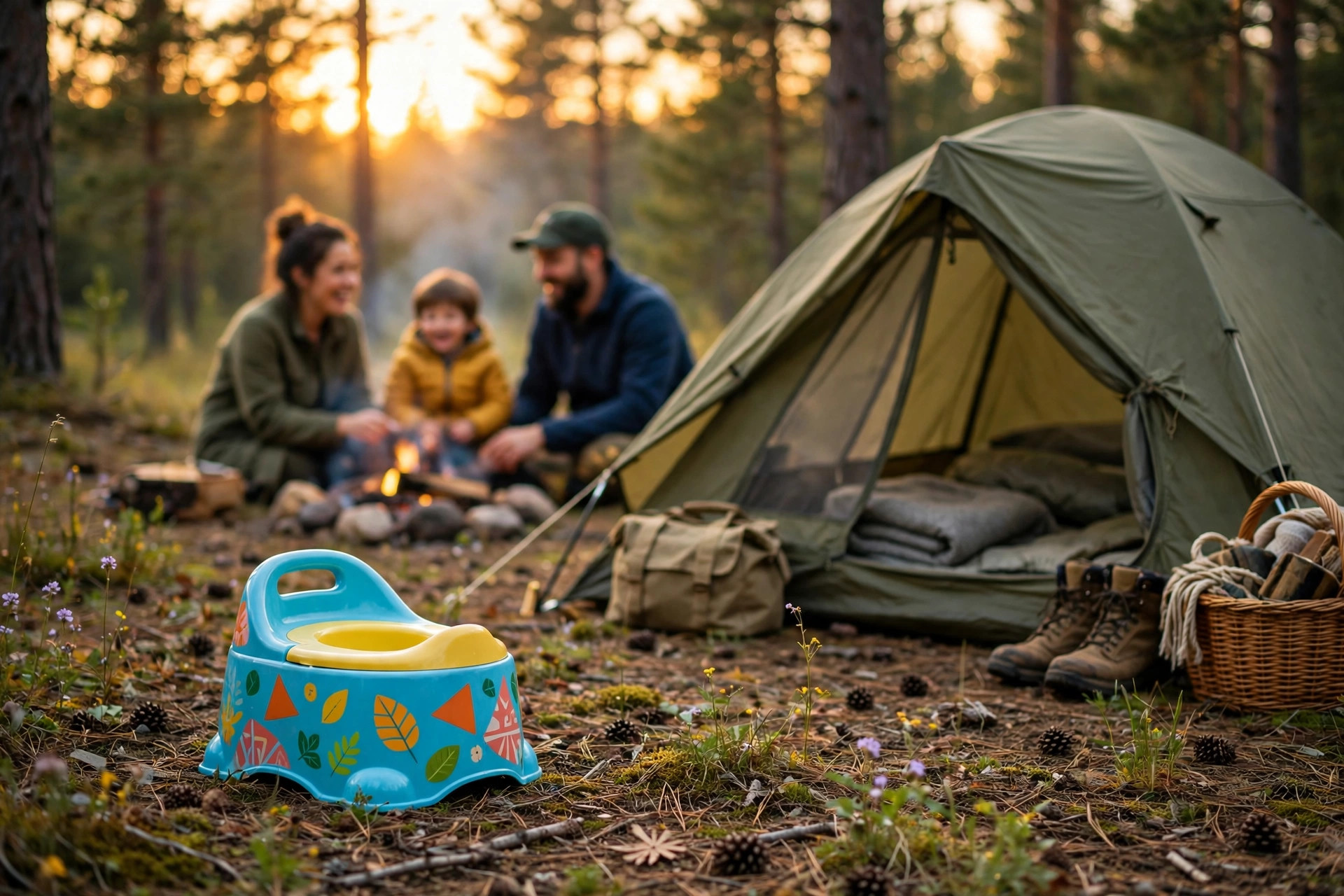
It is 2 a.m. at the campground. Your three-year-old is awake, whispering the words every camping parent dreads: “I need to go potty.” The nearest vault toilet is a five-minute walk away. This is the moment a portable potty for camping with kids earns its place in your gear pile. A good one means no midnight hikes to a distant bathroom and no toddler refusing a dark vault toilet. This guide compares the best portable potties for camping with kids in 2026, with honest pros and cons and a complete packing and disposal plan.
Why a Portable Potty Changes Family Camping
Children do not wait for convenient bathrooms. A portable potty solves four problems: midnight trips disappear — the potty sits inside or just outside the tent, so a half-asleep child can go and be back in their sleeping bag in two minutes. Fear goes away — many toddlers are scared of vault toilets, the dark, the echo, the hole; their own small seat feels safe. Potty training keeps its rhythm — a child learning at home does not have to relearn everything at camp (see our potty training while camping guide). And trailside emergencies are covered — on a hike, a folding potty over a pre-dug cathole is faster and cleaner than improvising.
The 4 Types of Portable Potties for Kids
| Type | How it works | Best for | Watch out for |
|---|---|---|---|
| Folding seat | Legs fold out into a small seat; waste drops into a reusable bowl or a disposable bag | Toddlers 18 months–4 years; hikes and car camping | Needs bags or a bowl; low seat height |
| Leakproof carry potty | One-piece sealed unit with a lid; waste stays inside until you empty it | Car trips, campgrounds, anywhere you need zero leaks | Heavier; you must empty and clean it |
| Bag-based / WAG system | A folding frame plus gelling waste bags you seal and pack out | Backcountry, dispersed camping, pack-out areas | Ongoing bag cost; no flush or rinse |
| Cassette / flush toilet | Full-size portable toilet with a fresh-water tank and a sealed waste tank | Families with older kids; longer stays; basecamps | Bulky and heavy; needs a dump station |
Most families with a toddler need a folding seat or a leakproof carry potty — or one of each.
How to Choose the Right One for Your Child
- Age and size first. Toddler potties suit roughly 18 months to 4 years, with a weight limit usually around 30–40 pounds. Check the weight limit before ordering — it is the most reliable size signal.
- Setup speed. You will set this up while holding a squirming toddler, often in the dark. A hinge-open design ready in one motion beats a four-leg fold-out.
- Leakproofing for the car. Any potty that rides in the car with waste inside must seal completely. Folding seats with open bowls should travel empty.
- Weight and packed size. A folding seat weighs under two pounds; a carry potty four to six pounds; a cassette toilet twelve or more. If you hike with it, weight wins; if you car camp, comfort wins.
- Disposal plan. Where does the waste go — a bowl you rinse, liner bags you bin, WAG bags you pack out, or a cassette tank you empty at a dump station? The Leave No Trace principles are the standard.
- Ongoing cost. The potty is a one-time purchase, typically $15–$60. Bags are the ongoing cost, so factor in a box of liners before you buy.
The 4 Best Portable Potties for Camping with Kids (2026)
These picks cover every family situation, from a first trip with a newly trained two-year-old to a backcountry weekend.
1. Potette Plus — Best Overall for Camping Families
Best for: Toddlers 18 months–4 years, car camping and day hikes. Type: Folding seat with reusable collapsible liner bowl.
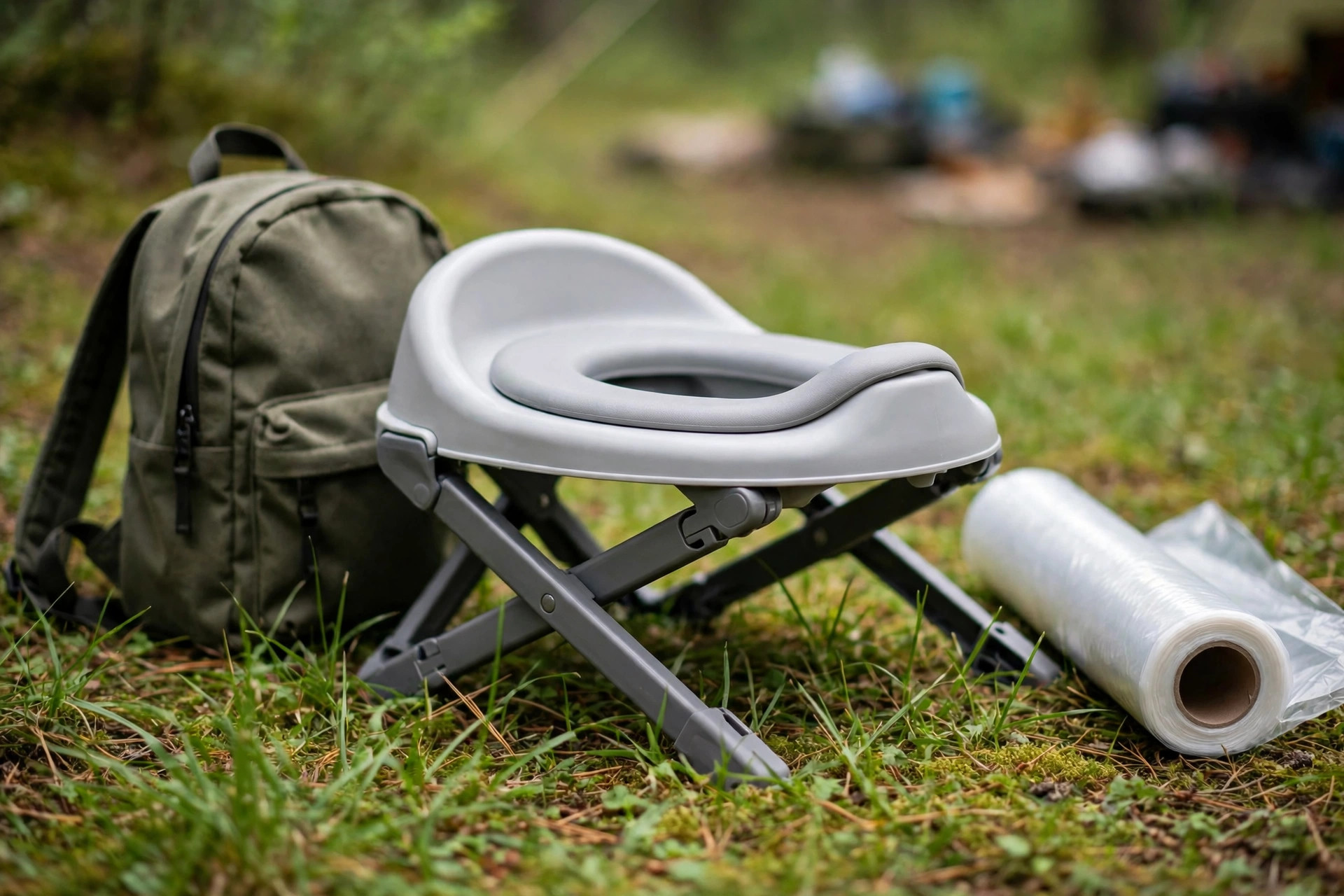
The Potette Plus is the most recommended toddler camping potty among outdoor families. Its legs fold out in seconds to form a small standalone seat, and it also spreads flat to work as a toilet seat adapter. The reusable silicone liner bowl catches waste, and it accepts disposable bags too. On a hike, set it over a pre-dug cathole without the basin; at a rest stop, it adapts to a real toilet.
Pros: Folds flat and light; standalone seat and toilet adapter in one; reusable bowl plus bag option; well under two pounds.
Cons: Low seat height can feel small for tall four-year-olds; the bowl needs rinsing; legs can sink into soft ground.
Skip it if: Your child is over four, or you want a sealed unit that can travel with waste inside.
2. My Carry Potty — Best Leakproof Option
Best for: Car travel, campgrounds, and parents who dread spills. Type: One-piece leakproof carry potty with an airtight seal.
My Carry Potty is a single sealed unit whose defining feature is its airtight, leakproof lid. Once the lid clicks shut, nothing escapes — no liquid, no odour — making it the safest choice for the car or inside the tent overnight. There are no legs to set up: open the lid and it is ready. The trade-off is that it is a one-piece unit, so it takes up more space than a folding seat and you must empty and rinse it after use.
Pros: Fully leakproof seal; zero setup; sturdy and stable; familiar shape kids accept quickly.
Cons: Bulkiest toddler option; heavier than a folding seat; must be emptied and cleaned by hand.
Skip it if: You hike with the potty or pack space is extremely tight.
3. Blue Snail Folding Potty — Fastest Setup
Best for: Parents who need a potty ready in one second flat. Type: Hinge-open folding seat with a full circular base.
Where most folding potties unfold leg by leg, the Blue Snail opens on a hinge — one motion and it is a complete, stable seat with a full circular base. It is the fastest toddler potty to deploy when a child announces an emergency with thirty seconds’ notice. It uses disposable bags, so cleaning is simple: tie the bag, bin it, and the seat is ready again.
Pros: Fastest setup of any folding potty; very stable base; simple bag-based cleanup; compact when folded.
Cons: Bag-only, no reusable bowl option; seat size suits smaller toddlers best; no toilet-adapter mode.
Skip it if: You prefer a reusable bowl, or your child is at the top end of the toddler size range.
4. Cleanwaste GO Anywhere + WAG Bags — Best for Backcountry
Best for: Dispersed camping, backpacking families, and areas that require pack-out. Type: Folding toilet seat plus gelling waste bags (WAG bags).
Some places — desert river corridors, alpine zones, and many dispersed sites — require you to pack out all human waste. The Cleanwaste GO Anywhere is a lightweight folding seat designed for exactly that: it holds a WAG bag, which contains gelling powder that solidifies waste and controls odour. When done, seal the bag and carry it out to a proper bin. It is also light enough for older kids and adults to share on backpacking trips.
Pros: Meets pack-out rules; very light; works for kids and adults; no cleaning or rinsing.
Cons: Ongoing bag cost; no bowl or flush; children need help with the bag setup.
Skip it if: You camp only at developed campgrounds with bins and toilets.
Quick Comparison: Which Potty for Which Family?
| Potty | Best age | Packed weight | Waste handling | Best trip type |
|---|---|---|---|---|
| Potette Plus | 18 mo–4 yr | Under 2 lb | Bowl or bags | Car camping + hikes |
| My Carry Potty | 18 mo–3 yr | 4–6 lb | Sealed unit, rinse out | Car trips, campgrounds |
| Blue Snail | 18 mo–3 yr | Under 2 lb | Disposable bags | Fast setup anywhere |
| Cleanwaste GO Anywhere | 4 yr–adult | Under 2 lb | WAG pack-out bags | Backcountry, dispersed |
| Thetford Porta Potti 335 | 5 yr–adult | ~12 lb | Sealed tank, dump station | Basecamps, long stays |
The Nighttime Potty Plan (So Nobody Walks to the Vault Toilet)
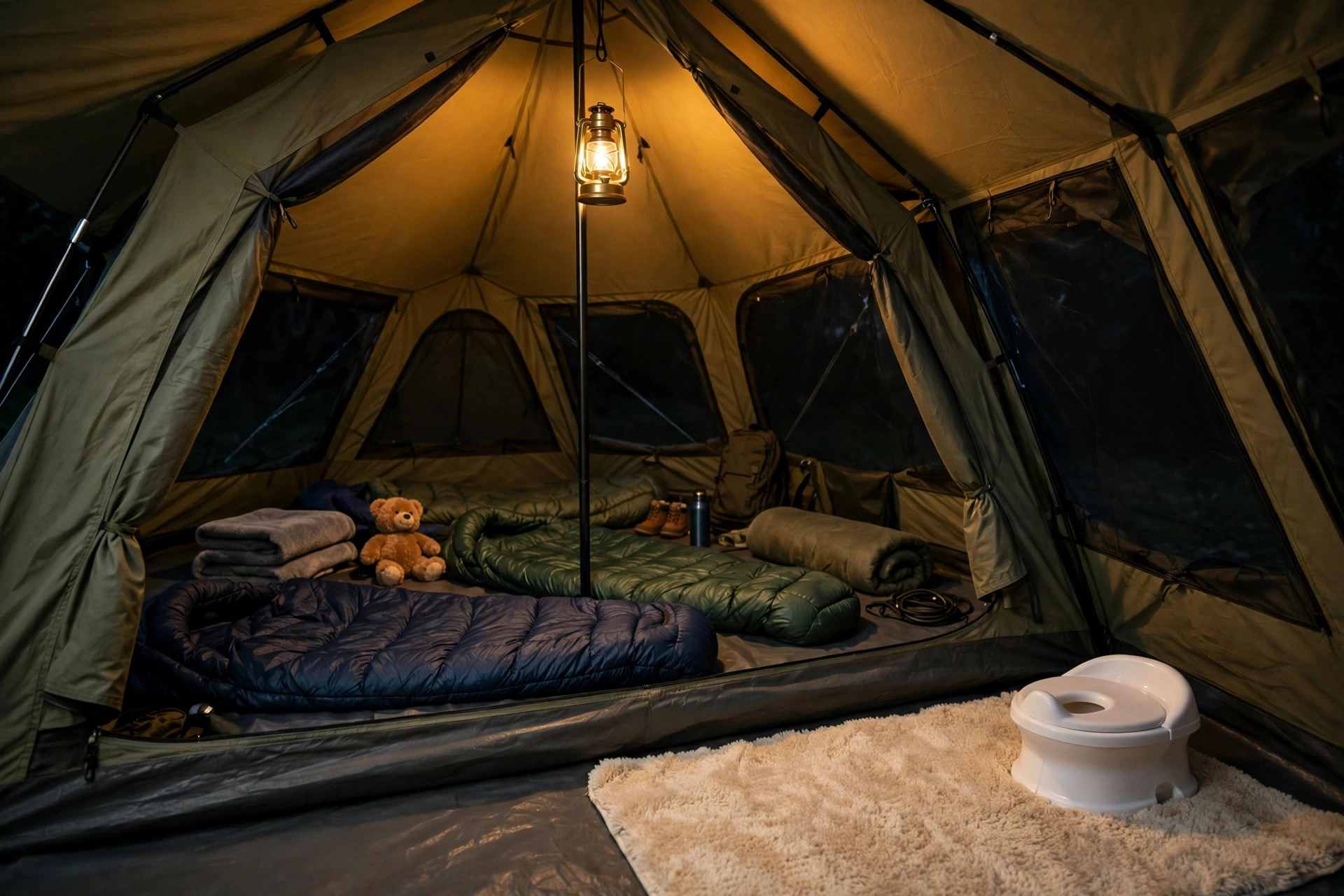
Most portable-potty failures happen at night, not because the potty is wrong but because nobody planned where it goes. Set it up before dark: place the potty just inside the tent vestibule or just outside the door, on flat ground, with a small rug underneath; pre-load a fresh bag or clean bowl and set a spare bag and wipes beside it; hang a small lantern at the tent door so a sleepy child can find it without waking the tent; let your child sit on it once in daylight so the nighttime version is not new and scary; and empty it first thing in the morning. Our guide on how to get kids to sleep while camping covers the bedtime routine.
What to Pack With a Portable Potty
The potty alone is only half the kit. Pack these with it: disposable liner bags or WAG bags (at least two per day per child, plus spares); wet wipes and hand sanitiser (pack the wipes out — never bury them); a small bottle of water for rinsing; a sealable bag for used wipes and liners; a camping trowel for catholes; toilet paper in a waterproof bag; a small privacy shelter if your site has no cover; and a headlamp. Keep the whole kit in one bag by the tent door. Our family camping checklist has the full 47-item version.
How to Dispose of Waste the Right Way
Improper waste disposal is the fastest way to damage a campsite and to earn a fine.
At a developed campground
Seal liner bags tightly, double-bag them, and put them in the campground trash. Empty reusable bowls into a vault or flush toilet — never onto the ground or into a stream. Rinse the bowl at a designated wash area, not at a drinking-water tap.
At a primitive or dispersed site
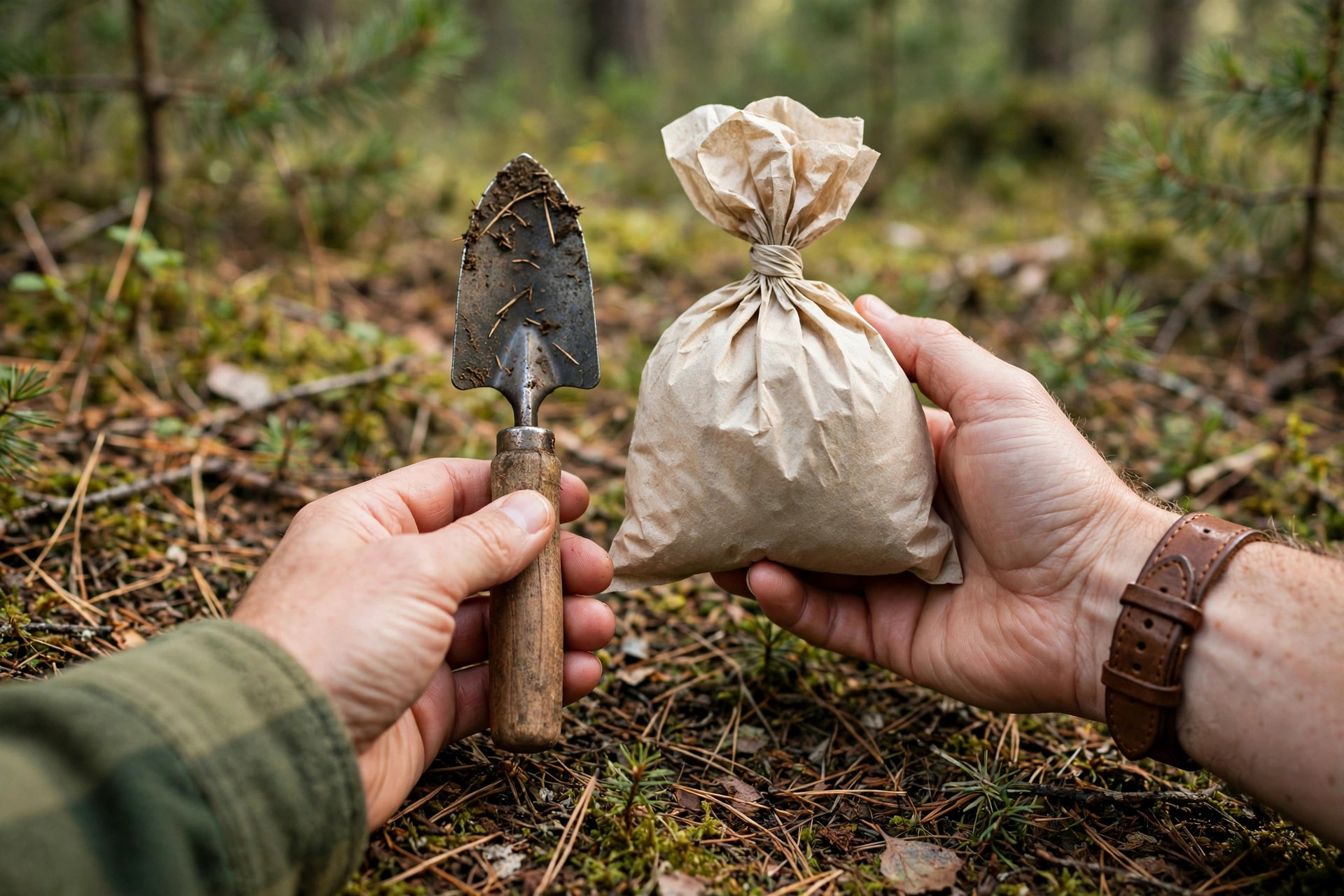
For solid waste, dig a cathole 6–8 inches deep and at least 200 feet (about 70 adult steps) from water, trails, and camp. A child can use the folding potty set directly over the cathole, then cover and disguise the hole. Pack out all toilet paper and wipes — they do not decompose quickly and animals dig them up.
With a cassette toilet
Empty the waste tank only at a dump station or into a vault toilet — never on the ground or into a stream. Rinse the tank after emptying.
Rules vary by park and forest, so check your destination’s regulations before you go — Recreation.gov lists site-specific rules for most federal campgrounds. When in doubt, pack it out.
Common Mistakes Parents Make
- Buying the potty the night before the trip. Test it at home first — a child who has never seen it will refuse it at midnight.
- Choosing an adapter-only seat for primitive camping. A toilet seat adapter is useless without a toilet. For off-grid trips, you need a standalone seat.
- Forgetting the bags. The potty is useless without liners or a bowl. Count bags before you leave and add spares.
- Leaving waste in the tent overnight. Empty the potty in the morning at the latest — sooner is better.
- Skipping the practice run. A backyard campout tells you in one evening whether the setup works.
Frequently Asked Questions
What age should a child be to use a portable camping potty?
Most are designed for children from about 18 months to 4 years old, once they are starting potty training. A child over four usually needs a bigger seat or a full-size cassette toilet.
Can you use a portable potty inside the tent at night?
Yes, and most camping families do. Place it in the vestibule or just inside the door on a towel, pre-load a fresh bag, and empty it first thing in the morning. A leakproof carry potty is the safest choice inside a tent because the lid seals completely.
How do you dispose of waste from a kids’ camping potty?
At developed campgrounds, seal liner bags and put them in the trash, and empty reusable bowls into a toilet. At primitive sites, use a cathole 6–8 inches deep and at least 200 feet from water, and pack out all wipes and toilet paper.
Are folding travel potties stable enough for toddlers?
Yes, on flat ground. Seats with a full circular base are the most stable; leg-style seats can sink into soft ground, so set them on a flat rock or packed earth. Always supervise a toddler on any portable potty.
The Bottom Line
A portable potty is a small, cheap piece of gear that removes one of the biggest sources of stress in family camping. For most families with a toddler, a folding seat like the Potette Plus plus a box of liner bags is all it takes — it covers the tent, the trail, and the rest stop in one flat package. Add a leakproof carry potty if you drive long distances. Whatever you choose, test it at home, pack the bags, and plan the disposal before you leave. Do that, and the 2 a.m. whisper becomes a two-minute job instead of a cold walk through the dark. Pair this with our family camping first aid kit guide to cover the safety side too. Camping with a baby instead? Our camping with a newborn guide covers the diaper-age setup.
