This post contains affiliate links. If you buy through them, TravelAle may earn a small commission at no extra cost to you. Read our Affiliate Disclosure.
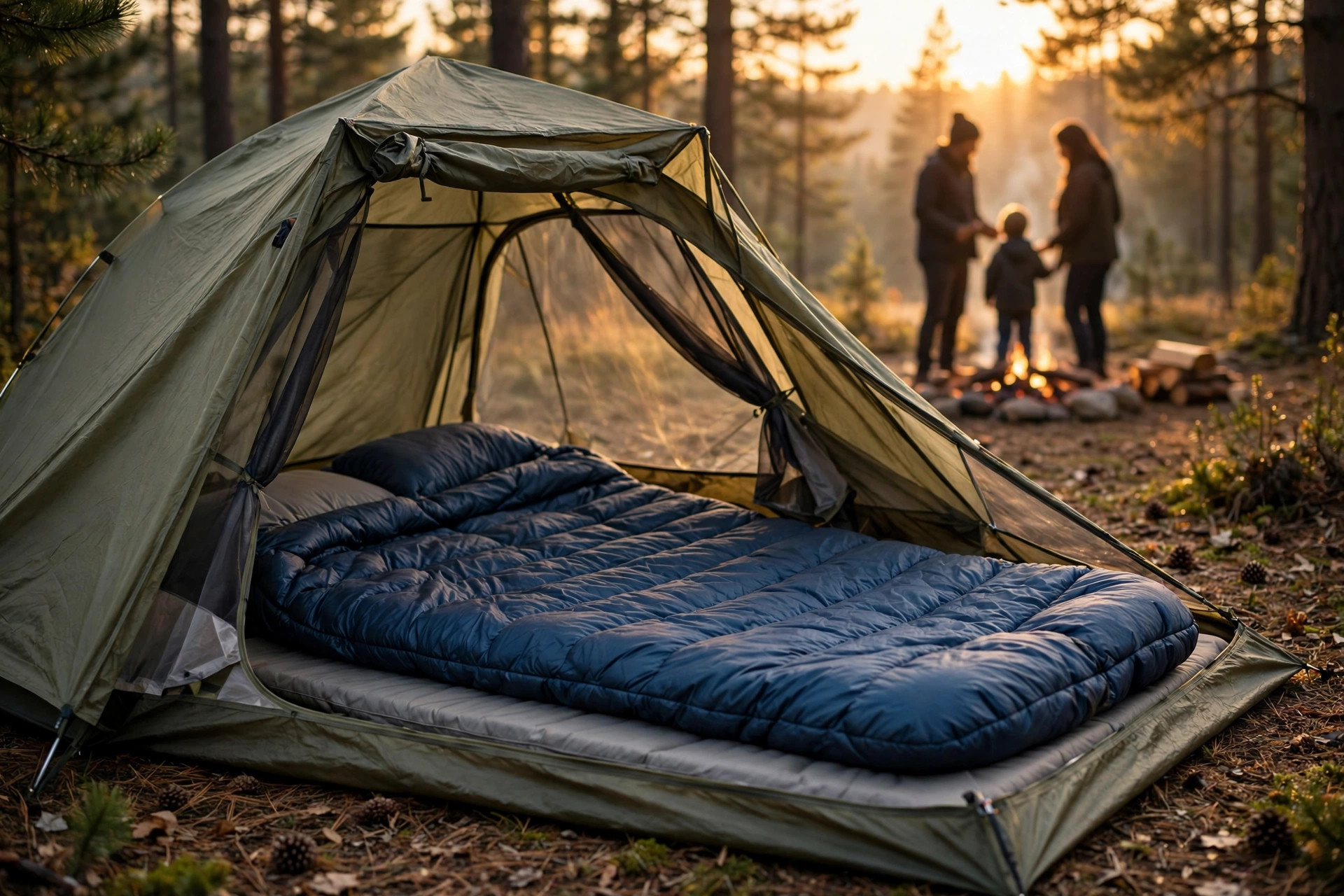
Picture the first night of your family camping trip. The tent is up, the kids are finally drowsy, and you crawl into your sleeping bag — only to spend the night half-awake, one arm numb, listening to your partner shiver on the other side of a cold zipper gap. Two single bags solve nothing: they slide apart, drafts sneak in, and a small child wedged between you ends up on bare tent floor by 2 a.m. A double sleeping bag was made for exactly this problem. It gives two adults (and often one small child) one shared, draft-free space to sleep in, and the best ones still split into two singles when you need them to. This guide explains how to choose the best double sleeping bag for family camping — the size you need, how to read temperature ratings honestly, and which bag fits your kind of trip.
Our Top Picks on Amazon
Check Price on Amazon
Check Price on Amazon
Check Price on Amazon
Prices change often — check Amazon for the current price. Affiliate Disclosure
Why a Double Sleeping Bag Works for Families
A double sleeping bag is simply two sleeping bags joined into one wide rectangle, usually queen-size or larger. For families, it creates one warm pocket that a parent and a small child can share. Kids lose heat faster than adults, and a child tucked between two warm bodies sleeps far better than a child alone in a cold single bag — and parents stay closer to a restless sleeper, which means fewer 3 a.m. wake-ups.
Most double bags also unzip into two single bags or flat blankets, so one purchase covers three jobs: a shared bag for family trips, two singles when the kids get older, and a blanket on cool evenings.
But a double bag is not right for every trip. It is heavier and bulkier than two singles, so it belongs in car camping, truck beds, cabins and backyard campouts — not on a backpacking trail. The rest of this guide assumes you drive to your campsite, which is how most families camp.
How to Choose a Double Sleeping Bag: 6 Decision Criteria
Work through these six in order, and the right bag usually picks itself.
1. Size: measure your sleepers, not the label
Double bags are sold by dimensions, not by bed sizes. A bag listed as “queen size” may be 87 by 59 inches, while another queen is 94 by 62 — a real difference when two adults and a toddler share it. Check the length against the tallest sleeper (add 4 inches of wriggle room), and look for at least 60 inches of width if your child sleeps in the middle.
2. Temperature rating: read it as a survival number, not a comfort promise
Most budget double bags carry a temperature rating set by the seller, not by an independent lab test. A bag “rated to 0°F” usually means you will survive a 0°F night, not sleep comfortably through one. A realistic rule: add 10–15°F to the listed rating to find where an average sleeper stays comfortable.
| Listed rating | Realistic comfort range | Best for |
|---|---|---|
| 0°F | Roughly 15–20°F and above | Cold spring and fall nights, mountain campgrounds |
| 20°F | Roughly 30–35°F and above | Most three-season family camping |
| 32–40°F | Roughly 45–55°F and above | Summer trips and mild-weather campgrounds |
Children feel the cold sooner than adults, so if you camp with kids, buy one step warmer than you think you need — a bag that is too warm is easy to fix by unzipping it. For more, see our guide to keeping kids warm while camping.
3. Split-ability: does it become two singles?
Almost every double bag unzips into two single bags, but the details matter. Two-way zippers on both sides let each person get out without waking the other — a small feature that matters a lot with a sleeping toddler. Check that the zippers run the full length.
4. Weight and packed size: know your car’s limit, not your back’s
A warm double bag can weigh 14–17 pounds and pack down to the size of a large duffel — fine for car camping, but a deal-breaker for walk-in sites. Before you buy, check the listed pack weight against your trunk space, especially if you are also hauling a family-size tent and an air mattress.
5. Lining: flannel comfort vs. easy cleaning
Flannel linings feel like bed sheets and are the main reason families love double bags — kids actually want to sleep in them. The trade-off is that cotton flannel absorbs moisture and dries slowly, so it is a poor choice for damp climates. Polyester linings feel less cozy but dry faster and wipe clean after a spilled juice box.
6. Hood, draft tubes and pillows
A hood that fits two pillows keeps heads warm without separate pillowcases, and draft tubes along the zipper block cold air sneaking in through closures. Some bags include pillows — handy, but check whether they are full-size or token-sized. Treat these as tie-breakers, not deal-makers.
Our Top Picks Compared
Here is how the three bags in our picks box stack up — all rectangular doubles that split into two singles, so the choice comes down to warmth, weight and feel.
| Bag | Listed temp. rating | Size | Pack weight | Lining |
|---|---|---|---|---|
| TETON Sports Mammoth 0°F | 0°F | 94″ × 62″ | 16.5 lbs | Brushed poly flannel |
| TETON Sports Mammoth 20°F | 20°F | 94″ × 62″ | 14 lbs | Brushed poly flannel |
| KingCamp XXL Flannel | 32°F and above | 87″ × 59″ | 8.81 lbs | 100% cotton flannel |
Who Each Bag Is (and Isn’t) For
TETON Sports Mammoth 0°F — best for cold-weather family camping
This is the biggest, warmest bag of the three — the one to choose if your family camps in spring or fall, at altitude, or anywhere nights drop near freezing. At 94 by 62 inches it genuinely fits two adults plus a small child in the middle. At 16.5 pounds it is strictly a car-camping bag, and summer-only campers will overheat in it.
TETON Sports Mammoth 20°F — best for most three-season family trips
If your family camps from late spring through early fall and you want one bag that covers nearly every trip, this is the balanced choice. Same roomy 94-by-62-inch cut as its colder sibling, but 2.5 pounds lighter and rated for the temperatures most campgrounds actually see at night. It is not for true winter camping — the 20°F rating is a limit, not a comfort promise. Pair it with a warm air mattress underneath, since cold ground steals more heat than cold air.
KingCamp XXL Flannel with 2 Pillows — best for mild-weather comfort
This is the lightest and softest of the three, with a 100% cotton flannel lining and two included pillows — the closest thing to bringing your bed to the campground. At 8.81 pounds it is the easiest to haul and store, and it suits summer camping, RV trips and backyard campouts. It is not for cold nights: its listed rating starts at 32°F. And because the lining is cotton, keep it dry — wet flannel stays wet.
Will It Fit Your Tent? A Quick Checklist
A double bag needs more floor space than two singles, and families discover this at 10 p.m. in the dark. Measure before you buy:
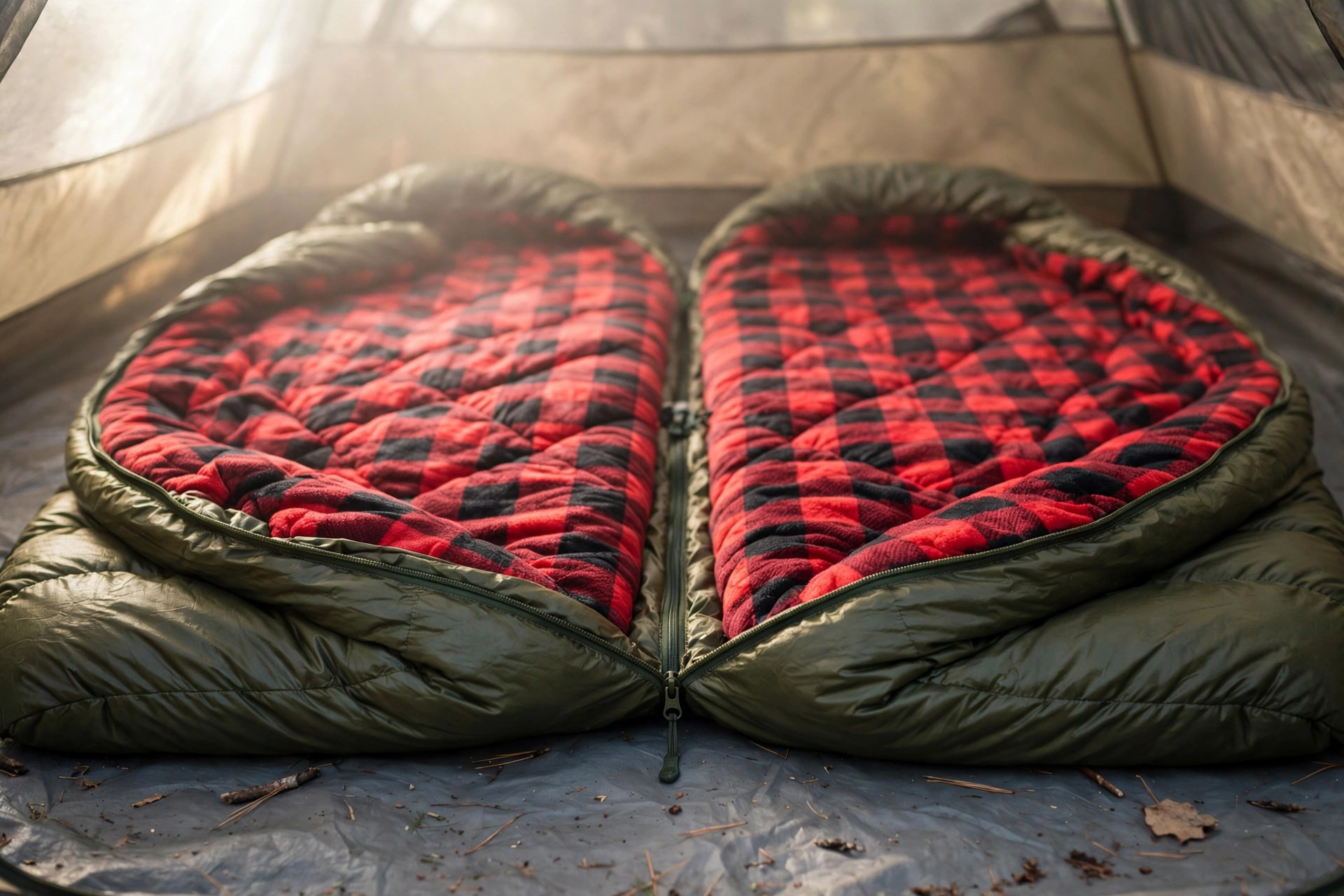
- Floor space: a 94-by-62-inch bag needs roughly 8 by 5.5 feet of flat floor — in a 4-person tent it fills the floor. Check your tent’s floor dimensions against the bag, not the “sleeps 6” label.
- Sleeping pads: one queen-size air mattress or two singles side by side both work under a double bag. A standard queen pad is 60 by 80 inches, slightly wider than most double bags, which is fine.
- Door access: leave a clear path to the tent door — a child who needs the bathroom at night should not have to climb over the bag.
- Gear storage: keep bags and shoes in the vestibule, not on the tent floor.
- Test at home: unroll the bag in the tent in your backyard once before the trip — five minutes of measuring saves a miserable first night.
Sleeping with Kids in a Double Bag: What Parents Should Know
Sharing a double bag with a child is one of the nicest parts of family camping — but a few safety rules matter. Babies and toddlers under two should not share a loose adult sleeping bag: the fabric can cover a small child’s face, and overheating is a real risk. Give infants their own sleep space, such as a portable travel crib inside the tent. For children aged two and up, sharing is generally fine with these precautions:
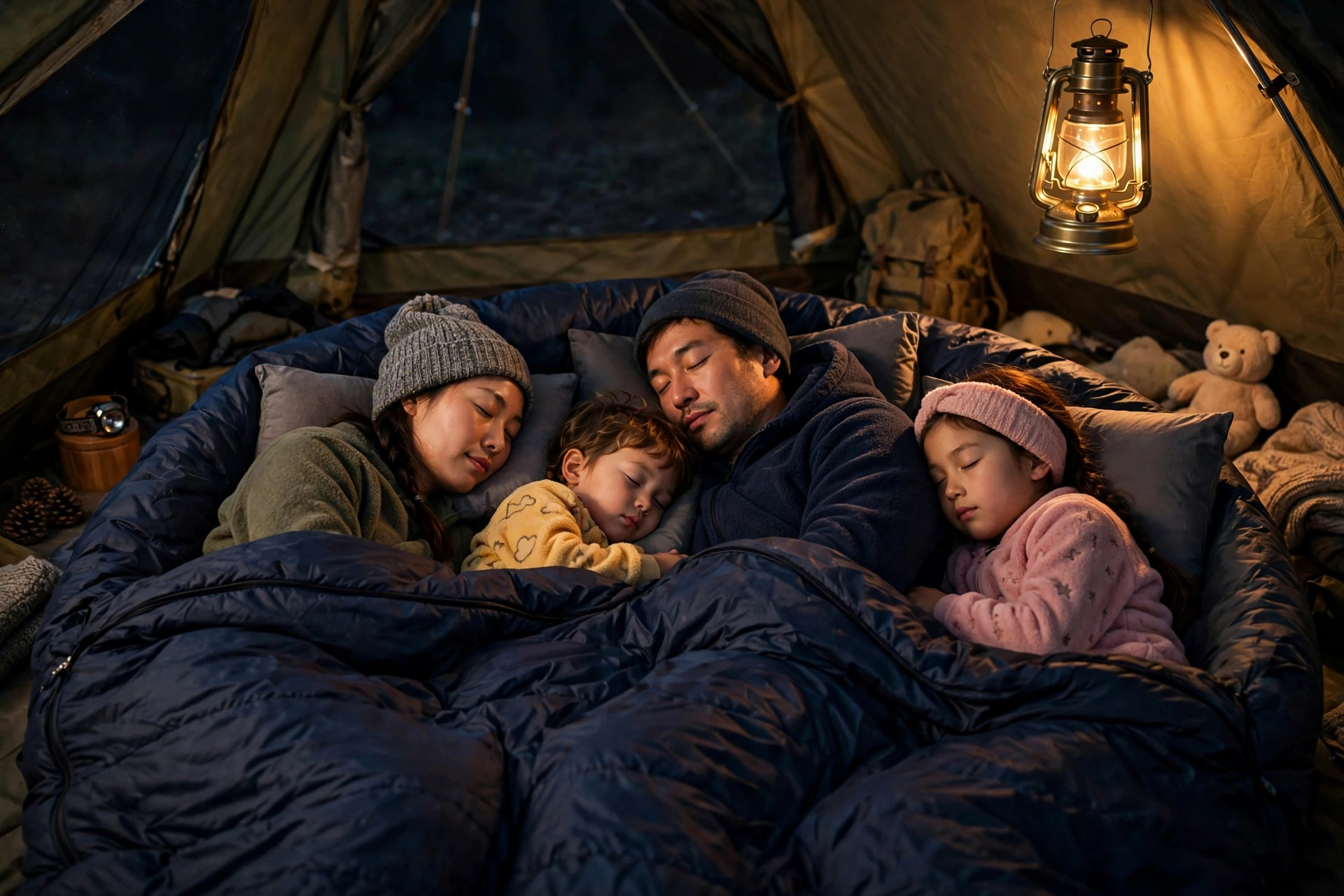
- Put the child in the middle between two adults, not at the edge where they can roll against the tent wall.
- Dress them in dry layers — a warm base layer and socks — rather than relying on the bag alone. Damp clothes from the day will chill a child fast.
- Vent the bag if they get sweaty. A child who wakes up damp is a child who will be cold an hour later. Unzip the foot of the bag to let heat out.
- Give older kids their own bag when they ask for it. Around age 7–9 most kids want their own space, and a single bag sized for them — see our guide to kids’ sleeping bags and temperature ratings — sleeps better.
- Keep the tent ventilated. Four people breathing in a closed tent builds condensation fast — crack a vent, even on cold nights.
Care and Storage: Make It Last
Never store a double bag compressed in its stuff sack between trips — constant compression flattens the insulation and the bag gets colder every year. Instead, hang it in a closet or store it loose in a large cotton sack. Air it out after every trip, and spot-clean spills rather than machine-washing the whole bag. If you must wash it, use a front-loading machine on gentle with a mild detergent, and dry on low heat with clean tennis balls to restore the loft. Before each season, check the zippers and re-treat the shell with a spray-on water repellent if it no longer beads water.
Frequently Asked Questions
Can two adults and a child really fit in one double sleeping bag?
Yes, if the bag is wide enough. Look for bags at least 60 inches wide — the 94-by-62-inch bags in this guide fit two adults and a small child comfortably. A 59-inch bag works for two adults, but adding a child makes it tight.
Are double sleeping bags warmer than two single bags?
Usually, yes. Two bodies in one bag share warmth, and there is no gap between bags for cold air to enter. The exception is when one sleeper runs much hotter than the other — then a bag with separate blankets helps.
Can a double sleeping bag split into two singles?
Almost all of them can. The bags in this guide unzip into two complete single bags, and they can also open flat as blankets. Check that the zippers run the full length of both sides.
What temperature rating do I need for family camping?
For most three-season family camping, a bag listed at 20°F is a good middle ground — realistically comfortable to about 30–35°F. If you camp in summer only, a 32–40°F bag is enough. If you camp in spring or fall at altitude, go to 0°F. Remember that listed ratings are survival numbers, not comfort promises.
Are double sleeping bags good for backpacking?
No. Even the lightest double bags weigh 7–9 pounds, and warm ones weigh 14–17 pounds. They are made for car camping, cabins and backyard campouts, where the car carries the weight. For backpacking with kids, use two lightweight single bags instead.
How do I wash a double sleeping bag?
Spot-clean when you can. For a full wash, use a front-loading machine on gentle with mild detergent — top-loaders with agitators can tear the baffles. Dry on low heat with clean tennis balls to restore loft.
A double sleeping bag will not fix a bad tent or a cold mattress, but it fixes the most common reason families sleep badly at camp: everyone drifting apart into cold, drafty singles. Pick the warmth level your trips need, measure it against your tent floor, and test it in the backyard once. For the rest of the trip, start with the National Park Service camping pages and check availability on Recreation.gov before you book.
