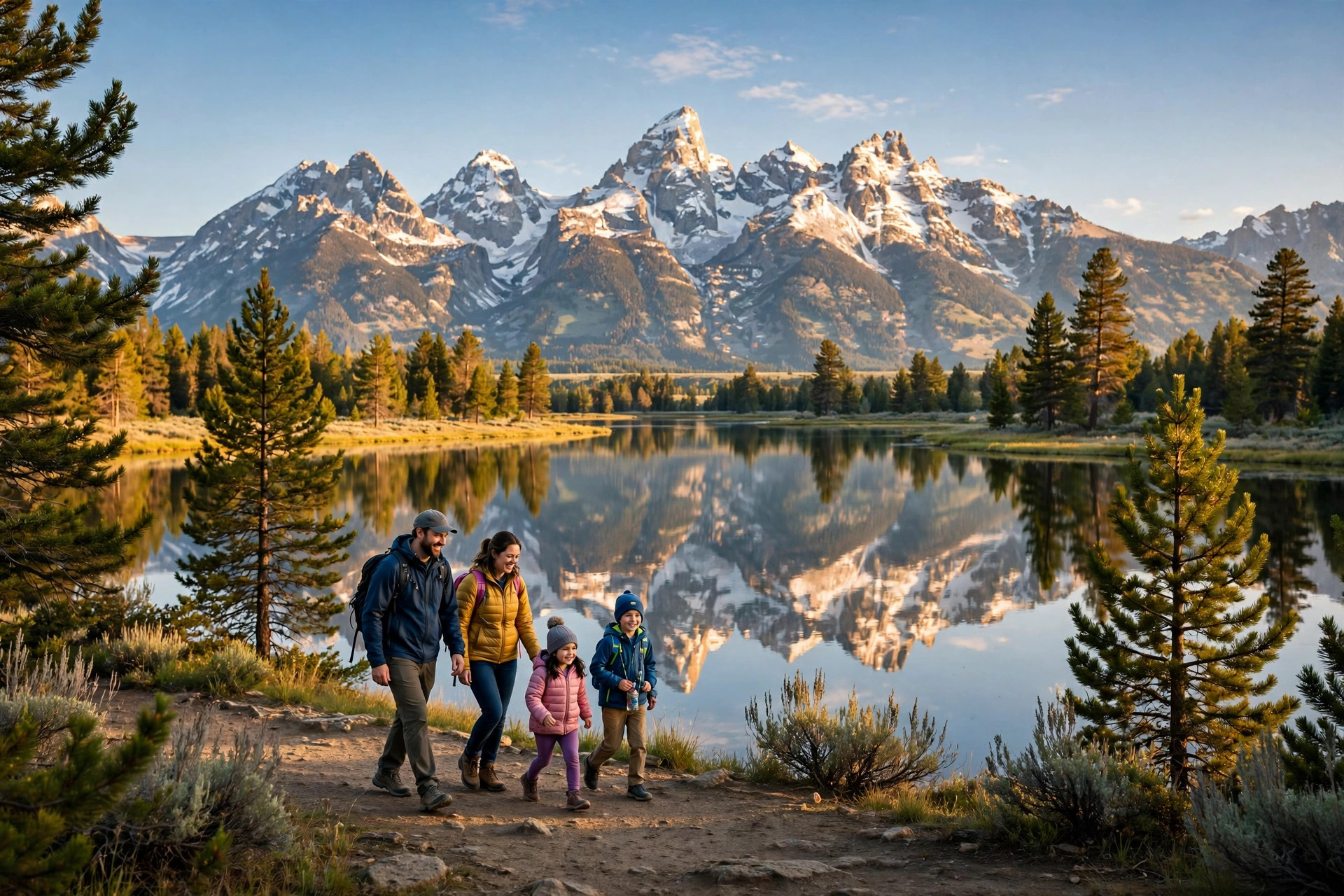
Planning Grand Teton with kids? You picked a great park. The peaks rise straight out of a flat valley, the lakes sit right beside the road, wildlife shows up at dawn and dusk without a long hike, and the whole park fits into a relaxed three-day trip. This 2026 guide covers what worked for our family: easy hikes by age, a day-by-day itinerary, wildlife safety, where to stay, and what to pack.
Why Grand Teton Works So Well with Kids
Most mountain parks make families work for the views; Grand Teton is different. The range has no foothills, so the peaks — Grand Teton tops out at 13,775 feet — tower over Jackson Hole valley, and you can see them from the car, the campground, and the lakeshore. That matters with a four-year-old: the scenery delivers even on days nobody hikes.
The park is compact: a 42-mile scenic loop connects the main viewpoints, trailheads, and lakes, so you are never far from the car or a picnic spot. The best sights are low and flat: Jenny, String, and Jackson Lakes sit at the foot of the mountains with short shoreline trails. And wildlife comes to you: moose in the ponds along Moose-Wilson Road, elk grazing at dawn, bison on the sagebrush flats. A sunrise drive can be the trip’s highlight, no hiking required. Children as young as three or four can enjoy the flat trails; from about age seven, kids can handle Taggart Lake and Hidden Falls.
Best Time to Visit Grand Teton with Kids
July and August are the best family window. The snow is gone from the valley trails, the Jenny Lake boat shuttle is running, the weather is warmest, and every visitor center and ranger program is open. The trade-off is crowds: arrive at popular trailheads before 9 a.m. or go late in the day.
June is a strong second choice: wildflowers, thinner crowds, and the boat shuttle running from mid-May. September brings golden aspens and cooler hiking weather, but the boat shuttle stops at the end of the month. Winter is spectacular but cold, with most roads closed November through April; save it for kids old enough to snowshoe.
How Many Days Do You Need in Grand Teton with Kids?
Two full days is the minimum: one for Jenny Lake and the boat to Hidden Falls, one for String Lake, Colter Bay, and a wildlife drive. Three days is the sweet spot. The third day adds a slow wildlife morning, Mormon Row’s historic barns, and an afternoon in Jackson — plus a weather backup if thunderstorms cancel a hike on day one. Five days adds a longer hike, a Snake River float trip, and a day in Yellowstone’s south loop, directly north of the park.
A Relaxed 3-Day Grand Teton Family Itinerary
It assumes kids who can walk one to three miles at a time, with a carrier for the youngest. Each day starts early and rests in the afternoon heat.
Day 1: Jenny Lake, Hidden Falls & Inspiration Point
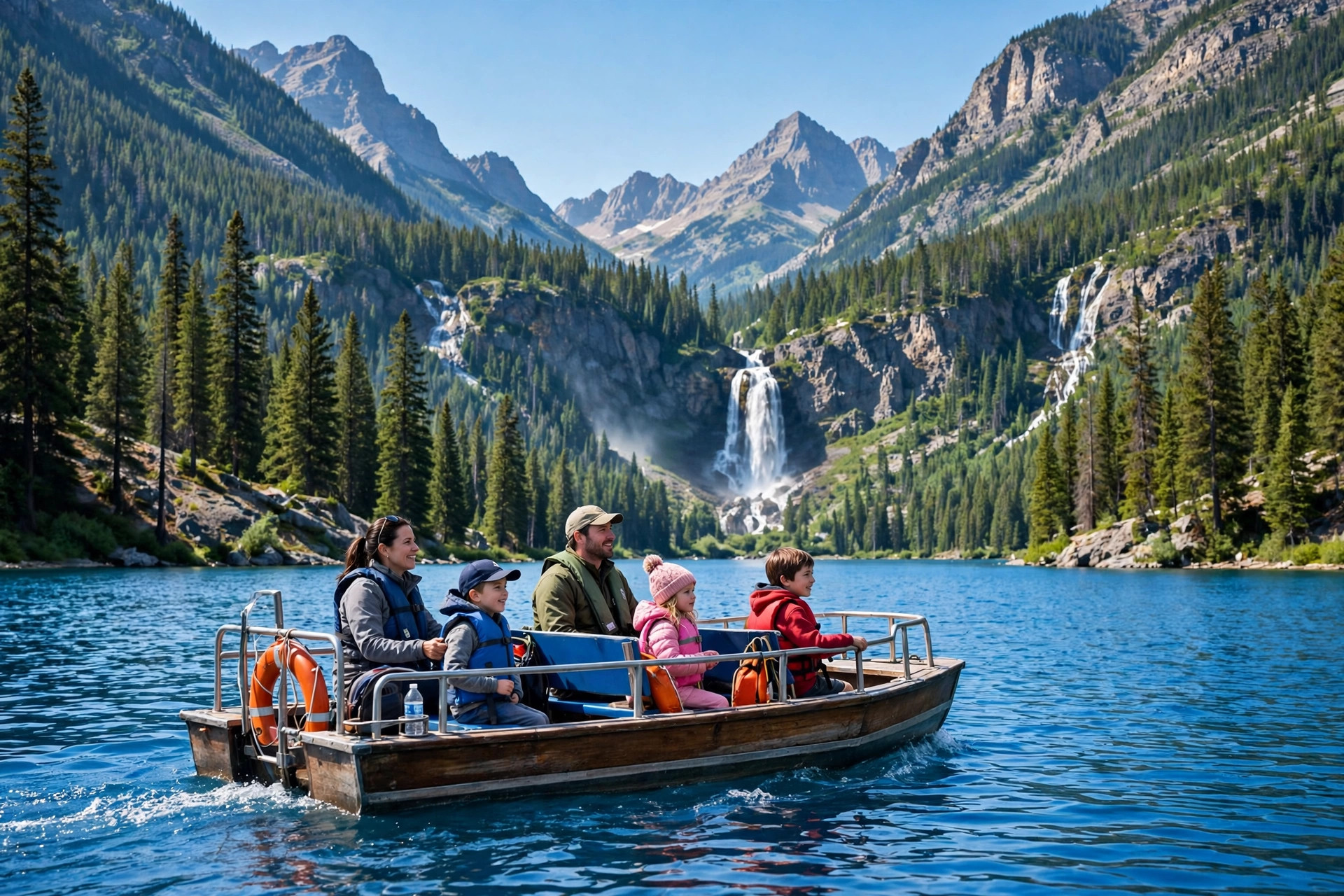
Start at the Jenny Lake Visitor Center for Junior Ranger booklets and the day’s ranger programs. Then ride the boat shuttle across Jenny Lake — a 12-minute crossing kids love — which cuts the Hidden Falls hike from about 5.7 miles round-trip to roughly 1.8 miles. From the west dock, a short walk leads to Hidden Falls, a 100-foot cascade kids hear before they see. Kids six and up can continue to Inspiration Point for a sweeping lake view, but the trail gets steep with real drop-offs near the top, so hold little hands — Hidden Falls alone is a complete outing. After lunch, drive Teton Park Road south and finish at Oxbow Bend for the sunset reflection.
Day 2: String Lake, Leigh Lake & Colter Bay
String Lake is the best kid lake in the park. The water is shallow and clear, the pebble beach is made for skipping stones, and the flat trail keeps the Tetons in view. Bring water shoes and dry clothes — the water is cold, around 57 to 59°F in July, but that never stops a determined seven-year-old from wading in. In the afternoon, drive north to Colter Bay: walk the flat 1.9-mile lakeshore loop, visit the visitor center, and let the kids run on the beach as the range turns gold.
Day 3: Wildlife Morning, Mormon Row & Jackson
Drive Moose-Wilson Road at dawn, when moose feed in the willow ponds and the light is soft. Then head east to Mormon Row, where the historic Moulton barns stand in front of the Tetons — the park’s most photographed spot. Finish in Jackson: the antler arches, a proper lunch, and an afternoon of rest.
Easy Grand Teton Hikes by Age
Grand Teton is not an easy-hiking park overall — the high trails are steep. But around the lakes there are several genuinely easy options; use this table to match the trail to your youngest hiker.
| Trail | Distance | Elevation gain | Best ages | Why kids love it |
|---|---|---|---|---|
| Menors Ferry Trail | 0.9 miles | Flat | All ages | River ferry site; beavers and waterfowl |
| Lunch Tree Hill | 0.5 miles | Flat | All ages | Short trail, big Teton views |
| Colter Bay Lakeshore | 1.9-mile loop | Flat | 3 and up | Lake beach and pine forest |
| String Lake Trail | 1.9 miles RT | Nearly flat | 4 and up | Shallow water, rock skipping |
| Jenny Lake west shore | 2.2 miles RT | Flat | 5 and up | Lake and mountain views |
| Hidden Falls by boat | 1.8 miles RT | About 400 ft | 6 and up | Boat ride plus a waterfall |
| Taggart Lake Trail | 3.1 miles RT | About 260 ft | 7 and up | Mountain lake, Teton views |
Two honest notes: the full Jenny Lake loop is 7.5 miles, too much for most kids under ten — do the west-shore section instead. And do not hike beyond Hidden Falls into Cascade Canyon with children under eight; the trail gets long and exposed in the heat.
Riding the Jenny Lake Boat Shuttle
The boat shuttle is the park’s best shortcut for families. It runs mid-May through September 30, leaves the East Dock every 10 to 15 minutes, and needs no reservation. The adult round-trip fare is $20 — check current child fares before you go.
Arrive at South Jenny Lake early: the lot fills by mid-morning in July and August. If you visit in October, do not count on the boat at all; the shuttle ends September 30 and you will need to walk the lakeshore trail instead.
Wildlife Watching with Kids — and Staying Safe
Wildlife is why many kids remember the Tetons. Best viewing is at dawn and dusk at Oxbow Bend, the Willow Flats, Schwabacher Landing, and Moose-Wilson Road. Bring binoculars — even a cheap pair turns a distant dot into a moose with antlers.
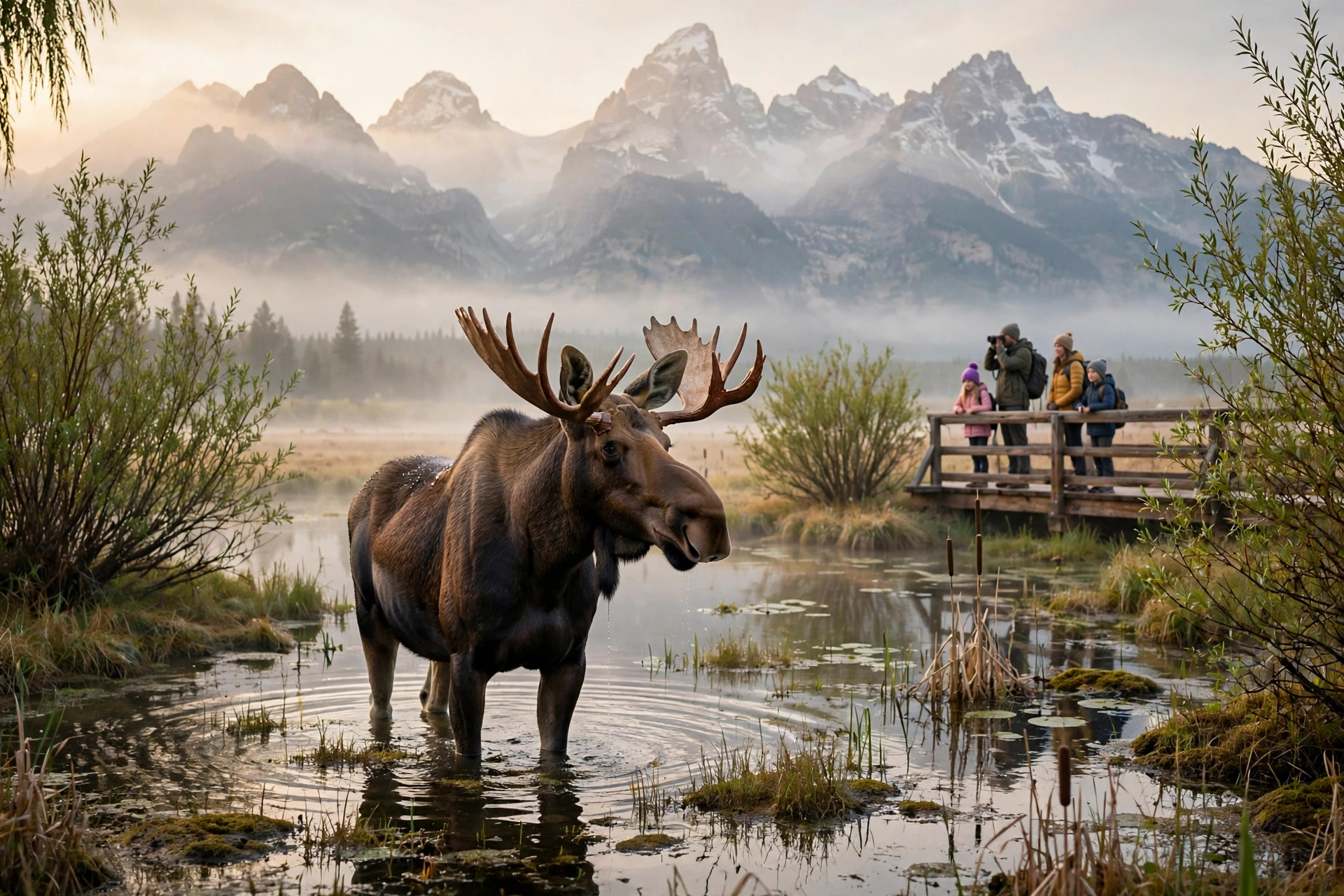
Teach kids the safety rules before the first sighting, not during it:
- Keep your distance: the National Park Service asks for at least 100 yards (a football field) from bears and wolves, and 25 yards from other wildlife, including moose, elk, and bison.
- Carry bear spray on every hike — adults carry it, kids learn where it is and that it is not a toy. Read our full bear safety guide for kids before your trip.
- Stay together and make noise on forested trails; kids hike between adults, never ahead around blind corners.
- Never feed wildlife or approach an animal for a photo, even a calm one. A moose can charge faster than you can run, and bison injure more visitors than bears.
- Store food properly: food, scented toiletries, and trash go in bear boxes or hard-sided vehicles.
String Lake: The Best Splash Spot in the Park
If your kids only remember one lake, make it String Lake. The trail between String Lake and Leigh Lake runs along a shallow channel where children can reach the water, skip rocks, and watch fish in the clear shallows while the Tetons stay in view. The out-and-back to the first beach is only about 1.9 miles — perfect for younger kids — while the full loop is about 4.3 miles and nearly flat.
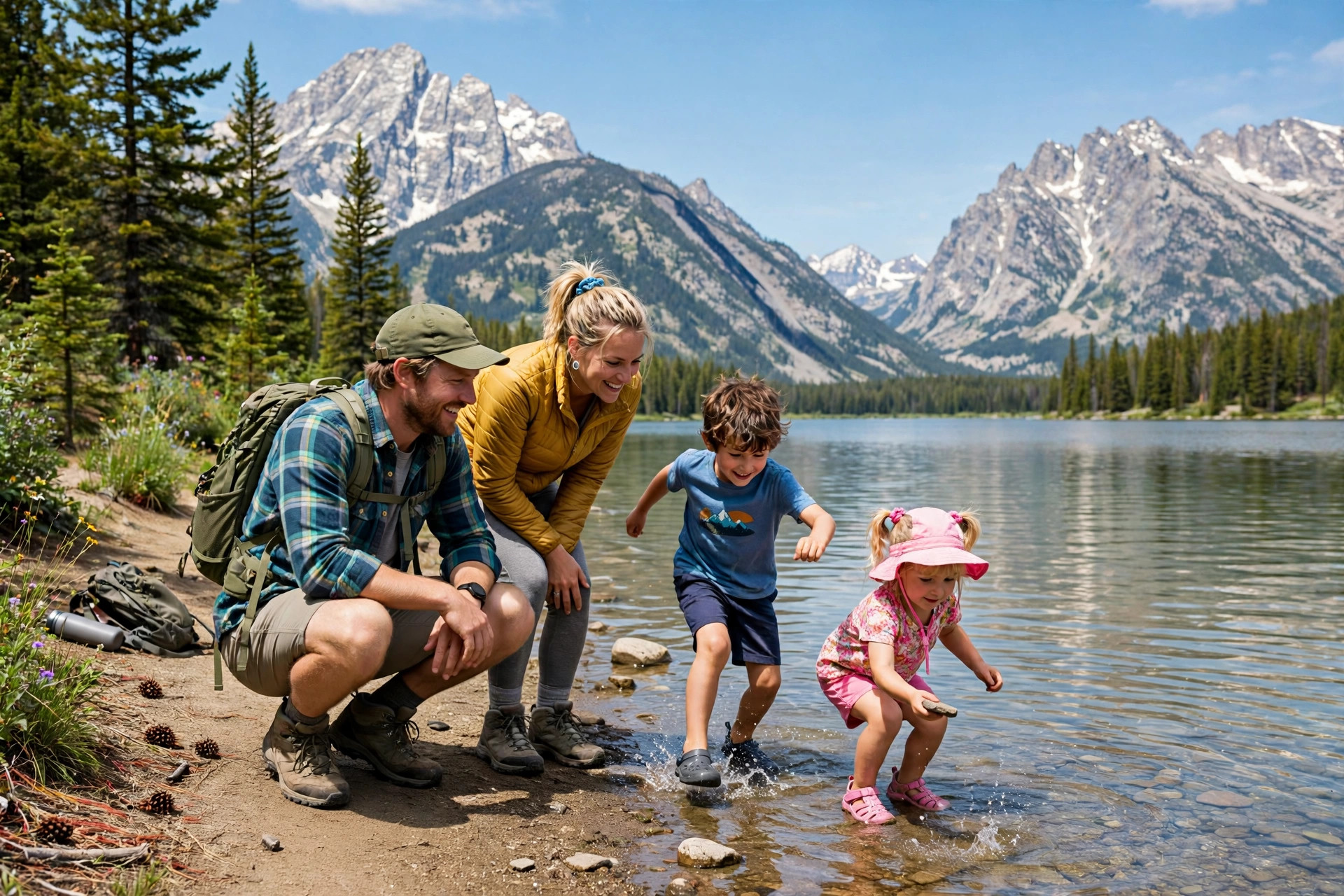
Pack water shoes, a towel, and dry clothes for the car. The lake is warmer than Jenny Lake but still cold, so plan on wading rather than swimming and keep a close eye on little ones — there are no lifeguards in the park.
Where to Stay with Kids
Inside the park: Colter Bay Village is the most family-friendly in-park stay: cabins, tent cabins, a marina, a beach, and a general store. Signal Mountain Lodge sits on Jackson Lake with a restaurant and boat rentals. Jenny Lake Lodge is beautiful, expensive, and better suited to couples than muddy kids.
Camping: Colter Bay, Jenny Lake, and Gros Ventre campgrounds take reservations through Recreation.gov, and popular sites book months ahead for summer. In Jackson: staying in town gives you restaurants, grocery stores, and laundry. The drive from Jackson to Jenny Lake is about 30 to 40 minutes, which is manageable if you start early.
What to Pack for Grand Teton with Kids
- Layers for everyone: mornings can be in the 40s even in July, afternoons in the 80s. Pack a warm layer and rain jacket per child.
- Sun protection. The sun is strong at 6,800 feet. Sunscreen, hats, and sunglasses are non-negotiable.
- Bear spray — one canister per hiking adult, carried where you can reach it.
- Binoculars and a simple wildlife checklist to turn waiting into a game.
- Water shoes and dry clothes for String Lake and any lakeside stop.
- Snacks and water. There are no food stands on the trails.
- Junior Ranger booklets from any visitor center — they turn the trip into a mission.
- Offline maps. Cell service is patchy inside the park, so download maps before you arrive.
Practical Tips Parents Ask About
Altitude: The valley floor sits around 6,300 to 6,800 feet. Most kids adjust fine, but take it easy on day one, drink plenty of water, and watch for headaches or unusual tiredness. If a child feels unwell, rest at a lower elevation — Jackson is slightly lower.
Weather: Mountain weather changes fast. Afternoon thunderstorms are common in summer, so start hikes early, be off exposed ridges by mid-afternoon, and always carry rain gear.
Fees and logistics: Entry is $35 per private vehicle, good for seven days, with no timed-entry system. The park went cashless in May 2026, so bring a card. Teton Park Road closes to vehicles November 1 through April 30. Check the National Park Service’s Grand Teton page for current conditions, and the park hours page for seasonal dates. Campground reservations go through Recreation.gov.
Crowds: The park is busiest late June through August. Beat the crowds by starting hikes before 9 a.m., visiting popular spots on weekdays, and saving the scenic drive for golden hour.
More National Park Family Guides
Planning a bigger national parks summer? Our Yosemite with Kids, Zion with Kids, Grand Canyon with Kids, and Bryce Canyon with Kids guides use the same age-by-age format.
Frequently Asked Questions
Is Grand Teton good for toddlers?
Yes, with the right plan. Toddlers do best on flat, short trails — Menors Ferry (0.9 miles), Lunch Tree Hill (0.5 miles), the Colter Bay lakeshore — and the scenic drive with frequent stops. Bring a carrier for trails, a stroller for paved visitor-center paths, and keep days short with nap time built in.
Can you see Grand Teton with kids without hiking?
Absolutely. The 42-mile scenic loop, the Teton Park Road overlooks, the Jenny Lake boat shuttle, and wildlife watching from the car all deliver the park’s best scenery with no hiking at all. Many families with very young children do the whole trip this way.
Do kids need bear spray in Grand Teton?
Adults should carry bear spray on every hike. Children do not carry it themselves, but they should know what it is, that it is not a toy, and that they must stay close to an adult on trails. Teach the distance rules (100 yards from bears, 25 yards from other wildlife) before your first hike.
How much does a Grand Teton family trip cost?
The park entry pass is $35 per private vehicle for seven days. The Jenny Lake boat shuttle is $20 per adult round-trip (check child fares before you go). Park campgrounds are inexpensive but book months ahead; lodges and Jackson hotels cost far more in July and August.
Can you combine Grand Teton and Yellowstone with kids?
Yes — the parks share a border, and many families do both in one trip. Add two to three days for Yellowstone’s south loop (Old Faithful, Grand Prismatic Spring, and the Grand Canyon of the Yellowstone). Five to six days for both parks is a comfortable pace; three days total will feel rushed.
Is there a Junior Ranger program at Grand Teton?
Yes. Pick up a free Junior Ranger booklet at any visitor center — Craig Thomas, Jenny Lake, or Colter Bay. Kids complete activities as they explore, then return the booklet to a ranger for a badge and a swearing-in ceremony — the best free activity in the park.
