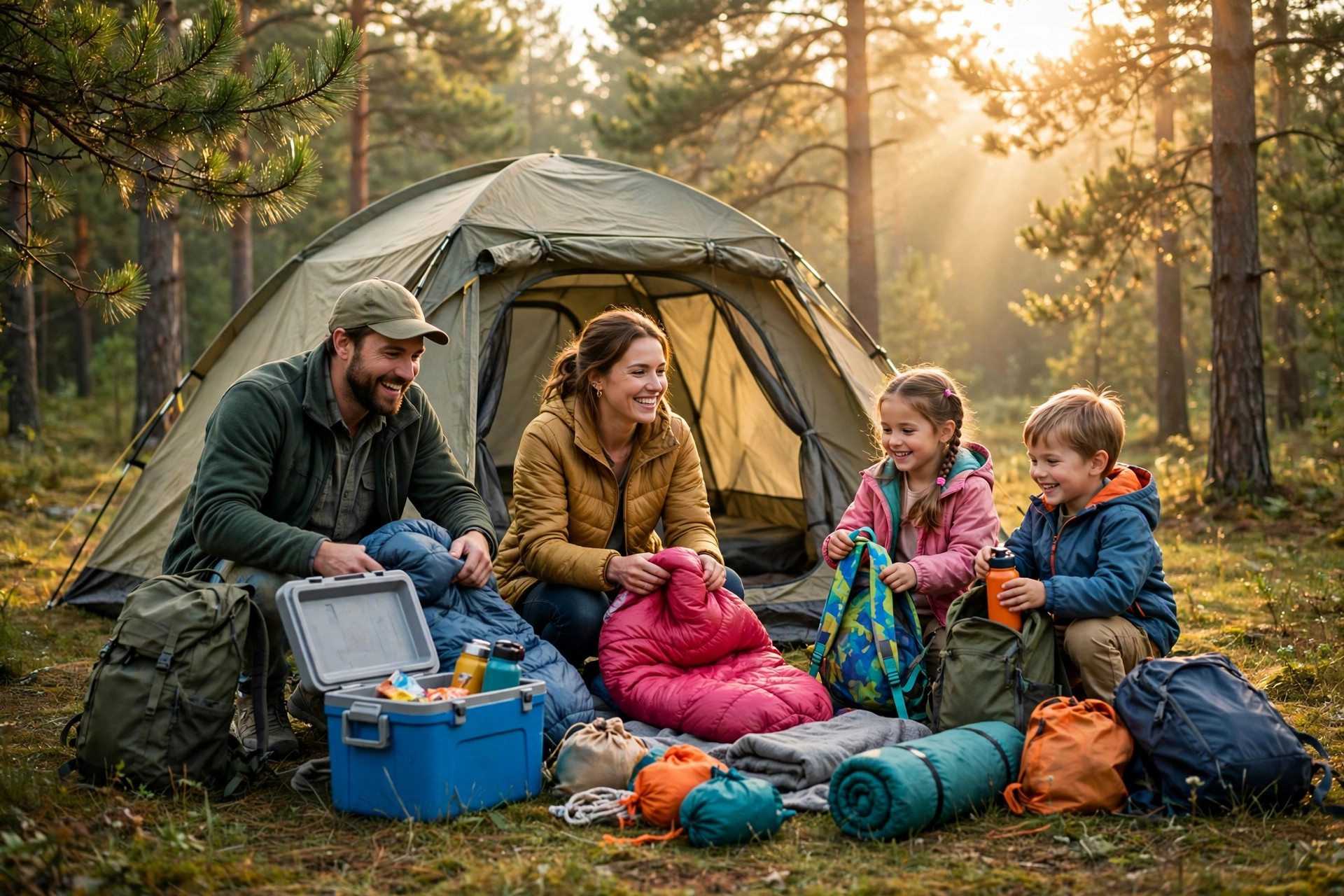
Packing for a camping trip with kids is a different job from packing for adults. Adults can shrug off a forgotten toothbrush or a cold night. Kids cannot — and a tired, cold, hungry child can turn a dream weekend into a 2 a.m. drive home. This camping checklist with kids fixes that: everything children actually need — sleep, clothes, food, safety, hygiene and fun — organised by age, with a printable table you can tick off and reuse on every trip.
Unlike a general packing list, this camping checklist with kids is built around how kids behave at camp: they get dirty fast, they get cold faster than you, they lose things, and they need comfort items to sleep somewhere strange. Pack for the child you have, not the camper you wish you had.
Why Kids Need Their Own Camping Checklist
A standard camping list assumes every person in the tent has the same needs. That breaks the moment a toddler face-plants in the mud or a six-year-old announces at 9 p.m. that they are scared of the dark. Kids need more clothes, more snacks, more comfort and more patience than the list in your head accounts for.
Three rules make the whole system work. First, sleep comes first: if kids sleep badly, nothing else works, so their sleep gear gets packed before anything fun. Second, one outfit per day plus one spare: kids will use the spare, usually before lunch on day one. Third, every child carries their own small bag with their comfort item, water bottle and a snack — it keeps them busy and means you are not the family pack mule.
If this is your very first trip, read our first family camping trip weekend plan alongside this list — it covers the timeline, from choosing a site to the drive home. And if you want the grown-ups’ version of the gear list, our family camping checklist of 47 essentials covers tents, kitchen gear and camp setup in full.
The Printable Camping Checklist with Kids
Copy this table, print it, or save it on your phone. Tick each item as it physically goes into the bag — not as you think of it. The “per child” column is the quantity for one child on a two-night trip; scale up for longer stays.
| Category | Item | Per child (2 nights) |
|---|---|---|
| Sleep | Sleeping bag rated for the night temperature | 1 |
| Sleep | Sleeping pad or camp mattress | 1 |
| Sleep | Pillow (or stuff sack filled with clothes) | 1 |
| Sleep | Favourite comfort item (stuffed animal, blanket) | 1 |
| Sleep | Pajamas, warm socks for sleeping | 2 sets |
| Clothes | Day outfits (shirt, pants/shorts, underwear, socks) | 3 sets + 1 spare |
| Clothes | Warm layer (fleece or hoodie) | 1–2 |
| Clothes | Rain jacket and rain pants | 1 set |
| Clothes | Sturdy closed-toe shoes + camp sandals | 1 pair each |
| Clothes | Sun hat and warm beanie | 1 each |
| Food | Snacks they already like (bars, fruit, crackers) | Daily supply |
| Food | Reusable water bottle, labelled with their name | 1 |
| Food | Plate, bowl, cup, spoon and fork | 1 set |
| Food | High chair or booster seat (under-3s) | 1 |
| Hygiene | Toothbrush, toothpaste, hairbrush | 1 set |
| Hygiene | Wet wipes and hand sanitiser | 1 pack each |
| Hygiene | Sunscreen (SPF 30+), lip balm | 1 each |
| Hygiene | Insect repellent (age-appropriate) | 1 |
| Hygiene | Diapers/pull-ups and bags (if needed) | Daily supply + extras |
| Safety | Headlamp or small flashlight | 1 |
| Safety | Whistle (teach: three blasts = help) | 1 |
| Safety | Basic first-aid items for kids | Shared kit |
| Safety | Any medication, with the prescription label | As prescribed |
| Fun | Book, colouring kit or card game | 2–3 items |
| Fun | Binoculars or magnifying glass | 1 |
| Fun | Bucket and spade, ball or frisbee | 1–2 items |
| Fun | Nature journal and pencils | 1 |
Keep the list where you will actually use it: taped inside the gear closet, saved as a phone note, or folded into the tent bag. The families who forget the least are the ones who use the same list every time.
Packing by Age: What Changes and When
A baby, a toddler and a ten-year-old are three different packing jobs. The table above is the base; these age notes are the adjustments.
Babies (under 1 year)
Keep the first trips short and close to home — one night, a developed campground with facilities, and a drive home under an hour if you need to bail. Pack a portable travel crib or bassinet, plenty of diapers (plan for double your normal daily count), formula or breastfeeding supplies, and a sun shade for the tent entrance. Babies lose heat fast, so pack an extra warm layer even in summer. Talk to your paediatrician before the trip if your baby has any health concerns.
Toddlers (1–3 years)
Toddlers are the hardest age to camp with, and the most rewarding. They need containment: a travel crib or playpen at the site, a camp chair with a tray for meals, and a fenced-off play area if your site allows it. Pack twice the clothes you think you need — mud is a toddler’s natural habitat — plus their comfort item, a familiar sippy cup, and snacks in individual bags. Choose flat, shaded sites near the bathrooms, and plan for a midday nap in the tent, even if it cuts into your hiking plans.
Young Children (4–7 years)
This is the golden age for family camping. Kids this age can carry their own small backpack, help set up the tent, and stay engaged with simple jobs: collecting kindling, spotting wildlife, or carrying the water bottle. Pack a headlamp of their own (they will wear it everywhere, including the car), a nature journal, and a few quiet activities for downtime. Let them pack their own bag from a short list you give them — it builds excitement and means they know where their things are.
Older Kids (8–12 years)
Older kids need less stuff and more responsibility. Give them real jobs: tent setup, firewood runs, meal prep, and navigating with a map. Pack binoculars, a fishing rod if your site allows it, and a book for quiet evenings. They can also handle a bigger daypack on hikes. The main packing risk at this age is screens — set the expectation before you leave that devices stay in the car except for photos, and pack enough analogue fun to make that deal easy to keep.
How to Pack the Car Without Losing Your Mind
The checklist is only half the job. The other half is getting it all into the car — and back out again in an order that lets you set up camp without unpacking everything twice.
Use the first-in, last-out rule: the things you need first at the campsite go in last, on top. That means the tent, sleeping gear and the kids’ comfort items load last, and the food cooler and kitchen box load first, deep in the boot. Pack each child’s clothes in their own labelled stuff sack or packing cube — one cube per child per trip — so you never have to dig through a shared duffel in the dark.
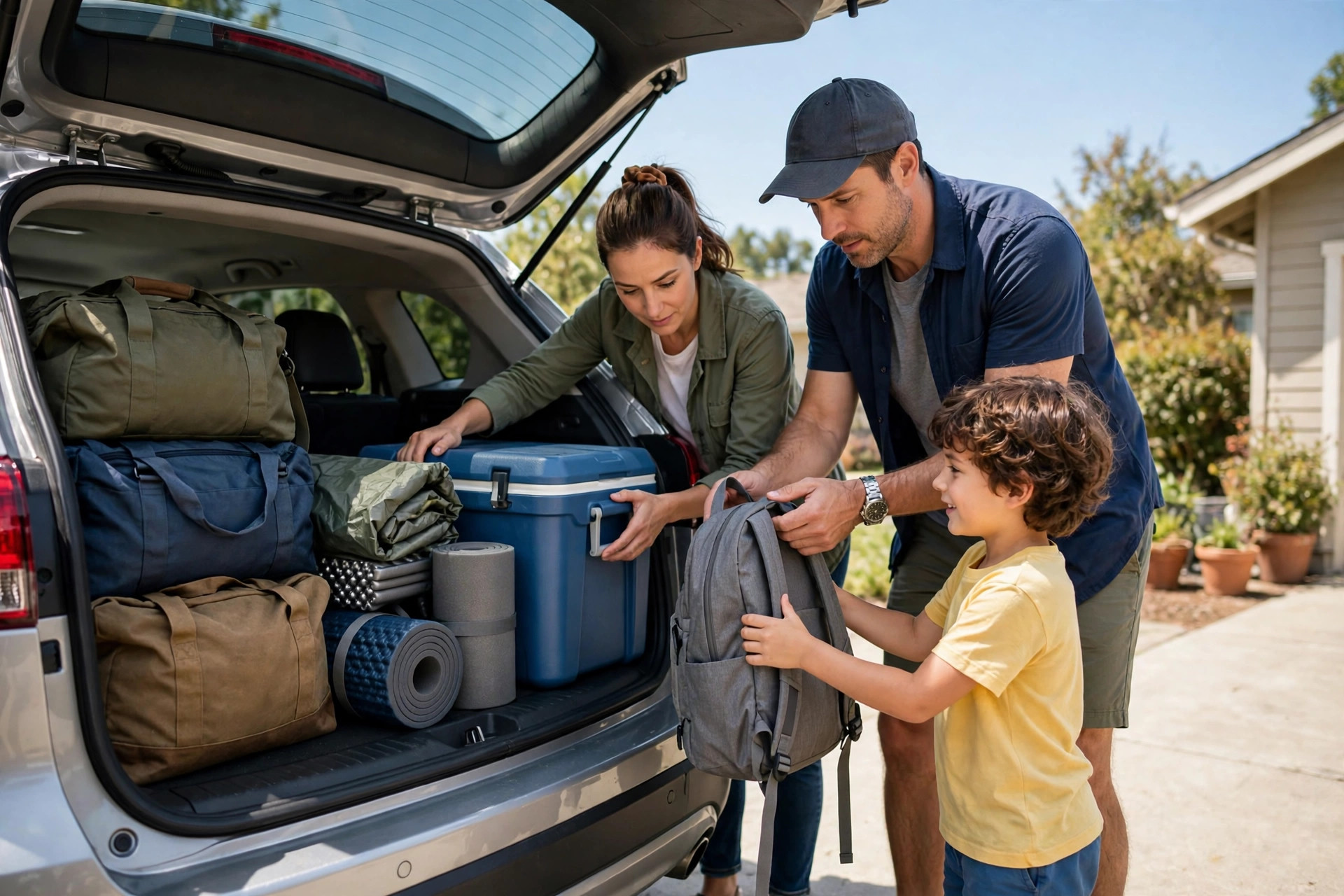
Keep a small “arrival bag” on top with the things you need in the first fifteen minutes: headlamps, wet wipes, snacks, water bottles and the kids’ comfort items. Keep the first-aid kit reachable without unpacking the car — see our family camping first-aid kit guide for what belongs in it. Before you leave, do a driveway check: count heads, and run through the list one last time. The most commonly forgotten items are the pillow, the phone charger and the child’s comfort item — put the comfort item in the car the night before, not the morning of the trip.
What NOT to Bring (Overpacking Is a Real Problem)
New camping parents pack for every scenario they can imagine. Experienced ones pack for the scenarios that actually happen — and this camping checklist with kids is built on that principle. Leave these at home:
- Too many toys. Three small items per child is plenty. The campsite is the entertainment — sticks, stones, water and dirt beat any toy you brought.
- Full-size toiletries. Decant shampoo, soap and sunscreen into small bottles. One shared family wash kit beats five individual bags.
- Valuable electronics. Tablets and expensive cameras attract worry, not fun. One phone for photos and emergencies is enough.
- White or brand-new clothes. Everything your child wears camping will come home stained. Pack older clothes you do not mind sacrificing to mud.
- Firewood from home. Many campgrounds ban it — it spreads pests and disease. Buy firewood at or near the campground.
- Extra food for “just in case”. Plan meals, buy to the plan, and add one backup dinner (pasta and sauce) rather than a second cooler of maybes.
A good test: if you cannot carry everything from the car to the tent in two trips, you brought too much.
Forgot Something? How to Fix It at Camp
Even with a perfect list, something will get forgotten. Most gaps have a camp fix: a jacket stuffed into a pillowcase works as a pillow for one night; a large bin bag with holes for head and arms keeps a child dry until you can buy a proper rain jacket at the camp store; camp stores and nearby towns almost always have crackers, fruit and granola bars. The golden rule: never let a forgotten item cancel the trip. Kids remember the campfire and the stars, not the missing toothbrush.
Getting Kids to Sleep in a Tent
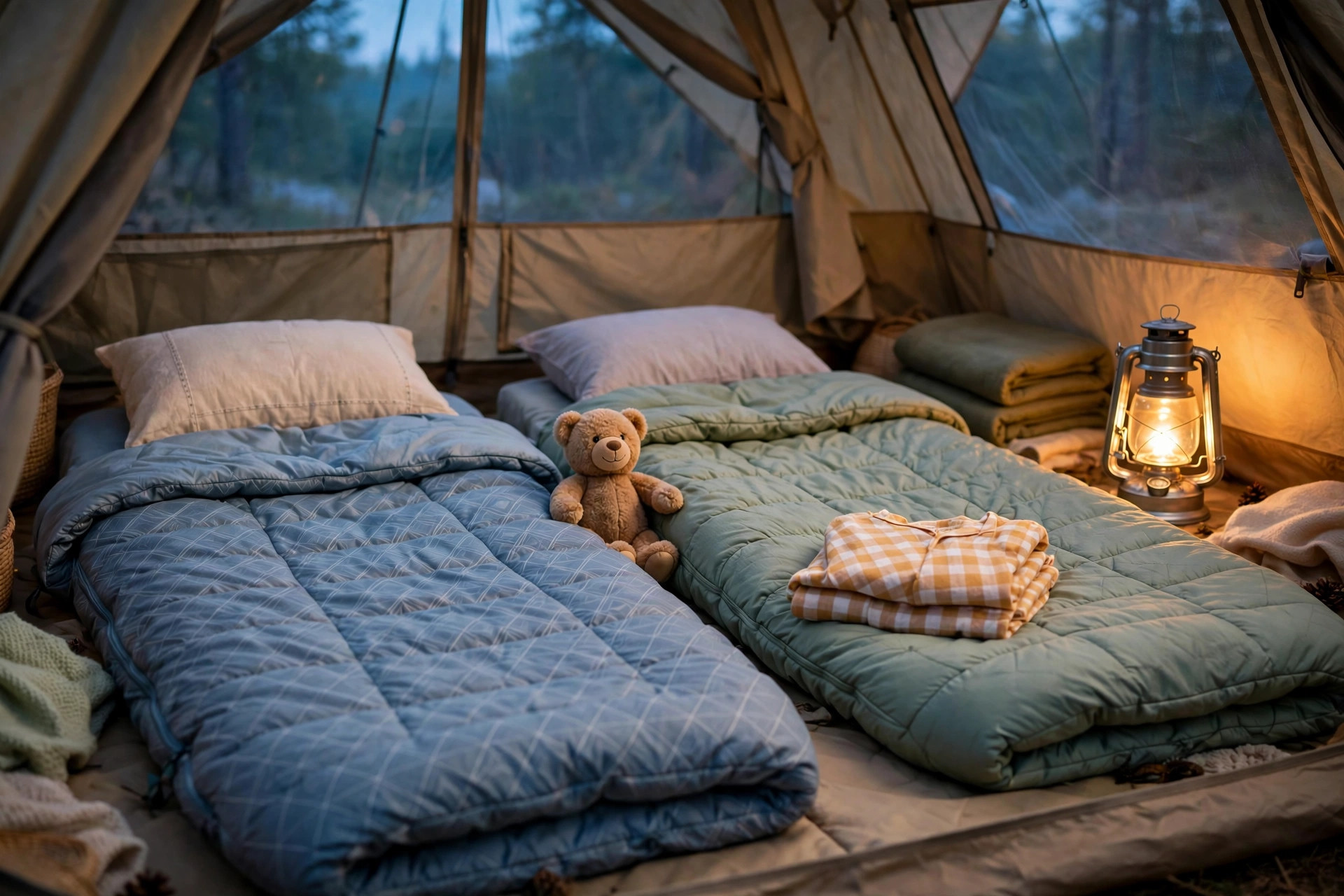
Sleep is where family camping trips are won or lost. Keep bedtime close to home time, even at camp. Bring the comfort item, the same pajamas they wear at home, and a familiar bedtime routine — story, song, lights out — shortened to fit the tent. Warmth matters more than you think: children lose heat faster than adults, so add a layer to their sleep setup and check their feet before you zip up for the night. Our guide on how to get kids to sleep while camping covers the full system, and how to keep kids warm while camping covers the layering system that actually works.
Before You Go: The 48-Hour Countdown
Packing goes wrong when it is rushed. Spread it over two days and this camping checklist with kids does the work for you:
- Two days before: check the weather forecast and the campground rules, charge every device and power bank, and confirm your reservation. The Recreation.gov site lists site details, fire rules and water availability for most federal campgrounds.
- One day before: lay out every item from the table on the living-room floor, tick it off as it goes into bags, and pack the car except for the cooler and the arrival bag.
- Morning of the trip: load the cooler, the arrival bag and the comfort items, do the driveway headcount, and leave early — arriving before dark is the single biggest predictor of a good first night.
- At the campsite: set up the tent and the kids’ sleep area first, before anything else. A ready bed means the evening stays calm even if dinner runs late.
For destination ideas and what to expect at different parks, the National Park Service camping pages are the most reliable starting point, and REI’s family camping checklist is a useful cross-check against your own list.
Frequently Asked Questions
What should I pack for camping with kids for the first time?
Start with the table in this guide: sleep gear, one outfit per day plus a spare, rain gear, snacks, water bottles, hygiene basics, a headlamp and a comfort item per child. Add the age notes for your child’s age group, keep the trip short and close to home, and do a practice run in the backyard first.
How many clothes should kids bring camping?
One full outfit per day plus one spare outfit, two sets of pajamas, and one warm layer. The spare outfit is usually used on day one, so it is not optional. Pack older clothes you do not mind staining.
What do toddlers need for camping that older kids don’t?
Toddlers need a travel crib or playpen, a camp high chair or booster seat, double the diapers you would use at home, a familiar sippy cup and comfort item, and a shaded, flat campsite near the bathrooms. They also need constant supervision near water and fire, so plan for one adult on toddler duty at all times.
What is the best age to start camping with kids?
There is no single right age — families camp successfully with babies from a few months old, and with toddlers, preschoolers and older kids. The key is matching the trip to the age: short, close-to-home trips with facilities for babies and toddlers, and longer, wilder trips as kids grow. Start small, keep it fun, and build up.
Emma is the editor of TravelAle, where she writes practical family camping and hiking guides from years of camping with her own kids across US national and state parks.
