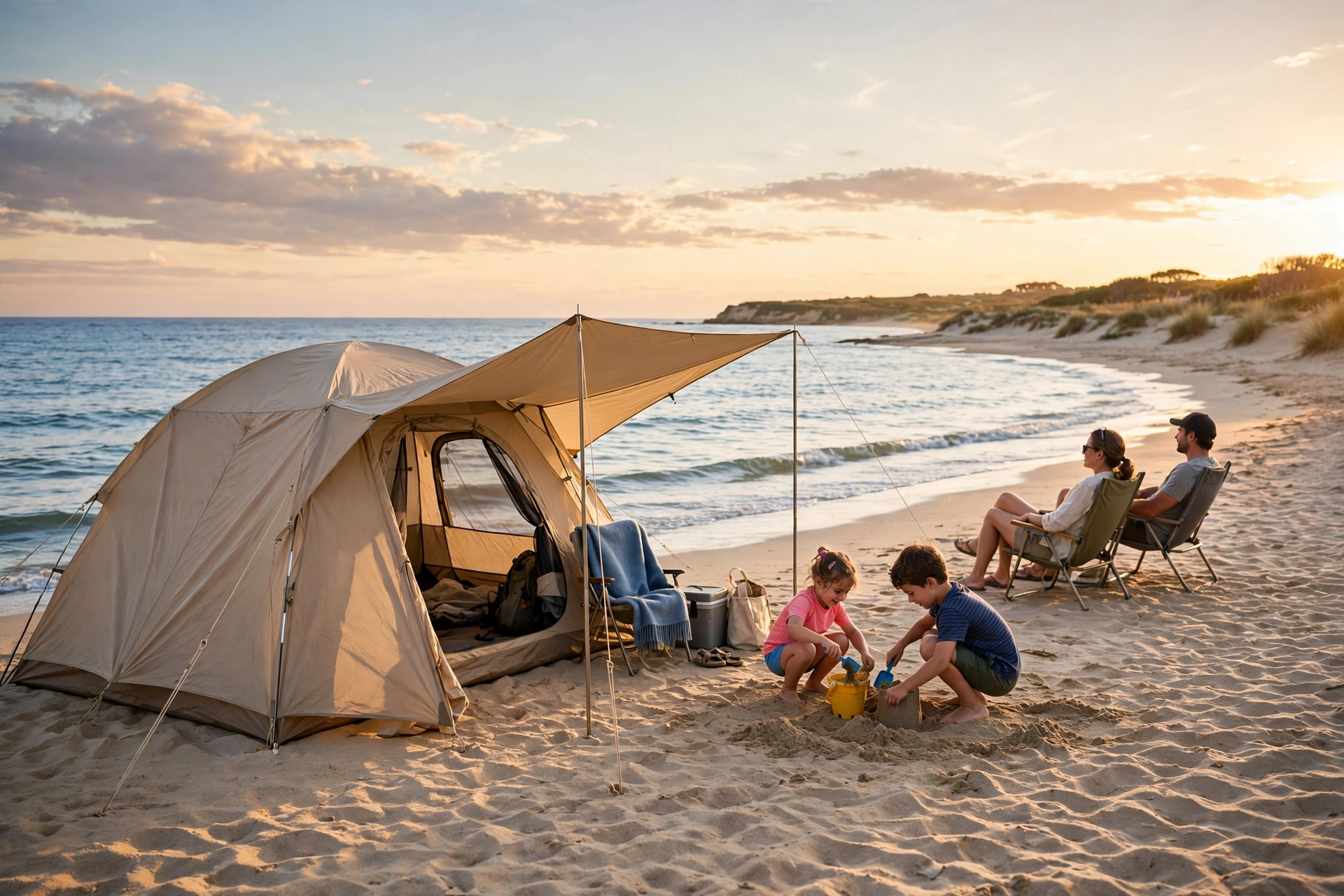
Beach camping with kids sounds like the perfect family trip — fall asleep to waves, wake up to sunrise over the water, and spend the day building sandcastles steps from your tent. But it is not the same as forest camping with a sea view: sand gets into everything, the tide moves while you sleep, wind never stops, and the sun is twice as strong with the reflection off the water.
This guide covers tides, tent setup on sand, water safety rules for children, a packing checklist, and the best family beach campgrounds in the US.
Why Beach Camping Is Different (and Worth It)
A beach campsite gives kids a giant natural playground that needs no equipment — sand, water, shells, and waves keep them busy for hours. But there is no shade unless you bring it, and the ground shifts under your tent.
Three things surprise first-time beach campers most:
- The tide: the waterline can move 100 feet or more between low and high tide. A perfect tent spot at 4 p.m. can be underwater at 4 a.m.
- The wind: coastal wind is constant and carries fine sand into tents, food, and eyes. Standard tent stakes pull straight out of dry sand.
- The sun: UV reflects off sand and water, so kids burn faster at the beach than in a backyard — even on cloudy days.
Each problem has a simple fix — plan for the beach as its own environment, not as “regular camping, but sandy.”
Pick the Right Beach Campground First
Not every beach allows camping, and not every beach campground is good for kids. Before you book, check these five things:
- Is camping allowed on the sand? Many public beaches ban overnight stays — look for campgrounds with designated beach sites; state parks and national seashores are the most reliable.
- Are there lifeguards? A staffed swimming area matters enormously with children — without lifeguards, swim only in calm, shallow water, within arm’s reach of younger kids.
- What facilities exist? Restrooms, fresh water, and outdoor showers turn a beach trip from gritty to comfortable — with toddlers, real bathrooms are worth a longer drive.
- What are the fire and pet rules? Some allow campfires only in metal rings or below the high-tide line; some ban fires in summer — check before you pack firewood.
- Do you need a permit or reservation? Popular beach campgrounds book out weeks or months ahead in summer, so reserve early and check whether you need a separate beach or camping permit.
Read the Tides Before You Pitch Your Tent
Tides are the most important beach camping safety skill, and they are easy to learn: most US coasts have two high tides and two low tides roughly every 24 hours, about six hours apart, with a height difference from 2 feet on the Gulf Coast to 10 feet or more on the Atlantic and Pacific coasts.
How to check tide times
Look up the tide chart for your exact beach and dates — free sources include NOAA tide predictions and most weather apps. Save a screenshot (signal is often weak) and tape the high-tide times inside the tent door.
The high-tide line rule
Pitch your tent at least 20–30 feet above the visible high-tide line, and higher if a storm or big swell is forecast — the debris line is your minimum, and storm waves reach further. If there is no obvious debris line, ask a ranger or campground host where the safe zone is. This one habit prevents the most common beach camping disaster: waking up to water under your sleeping bags.
Teach kids the tide, too: show them the high-tide line on arrival and explain that the water reaches it twice a day. Give each child a job — one checks the tide chart, one watches the water at lunch.
Setting Up Camp on Sand: Tents, Anchors, and Wind
A tent that holds fine in a forest meadow can blow away on a beach — sand has almost no grip, and coastal gusts are stronger than most families expect.
Use sand anchors, not regular stakes
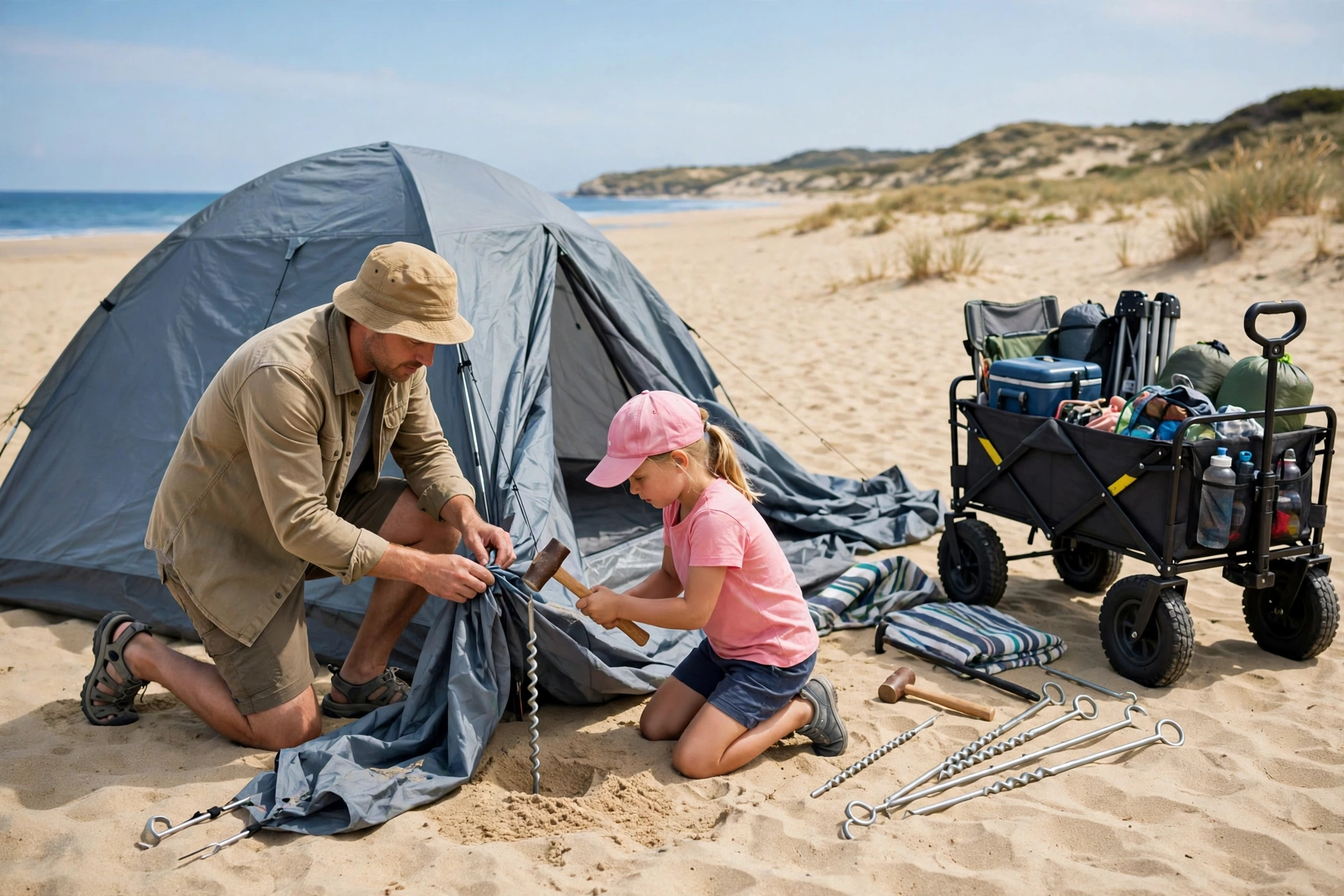
Standard stakes pull out of dry sand with a gentle tug. Use long sand stakes (at least 12 inches), sandbags, or a “deadman anchor” — a stuff sack filled with sand buried a foot deep with the guyline attached. Anchor every guyline, not just the corners.
Face the tent door away from the wind
On most beaches the wind comes off the water, so pitch the tent with its back to the sea breeze and the door toward the dunes. This keeps sand out and stops the wind from turning your tent into a sail. If the wind shifts, close the rainfly vents on the windward side.
Keep sand out of the tent
Sand in the sleeping area ruins a beach trip fast. Put a cheap doormat at the tent door and make it a rule: shoes off, feet brushed before entry. Keep a small brush and dustpan inside the door for a quick sweep before bed, store clothes in zip bags, and shake out sleeping bags each morning — sand works its way in overnight no matter what you do.
A groundsheet protects the tent floor from sharp shells, and a second tarp gives you a shaded cooking area — beach campsites rarely have natural shade.
Water Safety Rules for Kids at the Beach
Water is the reason you came, and the biggest risk — drowning is fast and quiet, and at a busy beach it is easy to assume someone else is watching. Make the rules clear before anyone touches the water:
Age-by-age water rules
Toddlers (under 3): within arm’s reach of an adult at all times near water — no exceptions, even in ankle-deep water. A small inflatable pool at the campsite gives them safe splash time.
Ages 4–7: swim only in the designated area, only with an adult in the water with them, and wear US Coast Guard-approved life jackets if they can’t swim well — even in shallow water. Teach them that waves knock you down: sit down when a big wave comes instead of running from it.
Ages 8 and up: strong swimmers can go to waist depth with a buddy while an adult watches from shore. Teach them about rip currents: if caught, don’t fight it — float, stay calm, and swim parallel to the shore until free.
The watcher system
Designate one adult as the “water watcher” in 20–30 minute shifts — that adult does nothing else: no phone, no cooking, no reading. Rotate the job so it stays fair. Other rules: never swim alone, never swim at night, and never let kids play near rocks, jetties, or piers where currents are strongest. Ask the lifeguard or ranger about the day’s conditions on arrival — rip current risk changes daily.
Sun, Heat, and Sand: Keeping Kids Comfortable
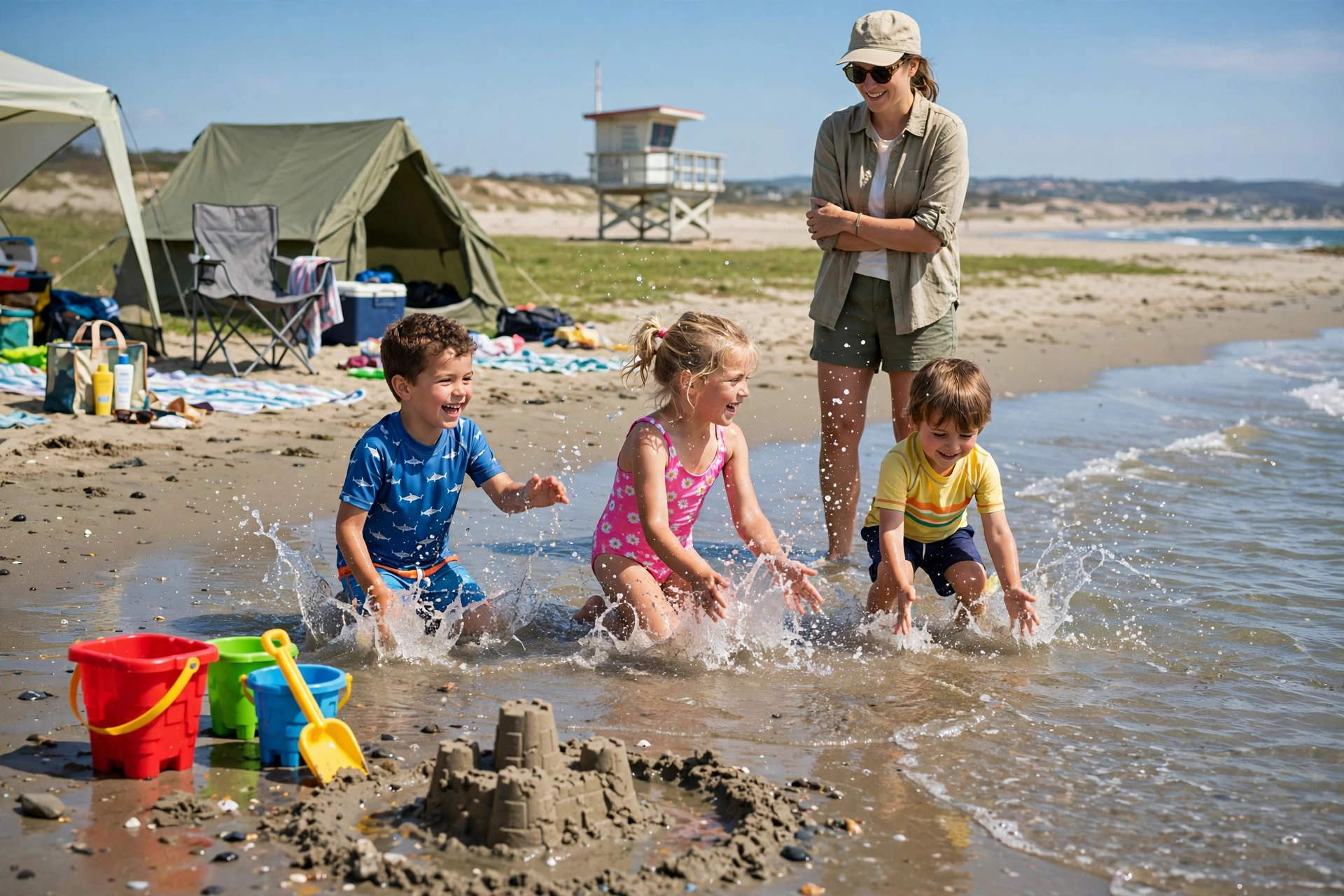
Beach sun is stronger than most parents expect — UV reflects off sand and water, so shade from a hat or umbrella only blocks part of it. Treat sun protection as a system, not a single product:
- Shade first: bring a pop-up canopy or beach tent as well as your sleeping tent — kids need a cool place to retreat at midday, and you need shade for cooking and meals.
- Clothing: long-sleeve rash guards and swim shirts protect better than sunscreen alone and don’t wash off. Wide-brim hats beat baseball caps for ears and necks.
- Sunscreen: apply SPF 50 broad-spectrum sunscreen 30 minutes before sun exposure, reapply every two hours and after every swim — even with “water-resistant” formulas. Use reef-safe sunscreen where the beach requires it.
- Hydration: kids dehydrate fast in sun and wind — keep a water jug at the campsite and hand out drinks on a schedule, not just when kids ask. For more on keeping kids cool, see our desert camping heat safety guide.
Watch for heat exhaustion: headache, nausea, dizziness, or unusual tiredness in a child means shade, water, and rest immediately. If symptoms don’t improve quickly, seek medical help.
Beach Camping Packing Checklist for Families
Beach camping needs a few items forest campers never think about — use this checklist on top of your normal camping kit:
| Category | Beach-specific items |
|---|---|
| Shelter | Tent + sand stakes or sandbags, groundsheet, pop-up shade canopy, extra tarp |
| Sleep | Sleeping bags + pads, extra blanket for wind chill |
| Sun & heat | SPF 50 reef-safe sunscreen, rash guards, wide-brim hats, sunglasses, water jug |
| Water safety | USCG-approved life jackets for young kids, water shoes, first aid kit |
| Sand control | Doormat, small brush + dustpan, zip bags, baby powder (removes sand from skin) |
| Food & cooking | Cooler with ice, windproof stove or grill, sealed food containers, extra water |
| Fun | Buckets, spades, sandcastle molds, beach ball, kites, tide-pool net, headlamps |
Leave out anything you don’t want full of sand. Bring more water than you think you need — there is rarely a tap on the sand.
For a complete first aid list, check our family camping first aid kit guide before you pack.
Best Family Beach Campgrounds in the US
These well-established, family-friendly beach campgrounds allow tent camping near the beach, and all reward early booking:
- Assateague Island National Seashore (Maryland/Virginia): wild horses, wide beaches, and oceanside and bayside campgrounds. Sites are primitive — no hookups — but unforgettable. Book well ahead of summer.
- Bahia Honda State Park (Florida Keys): often called the best beach in the Florida Keys, with calm shallow water for younger children. Sites book out fast — reserve the moment your dates open.
- Cape Henlopen State Park (Delaware): gentle surf, bike trails, and a campground a short walk from the sand — a great first beach trip for families with toddlers.
- Huntington Beach State Park (South Carolina): three miles of beach, a nature center, and shaded campsites under live oaks — beach days plus wildlife and trails.
- Padre Island National Seashore (Texas): miles of undeveloped Gulf beach, with primitive camping allowed by permit — best for families with older kids who like a wilder experience.
Check the park’s official page before you travel — rules and reservation windows change seasonally. Our best family beaches on the US East Coast guide compares great day-trip beaches too.
Food, Fires, and Nighttime at the Beach
Evenings are the best part of beach camping:
- Campfires: only where allowed, only in designated rings or below the high-tide line where rules permit. Bring your own firewood — driftwood is often protected and burns poorly. Read our campfire safety rules for families before the trip and teach kids the fire circle boundary.
- Food storage: salt air and sand get into everything, so keep food in sealed hard containers. At night, store food in the car or a sealed cooler — raccoons patrol beach campgrounds after dark. Our bear country food storage guide covers the same sealed-storage habits, which work just as well against raccoons and gulls.
- Night walks: a moonlit beach walk is magical with kids — bring headlamps, stay together, and keep children away from the water’s edge at night, when tides, waves, and footing are harder to judge.
- Sleep: beach nights can be chilly even after hot days — pack an extra layer for every sleeper, and a thick sleeping pad, since sand under the tent floor feels lumpy. For more sleep tips, see how to get kids to sleep while camping.
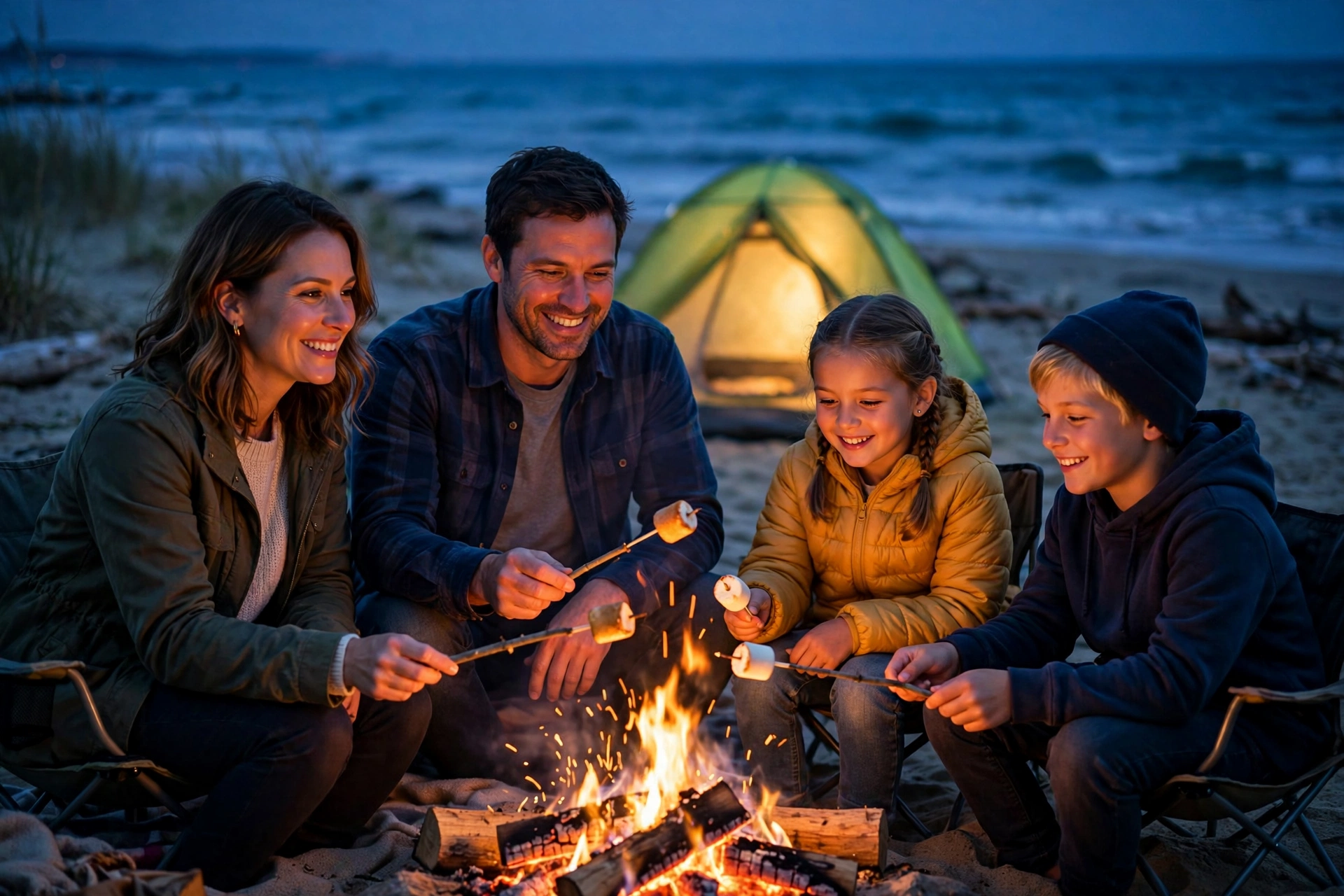
Beach camping gets easier every time you do it. The first trip is about learning the tides, the wind, and the sand — by the second, your family will have its own system.
Frequently Asked Questions
Is beach camping safe for toddlers?
Yes, with the right campsite and rules. Choose a beach with lifeguards, calm water, and facilities, keep toddlers within arm’s reach near water, use a small splash pool at the campsite, and set up camp well above the high-tide line.
How do I keep sand out of the tent?
Use a doormat and foot brush at the tent entrance, make shoes-off a strict rule, and store clothes in zip bags. A groundsheet helps, and a quick sweep before bed keeps the sleeping area comfortable.
Can you camp directly on the beach?
Some national seashores and state parks allow camping on designated beach sites, while many public beaches ban overnight stays entirely. Check the official park page before you go — and never camp below the high-tide line.
What is the best tent for beach camping with kids?
Look for strong wind resistance, good ventilation, and a full rainfly — beach weather changes fast. More important than the tent are the anchors: long sand stakes or sandbags are essential, since regular stakes pull out of sand.
Do I need a permit to camp on the beach?
Often, yes. Many beach campgrounds require a reservation, and some (like Padre Island National Seashore) require a separate beach camping permit. Check the park’s official website or recreation.gov before your trip and book early — popular sites fill up weeks ahead in summer.
