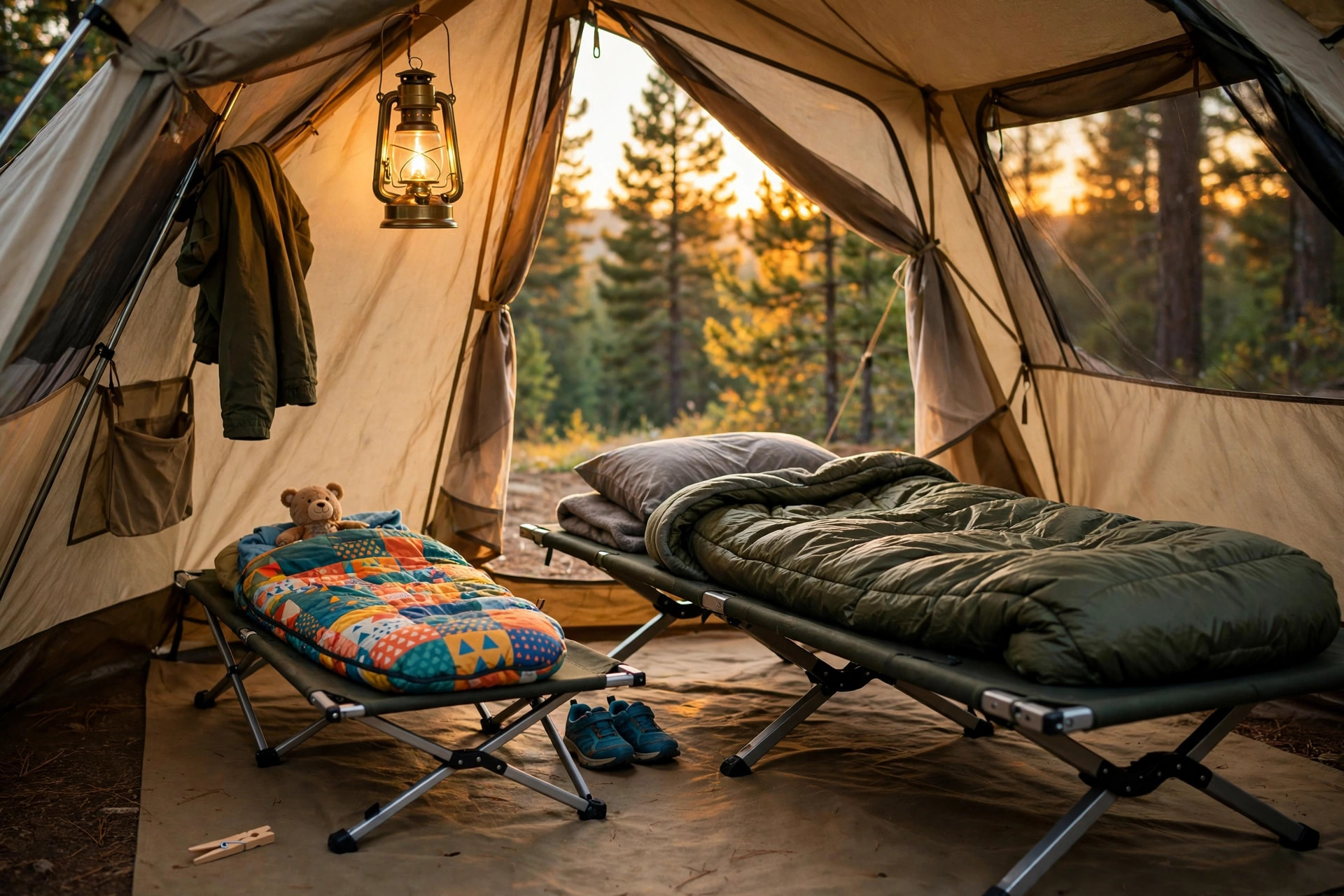
If your kids wake up cold, damp, and cranky after a night on the tent floor, the problem probably isn’t their sleeping bag — it’s what’s underneath them. The best camping cots for kids lift your child off the cold ground, keep them dry when condensation pools on the tent floor, and give them a bed that actually feels like a bed.
But not every cot suits every child. A toddler needs a low, stable bed they can’t roll out of. A nine-year-old needs length and a weight limit with room to grow. This guide covers how to choose, compares the best options by age, and covers the setup and safety details most roundups skip.
Why a Cot Beats a Sleeping Pad for Kids
Sleeping pads are fine for adults who know how to stay on them. Kids roll, sprawl, and slide off pads in their sleep — then wake up at 2 a.m. lying on cold tent fabric. A cot solves three problems at once:
- Insulation from the ground: Cold ground steals body heat all night. A cot puts several inches of air between your child and the ground, which makes a real difference on chilly spring and fall nights.
- A dry sleeping surface: Condensation and spilled water pool on the tent floor. On a cot, your child’s sleeping bag stays dry.
- A real edge: The frame gives kids a sense of where the bed ends, so they roll less and sleep longer — which means you sleep longer too.
Cots also double as a daytime seat and a place to stash a stuffed animal or a book. The trade-off is bulk: even the lightest kids’ cot takes up more space than a foam pad, so plan tent and car space around them.
How to Choose a Camping Cot for Your Child
Start with your child’s age, height, and weight — then check the cot against those numbers, not the marketing photos:
| Age group | Typical height | What to look for | What to avoid |
|---|---|---|---|
| Toddlers (2–5) | Under 48 inches | Low height (under 10 inches), sturdy frame, fitted sheet option | Adult cots, high bunk setups, inflatable beds with no rails |
| Younger kids (5–8) | 48–54 inches | Length of at least 55 inches, weight limit of 100+ lbs | Cots shorter than your child, flimsy fabric |
| Older kids (7–12) | 54–60 inches | Length of 60+ inches, weight limit of 150–200 lbs, room to grow | Toddler cots they have outgrown, cots with no side support |
| Teens | Over 60 inches | Adult-size cot or a youth bunk rated to 200 lbs | Anything marketed as a “kids” cot under 60 inches long |
Five checks before you buy
1. Weight limit with headroom. Check the manufacturer’s stated weight limit and leave at least 20–25 lbs of headroom. A cot rated to 75 lbs is fine for a 45-lb five-year-old but will be outgrown fast by a sturdy eight-year-old.
2. Packed size and weight. A cot that weighs 12 lbs and packs to the size of a camp chair is a different proposition from one that folds to a 24-inch roll. If you car camp, weight matters less; if you walk far from the car, it matters a lot.
3. Setup effort. Some cots unfold in ten seconds. Others need two adults and a foot lever. Practice at home before the trip — the campsite at 9 p.m. in the rain is the wrong place to learn a new frame mechanism.
4. Height off the ground. Lower is better for toddlers (less far to fall, easier to climb in and out). Older kids do fine on standard-height cots of 12–16 inches, which also leave storage space underneath.
5. Fabric and frame. Look for 600-denier polyester or similar heavy fabric and a steel or aluminum frame with locking legs. Mesh panels help with airflow on hot nights. Avoid cots with exposed pinch points near the folding joints.
Best Camping Cots for Kids by Age
Below are the options that come up again and again in parent reviews and family camping guides, grouped by who they suit. Prices change by season and retailer, so check the current price before you buy.
Best for Toddlers (Ages 2–5): Regalo My Cot Portable Toddler Bed
This is the cot most camping families start with. It measures about 48 by 24 inches and sits just 9 inches off the ground, low enough for a toddler to climb in and out alone. The steel frame supports children up to 75 lbs, and a fitted sheet is included.
Why parents like it: It folds flat in seconds, weighs little, and works just as well for naps at grandma’s house as it does at the campsite. The low height means even a restless sleeper has a short fall.
Watch out for: At 48 inches long, most kids outgrow it by age five or six. It is a toddler bed, not a grow-with-me bed. Pair it with a thin foam pad or a folded blanket for extra comfort on cold ground.
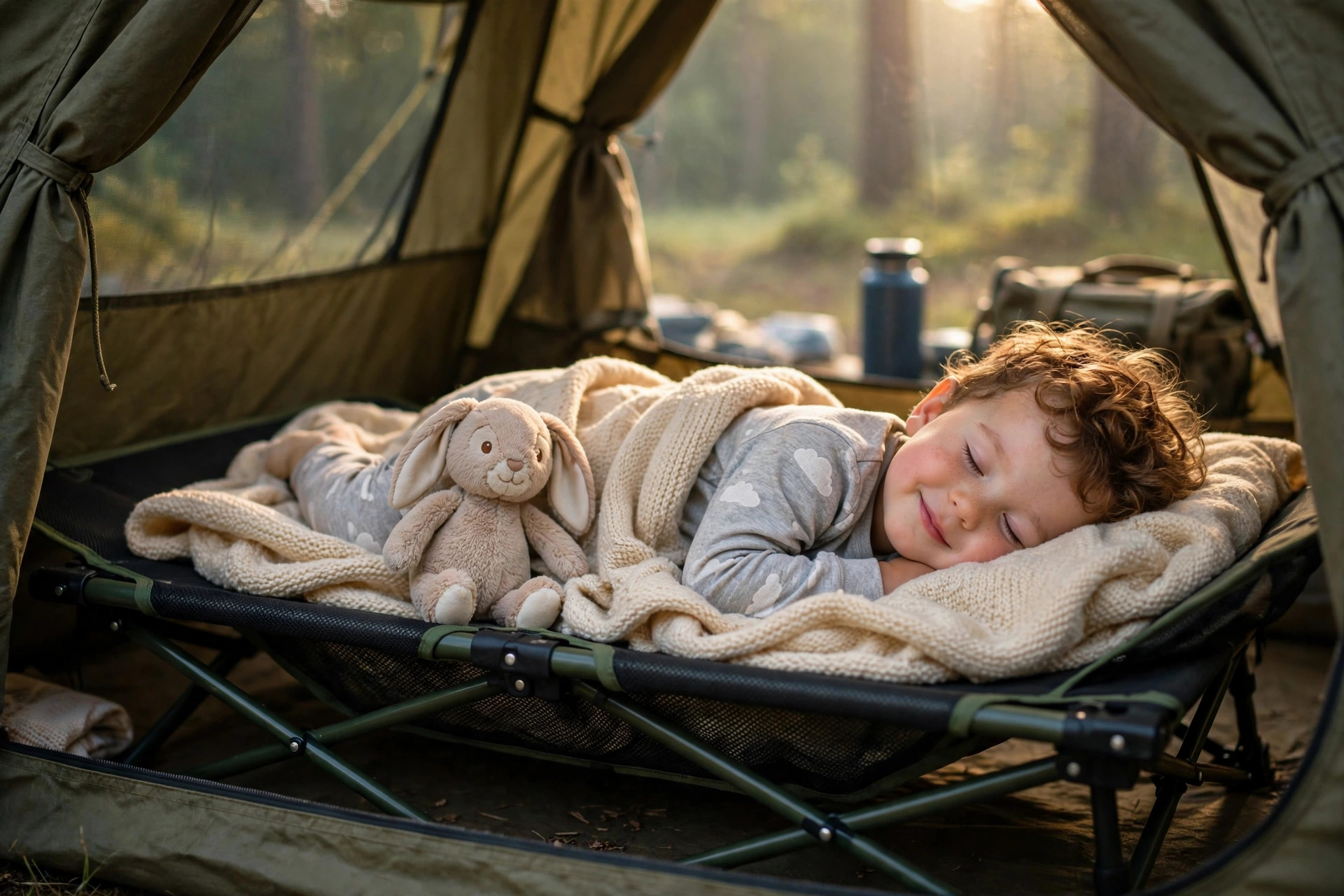
Best for Younger Kids (Ages 5–8): Joovy Foocot
The Joovy Foocot is a step up in size and sturdiness. It fits children up to 48 inches tall or 75 lbs, with a steel frame and tough polyester fabric, plus a small storage pocket for a book or headlamp and a carry bag.
Why parents like it: It feels like a real bed rather than a daycare nap mat, and the pocket keeps a child’s nighttime essentials within reach.
Watch out for: The 48-inch height limit arrives sooner than you think — measure your child, not their age. If your seven-year-old is already 50 inches tall, skip straight to a youth or adult-size cot.
Best for Older Kids (Ages 7–12): Disc-O-Bed Youth Kid-O-Bunk
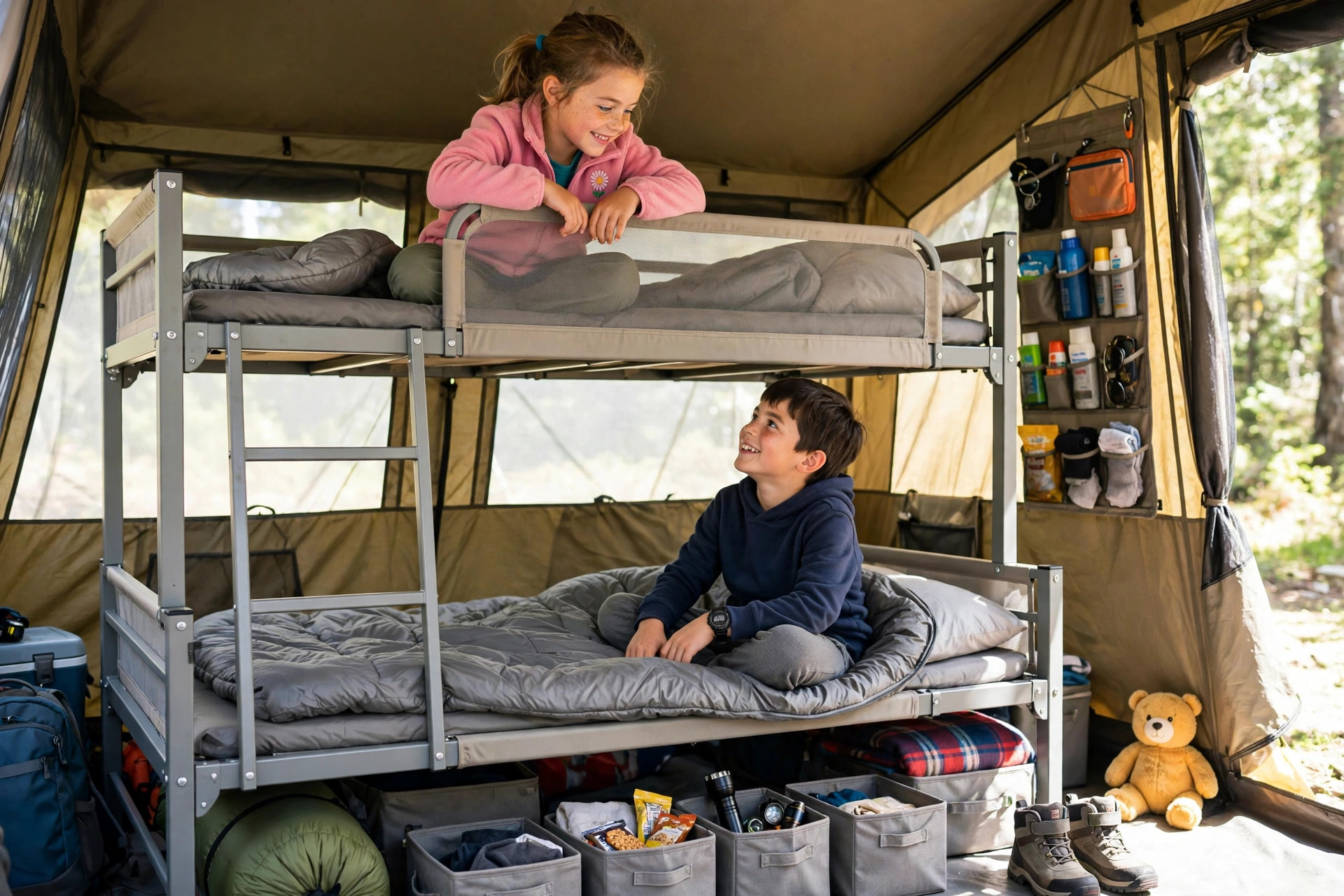
The Kid-O-Bunk is really two cots in one set. Each cot is 65 inches long and rated to 200 lbs, with locking straps and stack adapters so the pair can be used side by side or stacked as a bunk. Two storage organizers and two carry bags are included.
Why parents like it: Two kids, one footprint — stacked bunks free up serious tent floor space. The 200-lb limit means the cots last through the pre-teen years.
Watch out for: The set is heavier and bulkier than a single cot, and stacking takes a few minutes of fiddling the first time. Always use the locking straps when bunked, and put the heavier child on the bottom. The bunk configuration is not for children under seven.
Best Budget Extra Cot: REDCAMP Extra Long Kids Cot
For families who need a spare bed for a guest, a second child, or a growing kid who has outgrown the toddler cot, the REDCAMP kids cot is a straightforward folding cot: steel frame, 53-by-26-inch sleeping surface, carry bag included.
Why parents like it: It does the job — off the ground, sturdy, easy to fold — without a premium price tag. Good as a second or third cot when you are kitting out the whole family.
Watch out for: The fabric and stitching are not as heavy-duty as premium cots, so inspect the seams before the first trip. Bring a thin pad on top for comfort.
Quick Comparison: The Best Camping Cots for Kids
| Cot | Best for | Length | Weight limit | Standout feature |
|---|---|---|---|---|
| Regalo My Cot | Toddlers 2–5 | ~48 in | 75 lbs | Low height, fitted sheet included |
| Joovy Foocot | Kids 5–8 | ~48–52 in | 75 lbs | Storage pocket, carry bag |
| Disc-O-Bed Kid-O-Bunk | Kids 7–12 (two kids) | 65 in | 200 lbs per cot | Stacks as a bunk, organizers |
| REDCAMP Kids Cot | Budget spare bed | 53 in | Check listing | Low price, carry bag |
A note on the numbers: lengths and weight limits come from manufacturer listings, which change between model years. Confirm the current specs before you buy, and measure your child.
Setting Up Your Kids’ Cots for a Good Night’s Sleep
A cot alone is not a sleep system. Pair it with the right layers and your kids will sleep through the night instead of waking you at 3 a.m.
- Add a thin pad or blanket on top. Cot fabric can feel cold and taut. A closed-cell foam pad, a folded fleece blanket, or a self-inflating pad adds cushioning and insulation.
- Use the right sleeping bag. A bag rated for the expected overnight low matters more than the cot. Check the forecast, then check your bag’s rating — and bring one extra blanket per child.
- Place cots away from the tent walls. Tent walls collect condensation, and a sleeping bag touching the wall wicks moisture all night. Leave a few inches of gap.
- Keep the tent floor clear underneath. Store shoes and gear under the cot, not scattered where a child will step on them during a midnight bathroom trip.
- Do a practice run at home. Set up the tent and cots in the backyard for one night before the real trip. Everyone sleeps better on night one.
If sleep is the thing that worries you most about camping with kids, our guide on how to get kids to sleep while camping covers bedtime routines, white noise, and the small comforts that make the biggest difference. Before you head out, check the National Park Service camping pages for campground rules and reservation details at the park you are visiting.
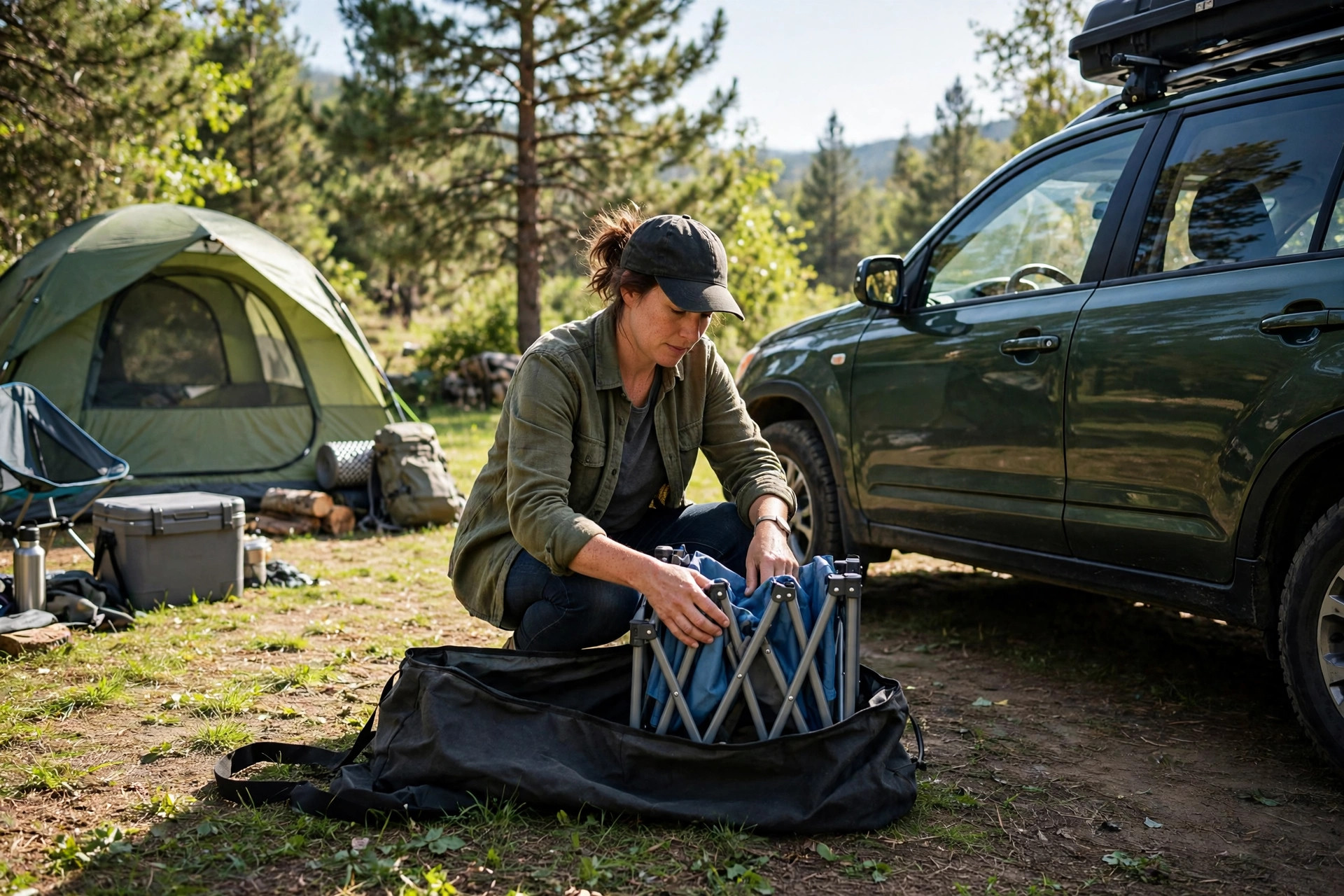
Do Cots Actually Fit in a Family Tent?
Before you buy, measure your tent’s floor and sketch the layout. A typical four-person tent has about 55–60 square feet of floor — two kids’ cots and one adult cot can fill it fast.
As a rule of thumb: a cot needs its own footprint plus about 12 inches of walkway. Two kids’ cots side by side need roughly 55 inches of width. If your tent is tight, the bunk configuration of a set like the Kid-O-Bunk is the most space-efficient option for two children. And a tent sized for a family of five gives you far more layout freedom — our roundup of the best family camping tents for 2026 covers the options by family size. Popular campgrounds book up fast in summer, so reserve your site early through Recreation.gov once you know your tent and cot layout.
Safety Checklist for Kids’ Camping Cots
Cots are simple gear, but a quick safety check each trip prevents the most common problems:
- Inspect the frame and fabric before every trip — look for bent poles, torn stitching, and cracked plastic joints.
- Lock every leg and joint. A partially locked leg can fold under a child’s weight.
- Never let kids jump or bounce on a cot. The frames are built for sleeping weight, not trampoline duty.
- Keep cots clear of the tent door and the campfire. A child climbing out in the dark should not trip over a cot leg.
- For bunked cots, use all locking straps, put the heavier child on the bottom, and never let a child under seven sleep on the top bunk.
- Pack a small repair kit: duct tape and a spare cot pin or two weigh almost nothing. Our family camping first aid kit list covers the rest of the safety gear you should never leave home without.
Frequently Asked Questions
What age can a child start sleeping on a camping cot?
Most manufacturers rate toddler cots for ages two and up, once a child can climb in and out safely and no longer needs crib rails. Younger babies should sleep in a travel crib, not on an open cot.
Are camping cots safe for kids?
Yes, when the cot is the right size for the child and is set up correctly. Choose a cot with a weight limit well above your child’s weight, lock all legs and joints, and keep the cot low for younger kids.
Do kids need a sleeping pad on top of a cot?
A pad is not required, but it helps a lot. A thin foam pad or folded blanket adds cushioning and insulation, because air circulates under a cot and can feel cool on cold nights.
How much weight can a kids’ camping cot hold?
Toddler cots are typically rated to 75 lbs, mid-size kids’ cots to 75–150 lbs, and youth bunk cots like the Disc-O-Bed Kid-O-Bunk to 200 lbs per cot. Always check the manufacturer’s current rating and leave headroom for growth.
Can two kids share one camping cot?
Sharing is not recommended unless the cot is specifically designed for it. Most kids’ cots are rated for one child. A bunk set or two separate cots is the safer and more comfortable option.
What is better for kids: a cot or an air mattress?
For camping, a cot usually wins. It cannot puncture or deflate in the middle of the night, it keeps kids off the cold ground, and it stays put. Air mattresses are softer but can leak, slide around, and leave kids cold from below.
A good night’s sleep changes everything about a family camping trip. Pick a cot that fits your child’s size today with room to grow, practice the setup at home, and pair it with a warm sleeping bag — and the whole family will wake up ready for the trail.
