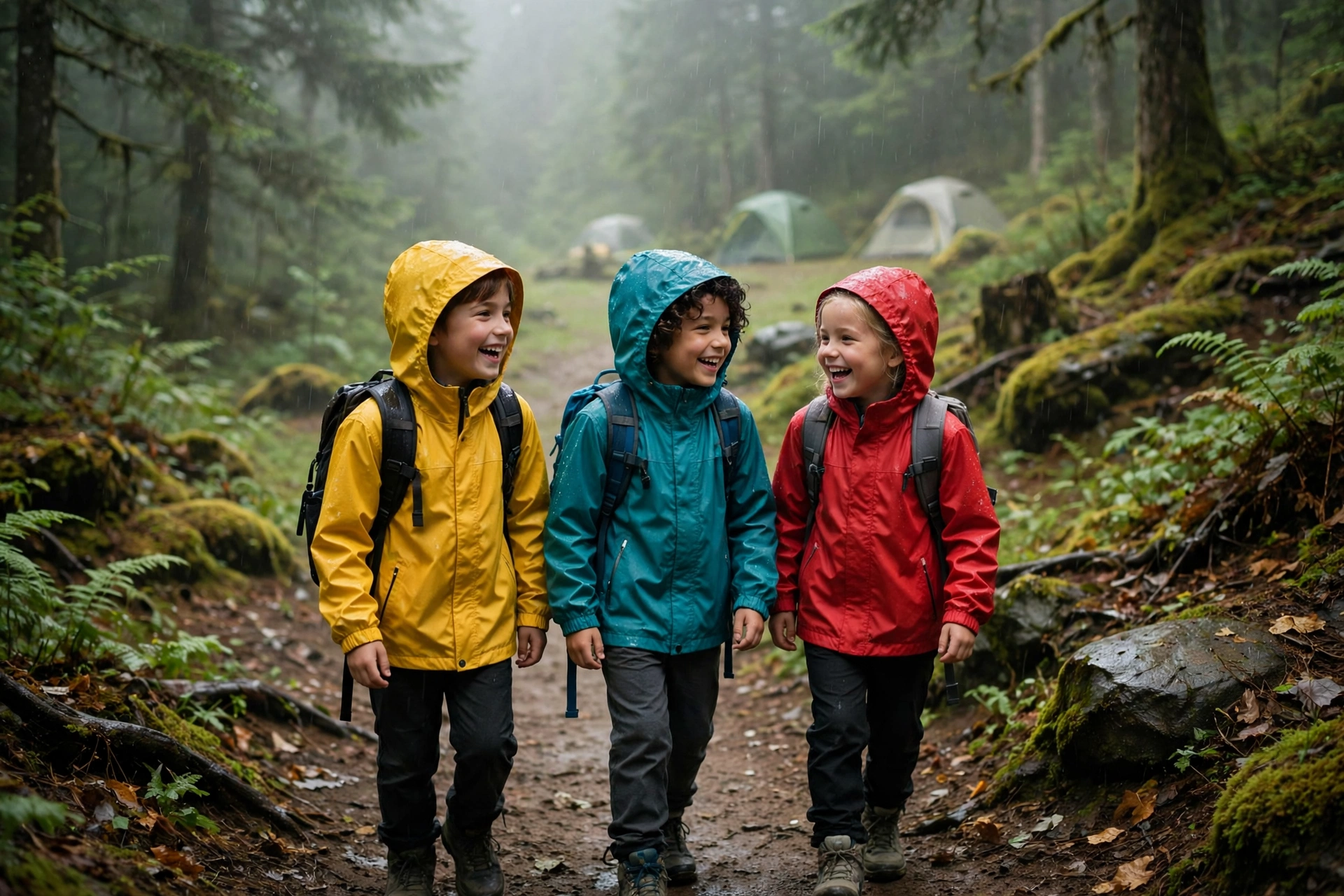
A wet, shivering kid can end a camping weekend faster than a flat tire. The best rain jackets for kids keep your child warm enough, comfortable enough, and willing enough to stay outside when the sky turns gray. This guide breaks down what matters when shopping for kids’ rain gear, compares the strongest 2026 options by age and use-case, and shows you how to size for growth without drowning your kid in fabric.
What Actually Matters in a Kids’ Rain Jacket
Before we get to specific picks, learn the five things that separate a jacket that works from one that leaks, overheats, or never gets worn.
Waterproof vs. water-resistant: learn this first
“Waterproof” means the fabric blocks rain from passing through, period. “Water-resistant” handles light rain or mist for a while — then soaks through. For a camping or hiking trip where a shower can turn into hours of drizzle, you want waterproof. REI’s expert guide to kids’ rain gear covers the technical categories in more depth.
Sealed seams and a DWR finish
Water finds the stitching first. Look for fully sealed (taped) seams and a durable water repellent (DWR) finish — the coating that makes raindrops bead up and roll off. When DWR wears off (usually after a season or two), the jacket feels clammy even if the membrane still works. That’s normal, and fixable — see the reproofing section below.
Breathability matters more than you’d think
Kids are furnaces. An active child hiking uphill in a non-breathable plastic-style raincoat can end up just as wet from sweat as from rain. For kids who actually move outdoors, look for jackets marketed as waterproof/breathable. For a toddler who mostly rides in the carrier or plays in puddles, a simple non-breathable slicker is cheaper and perfectly fine.
The fit-for-growth sizing strategy
Kids grow mid-season. The classic parent trick is buying big — but a rain jacket that’s two sizes too big is a safety and comfort problem: sleeves slide over hands, the hood eats the whole head, and water runs in at every gap. The sweet spot:
- Buy ONE size up from the current fit, not two.
- Sleeves should end at the wrist bone when arms hang relaxed — a little past is fine, past the fingertips is not.
- Check the hood: your child should be able to turn their head and still see sideways. An adjustable or elastic hood matters more than hood size.
- Leave mid-layer room: you should be able to pinch about an inch of fabric at the sides with a fleece on underneath. If you can’t, size up for cold-weather camping.
Camp-specific details worth paying for
Elastic or adjustable cuffs, a longer back hem (sits-on-wet-logs insurance), reflective accents for dusk visibility around the campground, and packability — a jacket that stuffs into its own pocket earns its place in the daypack.
The Best Rain Jackets for Kids in 2026
A note on how these picks were chosen: this isn’t a “we bought and lab-tested everything” claim. Each recommendation is based on published waterproof/breathability specs, manufacturer sizing ranges, and patterns across parent reviews and camping-forum discussions — with honest notes on who each jacket suits and who should skip it. Price tiers are labeled budget / midrange / premium because exact prices change constantly; check current pricing at your favorite retailer.
| Jacket | Best for | Waterproof type | Price tier |
|---|---|---|---|
| Columbia Youth Watertight / Switchback II | Best overall value, ages 4–12 | Waterproof (sealed seams) | Budget–midrange |
| One-piece rain suit (Jan & Jul style) | Toddlers & preschoolers, puddle play | Waterproof PU shell | Midrange |
| REI Co-op Rainier (Kids/Toddler) | Active kids, longer hikes | Waterproof/breathable membrane | Midrange |
| Marmot PreCip Eco (Youth) | Older kids & teens who hike far | Waterproof/breathable coating | Midrange |
| Simple EVA packable raincoat | Emergency stash in the daypack | Waterproof, non-breathable | Budget |
| Patagonia Kids’ Torrentshell 3L | Wet climates, serious weather | Waterproof/breathable 3-layer | Premium |
1. Columbia Youth Watertight / Switchback II — best overall value
The Watertight (and its close sibling, the Switchback II) is the workhorse pick: fully seam-sealed, packable into its own pocket, and available in a huge size run starting at toddler XXS. Parents consistently praise the adjustable hood and the price-to-durability ratio — it’s the jacket that survives being handed down.
Who it’s for: most kids ages 4–12, occasional-to-regular campers, budget-conscious families.
Who it’s NOT for: kids doing long hikes in warm weather — it’s not the most breathable option, so hard-charging older kids can overheat.
Honest cons: mid-tier breathability; the hood adjustment on the youngest sizes can be fiddly for small kids to operate alone.
2. One-piece rain suit (Jan & Jul–style) — best for toddlers and preschoolers
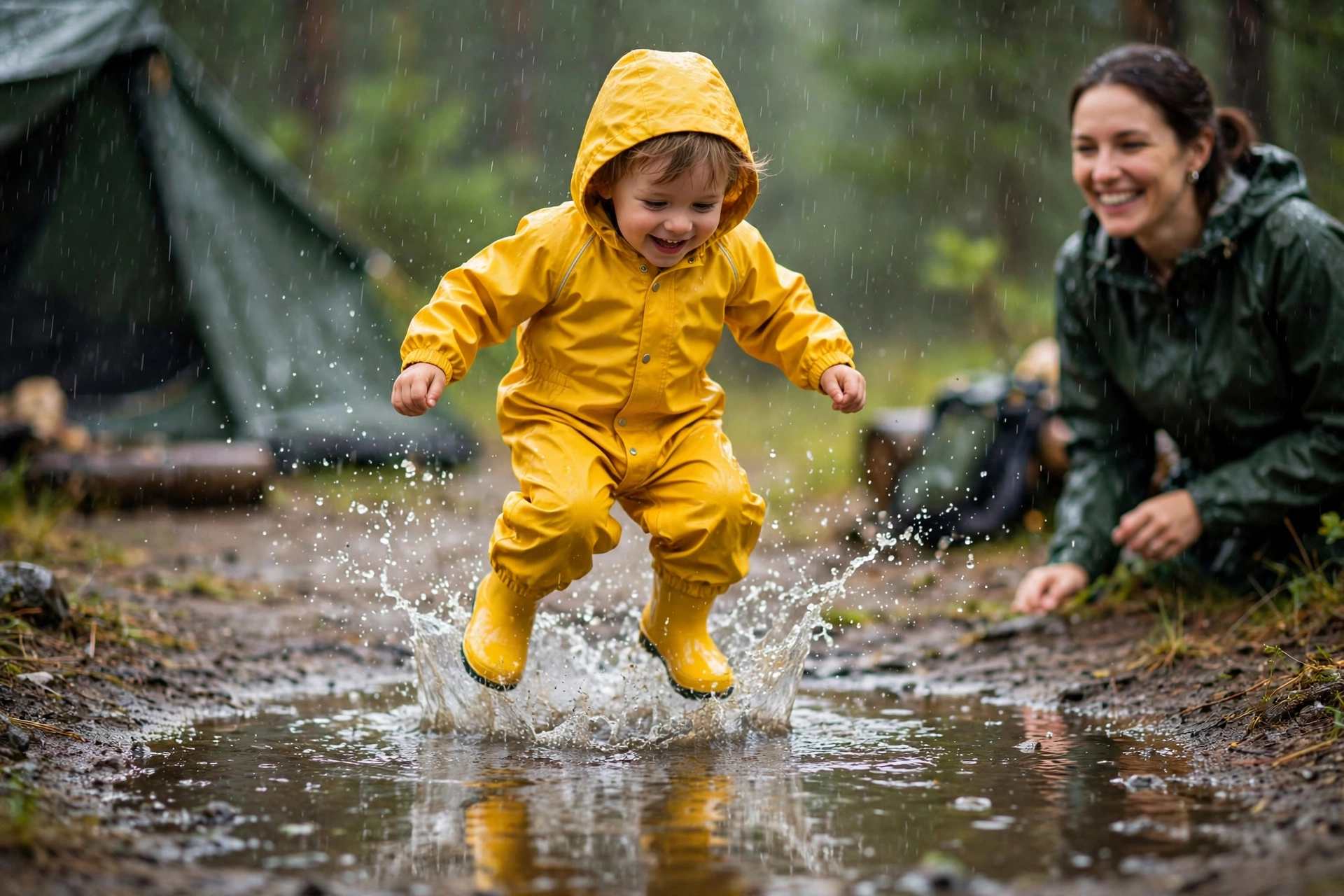
For kids under about 5, a one-piece rain suit beats a jacket-and-pants combo: no gap at the waist for rain and mud to sneak through. Look for snap closures rather than zippers — much easier for kids who haven’t mastered zippers yet — plus an adjustable hood and reinforced knees.
Who it’s for: ages 1–4, puddle stompers, daycare-to-campground life.
Who it’s NOT for: actual hiking — one-pieces restrict movement and run hot on the trail.
Honest cons: bathroom breaks take longer; you’ll pay more than a basic slicker.
3. REI Co-op Rainier (Kids’ and Toddler) — best breathable performer
The Rainier is the pick for families who actually hike in the rain: a genuine waterproof/breathable membrane, fully seam-sealed, with toddler sizes down to 12 months and kid sizes through XL. It layers cleanly over a fleece, packs small, and comes in colors kids actually want to wear — which matters, because the best rain jacket is the one your kid doesn’t fight you about.
Who it’s for: active kids, hiking families, anyone camping in genuinely wet regions.
Who it’s NOT for: families who only need rain gear twice a year — the midrange price is overkill for occasional use.
Honest cons: slightly heavier than ultralight competitors; the toddler version’s cuffs could be snugger for very small wrists.
4. Marmot PreCip Eco (Youth) — best for older kids and teens
Older kids who cover real miles need what adults need: breathability. The PreCip Eco’s waterproof/breathable coating handles sustained activity without the clammy feeling, and the recycled face fabric is a plus for eco-minded families. Sizing runs youth XS–XL, covering roughly ages 8 through teen.
Who it’s for: kids 8+, teens, hiking and backpacking families.
Who it’s NOT for: toddlers or small kids (fit won’t work); families on a tight budget.
Honest cons: the coating-based membrane needs more frequent DWR refresh than membrane jackets; not the warmest-feeling shell on its own in cold wind.
5. Simple EVA packable raincoat — best emergency stash
Every family camping kit should have one of these living in the daypack: a featherweight EVA raincoat that costs very little and deploys in seconds when the sky surprises you. It’s not breathable and won’t survive a season of abuse — that’s not its job.
Who it’s for: backup/emergency use, fair-weather campers who just want insurance.
Who it’s NOT for: your primary rain jacket if you camp in real rain more than a couple times a year.
Honest cons: zero breathability; tears more easily than fabric jackets; minimal hood adjustability.
6. Patagonia Kids’ Torrentshell 3L — best for wet climates
If your family camps in the Pacific Northwest, the Appalachians, or anywhere “drizzle” is a lifestyle, the 3-layer Torrentshell earns its premium price: genuinely waterproof, properly breathable, and built without intentionally added PFAS.
Who it’s for: wet-climate families, all-day hikers, buy-once parents.
Who it’s NOT for: occasional campers — a premium price for a jacket used twice a year is hard to justify.
Honest cons: premium pricing; the athletic cut leaves less room for bulky mid-layers, so size thoughtfully for winter camping.
Rain Jacket Fit Guide by Age
The right jacket type changes as your kid grows. Here’s how to think about it by age band.
Toddlers (ages 1–3)
Prioritize one-piece rain suits and snap closures over zippers. Hiking with toddlers is really about short distances and carrier time, so breathability matters less than coverage — a simple waterproof suit is perfect.
Preschoolers (ages 3–5)
If your preschooler still loves puddles more than trails, stay with a one-piece suit. If they’re starting real hikes, move to a jacket + rain pants combo with elastic cuffs and hoods they can manage themselves. Bright colors and reflective details are useful at this age — you’ll spot them faster at a busy campground.
School-age kids (ages 6–12)
Now breathability starts to matter, because these kids run, climb, and hike for real. Choose a waterproof/breathable jacket with adjustable everything (hood, cuffs, hem) and enough room for a fleece underneath. Involve the kid in the choice — a jacket they’ll actually wear beats a technically superior one they hate.
Teens
Teens fit into youth XL or even adult XS/S sizes, which opens up the full adult rain-jacket market. Functionally, treat them like adult hikers: prioritize breathability and packability, because teens who feel clammy will simply refuse to wear the jacket — and a rain jacket in the backpack helps nobody.
Layering a Rain Jacket for Cold-Weather Camping
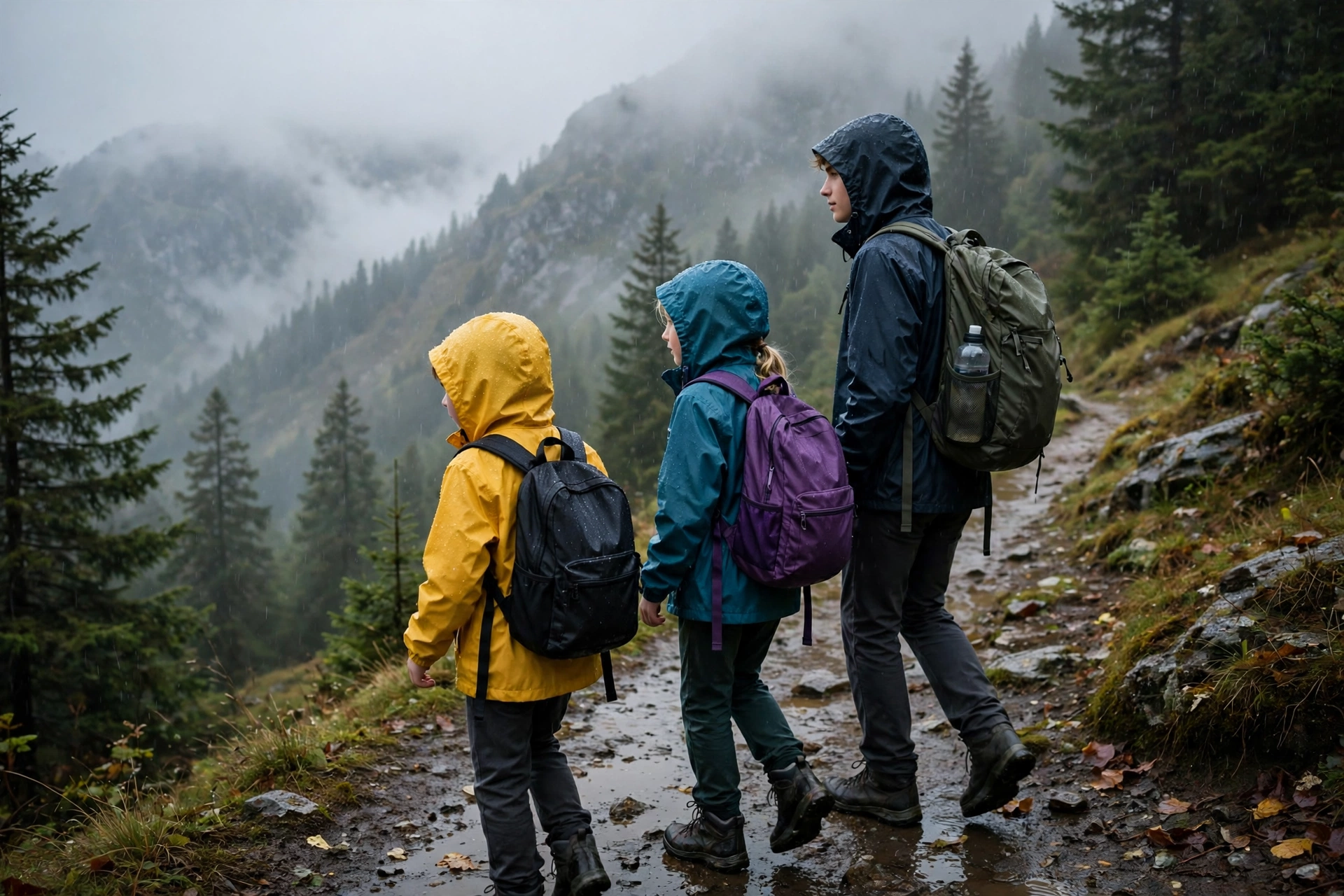
The single most common rain-jacket mistake: expecting the jacket to keep your kid warm. A rain jacket is a shell — its job is blocking wind and water. Warmth comes from the layers underneath: a moisture-wicking base layer, an insulating mid-layer (fleece or puffy), then the rain shell on top. Size the rain jacket with the mid-layer on — the fitting step most parents skip.
If you need the full system, our family camping layering guide walks through base, mid, and outer layers for every age, the family camping checklist makes sure rain gear actually makes it into the car, and REI’s family camping checklist is another handy packing cross-check.
Making It Last: Care and DWR Reproofing
Kids’ rain jackets take abuse, but most “worn out” jackets just need maintenance:
- Wash with a tech wash, not regular detergent — standard detergents leave residues that interfere with waterproof/breathable membranes.
- Hang dry (or tumble on low if the care label allows — heat actually reactivates some DWR finishes).
- Reproof when water stops beading: if rain soaks into the face fabric instead of beading up, spray on a DWR restorer or use a wash-in treatment. This one step can add another full season to a jacket.
- Store loosely, not crammed in a stuff sack for months — constant compression wears coatings faster.
Hand-me-down tip: a reproofed, quality hand-me-down jacket outperforms a brand-new cheap one. Check cuffs and hems for wear, reproof the DWR, and you’ve got a perfectly good second life.
Frequently Asked Questions
What’s the difference between waterproof and water-resistant kids’ jackets?
Waterproof jackets block rain from passing through the fabric entirely; water-resistant jackets handle light rain or mist for a short time, then soak through. For camping and hiking trips where rain can last hours, choose fully waterproof with sealed seams. Water-resistant is fine for school runs and brief showers.
How should a kids’ rain jacket fit — snug or roomy?
Roomy, but not sloppy: buy one size up to leave room for a fleece mid-layer, with sleeves ending around the wrist bone (not past the fingertips) and a hood your child can see out of when turning their head. Two sizes up is too much — the extra fabric catches water and trips kids up.
Can my child wear a rain jacket over a fleece or winter coat?
Yes — that’s exactly how the layering system works. Just make sure you size the rain jacket with the mid-layer on. A puffy winter coat under a rain shell works in a pinch, but a thinner fleece layers more cleanly and packs smaller.
How do I reproof a kids’ rain jacket that stopped beading water?
First wash it with a technical outerwear wash (regular detergent hurts performance), then either tumble dry on low if the label allows or apply a spray-on DWR restorer to the damp jacket. Test by sprinkling water on the sleeve — it should bead and roll off.
Do toddlers need a rain jacket, or is a rain suit better?
For most toddlers, a one-piece rain suit is better: no waist gap for rain and mud, snap closures they can’t fumble, and full coverage for puddle play. Switch to a separate jacket and rain pants around age 4–5, when they start real hiking and bathroom independence matters more.
Are expensive kids’ rain jackets worth it for occasional camping?
Usually not. If you camp in rain a few times a year, a budget-to-midrange seam-sealed jacket (like the Columbia Watertight) does the job. Premium breathable shells earn their price only for families who hike or camp in genuinely wet conditions regularly — or hand the jacket down through multiple kids, spreading the cost.
The Bottom Line
The best rain jacket for your kid matches how your family actually spends time outside: a simple waterproof suit for the toddler years, a breathable seam-sealed shell for hiking kids, and a packable backup in the daypack. Size one up for a mid-layer, keep the DWR fresh, and don’t let a gray forecast cancel the trip — a rainy day at camp can become the adventure your kids talk about all year.
