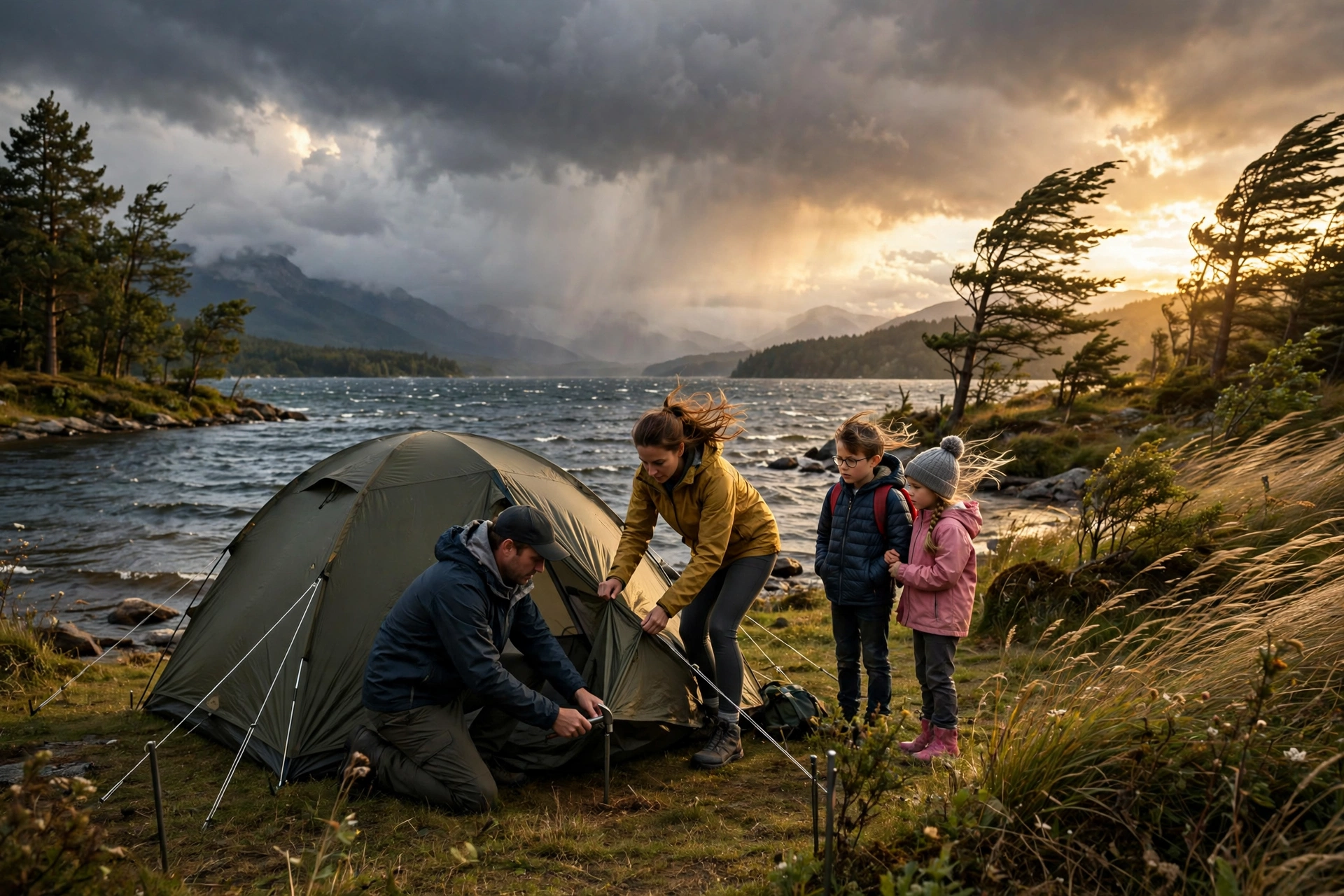
Wind is the part of camping nobody puts on the postcard — and it is the part most likely to ruin your first night in a tent. A flapping tent keeps children awake, a bent pole can end a trip early, and a lifting flysheet turns a simple pitch into a wrestling match. Windproof camping is mostly technique, not expensive gear: choose the right spot, pitch in the right order, stake at the right angle, and tension your guy lines properly.
This guide covers the whole process: reading the forecast, picking a sheltered pitch, a step-by-step windproof setup you can follow with children helping, and knowing when the safe choice is to pack up. If this is your first trip, read it alongside our first family camping trip weekend plan so the wind plan fits into the rest of your weekend.
Read the Wind Before You Leave Home
Most wind problems start before you arrive, because the forecast was checked for rain and temperature but not for gusts. Sustained wind and gusts are different things, and gusts are what damage tents. A forecast of 15 mph with gusts to 30 mph is a very different night from a steady 15 mph breeze.
Before you go, check three numbers: sustained wind speed, gust speed, and wind direction. Direction tells you which side of a hill, hedge, or tree line will be sheltered. If gusts above 35 to 40 mph are forecast, seriously consider whether a tent trip is right for a young family — especially in a large, tall family tent, which catches far more wind than a low dome tent. There is no shame in postponing. The campsite will still be there next weekend.
Also check whether wind will strengthen or change direction overnight. Many sites are calm at dinner and brutal at 2 a.m. when a front passes. If direction is expected to change, do not rely on a windbreak that shelters you from one side only. Guy out both sides of the tent, and if you are booking a managed campground, check site details and reservation rules on Recreation.gov before you travel.
Pick a Site That Does Half the Work for You
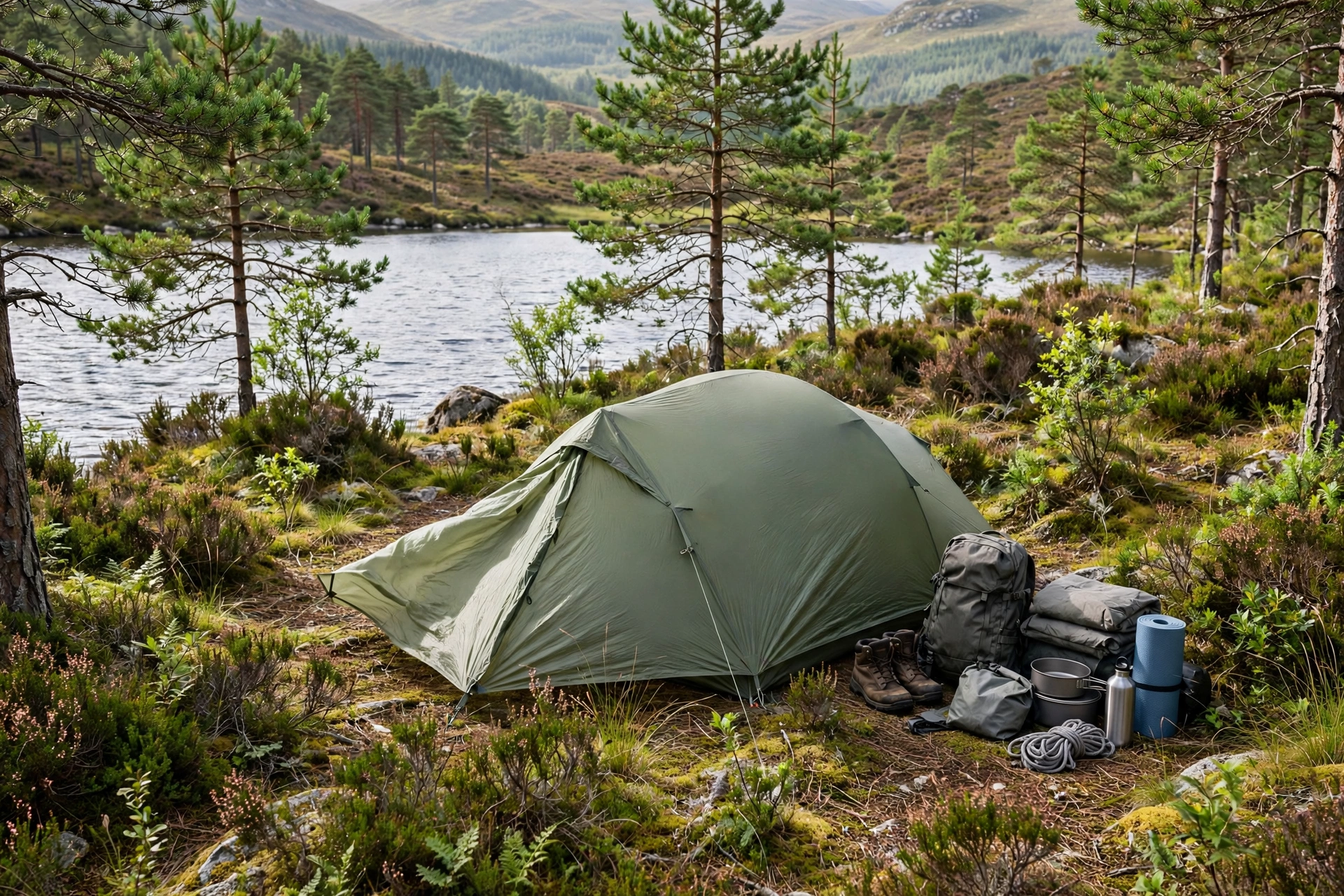
The biggest windproofing trick costs nothing: let the landscape shelter you. A tent on an open ridge fights the wind all night. The same tent tucked behind a low hill, a dense hedge, a stone wall, or trees will barely notice the same breeze. Walk the site before unpacking, feel where the wind is strongest, and look for the calm pocket. The National Park Service camping guidance is also worth reading before a park trip, especially for site rules and Leave No Trace expectations.
What makes a good wind-sheltered pitch
- Natural windbreaks: dense trees, hedges, banks, and buildings break the wind before it reaches you. Avoid a lone tree, which can drop branches in a storm, and never camp under dead or damaged limbs.
- Low ground, not the highest point: ridges and hilltops get the full force of the wind. A gentle hollow or the lee side of a slope is calmer, but avoid a dip that collects water if rain is also forecast.
- Firm, stakeable ground: grass on firm soil is ideal. Soft sand, loose gravel, and very hard dry ground all make staking harder. In sand, use wider stakes or bury a stuff sack filled with sand as a deadman anchor.
- Room to guy out: you need space around the tent for guy lines. A pitch squeezed between other tents will not let you tension the tent properly.
How to face the tent
Pitch with the narrowest, lowest end into the wind, and the door on the sheltered side if you can. A wide, tall side facing the wind acts like a sail; a narrow end lets wind slip past. If the wind may shift, face the strongest forecast gusts. Keep away from cliff edges, lakeshores, and narrow gaps between hills, where wind accelerates or funnels. Ask children to hold a light ribbon and watch which way it blows — it is a fun job, and it shows you the true wind direction on site.
The Windproof Pitch, Step by Step
Pitching in wind is easier with two adults, but one adult and an older child can manage if you work in the right order. The golden rule is: stake the tent down before it can blow away. Never lay an unstaked tent on the ground and turn away to fetch poles — an empty tent in a gust becomes a kite in seconds.
- Unpack with the wind at your back. Lay the groundsheet down and stake its windward corners immediately, before assembling anything else.
- Stake the windward side first. As soon as the tent body is out, peg the corners facing the wind, working toward the sheltered side so the tent is always anchored.
- Assemble poles low. Keep pole sections together and thread them while crouched behind the tent body, so a gust cannot snatch a loose section.
- Raise into the wind. Lift the windward side first and clip it quickly, then raise the rest. If a gust hits mid-pitch, drop flat and hold the tent down rather than fighting it upright.
- Stake every corner, then the flysheet. Corners first, then midpoint pegs, then the flysheet. Do not skip pegs because you are tired — every missing peg is a weak point.
- Guy out every guy line. In calm weather you can get away with half of them. In wind, use them all, on both sides, tensioned evenly.
- Tension, then re-tension. After ten minutes, walk around and re-tension every line and peg. Fabric stretches and ground settles. Check again before bed.
- Use gear as low ballast. Heavy bags inside the tent, placed low and away from the walls, add stability. Never push heavy gear against the wall where it forces fabric outward.
Stake angles that actually hold
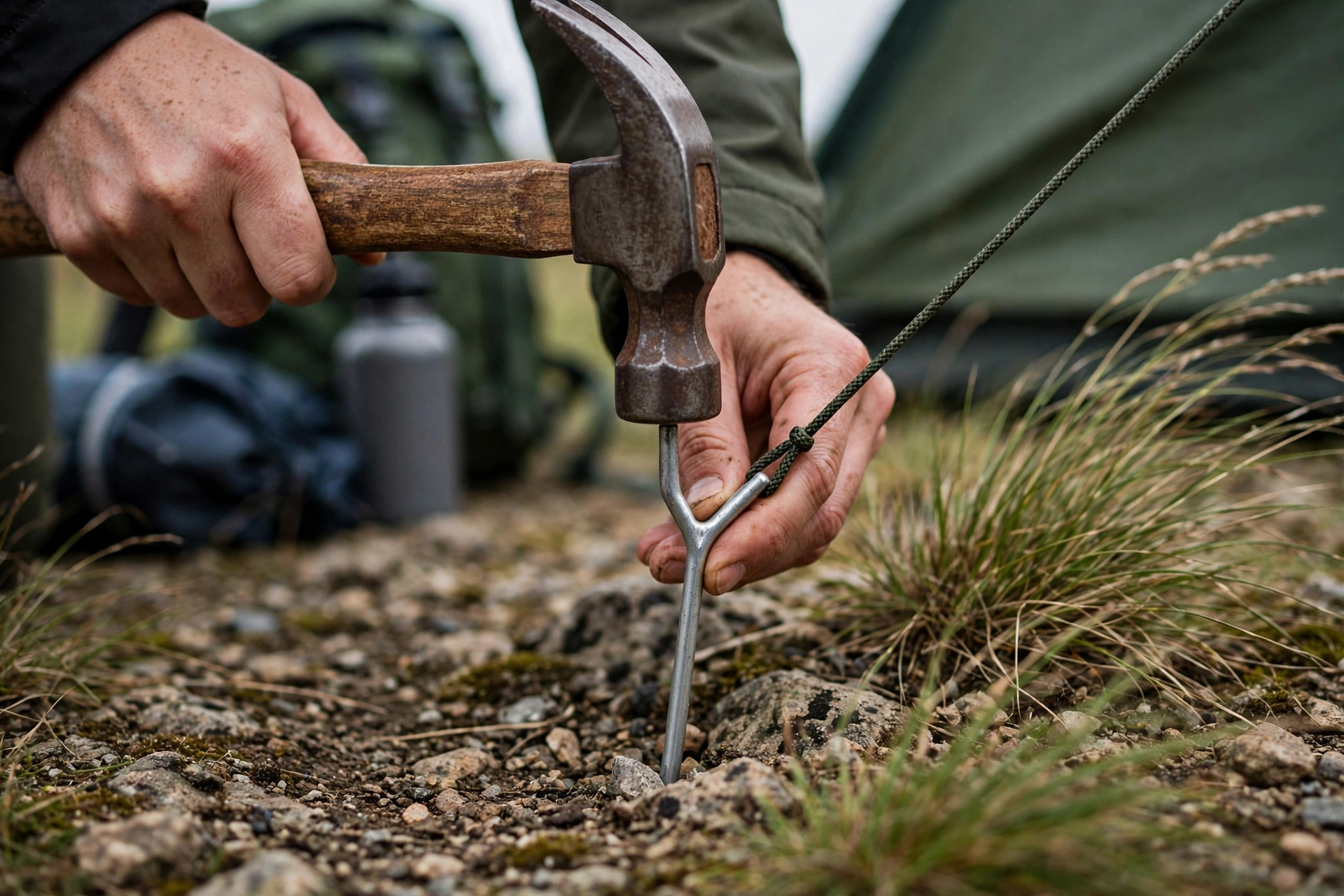
The most common staking mistake is hammering pegs straight down, or leaning them away from the tent. A peg holds best at about 45 degrees, leaning away from the tent, so the guy line pulls against the angle of the peg rather than sliding off it. Push it in until only a small hook is above ground, with the guy line seated in the hook, not balanced on top.
Match the peg to the ground: thin wire pegs suit firm soil, wider pegs grip soft ground, and rock pegs suit stony pitches. Carry spares. In very soft ground, cross two pegs in an X for the main windward lines, or bury a filled stuff sack tied to the line.
Guy lines: the part most campers skip
Guy lines spread the wind load, stop the flysheet flapping against the inner tent, and keep poles from flexing too far. In wind, every line should be out, taut, and anchored well away from the tent — the farther out the anchor, the stronger the hold. Adjust with the sliders so the flysheet is smooth but not drum-tight, since over-tensioning stresses seams and zips. Keep lines visible at night, especially with children around: bright or reflective lines, or a light cloth tied to each line, prevent painful trips. This is one of the common family camping mistakes that is easy to fix — and a tripped-over line can pull a peg out just when you need it most.
Wind, Rain, and Cold Together
Wind rarely arrives alone. With rain, keep the flysheet taut so water runs off, and the door on the sheltered side. With cold, add layers from our layering system that keeps kids warm before bedtime. Our rainy-day camping activities help for wet-weather tent routines.
| Wind you can feel | What it means at camp | What to do |
|---|---|---|
| Light breeze, leaves rustle | Comfortable camping | Normal pitch, guy out as usual |
| Steady breeze, small branches move | Flysheet flaps at night | Guy out all lines, re-tension before bed |
| Strong wind, large branches sway | Tent strains, sleep is disturbed | Check every peg, keep children inside |
| Gale, whole trees sway, walking is hard | Risk of pole damage or tent failure | Pack up, move to a vehicle or building |
Family Wind Tricks That Actually Help
Children are lower to the ground and lighter than adults, so gusts an adult barely notices can knock a toddler over. Keep small children on the sheltered side while you set up, and give them a clear safe spot — a camp chair behind a car or windbreak — rather than letting them run through guy lines.
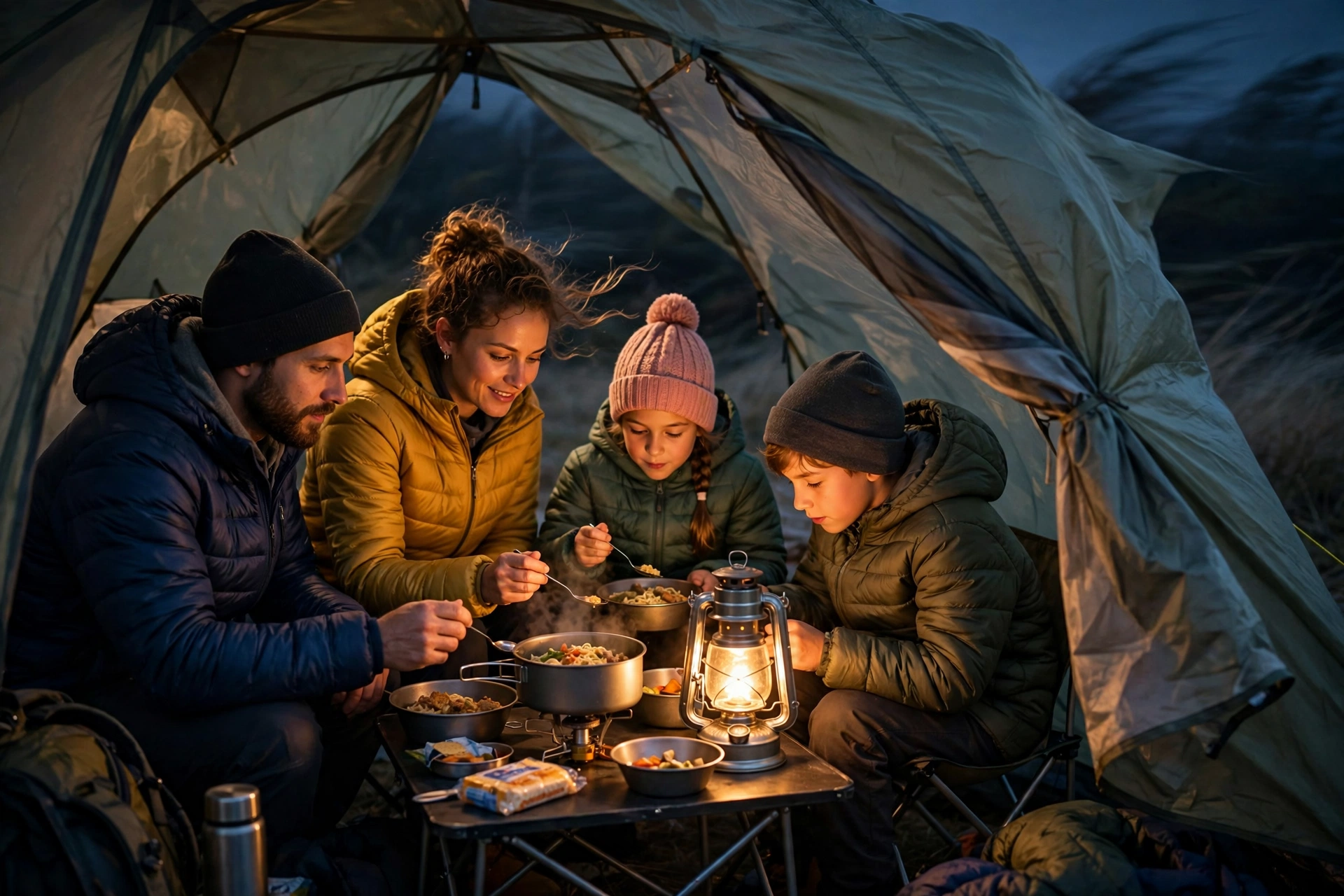
Plan meals for wind from the start. Cook in the most sheltered spot you can find, shield the flame with a windbreak well clear of it, and never cook inside a tent or a closed vestibule — the carbon monoxide risk is real and invisible. Simple one-pot meals and food prepared at home beat an ambitious campfire menu, and lidded boxes beat paper plates, which blow away.
Secure everything that can blow away before you sit down to eat: sleeping bags left airing, towels, empty bags, and lightweight chairs. Do a quick wind-check walk before bed: chairs folded or stowed, washing clipped firmly, rubbish tied inside the car or a sealed bin, and nothing loose on the picnic table. Five minutes prevents a midnight chase across the field.
Finally, tell children in advance that flapping is normal and the tent is designed to flex. A child who understands the noise sleeps far better than one who thinks the tent is about to blow away.
When to Pack Up Instead of Toughing It Out
Knowing when to stop is the most important wind skill. Pack up if poles bend or crack, pegs pull out repeatedly, the flysheet tears, branches fall nearby, or the forecast is upgraded to gale warnings. Do not wait for the tent to fail — a daylight pack-up is safe, a midnight storm pack-up is not. Keep a torch, shoes, and jackets by the door, and agree where the family will shelter if the tent must be abandoned.
Your Windproof Packing Checklist
- Spare stakes for soft, firm, and hard ground, plus a mallet
- Extra guy lines and tensioners, in case one snaps
- Reflective guy lines or bright markers for night-time safety
- A footprint or groundsheet that fits your tent, staked down first
- A windbreak or tarp for a sheltered cooking and sitting area
- Clips and pegs for securing washing, towels, and loose gear
- Lidded food boxes and a windproof lighter in a sealed bag
- Warm layers and a windproof outer layer for every child, within reach at night
- A torch, shoes, and rain jackets by the tent door for a quick exit
- The full family camping checklist, checked before you leave home
Frequently Asked Questions
Can a normal family tent handle strong wind?
Yes, up to a point. Most family tents handle steady winds and moderate gusts well when pitched, sheltered, staked, and fully guyed out. Tall cabin-style tents struggle sooner than low dome tents, and above gale-force gusts, packing up is safer.
Should I guy out my tent even in calm weather?
Yes. Guy lines keep the flysheet off the inner tent, improve ventilation, and stop condensation dripping inside — and mean you are ready if wind picks up overnight.
What is the best tent stake angle for wind?
Drive stakes at about 45 degrees, leaning away from the tent, with the guy line seated in the hook. This resists the pull of the line far better than a vertical peg, which can slide straight out in soft ground.
Is it safe to cook in a tent vestibule when it is windy?
No. Cooking inside a tent or a closed vestibule creates a serious carbon monoxide risk and a fire risk, and wind can blow flames unpredictably. Cook outside in a sheltered spot, well away from tent fabric.
How do I stop my tent flapping all night?
Tension every guy line evenly, re-tension before bed, and make sure the flysheet is not touching the inner tent. A taut, even flysheet flaps far less than a slack one. If one side still flaps, check for a loosened peg or slipped slider on that side.
What should I do if my tent pole breaks in wind?
Lower the tent immediately to reduce strain, splint the broken section with a repair sleeve or a sturdy stick and strong tape if you have them, and re-tension gently. If the tent cannot be made safe, move the family to your car or a building — do not sleep in a damaged tent in rising wind.
Wind does not have to end a family camping trip. With a sheltered pitch, a careful setup in the right order, well-angled stakes, and every guy line doing its job, your tent will ride out far more weather than you expect — and you will sleep better knowing you prepared properly.
