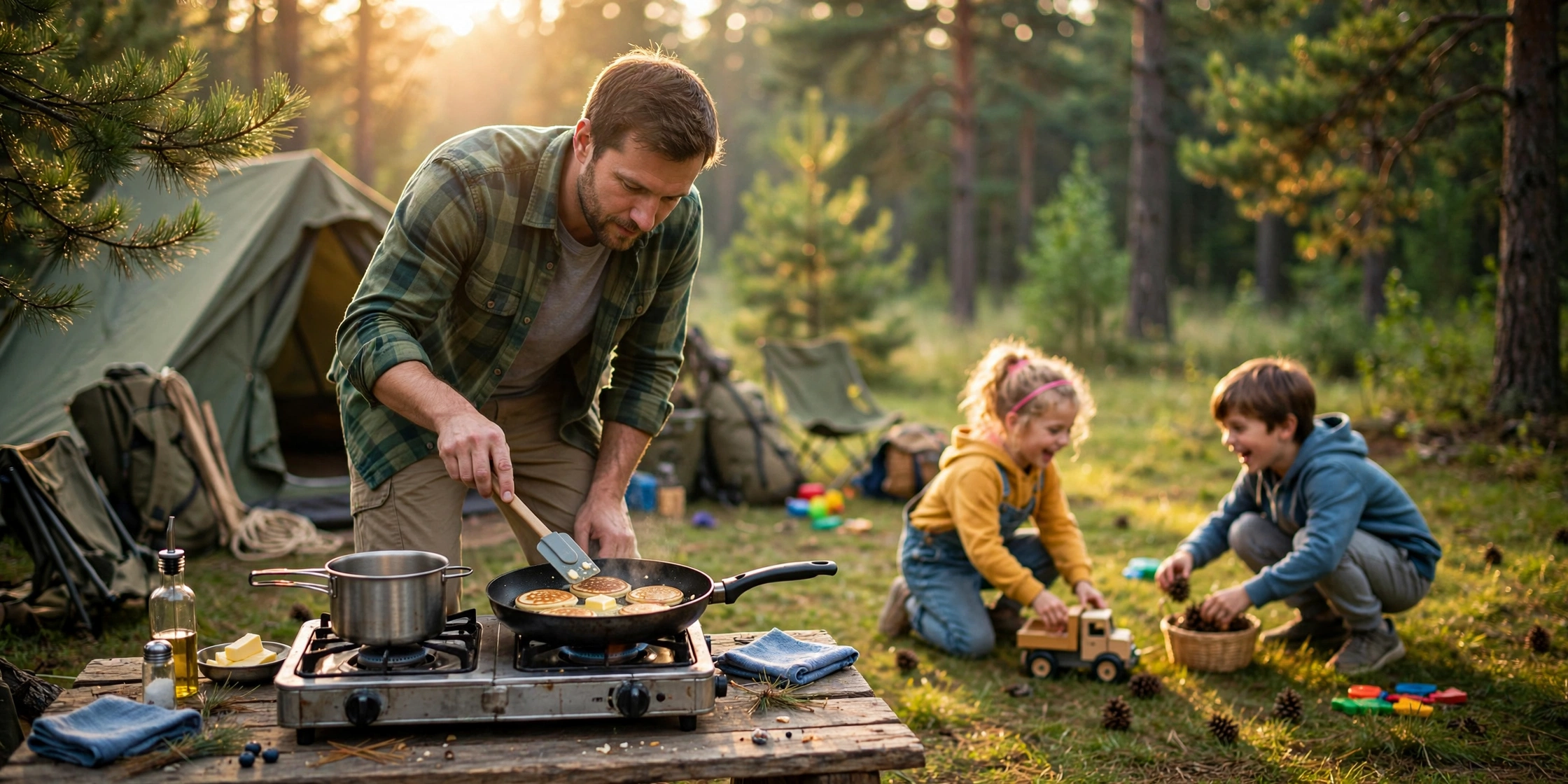
Cooking for kids at a campsite is nothing like boiling water for instant coffee on a solo backpacking trip. Hungry children do not wait patiently, appetites double after a morning on the trail, and every hot surface suddenly needs a safety plan. That is why choosing among camp stoves for family cooking deserves more thought than grabbing whatever is on sale. In this guide, I compare the three main types of camp stoves — canister, two-burner propane, and multi-fuel — on the things that actually matter to parents: boil time, weight, simmer control, safety around kids, and real-world cost.
Why Your Camp Stove Choice Matters More With Kids
When you camp solo or with friends, a stove just needs to boil water and heat food. Add kids to the mix and the job description changes. Dinner needs to be ready before the post-hike hunger meltdown. Breakfast needs to happen before a toddler’s patience runs out. And unlike your hiking buddies, small children are drawn to anything glowing, hissing, or steamy.
A family-friendly stove therefore has to do four things well: cook enough food for several people at once, offer real heat control so you can simmer oatmeal instead of scorching it, sit stably enough that a curious elbow won’t topple dinner, and be simple enough to operate safely while a five-year-old asks you questions at full volume. Very few ultralight stoves tick all four boxes, which is why the “best” stove depends entirely on how your family camps.
The 3 Main Types of Camp Stoves, Compared
Nearly every camp stove sold today falls into one of three categories. Here is what each one is actually like to cook with when you have a family to feed.
Canister Stoves: The Lightweight Sprinter
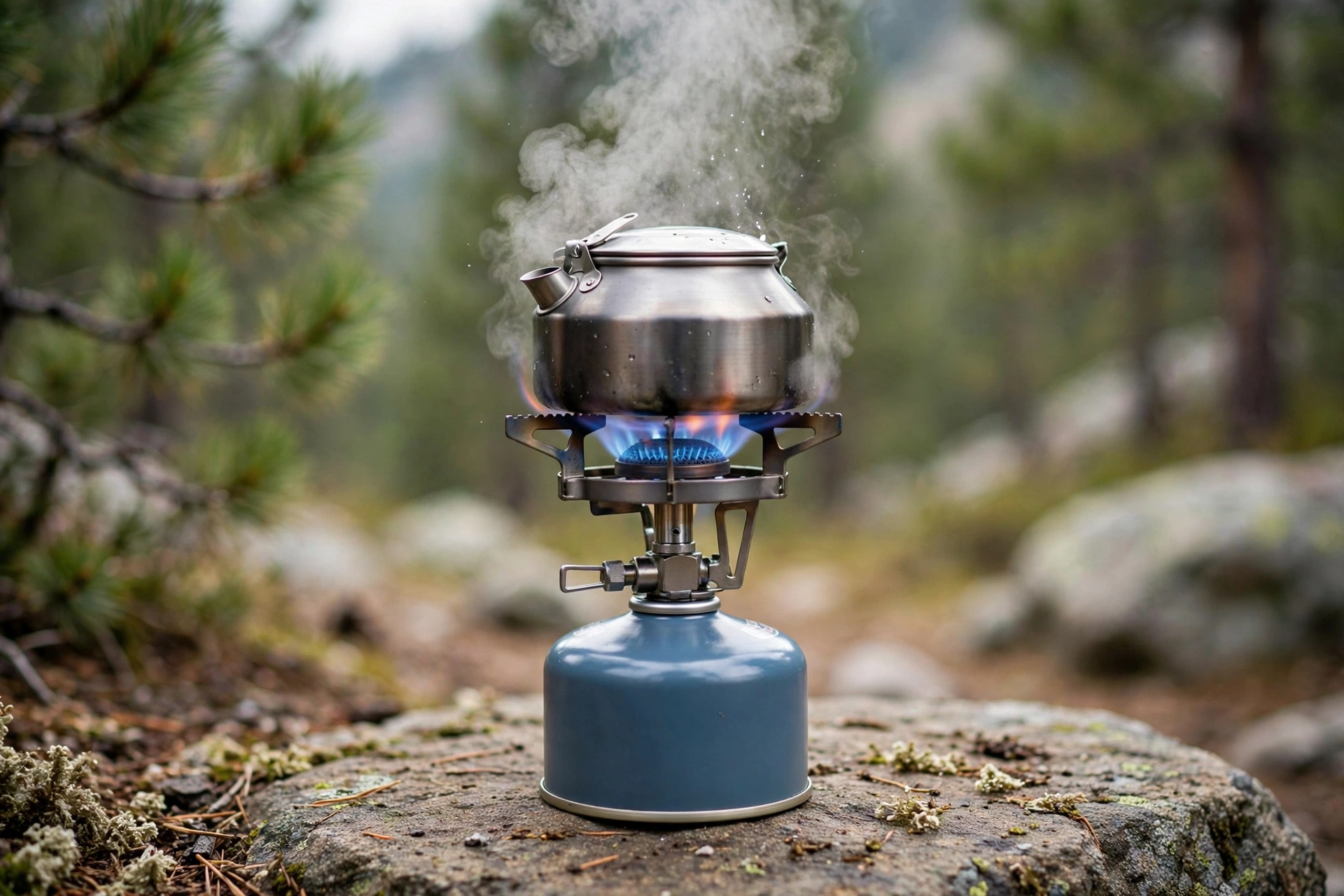
Canister stoves screw directly onto a small pressurized fuel canister and concentrate a lot of heat into a small burner. They light in seconds, weigh next to nothing, and pack smaller than a water bottle. For heating water fast — oatmeal, cocoa, freeze-dried meals — nothing beats them.
The tradeoff for families is stability and control. The stove sits on top of a tall, narrow canister, which makes a precarious tower when you set a full-size pot on it. Simmering is possible on better models but finicky, and one canister will not stretch across a long family weekend. These stoves shine on overnight backpacking trips with kids old enough to carry their own daypacks — where weight matters and meals are simple. For car camping with younger kids, the small, tippy footprint is a genuine safety concern.
Two-Burner Propane Stoves: The Family Workhorse
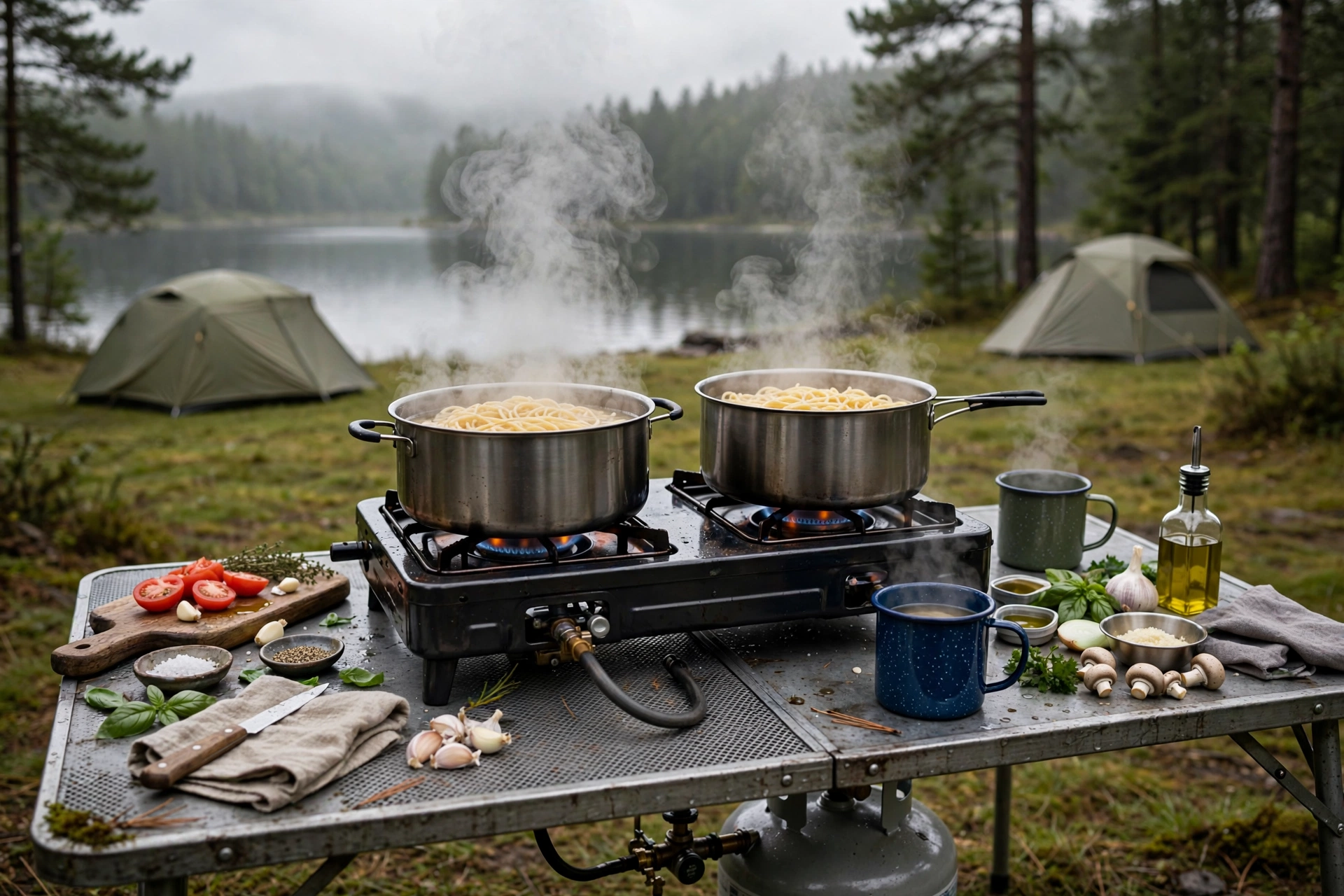
This is the classic green suitcase stove of family camping, and it remains the best choice for most families. Two-burner propane stoves sit low and wide on a picnic table, run on widely available 16.4-ounce propane canisters (or a refillable tank with an adapter), and give you two independently controlled burners. That means pancakes on one side and scrambled eggs on the other — real cooking, at family scale.
Heat control is the standout advantage: most models simmer genuinely well, which matters when you are cooking actual meals rather than boiling water. The low, wide stance is far harder to knock over than a canister stove, and the lid doubles as a windscreen. Downsides? They are bulky and heavy (typically 8–12 pounds), they are overkill for backpacking, and propane canisters perform sluggishly in very cold weather. But for car camping, they are the stove I recommend to nearly every family I meet. If you are building out your full cook setup, pair it with our complete camp kitchen setup guide.
Multi-Fuel Stoves: The Cold-Weather Specialist
Multi-fuel (liquid-fuel) stoves burn white gas, kerosene, or even unleaded gasoline, and they are the choice of expedition campers for one reason: they work when everything else sulks. Below freezing, canister stoves lose pressure and propane stoves sputter, while a liquid-fuel stove roars on.
For most family camping, though, they are more stove than you need. They require priming, they are noisier, fuel bottles need careful handling away from kids, and simmer control tends to be coarse. They make sense for winter camping or remote international travel where propane canisters are hard to find. For the average spring-through-fall family trip, a simpler option serves you better — and the National Park Service’s backcountry camping guidance is a good primer on matching your stove to your conditions.
Head-to-Head: Camp Stoves at a Glance
| Feature | Canister Stove | Two-Burner Propane | Multi-Fuel Stove |
|---|---|---|---|
| Boil time (1 liter) | 3–4 minutes | 5–8 minutes per burner | 3–5 minutes |
| Typical weight | 3–6 oz | 8–12 lbs | 11–20 oz (plus fuel) |
| Typical price | $30–$80 | $60–$150 | $100–$200 |
| Simmer control | Fair | Excellent | Fair to poor |
| Stability with big pots | Poor | Excellent | Fair |
| Cold-weather performance | Poor | Fair | Excellent |
| Kid-safety rating | Caution: tippy | Best: low and stable | Caution: hot + priming |
| Best for | Backpacking, quick hot drinks | Car camping, family meals | Winter camping, expeditions |
What Matters Most When You’re Cooking for Kids
Beyond the spec sheet, four practical factors separate a frustrating stove from a family-friendly one.
1. Safety Features Beat Fancy Features
Look for a wide, low base, a locking lid that doubles as a windscreen, and burners that sit well back from the table edge. Piezo push-button igniters are convenient, but always carry matches too — kids and complicated priming rituals do not mix. Set up a clear kid-free zone of at least three feet around the stove, and treat the stove like a hot campfire: interesting to watch from a distance, never to touch.
2. Simmer Control Is Non-Negotiable
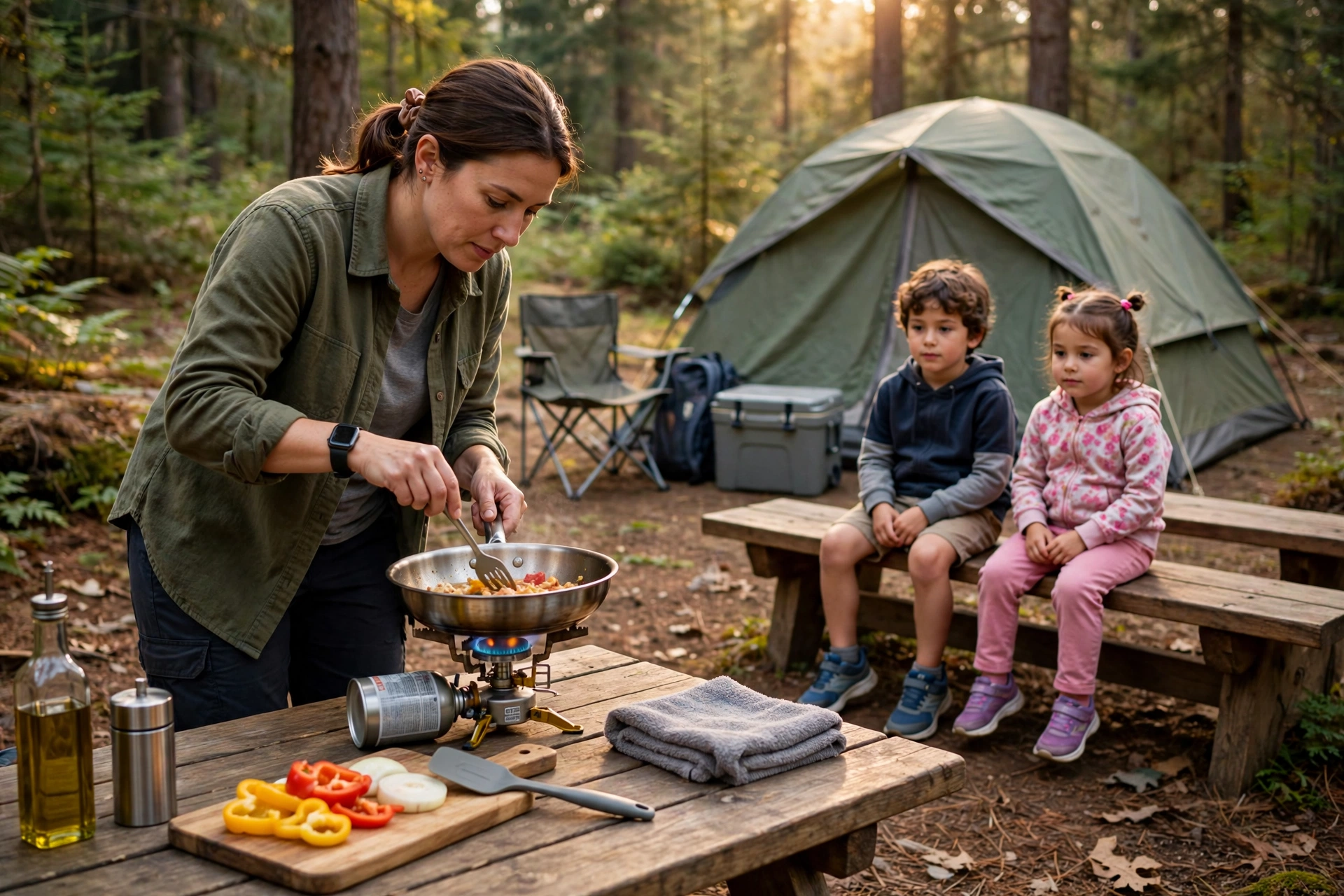
Family camping meals are real meals: oatmeal, pasta, pancakes, grilled cheese. A stove with only “off” and “volcano” settings will scorch milk, burn pancake bottoms, and boil every pot dry while you are distracted by a toddler. Two-burner propane stoves consistently offer the finest flame control, which is the main reason they dominate family car camping.
3. Wind Resistance Saves Dinner
A breeze that barely registers on your skin can double a canister stove’s boil time and steal heat from an unshielded burner. Integrated windscreens — the folding side panels on most two-burner stoves — make a real difference. Never improvise a tight-fitting windscreen around a fuel canister, though: trapping heat around a pressurized canister is dangerous. Use only the wind protection the manufacturer designed for your stove.
4. Weight and Pack Size: Know Your Trip Style
Be honest about how you actually camp. If every trip involves driving to a campground, a 10-pound two-burner stove costs you nothing and gives you everything. If you are hauling gear to a backcountry site with a seven-year-old, every ounce matters and a canister stove earns its place. Matching the stove to the trip — rather than buying one stove for every scenario — is the move most families get wrong. Our family camping checklist helps you think through your full gear list by trip type.
Our Picks: The Right Stove for Your Camping Style
- Car camping with kids (most families): a two-burner propane stove. Stable, powerful, great simmer control, and one 16.4-ounce canister typically covers a long weekend of family cooking.
- Overnight backpacking with older kids: a canister stove with a wide pot support. Fast, featherweight, and perfect for simple boil-and-eat meals.
- Cold-weather or shoulder-season trips: a multi-fuel stove, or a two-burner with a cold-weather fuel strategy and extra canisters kept warm in your sleeping bag overnight.
- Large groups or multi-family trips: a two-burner for main meals plus a small canister stove as a sidekick for coffee and cocoa — because hot drinks and hungry kids cannot wait for a free burner.
Fuel Math: How Much Propane Does a Family Really Burn?
Running out of fuel mid-trip is one of the most common camping mistakes, and it is entirely preventable. As a rough guide for a family of four:
- Breakfast (oatmeal + coffee/cocoa): about 15–20 minutes of burner time
- Lunch (usually sandwiches or leftovers): minimal, often no stove needed
- Dinner (pasta, stir-fry, or similar): about 25–35 minutes of burner time
- Rule of thumb: plan roughly one 16.4-ounce propane canister per 2–3 days of full family cooking
- Always bring one spare. Canisters do not warn you before they sputter out, and a spare weighs almost nothing in the car.
For canister stoves, the math is tighter: one standard 230g canister boils roughly 25 liters of water, so budget one canister per person for a 2–3 day backpacking trip, plus a spare for the group. Planning your menu first makes fuel estimates much easier — our 3-day family camping meal plan is built around realistic burner time.
Camp Stove Safety Rules for Families
- Never cook inside a tent, car, or camper. Stoves produce carbon monoxide, an odorless gas that can be deadly in enclosed spaces. This rule has no exceptions — not even “just for a minute” in bad weather.
- Set a kid-free zone. Mark three feet around the stove as adults-only. Older kids can watch and learn; younger ones stay at the picnic bench.
- Put the stove on flat, stable ground. A picnic table or level rock works; a wobbly camp table does not. Keep pot handles turned inward.
- Let it cool before packing. Burners stay dangerously hot for 10–15 minutes after you turn them off. Make cooling down part of your cleanup routine.
- Disconnect fuel for storage. Separate the canister from the stove whenever you are done cooking, and store fuel canisters upright in a cool, shaded spot away from the tent.
- Check for leaks every trip. A quick sniff test and a look at the seals before first use takes ten seconds and catches most problems.
For more on keeping little ones safe around camp, see the National Park Service’s camping safety resources.
Frequently Asked Questions
Can I use a camp stove inside a tent if it’s raining?
No — never. All fuel-burning stoves produce carbon monoxide, which is odorless and can kill in an enclosed space. Cook under a tarp or vestibule with full ventilation instead, and keep the stove itself outside the tent walls.
Which camp stove is safest with toddlers around?
A low, stable two-burner propane stove on a sturdy picnic table, used with a strict kid-free zone around it. Its wide base resists tipping far better than a canister stove balanced on a small fuel bottle, and its enclosed design keeps flames away from little hands.
How long does a 16.4 oz propane canister last for a family of four?
Expect about 2–3 days of normal family cooking (breakfast and dinner, plus hot drinks). A canister holds roughly 2–4 hours of total burner time depending on flame setting, so always pack a spare — running out mid-dinner is a classic and avoidable camping mistake.
Is a canister stove or a two-burner propane stove cheaper to run?
For car camping, the two-burner wins on fuel cost: 16.4-ounce propane canisters are inexpensive and widely available. Small isobutane canisters cost more per unit of heat, which adds up over a season of family trips. Canister stoves make up for it in the backpacking world, where weight savings matter more than fuel price.
Do I really need a windscreen?
You need the wind protection your stove was designed with — most two-burner stoves have built-in folding windscreens that work well. For canister stoves, a small aftermarket windscreen helps enormously, but never enclose the fuel canister tightly: trapped heat around a pressurized canister is a serious hazard.
What can I cook on a camp stove besides the basics?
With a two-burner stove’s simmer control, nearly anything: pancakes, quesadillas, fried rice, soups, and even simple baked goods in a lidded pot. For ideas beyond the usual hot dogs, check our roundup of camping snacks and easy camp meals — and when you are ready to book your next trip, Recreation.gov handles reservations for most federal campgrounds.
