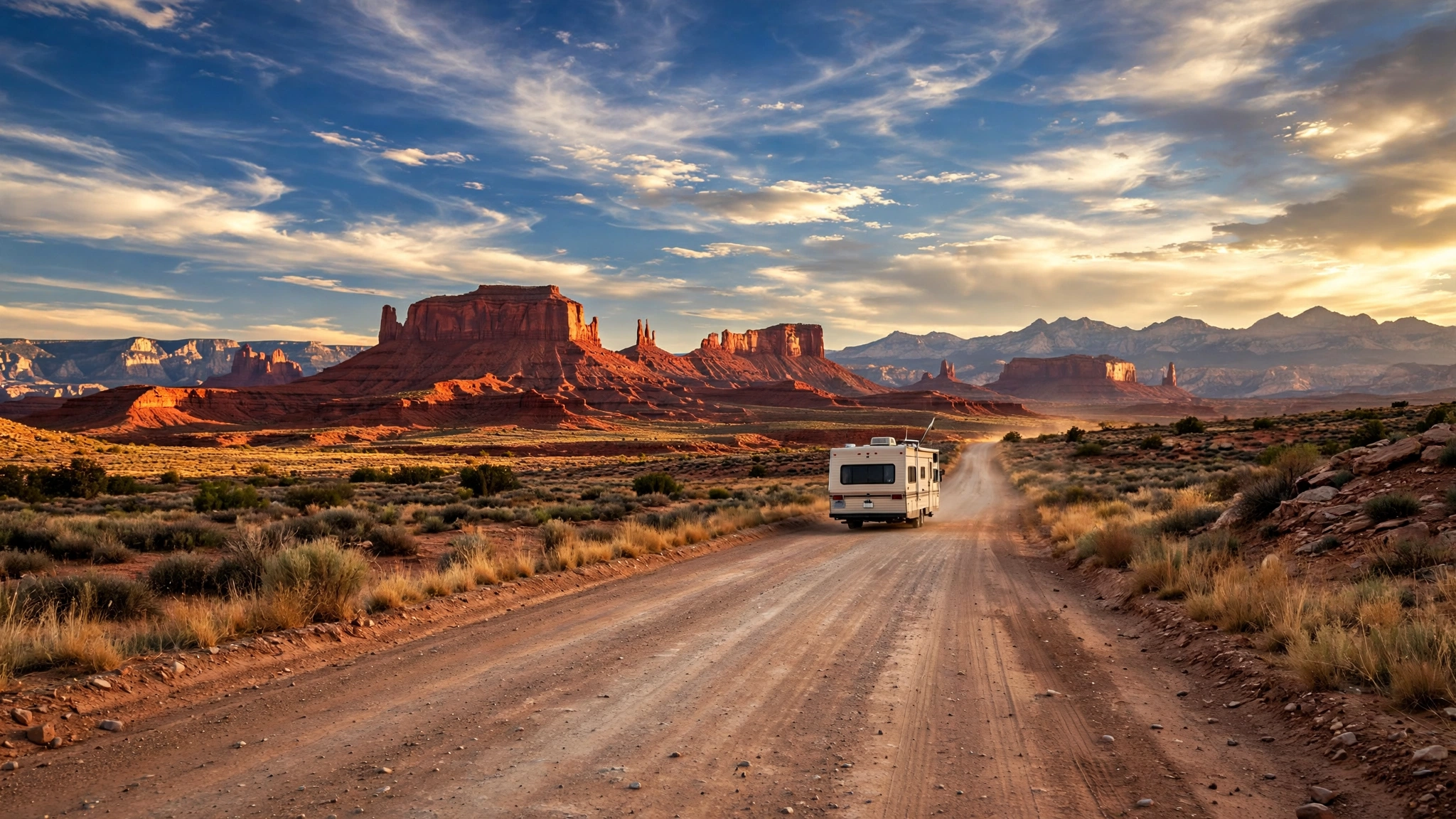
There’s nothing quite like pointing your car west, windows down, with red-rock mesas rising out of the horizon. This is the American West — where the landscapes look straight out of a Western film and every state line brings a completely different world. If you’ve been dreaming of the ultimate road trip, pack your boots: this four-state adventure through Arizona, Utah, Wyoming, and Montana strings together the most iconic national parks in the country into one unforgettable drive.
This guide gives you a practical route through each state, the can’t-miss stops, real-world planning tips for 2026 (timed-entry reservations, fees, seasons), and family-friendly advice so the whole crew enjoys the ride.
Wild West Road Trip: The Route at a Glance
A classic loop runs roughly 2,500–3,000 miles over 2–3 weeks, depending on your pace:
- Arizona (4–5 days): Grand Canyon → Sedona → Monument Valley → Petrified Forest
- Utah (3–4 days): Arches → Canyonlands, based in Moab
- Wyoming (5–6 days): Yellowstone → Grand Teton → Devils Tower
- Montana (3–4 days): Glacier National Park → Little Bighorn Battlefield
Short on time? The most popular condensed version covers Arizona and Utah in 7–10 days. The full four-state version is the real-deal pilgrimage.
Arizona: Where Desert Dreams Come True
Grand Canyon National Park
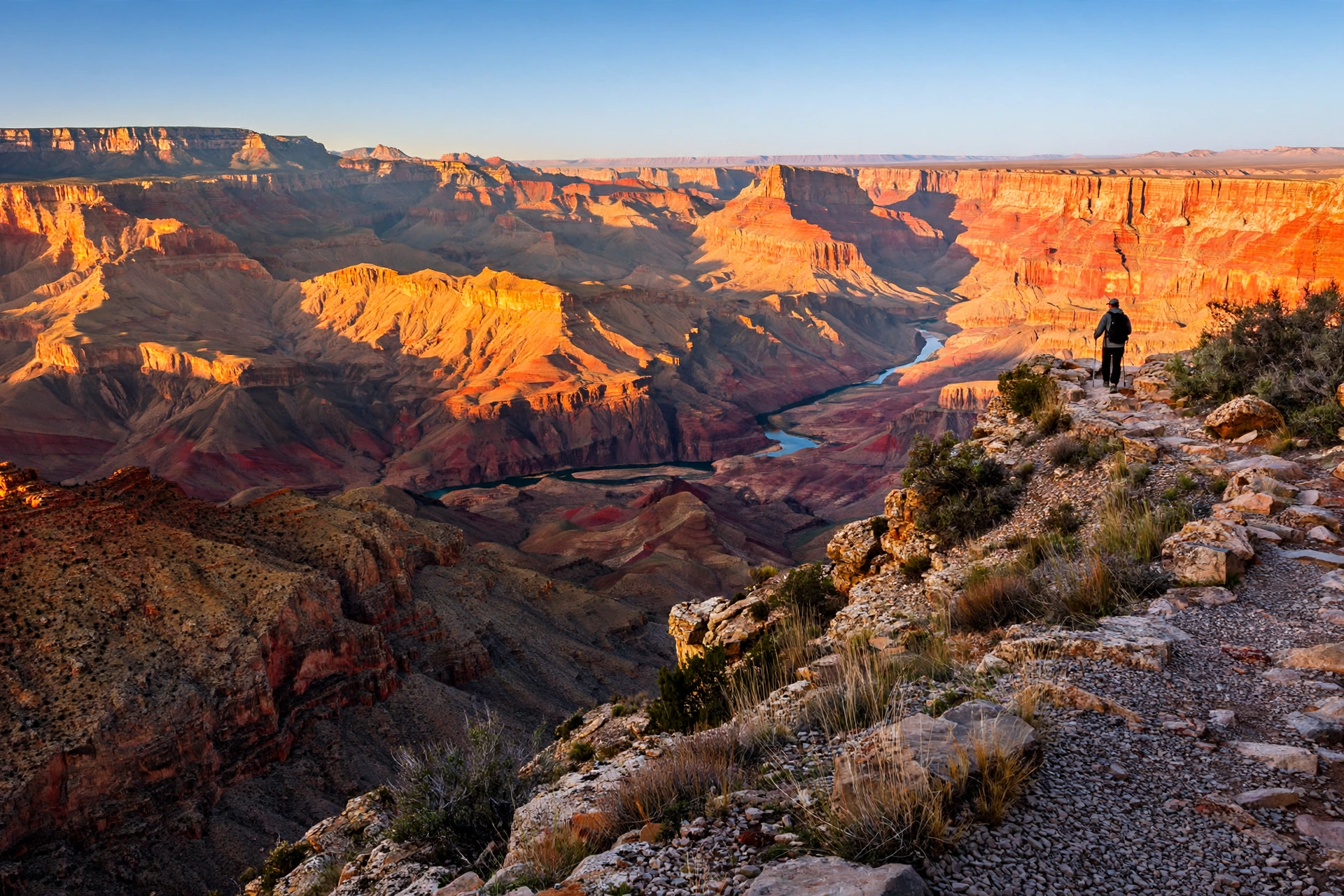
The Grand Canyon offers two distinct experiences. The South Rim is open year-round and has the most viewpoints, shuttle buses, and RV-friendly facilities. The North Rim is quieter and more remote, open seasonally from mid-May through mid-October, then closed by snow.
First-time visitors should walk part of the Rim Trail — it’s mostly flat, paved, and delivers the biggest views for the least effort, which makes it ideal for families with kids. Adventurous hikers can descend the Bright Angel Trail a mile or two down, but remember the golden rule of canyon hiking: the climb back up takes roughly twice as long as the descent, so turn around well before you feel tired.
Time your rim visits for sunrise or sunset, when the canyon walls shift through bands of orange, pink, and purple. Arrive at popular viewpoints like Mather Point 30–45 minutes early — parking fills fast in summer.
Sedona’s Red Rock Country
About two hours south of the Grand Canyon, Sedona’s red sandstone formations glow at dawn and dusk. The Bell Rock pathway is an easy, family-friendly introduction, while Cathedral Rock offers a short but steep climb with a big payoff. Don’t miss the Chapel of the Holy Cross, a stunning piece of architecture built directly into the red rocks. If the kids are tired of hiking, the Red Rock Loop Road delivers gorgeous scenery from the car.
Monument Valley & Petrified Forest
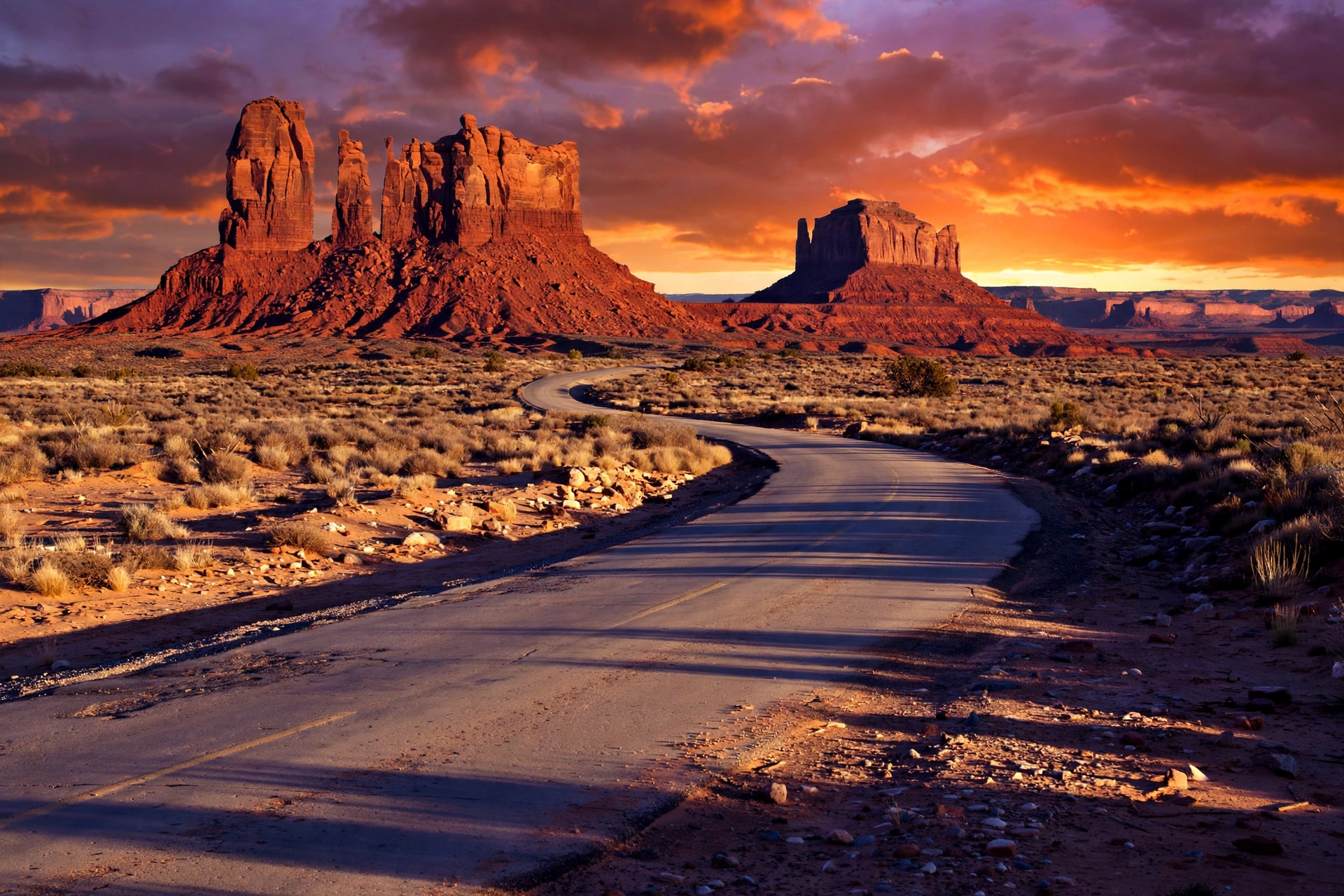
Monument Valley’s towering buttes are the classic Wild West landscape — and the best view in the park is from John Ford’s Point, named for the director who filmed Westerns here. Monument Valley is part of the Navajo Nation (it’s a tribal park, not a national park), and joining a Navajo-guided tour adds cultural stories you’d never get driving the loop road yourself.
Further east, Petrified Forest National Park protects fossilized trees over 200 million years old, plus a stretch of historic Route 66 and the Painted Desert, whose colorful badlands change hue as the light shifts through the day. Ancient petroglyphs at sites like Newspaper Rock add a fascinating human chapter to the desert story.
Utah: Red Rock Country at Its Best
Arches National Park
Home to over 2,000 natural stone arches, this is one of the most photographed parks in America. Delicate Arch is the icon (a moderately strenuous 3-mile round-trip hike), while the Windows Section packs several spectacular arches into a short, easy drive with minimal walking — perfect for young kids. The Courthouse Towers area offers equally dramatic formations with fewer crowds.
2026 planning note: Arches requires a timed-entry reservation during peak season (typically April through October), booked on recreation.gov — check current requirements before you go, as the system is adjusted year to year. Also note that the popular Fiery Furnace area is a ranger-led or permit-only hiking zone with no campground; most visitors stay in nearby Moab.
Canyonlands & Moab Adventure Sports
Base yourself in Moab to explore both Arches and Canyonlands. In Canyonlands, the Island in the Sky district gives you jaw-dropping canyon overlooks with short, easy walks like Mesa Arch at sunrise. Beyond the parks, Moab is an adventure-sports capital: world-class mountain biking trails and white-water rafting on the Colorado River. Book guided trips well ahead during spring and fall, the busiest seasons.
Wyoming: Big Sky Country and Cowboy Culture
Yellowstone National Park
America’s first national park still delivers the greatest hits: Old Faithful erupts roughly every 60–110 minutes (averaging about 90), and the Grand Prismatic Spring looks like something from another planet. But the real magic is wildlife. Drive the Lamar and Hayden Valleys at dawn or dusk for your best shot at bison, elk, and occasionally wolves or bears.
Wildlife safety is non-negotiable: carry binoculars or a spotting scope, stay at least 100 yards from bears and wolves and 25 yards from bison and elk, and never feed any animal. These are wild animals, not photo props. If you’re planning the Yellowstone leg with children, our 5-day Yellowstone family itinerary breaks the park into kid-manageable days.
Grand Teton National Park
Just south of Yellowstone, the jagged Teton peaks rise straight from the valley floor with almost no foothills — the most dramatic mountain silhouette in the Lower 48. Paddle or picnic at Jenny Lake, try fly fishing on the Snake River, and arrive at Schwabacher’s Landing before sunrise to photograph the peaks mirrored in still water. Trails here range from easy lakeside strolls to serious alpine climbs; check our easy hikes near national parks guide to match trails to your family’s fitness level.
Dude Ranches & Devils Tower
For authentic cowboy culture, Wyoming’s dude ranches offer horseback riding through wildflower meadows, and some run real cattle drives. Further east, Devils Tower National Monument — America’s very first national monument, designated in 1906 — rises 867 feet above the surrounding plains. The 1.3-mile Tower Trail circles the base for perfect views of climbers on the vertical columns, and the nearby prairie dog towns keep kids entertained for ages.
Montana: Big Sky and Endless Horizons
Glacier National Park
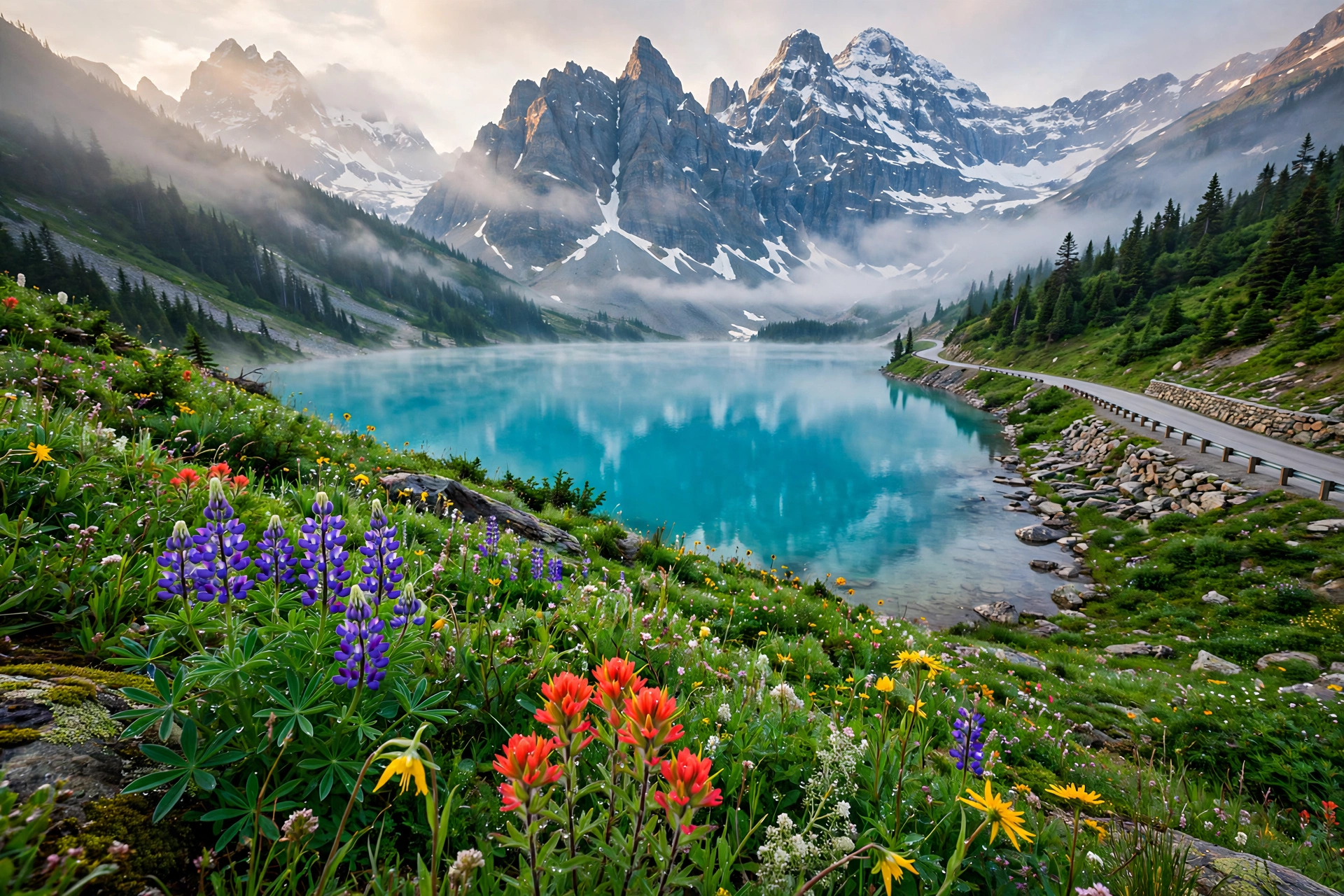
Glacier’s million-plus acres hold some of America’s most pristine mountain wilderness. The Going-to-the-Sun Road winds past glacial lakes and waterfalls — but check vehicle restrictions before you go (oversized vehicles, including many RVs, can’t make the narrow alpine sections; the limit is 21 feet long and 8 feet wide). Arrive at Logan Pass early in the morning to find parking and spot mountain goats and bighorn sheep.
Nearby, the Beartooth Highway climbs to nearly 10,900 feet with switchbacks and panoramic views — an unforgettable detour if your schedule allows. For more on the park’s quieter side, see our Glacier National Park west side guide.
Little Bighorn Battlefield
The Little Bighorn Battlefield National Monument commemorates the June 25, 1876 battle between George Armstrong Custer’s 7th Cavalry and Lakota, Cheyenne, and Arapaho warriors led by Sitting Bull and Crazy Horse. The 4.5-mile tour road connects key battle sites, and the Indian Memorial presents the Native American perspective. Ranger talks, offered in summer, bring this pivotal moment in American history vividly to life.
Planning Tips for Your 2026 Wild West Road Trip
- Best seasons: Late spring (May–June) and early fall (September–early October) bring mild weather and thinner crowds. Summer is glorious but hot in the desert parks and busy everywhere — book lodging and campgrounds 4–6 months ahead. Many high-elevation roads, including the North Rim and Going-to-the-Sun Road, only open from roughly late May/June through mid-October.
- Entrance fees: Major parks charge about $30–$35 per private vehicle for a 7-day pass. If your trip covers three or more parks, the America the Beautiful annual pass ($80) pays for itself quickly.
- Reservations matter now: Arches uses timed entry in peak season, and several popular campgrounds across these parks require advance booking on recreation.gov. Always check each park’s nps.gov page for the current year’s rules before finalizing your dates.
- Gas and water: Distances are huge and services are sparse between stops — fill up whenever you’re near a town, carry more water than you think you need (a gallon per person per day in summer desert), and download offline maps before leaving cell coverage.
- Budgeting: Fuel, park fees, lodging, and food add up fast on a multi-week drive. See our 2026 family road trip cost breakdown and gas-saving tips for long road trips to keep the trip affordable.
- Kids on the trail: Sign up for the free Junior Ranger programs at nearly every national park — kids earn badges by completing activity booklets, and it’s the single best free activity for school-age children in the parks.
Frequently Asked Questions
How long should a Wild West road trip be?
Two to three weeks covers the full Arizona–Utah–Wyoming–Montana loop comfortably. With 7–10 days, focus on Arizona and Utah, which pair naturally and keep driving days short.
What is the best time of year for this road trip?
May–June and September–early October offer the best balance of weather, open roads, and manageable crowds. July and August are peak season: spectacular, but hot in the desert and busy in every park.
Do I need reservations for the national parks?
Arches National Park requires a timed-entry reservation during peak season, and popular campgrounds in Yellowstone, Glacier, and the Grand Canyon book out months in advance on recreation.gov. Park entrance itself generally doesn’t need a reservation elsewhere, but always verify the current year’s rules on nps.gov.
How much does a Wild West road trip cost?
Costs vary widely, but a family of four driving 2–3 weeks should budget for fuel (2,500–3,000 miles), $30–$35 per vehicle park entrance fees or an $80 annual pass, lodging or campground fees, and food. Our detailed family road trip cost breakdown walks through realistic 2026 numbers.
Is this road trip good for families with kids?
Absolutely — it’s one of the best family road trips in the US. Short walks like the Rim Trail, Windows Section, and Mesa Arch work for toddlers; older kids love the Junior Ranger programs, wildlife spotting in Yellowstone, and the cowboy history at dude ranches and Little Bighorn.
Can I do this trip in an RV?
Yes, with planning. The South Rim, Moab, Yellowstone, and Grand Teton are RV-friendly, but Going-to-the-Sun Road in Glacier restricts vehicles over 21 feet long, and some park campgrounds have length limits — always check the specific campground’s rules when booking.
For a broader look at America’s park highlights beyond this route, don’t miss our roundup of the 12 must-see national parks in the USA.

1 comment
[…] purchases can quietly destroy a travel budget. Things like expensive airport food, unnecessary souvenirs, roaming charges, and last-minute […]