Every parent knows the moment. The tent is up, the snacks are out, and a small voice asks the question that can make or break an afternoon: "What can I do now?" Screens are (hopefully) out of reach, and bedtime is still hours away. This is exactly where kids camping crafts and simple outdoor activities earn their space in your packing.
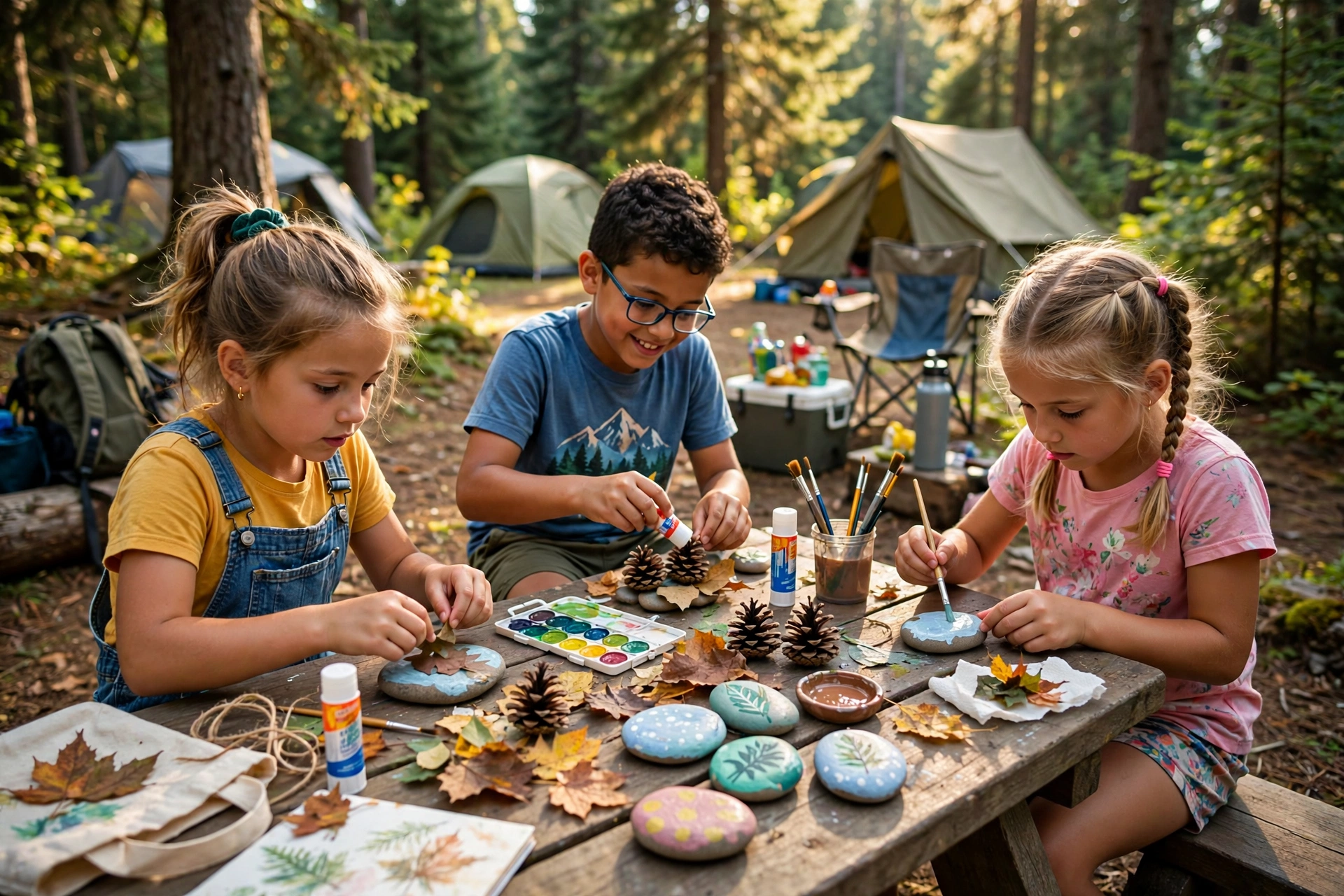
The good news is that the outdoors is the best craft cupboard there is. Leaves, pinecones, stones, sticks and mud provide most of the materials for free, and the activities below need almost no special equipment — just a small kit of basics you probably already own. This guide brings together 25 tried-and-tested ideas, organised by the moment you need them: calm table crafts, active games, water play, rainy-day saves and quiet evening wind-downs, with notes for toddlers through to tweens.
The Only Craft Kit You Need to Pack
Resist the urge to bring the whole art cupboard. One small tote or zip bag is plenty, and everything in it should be cheap, washable and not heartbreaking if it gets lost in the grass.
| Item | Why you need it |
|---|---|
| Washable markers and crayons | Drawing, rubbings, journals — no paint-water disasters |
| A glue stick and child-safe scissors | Simple construction without the mess of liquid glue |
| String or twine and masking tape | Nature bracelets, mobiles, stick frames, dens |
| A few sheets of white and coloured paper | Leaf rubbings, scavenger lists, paper aeroplanes |
| A magnifying glass | Turns any bug, leaf or stone into a ten-minute activity |
| Sidewalk chalk | Hopscotch and art on stones or paved pitches (where allowed) |
| A small bag or basket per child | Collecting treasures for crafts and hunts |
For food-fuelled craft breaks, our roundup of the best snacks for camping has plenty of low-mess options.
Nature Crafts at the Picnic Table
These are the classic kids camping crafts: quiet, sit-down activities that use whatever the campsite provides. Remind children of the golden rule before you start — collect only things that have already fallen to the ground, never pick living leaves, flowers or bark from trees.
1. Leaf and bark rubbings
Place a leaf vein-side up under a sheet of paper and rub the side of a crayon over the top. The pattern appears like magic, and older kids can label their rubbings like real botanists. A page of rubbings makes a lovely trip souvenir.
2. Pinecone creatures
Pinecones become owls, hedgehogs and mice with a dab of glue, drawn-on eyes and scraps of felt or leaf "ears". Toddlers enjoy simply painting pinecones with washable paint or rolling them in a tray of paint inside a lidded box — far less mess.
3. Painted stones to take home
Smooth stones plus washable paint or markers equals ladybirds, bees and tiny campfire scenes. Important: painted stones are a take-home craft. Leaving painted rocks in nature is discouraged in many parks, so enjoy them, photograph them, and bring them home.
4. Nature bracelets
Wrap masking tape, sticky side out, around each child's wrist. Every interesting fallen leaf, petal or seed they find gets stuck on. By the end of a short walk, everyone has a bracelet and nobody has pockets full of gravel.
5. Twig picture frames
Four straight sticks, tied at the corners with twine, make a rustic frame. Children can weave leaves and grasses through it or tape a drawing inside. Hang it on the tent for the weekend, then take it home.
6. Leaf crowns and capes
Big fallen leaves threaded onto a length of twine make crowns fit for woodland royalty. This one is wonderful for imaginative play and costs literally nothing.
7. Nature mobiles
A straight stick, three or four lengths of twine, and a collection of pinecones, feathers and interesting leaves. Tie, balance and hang from a branch near camp (remove it when you leave). Older children enjoy the engineering challenge of getting it to hang level.
Scavenger Hunts and Active Outdoor Activities
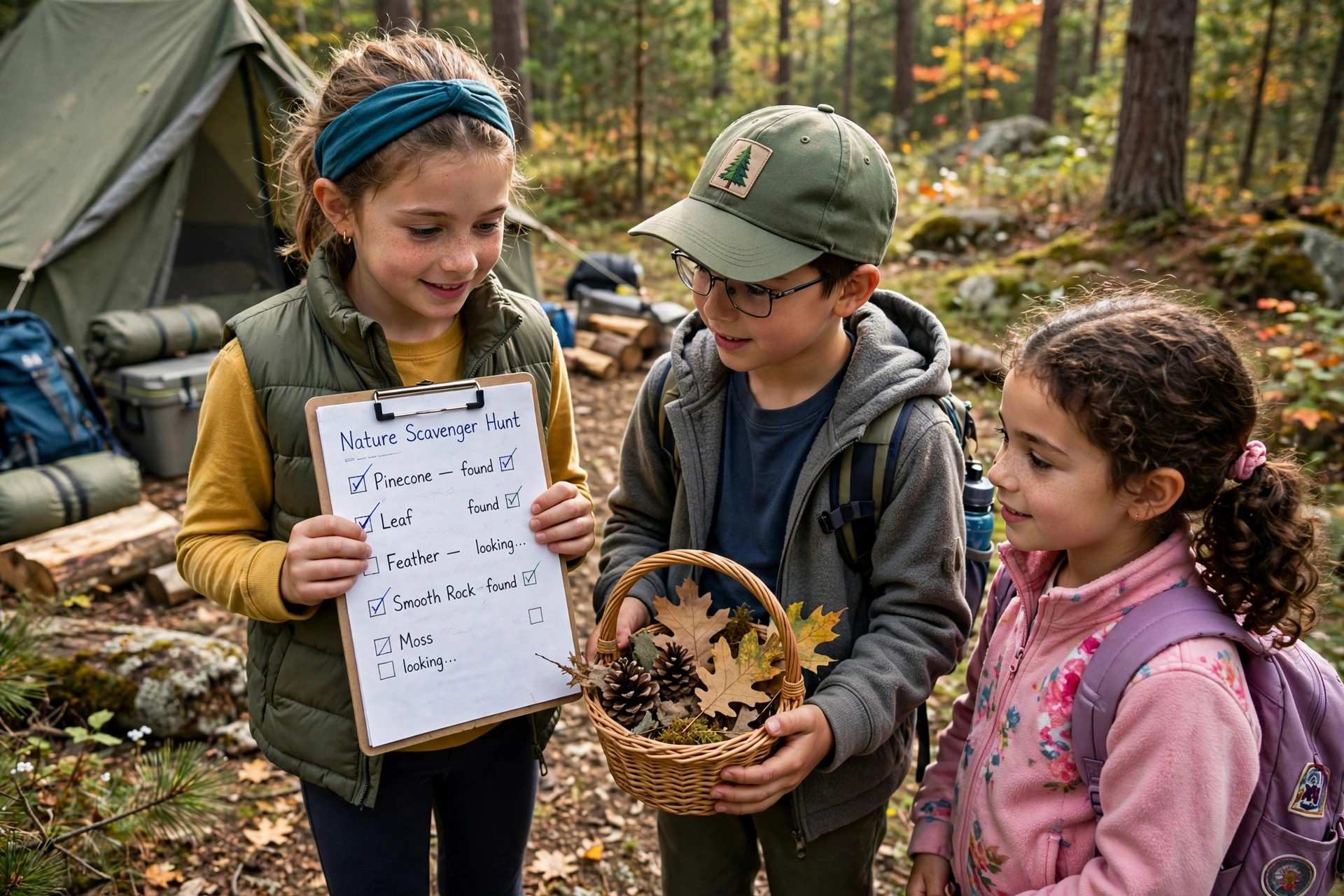
Crafts cover the quiet hours, but children also need to burn energy before they are expected to sit around a campfire. These outdoor activities for kids need no kit beyond a pencil.
8. The classic nature scavenger hunt
Write or draw a list: something rough, something smooth, something round, a feather, three different leaves, something that makes a noise. Drawing the items instead of writing words makes the hunt work for pre-readers. First to find everything — or best finds in twenty minutes — wins.
9. Colour hunt
Challenge children to find one natural item for every colour of the rainbow. Green is easy; blue and purple start real searching. Photograph each find so nothing needs to be picked.
10. Sound mapping
Sit quietly for two minutes with paper and pencil. Draw an X in the middle (that is you) and sketch every sound you hear in the direction it came from: birdsong, a stream, the wind. It is a craft, a game and a calming exercise in one.
11. Stick tower and den building
Who can build the tallest freestanding stick tower? For older children, graduate to a mini den or a full lean-to against a fallen log, using only found materials and twine. Always dismantle dens before you leave so the site is as you found it.
12. Campsite obstacle course
A log to balance along, stones to hop between, a lap around the big tree. Children will run a course of their own design twenty times and then demand you time them. It pairs well with a proper seat for supervising adults and resting toddlers — our guide to the best toddler camping chairs covers safe options.
Water and Sensory Play
On warm trips, water activities buy you the longest stretches of happy play.
13. Stone skimming and dam building
At a shallow, safe stream edge (adults within arm's reach, always), skimming flat stones and building tiny twig dams can absorb an entire afternoon. Check local rules first — in some protected streams, moving rocks disturbs habitat, so keep play to popular spots and put stones back.
14. Mud kitchen
Two old pots, a wooden spoon, water, mud and "ingredients" from the forest floor. Mud pies, leaf salads and pinecone soup will be proudly served. Pack one set of clothes you do not care about; you will need them.
15. Ice excavation
Freeze small plastic animals or treasures in a tub of water at home and bring it in the cooler. At camp, children excavate with spoons and warm water. On a hot day this is twenty to thirty minutes of fascinated, quiet play.
Rainy-Day and Tent Activities
Rain does not cancel camping fun if you have a plan — and if the weather turns properly wet, our complete guide to camping in the rain with kids will save the whole trip, not just the afternoon.
16. Camping journal
A notebook per child: draw today's campsite, stick in a leaf rubbing, write (or dictate) the best and worst moments. Journals become the souvenir children actually keep.
17. Card games and travel games
Uno, Go Fish, Dobble and a simple deck of cards weigh nothing and work in a tent, under a tarp or in the car. Teach one new game per trip and it becomes a family tradition.
18. Story stones
Paint or draw a simple picture on each of ten stones — a tent, a bear, a moon, a boat. Shake them in a bag, pull out three, and invent a story using all three. Take turns being the storyteller.
19. Shadow puppets and torch games
After dark in the tent: a torch, two hands and a little imagination. Older children can cut paper puppets during the day and perform the show at night.
Quiet Evening Wind-Down Activities
The hour before bed is when crafts earn their keep a second time — calm hands help small bodies slow down, and a predictable wind-down is a big part of what makes camp bedtime work at all, as our guide to what toddlers sleep in when camping explains in the sleep section.
20. Star and moon spotting
A simple chart of the moon's phases or a free star app on a parent's phone (red-light mode if you have it) turns looking up into an activity. Lying on a blanket counting satellites is a legitimate camping craft for the soul.
21. Friendship bracelets
Embroidery thread is tiny to pack and older children will happily knot bracelets for everyone they meet. Toddlers can thread big wooden beads or dry pasta onto a pipe cleaner instead.
22. Campfire drawing
Draw the campfire, the tent, or each other by firelight. Warm colours only is a fun rule. Keep paper well away from flames and let an adult manage anything near the fire.
23. Gratitude round
Not a craft, but the best evening ritual we know: everyone shares their favourite moment of the day and one thing they want to do tomorrow.
24. Nature weaving
Two sticks as a frame, twine as the warp, and leaves, grasses and feathers woven through. Slow, tactile and genuinely beautiful.
25. Build a tiny fairy or bug house
A circle of stones, a bark roof, leaf bedding. Children return to check their tiny house all weekend, and it teaches gentle respect for small creatures better than any lecture.
Activities by Age: What Works When
| Age | Best activities | Keep in mind |
|---|---|---|
| Toddlers (1–3) | Nature bracelets, mud kitchen, ice excavation, big-bead threading, simple painting | Short sessions, everything washable, constant supervision near water and small objects |
| Preschoolers (3–5) | Leaf rubbings, pinecone creatures, colour hunts, story stones, painted stones | Pre-drawn scavenger lists, chunky tools, lots of praise for effort over results |
| School age (6–9) | Scavenger hunts, stick towers, journals, mobiles, friendship bracelets | Add challenges, timers and collections to keep interest |
| Tweens (10–12) | Den building, sound mapping, star spotting, weaving, photography challenges | Give real responsibility — chief photographer, fire-side artist, hunt designer for younger kids |
Safety and Leave No Trace for Little Crafters
A few ground rules keep crafts safe for children and kind to the places you visit. The U.S. Forest Service's Know Before You Go guidance is a good pre-trip read for the whole family.
- Collect fallen materials only — never strip bark, break branches or pick wildflowers; many parks prohibit it.
- Wash hands after mud, stream and soil play, and always before eating.
- Teach children never to eat berries, mushrooms or plants they find, however craft-like they look.
- Keep scissors, twine and small items (beads, googly eyes) away from toddlers — choking hazards travel badly.
- Take every craft, tape scrap and painted stone home. If it did not grow there, it does not stay there.
- Supervise all water play at arm's length for under-fives, even in shallow streams.
Frequently Asked Questions
What are the easiest kids camping crafts with no supplies?
Nature bracelets (just masking tape), leaf rubbings (paper and one crayon), stick towers and fairy houses need almost nothing you do not already carry. If you pack only three things, make them tape, crayons and twine — a dozen activities in this guide run on those alone.
How do I keep camping crafts from becoming a huge mess?
Work on a blanket so everything has a boundary, choose washable, dry materials over liquid paint and glitter (never bring glitter outdoors), and keep a "finished box" so treasures are not crushed in the tent.
What can toddlers do at a campsite?
Toddlers do best with sensory, short-burst activities: sticking leaves on a tape bracelet, splashing in a mud kitchen, excavating toys from ice, painting pinecones and "helping" collect treasures in their own little basket. Expect five to fifteen minutes per activity and rotate often.
Are painted rocks okay to leave at campsites?
It is better not to. Many parks and land managers treat left-behind painted rocks as litter or environmental alteration, and acrylic paints are not natural materials. Paint them, enjoy them during the trip, photograph them — then take them home as souvenirs.
What do kids do when it rains at camp?
Move the craft table under a tarp or into the tent porch: journals, card games, story stones, friendship bracelets and drawing all work in a small dry space. Puddle walks in waterproofs turn the rain itself into the activity once the storm has passed.
Final Thoughts
You do not need a car full of craft supplies to keep children happily busy at camp. You need a tiny kit, a handful of ideas matched to the moment — active, quiet, wet or dark — and a willingness to let a pinecone be an owl. Start with three or four activities from this list, note which ones your children ask for again, and build your family's own greatest hits.

1 comment
[…] that slower time that work in a hotel room or a rental as well as at a campsite, our collection of kids camping crafts and outdoor activities doubles nicely as a travel activity bank for this […]