Ultimate Camping Checklist: Must-Have Essentials for Every Trip
There are no strict rules when it comes to camping—that’s what makes it so freeing! But the difference between a trip you remember fondly and one you’d rather forget almost always comes down to what you packed. Over the years, I’ve learned that the right must-have items can make or break your camping experience—a smart checklist beats a bigger carload of gear every time.
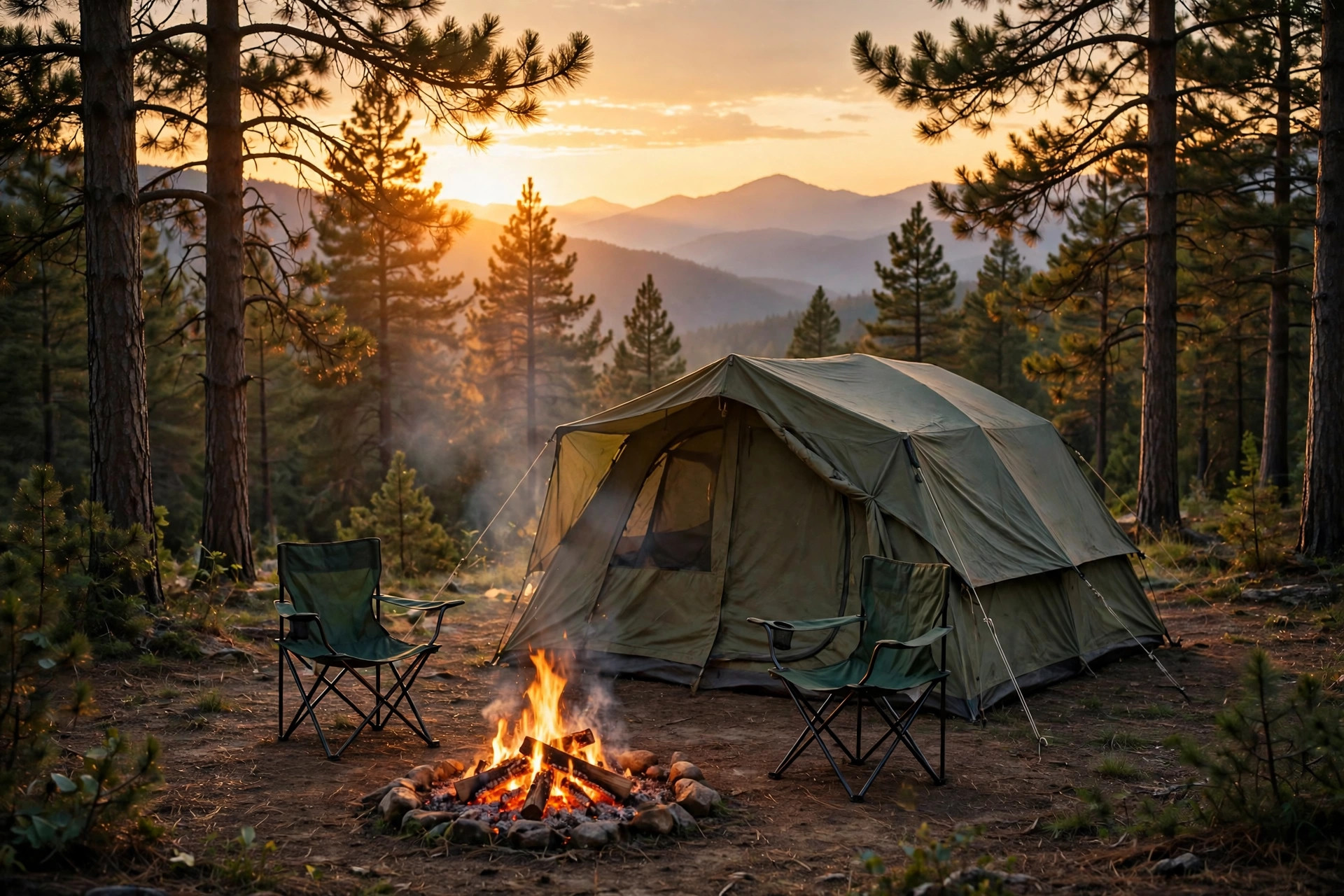
Use this list as your master starting point. A few days before each trip, go through it category by category and mark every item: bring it, the campsite provides it, or skip it for this trip. Your unique circumstances—where you’re staying, the season, who’s coming—will shape your final list. The whole review takes about 15 minutes, and it will save you a midnight run to the nearest gas station for forgotten toilet paper.
Ultimate Camping Checklist
Start with the big three—shelter, sleep, and kitchen—then fill in the rest of the categories below. A weekend at a full-hookup campground needs far less than a week of dispersed camping in the backcountry, and this list adapts to both: simply cross off what doesn’t apply. Save or print the list so the whole family can check items off as the bins get loaded. There is real peace of mind in ticking every box before you pull out of the driveway.
Campsite Must-Haves
Your site itself is the first piece of gear. Before you pack a single bin, read your reservation confirmation and the campground’s rules page: fire restrictions, quiet hours, whether firewood and drinking water are sold on site, and what the hookups look like. Many campgrounds now prohibit bringing firewood from home because of tree-killing pests like the emerald ash borer—buy it near the campground instead. And pre-chill your cooler the night before; a cold cooler packed in layers, with the first meals on top, holds ice far longer. Our tested guide to the best coolers for family camping shows which models actually keep ice through a long weekend.
Essential Items:
- Spacious cooler
- Refillable water dispenser
- Approved firewood
- Firestarter kit
- Campground map
Indoor Camping Must-Haves
Sleep is where camping trips are won or lost—one freezing night and everyone wants to go home. Choose a sleeping bag rated at least 10°F below the coldest night you expect, and remember the sleeping pad matters as much as the bag: an insulated pad stops the ground from stealing your body heat. RV campers have different needs—a portable power station and a small fan make warm nights far more comfortable. Earplugs and a sleep mask weigh nothing and will save the trip when the neighboring site hosts a midnight guitar session.
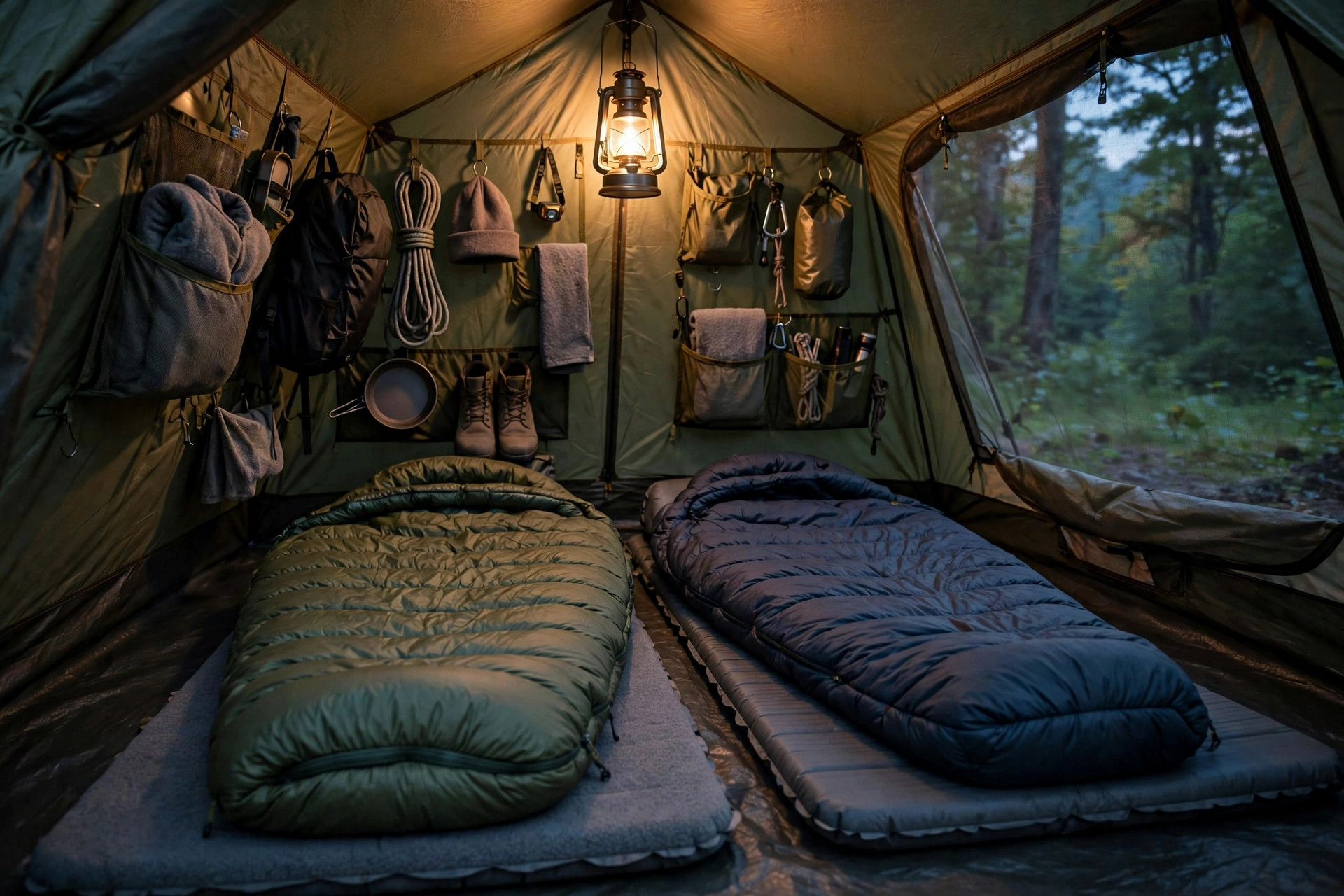
Sleep System:
- Sleeping bag
- Insulated liner
- Sleeping pad
- Air mattress
- Pump
- Repair kit
- Earplugs
- Sleeping mask
Outdoor Camping Must-Haves
Buy a tent one size bigger than your group—a “4-person” tent sleeps four shoulder-to-shoulder, not four comfortably. Lay a tarp or footprint under the tent to protect the floor and add a little insulation. For light, layer it: headlamps for hands-free tasks, a lantern for the picnic table, and a string of battery lights for atmosphere. If you’re not sure which to prioritize, our headlamps vs. lanterns guide breaks down the best lighting setup for a family campsite.

Shelter & Lighting:
- Season-appropriate tent
- Tent stakes
- Mallet
- Stabilization jacks
- Cinderblocks
- Tarp
- Mosquito netting
- Lantern
- Fuel
- Headlamps
- Rope lights
- Tiki torches
Tools for Camping
A good multi-tool replaces half a toolbox and lives in your pocket. Pro tip: wrap a few feet of duct tape around your water bottle so it’s always on hand for rips, leaks, and hot-spot blisters. Leave the specialty gadgets at home on your first trips—you’ll quickly learn which tools you actually reach for, and those are the ones that earn a permanent spot in the bin.

Essential Tools:
- Multi-tool pocket knife
- Wood axe
- Handsaw
- Duct tape
- Paracord
- Bungee cords
- Small trowel
Camping Furniture
Comfort furniture is wonderful until you’re loading it all back at 6 a.m. Bring seating for everyone, but skip the single-use gadgets until you know your camping style. If you hang a hammock, use wide tree-saver straps rather than thin rope—they protect the bark, and most campgrounds now require them.

Furniture Items:
- Pop-up pavilion
- Shade structure
- Hammock
- Outdoor rug
- Camping chair (one per person)
- Folding table
Clothes and Shoes for Camping
Dress in layers you can add and shed, because mountain and desert weather can swing 30°F in a single day. Avoid cotton as your main layer—it holds sweat and dries slowly; merino wool or synthetics keep you warm even when damp. Pack one full extra outfit in a dry bag as your “just in case” insurance, and for trips longer than four days plan one laundry stop or bring a sink-wash kit.

Clothing Essentials:
- T-shirts
- Light layering pieces
- Raincoat
- Sweater/hoodie
- Fleece pullover
- Thick wool socks
- Pants
- Shorts
- Pajamas
- Underwear
- Swimsuit/trunks
- Wide-brimmed sunhat
- Beanie/knit cap
- Gloves
- Sunglasses
- Shower shoes
- Hiking boots
- Rain boots
- Walking shoes
- Sandals/flipflops
Camping Cooking Essentials
Plan your meals before you shop—write the menu day by day, then build the grocery list from it. This one habit cuts food waste in half and ends the 5 p.m. “what do we even eat tonight” panic. A two-burner camp stove plus a cast-iron skillet handles nearly every family meal; our complete camp kitchen setup guide shows the layout that actually works. Keep the first night’s dinner dead simple—you’ll be pitching the tent, not cooking a feast.
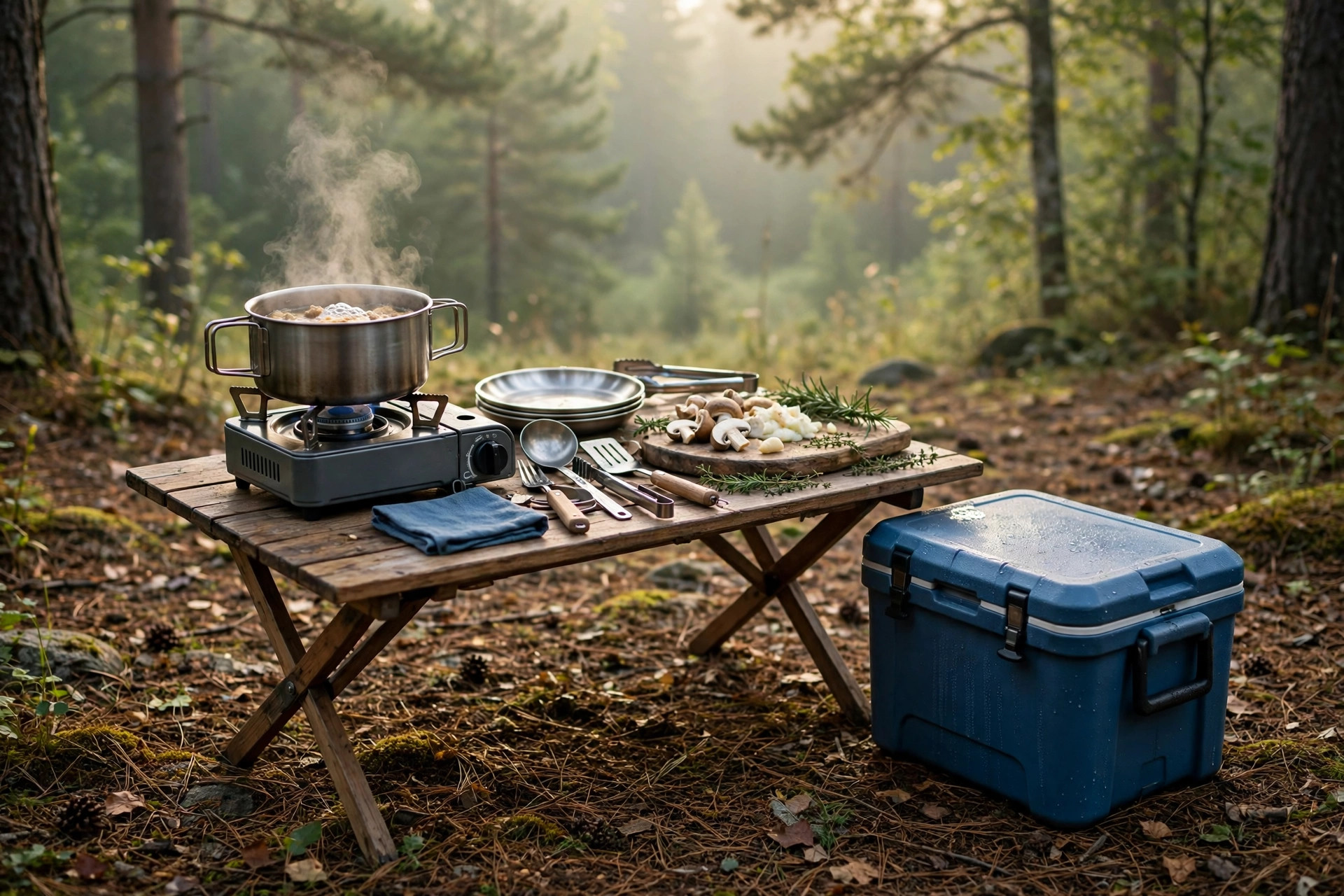
Cooking Equipment:
- Grill
- Fuel
- Cooking grate
- Portable cooking stove
- Roasting forks/sticks
- Cast-iron Dutch oven
- Coffee percolator
- Electric coffee pot
Must-Have Camping Utensils
Nesting and collapsible kitchen gear saves a shocking amount of bin space. In bear country—or anywhere the campground requires it—food and scented items go in a bear box or bear-proof canister at night, never inside the tent. A cheap oven mitt and a real bottle opener will earn their place within the first hour of camp.

Kitchen Utensils:
- Plates (one per person)
- Bowls (one per person)
- Shatter-proof cups
- Mugs
- Knives
- Spoons
- Forks
- Washable cutting board
- Fire-safe frying pan
- Measuring cups
- Spatulas
- Mixing spoons
- Tongs
- Cooking knives
- Oven mitts
- Food thermometer
- Bottle opener
- Can opener
- Coffee filters
- Bearproof food vault
- Kitchen scissors
- Toothpicks
- Bamboo skewers
- Small food bags
- Food containers
Must-Have Camping Food Items
Shop for the trip you actually planned, not a fantasy: perishables for the first two days, shelf-stable staples for the rest. Frozen water bottles do double duty as ice packs and drinking water as they melt. Pack a dedicated snack bag for the car and the trail—hungry kids derail hikes faster than steep hills. Need a full week mapped out? Our 7-day summer camping meal plan shows how to plan seven days of meals with zero repeats.

Food Essentials:
- Spices/herbs
- Salt/pepper
- Cooking oil
- Bottled water
- Soda/juice
- Potatoes
- Eggs
- Breakfast meats
- Popcorn
- Marshmallows
- Chocolate
- Graham crackers
- BBQ meats
- Fresh fruits
- Fresh vegetables
- Ketchup
- Mustard
- Relish
- Mayonnaise
- Bread
- Sliced cheese
- Deli meat
- Trail mix
- Energy bars
- Nut butter
- Jelly
- Cereal/granola
- Beef jerky
- Chips/pretzels
- Canned beans
- Hotdogs
- Hamburgers
Hygiene and Toiletries
Campground showers are unpredictable, so baby wipes and dry shampoo are worth their weight. Follow Leave No Trace: wash yourself and your dishes at least 200 feet from lakes and streams, using biodegradable soap sparingly. A small dedicated “bathroom bag” with toilet paper, hand sanitizer, and a headlamp makes midnight trips far less miserable.

Hygiene Items:
- Hand soap
- Bath towels
- Washcloths
- Hand/body lotion
- Body soap
- Shampoo
- Conditioner
- Hairbrush
- Toothbrush
- Toothpaste
- Cotton swabs
- Toilet paper
- Glasses/contacts
- Lens wipes
- Contact solution
- Handheld mirror
- Makeup
- Skincare items
- Tissues
- Dental floss
- Razor
- Shaving cream
- Water-safe shower bag
- Menstrual products
- Deodorant
- Baby wipes
- Portable shower
- Portable toilet
Camping Recreational Gear
The best camping memories rarely come from gear—they come from unhurried time together. Pack for downtime: cards, a frisbee, a star chart for clear nights. With kids, always have a rainy-day backup plan; our list of 25 tent-friendly activities has saved many a soggy afternoon. A pair of binoculars turns any ordinary campsite into a wildlife safari.

Recreation Equipment:
- Fishing poles
- Tackle
- Winter sports gear
- Kayak/canoe
- Swim towels
- Lifejackets
- Hiking daypack
- Lawn games
- Badminton set
- Cornhole
- Board games
- Playing cards
- Books
- Music player
- Speaker
- Trekking poles
- Bikes
- Skateboards
- Rollerblades
- Camera
- Video camera
- Binoculars
- Guidebook
- Frisbees
- Volleyball
- Football
- Musical instruments
- Glow sticks
- Event tickets
Camping Clean-Up Must-Haves
Plan your trash like you plan your meals: bring more bags than you think you’ll need, and learn the campground’s rules for gray water and recycling before you arrive. Strain dishwater through a bandana to catch food bits, then scatter the strained water at least 200 feet from camp and water sources. A clean site at checkout is part of the deal—leave it better than you found it.

Clean-Up Supplies:
- Eco dish soap
- Paper towels
- Trash bags
- Dishtowels
- Cleaning sponge
- Disinfectant wipes
- Drying rack
- Clothesline
- Clothespins
- Laundry hamper
- Stain remover
- Portable sink
- Broom
- Dustpan
Safety Items for Camping
Before you leave cell range, tell someone your exact itinerary—where you’re camping and when you’ll be back. A paper map still works when the phone dies. If you’re hiking with kids, walk through the “what if we get separated” plan together at the trailhead; our lost-hiking safety plan gives you the exact steps to teach them.

Safety Gear:
- Fire extinguisher
- Hand sanitizer
- Emergency blanket
- Spare cash
- High SPF sunscreen
- Insect repellant
- DEET
- Area map
- Compass
- Water filter
- Freshwater jugs
- Field guide
- Spare batteries
- Bear mace
- Whistle
- Rain poncho
- Hospital directions
Camping First-Aid
Check your kit before every season: replace expired medications, restock what you used last year, and keep prescriptions in their original labeled bottles. Add a tick remover and learn the signs of heat exhaustion—both are far more common camping emergencies than snakebites. A basic first-aid course, taken once, is worth more than any gadget in the kit.

First-Aid Supplies:
- Adhesive bandages
- Alcohol
- Hydrogen peroxide
- Gauze
- Pain relievers
- Antihistamines
- Antacids
- Anti-itch cream
- Finger splints
- Liquid bandage
- Eye drops
- Non-latex gloves
- Thermometer
- Prescriptions
- Snakebite kit
- Sunburn cream
- Tweezers
- Safety pins
- Sterile wipes
- Hydrocortisone
- EpiPen
- First-aid manual
Camping With Kids
Kids camp best with routine: the same bedtime ritual, familiar snacks, and one comfort item from home. Give each child a real job—gathering kindling, holding the flashlight, reading the map—and watch the whining drop. For a first trip, keep it to one or two nights close to home; our stress-free first family camping weekend plan walks you through it step by step.
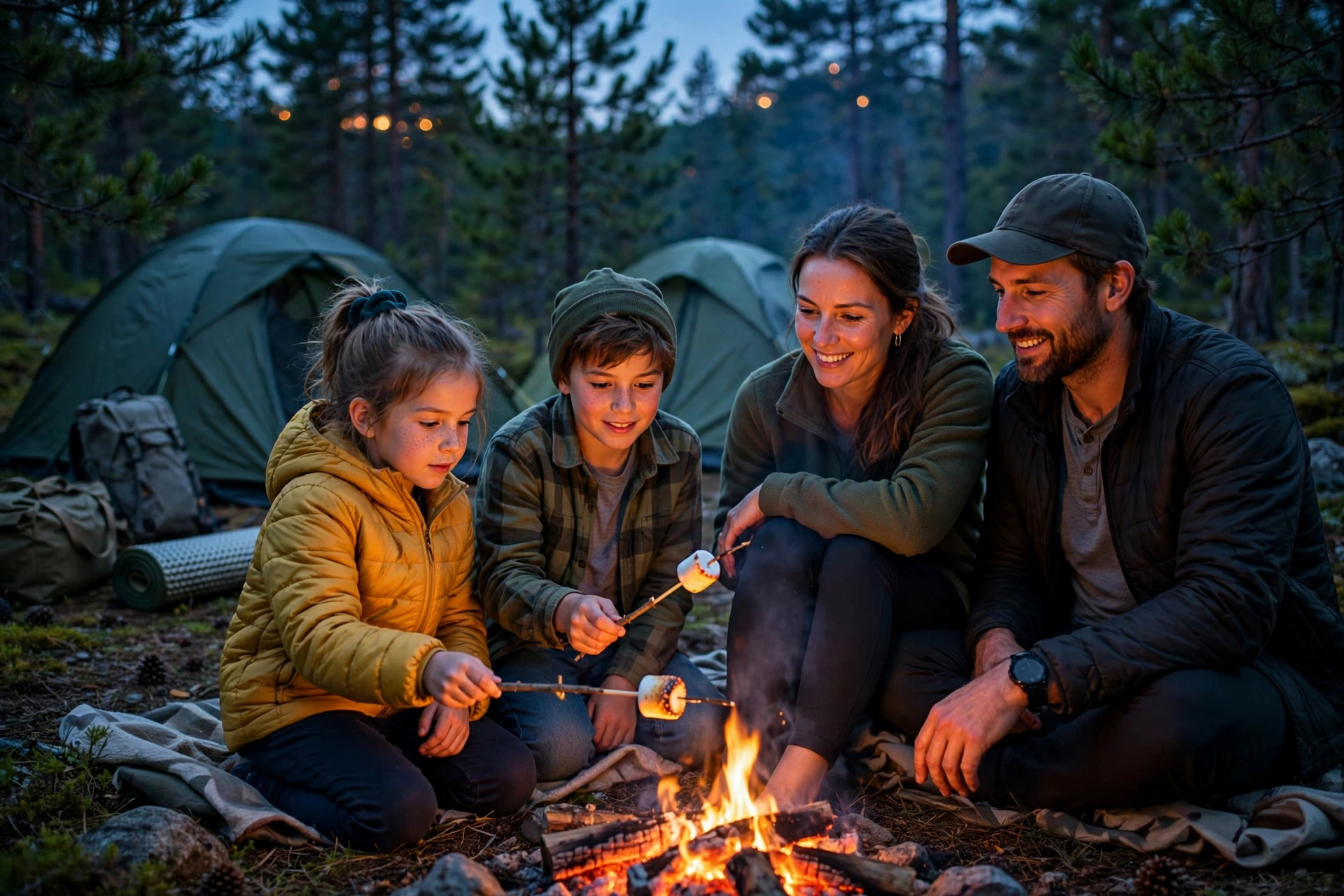
Kids’ Items:
- Indoor toys
- Outdoor toys
- Pop-up playpen
- Crib/bassinet
- Baby carrier
- Portable bathtub
- Baby monitor
- Diapers
- Baby food
- Outdoor high chair
- Child-sized chairs
- Current photo
Camping With Pets
Call ahead: many campgrounds restrict certain breeds, require leashes at all times, or ban pets from some loops. Never leave a pet in a hot car or a closed tent, and do a full tick check on everyone—two-legged and four-legged—after every hike. Bring their regular food (a diet change plus travel stress is a bad combo) and a familiar bed so they settle in faster.

Pet Supplies:
- Waste bags
- Dog food
- Treats
- Food bowls
- Water bowls
- Outdoor toys
- Pet bed
- Leash
- Harness
- ID tags
- Pet first-aid kit
- Vet records
- Current photo
- Emergency vet directions
Personal Belongings
Photograph your reservation confirmation, ID, and insurance cards and keep them in a shared album—paper gets wet. A small dry bag for phone, wallet, and keys lives by your sleeping bag at night. These boring little items are the ones that end trips early when forgotten.
Personal Items:
- Cell phone
- Charger
- Wallet
- Credit cards
- ID
- Keys
- SPF lip balm
- Driver’s license
- Fishing license
- Reservation confirmation
- Insulated bottle
- Travel umbrella
Camping Checklist FAQ
What is the single most important thing to pack for camping?
If I had to pick one category, it’s the sleep system: a warm-enough bag and an insulated pad. Shelter keeps the rain off, but miserable nights are what actually send families home early. After that, water, food, and a first-aid kit round out the non-negotiables.
How do I avoid overpacking for camping?
Use this checklist the way it’s meant to be used: cross off everything the campsite already provides, skip what doesn’t fit your season or group, and do a test pack in the driveway a day early. Most first-timers bring twice the clothes and half the trash bags they need. These are the 11 beginner camping mistakes I see families repeat most.
How far in advance should I start packing?
Check the big gear a week out (pitch the tent, test the stove, check the first-aid kit), shop for food one or two days before, and load the car the night before you leave. If it’s your first trip with a new tent, always do a practice pitch at home—learning in the backyard beats learning in the rain.
How do I keep food cold for a whole weekend?
Pre-chill the cooler overnight, use block ice plus frozen water bottles, open the lid as little as possible, and keep the cooler in the shade (throw a sleeping bag over it on hot days). Pack the meals you’ll eat first on top so you’re not digging. Our cooler ice-retention tests show which models genuinely last a long weekend.
What should I do if I forget something important?
Don’t panic. Campground stores cover the basics, neighboring campers are famously generous with a loaned mallet or a cup of sugar, and half of camping is cheerful improvisation. Write the forgotten item at the top of this checklist for next time—that’s how a good list gets great.
Print this list, save it to your phone, and run through it the night before every trip. Packing well is a skill: your third trip will take half the time of your first. Happy camping!
