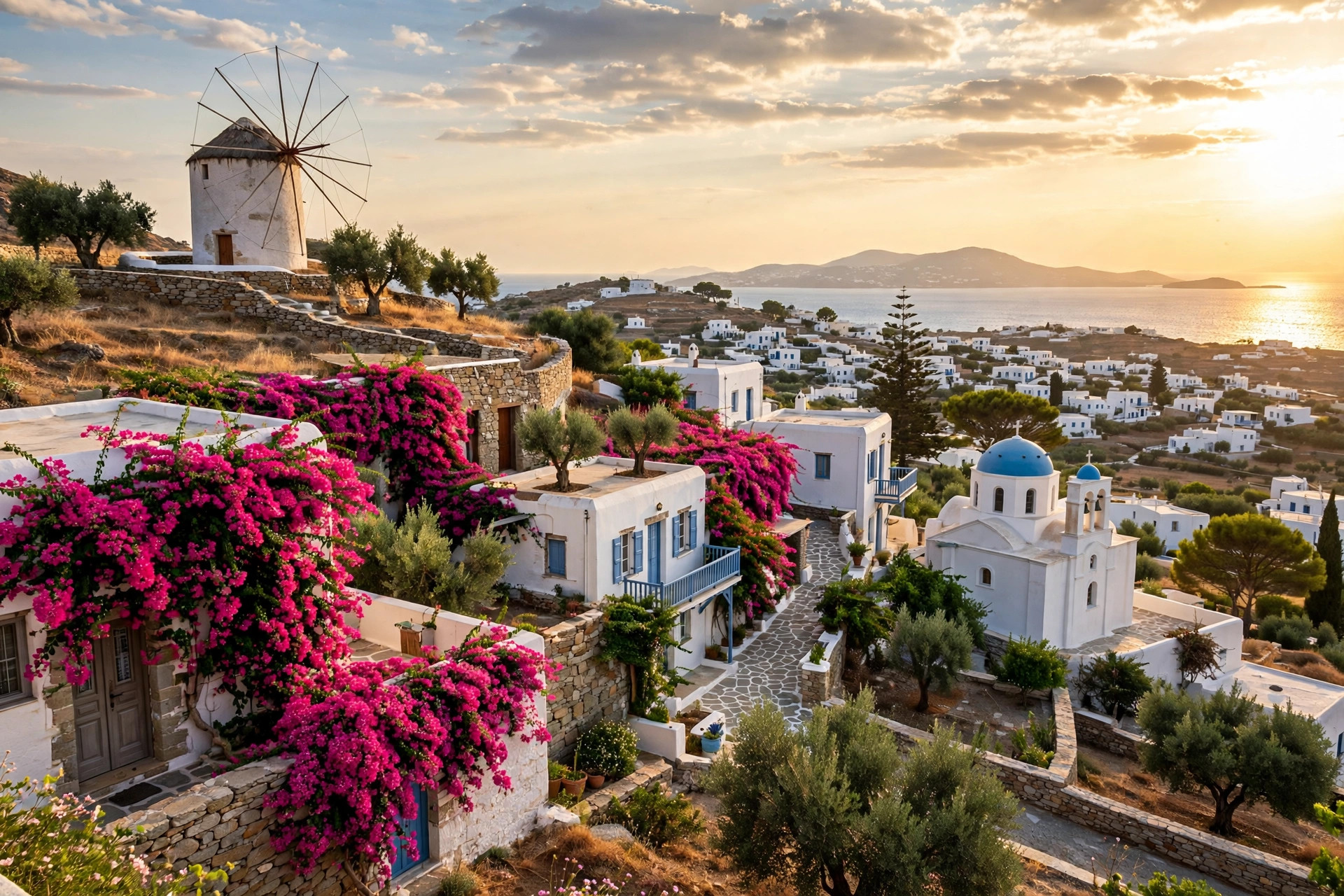
Tucked into the hills at the very center of Paros, Lefkes (Λεύκες) is the island’s most beautiful village — a whitewashed maze of cobbled lanes, neoclassical mansions, and Byzantine churches that feels a world away from the busy port towns of Parikia and Naoussa. Once the first capital of Paros, this serene hilltop village pairs dramatic views across the Aegean to Naxos with some of the best tavernas on the island.
This complete Lefkes Paros travel guide covers everything you need to plan your visit: the best things to see and do, how to walk the ancient Byzantine Road, where to eat, where to stay, and the best time to go. Whether you’re stopping in for a half-day stroll or using the village as a quiet base for your Paros trip, here’s how to make the most of it.
Getting to Know Lefkes
Lefkes sits in the hilly heart of Paros, about 10 kilometers inland from both Parikia and Naoussa. It was the island’s first capital — a role it held for centuries — and that history still shows: Venetian-influenced neoclassical mansions line the main square, while small Byzantine chapels and olive presses hide along the back lanes. The village’s marble quarries, used since antiquity, supplied stone for some of the most famous sculptures of ancient Greece.
Writers have long romanticized it. Lawrence Durrell famously described Lefkes as being “like a white dove” — and standing in its flower-draped alleys at golden hour, you’ll see exactly what he meant. Unlike the buzzing beach clubs of Naoussa, Lefkes runs on a slower rhythm: morning coffee in the square, an afternoon walk under the pines, dinner at a family-run taverna.
Planning Your Visit
How long do you need? A half day (3–4 hours) is enough to wander the lanes, visit the windmills, have lunch, and stroll part of the Byzantine Road. Stay a full day if you want to hike the full Byzantine Road to Prodromos and back, or linger over a long dinner.
Best time to visit: Late April through June and September into October offer the sweet spot — warm days, blooming bougainvillea, and far fewer crowds than high summer. July and August bring the most visitors (and the hottest weather), so aim for early mornings or late afternoons then. Winter months (December–February) can be rainy and quiet, with some tavernas closed — though the village looks moody and beautiful in soft winter light. For more on timing island travel around costs, Discover Greece’s official Paros villages guide is a helpful seasonal reference.
Getting around: The village center is pedestrian-only, so park at the entrance car parks and explore on foot. A rental car (typically around €30–€50 per day in season) gives you the freedom to combine Lefkes with the marble quarries, Prodromos, and Marpissa in one loop. Scooters are easier to park near the pedestrian-only alleys. If you’re budgeting the whole trip, our family road trip cost breakdown can help you plan the transport side of the journey.
Getting There
Most visitors arrive on Paros by ferry into Parikia from Piraeus (Athens) or nearby Cycladic islands. From there, Lefkes is an easy 20-minute drive inland — roughly 10 kilometers — with increasingly spectacular views of Naxos and the Aegean as you climb.
- By car or ATV: The drive up from Parikia or Naoussa passes the ancient marble quarries — worth a short stop. Parking is well signed at the village entrances.
- By bus: Local buses connect Lefkes with Parikia for around €2 — the cheapest way to get there if you’re traveling light.
- Guided tours: Sunset minivan tours and village-hopping excursions from Parikia and Naoussa often include Lefkes as a stop, and boat trips to Antiparos can be combined for a full day out.
What to See and Do in Lefkes and Beyond
1. Wander the Village Streets
This is the main event — and the best thing about Lefkes is that it costs nothing. Lose yourself in narrow alleyways draped with bougainvillea, where whitewashed houses and neoclassical mansions tell stories of the village’s past as the island’s first capital. Don’t miss the House of Literature (founded in the former town hall), a striking example of Cycladic architecture that now hosts writing workshops.
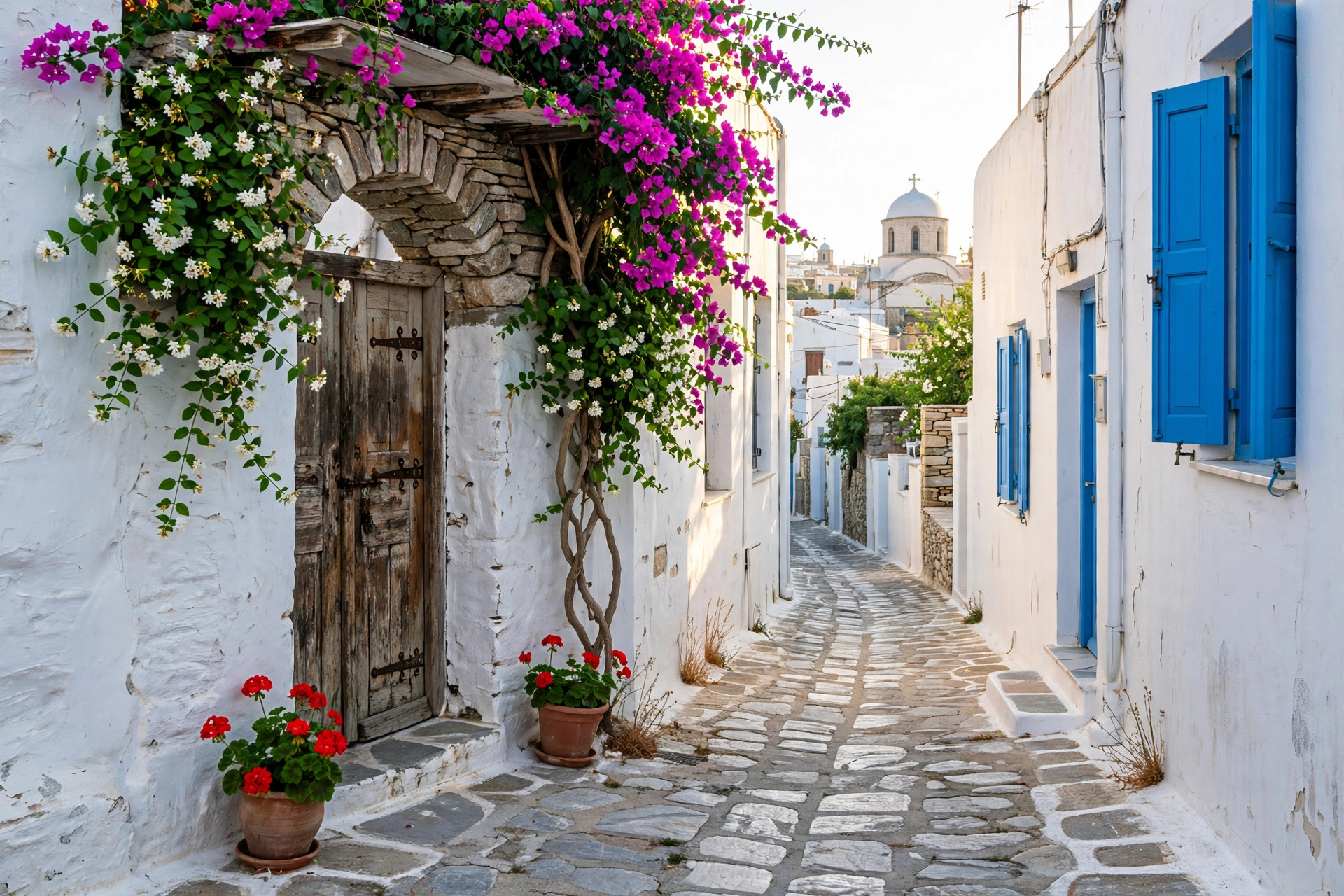
Tip: The lanes are prettiest in the soft light before 11am and after 5pm, when tour buses have gone and photographers get the village nearly to themselves.
2. Visit the Restored Windmills
Just above the village near the main church, Lefkes’ beautifully restored stone windmills are the island’s most iconic landmarks outside the beaches. Climb up for panoramic views over the surrounding hills toward Naxos. Pick up a clay windmill souvenir from a local shop — it’s the classic symbol of Paros heritage.
3. Shop for Local Treasures
Lefkes punches above its weight for artisan shopping. A few standouts:
- Oneipa Concept Store: Hidden behind a stone entrance, it blends traditional Greek items with modern designs.
- Keramiko: A pottery workshop famous for glazed pomegranates — symbols of health and prosperity in Greek culture.
- ART&SILVER @ bric à brac: Quirky handcrafted jewelry and antiques worth a browse.
- Scarabee Jewelry: Exquisite designs with blue stones inspired by the sea.
4. Hike the Byzantine Road
The ancient Byzantine Road is a thousand-year-old stone-paved footpath that once connected Lefkes with the coast — and it’s one of the most rewarding walks on Paros. The route is well waymarked and mostly shaded:
- Route 1 (5 km, ~3 hours): An easy, mostly downhill stroll to Prodromos — ideal for families and casual walkers.
- Route 2 (9 km, ~5 hours): A moderate hike toward Ag. Kyriaki Monastery with wide valley views.
- Route 3 (15 km, ~5 hours): Challenging but rewards you with panoramic views from Rachi Hill.
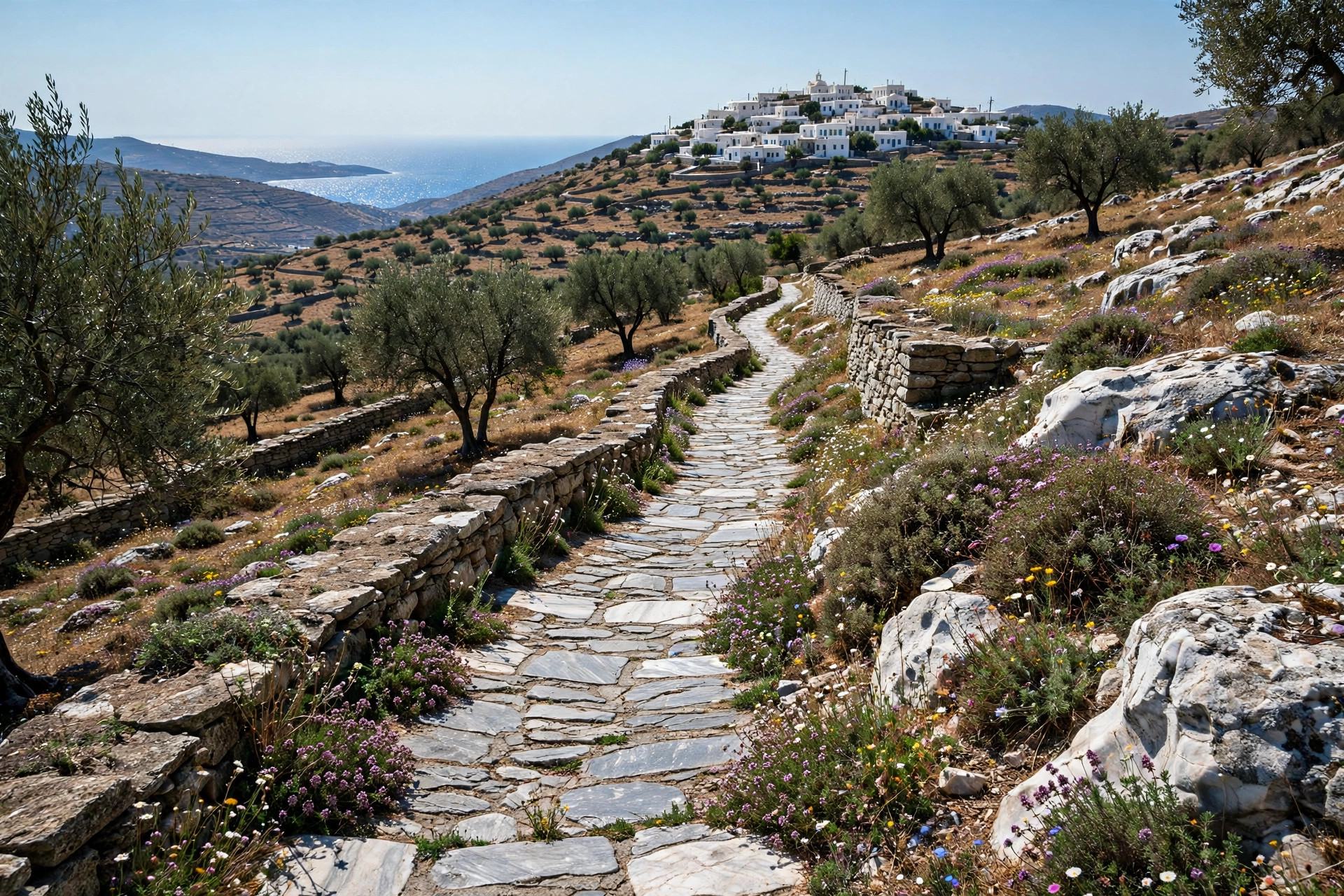
Bring sturdy shoes, water, and sun protection — there are few shade stops along the open stretches. Hiking with little ones? Our guide to realistic trail distances by age will help you pick the right route. For full route details, All Over Greece’s Byzantine Road trekking guide has maps and elevation profiles.
5. Explore Churches & Monasteries
Lefkes’ religious heritage is one of its richest assets:
- Agia Triada Church: The village’s grandest church — step inside to admire Byzantine frescoes under its dome.
- St. Kyriaki Monastery: A medieval fortress-like monastery dating to 1665, set above the village with sweeping vistas.
- Panagia Ypapanti: A hidden gem of a chapel with intricate iconography, tucked along the lanes.
6. Soak Up Village Life
Slow down Lefkes-style. Sip a Greek coffee at Agiazi Café (try their orange pie) or settle under the pine trees in the main square with an ice cream and views across to Naxos. Mornings belong to the locals — arrive early and you’ll share the square with grandfathers and their coffee cups rather than tour groups.
7. Dine at Authentic Tavernas
Lefkes is a serious food village. A few local favorites:
- Chrisoula: Famous for pastitsio and zucchini balls.
- Meli: Pair baklava with their handmade vanilla ice cream.
- Klarinos Tavern: Hearty local sausages and grilled octopus.
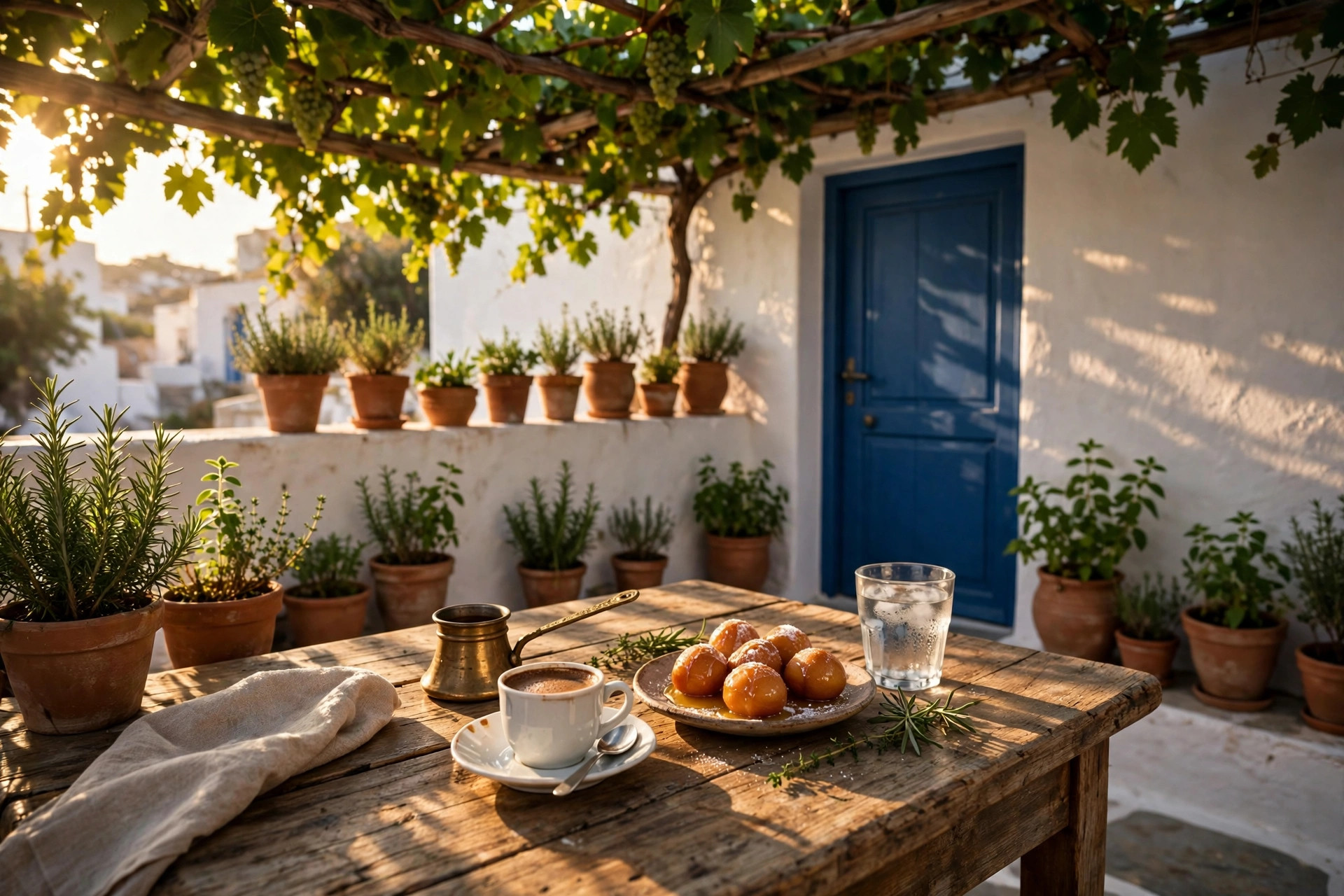
Book ahead for dinner in July and August — the best tavernas fill up fast on weekend evenings.
8. Attend the Karavolas Festival
If you’re visiting in late August, don’t miss the Karavolas Festival — a lively celebration of music, dancing, and traditional snail dishes that’s a unique taste of Parian culture. Check locally for exact dates, as they shift slightly each year.
9. Visit the Museum of Aegean Civilization
End your day at this small museum inside the Lefkes Village Hotel, showcasing the daily life of Aegean islanders through the centuries. It’s a quick, worthwhile stop. Contact: +30 2284041827.
Nearby Attractions
Prodromos & Marpissa: Linked to Lefkes via the Byzantine Road, these neighboring villages offer charming alleys, local eateries, and an even quieter pace — an easy add-on to your hike or drive.
Piso Livadi Beach: After a morning of hiking, head down to Piso Livadi for a swim and a seaside lunch. It’s the perfect cool-down after the Byzantine Road.
Pair this guide with our ultimate Naoussa Paros travel guide to plan the coastal half of your trip — Lefkes and Naoussa make an ideal two-sided Paros experience.
Where to Stay
Lefkes works beautifully as a quiet, authentic base — you’ll pay less than in Naoussa and sleep to church bells instead of beach-bar bass.
- Olive Mill Guesthouse: A historic building with soundproofed rooms and free parking. (Check reviews, prices & availability)
- Agiasa Villas: Sparkling pools and hot tubs — a great pick for families. (Check reviews, prices & availability)
- Villa Luxury Magic View: Private Aegean Sea views and an infinity pool for a splurge stay. (Check reviews, prices & availability)
Who Should Visit?
Photographers: Stunning landscapes, Cycladic architecture, and golden-hour light make Lefkes one of the most photogenic villages in the Cyclades.
Hikers: The Byzantine Road and its offshoots offer thousand-year-old trails with real variety. For shoulder-season hikes, pack smart with our winter hiking gear list.
Foodies: Renowned tavernas with authentic Greek cuisine — this is where Parians themselves come to eat well.
Families: Safe pedestrian lanes, easy half-day hikes, and ice cream in the main square make Lefkes an easy win with kids.
Couples: Quiet, romantic, and beautifully lit at night — a lovely contrast to busier beach towns.
Frequently Asked Questions
Is Lefkes worth visiting on Paros?
Yes — it’s widely considered the most beautiful village on Paros and gives you the island’s traditional, inland side that most beach visitors miss. The Byzantine Road hike, the tavernas, and the windmill views alone justify the short drive.
How long do you need in Lefkes?
A half day (3–4 hours) covers the village lanes, windmills, and a taverna lunch. Give it a full day if you want to hike the Byzantine Road to Prodromos and back, or stay overnight for the quietest experience.
Can you walk the Byzantine Road with kids?
Route 1 (5 km, ~3 hours) is an easy, mostly downhill walk that suits older children. Go early to beat the heat, carry plenty of water, and wear proper shoes — the stone paving is uneven in places.
How do you get to Lefkes without a car?
Local buses run between Parikia and Lefkes for around €2. Guided sunset minivan tours from the coast also stop in the village.
When is the best time to visit Lefkes?
May–June and September–October offer the best balance of warm weather and small crowds. July and August are busiest — visit early in the day for the most peaceful experience.
