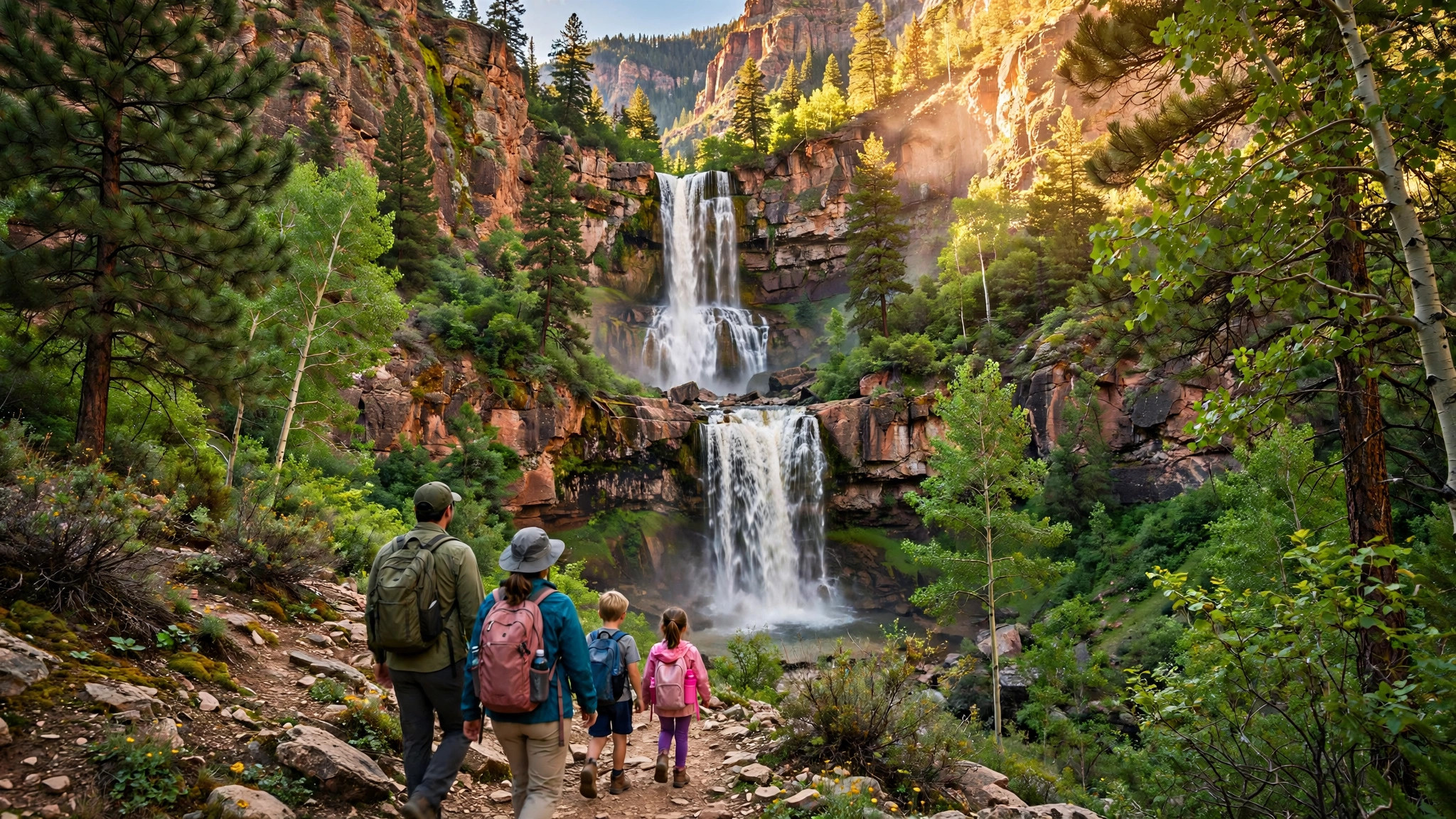
Of all the trails we have hiked in Utah, the one I recommend first to families is Stewart Falls. It has everything you want in a day hike: a shady, interesting trail, mountain views that keep kids distracted, and a waterfall at the end so dramatic that every age group stops talking for a moment. After hiking it in every season, I can say with confidence that this two-tiered, 200-foot waterfall near Sundance is one of the best waterfall hikes in the Wasatch — and it is absolutely doable with kids in tow.
This guide covers the updated trail stats, current parking and fee details, what to expect on the trail, seasonal highlights, winter safety, and practical family tips. Whether this is your first hike in Utah or your fiftieth, you will find something new here.
Hike Stats at a Glance
Before you lace up, here are the numbers that matter:
- Distance: 3.6 miles out and back
- Elevation gain: about 656 feet, mostly in rolling ups and downs rather than one brutal climb
- Difficulty: moderate, leaning toward easy for fit families
- Time: 1.5 to 2.5 hours round trip, depending on how long you linger at the falls
- Trailhead: Aspen Grove parking lot off the Alpine Scenic Loop (SR-92), just past the fee station
- Fees: a recreation pass is required — the self-pay station has charged $6 to $10 per vehicle in recent seasons, so bring cash and check the current signage; America the Beautiful passes are also accepted
- Season: typically late May through November from the main trailhead
- Facilities: restrooms and a small parking lot at the trailhead (fills by 9 or 10 AM on weekends)
- Dogs: welcome, but keep them leashed at all times and pack out waste
The trailhead lot is shared with the Mount Timpanogos trailhead, which catches people off guard. Park, walk to the restrooms, and look for the sign that says “Stewart Cascades.” Take that path. If you follow the Mt. Timpanogos signs, you will be in for a very different day.
Navigating to the Trailhead
From Salt Lake City, take I-15 south to Provo Canyon (US-189), then head east on the Alpine Scenic Loop (SR-92) toward Sundance. Continue past the resort to the fee station, then turn into the parking lot immediately after it. Self-pay envelopes with a tear-off hang tag are available at the station — fill one out, display the tag on your dashboard, and you are set. If you have a national parks pass, leave it on the dashboard instead.
A few practical notes: the lot is small and there is no overflow parking nearby, so arrive before 9 AM on summer weekends. Bring exact change for the fee station. Cell reception can be spotty on the drive up, so download your map before you leave home.
What to Expect on the Trail
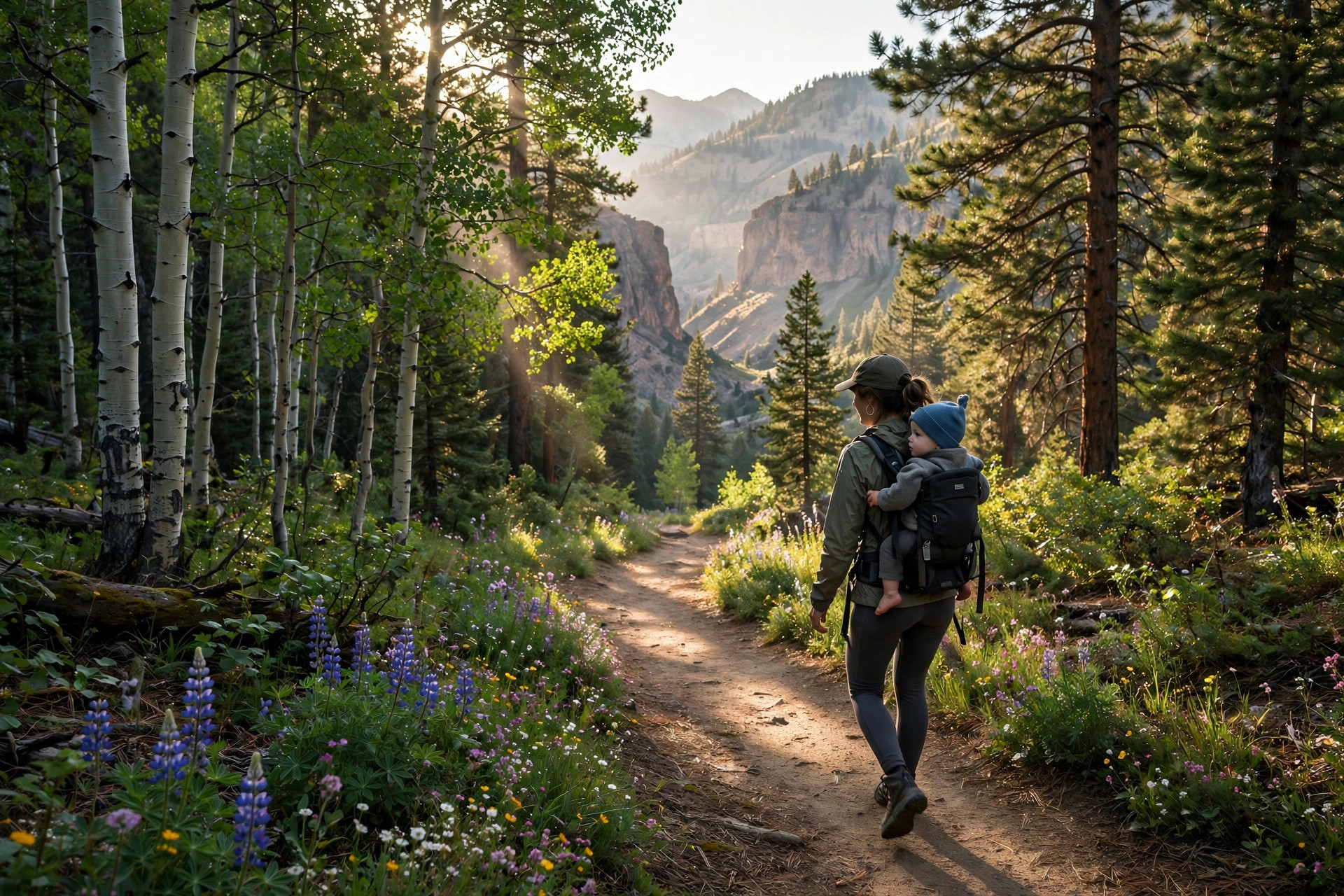
The first quarter mile is the steepest section — a short, direct climb that gets the hard part done early. After that, the trail settles into a gentle rhythm through pine and aspen forest, weaving in and out of shade with opening views of Provo Canyon and the backside of Mount Timpanogos. Around the one-mile mark, the trail begins to descend toward the falls.
Expect rocky sections with embedded rocks that act like natural stairs, plus loose gravel and exposed tree roots in places. Sturdy hiking shoes with good traction make a real difference here, and I recommend holding hands with small kids through the rockiest stretches. Watch for stinging nettle along the edges — teach little explorers what it looks like and to give it a wide berth.
About 1.8 miles in, you will hear the falls before you see them. The last descent from the ridge down to the base is steep, so keep youngsters close at this point. The payoff is worth every step: a towering two-tiered waterfall crashing over 200 feet of rock face, with a cooling mist that feels incredible on a hot summer day.
Seasonal Highlights: When to Visit
Spring: This is when the falls run their strongest. Snowmelt swells the creek, wildflowers carpet the meadows, and the mist at the base is extra refreshing. Expect muddy patches early in the season.
Summer: The classic family season. The forest canopy keeps much of the trail shaded, but start early to beat both the heat and the crowds. Pack more water than you think you need — it is dry in July, and the exposed sections bake by midday.
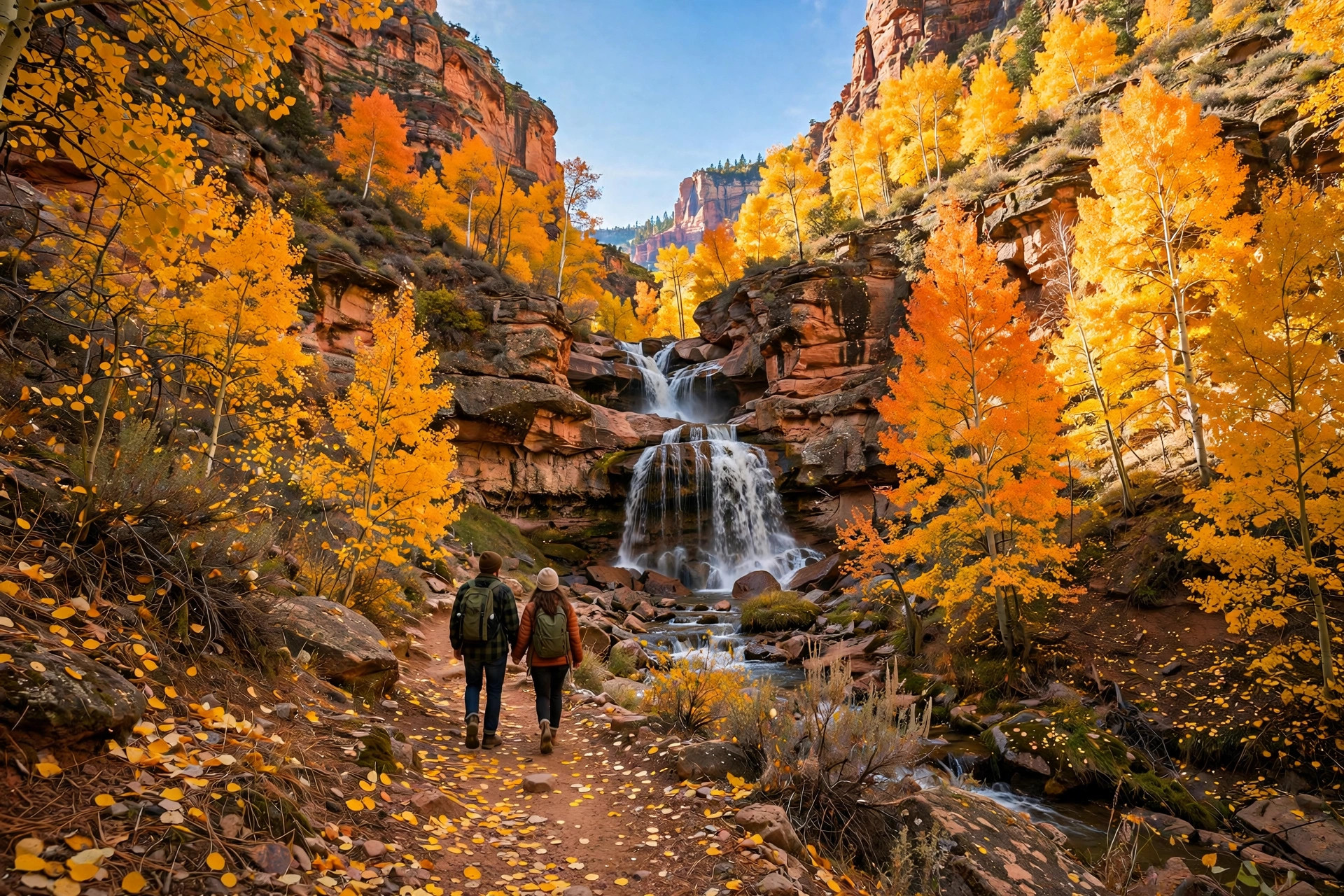
Fall: My personal favorite. The waterfall drops to a thinner flow, but the surrounding aspens explode into gold and orange, making this one of the most photogenic hikes in the Wasatch. Late September through mid-October is peak color.
Winter: A completely different, magical experience — but it comes with serious caveats. See the winter section below.
Stewart Falls in Winter
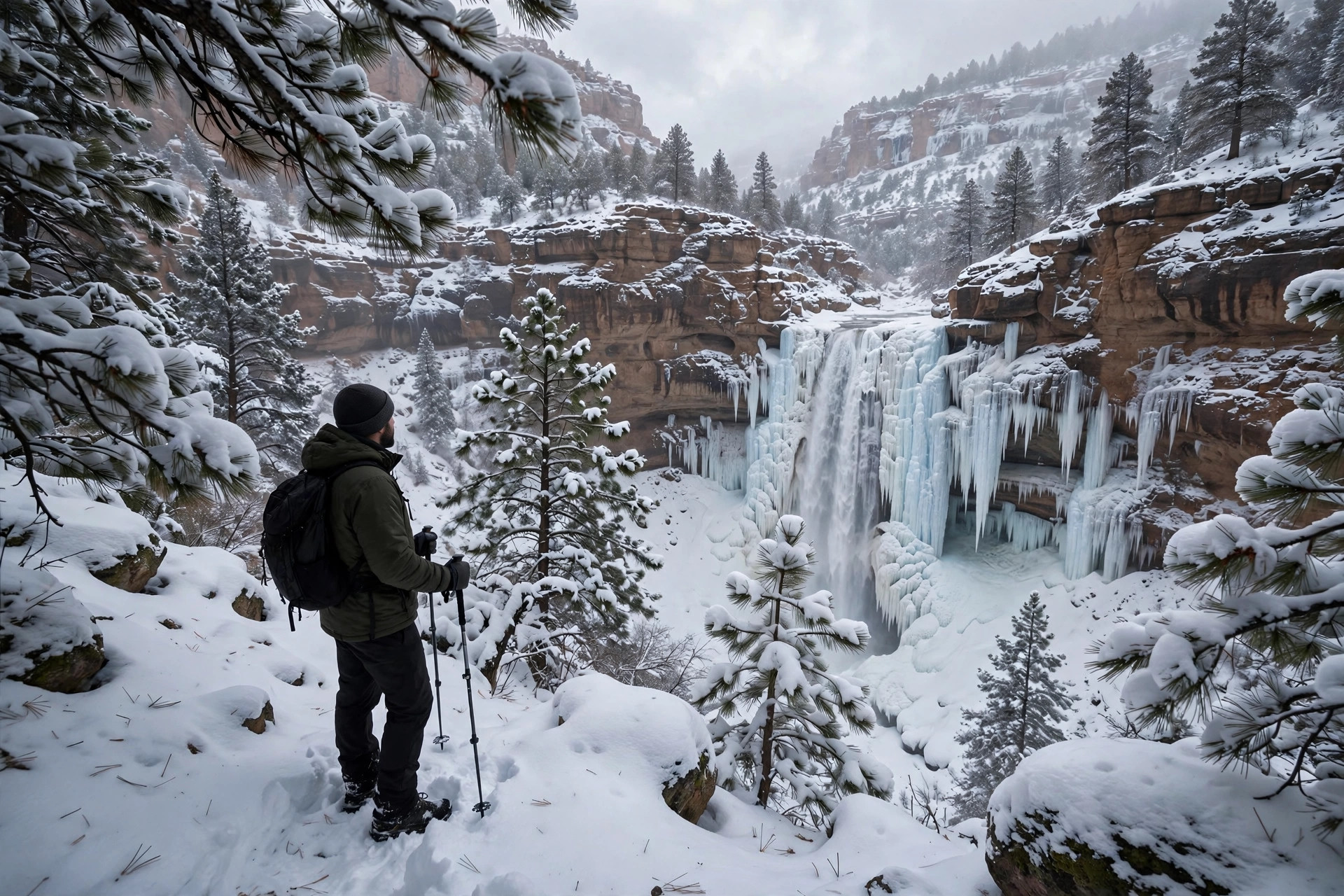
In winter, the falls often freeze into a curtain of ice, and the trail becomes a quiet, snow-covered wonderland. But winter access and safety deserve their own discussion.
First, the Alpine Scenic Loop closes in winter, so you cannot reach the Aspen Grove trailhead by car. Winter access is from the Sundance Resort side instead. Second, the trail crosses several avalanche-prone areas. This is not casual winter-hiking territory: before you go, check the daily avalanche forecast from the Utah Avalanche Center and only hike when danger is low in the Provo area.
Gear matters enormously in winter. Bring microspikes for packed trail or snowshoes for fresh powder, dress in proper winter layers, and pack more insulation than you think you will need. Our guide to keeping kids warm outdoors with a layering system applies just as much to winter hiking as it does to camping. If you are new to winter trails, go with someone experienced and turn around if conditions feel wrong — the falls will be there next year.
Hiking Stewart Falls With Kids
This is one of the best “big payoff” hikes for families in northern Utah, but a little planning makes it much smoother:
- Pick a realistic distance. At 3.6 miles round trip with only moderate elevation gain, Stewart Falls fits comfortably into the realistic trail distances we recommend by age. Little legs do best with frequent snack breaks — pack double the snacks you think you need.
- Start early. Aim for the trailhead by 8 AM in summer. You will get parking, shade on the outbound climb, and a less crowded waterfall.
- Gear up right. A carrier is easier than a stroller on the rocky sections — see our toddler hiking gear picks if you are deciding what to bring. Every kid carries their own small pack with water and a snack; ownership of the pack dramatically improves morale.
- Respect the falls. The rocks at the base are slick, and the mist makes everything wet. Keep kids away from the cliff edges and do not let anyone climb toward the upper tier — this is where injuries happen every summer.
- Expect the steep finish. The ridge descent near the falls is the one section where small children need close supervision. Save your energy (and theirs) for this part.
Protecting the Trail: A Shared Responsibility
Stewart Falls is wildly popular, and the impact shows — especially on busy weekends. This trail is a perfect classroom for teaching kids the 7 Leave No Trace principles in ways they actually remember: packing out every wrapper, staying on the marked path, leaving wildflowers for the next family, and respecting wildlife from a distance.
If you bring your dog, leash up and carry bags — pick up waste and dispose of it at the trailhead bins. And please, no rock stacking near the falls or carving initials into trees. A few hundred thousand visitors a year can love this trail to death if everyone takes a small souvenir.
Frequently Asked Questions
How long is the hike to Stewart Falls?
The round trip is about 3.6 miles on an out-and-back route, with roughly 656 feet of elevation gain. Most hikers finish in 1.5 to 2.5 hours, including time spent at the falls.
Is Stewart Falls kid friendly?
Yes — it is one of the best family waterfall hikes in Utah. The trail is well marked and mostly manageable for school-age kids. The descent from the ridge to the base of the falls is steep, so keep young children close through that section, and bring extra snacks and water.
Is Stewart Falls hard?
It is rated moderate, leaning toward the easier side. The first quarter mile is the steepest climb, then the trail rolls gently through the forest. The steepest section is the final descent to the base of the falls. Rocky sections make sturdy footwear worthwhile.
Who is Stewart Falls named after?
Stewart Falls is named for the Stewart family, early settlers of the area around Sundance and North Fork Canyon. Local history ties the falls and nearby Stewart Cascades to these homesteaders who farmed the canyon in the late 1800s.
Do you have to pay to hike Stewart Falls?
The trail itself is on public Forest Service land, but parking at the Aspen Grove trailhead requires a recreation pass — the self-pay station has charged $6 to $10 per vehicle in recent seasons. America the Beautiful passes are honored.
Can you hike Stewart Falls in winter?
Yes, but access and safety change completely. The Alpine Scenic Loop closes, so you reach the trail from the Sundance Resort side. The trail crosses avalanche terrain, so check the Utah Avalanche Center daily forecast first, and bring microspikes or snowshoes plus full winter layers.
Stewart Falls has a way of turning casual visitors into repeat hikers — our family keeps coming back each season to see how the falls change. If you are building your Utah hiking list, this one earns its place near the top. For more family-friendly options across the country, check our roundup of the best easy hikes near national parks for families, and see the full trail profile on AllTrails for recent hiker reviews and current conditions.
