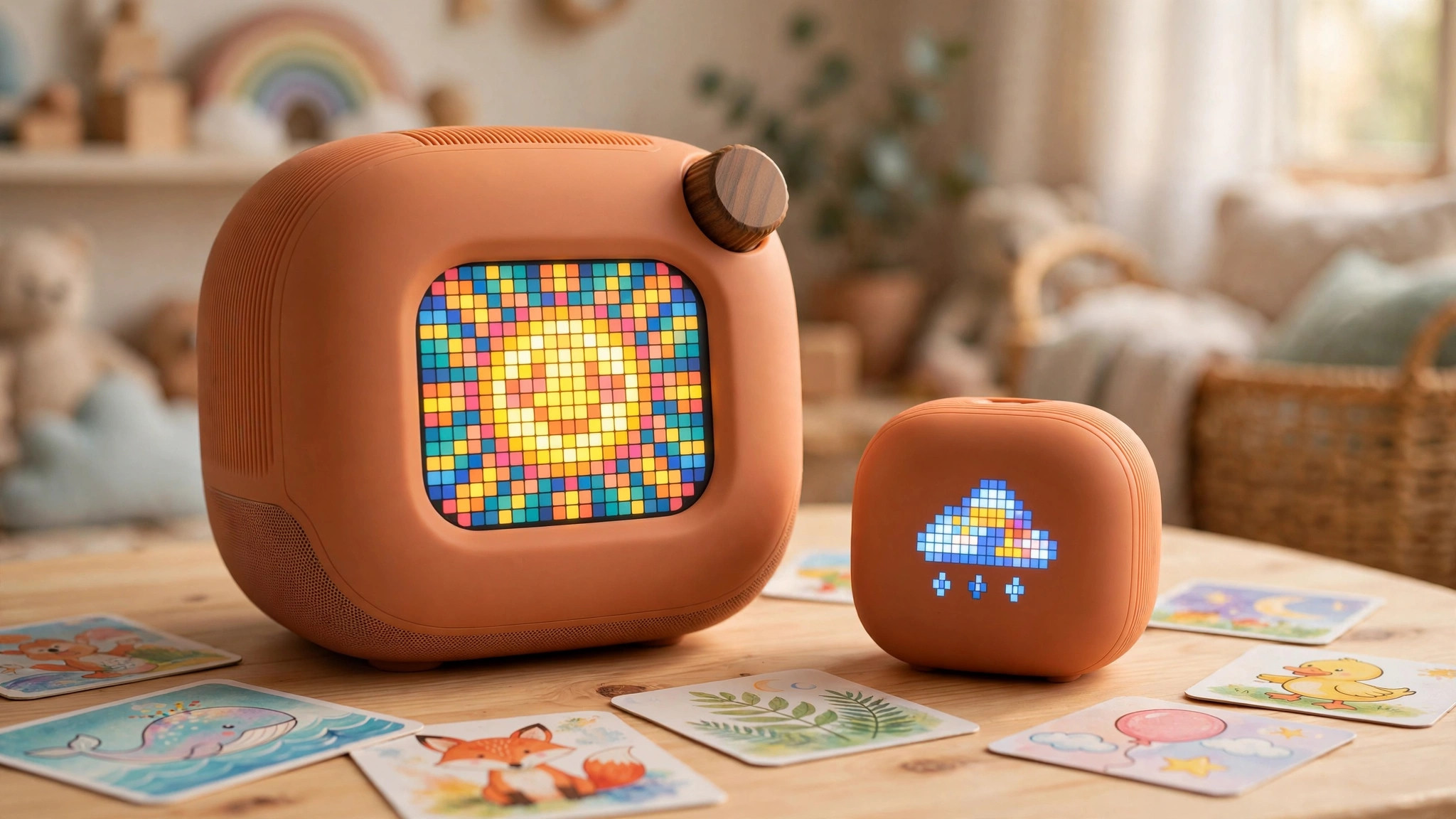
Yoto Player vs Mini: which one wins for your family? If you’re torn between the Yoto Player (3rd Generation) and the pocket-sized Yoto Mini, you’re not alone — it’s the most common question we hear from parents. After using both devices almost daily with our toddler at home and on the road, I can tell you honestly: you can’t go wrong with either one. But the right choice depends on how your family actually uses it.
Here’s the short version. The Yoto Player (around $120) is the better home base: bigger sound, a glowing pixel display that doubles as a night light, a room thermometer, and 24 hours of battery. The Yoto Mini (around $70) is the travel hero: half the price, palm-sized, USB-C charging, and still plays every single Yoto card. For the full picture — and a few things we learned only after months of use — keep reading.
Yoto Player vs Mini: What Makes Them Special?
Both devices are screen-free audio players built around the same brilliant idea: kids insert physical cards into a slot, and the player plays stories, music, meditations, white noise, nature sounds, and even daily podcasts. No phone pairing required for playback, no touchscreen, no ads — just audio that sparks imagination. If you’re building a card library, our guide to the best Yoto cards for toddlers covers the ones our family plays on repeat.
How the Yoto Card System Works
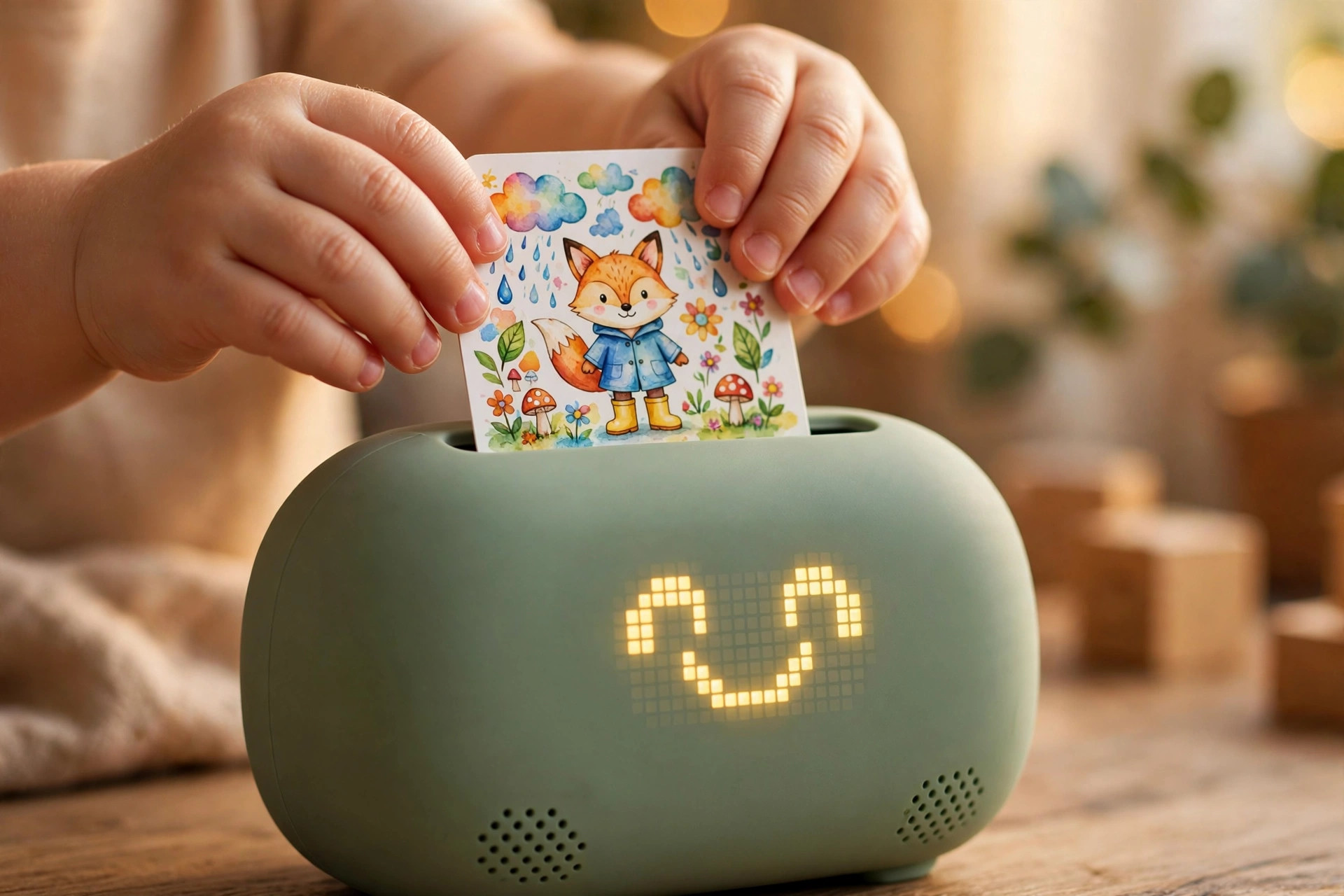
Kids pick a card — a sturdy physical card with a picture on it — pop it into the slot, and the story starts. The pixel display shows a little picture for each track, so pre-readers can navigate on their own. You can also make your own cards to record grandparents reading bedtime stories or link to playlists, which is honestly one of the sweetest features either device has.
Yoto Player (3rd Gen): The Home Favorite
The full-size Yoto Player is the flagship for a reason. Two side speakers fill a bedroom with rich sound, the big pixel display is easy to read from across the room, and the two chunky knobs give kids real control over volume and tracks — a huge plus for toddlers who hate waiting for a grown-up. It ships with a charging dock, plus a USB-C port on the side, so you only need one cable type when you travel. For our detailed hands-on take, see our full Yoto Player review.
Charging, Battery, and Storage
The 3rd Generation Player charges on its dock or over USB-C, and the battery runs around 24 hours — in practice, we charge it about twice a week with daily bedtime use. Storage is 32 GB, good for roughly 700 hours of audio. For a device that can hold years of bedtime stories, that’s effectively unlimited.
The Night Light and Room Thermometer
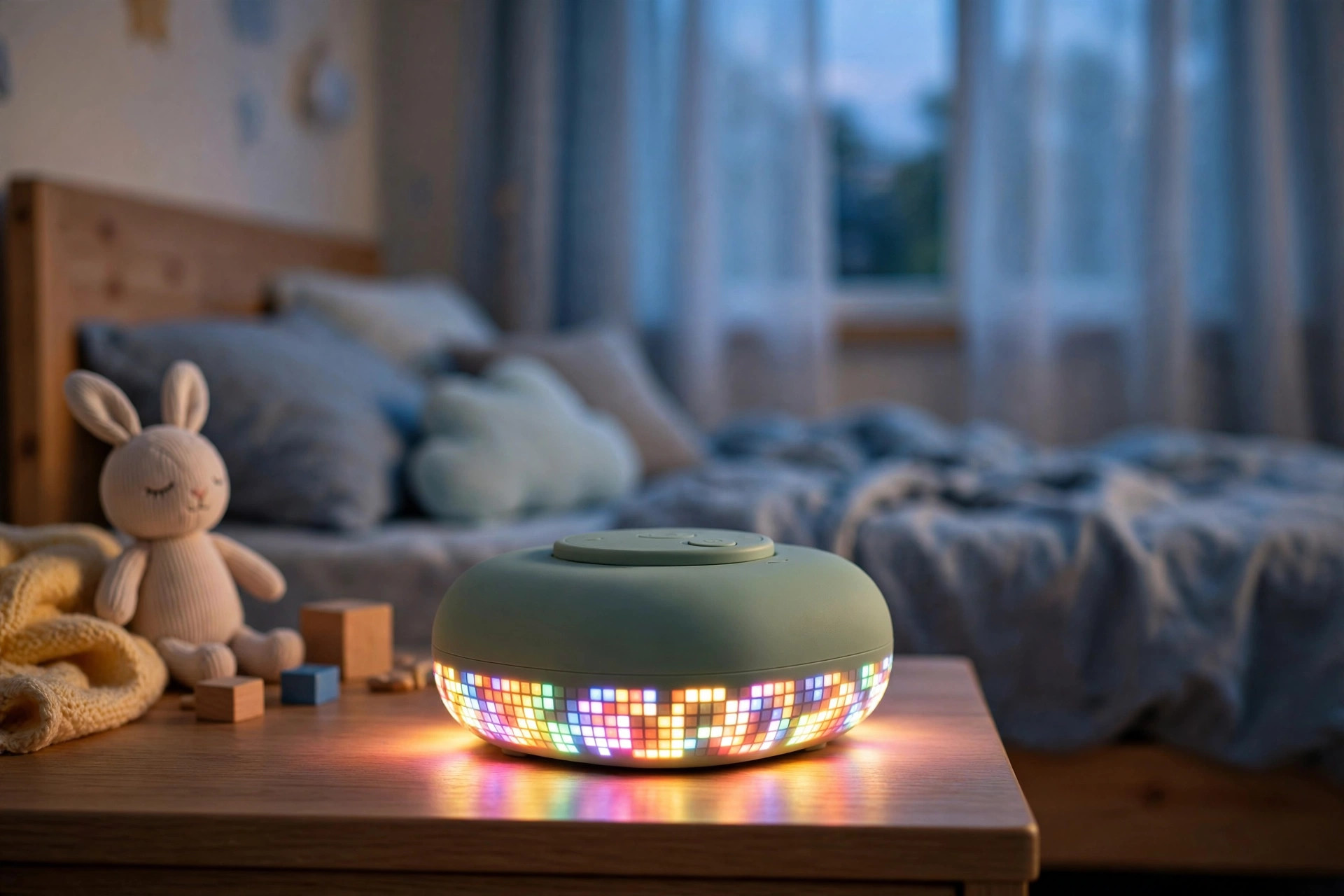
This is where the Player earns its place on the nightstand. Flip it face down and the pixel display becomes a customizable night light — adjust brightness on the device, color through the app. It also has a built-in room thermometer that shows the nursery temperature at a glance, with app alerts if it drifts. These two features alone convinced us: the Player lives in the bedroom.
Yoto Mini: The Travel Favorite
The Yoto Mini plays exactly the same cards as the big Player — same library, same Make-Your-Own cards, same Yoto Radio and Yoto Daily podcast. It just does it in a package that fits in a diaper bag pocket. One front speaker, two knobs, a card slot, a headphone jack, and USB-C charging. Battery runs around 15 hours, and we genuinely only charge it every few days. Storage is 16 GB (about 350 hours of audio) — plenty for travel.
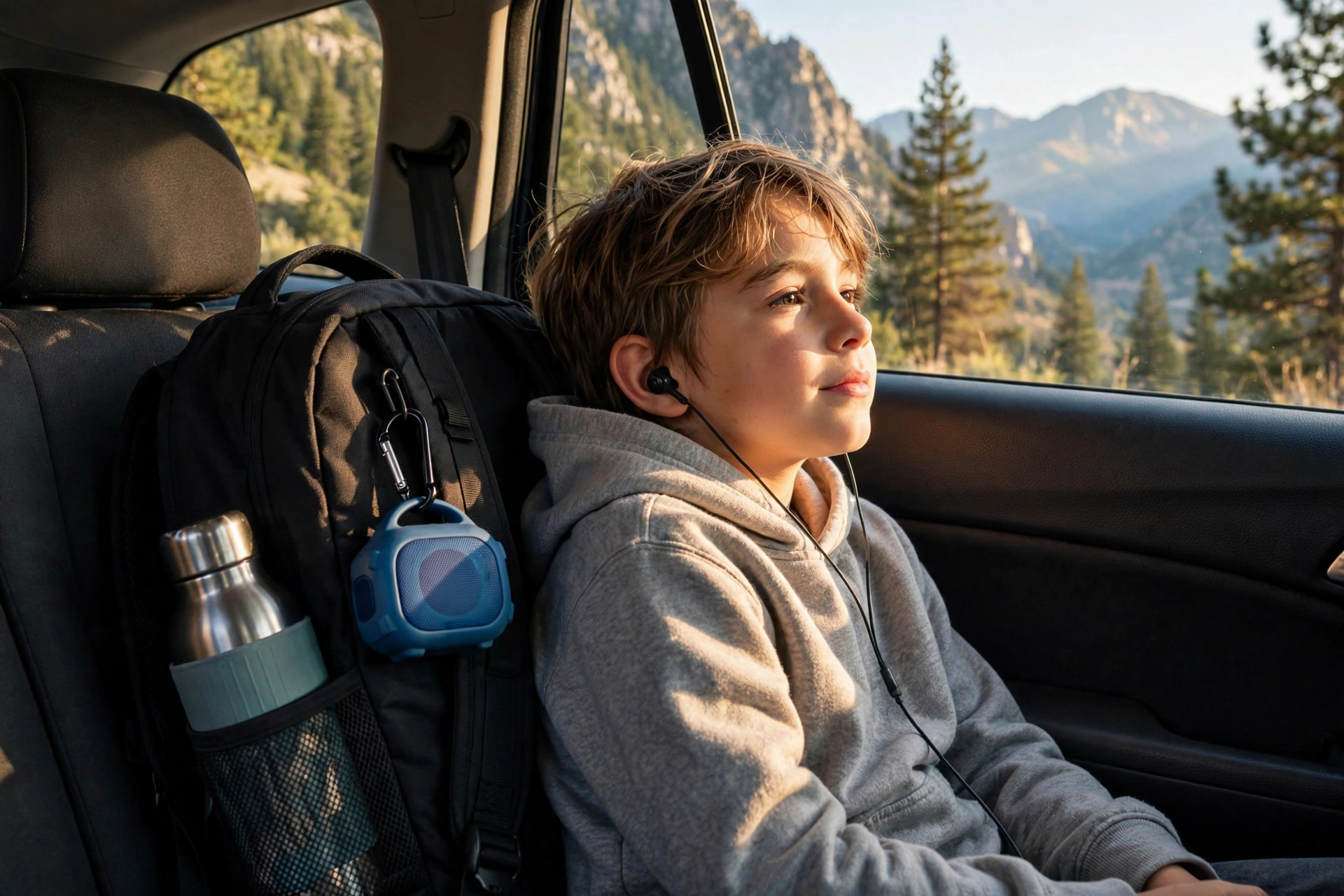
Our Mini comes on every trip. It lives in the car door, clips to a backpack, and has saved more than one restaurant meal and more than one red-eye drive.
Portability Families Actually Use
At roughly half the price, the Mini is also the easy “second device” buy — one for each kid, or one for home and one that never leaves the travel bag. The speaker is quieter than the full Player, but it’s plenty loud for a car seat or a tent, and the headphone jack covers quiet hotel rooms.
Yoto Mini vs Yoto Player (3rd Gen.): Head-to-Head Comparison
| Feature | Yoto Mini | Yoto Player (3rd Gen.) |
|---|---|---|
| Price | ~$70 | ~$120 |
| Charging | USB-C | Charging dock + USB-C |
| Battery life | ~15 hours | ~24 hours |
| Display | Small pixel display | Large pixel display |
| Audio storage | 16 GB (~350 hours) | 32 GB (~700 hours) |
| Speakers | 1 (front) | 2 (side stereo) |
| Night light | No | Yes — color + brightness |
| Room thermometer | No | Yes |
| Portability | Excellent — pocket-sized | Good — but bulkier |
| Card library | Full Yoto library | Full Yoto library |
Features They Share
Here’s the part that matters most: the Mini and the Player do the same job. Both play every Yoto card, both work with Make-Your-Own cards, both have headphone jacks, both stream Yoto Radio and the Yoto Daily podcast, and both can connect to your phone over Bluetooth to play your own music or podcasts. You’re never buying into a smaller content library with the Mini — you’re just choosing a smaller speaker.
Which One Should You Choose?
It comes down to one question: where will it live?
Start with the Yoto Player if: it’s your first Yoto, it’s mainly for the bedroom or living room, you want the night light and room thermometer, or you have one shared device for siblings. The bigger sound and display make it the better “home base,” and its durability means it stays a favorite from age 3 onward.
Start with the Yoto Mini if: budget is tight, you travel a lot, you’re buying a second device for another child, or it’s mostly for the car. It does everything the Player does content-wise, at roughly half the price and half the size.
Many families end up with both — and honestly, that’s the sweet spot. The Player stays docked in the bedroom; the Mini lives in the car or the travel bag. If you buy one at a time, start with the Player. It’s the better first device because the night light and bigger controls give young kids more independence.
Using Yoto on Family Travel
This is where the Mini quietly becomes indispensable. On road trips, a Yoto Mini with headphones is screen-free entertainment that lasts the whole drive — stories and music on a 15-hour battery beats tablets for the youngest travelers. In the tent, it’s white noise and bedtime stories without draining your phone.
For more screen-free travel ideas, our guide to realistic hiking distances with toddlers covers how we plan trail days around nap windows — the Mini rides along in the carrier backpack for the ride home.
FAQs
Is the Yoto Mini worth it?
Yes — it’s one of the best-value kids’ audio devices we own. It plays the full Yoto card library, travels anywhere, and costs roughly half the price of the full-size Player. If you already own a Player, the Mini is the perfect second device for the car or a sibling.
Is the Yoto Mini as loud as the Yoto Player?
No — the Mini’s single speaker doesn’t get as loud as the Player’s stereo speakers. But it’s surprisingly capable for its size: plenty loud for a car seat, a tent, or a small room, and the headphone jack covers quiet spaces like hotel rooms.
What age is the Yoto Mini for?
Both the Yoto Player and Yoto Mini are certified for ages 3 and up, with content spanning ages 0 to 12+. Toddlers under 3 can enjoy them with a grown-up, especially the sturdy card format — our 2-year-old navigates the Mini independently.
Can two siblings share one Yoto?
Absolutely — cards work on any Yoto device, so siblings can swap cards freely. That said, if your kids have different bedtimes or very different tastes, a second device (usually a Mini) prevents a lot of negotiations.
Does Yoto work without Wi-Fi?
Yes, once cards are downloaded to the device, playback works fully offline — great for flights, road trips, and camping. You only need Wi-Fi for downloading new cards and content.

1 comment
[…] a parent I’ve seen firsthand how the Yoto Player and Yoto Mini have transformed daily routines for families. Whether it’s playing Yoto stories during a bedtime […]