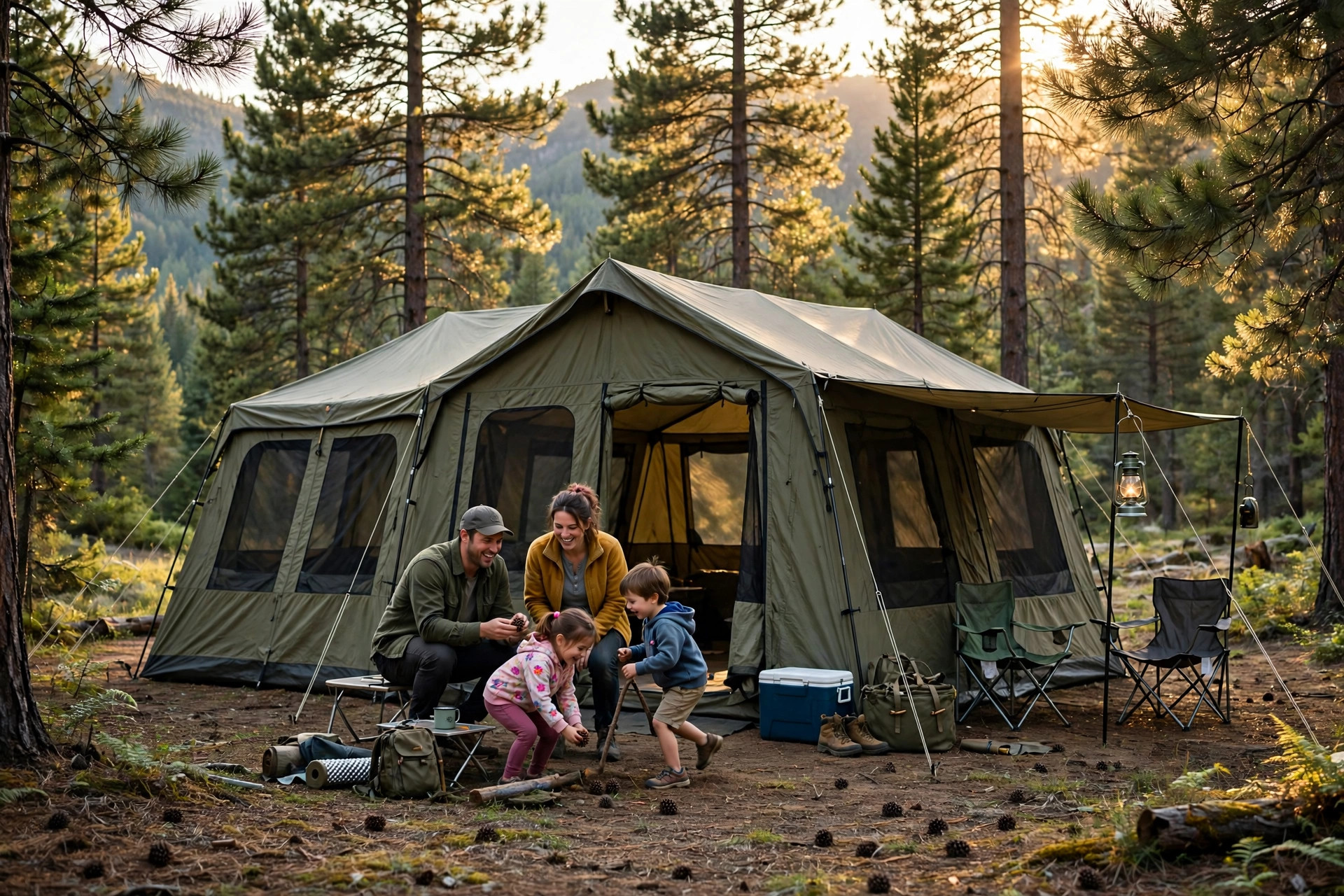
Shopping for a family tent and wondering how big is a 6-person tent, really? The short answer: most 6-person tents measure about 10 by 9 feet to 11 by 10 feet, giving you roughly 90 to 110 square feet of floor space and a peak height of around 6 feet. But that number on the box is only half the story — and it is the half that catches most families out.
A “6-person” rating does not mean six people sleep comfortably. It means six standard sleeping pads can be laid side by side on the floor, with no room left for bags, gear, or anyone to sit up. For a real family — two adults, two or three kids, backpacks, shoes, and a lantern — a 6-person tent is usually a comfortable tent for four, and a tight one for six. In this guide, we break down the real dimensions, show you exactly what fits inside, compare dome vs cabin shapes, and give you a simple measuring checklist so you buy the right size the first time.
The Short Answer: 6-Person Tent Dimensions at a Glance
Here are the typical dimensions you will find on a standard 6-person family tent. Exact numbers vary by brand and model, so always check the spec sheet of the specific tent you are considering.
| Measurement | Typical range |
|---|---|
| Floor size | 10 × 9 ft to 11 × 10 ft (120 × 108 in) |
| Floor area | 90–110 sq ft (8.4–10.2 m²) |
| Peak height | 72–78 in (6–6.5 ft) for cabin styles; 66–72 in for domes |
| Packed weight | 12–25 lb (5.4–11.3 kg) |
| Packed size | About 24–28 in long when folded; up to 42 in for instant tents |
| Doors | Usually 1–2, often with a vestibule for gear |
The most important number in that table is the floor area: 90 to 110 square feet. Divide that by six people and you get 15 to 18 square feet per person — roughly the size of a single sleeping pad plus a few inches. That is why the rating feels so misleading in real life.
What “6-Person” Actually Means
Tent makers rate capacity in a very specific way: they count how many standard sleeping pads — about 20 inches wide and 72 inches long — fit on the floor side by side. That is it. The rating ignores gear, ignores headroom, ignores whether you can sit up, and ignores the fact that kids wiggle and adults need elbow room.
Think of it like this: a 6-person rating is a sleeping count, not a comfort rating. It answers “how many bodies can lie flat here?” — not “how many people will enjoy a rainy weekend here?” That is why experienced family campers follow a simple rule: size up by one or two. A family of four is usually happiest in a 6-person tent, and a family of five or six should look at an 8-person tent instead.
For a deeper explanation of how tent capacity ratings work across all sizes, see our guide to what family tent sizes really mean.
How Much Space Does Each Person Really Get?
Once you know the rating is just a pad count, the next question is practical: what actually fits on a 10 × 9 foot floor? Here is where the numbers turn into real decisions.
The sleeping pad math
A standard sleeping pad is about 20 inches wide. Six of them side by side need 120 inches — exactly the 10-foot width of a typical 6-person tent. There is no slack: pads touch the walls, and anything wider than a standard pad will not fit six across.
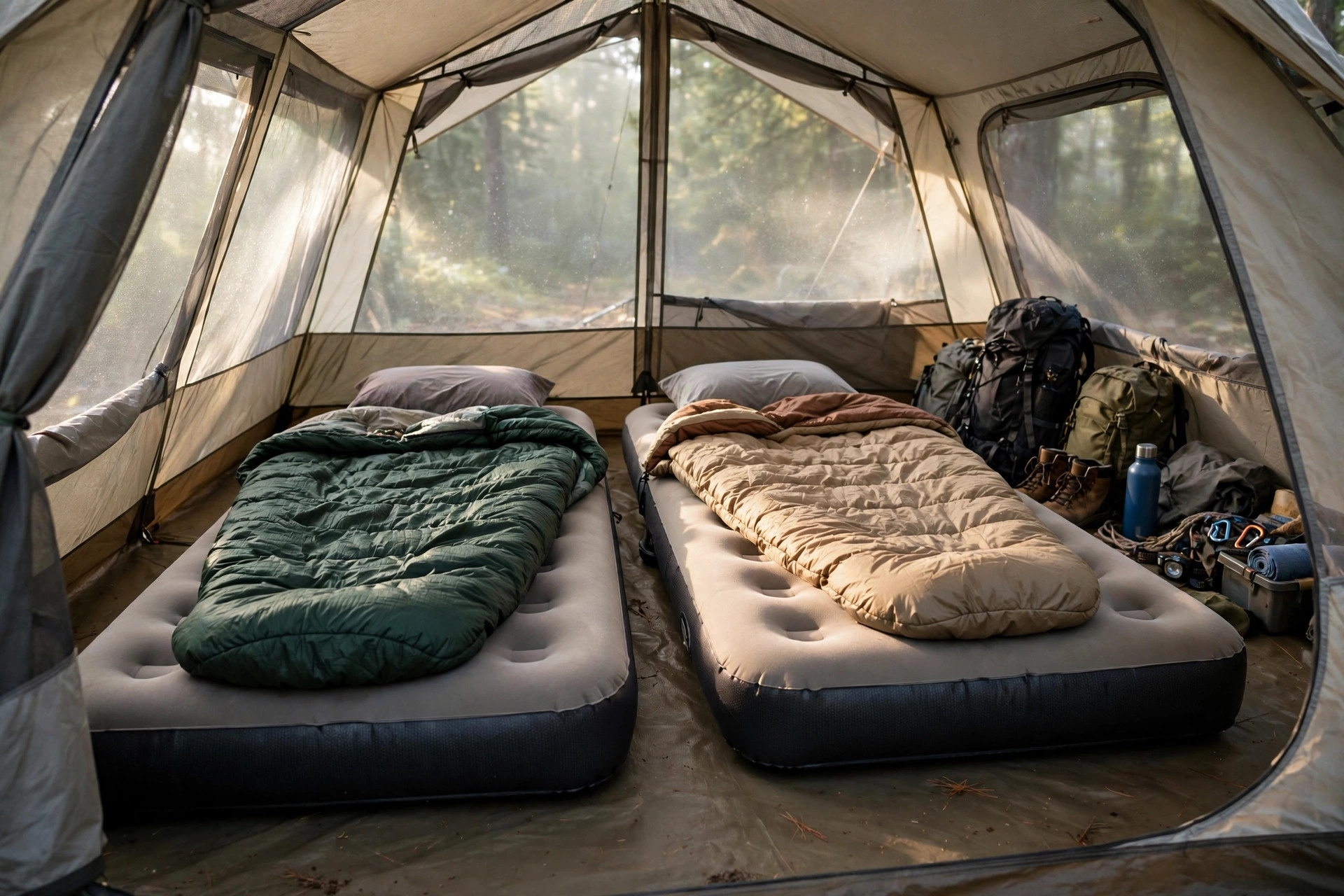
A queen air mattress is 60 × 80 inches. Two of them side by side need 120 inches of width and 80 inches of length — exactly the full floor of a 10 × 9 foot tent. It works, but only just: the mattresses fill the floor edge to edge, leaving nowhere to put bags, shoes, or a midnight water bottle.
Four sleeping layouts that actually work
| Layout | Who it fits | Gear space left |
|---|---|---|
| 6 standard sleeping pads | 6 adults, shoulder to shoulder | Almost none |
| 2 queen air beds | 4 adults, or 2 adults + 2 kids | None — floor is full |
| 1 queen air bed + 2 single pads | 2 adults + 2 kids | A corner for bags and shoes |
| 4 sleeping pads + gear corner | Family of 4, comfortably | A full corner plus room to sit up |
Notice the pattern: the layouts that leave gear space are the ones with four sleepers, not six. That is the honest answer to “how big is a 6-person tent?” — big enough for six bodies, comfortable for four people plus their stuff.
If your family sleeps on air beds, read our guide to camping air mattresses for families before you buy, because mattress width changes everything about what fits.
Dome vs Cabin: Same Rating, Very Different Tent
Two tents can both be sold as “6-person” and feel completely different inside. The shape matters as much as the floor size.
Dome tents have sloping walls that curve inward as they rise. They are lighter, cheaper, and handle wind well — but the usable space shrinks fast above knee height. You can lie down anywhere, but you can only sit upright near the center, and adults will be crouching or kneeling most of the time.
Cabin tents have near-vertical walls and a peak height of 6 to 6.5 feet, so most adults can stand up straight. The floor space is genuinely usable right up to the walls, which makes the same 90–110 square feet feel much bigger. They are heavier and catch more wind, but for family car camping, that trade is usually worth it.
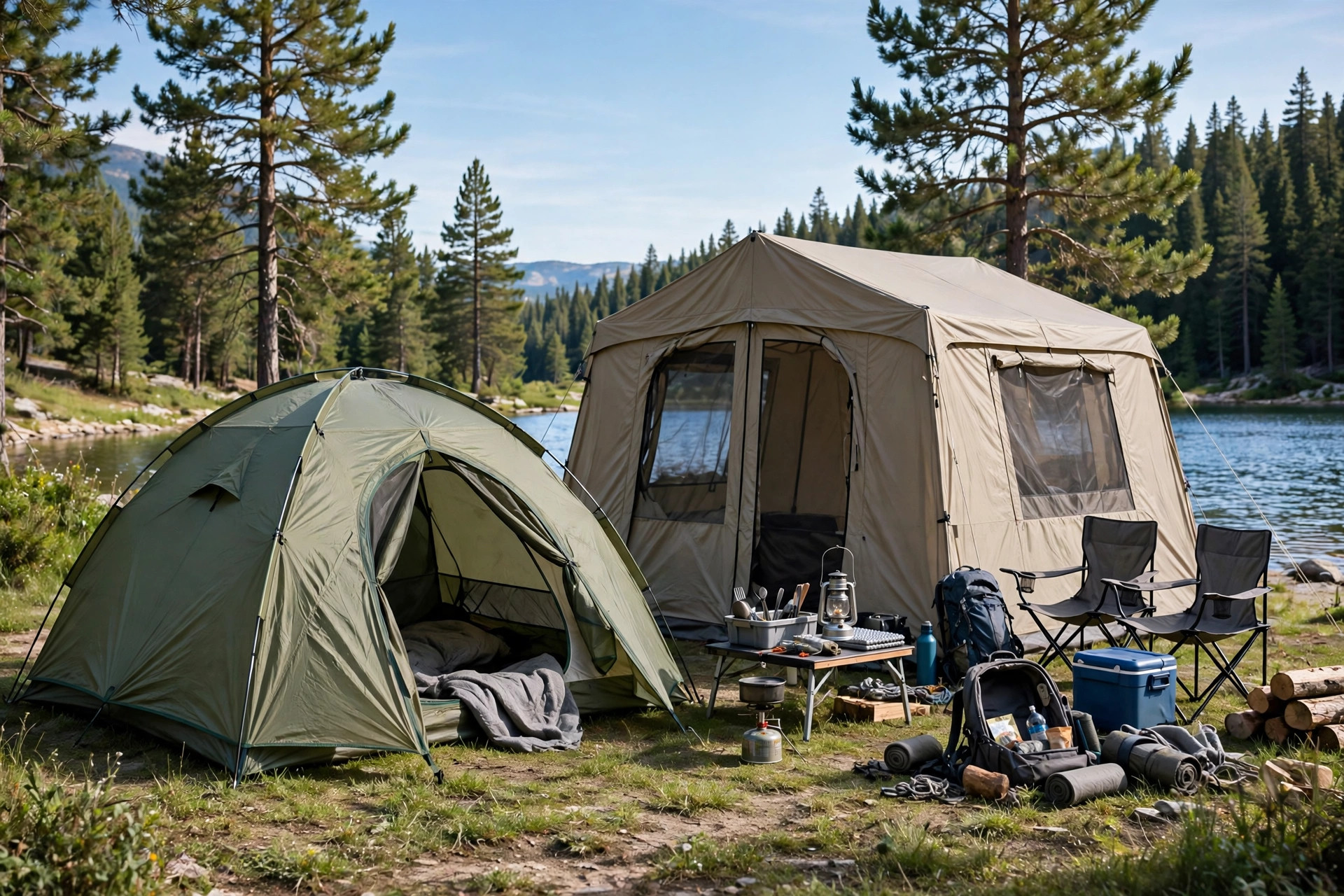
For families, the rule is simple: if you will spend waking hours inside the tent — rainy days, changing clothes, getting kids ready for bed — choose a cabin style. If you only sleep in it, a dome is fine and packs smaller.
Will a 6-Person Tent Fit Your Family?
Here is the honest fit guide.
Family of 4 (2 adults + 2 kids)
This is the sweet spot. A 6-person tent gives a family of four room to sleep on a queen air bed plus two kids’ pads, with a corner left for bags and shoes. There is space to sit up, play a card game on a rainy afternoon, and get dressed without elbowing each other. If this is your family size, a 6-person tent is very likely the right buy.
Family of 5 (2 adults + 3 kids)
It works, but it is tight. Plan on one queen air bed plus three single pads, and keep most gear in the car or vestibule. If your kids are older or taller, or you camp where everyone ends up inside on rainy days, seriously consider an 8-person tent instead. Our guide to the best tents for a family of 5 walks through the options.
Family of 6 (2 adults + 4 kids)
A 6-person tent will fit six sleeping pads and nothing else — no gear corner, no sitting-up space, and no patience left by the second morning. For a family of six, an 8-person tent is the comfortable minimum; see our 8-person tent guide for large families.
Two adults + a dog
A medium or large dog counts as roughly one extra person on the floor. A 6-person tent works well for two adults, a dog, and one or two small kids — the dog gets a corner, everyone else keeps their space.
How to Measure Before You Buy: A 5-Step Checklist
Do not trust the number on the box. Run through this quick check before you spend money, and you will never buy the wrong size tent again.
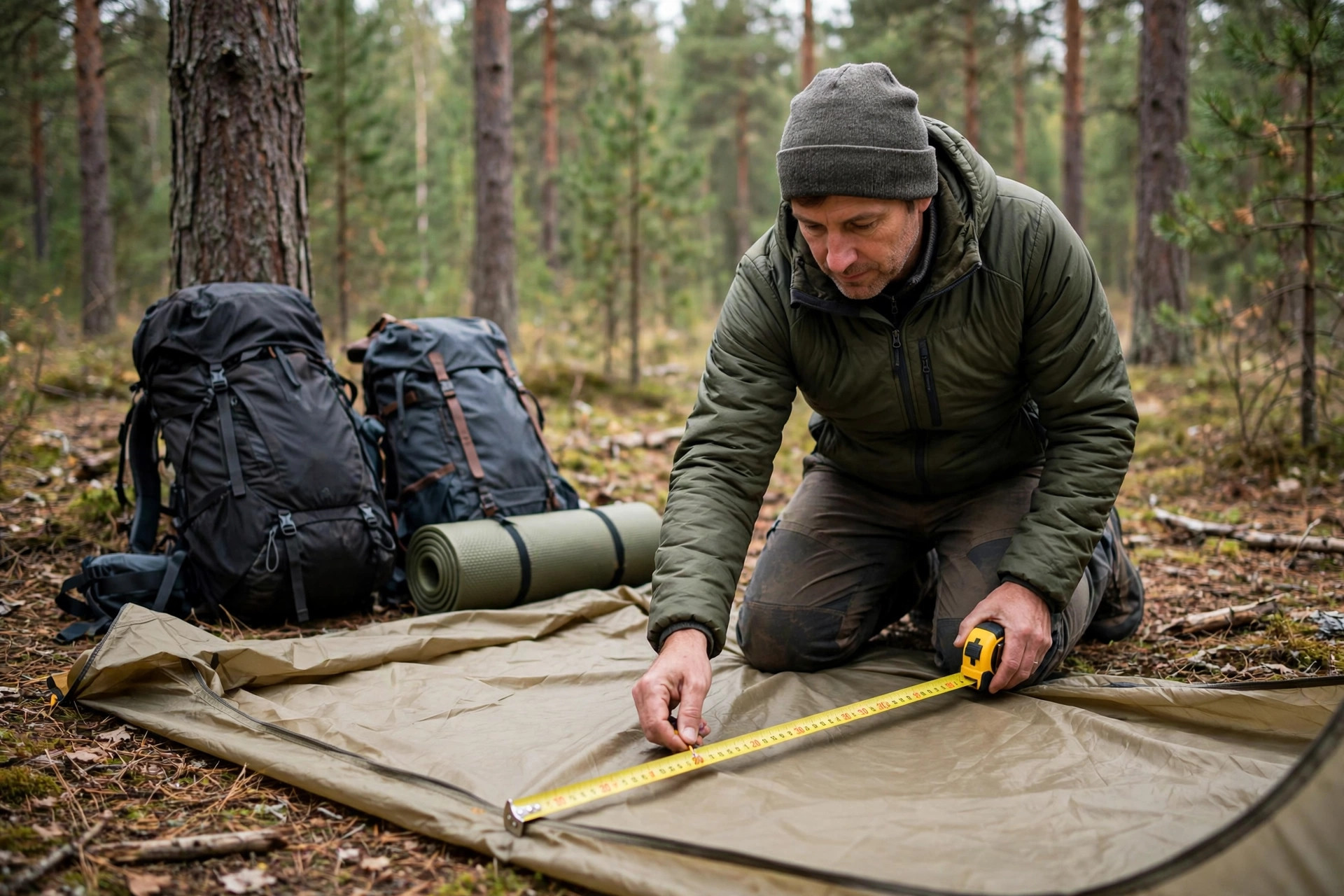
- Read the floor dimensions, not the rating. Look for length × width on the spec sheet. A 10 × 9 foot floor and an 11 × 10 foot floor are both “6-person,” but the second gives you 20 extra square feet.
- Lay out your sleep setup at home. Inflate your air mattresses or lay out your sleeping pads on the living room floor in the layout you plan to use, then add at least 2 feet on one side for bags and shoes.
- Check the peak height — and the wall shape. Six feet of peak height only helps if the walls are near-vertical. On a dome tent, the standing space is a small circle in the middle.
- Measure your car trunk and your campsite pad. A folded 6-person tent is usually 24–28 inches long, but instant tents can fold to 42 inches. Many campgrounds also cap tent pads at about 120 × 120 inches, and a 6-person tent at 120 × 108 inches just fits.
- Count the vestibule. A vestibule (the covered area outside the door) is where muddy shoes and packs live — a tent with a good one effectively gains 10–15 square feet of gear storage.
For the full buying process — fabric, poles, rainfly, and setup — our family tent buying guide covers everything in one place.
Packed Size, Weight, and Campsite Fit
A 6-person tent is a car-camping tent, not a backpacking tent. At 12 to 25 pounds packed, nobody is carrying one far down a trail — and that is fine, because that is not what it is for. What matters is whether it fits your car and your campsite.
Most 6-person tents fold down to a bag about 24 to 28 inches long, which fits easily in a car trunk or roof box. Instant tents with pre-attached poles fold longer — up to 42 inches — so measure your trunk before you buy if you drive a small car.
At the campground, check the tent pad size when you book. Many state and national park sites limit pads to roughly 120 × 120 inches. A standard 6-person tent at 120 × 108 inches fits, but an oversized cabin with a big vestibule may not. The National Park Service’s camping pages and Recreation.gov list site details and pad sizes for reservable campgrounds.
Common Mistakes When Sizing a Family Tent
- Trusting the person rating. It counts sleeping pads, not comfort. Always size up by one or two for real family use.
- Forgetting the air mattress. A queen air bed is 60 inches wide — two of them fill a 6-person tent completely. Measure your actual sleep setup, not the rating.
- Ignoring peak height and wall slope. A 6-foot peak on a dome tent gives you a small standing circle; the same peak on a cabin tent gives you a whole standing room.
- Not checking the campsite pad. Some park pads cap at 120 × 120 inches. An oversized tent plus vestibule can overhang the pad.
- Buying for today’s kids. Kids grow fast, and so does their gear. If your kids are 8 and 10 now, buy for the teenagers they will be in three years.
Frequently Asked Questions
How big is a 6-person tent in feet?
Most 6-person tents measure 10 × 9 feet to 11 × 10 feet, with 90 to 110 square feet of floor space and a peak height of about 6 to 6.5 feet in cabin styles. Dome-style 6-person tents are usually a little shorter, around 5.5 to 6 feet at the peak.
Is a 6-person tent big enough for a family of 4?
Yes — a family of four is the ideal fit for a 6-person tent. Two adults and two kids can sleep on a queen air bed plus two single pads and still keep a corner free for bags, shoes, and sitting up on a rainy day. It is the most popular family tent size for exactly this reason.
How much does a 6-person tent weigh?
Most 6-person tents weigh 12 to 25 pounds packed. Dome tents are usually lighter (12–18 pounds), while cabin and instant tents run heavier (18–25 pounds). Either way, it is a car-camping tent — plan to park close to your site.
What is the difference between a 6-person dome tent and a 6-person cabin tent?
The floor size is similar, but the shape changes how the space feels. Dome tents have sloping walls, so only the center is tall enough to sit or stand in. Cabin tents have near-vertical walls and a 6-foot-plus peak, so the whole floor is usable and most adults can stand up.
The Bottom Line
So, how big is a 6-person tent? On paper: about 10 × 9 to 11 × 10 feet, 90–110 square feet, with a peak around 6 feet. In real life: a comfortable tent for a family of four plus their gear, a workable tent for five, and a tight squeeze for six.
Buy by floor dimensions, not by the number on the box. Lay out your sleep setup at home, add a gear corner, check the peak height and wall shape, and make sure it fits both your car and your campsite pad. Do that, and the tent you bring home will be the tent your family actually enjoys — on sunny days and rainy ones alike.
