
This post contains affiliate links. If you buy through them, TravelAle may earn a small commission at no extra cost to you. Read our Affiliate Disclosure.
It is the second evening of your camping trip. The kids are filthy, happy, and finally winding down — and then you spot it: a tiny dark dot behind your daughter’s ear. A tick. Your child starts to panic, and the tweezers in the first-aid kit are the blunt kitchen kind that cannot grip anything smaller than a splinter.
Our Top Picks on Amazon
Check Price on Amazon
Check Price on Amazon
Check Price on Amazon
Prices change often — check Amazon for the current price. Affiliate Disclosure
A tick remover is one of the smallest, cheapest things you can pack — and one of the few that actually matters in the moment. Ticks are a normal part of camping in most of the United States, and kids are prime targets: they play in tall grass and wander off-trail exactly where ticks wait. This guide covers the four types of removers, how to remove a tick from a squirming child, the tick-check routine, and what to do after the tick is out.
Why Every Family Camping Kit Needs a Tick Remover
Ticks do not fly or jump. They wait on the tips of grasses and shrubs — a behavior called questing — and climb aboard when a child brushes past. Once attached, a tick feeds for hours or days, and the longer it stays attached, the greater the chance it passes on an illness like Lyme disease. The CDC notes that many tickborne diseases share early symptoms — fever, aches, fatigue, and sometimes a rash — and that a healthcare provider should evaluate any symptoms that appear within a few weeks of a bite.
The good news: early removal is the single most important step, and it takes about thirty seconds with the right tool. Blunt household tweezers cannot grip a nymph tick — the poppy-seed-sized young ticks that cause most Lyme infections — and squeezing an engorged tick can push its contents back into the bite. A proper remover grips low, near the skin, and lifts the whole tick out intact.
The 4 Types of Tick Removers (and Which One Suits Families)
Every remover does the same job — get the whole tick out, mouthparts included, without squeezing it — but in different ways.
1. Fine-tip tweezers
The baseline tool, and the one the CDC describes: clean, fine-pointed tweezers, grasped as close to the skin as possible, pulled upward with steady pressure. Flat, blunt tweezers cannot grip a nymph, and tweezers are the hardest tool to use on a squirming toddler.
2. Hook and twist tools
A small hook with a notch that slides under the tick, then rotates it free — the Tick Twister is the best-known example. Two sizes cover nymphs through engorged adults, and the hook cradles the tick instead of pinching it.
3. Key and card tools
A flat slotted tool — the Tick Key is a piece of anodized aluminum shaped like a key. Center the slot over the tick, press down, and slide the tool away along the skin. It lives on a keyring, so it is the tool you actually have on the trail.
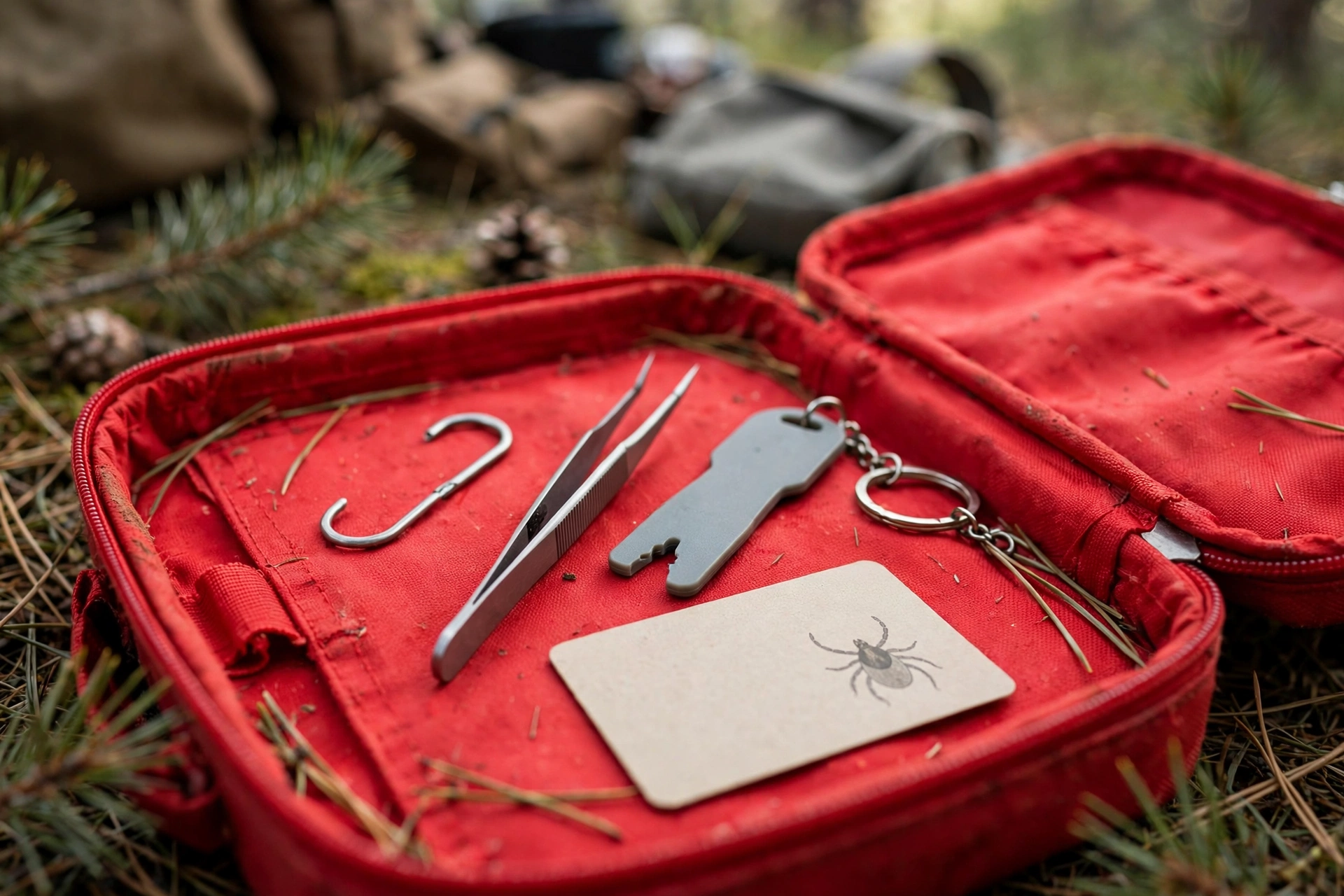
4. All-in-one kits
A kit bundles a fork-style remover plus fine-tip tweezers in a small case with a tick identification card. The case keeps everything together, and the ID card helps you identify the species if you later talk to a doctor.
Best Tick Removers for Families (2026): Quick Comparison
| Tool | Best for | Type | Why families like it |
|---|---|---|---|
| Tick Twister Set | Best overall | Hook / twist | Two sizes; cannot squeeze the tick |
| TickCheck Premium Kit | Best complete kit | Fork + tweezers | Two tools, case, and ID card |
| The Original Tick Key | Best for carrying | Key / slot | On your keyring; hard to misuse |
| Fine-tip tweezers | Best free option | Tweezers | The CDC baseline |
1. Tick Twister Tick Remover Set — Best Overall for Families
Each set includes two hooks: a small one for nymphs and deer ticks, a large one for engorged adults. Slide the notch under the tick, lift very lightly, and rotate two or three times — the tick detaches on its own, mouthparts included, without being squeezed. For families, the selling point is forgiveness: the motion is the same every time, and the set weighs less than half an ounce. Watch out for: the hooks are small and easy to lose — store them in a zip pouch.
2. TickCheck Premium Tick Remover Kit — Best Complete Kit
If you want one purchase that covers every scenario, this is it. The kit pairs a stainless steel tick-remover fork — slide it under a larger embedded tick and lift — with ultra-fine-tip tweezers for nymphs and tight spots, plus a leatherette case and a pocket tick identification card. The case keeps both tools together in the first-aid kit. Photograph the tick next to the ID card before you dispose of it. Watch out for: it is a case, not a pocket tool, so it stays in camp — pair it with a Tick Key on your keyring for hikes.
3. The Original Tick Key — Best for Always Having One Handy
The Tick Key’s advantage is not its mechanism — it is its location. A flat piece of anodized aluminum with a teardrop slot, it clips to a keyring, a zipper pull, or a dog’s collar, so it is on you during the hike, not back in the tent. Center the slot over the tick, press the key flat against the skin, and slide it away — the natural leverage lifts the tick out whole. It is the hardest tool to misuse, which suits first-time tick-finders and nervous parents. Very small nymphs can slip through the slot — switch to tweezers for barely visible ticks.
4. Fine-Tip Tweezers — The Free Baseline Every Family Already Owns
Before you buy anything, check your bathroom drawer. A clean pair of fine-pointed tweezers — pointed tips that meet precisely, not the flat cosmetic kind — is exactly what the CDC recommends, and it costs you nothing. Grasp the tick as close to the skin as possible and pull upward with steady, even pressure. Tweezers rank last here for usability with kids, not effectiveness: they demand a still child and a steady hand.

How to Remove a Tick from a Child, Step by Step
Slow down, stay calm, and follow these steps — the whole process takes under a minute.
- Keep your child still and calm. Sit them down, explain calmly that it will not hurt much, and give them something to hold.
- Clean the tool. Wipe your remover or tweezers with rubbing alcohol or soap and water.
- Grasp low, at skin level. With tweezers, grip the tick as close to the skin as you can. With a hook, slide the notch under the tick from the side. With a key, center the slot over the tick and press flat.
- Remove with steady motion. Tweezers: pull upward with steady, even pressure. Hook: lift lightly and rotate two or three times. Key: slide away from the tick along the skin. Never squeeze the tick’s body.
- Check the bite site. The whole tick, including its head, should be out. If a small dark speck remains, try clean tweezers; if you cannot get it out, clean the area and call your pediatrician.
- Clean the bite. Wash the area thoroughly with soap and water, then dab on rubbing alcohol or antiseptic.
- Save the tick. Drop it in a sealed bag with a little rubbing alcohol and note the date. Take a photo next to a coin for scale.
What NOT to Do When You Find a Tick
Most tick-removal mistakes come from old folk remedies:
- Do not burn it with a match or lighter. Heat can make the tick release more saliva.
- Do not smother it with petroleum jelly, nail polish, or alcohol before removal. A stressed tick may regurgitate into the wound.
- Do not crush it with your fingers. Use a tool, and wash your hands after handling any tick.
- Do not jerk or yank. A sudden pull is how mouthparts break off in the skin.
- Do not wait until morning. Remove the tick as soon as you find it.

The 5-Minute Tick Check Routine for Campers
Removal is the backup plan. The real defense is the nightly tick check — a quick scan that catches ticks before they have fed long. Make it part of the bedtime routine and kids stop resisting it.
- Check after every hike and every evening. Ticks can wander for hours before attaching.
- Work head to toe. Scalp, hairline, behind the ears, neck, armpits, waistband, behind the knees, between the toes.
- Use a headlamp. A bright light makes tiny dark nymphs visible. Run a fingertip over the skin too — a nymph feels like a tiny new freckle.
- Check the dog too. Run your hands through the dog’s fur, especially around the ears, collar line, and belly.
- Shake out clothes and gear. Tumble clothes in a hot dryer for ten minutes when you get home.
Prevention helps: long pants tucked into socks, light-colored clothing, and permethrin-treated clothing or EPA-registered repellent used as the label directs. Our mosquito net guide covers the other half of camp bug defense, and our bear safety guide for kids covers the wildlife side of the same conversation.
After You Remove a Tick: What to Do Next
Removing the tick is step one. For the next two weeks, watch for fever, chills, headache, fatigue, muscle aches, or a rash — especially an expanding bull’s-eye rash. The CDC notes that many tickborne illnesses share these early symptoms and that a healthcare provider should evaluate them. Call your pediatrician if any symptom appears within a few weeks, or if you could not remove the whole tick. Bring the saved tick and your photo. Most tick bites cause no illness — but symptoms are far easier to treat when caught early.
Packing Your Family Tick Kit
Everything below fits in a sandwich bag inside your first-aid kit. Pack it once and check it each spring.
- Tick Twister set (small + large hooks) — the main tool
- Fine-tip tweezers — for nymphs and tight spots
- Tick Key on the car keyring — the always-with-you backup
- Small bottle of rubbing alcohol and a few cotton pads
- Two or three small zip bags for saving a tick, plus a pen to write the date
- Tick identification card (comes with the TickCheck kit)
- Headlamp for the evening tick check
Add the tick kit to your camping checklist with kids so it gets packed automatically every trip — and if you are camping with a toddler for the first time, our toddler camping guide covers the rest of the basics.
Frequently Asked Questions
What is the best tick remover for kids?
For most families, a hook tool like the Tick Twister is easiest: it slides under the tick and twists it free without squeezing. Pair it with fine-tip tweezers for very small nymphs, and keep a Tick Key on your keyring as a backup.
Can I use regular tweezers to remove a tick?
Yes, if they are fine-pointed tweezers with tips that meet cleanly. The CDC’s method is fine-tip tweezers, grasping close to the skin and pulling upward with steady pressure. Blunt household tweezers cannot grip a nymph tick.
Should I twist or pull a tick out?
It depends on the tool. With tweezers, pull straight up and do not twist. With a hook tool, the manufacturer instructs a gentle twist. Follow the instructions on the tool you own, and avoid squeezing the tick’s body.
How do I know if the tick’s head is still in the skin?
Look closely with a headlamp or phone light. If you see a small dark speck in the center, mouthparts may remain — try clean fine-tip tweezers. If you cannot get them out, clean the area and call your pediatrician.
How long does a tick need to be attached to transmit Lyme disease?
Risk rises with attachment time, and most infections happen after a tick has fed for 36 to 48 hours — which is why prompt removal and the nightly tick check matter. A tick removed the same evening is far less risky than one found days later.
Do I need to see a doctor after every tick bite?
No — most tick bites cause no illness. See a doctor promptly if a rash, fever, or flu-like symptoms appear within a few weeks, if you could not remove the whole tick, or if you are unsure how long it was attached. When in doubt, call your pediatrician.
