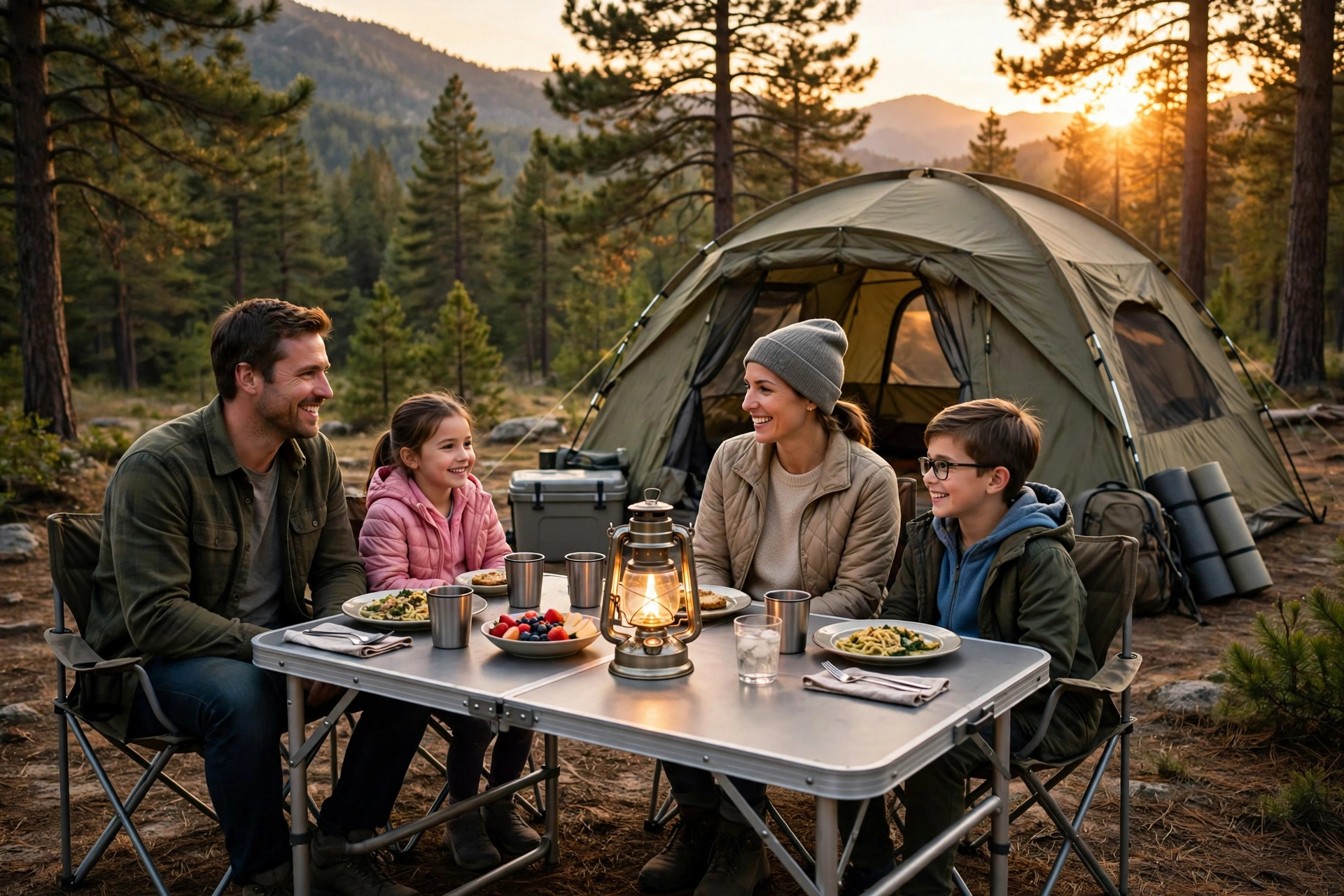
Ask any family that camps regularly what single piece of gear changed their trips the most, and you will hear the same answer: a good camping table. Not the tent, not the cooler — the table. It is where breakfast happens before the kids scatter, where the stove sits safely off the ground, and where crafts and card games spread out on rainy afternoons.
This guide covers the best camping table for families in 2026: how to size one for your crew, the five table types that work with kids around, the family picks worth your money, and the safety rules for little hands and hot stoves.
Why a Good Camping Table Changes the Whole Trip
Without a table, everything happens on the ground: food prep crouched over a cooler, plates balanced on knees, the stove on dirt where a toddler can reach it. Add a table and you have a kitchen counter, a dining room, and a play space in one piece of gear — a clean surface for meals, a stable platform for your stove away from tent fabric, and a “home base” for sunscreen, bug spray, and headlamps. If you are still building your setup, pair this guide with our full family camp kitchen setup guide.
What Size Camping Table Does Your Family Need?
The most common mistake is buying a table sized for a couple and trying to feed four or five people from it. Allow about 24 inches of table edge per person, plus room in the middle for shared dishes.
| Family size | Minimum tabletop | What works best |
|---|---|---|
| 2 adults + 1 child | 30″ × 24″ | Small roll-top or compact folding table |
| 2 adults + 2 children | 36″ × 24″ | Medium folding table or roll-top — the sweet spot |
| 2 adults + 3 children | 40″ × 28″ | Large folding table, or dining table + small side table |
| 6+ people / two families | 48″ × 30″ (or two tables) | Two medium tables — one for dining, one for cooking |
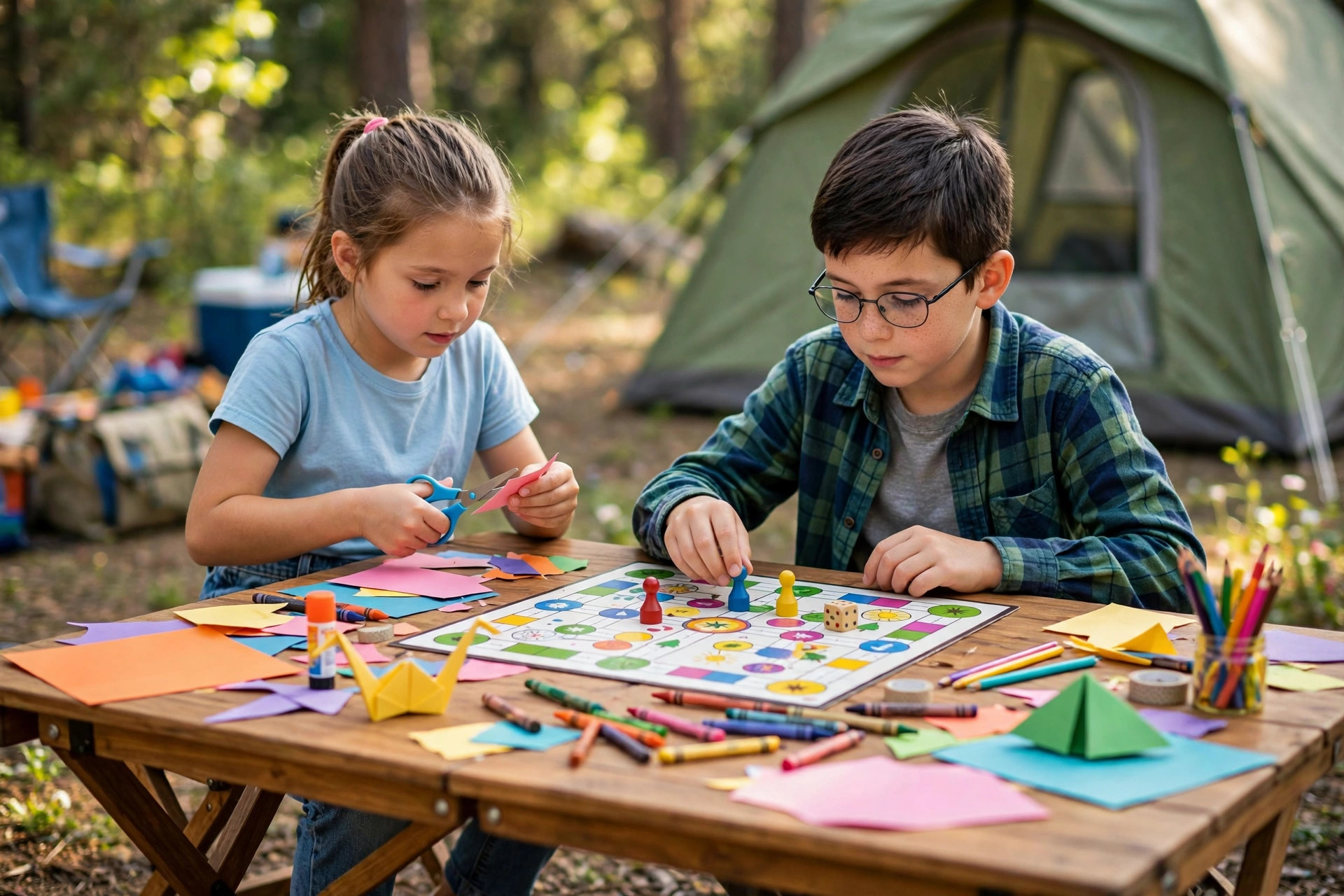
Two smaller tables often beat one big one: one for dining, one for the kitchen and crafts. When the kids take over one table with a board game, dinner prep does not have to stop — and two compact tables pack easier into a smaller car than one huge one.
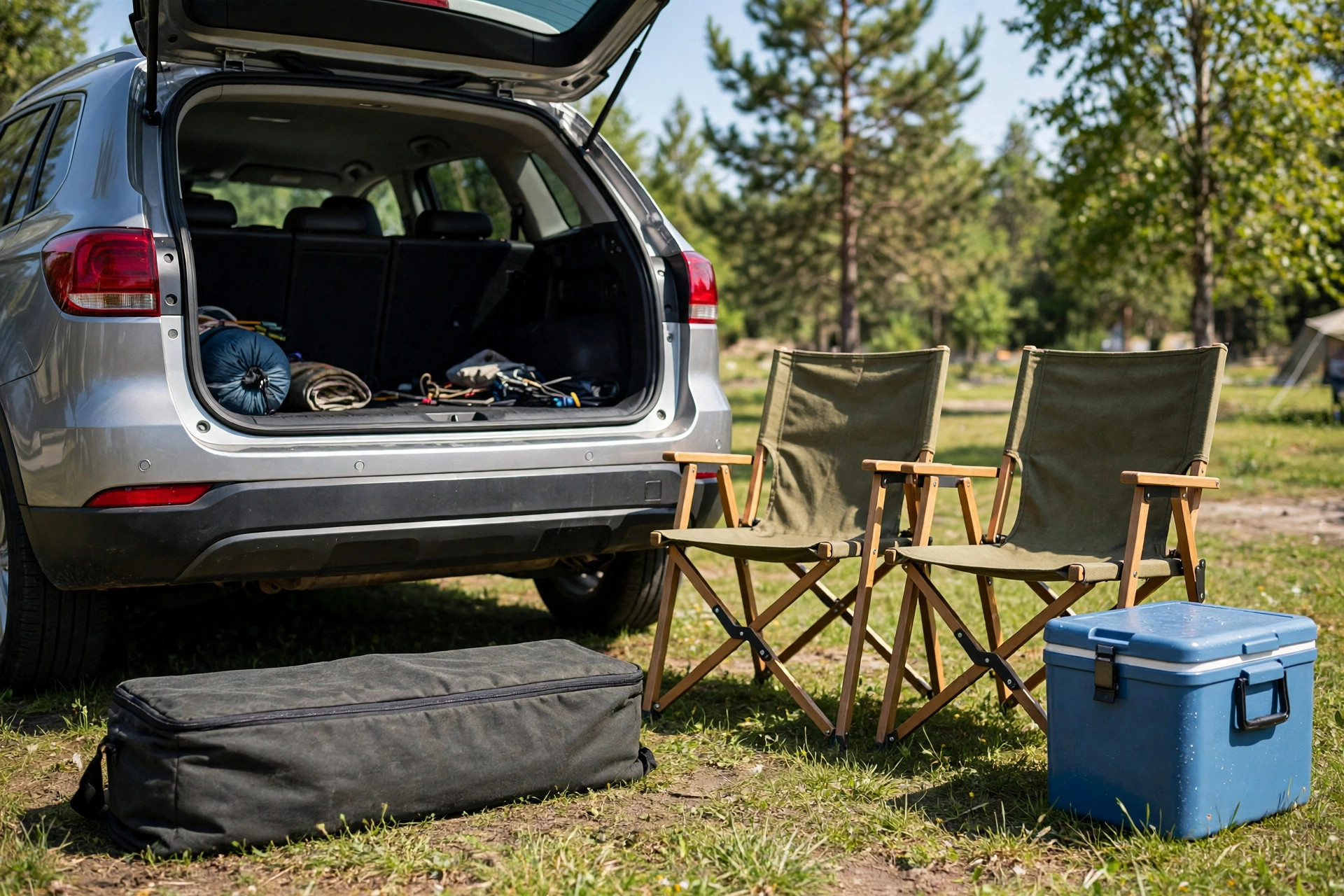
Weight matters too. A 14-pound table is easy for one adult to carry from car to pitch; a 25-pound table is a two-person job — fine at a drive-up site, miserable on a walk-in site. Measure the folded length against your trunk before you buy, and remember the table shares that space with everything else on your camping checklist with kids.
The 5 Types of Family Camping Tables
Every camping table is a trade-off between size, weight, stability, and setup time. Here is how the five main types compare for family use.
| Type | Best for | Watch out for |
|---|---|---|
| Roll-top table | Most families — light, packs small, big surface | Slatted top lets small items slip through |
| Folding camp table | Car campers who want a solid, flat top | Heavier and bulkier when folded |
| Cook station | Families who cook real meals at camp | Takes more space; main top is often small |
| Side table | A second surface for drinks, lanterns, crafts | Too small for dining — a companion only |
| Ultralight table | Walk-in sites and minimal packers | Tiny top; not a family dining table |
1. Roll-Top Tables
A roll-top has a surface of slats that roll up like a scroll, with folding legs underneath. It packs down to the size of a rolled sleeping pad, sets up in under a minute, and gives you a large surface for its weight. Keep tiny items — beads, dice, Lego — in a tray on top, because they can slip through the slats.
2. Folding Camp Tables
These fold in half like a suitcase and open into a solid one-piece top, usually plastic or aluminum. They are the most stable option and the easiest to wipe clean after a spaghetti night. The downside is folded size: flat but wide, so check it fits your vehicle.
3. Cook Stations
A cook station is a table with extras built in: side shelves, a windscreen, and storage for utensils. If your family cooks full meals at camp, it keeps the stove, ingredients, and tools in one organized spot. The main cooking surface is often smaller than a regular table, so many families pair one with a separate dining table.
4. Side Tables
A small side table holds drinks, a lantern, or a charging station next to your chairs, and doubles as a kids’ craft table while the adults use the main table. Cheap, light, and easy to justify — but a companion piece, not a replacement for a real dining surface.
5. Ultralight Backpacking Tables
These weigh about a pound and fold down to the size of a water bottle. Brilliant for a couple hiking into a site, but the top is roughly the size of a placemat — far too small for family dining. Buy one as an extra for coffee and maps, never as your only table.
Our Top Picks for Family Camping Tables (2026)
These are the tables family campers and outdoor retailers consistently recommend, chosen for what matters with kids around: stability on uneven ground, a surface big enough for a family meal, and a design that survives being knocked and spilled on. Prices change often, so check the current price before you buy.
ALPS Mountaineering Dining Table — Best All-Rounder
Best for: families of four to six who want one table that does everything. The aluminum slat top measures about 37″ × 27″ — big enough for four plates, a serving dish, and drinks — and supports around 60 lbs, so a leaning toddler will not buckle it. At roughly 14 lbs, one adult can carry it, and the X-frame legs resist the wobble cheaper tables develop on soft ground. Skip it if: you need a gap-free surface for tiny craft supplies — use a tray on top.
GCI Outdoor Slim-Fold Cook Station — Best for Families Who Cook
Best for: families who cook real meals at camp and want a proper outdoor kitchen. The Slim-Fold opens from a flat portfolio shape into a cook station with a heat-resistant countertop, side tables, and storage underneath — a kitchen in seconds, which is what you want when making pancakes for four hungry kids. At around 18 lbs it is heavier than a plain table, but a fair trade for car campers. Skip it if: you mostly eat no-cook camping meals.
REI Co-op Camp Roll Table — Best Classic Roll-Top
Best for: families who want the proven, packable roll-top design from a trusted outdoor retailer. This table has been a staple for years because it gets the basics right: a generous aluminum slat surface, a stable frame, and a packed size that disappears into a car trunk. Skip it if: you need a solid top for rolling dough or puzzles — the slats have small gaps.
Coleman 4-in-1 Folding Table — Best Versatile Pick
Best for: families who want one table that adapts through the day. The Coleman 4-in-1 works at full dining height, drops to coffee-table height for games, or splits into two smaller tables — crafts on one half in the afternoon, dinner for everyone on the full table at night. It is also one of the more affordable options here. Skip it if: you need maximum weight capacity — check the published limit before loading it with heavy cookware.
Helinox Table One Hard Top — Best Ultralight Extra
Best for: walk-in sites, or as a second table for drinks and games. At roughly 1.4 kg with a 60 × 40 cm top, the Helinox Table One is the benchmark ultralight table — it packs down to the size of a large water bottle. Too small to be a family’s only dining table, but the perfect second table: one for coffee and maps while the main table handles dinner. Skip it if: this would be your only table.
Kid Safety: 6 Rules for Tables, Stoves and Little Hands
These six rules cover the accidents families actually have at the table.
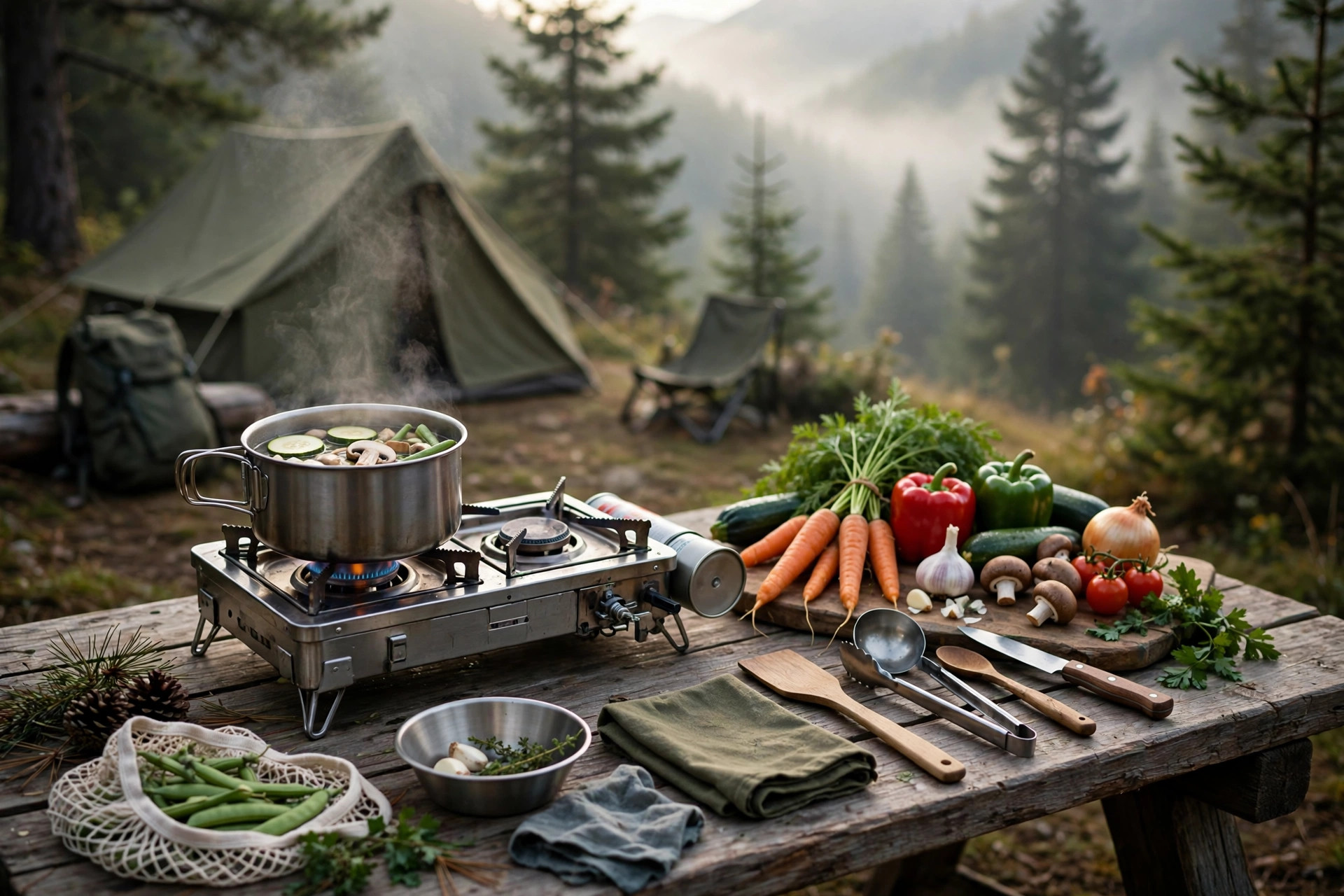
- Never put a gas stove on a fabric-top table. Manufacturers warn against it — fabric can scorch or catch. Stoves belong on metal, aluminum, or heat-resistant surfaces only. If you are unsure which stove suits your setup, read our guide to compare camp stoves for family cooking.
- Give the stove its own zone. Put the stove table at the edge of camp, away from the tent door and the play area, with a clear “no kids past this line” rule.
- Check stability before every meal. Press down on each corner. On soft or sloping ground, level the legs with flat rocks or a small piece of plywood. A wobbling table plus a pot of boiling water is the accident you never want.
- Watch pinch points. Folding legs and scissor frames pinch small fingers. Set the table up before the kids arrive at it, and teach older kids to keep hands clear of the hinges.
- Keep hot things in the middle, drinks at the edges. Hot food and pots go in the center where small hands cannot easily reach them; cups and water bottles go near each person’s edge.
- Anchor it in wind. A light table becomes a sail in a gust. Keep heavy items on it in windy weather and fold it down when you leave camp for the day.
Before a trip into bear country or the backcountry, the National Park Service’s camping guidance and safety information is worth a read.
Setting Up Your Campsite Around the Table
Put the kitchen zone (stove table and wash station) on flat ground upwind of the tent; the dining table near the fire ring with chairs facing the view; the second or side table where you can see it from the kitchen, so kids can craft while you cook; and the lantern on the side table, not the dining table, so it does not get knocked over during dinner.
Before you go, check your site on Recreation.gov — knowing whether your site has a picnic table, a fire ring, or a flat tent pad tells you whether to bring a big dining table, a compact one, or both. If you are hauling all of this from the car, a camping wagon for hauling gear and tired toddlers makes the carry much easier.
Frequently Asked Questions
What size camping table do I need for a family of four?
A family of four needs at least a 36″ × 24″ tabletop for comfortable dining with plates, cups, and a shared dish or two. Tables 40″ × 28″ or larger are more comfortable and leave room for condiments and a lantern. If you also cook at the table, add a second small table or a cook station.
Can I put a camp stove on any camping table?
No. Never put a gas stove on a fabric-top table — manufacturers warn against it because the fabric can scorch or catch fire. Use a metal, aluminum, or heat-resistant tabletop, keep the stove stable and level, and keep children away from the stove zone while it is hot.
Are roll-top tables good for families?
Yes — roll-top tables are one of the best family choices. They pack small, set up in under a minute, and give you a large surface for their weight. The only real downside is the small gaps between slats, which let tiny items like beads or dice slip through. A tray or placemat on top solves that.
How much should a family camping table weigh?
For car camping, 10–18 lbs is the comfortable range — light enough for one adult to carry from the car to the pitch. Under 5 lbs is ultralight territory and usually means a much smaller top.
Do I need one table or two?
Two tables work better for most families: one for dining and one for cooking, prep, or kids’ activities. It costs more and takes more car space, but it ends the constant shuffle of clearing the dinner table to make lunch. If you can only bring one, choose the largest stable table your car can carry.
How do I keep a camping table stable on uneven ground?
Set it on the flattest spot you can find, press each corner to check for wobble, and level the legs with flat rocks, a piece of plywood, or a folded camp towel. Tables with adjustable legs handle slopes best. Always re-check stability after rain softens the ground.
Final Word
The best camping table for your family is the one that fits your crew, your car, and the way you actually camp — big enough to eat from comfortably, stable enough to trust with a stove, and easy enough to set up that you will actually use it every trip. Start with the size table above, pick the type that matches your style, and let the table do what it does best: give your family a place to gather.
