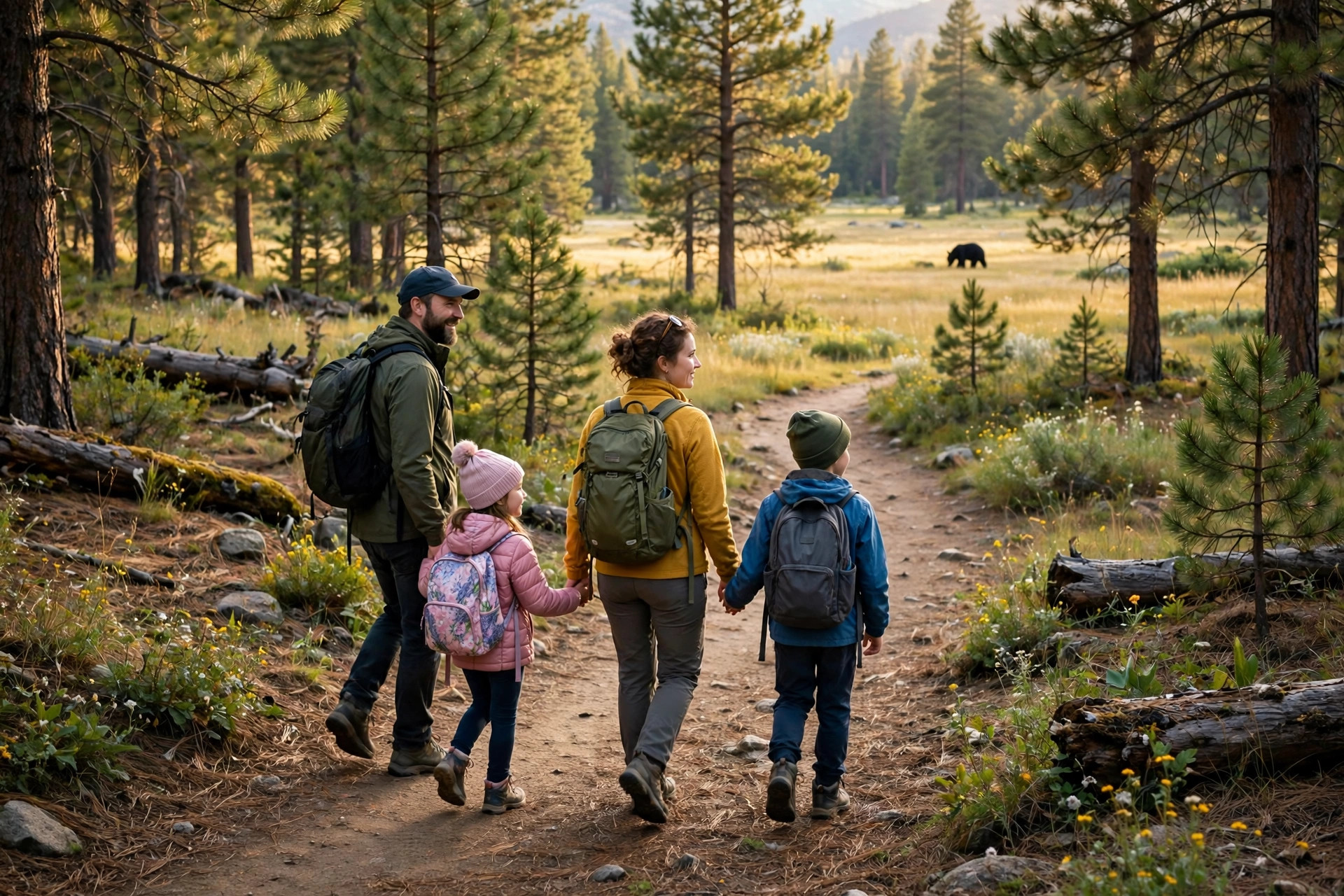
Your kids are skipping down a forest trail when one of them stops and whispers, “Mom — is that a bear?” In that moment, everything you taught them matters more than anything you packed. Bear safety for kids is about giving them a few practiced rules so they know what to do — and what never to do — if they ever meet a bear.
Bear encounters are rare, and attacks are rarer still. But families camp and hike in bear country every summer, from Yellowstone to the Smokies, and the safest families are the ones who talked about bears before the trip — calmly, at home, with a plan everyone understands.
First, the Honest Truth: Bears Are Not the Enemy
Before you teach rules, teach respect. Most bears want nothing to do with people. A black bear’s first instinct is almost always to run away. Grizzlies usually avoid people too, and attack mainly when surprised, cornered, or with cubs nearby. Kids who understand this stay calmer — and calm kids make better decisions.
Tell your children this: bears are wild animals, not the friendly cartoon bears in storybooks. We do not feed them, approach them, or try to take a selfie with one. We admire them from far away.
Our companion guide to camping in bear country with kids covers food storage in detail. This post covers the other half: what your kids themselves need to know.
The 5 Golden Rules of Bear Safety for Kids
Teach these five rules before the trip and quiz your kids at the campfire. Five rules are few enough for a six-year-old to remember — and strong enough to keep a teenager safe.
- Stay close — always within sight. Kids hike between the adults, never ahead around a bend and never behind.
- Make human noise. Talk, sing, clap, call out “hey bear!” at blind corners and near streams. Your voice tells bears a human is coming long before you arrive.
- Never run from a bear. Running triggers a chase instinct, and no one can outrun a bear. This is the hardest rule for kids, so practice it until it is automatic.
- Stay together and look big. If you see a bear, gather close, pick up small children, and stand as a group. A group looks much bigger — and much less interesting — than one small person alone.
- Leave food and smelly stuff out of the tent. No snacks, candy wrappers, toothpaste, or scented wipes where kids sleep. Food smells belong in the car, a bear box, or a bear canister.
What to Do If You See a Bear: The Step-by-Step Script
Kids panic less when they have a script. Teach this one like a fire drill.
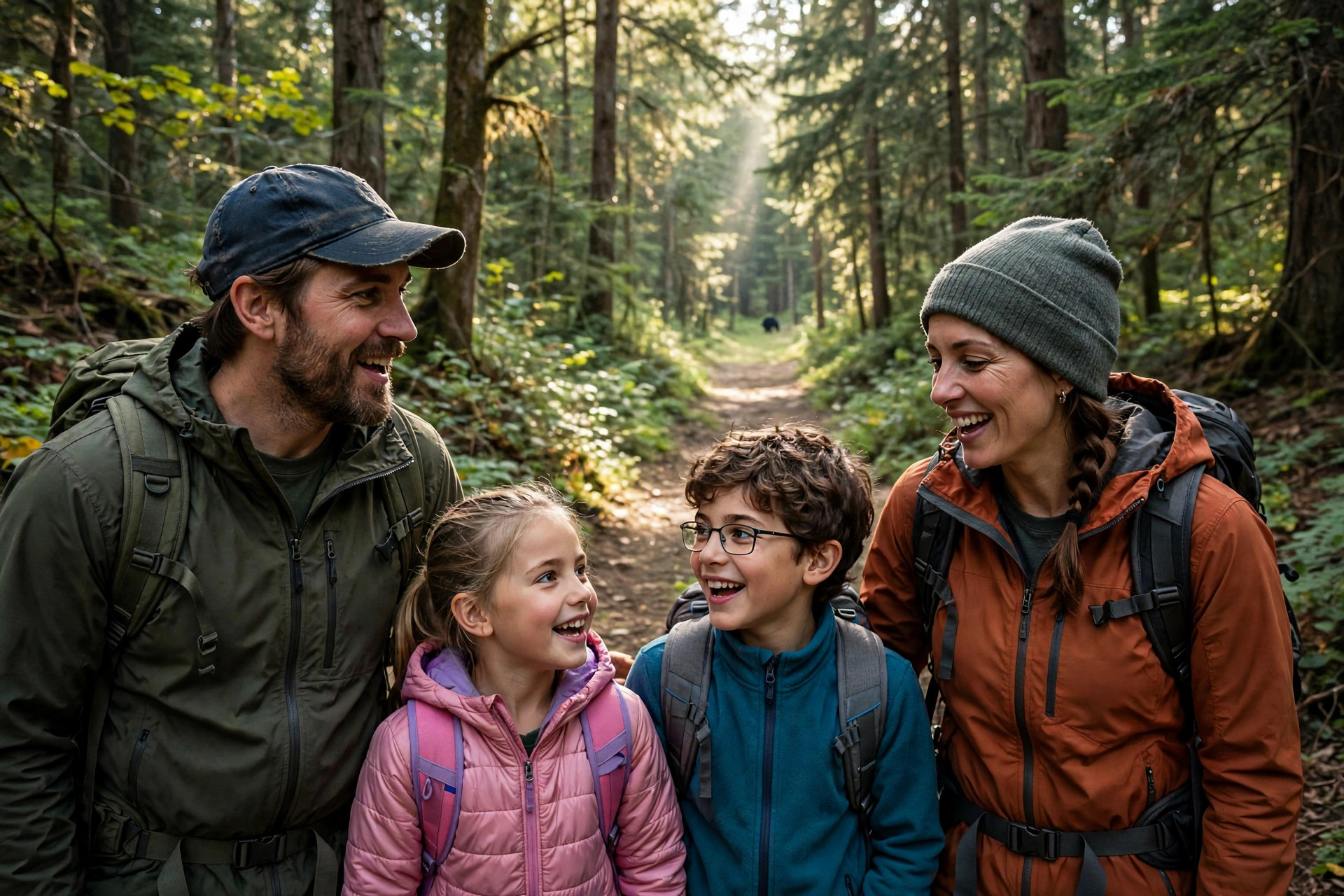
Step 1: Stop and stay calm
Freeze where you are. Take a breath. Do not scream, and do not run. Tell your kids: “Stop, stand still, look at me.” Your calm voice is the anchor.
Step 2: Gather together — pick up little kids
Call every child to you immediately and pick up toddlers and small children. Everyone stands shoulder to shoulder in one tight group. If a child is a little way off, call them to you in a firm, calm voice.
Step 3: Talk to the bear in a calm, firm voice
Say something like, “Hey bear, we’re leaving now.” Speak loudly enough for the bear to hear you, but keep your voice steady and low — this tells the bear you are a human, not prey.
Step 4: Back away slowly — never turn your back
Move away slowly, facing the bear, giving it plenty of room to leave. Do not make direct eye contact. Keep backing up until the bear is out of sight.
Step 5: If the bear comes closer, get ready with bear spray
The adult with the bear spray takes the safety clip off and holds it ready. If the bear charges or comes within about 30 feet, spray in short bursts toward its face, then keep moving away as a group.
One warning that surprises many parents: do not climb a tree. Black bears are excellent climbers, and grizzlies can climb too. A tree is not an escape plan.
Black Bear vs. Grizzly: What Kids Need to Know
Most bears your family will meet in the lower 48 states are black bears. Grizzlies live mainly in Montana, Wyoming, Idaho, and Alaska. Kids do not need a biology lesson — they need to know how to tell them apart and that the response is slightly different.
| Black Bear | Grizzly (Brown) Bear | |
|---|---|---|
| How to spot it | Straight face, tall pointed ears, no shoulder hump, smaller (150–400 lbs) | Dished face, small rounded ears, big shoulder hump, larger (300–800 lbs) |
| Where you will see it | Most US forests and mountains, including the Smokies | Mostly Montana, Wyoming, Idaho, Alaska, and Canada |
| Typical behavior | Usually runs away; very rarely aggressive | More likely to stand its ground, especially with cubs nearby |
| If it attacks | Fight back hard — focus on the face | Play dead: lie face down, hands over neck, legs spread |
Memorize that last row yourself: the National Park Service advises playing dead during a grizzly attack, but fighting back during a black bear attack. For children, the lesson is simpler — do everything you can to never reach that point. Check the official guidance for your destination before you go; the National Park Service bear safety page at nps.gov is the authority.
Teaching Bear Safety by Age
The same rules land differently at different ages.
Toddlers (ages 2–4): Keep it physical, not verbal
Toddlers cannot memorize rules, so the plan is entirely on you. Keep them in a carrier, a stroller on paved paths, or holding your hand — never wandering ahead. Their only “rule” is one word: “Freeze!” Practice it as a game at home: shout “freeze!” and everyone stops like a statue.
Young kids (ages 5–8): Rules as a game
Kids this age love rules and love to practice. Give them a job on the trail: one child is the “noise maker” who calls “hey bear!” at every bend, another is the “lookout” who scans ahead. Role-play an encounter in the backyard: you play the bear, they practice stopping, gathering, and backing away slowly. Keep it fun, never scary — a frightened five-year-old forgets everything.
Older kids (ages 9–12): Give them real responsibility
Kids this age can understand why the rules exist, which makes them follow the rules when you are not watching. Teach them to spot bear signs: tracks, scat, claw marks, berry bushes. Let them carry their own whistle. Show them how bear spray works (with an inert practice canister, never a live one). Junior ranger programs are a great fit too — see our guide to junior ranger programs.
Teens (ages 13+): Treat them like trail partners
Teenagers tune out lectures, so make them part of the plan. Have your teen read the park’s bear safety page and brief the family at the trailhead. Let them carry the bear spray (after a real practice session) and navigate with the map. And talk honestly about headphones: a teen who cannot hear the trail cannot hear a bear. One earbud out, always, in bear country.
Bear Safety at the Campsite: Rules Kids Can Follow
Most bear problems at camp start with food, and kids are the ones who leave the trail mix in the tent.
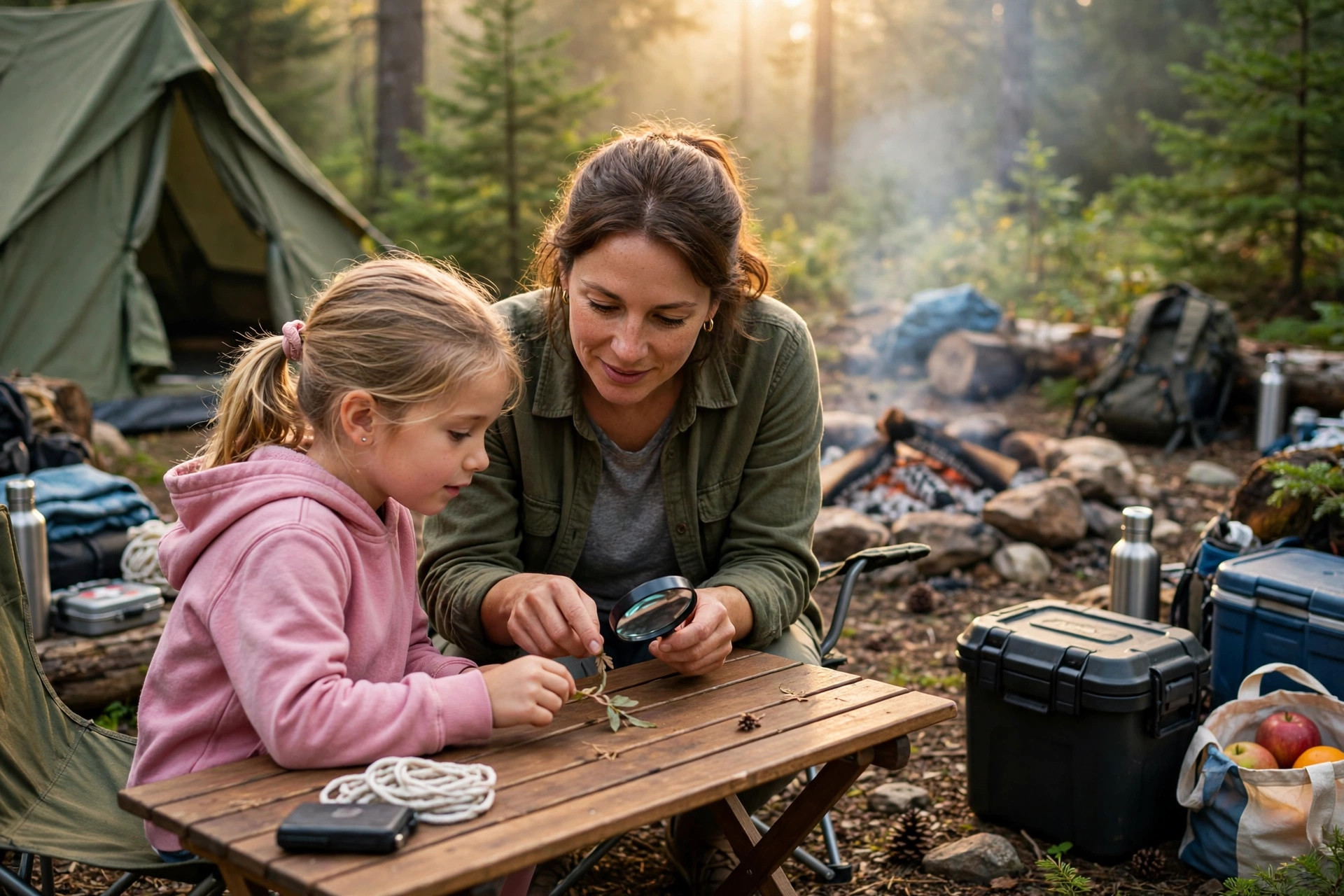
- The tent is a no-food zone. No snacks or candy in pockets. Eat only at the picnic table, then wash hands and faces before bed.
- Change out of food-smelling clothes. The shirt your child wore while eating s’mores stays outside the tent overnight.
- Toothpaste and soap sleep with the food. Scented toiletries go in the car or bear box, not in the tent. Brush teeth at the picnic table.
- Clean up the second dinner ends. Wash dishes right away and get every scrap into the bear box or car before dark. A clean camp is a boring camp to a bear.
- Know where the bear box is. On arrival, walk the kids to the bear box and show them how it opens and closes. No bear box? Food goes in the car trunk — never in the tent.
- If you hear something at night, stay in the tent. Wake a parent — nobody leaves the tent alone to investigate.
For the full food-storage system — bear canisters, hanging food, and trash — read our bear country food storage guide. For more outdoor skills, see our guide on teaching kids trail safety by age.
Bear Spray Basics for Families
Bear spray is the single most effective tool you can carry in bear country, and the National Park Service recommends it for anyone hiking or camping where bears live. Here is what parents need to know:
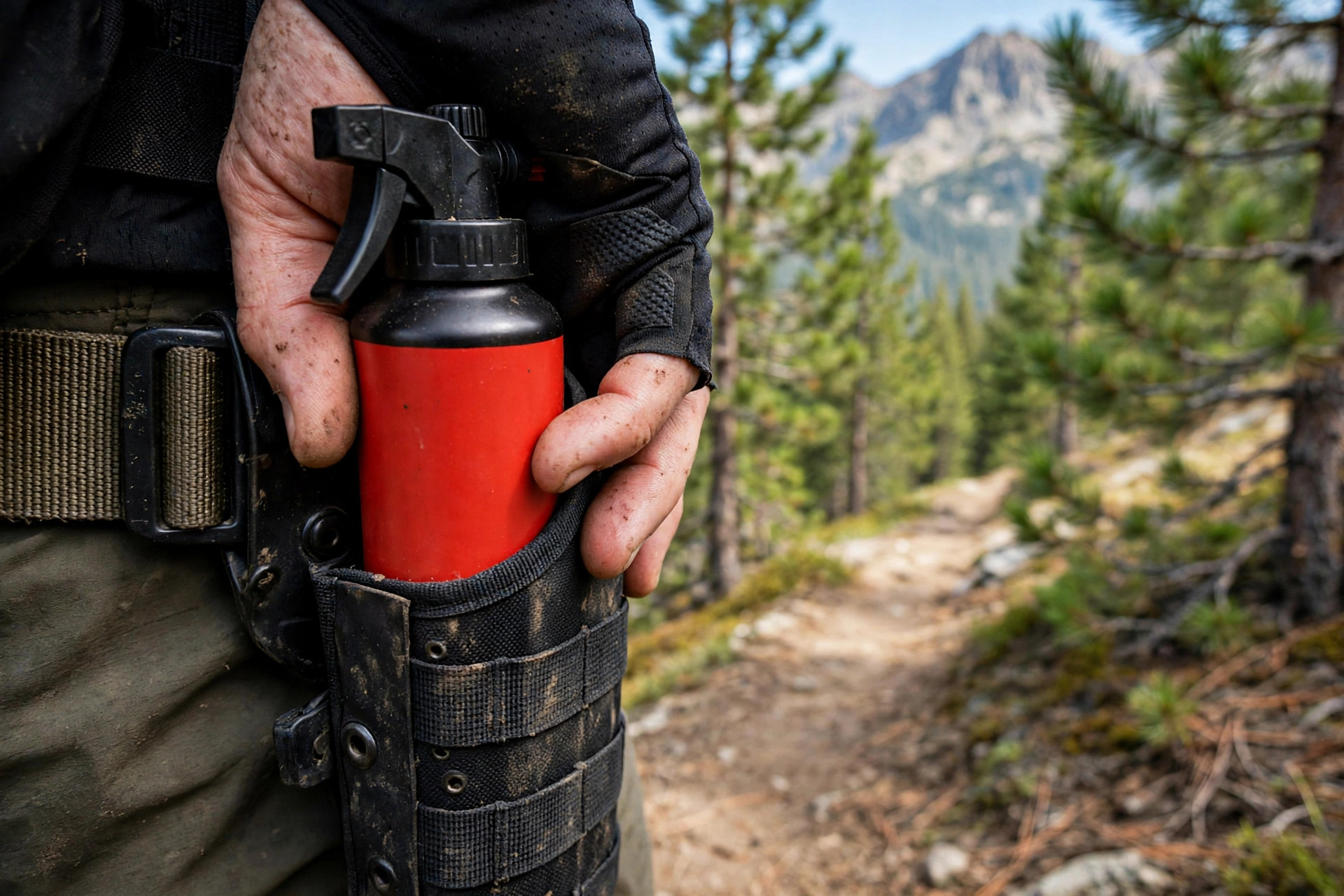
- Buy it before the trip. Bear spray is not sold in every store, and you cannot fly with it. Buy it near your destination — and check that it is not expired.
- Carry it on your body, not in your pack. A canister buried in a backpack is useless. Clip it to your belt or chest strap, safety clip on, where you can reach it in two seconds.
- Know how it works before you need it. Read the instructions at home and practice drawing it from the holster. An inert practice canister lets older kids try it too.
- Kids do not carry live bear spray. It is a powerful irritant and a weapon, not a toy. Adults carry it; kids learn what it is and why they never touch it without permission.
- Spray only if a bear is close and approaching. Aim slightly downward in short bursts when the bear is within about 30 feet. Do not spray into the wind if you can avoid it.
Practice Games That Make Bear Safety Stick
Try these before your trip:
- Freeze tag, bear edition. When you shout “BEAR!” everyone freezes, gathers, and backs away slowly. The last one to gather is the bear next round.
- The noise game. On a practice walk, take turns being the “trail caller” — every minute, that person calls “hey bear!”
- Spot the sign. On a local trail, look for animal tracks, scat, and claw marks together.
Your Printable Bear Safety Checklist
Print it and tape it inside your tent. Run through it at the trailhead and again at the campsite.
- ☐ Everyone knows the 5 golden rules
- ☐ Checked the park’s bear activity alerts and current closures before leaving
- ☐ Bear spray packed, not expired, clipped to an adult’s belt — not buried in a pack
- ☐ Food, trash, and scented items in the car or bear box — nothing in the tent
- ☐ Practiced “freeze” and the back-away drill at home
- ☐ Kids know: if you see a bear, stop, call for an adult, and do not run
- ☐ Family first aid kit packed and easy to reach
- ☐ Campfire fully out and camp clean before bed — see our campfire safety rules
Frequently Asked Questions
Are bears dangerous to kids?
Bear attacks on children are extremely rare, and most bears avoid people entirely. The risk is real enough to prepare for, but it should not stop your family from camping or hiking.
What should a child do if they see a bear alone?
Stop, stay calm, and do not run. The child should call loudly for an adult, stay where they are, and slowly back away while facing the bear.
Should kids carry bear spray?
No. Bear spray is a powerful irritant for adults only. Kids should know what it is, where the adult carries it, and that they must never play with it. Older teens can be taught to use it under adult supervision with an inert training canister.
Is it safe to camp with kids in bear country?
Yes — millions of families camp in bear country every year. The key is preparation: store all food and scented items properly, keep a clean camp, carry bear spray, and teach your kids the five golden rules. Check your park’s bear activity alerts on nps.gov before you go.
What if a bear comes into our campsite at night?
Stay in your tent and make noise from inside — shout, bang pots together, and turn on lights. Do not leave the tent to chase it away. In almost all cases the bear is after food smells, not people, and it will move on. If a bear enters your tent, fight back loudly and use bear spray if you have it. Report it to a ranger as soon as possible.
The Bottom Line
Bear safety for kids comes down to three things: stay close, make noise, and never run. Teach the five golden rules at home, practice them like a game, and review them at the trailhead. Keep your camp clean and carry bear spray where you can reach it.
Your kids do not need to be afraid of bears — they need to be ready for them. Print the checklist, pack the bear spray, and take your family somewhere wild.
Before your next adventure, grab our printable camping checklist with kids.
