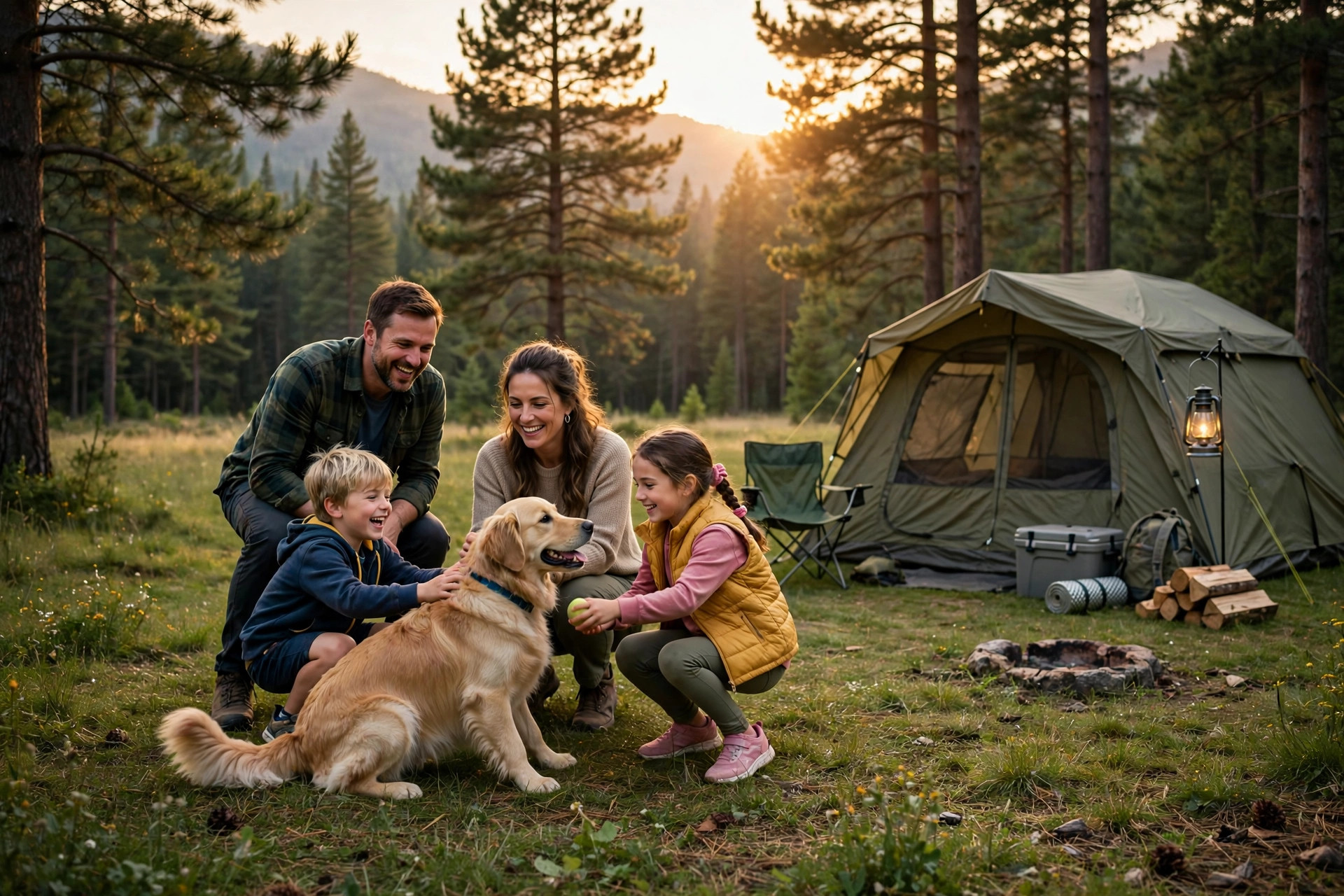
Camping with dogs and kids sounds like the perfect family weekend — until the dog bolts after a squirrel while your toddler wanders toward the fire ring. The good news is that with the right preparation, the dog and the kids can make each other’s trip better, not harder. This guide covers everything you need to know about camping with dogs and kids: picking a dog-friendly campground, packing for both, managing the campsite, trail safety, and what to do when things go sideways.
Is Your Dog Ready for a Family Camping Trip?
Before you book anything, take an honest look at your dog. A camping trip is a big change of scenery, and not every dog is ready for it. A well-socialized dog that is comfortable around strangers, children, and other animals will do far better than a reactive or anxious one. If your dog has never spent a night away from home, start with a backyard campout first. Pitch the tent, let the dog sleep in it with the family, and see how everyone does. That one dry run will tell you more than any checklist.
Age and health matter too. Puppies under about six months should not do long hikes, and older dogs with joint problems may struggle on uneven trails. Before the trip, ask your vet whether vaccinations and flea and tick prevention are current — and bring a copy of the vaccination record, since many campgrounds ask for it at check-in.
Choosing a Dog-Friendly Campground
Not every campground that allows dogs is a good fit for a family with both dogs and kids. Look for these specifics before you book:
- Clear pet rules in writing. Check the campground’s website or call ahead. Confirm dogs are allowed at your specific site type, not just somewhere in the park.
- Leash length rules. Most campgrounds require a leash of six feet or less. A few allow longer tie-outs. Know the rule before you arrive so you can pack the right gear.
- Designated pet areas. A fenced dog run or a pet relief area near the loop saves a lot of late-night walks in the dark.
- Space between sites. A spacious site gives the dog room to settle without being nose-to-nose with the neighbors’ tent — and gives your kids room to play without tripping over a tie-out line.
- Nearby trails that allow dogs. Some trails, especially in national parks, ban dogs entirely. If hiking is part of your plan, confirm the trails you want are dog-friendly.
When you book, mention the dog and the kids — staff can often steer you toward a quieter loop. For help narrowing down options, read our 12 questions to ask before booking a family campground.
The Packing Checklist: Dogs and Kids Together
Pack the dog’s gear in one dedicated bag so nothing gets left behind. Here is what belongs in it:
Dog essentials
- Food and treats for the whole trip, plus one extra day’s worth
- Collapsible food and water bowls, and more water than you think you need
- A six-foot leash, a long tie-out line, and a spare leash
- A stake or a sturdy anchor point for the tie-out
- Dog bed or blanket — a familiar smell helps the dog settle at night
- Waste bags, a lot of them
- Dog towel for muddy paws and wet fur
- Flea and tick prevention, plus a tick-removal tool
- Dog first-aid basics: bandages, antiseptic, tweezers, and any medication
- Vaccination records and your vet’s phone number
- A dog life jacket if you will be near water
Kid essentials that matter more with a dog around
- Closed-toe shoes — bare feet and a running dog are a bad mix on gravel
- A headlamp for every child old enough to use one, so the dog is always visible after dark
- Extra clothes, because kids and dogs together generate an impressive amount of mud
- A small backpack for each child to carry their own water and snacks on hikes
If you are still building your base kit, start with our family camping checklist of 47 essentials and add the dog items above to it.
Setting Up a Safe Campsite for Dogs and Kids
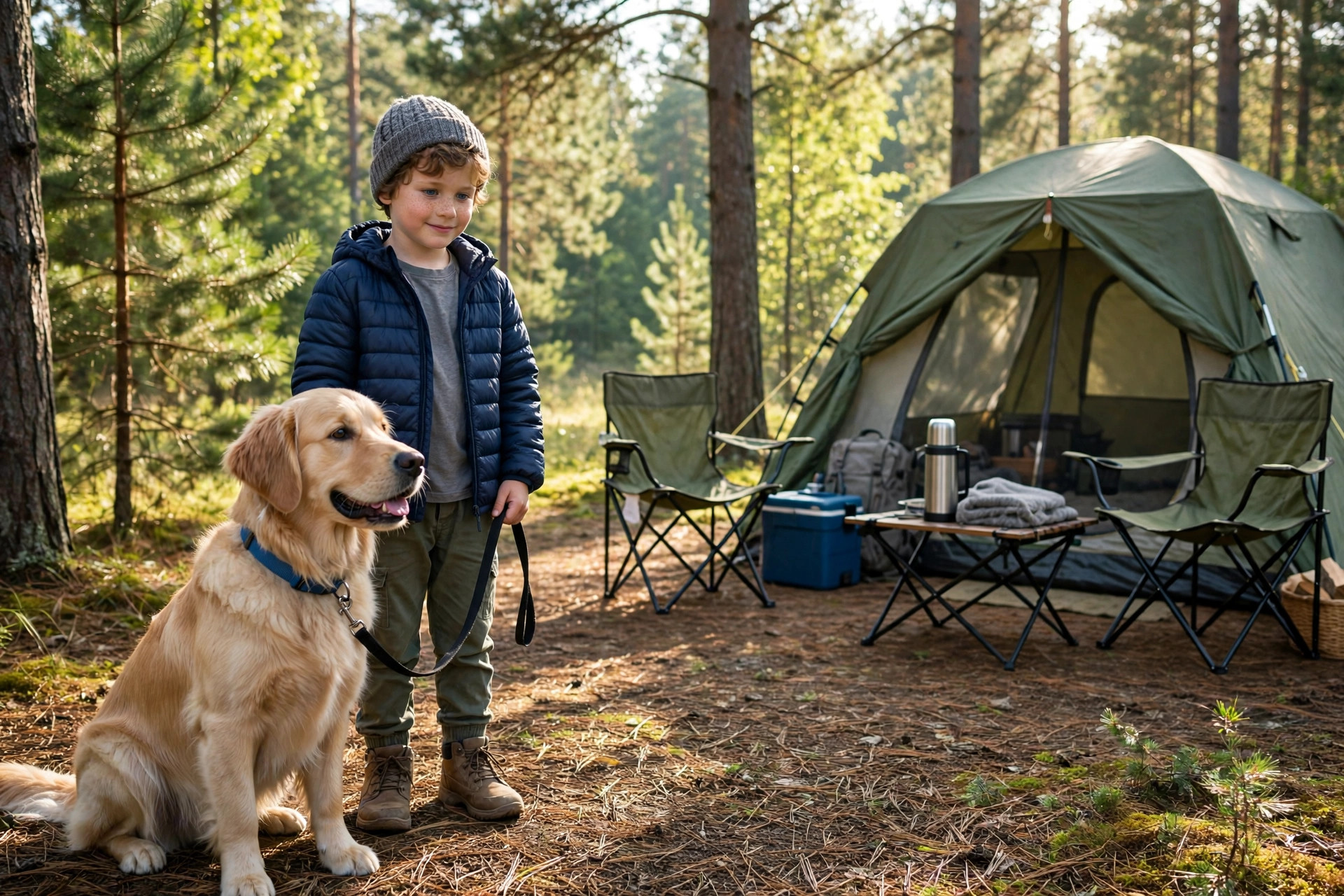
How you arrange your site matters more than any single piece of gear. Set up with three zones in mind: the dog’s spot, the kids’ play area, and the cooking and fire area — and keep them separate.
Put the dog’s bed and tie-out in a shaded spot with a clear view of the family, but away from the fire ring and the cooking area. Keep the line short enough that the dog cannot reach the fire, the grill, or the neighbors’ site, and mark it with a bright flag so the kids do not trip over it at dusk.
Give the kids their own play zone on the opposite side of the site, away from the dog’s line. This is where the toys, the bubbles, and the card games live. The separation protects both sides: kids do not accidentally step on the dog, and the dog does not get overwhelmed by constant attention.
Store all food in sealed containers inside the car or a bear box at night — never in the tent. Keep the dog inside the tent or the car at night, never tied up alone outside: a tied dog that hears wildlife will bark all night, and a loose dog may chase it.
Hiking with a Dog and Kids: The Trail Rules
Hiking is where the combination of dogs and kids shines — and where it can fall apart fastest. A dog that pulls on the leash will tire out a small child in the first half mile, and a dog that chases wildlife puts everyone at risk.
Put an adult in charge of the dog at all times. Never hand the leash to a child under about ten on a real trail — a sudden squirrel can yank a small child off their feet. Instead, let kids walk ahead with the other adult and give them a job: spotting trail markers, counting birds, or carrying the dog’s water.
Plan shorter hikes than you would with adults alone. A good rule of thumb from our guide to realistic trail distances by age is to cut the distance in half when a dog and a young child are both along, and add frequent water and shade breaks. Dogs overheat faster than people, especially short-nosed breeds and dark-coated dogs. Watch for heavy panting, lagging behind, or lying down in the shade — those are signs to stop, rest, and offer water.
Keep the dog on the leash even on trails that allow off-leash dogs — other hikers may have children, a reactive dog, or a fear of dogs. Pack out the dog’s waste the same way you pack out your own trash, and teach your kids to do it: the Leave No Trace rules apply to pets too.
Food, Water, and Weather: The Dog’s Needs
Dogs need more water than you expect when camping. A medium-sized dog can drink a liter or more on a warm hiking day, on top of what it drinks at camp. Carry a dedicated water bottle for the dog and a collapsible bowl, and offer water at every stop. Never let the dog drink from stagnant ponds or streams without treating the water first — the same parasites that make people sick can make dogs sick too.
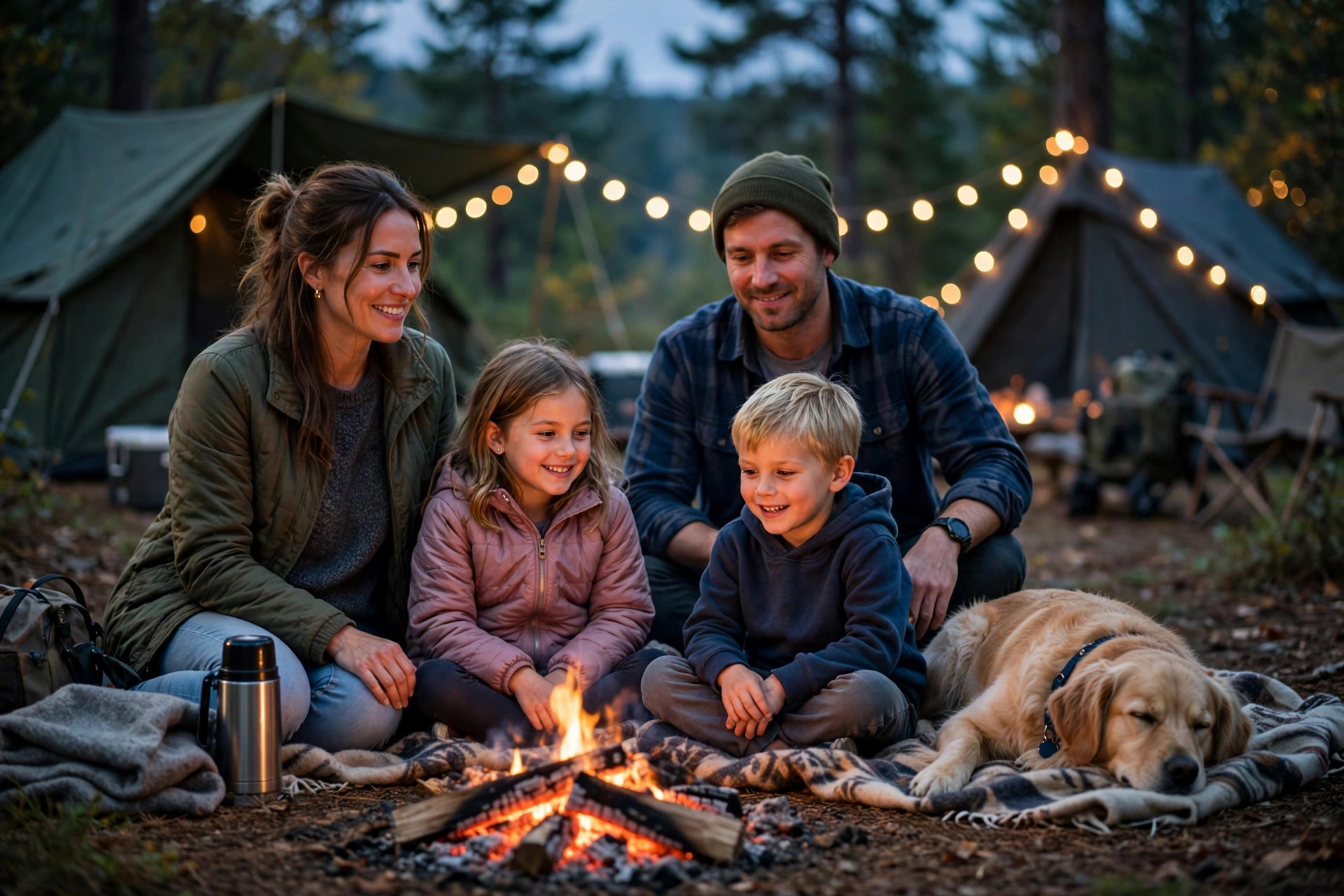
Weather is the biggest variable. In heat, set up shade before anything else and never leave the dog in a hot car or a closed tent. In cold, bring the dog’s bed inside the tent and add an extra blanket — if your kids need an extra layer, the dog probably does too. Our layering system for keeping kids warm while camping applies to dogs as well.
Bugs bite dogs as well as kids. Use a vet-approved flea and tick repellent, check the dog for ticks every evening, and keep the same repellent discipline for the kids — see our guide to keeping bugs away when camping with kids for the products and routines that work for the whole family.
What Can Go Wrong — and What to Do
Most camping trips with dogs and kids go smoothly. When they do not, it is usually one of these situations:
The dog runs off
Stay calm and do not chase. Call the dog once, in a cheerful voice, and crouch down — most dogs return when they realize the game is over. Make sure the dog’s tag and microchip details are current before the trip, and keep a recent photo on your phone. If the dog is still missing after ten minutes, alert the campground host and other campers.
The dog meets wildlife
Keep the dog close and leashed, especially at dawn and dusk when animals are active. If you spot a snake, bear, or moose, pick up small children, keep the dog behind you, and back away slowly. Never let the dog chase or corner a wild animal.
The dog gets sick or hurt
A cut paw, a bee sting, or an upset stomach are the most common issues. Carry a small dog first-aid kit and know where the nearest vet clinic is before you leave home — save the address in your phone. For a cut paw, clean it, bandage it, and keep the dog off rough ground. For repeated vomiting or lethargy, do not wait it out; drive to the vet.
The kids are scared of the dog — or the dog is scared of the kids
This happens more often than parents admit, especially with a new or unfamiliar dog. Never force interaction. Let the child watch the dog from a distance, offer treats from an open palm, and keep early meetings short and calm. If either side stays stressed, separate them for the rest of the trip rather than pushing through it.
A Simple Weekend Plan That Works
| When | What to do |
|---|---|
| Friday evening | Arrive before dark. Set up the tent, the dog zone, and the kids’ play area. Short walk around the loop so everyone learns the site. |
| Saturday morning | Easy hike, under two miles, with water stops. Back at camp for lunch and a long rest while the dog naps. |
| Saturday afternoon | Low-key camp activities: scavenger hunt, skipping stones, or a short drive to a viewpoint. Campfire after dinner. |
| Sunday morning | Slow pack-up. Let the kids help load the car while the dog gets a final walk. Home by lunch. |
That is it. One night, one short hike, and a lot of unstructured time. If it goes well, the next trip can be longer. If you want a fuller version of this approach, our first family camping trip weekend action plan walks through the same idea in more detail.
FAQ
Can I bring my dog to a national park campground?
Many national park campgrounds allow dogs, but the rules are strict: dogs must stay on a leash no longer than six feet, they are usually not allowed on trails or in backcountry areas, and they may not be left unattended at the campsite. Check the specific park’s pet rules on nps.gov before you book — state parks are often more flexible for families with dogs. The Recreation.gov listing for each campground usually states the pet policy too.
What age is best for a child to walk the dog while camping?
Most experts suggest waiting until a child is at least ten years old and strong enough to hold the dog if it lunges. Even then, keep it to flat, open areas near camp, never on a trail or near water. An adult should always stay within arm’s reach.
How do I keep my dog from barking at night?
Tire the dog out during the day with a hike and play, keep the dog inside the tent with the family at night, and bring a familiar bed or blanket. A dog that can see and smell its people rarely barks. If the dog still barks at every sound, a white-noise app on your phone can help mask campground noises.
Should my dog sleep in the tent with us?
Yes, for most families this is the safest and calmest option. The dog stays warm, quiet, and out of trouble, and the kids love it. Bring a dedicated dog blanket to protect the tent floor, and keep the dog’s claws trimmed so the floor does not get punctured.
What if my dog is not allowed on the trails I want to hike?
Plan around it. Take turns with another adult — one hikes with the kids while the other stays at camp with the dog — or choose a campground near trails that do allow dogs. Never leave the dog alone at the campsite while you hike; most campgrounds forbid it, and it is stressful for the dog.
Start small, pack for both, keep the campsite organized, and let the dog be part of the adventure.
