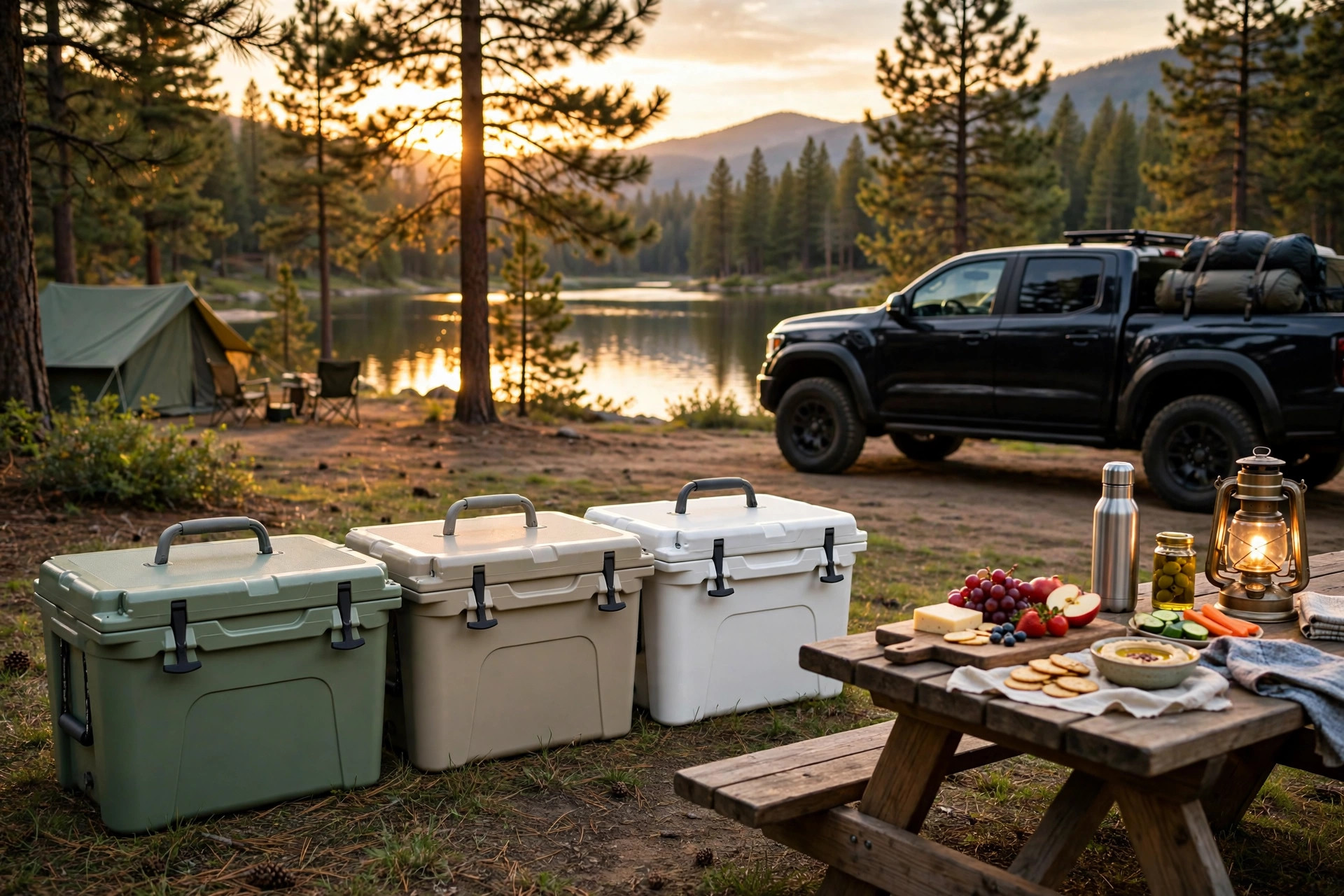
Nothing ruins a family camping trip faster than a cooler full of lukewarm water and questionable milk. Ask me how I know: three summers ago at a state park in Colorado, our bargain cooler gave up on day two, and we spent the rest of the weekend eating room-temperature sandwiches and buying bag after bag of melting ice. A good family cooler is not a luxury — it is the difference between safe, happy meals outdoors and a food-safety gamble.
But “good” means different things for different families. A couple with a toddler doing weekend trips needs something completely different from a family of six heading out for a week. This guide breaks down the types of family coolers, how ice retention actually works, what size your family needs, and how to keep food cold for days — so you buy once and buy right.
The Three Types of Family Coolers
Walk into any outdoor store and you will face a wall of options. Almost all of them fall into three categories.
1. Rotomolded Hard Coolers
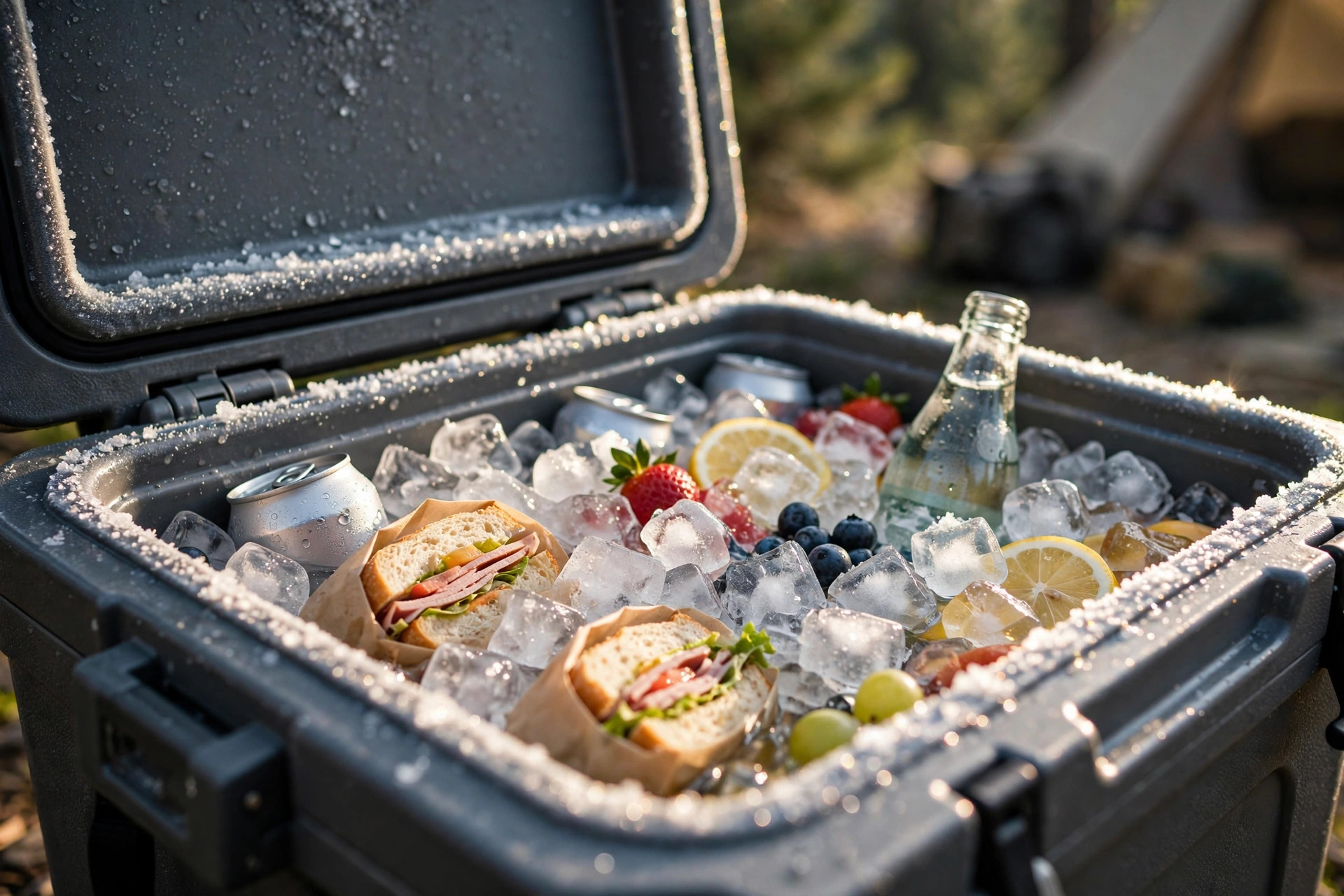
These are the thick-walled beasts with bear-resistant certifications. Rotomolding (rotational molding) creates a single, seamless plastic shell filled with pressure-injected foam insulation. They hold ice for 5–10 days, survive being dropped off a tailgate, and double as extra seating at the campsite.
The trade-off is weight and price. A 45-quart rotomolded cooler can weigh 20+ pounds empty, and the well-known brands run $200–$400. For families who camp often, car camp, and hate buying ice, they are worth every penny. A family of four on a long weekend will not need to re-ice a good rotomolded cooler even once.
2. Traditional Injected Hard Coolers
The classic picnic coolers most of us grew up with. Thinner walls, lighter weight (often under 10 pounds), and prices typically between $40 and $100. Modern versions have come a long way — better lids, drain plugs, and UV-resistant exteriors.
Expect 2–4 days of ice retention in mild weather. These are the sweet spot for families who camp two or three weekends a year and do not want to haul a 25-pound box around. They also fit easily into a packed trunk.
3. Soft-Sided Coolers
Insulated tote bags with zippers and shoulder straps. They are light, collapsible, and great as a second cooler — for drinks, snacks, or a day hike away from camp. Do not make a soft-sided cooler your only food cooler on a multi-day trip; ice retention is typically 24–48 hours.
Our recommendation for most families: one quality hard cooler for food (the “do not open unless necessary” cooler) plus one soft-sided cooler for drinks and grab-and-go snacks. This two-cooler system is the single best strategy for ice retention, and we will explain why below.
What Size Cooler Does Your Family Need?
Cooler capacity is measured in quarts, and the rule of thumb is roughly 12 quarts of cooler space per person per day for a trip with real cooking. In practice:
| Family size | Weekend trip (2–3 days) | Week-long trip |
|---|---|---|
| 2 people (1–2 kids) | 25–35 qt | 45–65 qt |
| 3–4 people | 45–65 qt | 65–100 qt |
| 5–6 people | 65–100 qt | 100+ qt (or two coolers) |
A word of caution: bigger is not automatically better. A half-empty cooler loses cold fast because of all the warm air inside. If you usually camp with three people but occasionally bring the grandparents, buy for your usual group and fill the extra space with frozen water bottles on bigger trips. Frozen bottles double as extra drinking water as they melt — free bonus.
Measure your vehicle too. A 100-quart cooler will not fit every trunk, and a cooler that lives in the garage because it is too big to transport is money wasted. Check the external dimensions before you buy, not just the quart rating.
Ice Retention: How It Actually Works
“Holds ice for 7 days” is the most quoted — and most misunderstood — spec in the cooler world. Those numbers come from lab tests: a cooler pre-chilled, packed 2:1 with ice, kept closed in 70°F shade. Real family camping is nothing like that. Kids open the lid seventeen times an hour, the cooler sits in a hot car, and the sun finds it.
The Two-Cooler System
Every time you open a cooler, warm air replaces cold air and ice melts a little faster. The fix is to separate what gets opened constantly from what needs to stay cold:
- Cooler #1 (the vault): raw meat, dairy, leftovers, anything perishable. Open only at meal times.
- Cooler #2 (the grab cooler): drinks, fruit, snacks. Kids can open this one all day without endangering dinner.
The grab cooler can be a cheap traditional cooler or a soft-sided one. The vault should be your best cooler, and guarding it is a family job everyone can understand.
Block Ice vs. Cube Ice
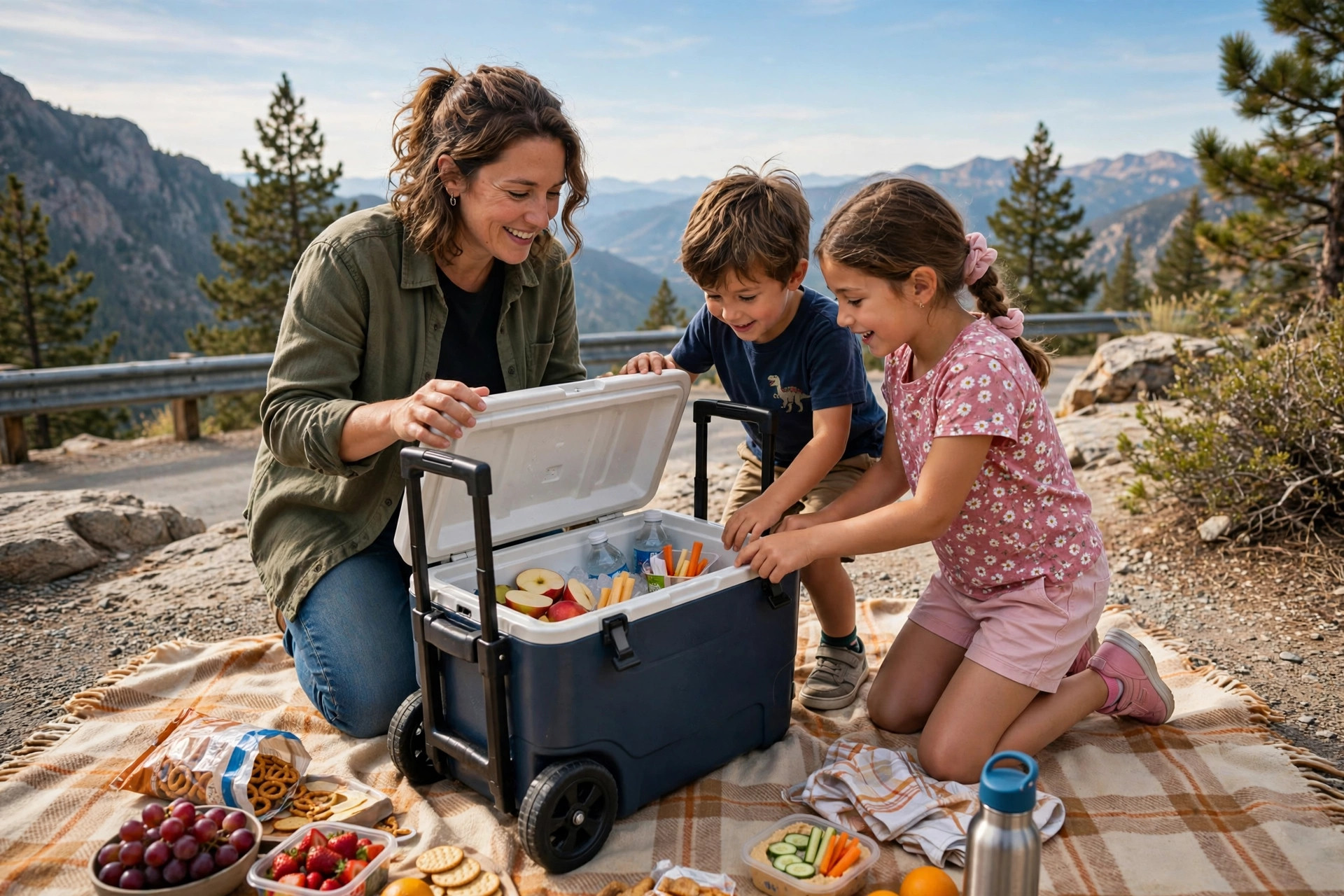
Block ice melts significantly slower than cubes because it has less surface area exposed to warm air. A block that fits the bottom of your cooler, topped with cubes to fill gaps, is the ideal setup. Freeze water in clean milk jugs or food-storage containers for free block ice.
Pre-Chilling: The Step Everyone Skips
A cooler that sat in a hot garage is a warm box. Put a sacrificial bag of ice (or frozen bottles) in it the night before your trip, then pack fresh ice the morning you leave. Pre-chilling alone can add a full day or more of ice life in summer heat.
Pack Like a Pro
- Cold food in, warm food never. Chill everything in your fridge before packing — a room-temperature soda can melts a surprising amount of ice.
- Ice on the bottom and on top. Cold air sinks, so put blocks on the bottom, food in the middle, and a layer of cubes on top.
- Fill air gaps. Crumpled newspaper, extra ice, or frozen bottles in empty corners beat empty air every time.
- Keep it in the shade. A cooler in direct sun works overtime. A wet towel draped over the lid adds evaporative cooling.
- Drain the water — but only when it is warm. Cold meltwater still chills food, so leave it unless the water itself is getting warm.
Features That Actually Matter for Families
Wheels and Handles
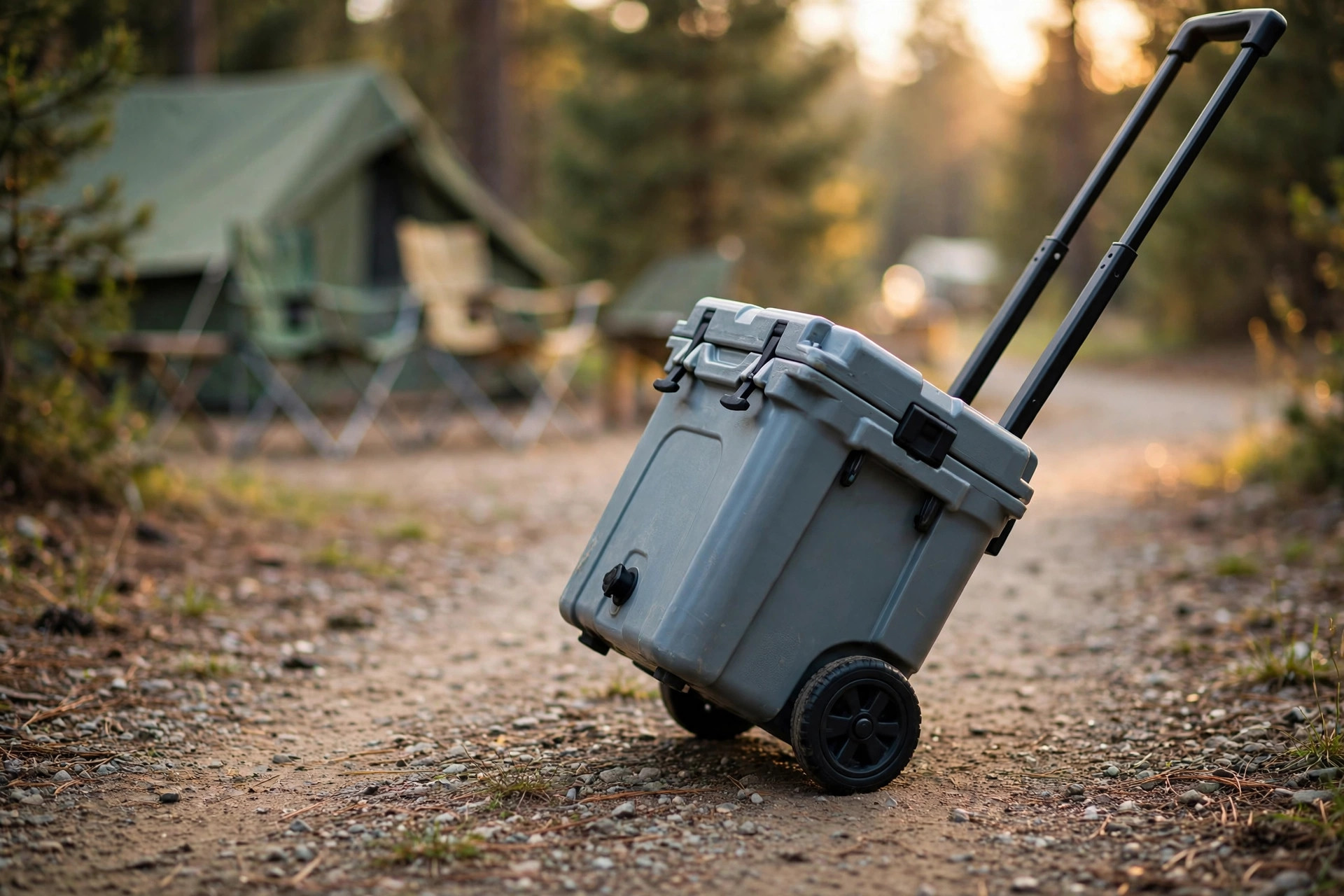
A loaded 65-quart cooler can weigh 60+ pounds. Wheeled models with telescoping handles are a genuine back-saver for campsites with long walks from the parking area. Look for all-terrain wheels if your spots are gravel or grass rather than pavement.
Drain Plugs
A drain plug lets you empty meltwater without tipping the whole cooler — essential for larger models. Threaded plugs that tether to the cooler (so they do not get lost in the grass) are a small detail you will appreciate on day three.
Lid Latches and Kid Access
Think about who opens the cooler. Twist or pull latches that a six-year-old can manage make the grab cooler actually usable by kids. On the vault cooler, look for latches that stay shut in a moving car — and consider whether the lid can support a small child sitting on it, because it will happen.
Bear Resistance
If you camp in bear country, this is not optional. Look for coolers certified by the Interagency Grizzly Bear Committee — many rotomolded models carry the certification. Even with a bear-resistant cooler, follow park rules: store it in a vehicle or bear box at night, never in your tent. The National Park Service’s camping guide has region-specific food storage rules worth reading before you go.
Divider Trays and Baskets
Wire or plastic baskets that hang from the rim keep cheese, butter, and small items out of the ice water. They are cheap add-ons that make a real difference in daily use.
Best Coolers for Family Camping: What to Look For
Rather than naming a single “best” cooler (which depends on your family size, budget, and camping style), here is what to prioritize in each category:
Best for Weekend Warriors
A mid-size traditional hard cooler (45–55 qt) from an established brand. You get 2–4 days of ice, light weight, and a price under $100. Perfect if you camp a few weekends a year and mostly cook simple meals. Browse the current cooler selection at REI to compare weights and capacities side by side.
Best for Long Trips and Hot Climates
A rotomolded 65–75 qt cooler. The ice retention (5+ days with good habits) means no mid-trip ice runs, and the durability handles years of family abuse. Yes, it is heavy and expensive — but spread over dozens of trips, it is one of the best cost-per-trip purchases in your gear closet.
Best Budget Pick
Do not overlook the classic mid-range coolers. With pre-chilling, block ice, and the two-cooler system, a $60 cooler can keep food safe for a 3-day weekend in moderate weather. Spend the savings on the rest of your camping checklist instead.
Best Second Cooler
A soft-sided 24–30 qt cooler for drinks and snacks. Light enough for one adult to carry, collapses flat for the drive home, and keeps the kids’ constant lid-opening away from your perishables.
Food Safety: The Part That Matters Most
This is the serious bit, and it is why cooler quality matters beyond convenience. Perishable food (meat, dairy, eggs, cooked leftovers) is only safe below 40°F. In the danger zone between 40°F and 140°F, bacteria double every 20 minutes.
- Keep a cheap fridge thermometer in your food cooler. If it reads above 40°F, the food is on borrowed time.
- Never leave the cooler open “for a minute” in the sun — one careless afternoon can spoil the whole trip’s food.
- Pack raw meat in sealed containers on the bottom, below ready-to-eat food, so drips cannot contaminate anything.
- When in doubt, throw it out. A ruined steak is annoying; food poisoning in a tent with two toddlers is a nightmare.
Planning meals around what keeps well also helps. Our family camp kitchen guide covers meal planning that reduces how much perishable food you need to protect in the first place.
Cooler Care: Make It Last a Decade
After each trip: empty it completely, wash with warm soapy water, and rinse well. For lingering smells, wipe down with a baking-soda solution and let it air-dry with the lid cracked open — never snap the lid shut on a damp cooler, or it will smell like a swamp next spring. Store it with the lid propped open or the drain plug removed. Check latches, hinges, and gaskets once a season; most manufacturers sell replacement parts, and a $5 gasket can restore a tired cooler.
Cooler Buying Checklist
Before you click buy, run through this list:
- Right size for your usual group (not the biggest trip you might take)
- Fits in your vehicle’s cargo space (measure!)
- Ice retention matched to your trip length and climate
- Weight you can actually lift when loaded (or wheels)
- Drain plug, sturdy latches, UV-resistant exterior
- Bear certification if you camp in bear country
- Budget left for a smaller second cooler
And if you are planning the trip itself, our breakdown of what a family road trip really costs and gas-saving tips for long drives will help you budget the whole adventure — cooler ice included.
Frequently Asked Questions
How long will ice last in a family cooler?
With good habits (pre-chilling, block ice, shade, minimal opening), expect 2–4 days from a traditional hard cooler and 5–10 days from a rotomolded cooler in mild weather. Hot weather and frequent opening cut those numbers significantly.
What size cooler do I need for a family of four?
A 45–65 quart cooler covers a long weekend for four; go 65–100 quarts for a week-long trip. Remember the air-gap rule: a cooler that is only half full loses cold fast, so do not oversize for your usual group.
Is dry ice safe to use in a camping cooler?
Dry ice works but needs care: never touch it with bare hands, never seal it in an airtight cooler (pressure buildup can damage the cooler or worse), and keep the cooler ventilated. For most family trips, regular block ice is simpler and safer.
Should I drain the water from my cooler?
Only when the water feels warm. Cold meltwater still insulates your food, so draining too early actually shortens ice life. Drain warm water, then add fresh ice if needed.
Are expensive rotomolded coolers worth it for families?
If you camp frequently, take long trips, or camp in hot climates — yes. The ice retention eliminates mid-trip ice runs and the durability lasts a decade. For occasional weekend campers, a good mid-range cooler with smart packing habits is plenty.
Can I keep a cooler in a hot car?
Try not to. A car interior can hit 130°F+ in summer sun, which melts ice shockingly fast. If you must, crack the windows, park in shade, and cover the cooler with a light-colored blanket or towel.
