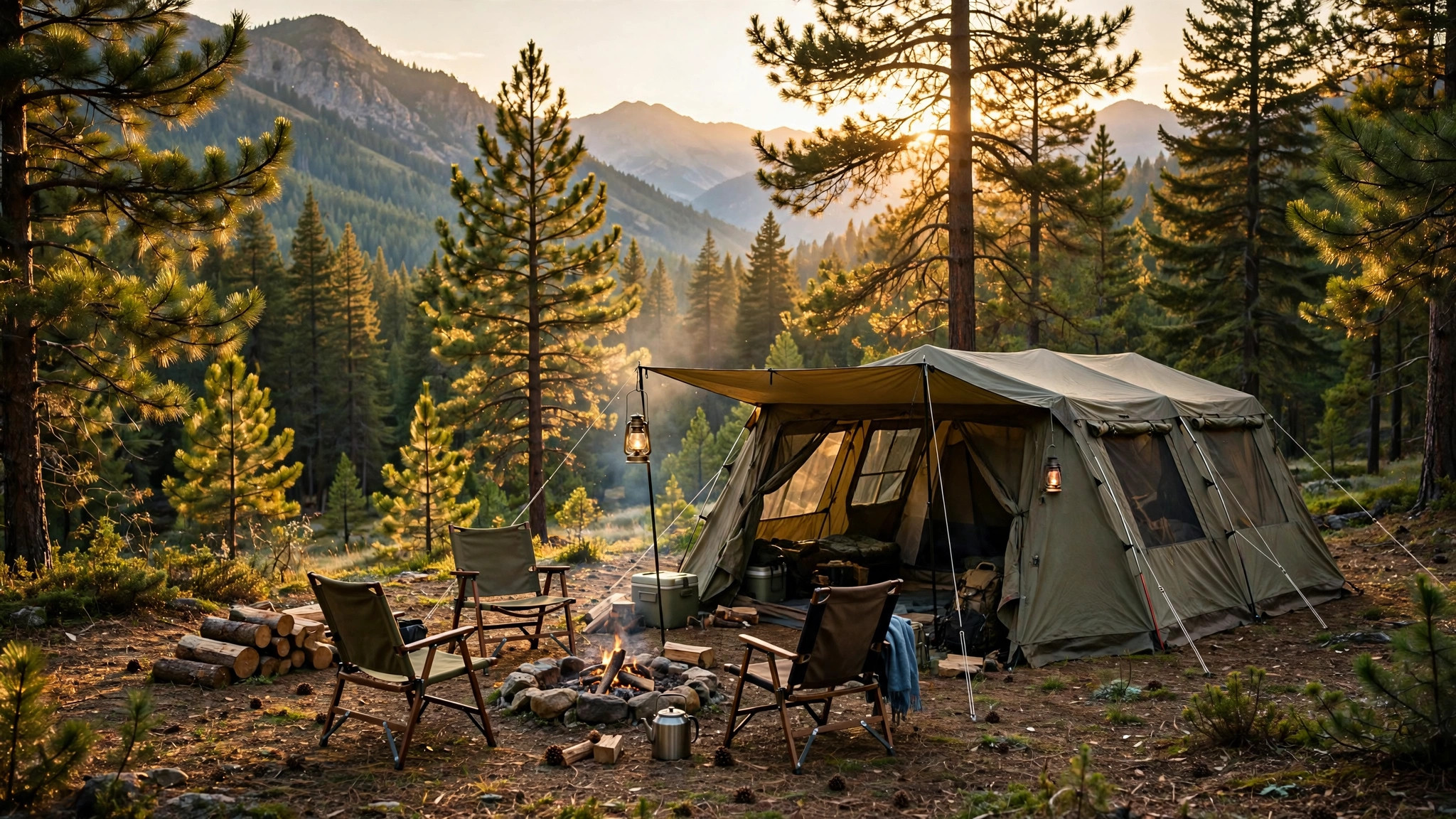
Picking the right size family tent is the single most important gear decision you’ll make before your first trip. Too small, and you’ll spend every night elbowing the kids, tripping over gear, and regretting the “cozy” label on the box. Too big, and you’re lugging a heavy bag that takes forty minutes to pitch. In this family tent buying guide, I’ll walk you through exactly how to choose the right size tent for your family — no guesswork, no camping-store upsells, just the real math that works at a real campsite.
Why Tent Size Matters More Than the Brand Name
Here’s something no brand will tell you on the packaging: a tent’s advertised “4-person” capacity assumes four adults lying shoulder to shoulder with no gear, no wiggly toddler, and no late-night bathroom runs. Families don’t camp like that. We camp with stuffed animals, diaper bags, extra shoes, a cooler, and one kid who sleeps sideways like a starfish.
When you pack your family camping checklist, every item needs a place inside the tent at night. That means the tent you choose has to fit both sleeping bodies and the gear that keeps everyone warm, dry, and happy. Size it right, and the whole trip feels easy. Size it wrong, and everyone remembers the tent — for all the wrong reasons.
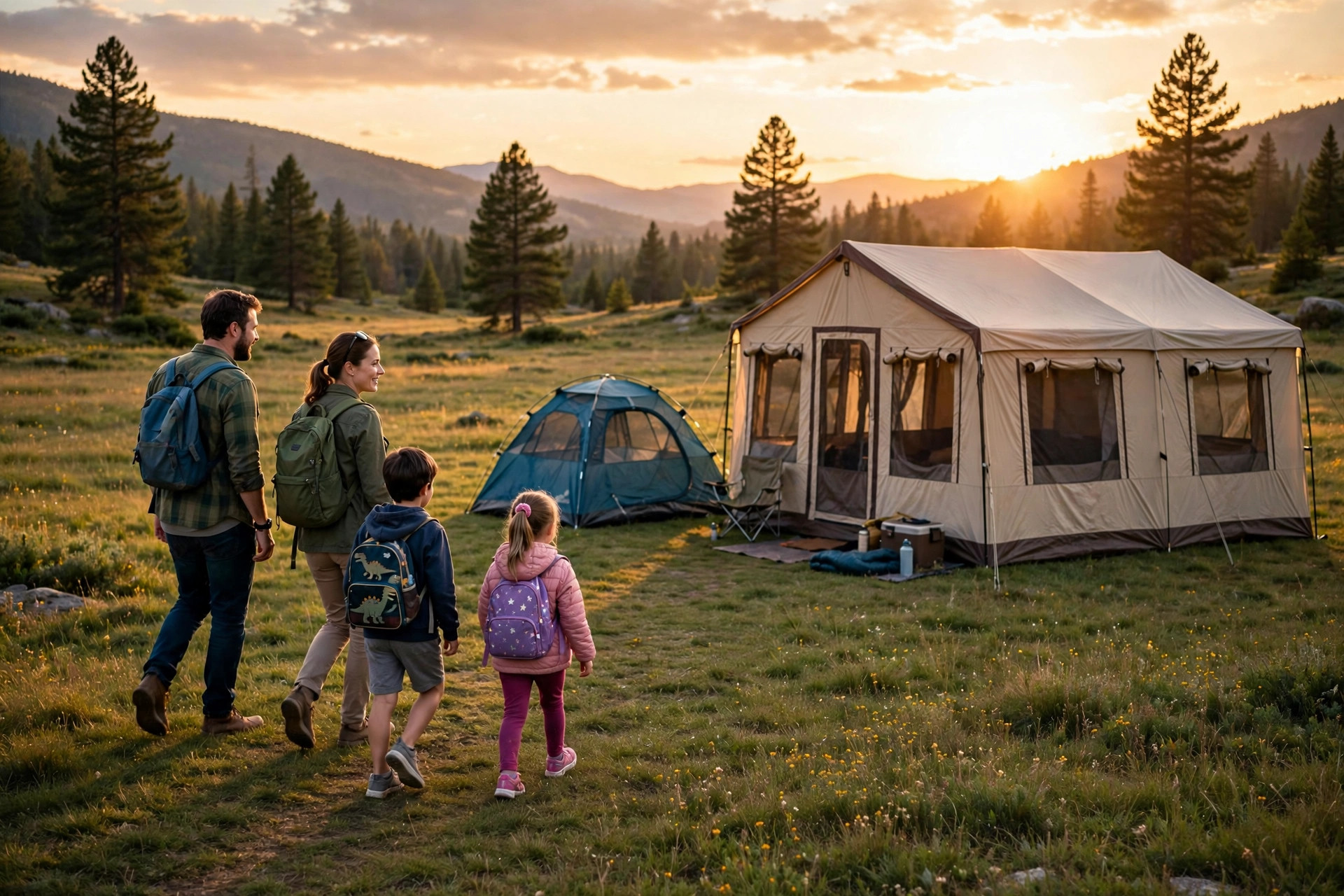
How Tent Manufacturers Measure “Person Capacity” (And Why It’s Wrong for Families)
Understanding how to choose the right size tent starts with decoding what the numbers on the box actually mean.
The sleeping-bag math behind the label
Most manufacturers rate a tent’s capacity using a simple formula: each “person” gets roughly 20–22 square feet of floor space — about the footprint of a standard sleeping bag plus a few inches. So a “4-person” tent offers around 80–88 square feet. That works for a group of backpackers who pitch, sleep, and leave.
Families need a very different number. Between the extra width of adult sleeping pads, a toddler’s sleep setup, the inevitable pile of clothes, and space to dress a squirmy preschooler without elbowing the tent walls, most experienced family campers use 35–40 square feet per person as a starting point — nearly double the manufacturer’s math.
The subtract-one rule every parent should know
Here’s the simplest family tent buying guide rule of thumb: take the advertised person capacity and subtract one to get the comfortable family capacity. A 6-person tent comfortably sleeps a family of five. An 8-person tent fits six people with room to breathe. This single rule has saved more camping trips than any fancy feature on a spec sheet.
Tent Size vs. Family Size: The Complete Table
This table assumes real families — with gear inside the tent, kids who move in their sleep, and room to sit up and play a card game on a rainy afternoon.
| Family size | Minimum floor space | Comfortable tent capacity rating | Best tent style |
|---|---|---|---|
| 2 adults + 1 baby | 70–80 sq ft | 4-person | Dome or cabin |
| 2 adults + 1 toddler | 80–100 sq ft | 6-person | Cabin or instant |
| 2 adults + 2 kids | 100–120 sq ft | 6-person | Cabin |
| 2 adults + 3 kids | 120–150 sq ft | 8-person | Cabin |
| 2 adults + 4 kids | 150–180 sq ft | 10-person | Multi-room cabin |
| 2 families (group camping) | 180+ sq ft or two tents | 10–12-person or 2 × 6-person | Two tents preferred |
A quick note on the last row: when two families camp together, most experienced campers actually prefer two separate 6-person tents over one giant 12-person tent. Separate tents give each family their own bedtime, their own mess, and a lot more peace — and they’re easier to pitch on real campsite pads. Our camping with toddlers essentials guide explains why separate sleep spaces matter so much for early bedtimes.
The 3 Numbers That Actually Decide Fit
Floor square footage is only the start. These three measurements matter just as much when you’re deciding how to choose the right size tent.
1. Floor dimensions — think sleeping pads, not square feet
Grab the actual length and width, not just the total area. A long, narrow tent might technically offer 100 square feet, but if it’s 8 feet wide, you’ll never fit four sleeping pads side by side. Most adult sleeping pads are about 25 inches wide, so four adults need at least 100 inches of width — over 8 feet. Sketch your family’s sleeping layout on paper before you buy. It takes five minutes and it prevents the number-one family tent mistake: the “pad puzzle” where everyone’s pads overlap at 11 p.m.
2. Peak height — can you stand up?
For families with young kids, peak height is a quality-of-life issue. Dressing a toddler, wrangling a baby, and waiting out a rainstorm all happen inside the tent. A peak height of 6 feet or more lets most adults stand up to dress and move around. Lower domes save weight and shed wind better, but they turn every rainy hour into a crouching, cranky crawl. If you’re tent camping with a baby, standing room for middle-of-the-night changes is worth its weight in gold.
3. Vestibule space — the gear’s bedroom
A vestibule is the covered area outside the tent door, under the rainfly. It’s where muddy shoes, the camp stove, and wet jackets live. Bigger vestibules effectively “add” storage square footage without making the tent itself bigger. When comparing two tents of similar floor space, the one with the larger vestibule almost always serves families better.
Cabin vs. Dome vs. Instant Tents: Which Shape Fits Families Best?
Tent shape changes how usable the floor space feels — two tents with the same square footage can feel dramatically different inside.
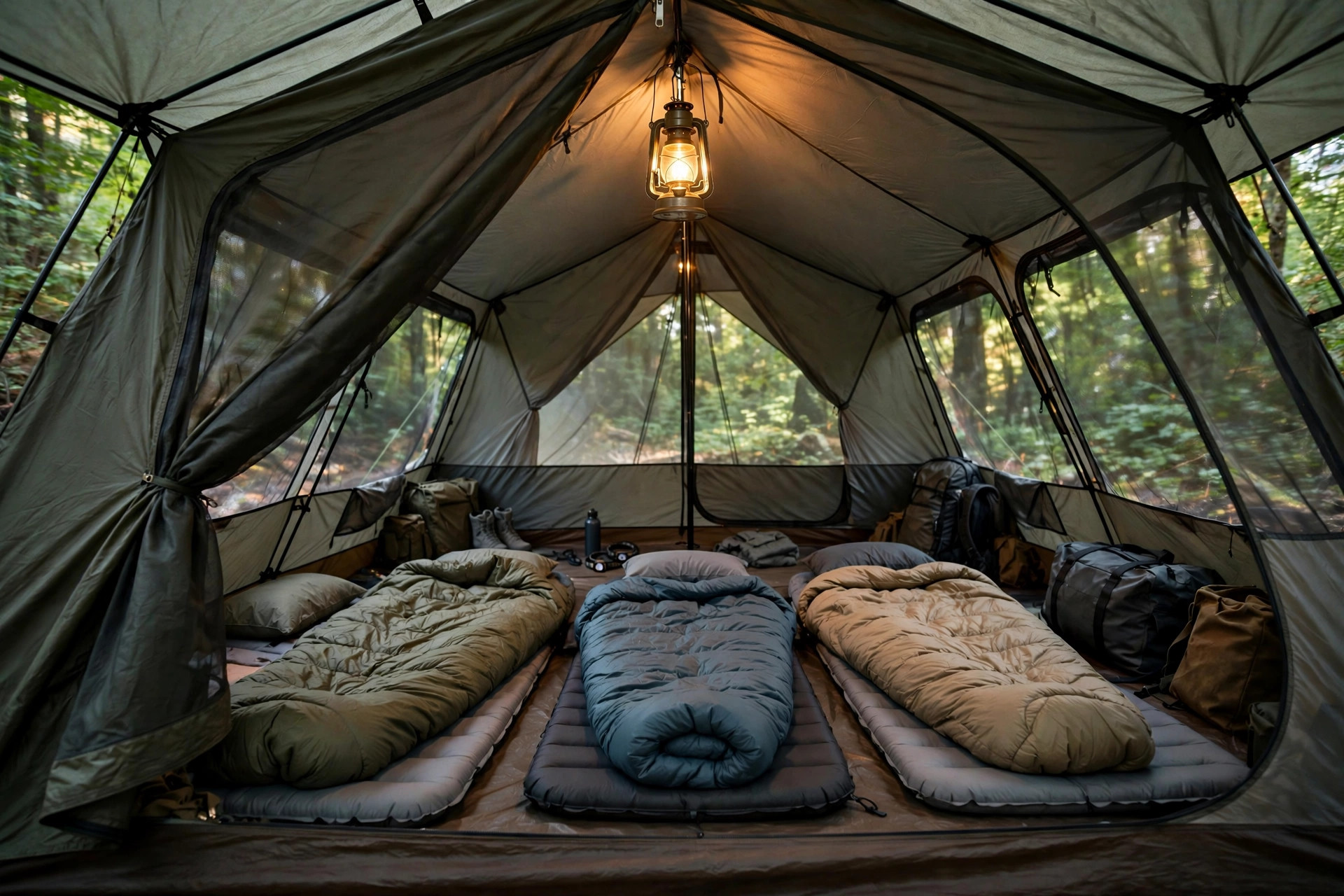
- Cabin tents — Nearly vertical walls, standing headroom, and room dividers that split one big tent into two “rooms.” The best choice for families of four or more, especially when kids need separate bedtimes. Downside: heavier and less wind-resistant.
- Dome tents — Sloped walls, lighter, and better in wind. Great for smaller families and shorter trips. The tradeoff is less usable space near the walls — you can’t push a sleeping pad all the way to the edge.
- Instant tents — Pre-attached poles let one adult set up a 6-person cabin in under ten minutes. A game-changer when you’re pitching with kids “helping.” They cost more and pack down bulkier, but the setup speed is real.
For most families starting out, a 6-person cabin or instant tent hits the sweet spot: enough room for two adults, two kids, and gear, with setup that’s manageable even when the toddler is mid-meltdown.
How Seasons and Weather Change the Size Equation
The right size tent in July might feel wrong in October. Weather changes how much time your family spends inside the tent — and that changes how much space you need.
In warm, dry weather, the tent is mostly a bedroom. You eat, play, and hang out outside, so you can get away with the minimum size from the table. In rain or shoulder seasons, the tent becomes your living room. Board games, snack time, and grumpy kids all happen under the rainfly. That’s when an extra 20–30 square feet turns a miserable rainy day into an actually fun one. Our guide to camping in the rain with kids covers how to set up a tent interior that doubles as a rainy-day playroom.
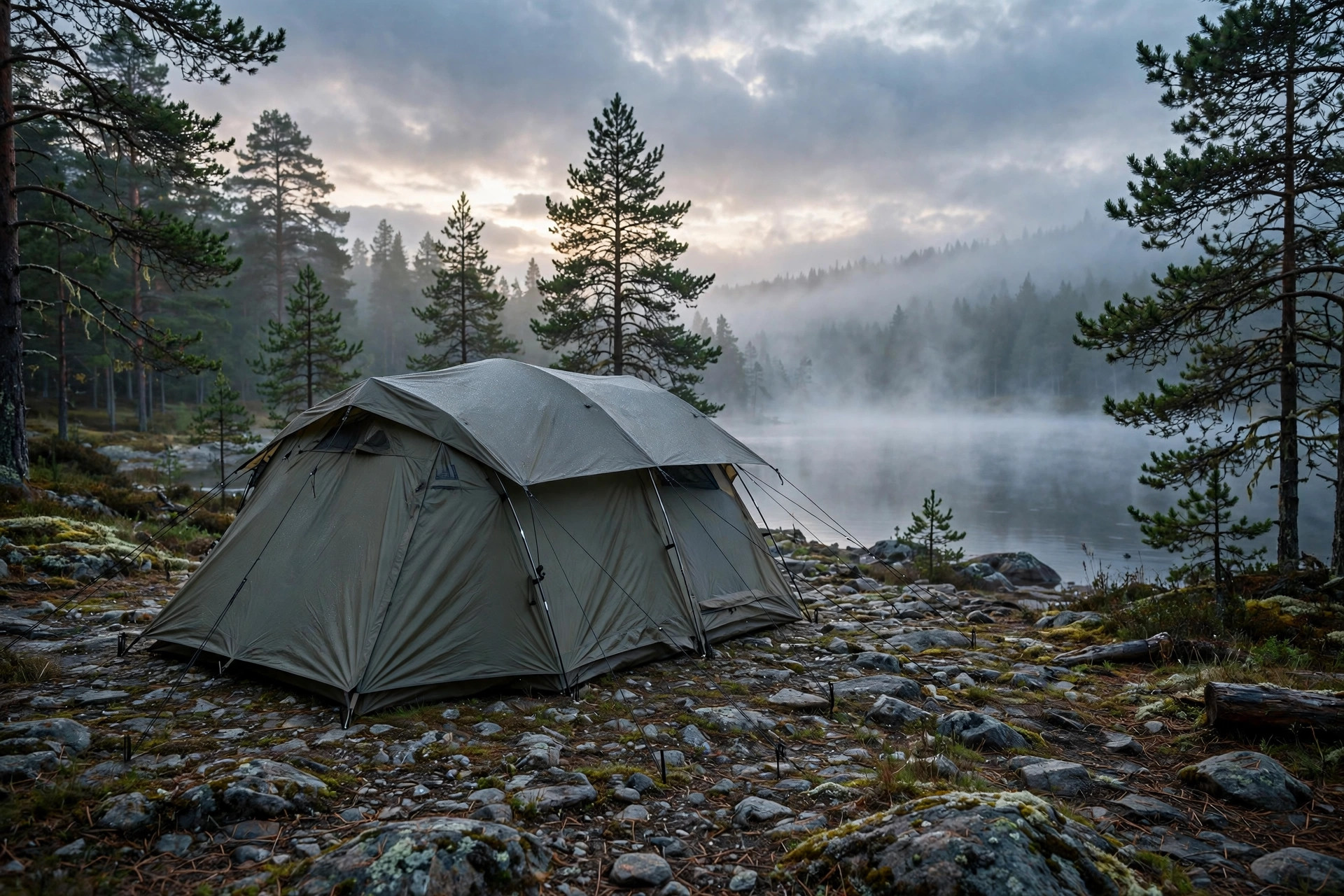
Wind matters too. Bigger cabin tents catch more wind, so on exposed or stormy sites, a slightly smaller dome tent that’s fully staked and guyed-out will hold up better than a big boxy cabin. If you camp mostly in exposed areas, check Recreation.gov site descriptions for wind exposure notes when you reserve, and match your tent’s sturdiness to the site.
The Pre-Purchase Test: How to Try a Tent Before You Commit
You wouldn’t buy shoes without trying them on. Apply the same logic to tents:
- Floor-plan test: Lay your actual sleeping pads on the living-room floor in the tent’s advertised dimensions (use painter’s tape to mark the footprint). Can everyone lie down without touching? Can someone sit up to read?
- Height check: Measure your tallest family member’s reach. Compare it to the tent’s peak height plus wall slope — standing room in the middle doesn’t help if you can’t dress near the walls.
- Pitch test: Watch a real-world setup video, not the brand’s marketing clip. Note how many people it takes and how long it really takes. Then assume you’ll take 50% longer with kids around.
- Car test: Check the packed dimensions and weight against your trunk space. A 10-person cabin tent in its bag can be the size of a duffel bag for a large adult — make sure it actually fits in the car.
For authoritative sizing advice beyond this guide, REI’s family tent buying guide has excellent interactive sizing diagrams, and the National Park Service camping guide is the best resource for understanding campsite tent-pad size limits — some national park sites only fit tents up to certain dimensions, so check before you go.
Common Family Tent Sizing Mistakes (And How to Avoid Them)
- Buying exactly for tonight’s family size. Kids grow, friends join trips, and guests show up. Buy one size up from what you need today — you won’t regret it, and “bigger than needed” is a far cheaper mistake than “too small.”
- Ignoring the sleep setup. Wondering what toddlers sleep in when camping? Travel cribs, toddler cots, and thick pads all eat more floor space than an adult pad. Add them to your floor-plan test.
- Forgetting the dog. A 60-pound dog needs roughly the floor space of one adult sleeper. Include every four-legged family member in your math.
- Choosing weight over livability for car camping. If you’re driving to the site, extra pounds don’t matter. Prioritize space, height, and setup ease over ultralight specs designed for backpackers.
Frequently Asked Questions
What size tent do I need for a family of 4?
A family of four needs a tent rated for 6 people, offering roughly 100–120 square feet of floor space with a peak height of at least 6 feet. The “subtract one” rule applies: a 6-person tent comfortably sleeps four family members plus gear. For families with very young kids or lots of gear, stepping up to an 8-person cabin tent gives welcome breathing room.
Is a 4-person tent big enough for 2 adults and 2 kids?
For one night in perfect weather, maybe. For a real family trip, no. A 4-person tent gives you roughly 60–70 square feet — enough for the four sleeping pads and nothing else. Add gear, clothes, and a rainy afternoon, and it feels cramped fast. Go with a 6-person tent minimum for two adults and two kids.
Are bigger tents harder to set up?
Not necessarily — it depends on the design, not just the size. Modern instant tents pitch a 6-person cabin in under 10 minutes with one adult. Traditional pole-and-sleeve cabin tents take longer and often need two people. If quick setup matters to you (it should, with kids), prioritize instant or hub-pole designs over raw size numbers.
How much should a family tent weigh?
For car camping, weight barely matters — most 6-person family tents weigh 15–25 pounds, which is perfectly fine when you’re carrying it 50 feet from the trunk. Only worry about weight if you’re backpacking in, in which case family backpacking tents are a whole different category (and families usually split into two smaller tents).
Do I need a footprint or groundsheet for a family tent?
It’s not required, but it’s one of the smartest cheap upgrades you can buy. A footprint protects the tent floor from rocks and roots (extending the tent’s life for years), adds a bit of moisture protection, and gives you a template for pitching. Make sure it matches or is slightly smaller than your tent’s floor — never let it stick out past the tent edge, or it will funnel rainwater underneath.
What tent size works best for camping with a baby or toddler?
For two adults plus a baby or toddler, a 6-person tent is the sweet spot. It fits two adult pads, a travel crib or toddler cot, and still leaves room to stand up for middle-of-the-night diaper changes and feedings. A cabin-style tent with near-vertical walls works best, since you can push the crib closer to the wall and still have headroom.
The Bottom Line
Choosing the right size tent comes down to one honest calculation: the manufacturer’s “person” is not your family. Use the subtract-one rule, aim for 35–40 square feet per person, and buy for the family you’ll be in two years — not just tonight. A well-sized tent turns camping from an endurance sport into the easy, joyful family time it’s supposed to be. Happy camping, and I’ll see you out there!
