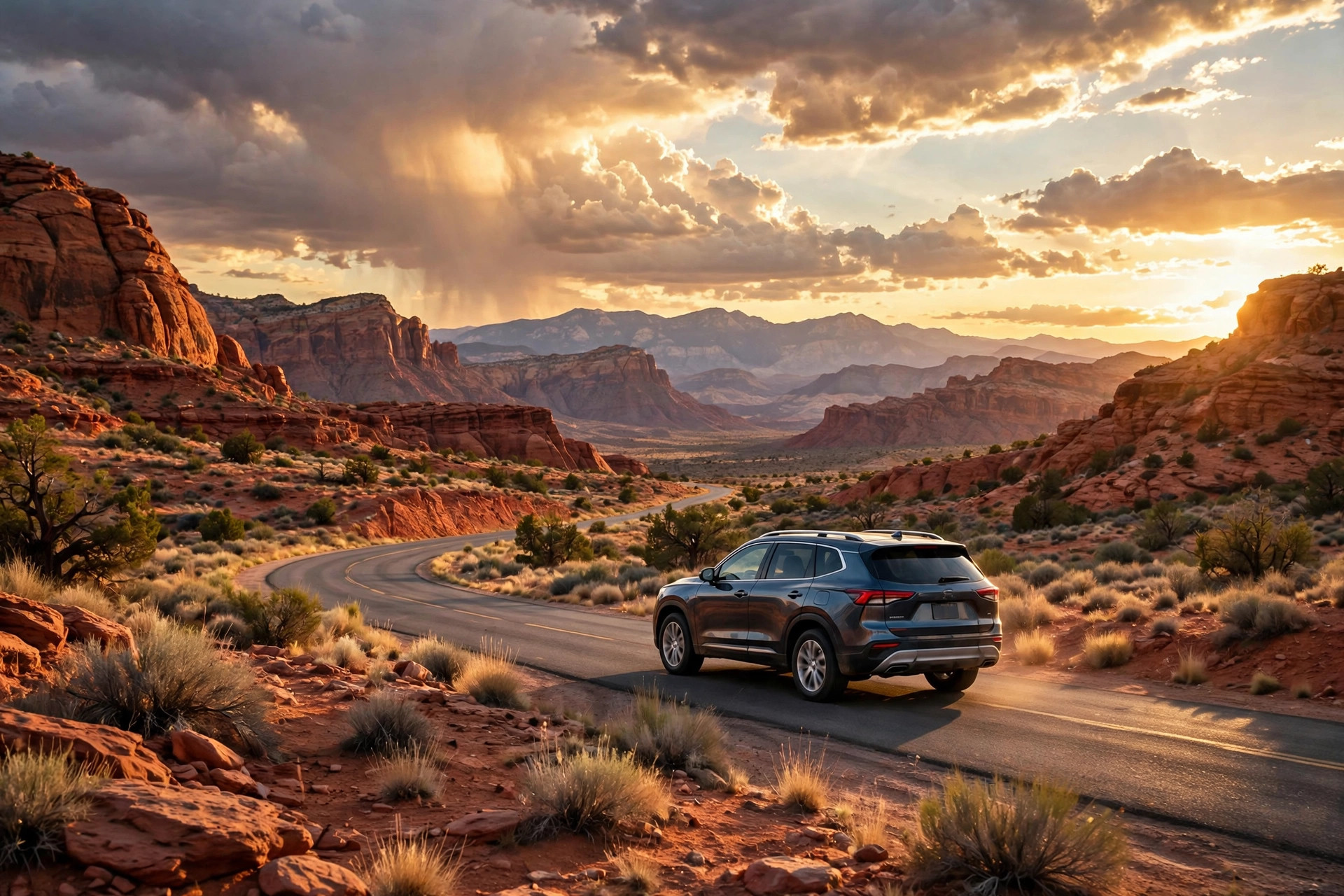
Every family dreams about loading up the car and hitting the open road — but before you pack the snacks and cue the playlist, one question decides everything: how much does a family road trip really cost? Gas, hotels, meals, park fees, and all those little extras add up faster than most parents expect. In this 2026 breakdown, I walk you through every major expense category with realistic numbers, three copy-ready 7-day budgets, and the money-saving tricks our own family uses every summer.
The Big Picture: What a Week-Long Family Road Trip Costs in 2026
Let’s start with the headline number. For a family of four taking a 7-day road trip of roughly 1,500–2,000 miles in 2026, the total typically lands between $2,100 and $6,400. That’s a wide range, and the difference comes down to where you sleep, where you eat, and how far you drive.
Here’s a quick comparison of three common travel styles:
| Travel style | Daily cost (family of 4) | 7-day trip total |
|---|---|---|
| Budget — camping, self-cooked meals, free attractions | $280–$330 | $2,000–$2,300 |
| Moderate — mix of hotels and camping, some restaurants | $480–$600 | $3,400–$4,200 |
| Comfortable — hotels, restaurants, paid tours | $800–$920 | $5,600–$6,400 |
These figures are based on 2026 national averages for gas prices, mid-range hotel rates, and campground fees. Your own total depends heavily on your home region — a road trip through the Midwest costs far less than the same trip through coastal California. If you’re still choosing your route, check out our guide to easy hikes near national parks to anchor your trip around great family destinations.
Gas and Tolls: The Mileage Math
Fuel is usually the second-biggest line item on a road trip budget — and the easiest to estimate accurately. The math is simple:
(Total miles ÷ your car’s MPG) × price per gallon = fuel cost
Take a typical 1,800-mile week-long loop. A family SUV averaging 24 MPG needs about 75 gallons of gas. With the 2026 national average around $3.40–$3.70 per gallon, that’s $255–$280 for fuel alone. Driving a less efficient vehicle at 18 MPG pushes that to $340–$370, while a hybrid crossover at 35 MPG drops it to around $175–$190.
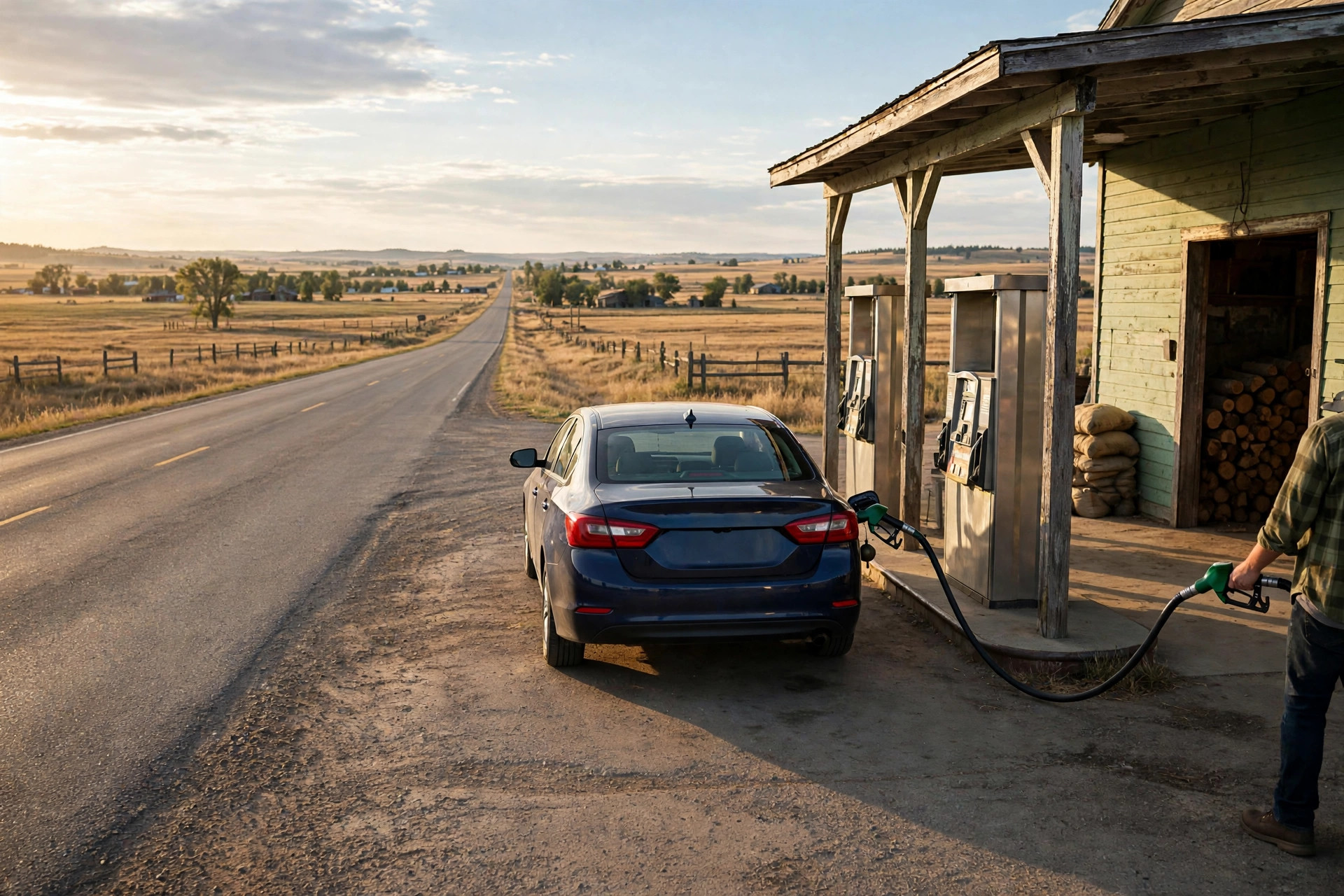
Don’t forget tolls. The Northeast and Midwest are toll-heavy; an I-95 corridor trip can add $40–$80 in tolls alone, while most western routes cost nearly nothing. A quick check of your route on a toll calculator before you leave can save an unwelcome surprise at the gate.
Quick ways to spend less on gas
- Keep tires at the recommended pressure — under-inflated tires can cut fuel economy by 2–3%.
- Stick to the speed limit; driving 75 instead of 65 mph can burn 15% more fuel.
- Use apps like GasBuddy to find the cheapest stations along your route instead of stopping at the first exit.
Where You Sleep: Lodging Costs Compared
Where your family sleeps is the single biggest variable in your road trip budget. A week of hotels can cost ten times what a week of campgrounds costs. Here’s how the options stack up in 2026:
| Lodging type | Typical 2026 nightly price | 7-night total |
|---|---|---|
| Developed campground (tent site) | $30–$55 | $210–$385 |
| RV site with hookups | $45–$90 | $315–$630 |
| Budget motel | $95–$140 | $665–$980 |
| Mid-range hotel | $160–$240 | $1,120–$1,680 |
| Vacation rental (2BR) | $200–$350 | $1,400–$2,450 |
Camping is the budget champion by a mile — and for families with kids, a campsite often feels more like an adventure than a hotel room ever will. National and state park campgrounds are the cheapest of all, but the popular ones book out months ahead. Our campsite reservation windows guide shows exactly when to book in each state, and sites like Recreation.gov are the official source for federal campground reservations.
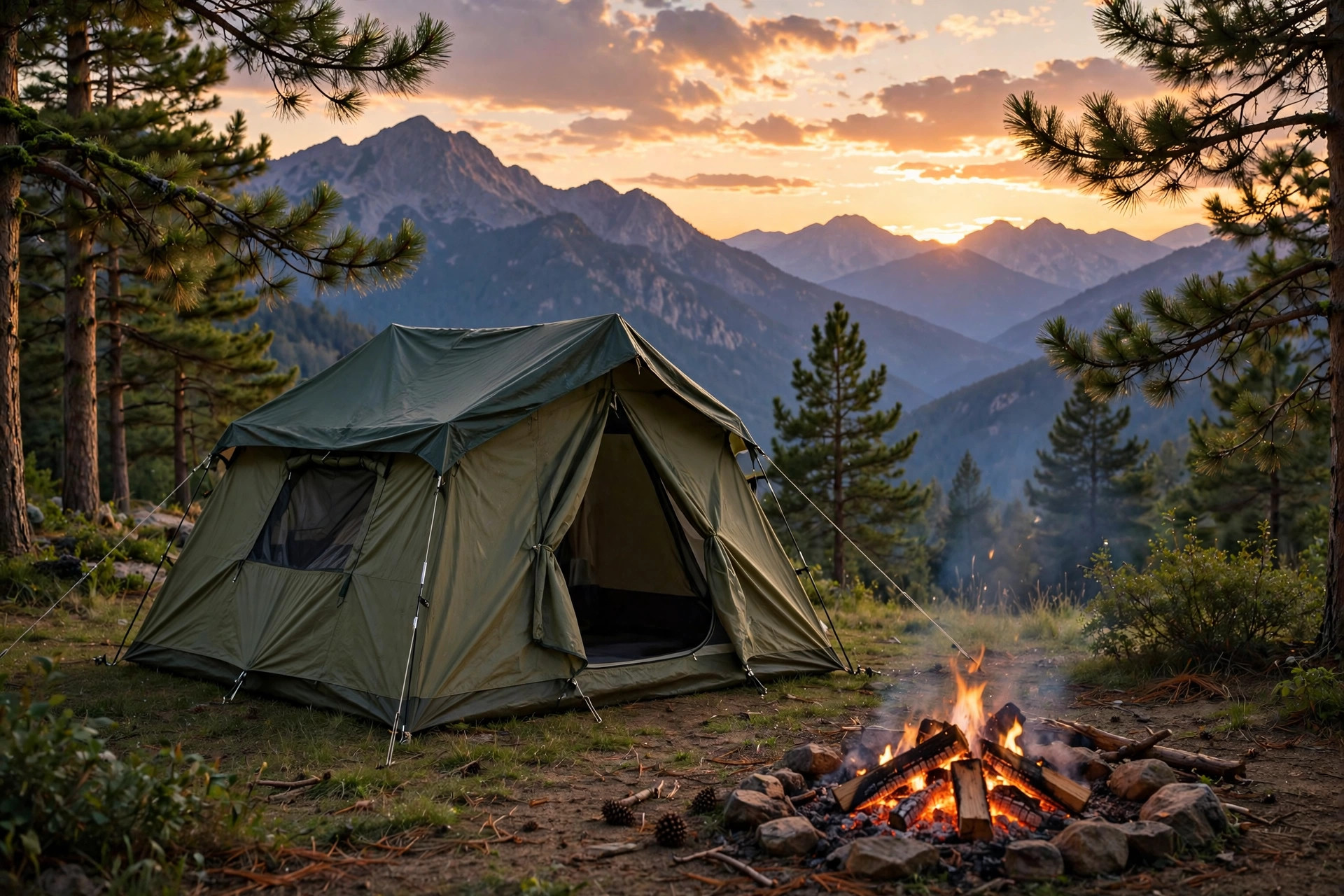
If camping sounds intimidating with little ones, it doesn’t have to be. Start with our 47-item family camping checklist so you don’t forget the essentials, and read our kid layering guide if your trip includes cool mountain nights.
The mixed strategy
Many families get the best of both worlds by mixing lodging types: camp for 3–4 nights, then take a mid-range hotel night to shower, do laundry, and let everyone recharge. This hybrid approach keeps a 7-day trip in the $800–$1,200 lodging range — far below a full hotel week.
Food on the Road: Restaurant vs. Self-Cooked
Food is the expense that surprises families most. Eating every meal out for a family of four costs $120–$180 per day in 2026 — that’s $840–$1,260 over a week, rivaling the hotel bill. The breakdown looks roughly like this:
- All restaurants: $120–$180/day — breakfast at a diner, fast-casual lunch, sit-down dinner adds up fast
- Mixed approach: $70–$100/day — cook breakfast and picnic lunches, eat dinner out a few times
- Mostly self-cooked: $40–$60/day — groceries plus a cooler, with occasional treats

Our family lives in the middle category on most trips. A well-stocked cooler with sandwiches, fruit, and snacks turns a $60 fast-food lunch stop into a $15 picnic — and the kids honestly prefer eating at a scenic overlook anyway. A compact camp kitchen makes self-cooked dinners easy; our family camp kitchen guide shows exactly what to pack for roadside cooking without a full campsite setup.
One honest caveat: the grocery bill at home goes up slightly in the week before the trip when you’re stocking up. Count that in your planning so it doesn’t feel like a mystery expense.
Activities and Attractions: The Fun Budget
Entertainment costs vary wildly depending on your family’s style. A national-park-heavy itinerary can cost almost nothing beyond the America the Beautiful annual pass ($80) — it covers entrance fees at 2,000+ federal sites and pays for itself in about three park visits. Check current pass details on nps.gov.
Here’s what typical family attractions cost in 2026:
- National park entrance (per vehicle, 7-day): $25–$35, or $80 for the annual pass
- State parks: $5–$15 per vehicle per day
- Children’s museums and zoos: $15–$30 per person
- Guided cave or boat tours: $20–$40 per person
- Free options: hiking, beaches, scenic drives, ranger programs, swimming holes — often the trip highlights
Budget about $150–$400 for a 7-day trip for activities, and remember that the free stuff — a sunrise hike, an evening ranger talk, skipping rocks at a lake — is what kids actually remember.
The Hidden Costs Families Forget
These are the expenses that ambush otherwise careful budgets:
- Pre-trip car maintenance: oil change, new wipers, a tire check — $80–$200 before you leave, and non-negotiable for safety.
- Pet or plant care: boarding or sitters run $40–$75 per day for dogs.
- Parking: $15–$40 per day in cities and popular tourist towns.
- Souvenirs and “I wants”: set a per-kid budget ($20–$30 each) before you leave — it prevents daily gift-shop battles.
- Laundry: laundromat stops every few days, $10–$20 per load including drying.
- Travel insurance: worth considering for trips over $3,000; typically 4–6% of trip cost.
- Data and device charging: a good car charger and offline maps download — minor cost, major sanity saver.
Three Real-World 7-Day Budgets for 2026
Here’s how it all comes together. Each budget assumes a family of four driving about 1,800 miles:
1. The Budget Camper — $2,135
- Gas (24 MPG SUV): $270
- Campgrounds (6 nights @ $45): $270
- One hotel night (laundry/reset): $130
- Groceries + cooler food: $380
- Two restaurant dinners: $140
- America the Beautiful pass: $80
- State park fees + small activities: $120
- Pre-trip car maintenance: $150
- Souvenirs, parking, misc: $200
- Buffer (10%): $195
2. The Balanced Mix — $4,010
- Gas: $270
- Campgrounds (3 nights): $150
- Hotels (4 nights @ $175): $700
- Groceries + picnics: $350
- Restaurants (mix): $650
- Attractions + annual pass: $280
- Car maintenance: $150
- Pet sitting (7 days): $350
- Parking, laundry, souvenirs, misc: $400
- Buffer (10%): $365
3. The Comfortable Cruiser — $6,300
- Gas: $280
- Hotels (7 nights @ $210): $1,470
- Restaurants (all meals): $1,120
- Attractions, tours, museums: $600
- Car maintenance + tolls: $250
- Pet sitting: $420
- Parking, souvenirs, shopping: $550
- Buffer (10%): $575
Notice how the same 1,800-mile trip can cost three times as much depending on lodging and food choices. The single most powerful lever is where you sleep; the second is how you eat.
9 Ways to Cut Your Road Trip Costs
- Travel just outside peak season. Late May and September offer warm weather with lower hotel rates and emptier campgrounds.
- Camp half your nights. Even 3–4 campground nights can save $500+ over a full hotel week.
- Buy the annual parks pass early. At $80, it pays for itself by your third national park visit.
- Pack the cooler right. Two grocery stops per week beat daily fast-food runs by $400–$600.
- Book refundable rates and re-check prices. Hotel prices drop as dates approach; rebooking at the lower rate takes five minutes.
- Set the souvenir budget upfront. A $25-per-kid trip budget ends gift-shop negotiations before they start.
- Fill up in cheap-gas states. Fuel prices vary by 50¢+ per gallon between states — top off where it’s cheap.
- Use free attraction days. National parks offer several fee-free days each year; plan around them.
- Do the pre-trip car check. A $150 maintenance visit beats a $600 roadside repair every time.
FAQ: Family Road Trip Costs
How much does a 7-day family road trip cost in 2026?
For a family of four driving 1,500–2,000 miles, expect $2,100–$6,400 total. Budget camping trips land around $2,100–$2,300, mid-range mixed trips around $3,400–$4,200, and comfortable hotel-based trips around $5,600–$6,400.
What is the biggest expense on a family road trip?
Lodging, by far. Seven nights of mid-range hotels ($1,120–$1,680) typically exceed gas costs ($250–$350) by three to five times. Mixing in campground nights is the fastest way to cut the total.
Is it cheaper to road trip or fly for a family of four?
For trips under about 1,500 miles, road trips are almost always cheaper — four plane tickets plus a rental car usually exceed $2,000 before you’ve eaten a single meal. Road trips also eliminate baggage fees and airport food costs.
How much should I budget per day for food on a road trip?
Plan $40–$60 per day for mostly self-cooked meals, $70–$100 for a mix of cooking and restaurants, or $120–$180 if you eat out for every meal. A stocked cooler is the biggest food-budget lever.
How far in advance should I budget for a summer road trip?
Start saving 4–6 months ahead and book campgrounds 3–6 months out — popular national park campgrounds sell out within hours of release. Hotels can often be booked 1–3 months ahead, and booking refundable rates lets you rebook if prices drop.
Are road trips still affordable with kids in 2026?
Yes — a week-long camping road trip for four costs less than many families spend on a single weekend at a resort. The key is choosing your travel style deliberately: every hotel night you swap for a campsite, and every restaurant meal you swap for a picnic, saves real money without reducing the fun.
Final Thoughts
A family road trip doesn’t need a luxury budget to be the trip your kids talk about for years. Whether you go full budget-camper at $2,100 or full comfort at $6,300, the formula is the same: know your big three costs (sleep, food, gas), decide where you want to splurge and where you’ll save, and leave a 10% buffer for the surprises every road trip brings. Now grab the cooler, check the tire pressure, and go make some memories.

3 comments
[…] toddler won’t play with anything — if you’re traveling with the whole family, see our family road trip cost breakdown to budget both the toys and the snack […]
[…] you’re budgeting the full trip — gas, food, lodging — our family road trip cost breakdown will help you see where the money really goes. And if you’re camping instead of hoteling it, […]
[…] Every window below is family-vetted: open facilities, comfortable weather, and real savings on lodging, flights, and car rentals. To see how timing savings stack against full trip budgets, read our breakdown of how much a family road trip really costs in 2026. […]