Yoto Player Review: Is It Worth It for Your Family?
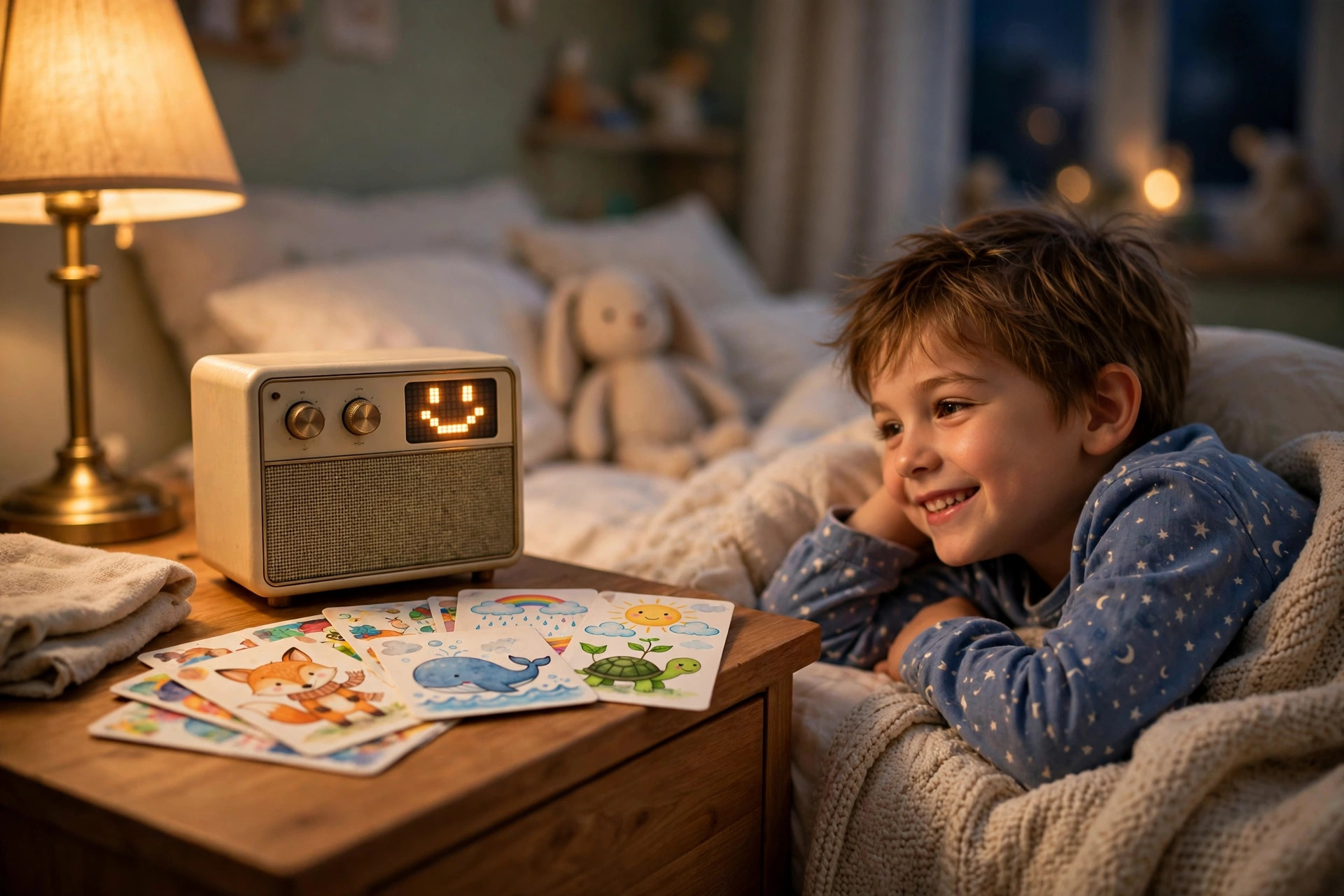
After more than a year of daily use by four kids, our Yoto Player has earned its place as one of the best screen-free tools in our family. It is incredibly simple: kids insert a small audiobook card into the top slot, turn one knob for volume, twist the other to skip chapters, and they are off listening on their own. No screens, no complicated menus, no internet rabbit holes. If you are wondering whether the Yoto Player is worth the money, here is our honest, family-tested review.
Two Versions: Full-Size Yoto Player vs. Yoto Mini
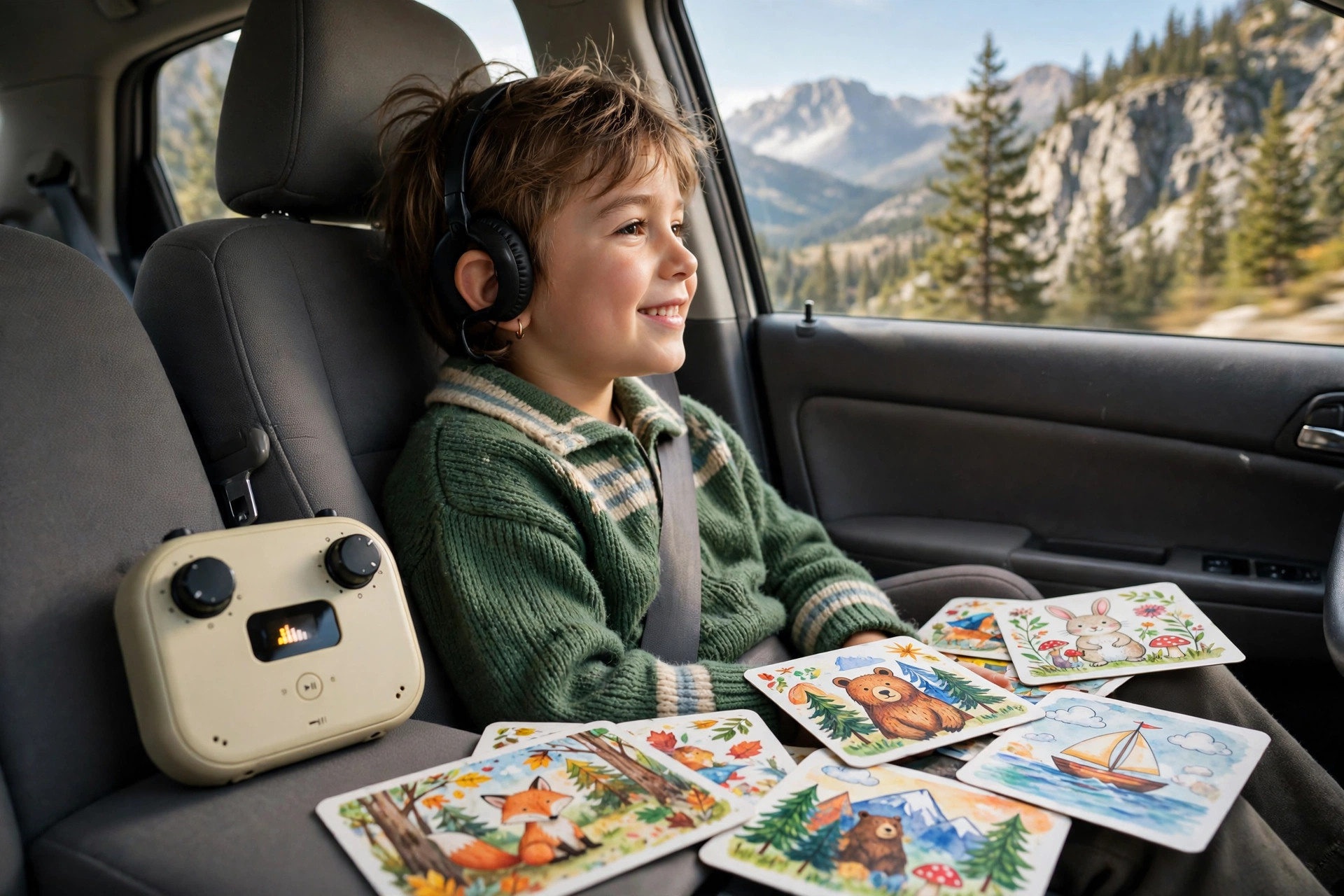
Yoto sells two players. The full-size Yoto Player and the compact Yoto Mini do the same thing, but the Mini is smaller, cheaper, and easier to toss into a backpack or suitcase. We own both, and for a side-by-side breakdown, our full comparison covers the differences in detail. Short version: you cannot go wrong with either, and the Mini is our favorite for travel.
Our Family’s Complete Experience With the Yoto Player
Why This Screen-Free Audio Player Won Us Over
We love our Yoto Player because it helps foster our children’s passion for stories through audiobook cards. Our kids absorb wonderful books with rich language and exceptional characters that provoke their imaginations and spark deep conversations. As a minimalist family, we appreciate how the cards store easily (we keep ours in a small zippered case) and how sharing beloved stories fosters connection between siblings.
The Yoto gives our toddlers and preschoolers perfect quiet-time entertainment after they dropped naps, while teaching them independence as they choose, turn on, and control stories themselves — all without the risk of inappropriate content from internet ads.
WiFi Needs and Offline Freedom
You will need WiFi for the initial setup when you first insert a Yoto Card, because the player downloads the audio from Yoto’s servers onto the card. After that, it works completely offline. We have enjoyed ours everywhere from our RV to deep in the forest with no cell signal. This offline ability is exactly why the Yoto Player is such a good fit for family travel days — long drives, airport waits, and flights all become manageable without handing over a phone.
Daily Routines That Actually Work
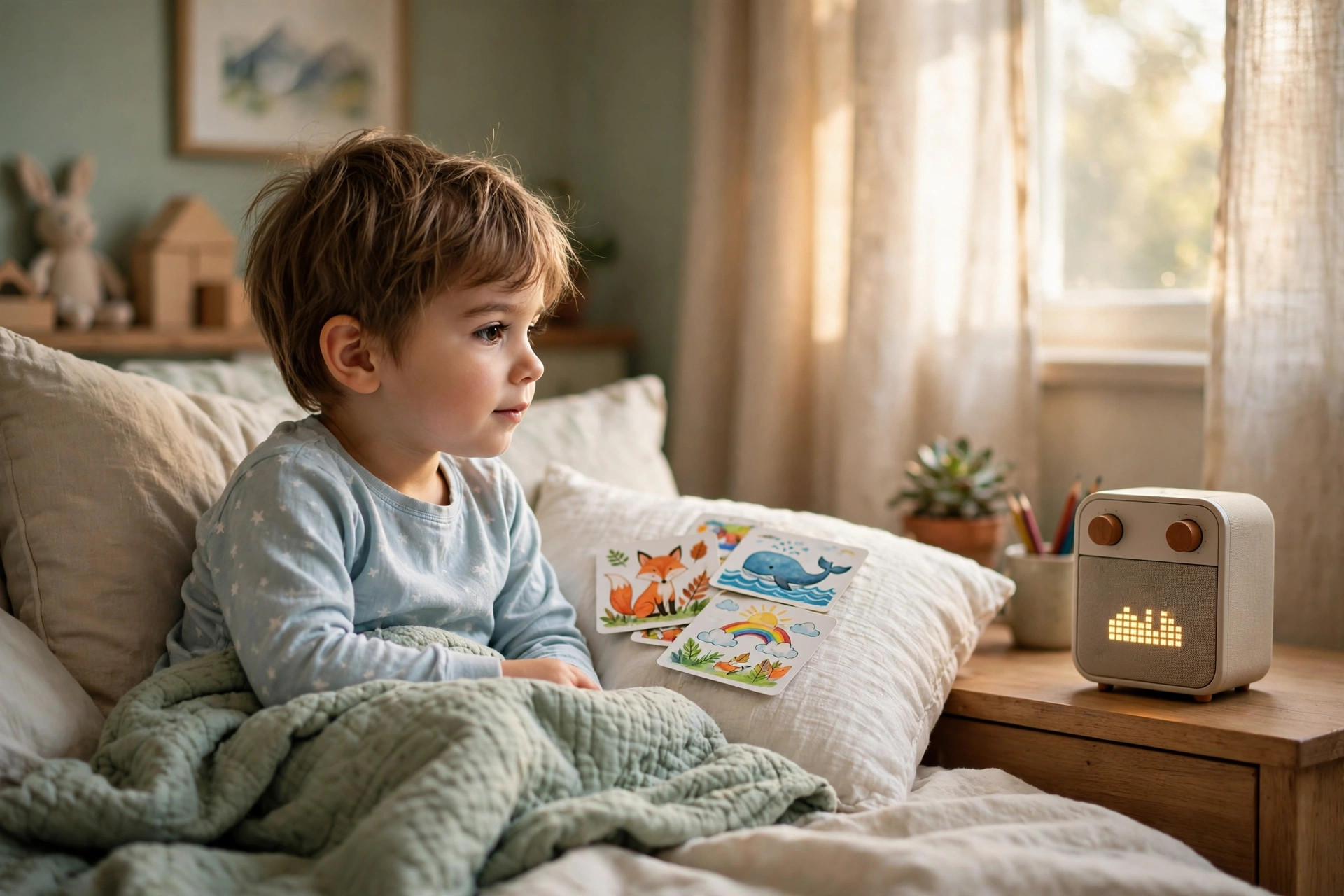
We have woven the Yoto Player into our homeschool days and bedtime routines. Our 7-year-old listens before sleep and when he wakes up early, staying content in his room thanks to volume limits we set for daytime hours. The 2-year-old uses hers during independent playtime. All the kids carry their players everywhere — from quiet-time sessions to long car rides. The older kids enjoy theirs during rest times too.
One tip that changed everything: give each child a consistent routine spot for their player and cards. When the player has a home base on the nightstand, cards stop disappearing into the couch.
Perfect for Ages 2 to 7 (And Beyond)
All four of our children (ages 7, 6, 4, and 2) adore their Yotos. We do not anticipate them growing out of these anytime soon — especially since we are avoiding smartphones in their futures. The player grows with them beautifully: toddlers tap picture cards and music, while the older kids graduate to chapter books and longer audiobooks.
One Per Child? Our Honest Take
Whether each child needs their own comes down to personal preference and budget. In our home, with separate rooms and quiet times, we found giving everyone their own player works best. The independence it fosters is worth it. If your kids share a room and mostly listen together, start with one player and a good set of cards, then decide.
Our Favorite Yoto Cards
We keep a constantly updated favorites list, but every family will have different standards for appropriate content. We always preview rather than take anyone’s word — some cards required extra conversations about certain content. A good rule: listen to the first few minutes of any new card yourself before handing it to a young child.
Make Your Own Cards: Our Tried-and-True Method
The Make Your Own (MYO) cards feature is brilliant. We have recorded family messages and assigned audiobooks we already owned to blank cards. For sourcing, we check audiobook sales monthly, or find audio CD versions of classics, then upload the MP3s to MYO cards through the Yoto app.
Smart Library Organization That Saves Money
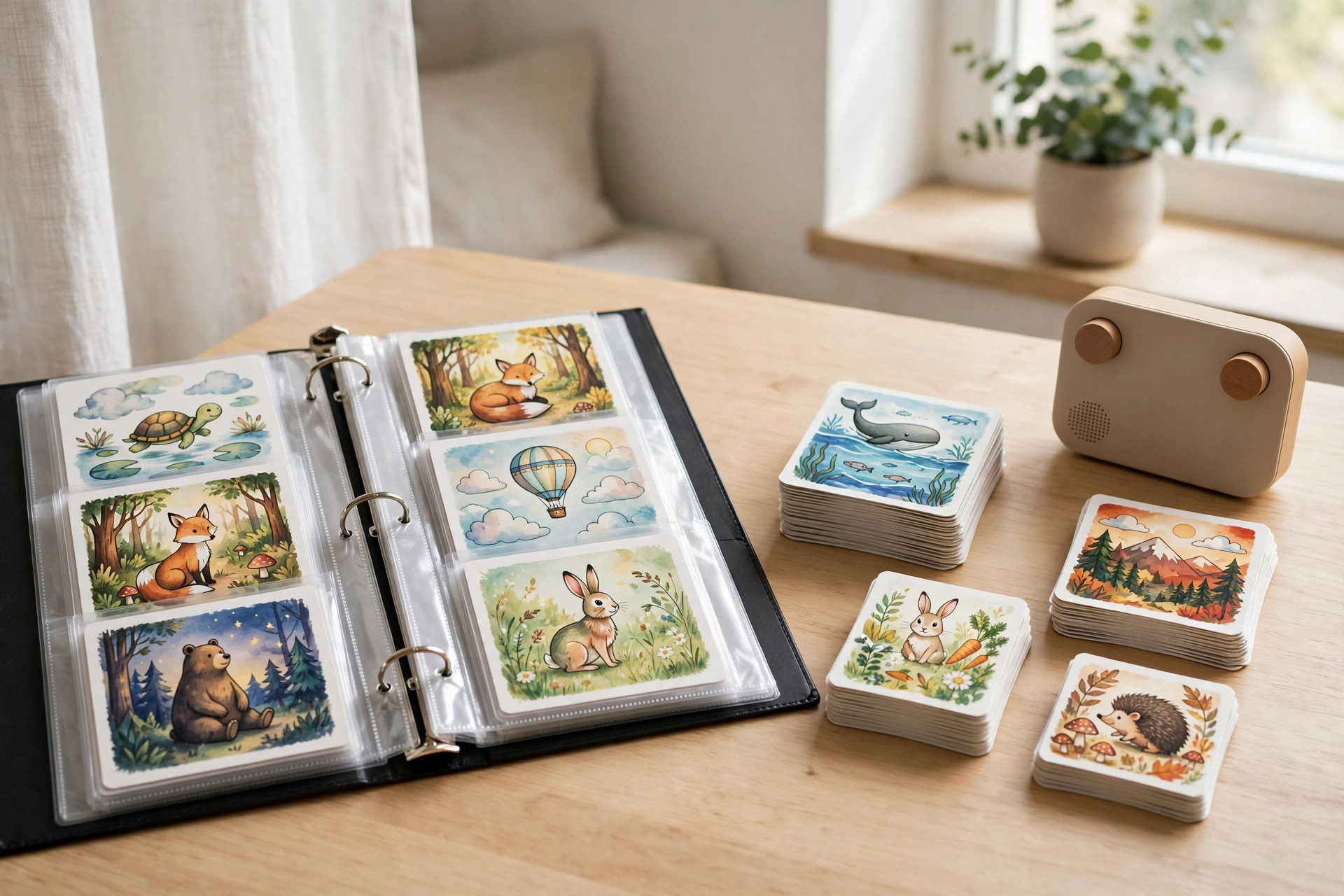
After some trial and error (including discovering a child biting cards), we created a library system: printed card images in binders, with a few blank MYO cards per child as reusable “library cards.” They choose from the binder, and we assign selections via the Yoto app — no more endless sticker-paper cutting or buying extra blank cards. Keeping cards organized also matters on trips; see our toddler trip packing guide for how we fit entertainment gear into a small bag.
Cost Breakdown: Is the Yoto Player Worth It?
The upfront investment is real — the full-size player costs more than the Mini, and card collections add up. Here is how we think about it: the Make Your Own option lets us reuse audiobooks we already owned, stretching the value of every blank card. Considering all four kids will use these for years, it is a worthwhile investment for our family. If budget is tight, start with one Mini and a handful of cards, then grow the collection with birthdays and holidays — the players hold up for years, so there is no rush.
Why We Chose Yoto Over Competitors
After researching other screen-free audio players, Yoto stood out for its minimal cards (easy to store in a simple card holder versus bulkier alternatives) and the ability to reassign content if you lose a card. The Make Your Own cards also hold more content than competing products, and generally cost less.
Yoto vs. CD Player: The Game-Changing Differences
The key difference is how it empowers kids — they take full ownership, freely choosing and carrying their stories. The simple two knobs make it easy to use without help, unlike fragile CD players that need to stay plugged in. We have been pleasantly surprised how often they play audiobooks throughout the day on their own.
Full-Size Yoto Player: Pros and Cons
Pros
- Louder, clearer speaker — ideal for group listening
- Long battery life (around 24 hours per charge vs. the Mini’s 14 hours)
- Pixel display shows a clock, nightlight, and fun pixel art
Cons
- Less durable — ours broke when it rolled off a bed, snapping a card (thankfully, we reassigned the audiobook to a new Make Your Own card)
- Bulkier for travel than the Mini
- Ok-to-Wake function has limited settings (not as versatile as our Hatch Rest for multiple kids)
Yoto Mini: Why It Is Our Top Pick
Advantages
- Does the exact same audio functions as the full-size version
- Less expensive
- More portable for car rides and vacations
- Surprisingly loud speaker for its size
- Works perfectly with headphones — a lifesaver on flights and in hotel rooms
Our Experience
We own four Yoto Minis, and they have served our family beautifully. The Mini delivers all the magic in a more practical package, and it is the one we recommend most often to friends who travel.
Frequently Asked Questions
Does the Yoto Player need WiFi to work?
Only for setup and the first download of each card. After the audio is saved to the card, the player works completely offline — perfect for road trips, flights, and camping.
What ages is the Yoto Player best for?
Yoto targets ages 3 to 12, but our 2-year-old handles it well with supervision, and our 7-year-old still uses his daily for chapter books. The card library spans toddler songs to middle-grade novels.
Should I buy the Yoto Player or the Yoto Mini?
They play the same content. Pick the full-size player if you want the louder speaker, longer battery, and clock display for a shared bedroom. Pick the Mini for travel, tight budgets, or one player per child.
Are Yoto cards expensive?
Individual cards vary, and a collection adds up. Make Your Own cards are the budget hack: load audiobooks or recordings you already own onto blank cards, and reuse them endlessly.
Can kids use the Yoto Player without a phone or tablet?
Yes. The Yoto app is used by the parent for setup and card management, but kids operate the player entirely on their own with the cards and knobs. No screen required.
Is the Yoto Player good for travel?
It is one of the best travel gadgets we own. Offline playback, headphones support, and a small footprint make it ideal for cars, planes, and quiet hotel evenings.
The Bottom Line
If you want a screen-free way to fill your home and your travels with stories, the Yoto Player is worth it. It has survived a year of daily use by four kids, grown with them from toddler songs to chapter books, and made our road trips dramatically calmer. For most families, starting with a Yoto Mini is the smart move — add cards over time, and you will have years of independent listening ahead.
