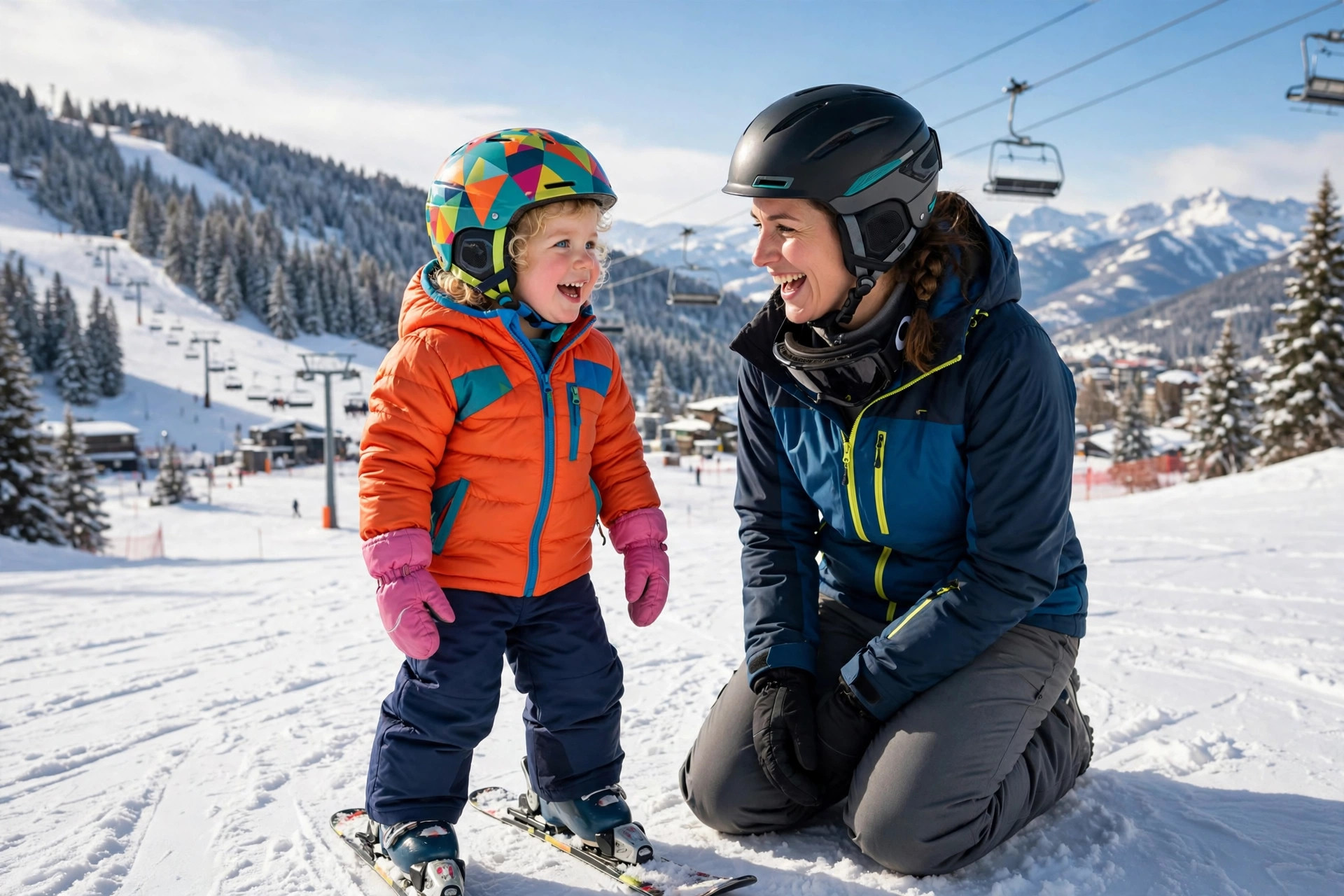
Taking a toddler skiing can sound like a recipe for chaos — the layers, the boots, the chairlifts, the meltdowns. But after many seasons on the slopes with our own little ones, we can tell you this: a ski day with toddlers can genuinely be the best part of winter. The trick is knowing what to expect, packing the right gear, and building the whole day around your toddler instead of around the mountain.
Our kids started skiing at age three, and skiing quickly became our family’s favorite winter activity. These are the tips we wish someone had given us before our first trip — updated for the 2026–27 ski season — so you can skip the learning curve and go straight to the good stuff. If you love getting outside with little ones year-round, you may also enjoy our guide to hiking with toddlers by age for realistic trail distances in the off-season.
What Age Can Toddlers Start Skiing?
Most resorts run group lessons starting at age four, and private lessons for kids as young as three. We started both of our kids at three, and it worked — but honestly, the magic age depends more on temperament and coordination than on the calendar.
Look for these readiness signs before you book anything:
- Your toddler can balance on one foot for a few seconds and walk confidently in bulky boots
- They can follow simple two-step instructions (“bend your knees, then stop”)
- They show real interest in the idea of skiing — not just in the snow
- They can tolerate cold for 45–60 minutes with proper gear
Two-year-olds can still enjoy the mountain in other ways: riding the magic carpet with a parent, playing at the base lodge, or being pulled in a sled. There’s no prize for starting earlier — a happy four-year-old learns faster than a miserable three-year-old. Start when your child is ready, and the first season will go much better.
The Right Gear Makes All the Difference
Getting your kids ready for the slopes starts with the basics — gear that keeps them warm, dry, and safe. After years of trial and error, we’ve learned that a good system matters more than any single piece of expensive equipment. A consistent layering approach does more for comfort than a fancy jacket alone; our full breakdown is in how to keep kids warm while camping with a layering system, which applies just as well on the slopes.
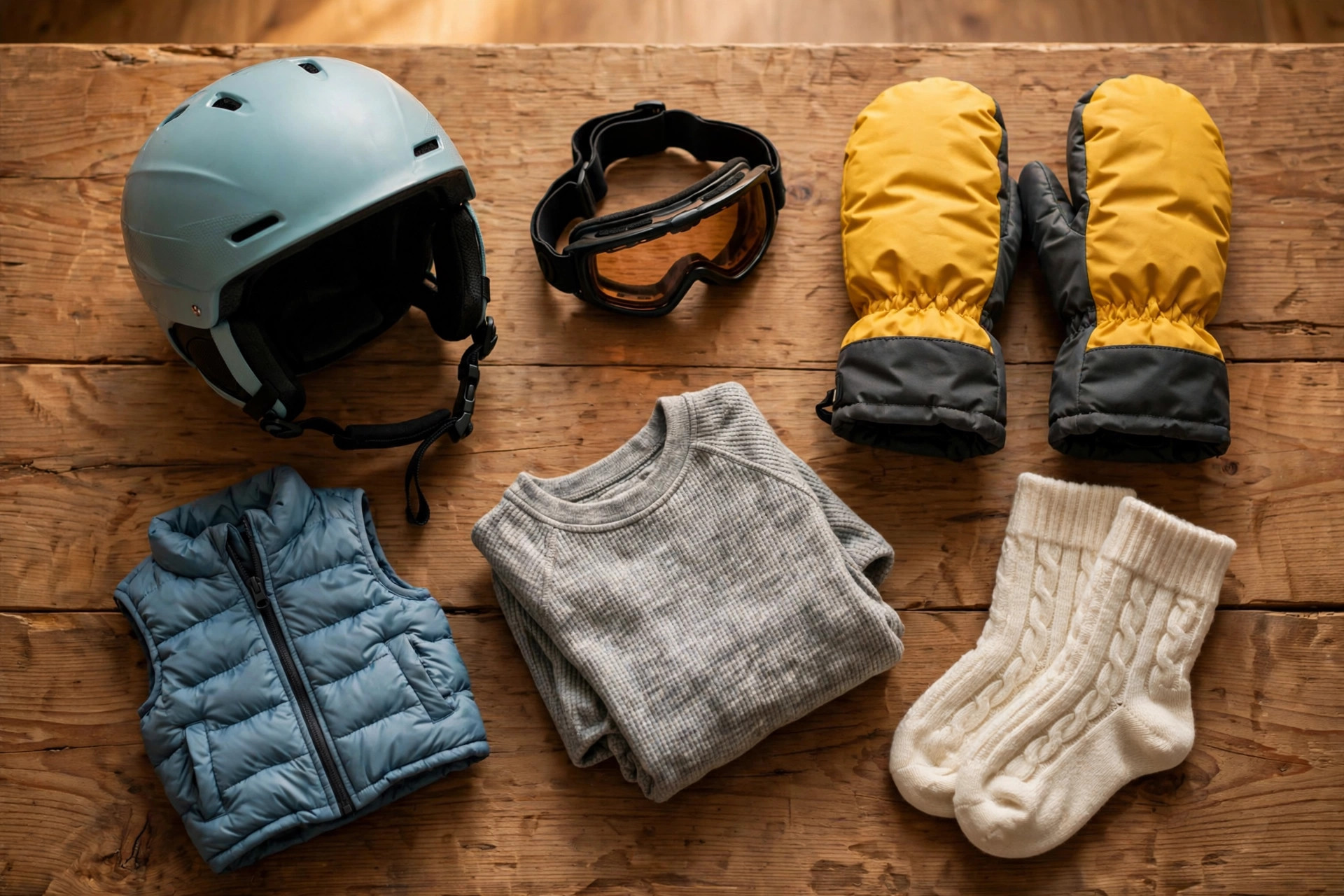
Here’s what our setup looks like for each ski day:
- Helmet (non-negotiable): A properly fitted ski helmet with MIPS protection. Never borrow one that doesn’t fit — a helmet that slides around protects no one. Look for an integrated-visor style on very young kids to skip the goggle battle.
- Goggles: Well-fitting toddler goggles that seal out wind. If your child hates them, try wearing them around the house for a few days first so they feel normal.
- Base layer (no cotton!): Cotton traps moisture and makes kids cold fast. Use moisture-wicking merino or synthetic pajama-style base layers instead.
- Mid layer: On cold days, add a polyester fleece mid-layer plus fleece pants under their snow pants.
- Shell jacket and bibs: Waterproof outer layers that work as a system — bibs stay put better than pants on wiggling toddlers, and a hardshell-style jacket blocks wind on the lift.
- Mittens, not gloves: Waterproof, insulated mittens with a long cuff and a zipper are a game-changer for tiny hands — fingers stay warmer together, and no more frozen digits.
- Thin wool socks: Skip thick socks — they make chubby feet too bulky for boots and cut off circulation, which causes cold toes. Light-cushion wool socks are the sweet spot.
Toddler ski gear checklist at a glance:
| Item | What to look for | Why it matters |
|---|---|---|
| MIPS helmet | Snug fit, adjustable dial | Head protection on falls and lift bumps |
| Goggles | Flexible frame, UV100 lenses | Blocks wind, glare, and snow spray |
| Synthetic base layer | No cotton | Wicks sweat so kids stay warm |
| Fleece mid layer | Lightweight, zip neck | Easy on and off for temperature swings |
| Waterproof bibs | Taped seams, long legs | Keeps snow out during inevitable sitting |
| Insulated mittens | Zipper + long cuff | Tiny hands stay warm and dry |
| Wool socks | Thin, light cushion | Fit boots without pressure points |
One secret that changed everything: let them personalize their gear. Our kids cover their helmets with stickers and iron patches onto their fleece layers. It sounds silly, but when they love their outfit, getting dressed becomes the easiest part of the day — and that’s half the battle won.
Ski Snacks and Hydration Essentials
Skiing burns energy fast, and a hungry toddler is a done toddler. We pack snacks with intention: they must fit in a pocket without getting crushed, be small enough to pop straight in the mouth, and deliver quick energy. This is non-negotiable packing, right up there with the helmet.
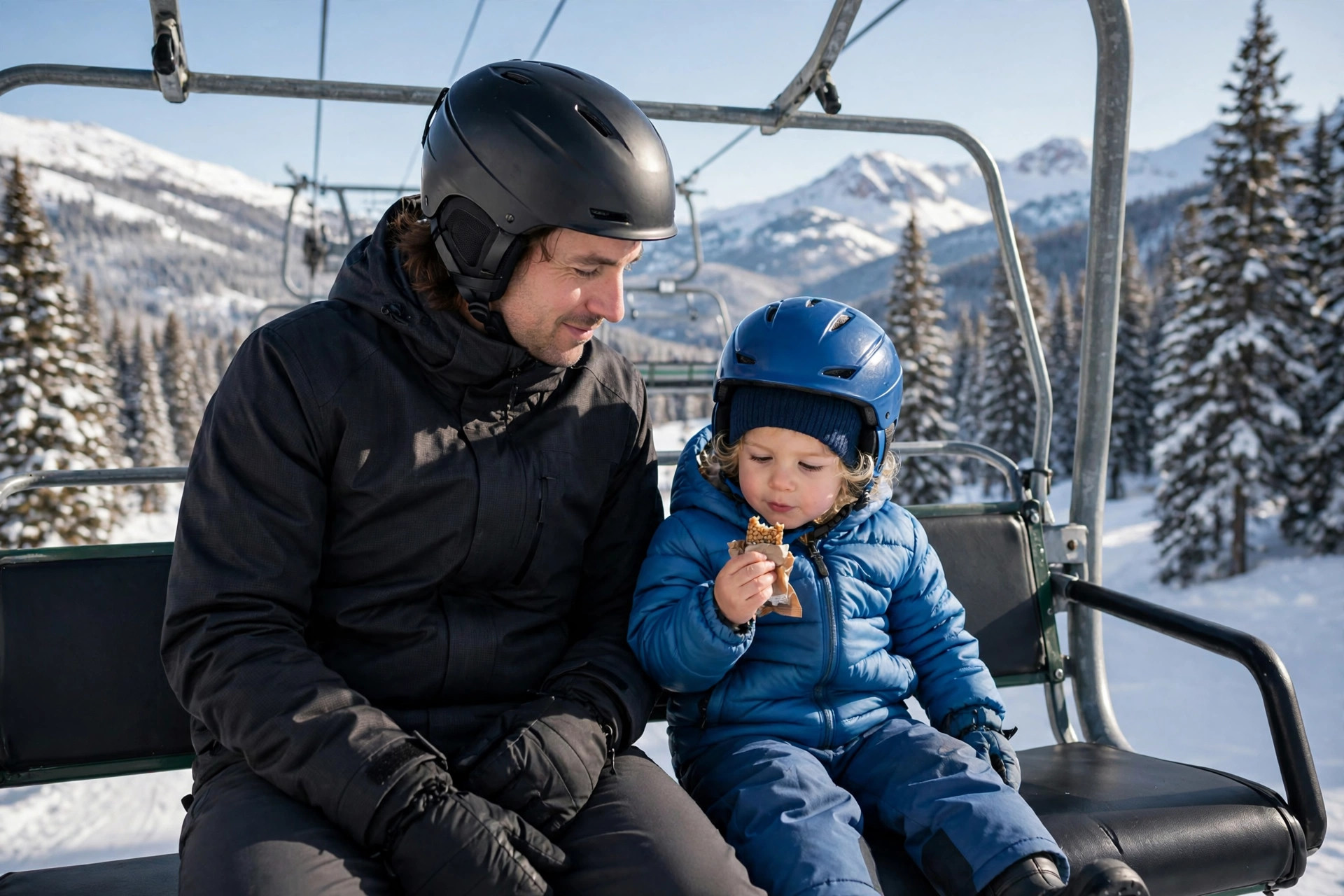
Best chairlift snacks:
- Peanut butter M&Ms (a little protein, a little treat)
- Gummy bears and fruit snacks (kid favorites, melt-free)
- Made Good granola minis (allergy-friendly for shared lifts)
- Homemade trail mix with raisins and cereal
Heartier break-time options: yogurt and chia pouches (no mess), soft granola bars, PB&J sandwiches cut into strips, and grilled cheese strips wrapped in foil that stay warm in a jacket pocket. For hydration, skip hydration bladders for toddlers — food bits clog the straw and they’re awkward to refill. We use small insulated bottles that fit in a jacket pocket and refill at mountain water stations.
Harness and Leash: Your Back-Saving Safety Tools
A quality ski harness transforms skiing with kids from exhausting to enjoyable. We never ski without ours — it lets us lift our child onto chairlifts, tow them across flat sections, and pick them up after falls without destroying our backs. A harness with dual handles (we loved the NipperGrip) gives you control from behind; ski vests with back handles like the ones resorts use also work wonders, especially in powder when little legs get stuck.
For two and three-year-olds, a leash is genuinely invaluable. These fearless little speed demons will bomb down hills with reckless glee — the leash slows them and prevents terrifying close calls with skiers and snowboarders who pass too close. As your child gains control, use it less: we still bring ours for steeper runs when our daughter asks, more for her confidence than for necessity.
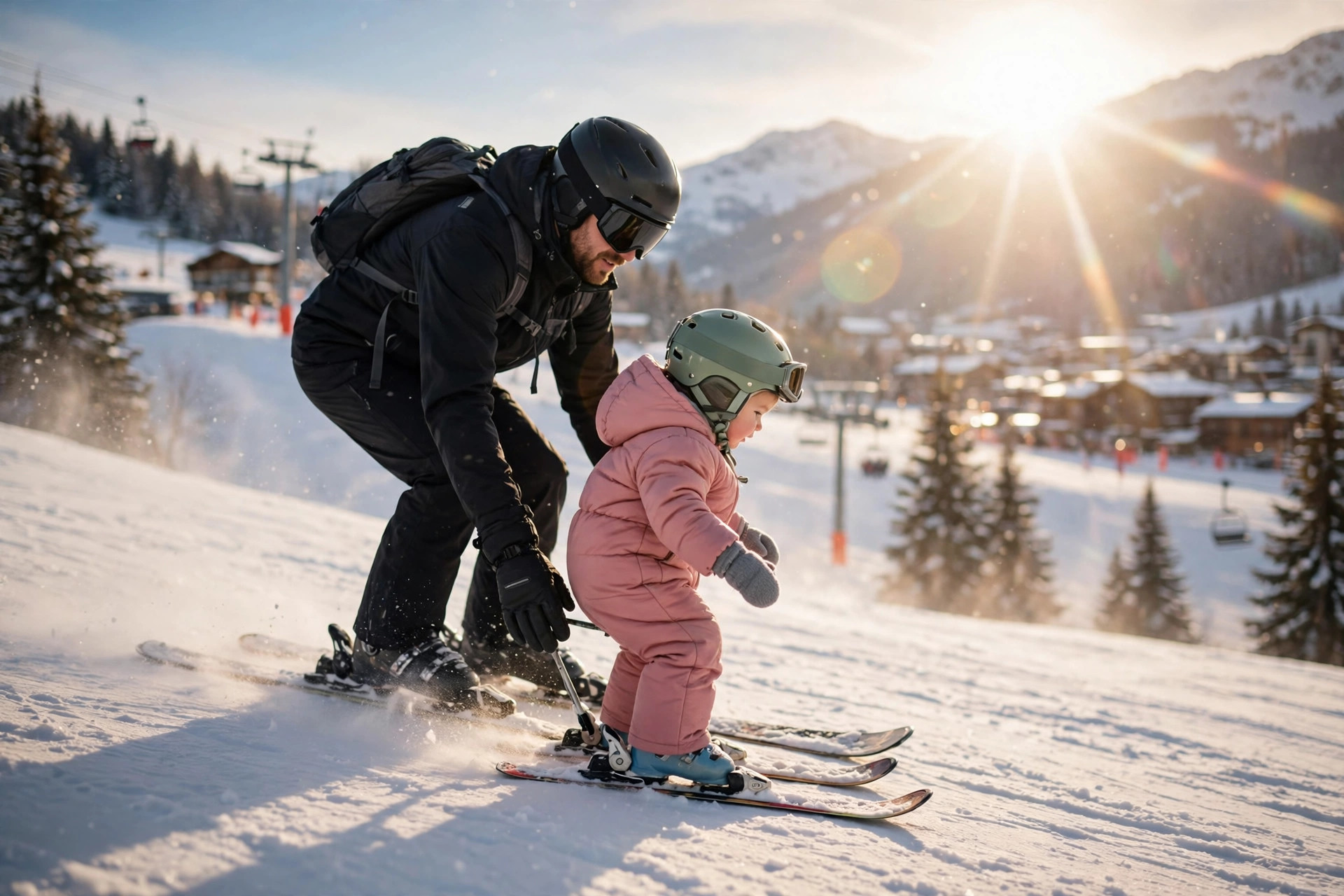
As you teach independence, also teach skiing’s Your Responsibility Code in kid-friendly language: look uphill before merging, stay in control, and stop where people can see you. Even three-year-olds can learn “look before you go.”
Bathroom Breaks: The Inevitable Challenge
Bathroom needs always strike at the most inopportune moments — mid-run, on the lift, at the far end of the mountain. After many stressful gear-stripping races, we built a system:
- Go before suiting up — every single time, no exceptions
- Use pull-ups even for potty-trained kids on ski days (saves everyone)
- Plan breaks before the “I need to go now!” minute
- Account for time — resort bathrooms often have lines, steps, and a long walk from the slopes
Rest Stops: Preventing Meltdowns
We’ve spent countless happy-enough hours in the lodge with sleeping kids — and that’s okay. Skiing drains toddlers fast: most last about 30 minutes of actual skiing before needing a break. Schedule snack breaks proactively (we hand out a treat on every chairlift ride), and always factor in the weather — cold zaps energy far faster than you’d think.
End the day on a high note, not when everyone’s spent. Our rule: quit while they’re still smiling, and they’ll beg to come back tomorrow. If you’re planning a longer family trip around skiing, our guide to Great Smoky Mountains with toddlers covers how we pace multi-day outdoor trips with little ones so nobody burns out.
Ski Lessons: Are They Worth It?
Short answer: yes, if you pick the right format. While we teach our kids plenty ourselves, professional lessons offer something parents can’t easily replicate:
- Instructors make learning fun with games — kids don’t realize they’re practicing
- Group settings build confidence (they see other kids trying too)
- They learn from someone who isn’t mom or dad, which somehow carries more authority
But go in with realistic expectations. Lessons are expensive, and toddlers get exhausted — one friend’s child fell asleep before his lesson even started. For first-timers, a private lesson (30–45 minutes) beats a two-hour group session every time. And always ask the resort whether they allow parents to watch; some programs ask parents to step away, and your toddler needs to be okay with that.
Teaching Your Toddler: Patience Pays Off
With the right perspective, teaching your toddler to ski becomes some of the most rewarding family time you’ll ever have. Start small, focus on fun over technique, and celebrate every little success — the first wedge, the first solo stop, the first time they say “again!”
A few things that actually work on the snow:
- Pizza and french fries really do work — “french fries” (skis parallel) to glide, “pizza” (tips together) to slow down
- Follow-the-leader games down the gentlest slope, with you just ahead
- Short sessions — two good 20-minute blocks beat one crying hour
- Warm rewards — hot chocolate at the lodge is the best bribe in the sport
Before you know it, you’ll have a tiny ripper conquering the mountain — and asking about the 2026–27 season before this one even ends. If you’re looking for more fun outdoor family activities, we’ve got year-round ideas to keep the momentum going.
FAQs: Skiing with Toddlers
How long should a ski day be with a toddler?
Keep it to 1–2 hours of actual slope time for ages 2–4, with breaks. Our rule of thumb: two good sessions beat one long miserable one. End the day while everyone is still happy.
Is it safe for toddlers to ride the chairlift?
Most resorts allow small children on lifts with an adult, but policies vary — check the resort’s rules before you go. Always ride with your toddler between you and the outside edge, lower the safety bar immediately, and use a harness handle so you can support them during loading and unloading.
Should I rent or buy toddler ski gear?
Rent boots and skis at the resort — toddler sizes change fast, and resort rental shops set bindings safely for kids. Buy the things that touch skin (helmet, base layers, mittens, socks) for fit and hygiene, and rent the rest.
What if my toddler cries or refuses to ski?
This is completely normal and not a sign of failure. Don’t push through tears — take a lodge break, switch to sledding or hot chocolate, and try again another day. Most toddlers need 2–3 gentle introductions before they enjoy it. Fun is the entire curriculum at this age.
How cold is too cold for a toddler to ski?
Watch wind chill, not just temperature. Most parents we know draw the line around 10–15°F (-12 to -9°C) before wind for toddlers under four. If your child’s cheeks stay red for more than a few minutes after coming inside, or fingers feel cold despite mittens, call it a day — warmth always wins.

1 comment
[…] coat or a big coat worn open over the carrier — never strap a bulky snowsuit inside. See our skiing with toddlers tips for cold-weather family […]