This post contains affiliate links. If you buy through them, TravelAle may earn a small commission at no extra cost to you. Read our Affiliate Disclosure.
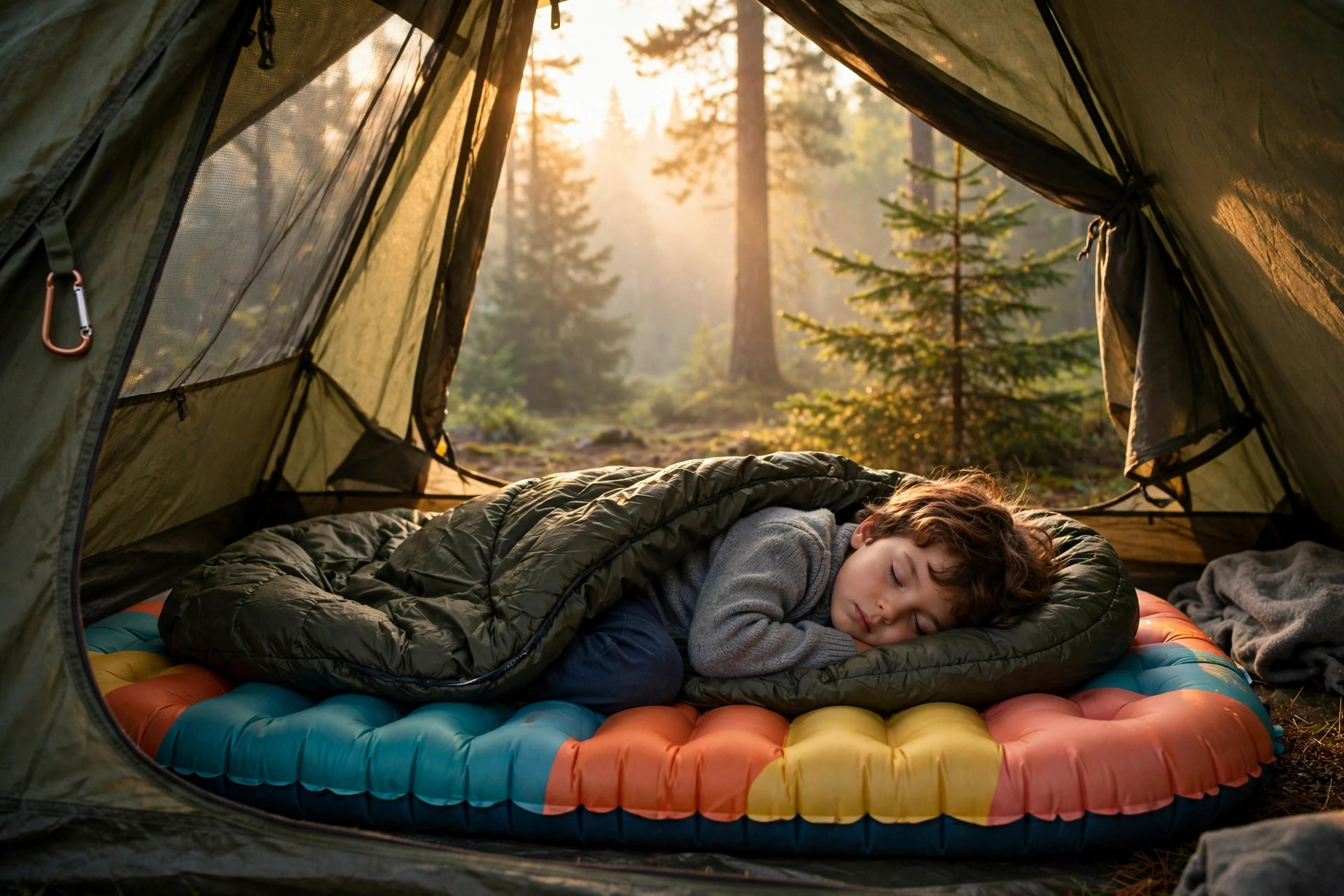
A good night’s sleep can make or break a family camping trip — and for kids, the sleeping pad matters more than the sleeping bag. The ground steals body heat all night, and a child on a thin or wrong-sized pad wakes up cold, cranky, and done with camping before breakfast. The best sleeping pads for kids solve that with the right size, the right warmth (R-value), and a design a child can actually use. This guide shows you how to choose one by age, explains the four pad types in plain English, and ends with a setup checklist.
Our Top Picks on Amazon
Klymit Static V Inflatable Sleeping Pad — Best for older kids and tweens who carry their own gear. Check Price on Amazon
Therm-a-Rest NeoAir Venture Lightweight Camping Air Mattress — Best all-rounder for three-season family camping, with a fast valve for easy inflation. Check Price on Amazon
Coleman Self-Inflating Sleeping Pad with Pillow — Best for car camping with younger kids; self-inflating with a built-in pillow. Check Price on Amazon
Prices change often — check Amazon for the current price. Affiliate Disclosure
Why Kids Need Their Own Sleeping Pad (Not a Grown-Up Hand-Me-Down)
It is tempting to hand your child your old full-size pad. Resist it: adult pads are too long, too wide, and too heavy for a small camper to carry, and too slippery for a child who tosses and turns. A kid who slides off their pad at 2 a.m. ends up on the cold tent floor — and cold kids do not go back to sleep quietly.
A kid-sized pad fixes three things at once. First, fit: a pad that matches your child’s height keeps their whole body insulated, with no cold spots. Second, weight: a child carrying their own gear needs a pad that packs small and light, or you will be carrying it by mile two. Third, independence: simple valves and built-in pumps let kids set up their own bed.
Most parents miss the warmth point: a sleeping bag’s insulation is squashed flat underneath a sleeper, so it barely insulates from below — the pad does almost all the ground-insulation work. A warm bag on a thin pad still leaves a child shivering, so upgrade the pad first, not the bag. See also our layering guide for kids.
The 4 Types of Kids Sleeping Pads, Explained Simply
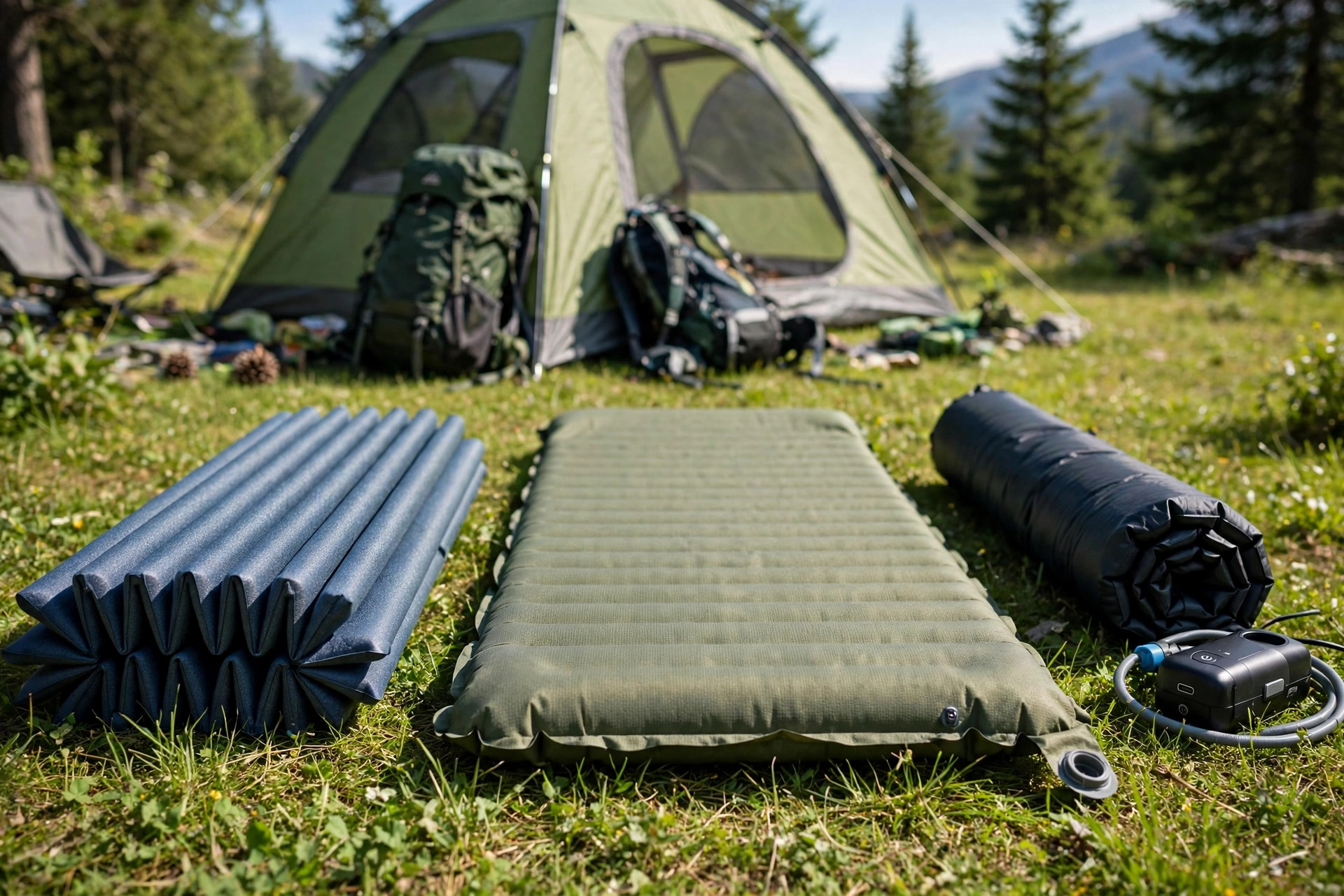
Every kids pad falls into one of four types. The type matters more than the brand — it decides weight, warmth, durability, and how much help your child needs at bedtime.
1. Closed-Cell Foam Pads
These are the accordion-fold or roll-up foam mats — no air, no valve, nothing to inflate. They are nearly indestructible, which makes them the best first pad for toddlers and rough-and-tumble kids under seven.
The trade-off is comfort and warmth. Foam pads are thin (usually under an inch) with a low R-value of around 2. They are fine for summer car camping on soft ground, but on cold or rocky ground your child will feel every bump, and they strap to the outside of a pack rather than fitting inside it.
Best for: toddlers, first-time campers, and as a cheap indestructible backup. Not for: cold-weather trips or kids who need real cushioning.
2. Self-Inflating Pads
Self-inflating pads have open-cell foam inside an airtight shell. Open the valve and the foam expands, sucking air in on its own; a few extra breaths top it up. They are the easiest pads for kids — no pump, no long blowing session.
They strike a good balance: thicker and warmer than foam (usually 1.5 to 2 inches, R-value around 3 to 4), still reasonably light, and the foam core holds some insulation even if the valve leaks a little. The downside is packed size — they roll up bigger than air pads, so they suit car camping better than backpacking.
Best for: car camping families and kids aged 5 to 10 who want a simple setup. Not for: backpacking, where every inch of pack space counts.
3. Inflatable Air Pads
Air pads are just air chambers — no foam inside — so they pack down tiny and weigh very little. Modern ones use clever chamber shapes to support side sleepers and stop kids rolling off, and many come with built-in foot pumps or pump sacks.
The catch is punctures. A sharp stick or a zipper can flatten an air pad, and a flat pad on a cold night is worse than no pad at all. Always pack the repair patches from the box, and teach your child to check the ground before unrolling. Air pads also vary hugely in warmth: uninsulated ones are summer-only, while insulated versions cost more but work into spring and fall.
Best for: hiking and backpacking families, and tweens carrying their own gear. Not for: very young kids who cannot manage a valve, or trips with no backup pad.
4. Integrated Sleep Systems (Pad + Bag Combos)
Some brands sell a kids sleeping bag with a sleeve on the bottom that a matching pad slides into. The pad cannot slide away and the child cannot roll off it — a real fix for restless sleepers who wake up cold because they wriggled off their pad.
The downside is lock-in: when your child outgrows the bag, the whole system goes, and they cost more than buying pad and bag separately. Think of a sleep system as a great solution for one specific child (a wriggler aged 5 to 9), not as a buy-once investment.
Best for: restless sleepers who roll off a normal pad. Not for: tight budgets, or kids in a fast growth spurt.
How to Choose: Fit by Age
Size is the single most useful buying filter. A pad should be at least as long as your child is tall, plus a few inches for growth and the pillow area. Width matters too: a child who moves in their sleep needs enough width to stay on the pad all night.
| Age | Height range | Pad length to look for | Best pad type |
|---|---|---|---|
| 3–5 (toddler) | Under 42 inches | 36–48 inches (kids size) | Foam or self-inflating |
| 6–9 (younger kid) | 42–52 inches | 48–60 inches (kids or short adult) | Self-inflating or air pad |
| 10–12 (tween) | 52–60 inches | 60–66 inches (short or regular adult) | Lightweight air pad |
| 13+ (teen) | Over 60 inches | 66–72 inches (regular adult) | Any adult pad, by trip type |
If your child is between sizes, buy the longer pad — a little too long is fine, but too short leaves cold feet all night. And check the packed size against your child’s backpack: a pad that does not fit becomes yours to carry by lunchtime.
How Warm Should It Be? R-Value by Season
R-value measures how well a pad resists heat loss to the ground; higher is warmer. Brands now test to a common standard (ASTM F3340), so numbers are roughly comparable.
| Season / nighttime low | R-value to aim for | What it means for kids |
|---|---|---|
| Summer, lows above 50°F (10°C) | 1–2 | Any foam or uninsulated air pad |
| Spring/fall, lows 30–50°F (−1 to 10°C) | 3–4 | Insulated pad; add foam underneath on cold nights |
| Cold, lows below 30°F (−1°C) | 5+ | Insulated pad plus a foam layer underneath |
For most family camping, an R-value of 3 to 4 is the sweet spot, covering most US campgrounds from late spring to early fall. If you camp mostly in July and August, do not pay extra for a high R-value; spend the difference on a thicker pad. And remember: R-value only counts if your child stays on the pad — a wide pad beats a warmer narrow one for a child who rolls around.
Our 3 Picks, Compared Honestly
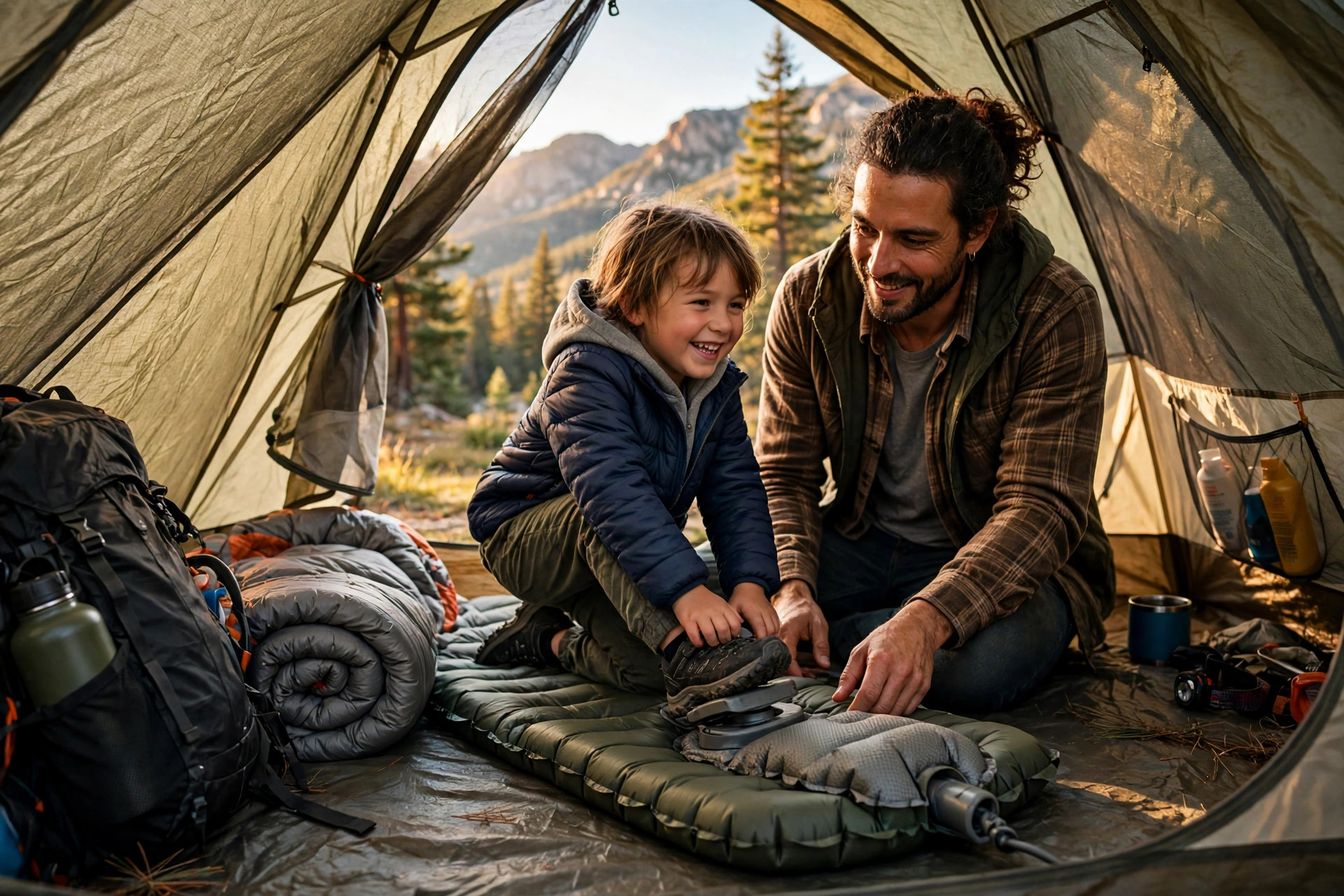
The three pads above cover the main use cases — including who each one is not for. The Klymit Static V is the lightest, most packable pick, but at 72 inches it is too big for small kids, and uninsulated it suits summer and mild nights only. The Therm-a-Rest NeoAir Venture is the all-rounder for three-season camping with a fast valve — but its R-value of 2.2 makes it a poor cold-weather choice, and its narrow width suits calm sleepers best. The Coleman Self-Inflating Pad with Pillow is the easiest for younger kids, with no pump needed — but it is bulkier to pack, so check the size fits your child first.
If you only buy one pad and your child is 6 to 10, start with a self-inflating pad like the Coleman. If your child already hikes with their own pack, the Klymit Static V is the lighter step up. The NeoAir Venture sits in the middle — a solid all-rounder that lasts into the teen years. Pair any of these with a warm bag — our double sleeping bag guide covers family-sized options — or a kids camping cot if your child prefers sleeping off the ground.
Setup in 6 Steps (Teach Your Kid to Do It Themselves)
Walk through these steps together on the first trip, then let your child take over.
- Clear the ground. Pick up sticks and stones where the pad will go.
- Unroll the pad inside the tent. Never inflate it outside and drag it in — that is how valves get knocked.
- Open the valve and let it fill. Self-inflating pads do most of the work; air pads need the pump sack or foot pump.
- Top up to the right firmness. Supportive, not rock-hard — let your child lie on it and adjust.
- Put the sleeping bag on top, not under. The bag goes on the pad, never between pad and ground.
- Pack the repair kit where you can find it. Patches and a spare valve cap go in the same pocket every trip.
When a Pad Pops Mid-Trip (It Happens)
Even good pads puncture, usually on night one of a three-night trip. Find the leak: inflate the pad, press it section by section, and listen for escaping air.
Stick the included patch on the hole, press firmly for a minute, and let it cure before re-inflating. No patch? A strip of duct tape works for a night or two. If the pad will not hold air at all, fold a spare blanket or jacket under the sleeping bag, and add a foam pad underneath if you brought one — that is why experienced campers pack a cheap foam pad as a backup. Prevention helps too: keep pads away from the campfire ring, and never let kids jump on an inflated pad — most punctures come from zippers and tent stakes left on the floor, not the ground itself.

5 Mistakes Parents Make When Buying Kids Sleeping Pads
- Buying an adult pad “to grow into.” A pad two feet too long wastes pack space, and a child swimming on a wide pad rolls off it more easily.
- Ignoring R-value. A thick uninsulated air pad can be colder than a thin foam pad — check R-value, not thickness.
- Choosing the cheapest pad without a repair kit. Pads that ship without patches can ruin a trip the first time they leak.
- Forgetting the pillow. Pick a pad with a built-in pillow or pack a small camp pillow.
- Never testing at home. Inflate the pad in the living room and practice rolling it back into its sack before the trip.
For car camping, compare pads against our family air mattress guide, and add the pad to your camping checklist with kids.
Frequently Asked Questions
What age can a child use a sleeping pad?
Most kids can use a pad from around age 3, starting with a closed-cell foam pad that cannot pop or deflate. From age 5 or 6, a self-inflating pad is a good step up, and by 8 to 10 most kids can manage an inflatable air pad with a pump sack.
What R-value does a kid need for summer camping?
For summer nights above 50°F (10°C), an R-value of 1 to 2 is enough. For spring and fall trips with lows between 30 and 50°F, aim for R-value 3 to 4 — or add a cheap foam pad underneath on colder nights.
Are adult sleeping pads OK for kids?
They work, but they are rarely ideal: longer, wider, and heavier than a child needs, and a small child rolls off a wide pad more easily. A short or kids-sized pad fits better, packs smaller, and is usually cheaper. Teens over 5 feet tall can use a regular adult pad.
How do I stop my child rolling off their sleeping pad?
Use a wider pad, a pad with raised side rails, or an integrated sleep system where the pad slides into a sleeve on the sleeping bag. Placing the pad against the tent wall on one side also helps.
For official guidance, the National Park Service camping pages cover campground rules and safety, and Recreation.gov is where most federal campgrounds are booked. A warm, well-rested kid is a happy camper.
